






African Indigenous Knowledge
Ude Aki (Palm Kernel Oil) in Igbo Culture: Traditional Uses, Healing, and Cultural Significance

Ude aki is an important part of Igbo culture, known for its traditional uses in healing, childcare, beauty, cooking, and indigenous wellness practices in Igboland.
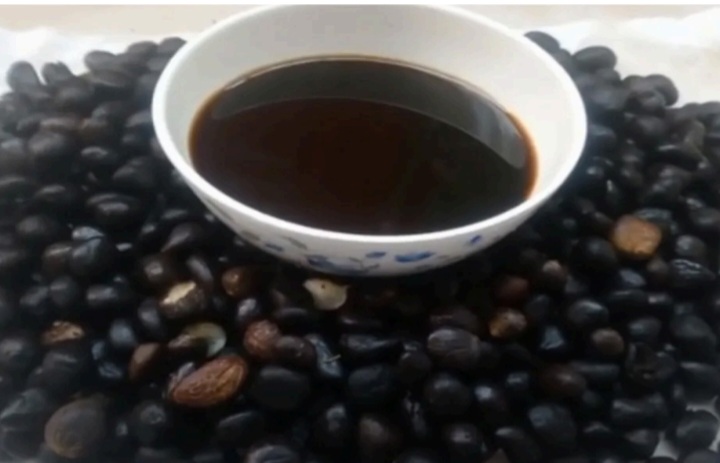
In many Igbo homes, especially in rural communities, ude aki represents more than just oil. It carries memories of childhood, traditional care, home remedies, and everyday living. Long before modern skincare products, packaged medicines, and imported cosmetics became common, families across Igboland relied on natural products from the oil palm tree for survival and wellbeing. Among these products, palm kernel oil held a special place.
Known locally as ude aki, palm kernel oil has been used for generations in traditional medicine, postpartum care, infant massage, hair treatment, soap making, and household life. Elderly women often kept small containers of the oil within reach, ready for use whenever a child had dry skin or convulsion, a newborn needed warmth, or someone complained of body pain. In many communities, the scent of freshly processed palm kernel oil was a familiar part of village life.
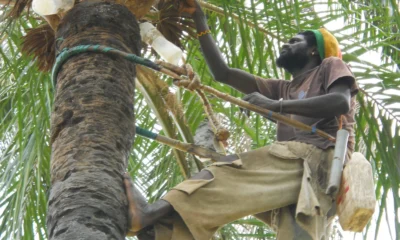
The oil palm tree itself has deep roots in the economic and cultural history of southeastern Nigeria. Scholars have described it as one of the most valuable indigenous trees in West Africa because nearly every part of it serves a purpose. Palm oil, palm wine, palm fronds, kernels, and fibres all contribute to local life in different ways. Among the Igbo people, these products supported farming households, local trade, traditional ceremonies, and indigenous healthcare systems.
Today, interest in natural wellness and African traditional knowledge is growing again. Many younger Nigerians are beginning to rediscover the cultural importance of products like ude aki. What was once seen only as a local household oil is now being appreciated as part of indigenous knowledge passed from one generation to another.
What Is Ude Aki?
Ude aki is the Igbo name for palm kernel oil, an oil extracted from the kernel or seed inside the fruit of the oil palm tree, scientifically known as Elaeis guineensis. It is different from ordinary red palm oil which comes from the fleshy outer part of the palm fruit.
In traditional Igbo communities, the process of producing ude aki was labour-intensive and usually done locally. After palm fruits were processed for red palm oil, the nuts were dried and cracked open manually to remove the kernels. These kernels were then roasted or heated before oil extraction began. Traditional methods varied from one community to another, but the work often involved groups of women who processed the kernels together.
The oil produced from the kernels is usually lighter in colour than red palm oil. It has a distinct smell and a thick texture, especially when unrefined. In many villages, local producers stored the oil in clay pots, bottles, or metal containers for family use and market sales.
The oil palm tree has long been considered one of the most useful trees in Igboland. Beyond food and commerce, it contributed to local industries such as soap production, basket weaving, roofing, and traditional medicine. British colonial records from the nineteenth and early twentieth centuries also documented the importance of palm products in southeastern Nigeria’s economy.
Traditional Uses of Ude Aki in Igbo Culture
One of the oldest uses of ude aki in Igbo culture is traditional healing. Many indigenous remedies involved mixing palm kernel oil with herbs, roots, leaves, or powdered substances. In some communities, people applied the oil to dry or damaged skin because of its moisturizing qualities. Traditional healers also used it during massage therapy for body pain, muscle discomfort, and joint stiffness.
Among elderly people, ude aki was sometimes warmed slightly and rubbed on aching legs or tired muscles after long hours of farm work. Some herbal mixtures used for skin irritation and scalp conditions also included palm kernel oil as a base.
Ethnobotanical studies from Nigeria have documented the use of palm products in indigenous medicine. Researchers have noted that palm kernel oil was commonly included in traditional healthcare practices because it blended easily with medicinal herbs.
In traditional bone-setting practices found in parts of southeastern Nigeria, natural oils were often used during massage and physical therapy. While practices differed across communities, ude aki sometimes served as part of the treatment process.
In Igbo culture, childbirth care extends beyond the hospital or delivery room. The period after childbirth is treated with great importance, especially during Omugwo, the traditional postpartum care practice where older female relatives help care for the mother and baby.
During Omugwo, ude aki has traditionally been used for infant massage and body care. Older women believed the oil helped to keep a baby’s skin soft and protected against dryness. In some communities, slightly warmed palm kernel oil was rubbed gently on newborns after bathing.
Mothers recovering from childbirth also used the oil during body massage. Traditional caregivers believed massage helped the body recover after labour and supported circulation and comfort. For many families, these practices were not simply about physical care. They represented love, support, family bonding, and the transfer of knowledge from older women to younger mothers.
Even today, some families in southeastern Nigeria still include palm kernel oil in postpartum care routines, although modern skincare products have become more common in urban areas.
Long before commercial lotions and hair creams entered local markets, Igbo women used natural oils to care for their skin and hair. Ude aki was one of the oils commonly used for this purpose. The oil helped to soften the skin and reduce dryness, especially during harmattan season when cold weather often caused cracked skin and lips. Some women applied it to the scalp to reduce dryness and improve hair texture.
Traditional black soap makers also used palm kernel oil as an ingredient in local soap production. In some communities, handmade soaps containing palm products were used for bathing, washing clothes, and skin care. Today, natural beauty brands across Africa continue to use ude aki in soaps, creams, and hair products because of its moisturizing properties.
Although red palm oil remains more common for cooking in Igbo cuisine, ude aki also had domestic uses in some communities. Certain local dishes and food preparations included small amounts of the oil. Beyond cooking, ude aki served practical household purposes. It was used in soap making, lubrication for simple tools, and preservation of some household materials.
Traditional soap production using palm products was once a thriving local skill in many villages. Women combined ash, plant materials, and oils to produce locally made soap for household use and trade.
In areas without electricity during earlier times, oils from palm products also contributed to local lighting systems through oil lamps.
Spiritual and Cultural Significance of Ude Aki

In Igbo culture, ude aki is not treated as something ordinary, even though it is part of everyday home life. It sits quietly among other palm products that have long supported both practical living and cultural identity. For many families, its presence is tied to care, continuity, and a way of life that values natural resources.
The oil palm tree itself holds deep meaning in Igbo land. It is often seen as a complete tree because almost every part is useful. From the fruit to the kernel, nothing is wasted. This sense of usefulness has shaped how palm products, including ude aki, are viewed in traditional life. They are not just materials. They are part of survival, community work, and inherited knowledge.
In many homes, ude aki has been associated with care and cleansing practices. It is used during massage for babies and mothers, especially in the Omugwo period which is a respected postpartum tradition in Igbo society. These practices are not only physical. They also carry a sense of responsibility, family bonding, and support for new life. The oil becomes part of how care is shown within the household.
Culturally, palm products often appear in ceremonies and communal life, especially in food preparation, hospitality, and traditional gatherings. While red palm oil is more visible in rituals and cooking, ude aki remains part of the wider palm tradition that supports daily living and wellness practices. It connects to the broader Igbo understanding of nature as something that provides both nourishment and care.
There is also a cultural belief that natural products from the earth carry purity because they come directly from the land without heavy processing. In this sense, ude aki is often valued as a simple and trusted substance for the body. It is used with familiarity, passed down through generations without formal instruction.
In many Igbo homes, its significance is not spoken about in complex terms. It is understood through practice. It is what elders reach for, what mothers use during childcare, and what families keep close for everyday needs. Over time, this quiet presence has made ude aki part of cultural memory that links daily life to tradition in a very simple but lasting way.
Ude Aki and Indigenous Igbo Knowledge
Ude aki is one of those everyday things that quietly carries a lot of Igbo traditional knowledge. It was never taught in classrooms or written in manuals in the past. Instead, it was learned by watching, listening, and doing. A child grows up seeing how elders handle palm kernels, extract oil, and use it at home. Over time, it becomes part of what they know without needing formal instruction.
In many Igbo communities, knowledge about ude aki is closely tied to how families lived with the oil palm tree. The tree was not just a plant in the environment. It was a resource that supported food, health, trade, and daily care. From harvesting the fruits to processing the kernels, every step carried skills that were passed from one generation to another, especially among women who often led the processing work.
Traditional healers and elderly women played a key role in keeping this knowledge alive. They understood when and how ude aki could be used for skin care, massage, and simple home treatments. This knowledge was not separated from daily life. It was part of routine care within the home, especially for children, mothers, and older people.
In rural Igbo settings, learning was mostly practical. A young girl might follow her mother to the processing area. A boy might watch how kernels are cracked and prepared. Nobody needed long explanations. The process itself was the lesson. This is how knowledge around ude aki stayed strong for many years.
This indigenous system of learning also connected people to their environment. Families understood the seasons, the harvest periods, and the best ways to use natural resources without waste. Nothing around the oil palm tree was treated as useless. Even the kernel which produces ude aki had value that supported both health and household needs.
Today, researchers and cultural writers are beginning to pay more attention to this kind of knowledge. It is part of what is called indigenous knowledge systems where communities develop their own ways of understanding health, environment, and daily living based on long experience rather than formal science.
Even as modern products become more common, the knowledge around ude aki is still present in many homes. It continues to live through practice, especially in rural areas and among families who still prefer natural methods for childcare and body care.
The Economic Importance of Ude Aki in Igboland
In Igboland, ude aki has never been only about home use. It has also played a steady role in local livelihoods and small-scale trade. For many rural families, palm kernel oil was part of how they earned income, supported household needs, and participated in village markets.
The oil palm tree grows widely across southeastern Nigeria, and its fruits provide both palm oil and palm kernels. After the palm fruit is processed for oil, the remaining kernels are collected, dried, cracked, and roasted to extract ude aki. This process has long created opportunities for family-based work, especially in rural communities where farming and small trade are closely linked.
In many Igbo villages, palm kernel processing was often done by women. It was common to see groups working together, cracking kernels, extracting oil, and preparing it for sale. This work was not only physical but also economic. The oil was sold in local markets, sometimes in small containers, sometimes in larger quantities, depending on demand. The income helped families with food, school expenses, clothing, and other daily needs.
Market traders played an important role in moving palm kernel oil from rural producers to larger towns. In busy markets across Igboland, ude aki was displayed alongside other palm products, herbs, spices, and household goods. Its value came from both its usefulness and its steady demand in homes.
Historically, palm products also contributed to broader trade systems in West Africa. During the colonial period, palm produce from southeastern Nigeria became part of regional and international trade. While palm oil was the dominant export, palm kernel oil also formed part of the wider palm economy that supported rural production systems and trade networks.
Today, ude aki still contributes to small-scale economic activity in many communities. Some families continue traditional processing methods, while others use more modern equipment to improve production. It is also finding new value in cosmetic and skincare industries where natural oils are increasingly in demand.
Even with these changes, the basic role remains the same. For many households, palm kernel oil is still a product that connects home care with income, tradition with trade, and local knowledge with everyday survival.
Ude Aki in Contemporary Igbo Society
In today’s Igbo society, ude aki still exists, though the way people use it has changed. In many homes, especially in towns and cities, it no longer sits as a daily household essential the way it once did. Instead, it is now used more occasionally, often when people want natural alternatives for skin care, hair care, or home remedies.
In rural areas, however, ude aki is still part of everyday life. Some families continue to produce it in small quantities or buy it directly from local markets. It is still used for baby care, dry skin, massage, and simple traditional treatments, especially during Omugwo and other family care practices.
One major change is the influence of modern products. Lotions, medicated creams, processed oils, and imported cosmetics have taken over many of the roles that traditional oils once filled. Because of this, the younger generations may not grow up with the same close familiarity with ude aki that the older generations had. In some cases, they only encounter it when visiting grandparents or during rural family gatherings.
At the same time, there is a growing return to natural living. Many people are now paying attention to organic products and traditional wellness practices. This has brought renewed interest in palm kernel oil, especially in skincare and hair care. Some small businesses now package and sell ude aki as part of natural beauty products, often highlighting its traditional roots and purity.
Social media has also played a role in this renewed attention. Discussions around natural oils, African skincare, and indigenous knowledge systems have helped to bring products like ude aki back into public awareness. What was once seen as old-fashioned in some urban spaces is now being reconsidered as simple and useful.
Despite these changes, ude aki still holds cultural meaning in Igbo society. It continues to appear in family care practices, especially where elders are present. It is also part of cultural memory, reminding many people of village life, traditional childcare, and the way families once depended more directly on natural resources.
In contemporary Igbo life, ude aki sits between two worlds. It is no longer the only option for care and wellness, but it has not disappeared. Instead, it remains part of a living tradition that continues to adapt, even as modern lifestyles change how people live and care for themselves.
Challenges Facing Traditional Palm Kernel Oil Production
The production of ude aki in Igboland has changed over time, and not always in ways that support traditional practice. What was once a common household and community activity is now facing several real challenges that affect how it is produced, shared, and passed on.
One of the main challenges is industrialization. In the past, palm kernel oil was processed mostly by hand within homes or small village groups. Today, larger processing machines and commercial producers dominate the market in many areas. While these systems can produce more oil in less time, they have reduced the number of people involved in traditional methods. As a result, the old skills of cracking, roasting, and manually extracting ude aki are becoming less common.
Another challenge is the shift in lifestyle, especially among the younger ones. Many young people are moving to cities for education and work. This reduces the number of people available to learn and continue traditional processing methods in rural communities. As the older generations grow weaker or pass on, some of this practical knowledge is not always fully transferred.
There is also the issue of time and convenience. Traditional palm kernel processing is slow and labour-intensive. It requires patience, physical effort, and group cooperation. In contrast, modern products and processed oils are easily available in shops and markets. For many urban families, convenience has become more important than traditional preparation methods.
Environmental and economic pressures also play a role. In some areas, land use changes and reduced farming activities affect oil palm production. When fewer palm fruits are harvested locally, the availability of kernels for traditional processing also reduces. This indirectly affects the supply of ude aki in rural markets.
Another important challenge is the gradual loss of indigenous knowledge. Much of the skill involved in producing and using ude aki was never formally documented. It was passed through observation and practice. When this chain is broken, the knowledge becomes harder to recover. This is why some researchers and cultural writers now emphasize documentation of traditional practices.
Market competition is also a factor. Commercially refined oils, both local and imported, often compete with traditionally produced palm kernel oil. These products are sometimes more uniform in appearance and easier to package, which makes them more attractive in urban markets, even when traditional oil is available.
Despite these challenges, ude aki is not disappearing completely. It still exists in many rural homes and continues to be used where people value natural and traditional care methods. However, without intentional effort to preserve skills and knowledge, traditional production methods may continue to decline over time.
Why Ude Aki is Still Relevant
Even with all the changes in modern life, ude aki has not lost its place in Igbo culture. It may no longer be used in every home the way it once was, but it still carries meaning that goes beyond convenience or preference.
One reason it still matters is its connection to everyday care. In many families, especially where elders are still active in childcare, ude aki continues to be used for baby massage, dry skin, and simple home treatments. These are not complicated practices. They are part of a way of caring that has been passed down through experience rather than formal instruction.
It also matters because of its link to identity and memory. For many people, the smell or texture of palm kernel oil brings back clear memories of home life, especially in villages. It recalls moments of Omugwo, visits to grandparents, and the simple routines of traditional living. In this sense, it holds emotional and cultural value that is hard to replace with modern products.
Another reason is its place in natural living. As more people become careful about what they apply to their skin and hair, interest in natural oils has increased. Ude aki is often revisited as a simple, locally available option that has been used for generations. This growing attention has also encouraged small-scale producers and local brands to include it in natural skincare products.
It also remains important as part of indigenous knowledge. The way it is processed, used, and shared is tied to older systems of learning that depended on observation and practice. These systems are still valuable because they show how communities once solved everyday needs using local resources and practical experience.
In rural Igbo communities, ude aki still plays a quiet but steady role. It appears in homes, local markets, and family care practices. Even when modern alternatives are available, some families continue to prefer it for specific uses because it is familiar and trusted.
Finally, it matters because it is part of cultural continuity. When people continue to use or remember ude aki, they are also keeping a part of Igbo tradition alive. It connects present life with older ways of doing things, and shows that culture is not only in ceremonies or language, but also in small daily practices.
For these reasons, ude aki remains relevant today, not only as an oil but as part of a living tradition that continues to adapt while holding on to its roots.
Conclusion …
Ude aki has remained part of Igbo life for generations, not because it is spoken about often, but because it has always been useful. From small home routines to deeper cultural practices, palm kernel oil has quietly supported how families care for themselves and one another.
Across Igboland, it has been used for skin care, infant massage, postpartum support during Omugwo, simple healing practices, and everyday household needs. It also carried economic value in rural markets where families depended on it as part of small-scale trade and income.
Over time, modern products and changing lifestyles have reduced how often ude aki is used in some homes. Yet, it has not disappeared. It still appears in rural communities, in traditional care practices, and in conversations about natural living and indigenous knowledge.
What makes ude aki important is not only its physical use, it is also the knowledge connected to it. The way it was produced, shared, and applied tells a larger story about Igbo life, community learning, and practical ways of using natural resources.
Even today, it continues to sit between tradition and modern life. For some families, it is a daily essential. For others, it is a cultural reminder of how things were done before. In both cases, it remains part of Igbo heritage that carries with it a quiet but lasting presence in everyday life.
References
- World Agroforestry (ICRAF). (n.d.). Elaeis guineensis (oil palm). https://www.worldagroforestry.org/
- Ezeanya-Esiobu, C. (2019). Indigenous knowledge systems in Africa. In Encyclopedia of the UN Sustainable Development Goals. Springer. https://link.springer.com/referenceworkentry/10.1007/978-3-319-71058-7_92-1
- Sofowora, A. (1993). Medicinal plants and traditional medicine in Africa (2nd ed.). Spectrum Books Limited.
- Okafor, J. C. (1980). Edible indigenous woody plants in the rural economy of the Nigerian forest zone. Forest Ecology and Management, 3(1), 45–5. https://www.sciencedirect.com/science/article/abs/pii/0378112780900059
- Food and Agriculture Organization of the United Nations. (n.d.). Oil palm. FAO. https://www.fao.org/palm-oil-plantation/en/
- Aghalino, S. O. (2000). British colonial policies and the oil palm industry in the Niger Delta region of Nigeria, 1900–1960. African Study Monographs, 21(1), 19–33. https://repository.kulib.kyoto-u.ac.jp/dspace/bitstream/2433/68445/1/ASM_21_19.pdf
You might want to check this out …
https://nnewicity.com/the-hidden-treasure-of-the-palm-tree-in-igbo-culture/