





Festivals & Events in Nigeria
Oviode Festival of Ntezi: A Rich Cultural Heritage and Sacred Tradition

Oviode Festival is the annual cultural celebration of Ntezi people which provides a vibrant time of community gathering, gratitude to God and ancestors, and cultural expressions in Ebonyi State, Nigeria.
Every year, as the dry season settles and the first new moon after January appears, the people of Ntezi begin to prepare for their most important cultural gathering. The Oviode Festival is not announced with noise or spectacle. It arrives quietly, carried in memory, expectation, and shared understanding. For generations, this festival has marked a sacred moment of gratitude, reunion, and cultural renewal in the Ntezi community of Ebonyi State.
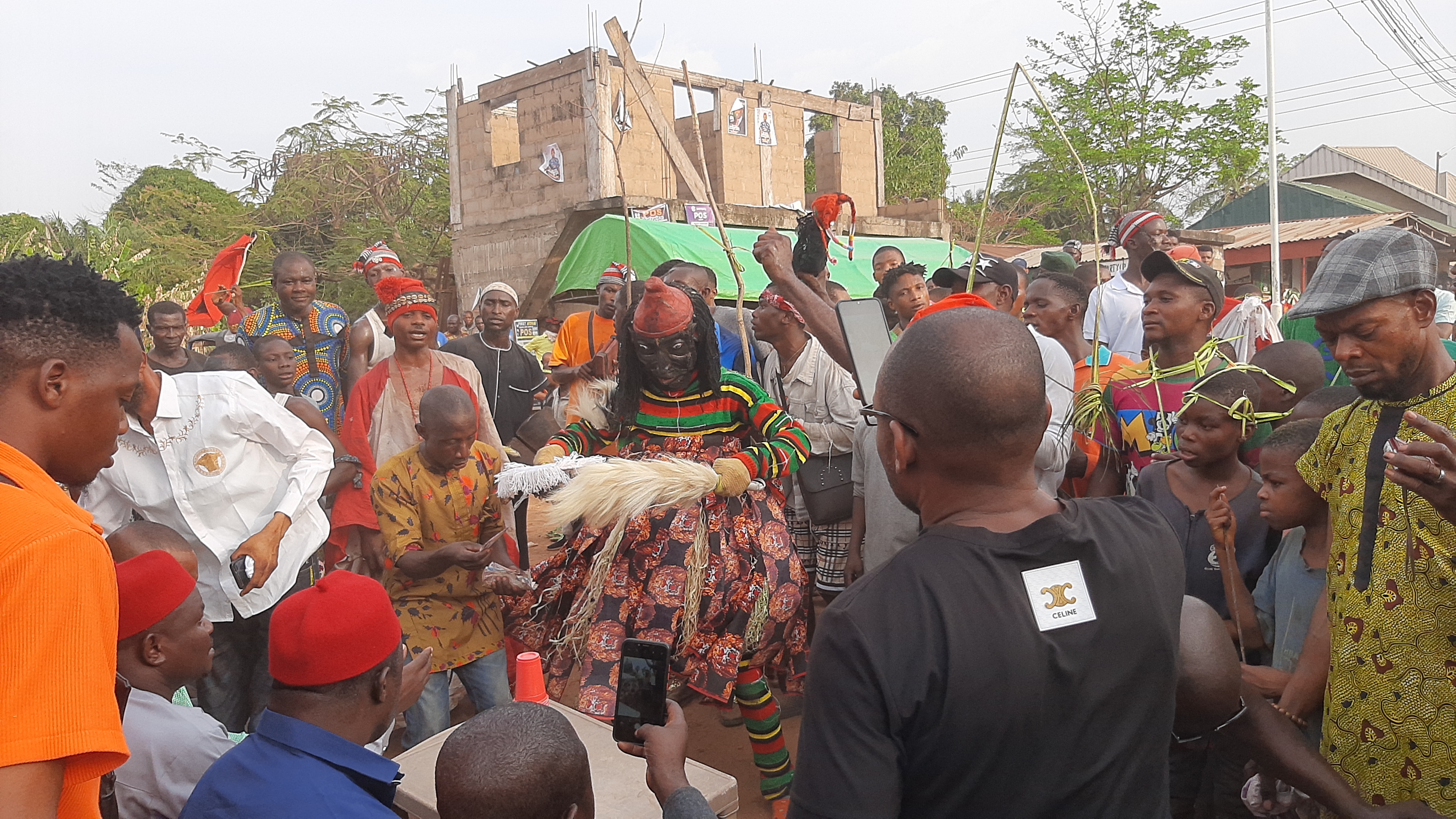
Oviode Festival brings families home. Elders, youths, and children gather in one place to give thanks to God, honour their ancestors, and celebrate the values that have held the community together for centuries. Drums sound across the Ode market. Masquerades appear in measured steps. Songs in familiar rhythms tell stories that words alone cannot hold. In these moments, history feels present and personal.
More than a yearly celebration, the Oviode Festival is a living expression of the Ntezi identity. It preserves oral history, reinforces communal bonds, and passes cultural knowledge from one generation to the next. Even as modern life reshapes daily routines, Oviode continues to remind the people of who they are and where they come from.
This article explores the history, meaning, rituals, and enduring cultural importance of the Oviode Festival. It traces how the festival began, how it is observed, and why it remains central to the life of Ntezi people today.
Historical Background of Oviode Festival
Oviode Festival has deep roots in the history of Ntezi people whose ancestors settled in what is now Ishielu Local Government Area of Ebonyi State many generations ago. Long before modern administrative boundaries and written records, the people of Ntezi relied on oral tradition to preserve their past. Through stories, songs, and rituals, history was passed carefully from the elders to the younger members of the community. Oviode Festival emerged from this tradition as a structured way to mark time, memory, and communal life.
Historically, Oviode developed as an annual thanksgiving and communal gathering tied to the agricultural and seasonal calendar of the area. For Ntezi people whose livelihoods were closely connected to farming, hunting, and local crafts, the end of January and the beginning of February marked a natural pause. Harvests had been stored, the harshest part of the dry season was easing, and families had the space to gather. The festival was, therefore, fixed around the first new moon after January, a period seen as suitable for gratitude and renewal.
The festival is closely linked to the identity of Ntezi as part of the wider Orring cultural group, also known as Korring. Over time, interaction with neighbouring Igbo communities influenced language use and social organization, though core traditions remained intact. Oviode became one of the most enduring expressions of this identity which survived pre colonial times, colonial rule, and the social changes that followed independence.
In its early form, Oviode Festival was primarily a spiritual and communal rite. The elders led prayers to God and remembrance of the ancestors, and acknowledge their role as guardians of the land and the people. These observances were not separate from daily life. They were part of how the community understood order, morality, and continuity. The festival also served as a moment when disputes were settled, relationships renewed, and collective decisions affirmed.
As the Ntezi community expanded into five villages, the structure of the Oviode Festival evolved. Each village began to present its own cultural displays in the days leading up to the main celebration. These preparatory appearances, often held at the Ode market allowed villages to announce their presence and readiness for Oviode. This practice strengthened healthy competition while reinforcing unity across the community.
Despite the arrival of Christianity, formal education, and modern governance, the historical foundation of Oviode Festival has remained largely intact. Rather than disappearing, the festival adapted. It came to be seen not only as a spiritual observance but also as a cultural inheritance. Today, when the people of Ntezi gather for Oviode, they are participating in a tradition shaped by centuries of shared history, seasonal rhythms, and collective memory.
This long continuity is what gives the Oviode Festival its lasting meaning as it stands as a reminder that the history of Ntezi is not confined to books or archives. It lives in annual gatherings, in repeated rituals, and in the quiet understanding passed from one generation to the next.
Meaning and Spiritual Significance
For the people of Ntezi, Oviode Festival carries meaning that goes far beyond celebration or entertainment. It is a sacred period set aside for gratitude, remembrance, and spiritual balance. Primarily, the festival is an expression of thanks to God for life, protection, and provision throughout the past year. This act of thanksgiving forms the spiritual foundation upon which every other aspect of Oviode rests.
Oviode Festival also serves as a time to honour the ancestors who are believed to remain connected to the living community. In Ntezi worldview, the ancestors are not distant figures of the past. They are custodians of moral order and silent witnesses to communal life. During Oviode, the elders acknowledge their presence through prayers and symbolic offerings, asking for their continued guidance, peace, and harmony within the land. This practice reinforces the belief that the well-being of the community is linked to respect for those who came before.
Spiritually, Oviode Festival marks a moment of renewal. As one year closes and another unfolds, it creates space for reflection and correction. Individuals are encouraged to settle disputes, mend broken relationships, and enter the new season with a clear conscience. This emphasis on reconciliation is not ceremonial alone. It is deeply spiritual and rooted in the understanding that peace among the people attracts divine favour.
The festival also carries moral instruction. Through songs, chants, and public rituals, values such as respect for elders, honesty, and communal responsibility are communicated. Younger members of the community learn not through formal teaching but by observation and participation. In this way, the Oviode Festival becomes a living classroom where spirituality and everyday conduct meet.
Although religious practices in Ntezi have diversified over time, many people continue to observe Oviode Festival as a cultural and spiritual heritage rather than a competing belief system. For some, it is an act of cultural remembrance. For others, it remains a deeply spiritual moment. What unites these perspectives is a shared understanding that Oviode connects the visible world with the unseen by linking the living, the ancestors, and God in a single communal experience.
Through this spiritual depth, Oviode Festival continues to hold a central place in the life of Ntezi. It reminds the people that culture and spirituality are not separate paths but intertwined ways of understanding life, responsibility, and belonging.
Timing and Preparation for the Festival
Oviode Festival follows a carefully observed traditional calendar that has guided the Ntezi people for generations. It is held during the first new moon after the month of January, a period that usually falls in early February. This timing is not random as it is meant to align with seasonal rhythms that signal a pause after harvest and the beginning of a new cycle of communal life. In many years, the usually coincides with an Eke market day, one of the four traditional market days recognized in the region which allows for wider participation and easier gathering.
Preparation for Oviode Festival begins weeks before the main celebration. As the date approaches, there is a visible shift in the community. Homes are cleaned and repaired, compounds are cleared, and public spaces are made ready to receive visitors. Families begin to plan for the return of relatives who live outside the community knowing that Oviode is one of the few moments in the year when nearly everyone comes home.
A key part of the preparation involves the five villages that make up Ntezi. Each village organizes its own cultural display in advance of the main festival day. These early presentations are held at the Ode market, the central gathering place of the community. Through music, dance, and masquerade appearances, each village announces its readiness for Oviode Festival. This stage of preparation encourages pride, cooperation, and a sense of shared responsibility across the community.
The elders and traditional leaders also play an important role during this period. They meet to agree on the exact timing, oversee ritual readiness, and ensure that customs are properly observed. Spiritual preparations include prayers and quiet observances within families aimed at entering the festival period in peace and good standing.
Musicians rehearse, masquerade groups refine their performances, and artisans prepare cultural items such as baskets, costumes, and symbolic objects. Nothing is rushed. The slow, deliberate pace of preparation reflects the importance of the festival itself.
By the time the Oviode Festival arrives, the community is already in motion. The days of preparation have set the emotional and spiritual tone, thereby turning the festival from a single event into a shared journey of anticipation, unity, and renewal.
Key Rituals and Ceremonial Practices
Oviode Festival is distinguished by its rich rituals and ceremonial practices which bring the Ntezi community together in celebration, reflection, and spiritual connection. These practices are carefully observed and passed down through generations as a way of giving the festival its unique character and enduring significance.
On the main day of the festival, the community gathers at the Ode market which is the cultural and spiritual centre of Ntezi. Here, families, elders, youth, and visitors participate in the opening rites which begin with prayers of thanksgiving. These prayers are led by the oldest elders and spiritual custodians of the community. They acknowledge God for protection, abundance, and peace over the past year, and they honour the ancestors whose guidance is believed to continue into the present.
Masquerades form one of the most visually captivating rituals of the festival. Masked performers representing ancestral spirits and village identities appear in choreographed movements accompanied by the rhythmic beating of drums and traditional musical instruments. Each masquerade has a symbolic role. Some invite blessings and protection over the gathering while others celebrate historical achievements or communal values. These performances embody the spiritual heritage and historical memory of Ntezi.
Offerings are another essential part of Oviode Festival. Elders present symbolic gifts usually in the form of food, yams, or agricultural produce which are placed at designated sacred spaces. These offerings are made as a gesture of gratitude to both God and the ancestors. While the practice is spiritual in nature, it also reflects the community’s agricultural roots and the importance of sustenance and sharing.
The youth and children also participate actively in the rituals. They perform songs, chants, and dances that recount stories of the past, convey moral lessons, and reinforce communal values. Through their involvement, the younger generations absorb the cultural knowledge necessary to maintain the significance of the festival.
Throughout the Oviode Festival, rituals are conducted in ways that maintain harmony and respect. Public displays are balanced with private family observances to create a festival experience that is simultaneously communal and intimate. Every step, from the opening prayers to the final dance contributes to the spiritual, social, and cultural essence of Oviode so that it becomes a celebration that strengthens bonds and preserves the heritage of the Ntezi people.
The festival closes with a period of reflection during which the elders offer guidance and blessings for the year ahead. This conclusion ensures that the Oviode Festival ends not merely as a spectacle but as a meaningful act of communal renewal, spiritual alignment, and cultural continuity.
Role of Traditional Institutions and Leadership
Traditional institutions and leadership play a central role in the success and continuity of the Oviode Festival. In Ntezi, authority and cultural custodianship are closely intertwined. The elders, village heads, and other recognized leaders are responsible for maintaining the integrity of festival practices by ensuring that every ritual and ceremony is performed correctly, and preserving the spiritual and cultural meaning of the event.
At the top of the leadership hierarchy are the oldest elders who are considered the custodians of Ntezi history and traditions. They lead prayers, oversee offerings, and guide the conduct of participants. Their presence signals the community’s respect for ancestral knowledge and moral authority. The elders also instruct the younger members on the significance of each ritual, and by so doing, help to transmit cultural and spiritual knowledge across generations.
Village heads and community leaders organize the logistical and social aspects of the festival. They coordinate gatherings, manage the schedule of events, and ensure that safety and order are maintained throughout the celebration. Each of the five villages in Ntezi participates under the guidance of their respective leaders who oversee cultural displays such as masquerades, dances, and music performances. This structure allows the Oviode Festival to operate smoothly while encouraging healthy cooperation and pride among the villages.
Traditional councils also serve a regulatory role. They ensure that customs are respected and that the rituals are conducted according to long-standing traditions. For example, they may determine which songs, dances, or offerings are appropriate for specific stages of the festival. By upholding these standards, the leaders maintain the spiritual and cultural integrity of the Oviode Festival, and prevent modern influences from overshadowing the heritage of the community.
Beyond the ceremonial aspects, the leadership, during Oviode, extends to fostering unity and social cohesion. The elders mediate disputes and encourage reconciliation between families or community members during the festival period. This way, the Oviode Festival becomes not only a cultural and spiritual event but also a practical mechanism for community governance and social harmony.
Overall, the role of traditional institutions and leadership ensures that the Oviode Festival remains a living, meaningful expression of Ntezi identity. Their guidance, oversight, and teaching preserve the festival as a bridge between the past and the present, thus connecting the elders, youth, and visitors in a shared experience of cultural pride and spiritual reflection.
Cultural Expressions During Oviode Festival

Oviode Festival is as much a celebration of culture as it is a spiritual and communal event. Music, dance, costume, and performance combine to create a vibrant atmosphere that brings the history and identity of the Ntezi people to life. These cultural expressions carry meaning, tell stories, and connect generations in ways that words alone cannot achieve.
Music is central to Oviode Festival. Traditional drumming sets the rhythm for dances and masquerade performances. Songs in the Korring language, often mixed with Igbo phrases convey stories of the ancestors, recount historical events, and teach moral lessons. The melodies are lively, yet deliberate enough to create an immersive environment where the participants and spectators alike can feel the weight of tradition.
Dance is another critical aspect of cultural expression during Oviode Festival. Each village has its own traditional movements which are often performed in coordinated groups. These dances reflect the agricultural and social life of Ntezi, from hunting and farming activities to communal celebrations. They also serve to honour the ancestors as many dances symbolize respect, gratitude, and protection.
Masquerades are the visual highlight of Oviode festival. Masked performers represent the spirits of the ancestors or symbolic figures connected to the village identity. Each masquerade carries a specific meaning, and the appearance of multiple masquerades from different villages turns the Ode market into a vivid display of community pride and creativity. The movements of the performers are deliberate and often accompanied by chants, drums, and other musical instruments that enhance the ceremonial experience.
Costume and adornment are also significant. Ovoide Festival attire includes bright fabrics, beads, and locally crafted items such as handwoven baskets and ceremonial staffs. Women, men, and children, each have distinct roles in the visual presentation. Women may carry decorated objects while performing dance steps that highlight grace and unity, while the men often lead the masquerade and musical performances. Children participate through singing, drumming, and simpler dance forms to ensure that cultural knowledge is passed on early.
Oral storytelling is woven into every element of the festival. The elders recount histories and ancestral tales between performances as a way of ensuring that each generation understands the roots of their customs. Through music, dance, masquerade, and storytelling, the Oviode Festival transforms the Ode market and surrounding spaces into a living cultural archive that celebrate the heritage of the Ntezi people in ways that are both joyful and instructive.
These cultural expressions make the festival a complete sensory experience. Participants do not just witness tradition, they become part of it by moving, singing, and celebrating in ways that keep the Ntezi identity alive for future generations.
Social and Communal Importance
The Oviode Festival is a cornerstone of social life for the Ntezi community. It provides an opportunity for people from different villages, clans, and family groups to come together, strengthen bonds, and reconnect with both relatives and neighbours. During this time, relationships that may have been strained over the year are renewed, and a spirit of unity permeates the community.
One of the social functions of Oviode Festival is reconciliation. The elders encourage families and community members to settle disputes before or during the festival to ensure that the celebrations are marked by peace and harmony. This practice highlights the role of the festival in promoting communal stability and moral order which has been an essential part of Ntezi society for generations.
Oviode also reinforces communal identity. When villagers from different parts of Ntezi gather in the Ode market, they participate in shared rituals, dances, and music to affirm their sense of belonging. The youths learn from the elders, and newcomers to the community are introduced to its history and values. This collective participation helps to transmit culture and social norms, thereby making each person a part of the community’s ongoing story.
Beyond family and village connections, the festival strengthens broader social networks. People who have moved away for work or education return home for Oviode. This creates opportunities for cultural and social reunions. Visitors from neighbouring communities or towns are welcomed with the aim of allowing Ntezi culture to be shared and appreciated more widely.
Oviode Festival also provides practical social benefits. Through shared planning and coordination, the residents collaborate on logistics, food preparation, and cultural performances. These joint efforts build teamwork, cooperation, and a sense of responsibility toward the community.
In essence, the Oviode Festival functions as a social glue that binds individuals, families, and villages together. It celebrates shared identity, encourages reconciliation, and strengthens the network of relationships that sustain Ntezi society. Through these communal interactions, the festival preserves not only cultural heritage but also the social cohesion essential for the continued vitality of the community.
Oviode Festival in Contemporary Times

Oviode Festival thrives in modern Ntezi by adapting to contemporary life while preserving its core traditions. Today, the festival serves not only as a spiritual and cultural event but also as a moment of reunion for families and community members who have moved to cities or even abroad. For many, returning home for Oviode is an annual pilgrimage that strengthens ties with their roots and reconnects them to their cultural identity.
Modern developments have enhanced the festival experience without changing its essence. Improved roads, wider communication networks, and the use of social media have made it easier for participants to plan their return, share stories, and even invite friends from outside Ntezi to witness the celebrations. Young people now document dances, masquerades, and rituals through videos and photos, and by so doing, ensure that the festival reaches wider audiences, even as it preserves memories for future generations.
Religious and social changes have influenced how Oviode is observed. While Christianity and other faiths are widely practiced in Ntezi today, many families continue to participate in the festival as a cultural celebration rather than a purely religious act. This dual approach allows the Oviode Festival to remain relevant across generations and belief systems.
Despite the pressures of urbanization and modern life, the festival continues to emphasize traditional values such as gratitude, respect for elders, and communal responsibility. Educational and cultural groups often use the festival to teach children about their heritage in a way that ensures that cultural knowledge and practices are passed on.
In contemporary times, the Oviode Festival also contributes to cultural tourism and regional recognition. Visitors from neighbouring communities, researchers, and cultural enthusiasts attend the festival to experience the vibrant music, dance, and rituals of Ntezi. These interactions provide opportunities for economic engagement and cultural exchange while reinforcing the importance of preserving local traditions.
Overall, the Oviode Festival exemplifies how cultural practices can adapt to modern life without losing their meaning. It continues to connect the Ntezi people to their ancestors, to one another, and to a shared sense of history, thus making it as relevant today as it was in the past.
Preservation and Documentation of Oviode Festival
Oviode Festival has survived centuries because the Ntezi people have valued continuity and cultural memory. Today, however, preserving and documenting the festival has taken on new urgency. Modern influences such as urban migration, changing lifestyles, and the attraction of global entertainment mean that the younger generations may not experience the festival in its entirety unless deliberate efforts are made to maintain it.
Documentation of the festival occurs on multiple levels but oral history remains central. The elders continue to recount stories, explain ritual meanings, and teach songs, dances, and ceremonial roles to the children and young adults. This personal transmission ensures that the knowledge of the festival remains alive in the community, even when formal records are scarce.
In addition to oral tradition, there are growing efforts to record the festival using modern tools. Photographs, videos, and written accounts capture dances, masquerade performances, and communal activities. These resources not only help Ntezi people who live far from the community to stay connected but also provide material for cultural research and education. Local cultural organizations and schools, sometimes, incorporate these records into teaching to ensure that the festival becomes part of formal as well as informal cultural learning.
Preservation also involves encouraging participation. Families make it a point to return home for the festival, and the youth are actively engaged in performances and rituals. By involving children and teenagers in both the preparation and execution of the festival, the elders ensure that skills, values, and traditions are transferred directly to the next generation.
Efforts to preserve the Oviode Festival are complemented by broader cultural recognition. Scholars, cultural enthusiasts, and regional institutions have begun documenting and studying the festival as a highlight of its significance as part of Ntezi and Ebonyi State heritage. These initiatives not only safeguard the festival but also raise awareness about the importance of indigenous traditions across Nigeria.
Through oral storytelling, modern documentation, and active participation, the Ntezi community protects the Oviode Festival. These efforts ensure that the festival remains a living tradition, one that connects the past, present, and future while celebrating the identity and values of the Ntezi people.
Cultural Significance Beyond Ntezi
While the Oviode Festival is primarily a celebration of Ntezi identity, its cultural importance extends beyond the community itself. The festival contributes to the wider heritage of Ebonyi State and the southeastern region of Nigeria where similar traditions of masquerades, music, dance, and ancestral veneration are found. In this context, Oviode serves as both a local expression of Ntezi culture and a piece of the broader Igbo and Orring cultural landscape.
Researchers, anthropologists, and cultural enthusiasts study the Oviode Festival as an example of how indigenous communities preserve identity through ritual and celebration. The festival embodies the ways in which oral history, music, dance, and social customs transmit values, teach moral lessons, and maintain communal cohesion. By observing Oviode, outsiders gain insight into the social structures, spiritual beliefs, and creative expressions of the Ntezi people.
The festival also has potential for cultural tourism. Visitors from nearby towns, states, and even the diaspora are drawn to Oviode for its rich display of tradition and communal spirit. These interactions foster cultural exchange, promote understanding of Ntezi heritage, and create opportunities for economic engagement through local crafts, food, and performances.
Additionally, the Oviode Festival strengthens cultural solidarity among Orring and Igbo communities. By highlighting shared practices, values, and historical connections, the festival becomes a platform for celebrating regional identity while preserving local uniqueness. It reminds both the Ntezi people and their neighbours that cultural traditions are living, adaptable, and central to communal life.
Essentially, the Oviode Festival is not only a source of pride for Ntezi but also an important cultural landmark in southeastern Nigeria. It offers a window into the spiritual, social, and artistic life of the region, and provides lessons on heritage preservation and the enduring relevance of indigenous festivals.
In Conclusion …
Oviode Festival stands as a powerful expression of the history, spirituality, and cultural identity of Ntezi people. It is a living tradition that unites families, strengthens social bonds, and connects the present generation to the wisdom of their ancestors. Through music, dance, masquerades, prayers, and communal rituals, the festival preserves values, moral lessons, and stories that have guided the community for generations.
In contemporary times, the Oviode Festival is adapting without losing its essence. Modern influences, urban migration, and changing lifestyles have introduced new forms of participation and documentation. However, the heart of the festival remains gratitude, unity, and cultural continuity. By actively involving the youth, preserving oral traditions, and welcoming both the residents and visitors, Ntezi community ensures that Oviode remains relevant and meaningful.
Beyond Ntezi, the festival highlights the richness of cultural heritage of southeastern. It provides a platform for regional pride, cultural tourism, and intercultural understanding, and reminds the world that indigenous festivals are not only about celebration but also about knowledge, identity, and communal harmony.
Ultimately, Oviode Festival is a testament to the resilience and creativity of Ntezi people. It is a celebration of life, history, and the enduring human desire to remember, honour, and come together. Through Oviode, the past, the present, and the future meet in a shared experience that continues to define the spirit of Ntezi.
References