






Biography
Remembering Onyeka Onwenu: Biography, Career, and Legacy

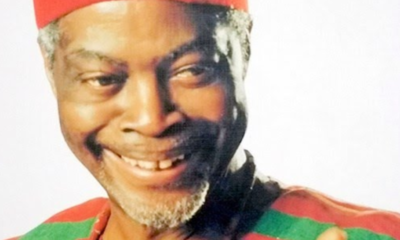
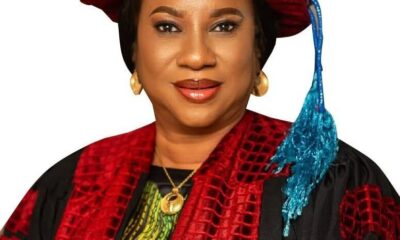
Onyeka Onwenu was one of Nigeria’s most beloved cultural figures. A singer, songwriter, actress, journalist, and activist whose voice and work moved people for decades. This detailed, fact-checked work remembers her early life, career, public service, final years, and legacy.

Onyeka Onwenu was a celebrated voice in Nigerian music industry. She was a woman whose life represented art, intellect, and public conscience. For decades, she stood at the crossroads of culture and activism, using song, storytelling, and media to reflect the hopes, struggles, and values of everyday Nigerians.
Known fondly as the Elegant Stallion, Onyeka carried herself with grace. Her message was often bold as it called for love, unity, accountability, and dignity in both private and public life.
From her early years in broadcasting to her rise as a music star in the 1980s, Onyeka Onwenu built a career that refused to stay in one lane. She recorded songs that became classics, acted in films that reached wide audiences, produced documentaries that challenged national thinking, and later stepped into public service with the same sense of purpose. Each phase of her life revealed a woman deeply committed to using her talent not just for fame, but for impact.
This article offers a carefully researched and fact-checked account of Onyeka Onwenu’s life and work. It traces her journey from childhood and education through her achievements in music, film, journalism, and advocacy, and bespeaks the legacy she left behind.
In remembering Onyeka Onwenu, we are not only looking back at a remarkable career but also honouring a life that helped to define Nigeria’s cultural and social landscape.
Onyeka Onyeka’s Early Life and Background

Onyeka Onwenu, popularly known as the Elegant Stallion was born on January 31, 1952 in Obosi in what was then the Eastern Region of Nigeria, and she hailed from Arondizuogu in Ideato North, Imo State in the south‑east of the country.
She was the youngest of five children born to Dixon Kanu (D.K.) Onwenu, a respected educationist and politician who represented Port Harcourt in the federal legislature in the 1950s. Tragically, her father died in a car accident when Onyeka was only four years old, just a week before he was to assume office as Nigeria’s Minister of Education. His early death left Onyeka’s widowed mother, Hope Onwenu to raise their children largely on her own.
Although born in Obosi, Onyeka grew up in Port Harcourt, Rivers State where she attended primary and secondary school before the outbreak of the Nigerian Civil War in 1967. After the war, she continued her education to abroad.
She earned a Bachelor of Arts degree in International Relations and Communication from Wellesley College in Massachusetts, USA, and later completed a Master of Arts in Media Studies from The New School for Social Research in New York.
Before returning to Nigeria, she also worked briefly as a tour guide for the United Nations in New York. In 1980, she came back home to serve in the National Youth Service Corps (NYSC) at the Nigerian Television Authority (NTA) in Lagos. That marked the beginning of her multifaceted career in media and public life.
Onyeka Onwenu’s early experiences, spanning growing up in a family forged by both tragedy and determination, receiving quality education at home and abroad, and working in international settings laid a strong foundation for her future roles as a broadcaster, musician, actress, and advocate for social causes.
Entry into Music and Media
Onyeka Onwenu’s professional journey began in broadcasting and journalism, long before she became known as one of Nigeria’s most loved musicians. After completing her education in the United States, she returned to Nigeria in 1980 to do her mandatory National Youth Service Corps (NYSC) at the Nigerian Television Authority (NTA) in Lagos. There, she quickly made a name for herself as an articulate and fearless reporter and television presenter and earned respect for her clarity, poise, and engagement with social issues.
Her work at NTA took a defining turn in 1984 when she wrote and presented Nigeria: A Squandering of Riches, a collaborative documentary between the BBC and NTA that examined corruption, the management of Nigeria’s oil wealth, and environmental degradation in the Niger Delta. The documentary received international attention and remains one of the most referenced works of Nigerian broadcast journalism. That work showcased her ability to use media, not just to inform but to challenge and provoke national reflection.
While building her broadcast and journalistic credentials, Onyeka Onwenu began to explore her talent in music. She released her first album, For the Love of You in 1981, even while still working with NTA. This debut marked her formal entry into the Nigerian music scene as it blended contemporary pop sounds with touches of soul and R&B that set her apart from many of her peers.
Her early success in music was closely linked with her visibility in media. As a broadcaster with national reach, she had an existing audience that embraced her transition into music. Her subsequent albums such as Endless Life and In the Morning Light helped to establish her reputation as a singer-songwriter capable of blending artistic expression with social messaging. This approach would become a hallmark of her music career.
Onyeka Onwenu’s move from national television to music was not a complete departure from her role as a communicator, rather, it was a natural extension. Her music often reflected the same commitment to issues she covered in journalism such as unity, health awareness, peace, respect for women’s rights, and national identity, and this helped her to build a broad and loyal following across Nigeria and beyond.
Through this mix of media and music, Onyeka Onwenu carved out a unique space in Nigeria’s cultural history which demonstrated that storytelling in all its forms, whether on television or through song could resonate deeply with the public and contribute to national discourse.
Music Career and Notable Works
Onyeka Onwenu’s music career began in the early 1980s while she was still working in television at the Nigerian Television Authority (NTA). She released her debut album, For the Love of You in 1981, a pop record that showcased her smooth voice and range and blended English and Igbo lyrics with contemporary production. This early entry into music marked the start of what would become a lifelong contribution to Nigerian song and culture.
Over the next decade, Onyeka Onwenu became one of Nigeria’s most popular musicians known for her ability to fuse Afropop, highlife, funk, and traditional sounds into music that was both commercially appealling and socially meaningful. Her second album, Endless Life was produced by the legendary Sonny Okosun and included interpretations of familiar songs like Walk Right Back which broadened her musical reach.
She followed this with In the Morning Light (1984) which was recorded in London, and featured songs like Masterplan penned by close collaborator Tyna Onwudiwe.
One of Onyeka Onwenu’s most enduring hits came with her 1986 release One Love, a song that became synonymous with messages of peace, love, and unity in Nigeria, especially at a time when the country was wrestling with social and political tensions. The chorus of the song, One love keeps us together became a refrain widely played on radio and at events across the nation.
Another standout track was You and I, a romantic ballad that mixed funk and jazz influences with lyrics in English, Igbo, and Nigerian Pidgin. The song’s emotional melody made it a favourite at celebrations and later led to its re‑recording for the 2001 Nigerian film Conspiracy in which Onyeka Onwenu also appeared.
Onyeka Onwenu’s catalogue also included music rooted in cultural identity and storytelling such as Ekwe which fused funk with Igbo folk elements, and Iyogogo, a heartfelt folk love song that has endured in popularity and was later interpolated in the hit Bank Alert by P‑Square.
Her versatility showed in both secular and spiritual songs. Tracks like Bia Nulu and Alleluya portrayed her turn toward gospel and spiritually‑themed music in the mid‑1990s when she shifted more of her focus to expressions of faith, hope, and resilience.
Onyeka also collaborated with other major Nigerian artists, such as King Sunny Ade on songs like Wait for Me and Choices which juju and pop styles brought together while addressing themes such as family planning and social wellbeing.
Across her decades‑long music career, Onyeka Onwenu remained a self‑penned songwriter, often using her music to speak about health, including HIV/AIDS awareness, peace, women’s rights, and the plight of children, making her work as meaningful as it was melodic.
Her contributions not only helped to define Nigerian pop music of the 1980s and 1990s but also left a lasting legacy in how music could reflect, challenge, and uplift society.
Acting, Broadcasting and Other Creative Pursuits
Onyeka Onwenu’s talents extended far beyond music which made her a true multi‑hyphenate in Nigeria’s creative and media landscape. Long before she became widely known for her songs, she had already begun to make a mark in broadcasting and journalism, platforms that helped to showcase her voice as both an artist and a public commentator.
Her media career took flight after she returned to Nigeria in 1980 and completed her National Youth Service Corps (NYSC) with the Nigerian Television Authority (NTA). At NTA, Onwenu worked as a newsreader and television presenter and captivated audiences with her clear delivery, poised presence, and thoughtful engagement with national issues.
She became well‑known for hosting television programmes such as Contact (1988) and Who’s On? (1993) on the NTA network, thus adding depth to her portfolio as a broadcaster.
One of her most significant early media achievements was the 1984 BBC/NTA documentary Nigeria: A Squandering of Riches which she both wrote and presented. The documentary explored the challenges of corruption, resource mismanagement, and environmental degradation in Nigeria, and gained international recognition for its incisive storytelling and national relevance.
This work demonstrated her ability to use journalism, not only to inform but also to provoke thoughtful public reflection.
Onyeka Onwenu’s creative pursuits naturally expanded into acting where she brought her charisma and depth to diverse roles in Nollywood. She began her acting career in the late 1990s, first starring in Zik Zulu Okafor’s film Nightmare in which she portrayed a childless woman who adopts an abandoned baby.
Over the years, she appeared in numerous notable Nigerian films. In 2005, she delivered an acclaimed performance in Women’s Cot, also known as Widow’s Cot, a film about women’s rights and resilience for which she won the Africa Movie Academy Award (AMAA) for Best Actress in a Supporting Role. That same year, she was nominated for Best Actress in a Leading Role for her performance in Rising Moon, a drama that went on to win multiple awards at the Africa Movie Academy Awards.
Onyeka Onwenu continued to take on meaningful roles in later years by appearing in the 2013 adaptation of Half of a Yellow Sun, a film based on Chimamanda Ngozi Adichie’s acclaimed novel and in Lionheart (2018), a Netflix feature directed by Genevieve Nnaji in which she played Abigail Obiagu, the matriarch of a family navigating business challenges.
Her role in Lionheart placed her alongside some of Nigeria’s most respected actors and helped to introduce her craft to international audiences.
She also acted in God Calling (2018), portraying the mother of one of the central characters in a Christian drama that explored themes of faith and redemption. Each of these roles highlighted her ability to bring strength and dignity to the characters she portrayed, enriching the stories of contemporary Nollywood cinema.
Beyond broadcasting, music, and acting, Onyeka Onwenu engaged in creative projects that bridged cultural expression and social advocacy. Her work across media, stage, and screen reflects a career that was not confined by a single form. Instead, she used every creative platform available to communicate, educate, and inspire.
Advocacy, Activism and Public Service
Onyeka Onwenu was both a gifted entertainer and passionate advocate for social justice, women’s rights, and community development throughout her life. Her commitment to using her voice, whether through media, music, or public office to address societal challenges made her one of Nigeria’s most respected cultural figures.
Her advocacy began early in her career when she used journalism and documentary filmmaking to confront social issues. Her 1984 BBC/NTA documentary Nigeria: A Squandering of Riches exposed corruption, environmental degradation, and economic mismanagement in Nigeria, earned international recognition and established her as a fearless social commentator. The documentary remains one of the most referenced critical media works in Nigerian broadcast history and was a demonstration of how she used her platform to speak truth to power.
Beyond journalism, Onyeka Onwenu’s music often carried strong social messages. Many of her songs addressed women’s rights, peace, health awareness, and unity, topics that were uncommon in Nigerian popular music at the time. Songs like One Love and Iyogogo became anthems not only for their melodies but also for their message of national harmony and cultural pride and using art to promote positive change.
In the year 2000, Onyeka Onwenu took her activism to a new level when she protested against the Nigerian Television Authority (NTA) over unpaid royalties for her music. When NTA allegedly used her song Iyogogo without payment, she staged a six‑day hunger strike outside the station, galvanizing public support and drawing attention to the broader issue of fair compensation for creative work in Nigeria until the dispute was resolved.
Onwenu also ventured into formal public service and political engagement. She was a member of the People’s Democratic Party (PDP) and twice contested for Local Council Chairman of Ideato North Local Government Area in Imo State.
Her dedication to cultural development and women’s empowerment was recognized through key appointments. Former Governor Ikedi Ohakim named her Chairperson of the Imo State Council for Arts and Culture where she supported artists and cultural initiatives.
On 16 September 2013, Onyeka Onwenu was appointed by then‑President Goodluck Jonathan as the Executive Director and Chief Executive Officer of the National Centre for Women Development (NCWD) in Abuja. In this role, she championed programmes to empower women, children, and vulnerable groups.
During her tenure, she helped to spotlight the plight of internally displaced persons (IDPs) in north‑eastern Nigeria and supported initiatives such as rehabilitation and reintegration programmes. She also promoted vocational training for women and helped to establish national observance of the International Day of the Girl Child.
Throughout her public service and activism, Onyeka Onwenu championed gender equality, cultural advancement, and social welfare by using every platform available, from music and film to government offices to push for a more just and inclusive society.
Her work in advocacy and public service broadened her impact beyond entertainment and left a legacy that continues to inspire emerging artists, activists, and public servants across Nigeria.
Awards, Recognition and Honours
Onyeka Onwenu received widespread recognition for her contributions to music, acting, and public service. She was awarded the Member of the Order of the Federal Republic (MFR), one of Nigeria’s highest national honours, in recognition of her outstanding achievements in the arts and culture.
In music, her albums and hit songs earned both critical acclaim and popular admiration, and she received numerous awards from cultural and media organizations. In acting, she won the Africa Movie Academy Award (AMAA) for Best Actress in a Supporting Role for her performance in Women’s Cot and received nominations for other roles, including Rising Moon.
Onwenu was also honoured for her advocacy work, particularly in advancing women’s rights and social development, including her leadership at the National Centre for Women Development (NCWD). These awards and recognitions reflected her multi-faceted impact as an entertainer, journalist, and public servant.
Personal Life
Onyeka Onwenu was known for maintaining a relatively private personal life, despite her high-profile career in music, film, and public service. She was married twice and had two sons whom she raised alone while balancing her demanding professional commitments.
She often spoke publicly about the importance of independence, dignity, and personal resilience. These values shaped both her career and her approach to family life. Onyeka Onwenu also credited her strong family foundation, particularly the guidance of her widowed mother after her father’s death as a major influence on her character and determination.
Beyond her immediate family, Onyeka Onwenu was actively involved in mentoring young artists and advocating for women’s empowerment. Her personal life reflected a balance of privacy, family commitment, and social engagement, thus making her a role model for many Nigerians.
Cultural Impact and Influence
Onyeka Onwenu left a lasting imprint on Nigerian music, film, and society. Her songs such as One Love, You and I, and Iyogogo became cultural anthems as it combined popular music with messages of peace, unity, and social consciousness. Through her music, she encouraged Nigerians to embrace their cultural identity and addressed social issues, setting a standard for artists who aim to combine entertainment with meaningful advocacy.
In film and broadcasting, she inspired a generation of female actors, musicians, and media professionals as she proved that women could excel in multiple creative fields while maintaining authenticity and integrity. Her work in documentaries, journalism, and advocacy also reinforced the idea that artists could play a constructive role in national discourse and influence public opinion and policy on issues such as women’s rights, children’s welfare, and national development.
Onyeka Onwenu’s influence still lives on today, with her music still played widely, her films studied and appreciated, and her public service remembered as a model of how art, media, and activism can intersect to shape society.
Final Years and Passing

Onyeka Onwenu remained active in music, film, and public engagements well into her later years. She continued to perform at events, mentor young artists, and advocate for social causes, and maintain her presence as a respected cultural icon and public figure.
On 30 July 2024, Onyeka Onwenu collapsed right after a performance at a private event in Lagos and was subsequently taken to a hospital where she passed away at the age of 72. Her death triggered national mourning, with tributes pouring in from fans, fellow artists, public officials, and organizations recognizing her contributions to music, acting, advocacy, and public service.
Her family honoured her wishes for a private burial, and many remembered her not only for her talent and achievements but also for her warmth, integrity, and dedication to societal progress. Onyeka Onwenu’s passing marked the end of a remarkable life that left a lasting legacy in Nigerian culture and public life.
Legacy and Lasting Memory
Onyeka Onwenu’s legacy extends far beyond her achievements in music and film. She is remembered as a trailblazing artist, a fearless journalist, and a dedicated public servant whose work inspired generations. Her songs continue to resonate with audiences because it was a mixture of entertainment with messages of peace, unity, and social responsibility.
Through her documentaries, journalism, and public service, particularly her leadership at the National Centre for Women Development (NCWD) she championed women’s rights, children’s welfare, and cultural advancement and set a benchmark for socially conscious artistry.
Onyeka Onwenu also served as a role model for aspiring musicians, actors, and media professionals by demonstrating that talent and advocacy can coexist. Today, her contributions are celebrated in Nigerian music, cinema, and civic life as a way of ensuring that her influence remains enduring and inspirational for future generations.
In Conclusion …
Onyeka Onwenu lived a life that seamlessly combined talent, advocacy, and public service. From her early days in broadcasting to her celebrated music career and impactful roles in film, she used every platform to inform, entertain, and inspire.
Beyond her artistic achievements, she remained committed to social causes, championing women’s rights, children’s welfare, and national unity through her work in media and public service.
Her passing on 30 July 2024 was a national mourning. However, her songs, films, and public contributions continue to resonate with audiences across Nigeria and beyond. Onyeka Onwenu’s life stands as a powerful example of how creativity, courage, and compassion can leave a lasting impact, thus ensuring that her legacy continues to inspire generations to come.
References
- https://en.wikipedia.org/wiki/Onyeka_Onwenu
- https://greatnigeria.net/celebrate-detail/onyeka-onwenu
- https://royalti.io/blog/celebrating-onyeka-onwenu-legacy-music-activism
- https://www.imdb.com/name/nm2416067/bio/
- https://www.vanguardngr.com/2024/08/onyeka-onwenu-finding-the-mystery-lover/
- https://www.reuters.com/world/africa/nigerian-singer-actress-onyeka-onwenu-dies-72-2024-07-31/
- https://punchng.com/tributes-as-music-icon-onyeka-onwenu-buried-in-lagos/
You might want to check this out …