

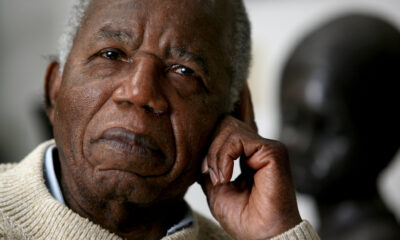




Biography
Stephanie Okereke Linus: Bio, Career, Humanitarian Impact

Stephanie Okereke Linus is a Nigerian actress, filmmaker and advocate. Read a verified, detailed profile of her early life, Nollywood career, major films including Dry, awards, humanitarian work with the Extended Hands Foundation, and other projects.

Stephanie Okereke Linus is one of the most influential figures in Nollywood today who is known not only for her talent as an actress and filmmaker but also for her strong voice in humanitarian work across Africa.
Over the years, Stephanie Okereke Linus has built a career that blends creativity with purpose. Her films highlight real social issues, especially those affecting women and girls while her foundation continues to support life-changing healthcare programmes.
This work explores her early life, rise in Nollywood, award winning projects, international recognitions and the powerful impact she has made through advocacy and community outreach. It offers a clear and verified picture of who Stephanie Okereke Linus is, what she stands for and why she remains a respected force in both entertainment and social development.
Stephanie Okereke Linus’ Early Life and Background
Stephanie Onyekachi Okereke, now Stephanie Onyekachi Okereke Linus was born on 2 October 1982 in Ngor Okpala, Imo State, Nigeria. She grew up in a close-knit family as the sixth child of Mary Okereke, a homemaker and Okereke Godwin who worked in the Nigerian Civil Aviation Authority. Her childhood in Imo State exposed her to a blend of cultural traditions, storytelling and community life.
Stephanie moved to Delta State for part of her upbringing and completed her secondary education at Federal Government Girls College, Owerri. She later gained admission into the University of Calabar where she studied English and Literary Studies. Her education strengthened her writing skills, improved her command of language and deepened her understanding of character development and storytelling techniques.
It was during her university years that Stephanie began to explore acting more seriously. She took part in small acting roles and stage activities which helped her to build confidence in front of the camera. Her blend of cultural exposure, strong academic background and early artistic experiences provided the foundation for the successful Nollywood career she would later build.
Entry into Nollywood
The journey of Stephanie Okereke Linus into Nollywood began when she was still quite young. Her first screen appearances came in 1997 when she featured in the films Compromise II and Waterloo. At the time, she was balancing early acting ambitions with her schooling.
After a brief pause to pursue education, Stephanie returned to acting. Her next notable role was in Terror directed by Teco Benson. That return helped to revive her presence in the industry and prepared the ground for her major breakthrough.
Her true breakout came in 2003 with the film Emotional Crack. The critical acclaim from Emotional Crack opened many doors. It became a launching pad that transformed Stephanie Okereke Linus from a hopeful young actress into a nationally recognized Nollywood star. From that point, she began to receive far more film offers and her career trajectory took off.
Rise to Fame

After her debut in 1997, Stephanie Okereke Linus steadily built momentum. By 2002, she had already gained public notice when she finished as first runner-up in the t Most Beautiful Girl in Nigeria (MBGN) beauty pageant.
Her breakthrough came in 2003 with the movie Emotional Crack. That film turned her into a household name and launched her into stardom. Her success with Emotional Crack was immediate and significant. She earned eight nominations for the film and won two awards – Best Actress (English) and Actress of the Year at the 2003 Reel Awards. The acclaim from that performance opened doors to many more acting roles and higher visibility.
Following her breakthrough, Stephanie Okereke Linus appeared in a variety of films that helped her build a broad and loyal fan base. Movies such as Private Sin, Pretender, Adora (shot in South Africa) and several others contributed to her growing reputation as a versatile and bankable actress.
By combining her acting talent with beauty and charisma, Stephanie became one of the most sought-after stars in the Nigerian film industry. Her success did not only come from a single film but from a steady build of performances that appealed to both critics and general audiences.
Gradually, her career expanded beyond acting. She attended film school abroad and began to explore writing, directing and producing. That would later lead her into roles as filmmaker and advocate. This evolution marked her transition from a popular actress to a creative force that defined her own projects.
Major Works and Filmography Highlights
Over more than two decades, Stephanie Okereke Linus has built a rich filmography both as a celebrated actress and as a filmmaker (director, writer, producer). Her acting career began in 1997 with films such as Compromise 2 and Waterloo. As she gained momentum, she appeared in many films in the early 2000s, including Pretender and Blind Justice (both 2002) among others.
2003 proved a landmark year for her career as she starred in several significant films such as Emotional Crack, Private Sin, Aristos, Genesis of Love, and Queen Sheba. These films contributed to establishing her reputation as a talented and versatile actress in Nollywood.
Stephanie did not limit herself to acting. After attending the New York Film Academy, she transitioned into writing, directing, and producing. Her debut as a director/writer/producer was Through the Glass (2008). In that film, she took on multiple roles – lead actress, script-writer, director, and producer. Through the Glass was well received such that it earned a nomination for Best Screenplay at the Africa Movie Academy Awards (AMAA) in 2009.
This bold move signalled her ambition not only to act but to shape stories and contribute more meaningfully to cinema.
One of her most important works is Dry (2014). In this film, Stephanie Okereke Linus again wore multiple hats. She wrote, directed, produced and starred in it. Dry tackles serious social issues relating to child marriage and maternal health, particlularly the problem of vesicovaginal fistula (VVF). The film gained wide attention for its bold storytelling and advocacy dimension. It helped to raise awareness beyond entertainment, contributing to conversations about women’s health and social justice.
Because of Dry, Stephanie expanded her role from actress to social-conscious filmmaker, using her art to push for change.
Beyond her directorial ventures, Stephanie Okereke Linus continued to act in commercially successful and popular films., including:
- Reloaded (2009), a romantic drama featuring a star-studded cast in which she played the character “Weyinmi”.
- Doctor Bello (2013), where she starred alongside both Nollywood and Hollywood actors, marking another important milestone in her career.
- More recently, she appeared in Clash (2021), a pan-African production which showed her continued relevance and adaptability in changing film landscapes.
According to several profiles, Stephanie Okereke Linus has featured in over 100 films across different decades.
Her body of work spans traditional Nollywood productions, socially conscious films, international collaborations, and directorial projects. This diversity speaks about her versatility and willingness to evolve.
Directing and Producing Career
Stephanie Okereke Linus expanded her career beyond acting by venturing into directing and producing to demonstrate a clear desire to tell stories with both artistic depth and social impact. Her interest in filmmaking was strengthened after she attended the New York Film Academy where she honed her skills in directing, screenwriting, and production management.
Her first significant directorial and producing project was Through the Glass (2008) in which she not only directed and produced but also starred as the lead actress. The film addressed complex social issues and showcased her ability to manage multiple roles in the filmmaking process. It earned recognition at the Africa Movie Academy Awards (AMAA) for Best Screenplay in 2009.
Stephanie’s directing style often emphasizes socially relevant themes, with strong female characters at the forefront. She uses her films as platforms to raise awareness about issues such as child marriage, maternal health, and women’s empowerment. This approach was fully realized in her acclaimed film Dry (2014) which she wrote, directed, produced, and starred in. Dry won several awards at both national and international film festivals and helped to cement her reputation as a filmmaker committed to advocacy through storytelling.
In addition to her personal projects, Stephanie Okereke Linus has been involved in mentoring young filmmakers and supporting film projects that highlight African narratives on a global stage. She often emphasizes authenticity, cultural relevance, and high production standards, helping to elevate Nollywood’s international profile.
Her career in directing and producing has demonstrated her versatility, creative vision, and commitment to using film as a tool for social change. Stephanie Okereke Linus remains one of the few Nigerian filmmakers who successfully combine entertainment, social advocacy, and international appeal in her work.
The Defining Project – Dry
One of the most significant milestones in Stephanie Okereke Linus’s career is the film Dry which she wrote, produced, directed, and starred in. Released in 2014, Dry tackles serious social issues affecting young girls and women, including child marriage and vesicovaginal fistula (VVF), a debilitating childbirth injury common in parts of Nigeria and other developing countries.
The film follows the story of a young girl forced into early marriage, exploring the physical and emotional trauma she experiences and the societal challenges that allow such practices to persist. Dry was praised for its sensitive storytelling, authentic portrayal of the issues, and compelling performances, particularly Stephanie’s lead role.
Dry earned multiple awards and nominations at both local and international platforms:
- Africa Magic Viewers’ Choice Awards (AMVCA): Dry won awards for Best Overall Movie and Best Movie in West Africa (Drama).
- Africa Movie Academy Awards (AMAA): The film received nominations for Best Director, Best Film, and Best Screenplay. That further established Stephanie’s credibility as a filmmaker.
- International Film Festivals: Dry was screened at several festivals across the UK, USA, and Africa, drawing global attention to issues of maternal health and child protection.
Beyond entertainment, Dry served as an advocacy tool. The film brought attention to the public health crisis of VVF and the practice of child marriage in Nigeria. Stephanie’s partnership with organizations such as UNFPA and UN Women amplified the message and encouraged discussions on maternal healthcare, policy reforms, and community education programs.
By merging artistry with activism, Dry cemented Stephanie Okereke Linus’s reputation as a filmmaker committed to social change. The film exemplifies how cinema can influence public opinion, inspire advocacy, and contribute to real-life interventions in women’s health.
Awards and Recognitions
Stephanie Okereke Linus has received wide recognition for her talent in acting, directing, and producing as well as for her humanitarian work. Her awards and honours span national, continental, and international platforms as a reflection of both her artistic achievements and her social impact.
In 2011, Stephanie was conferred with the Member of the Order of the Federal Republic (MFR) by the Nigerian government. This prestigious national honour recognized her outstanding contribution to Nollywood and her role as a humanitarian and advocate for women’s rights.
Stephanie Okereke Linus has earned several nominations and wins at the Africa Movie Academy Awards (AMAA), one of Africa’s most respected film award platforms:
In 2009, she was nominated for Best Screenplay for her debut film Through the Glass. Between 2014 and 2015, her film Dry received multiple nominations, including Best Film, Best Director, and Best Screenplay which highlighted her talents beyond acting.
In 2016, Dry won awards for Best Overall Movie and Best Movie in West Africa (Drama). These accolades recognized Stephanie’s excellence in combining artistry with social advocacy.
Apart from these local awards and recognition, Stephanie has been acknowledged by several international film festivals for Dry and her other projects which were screened in the UK, USA, and across Africa which highlight her global influence as a filmmaker.
Her contributions to social causes, particularly maternal health and the fight against child marriage have earned her recognition from NGOs and advocacy groups, including partnerships with UNFPA and UN Women.
These awards reflect Stephanie’s dual impact, namely, her artistic excellence in Nollywood and her dedication to humanitarian causes. From acting accolades to national honours, she remains one of Nigeria’s most respected and influential cultural figures who is an inspiration to upcoming actors and filmmakers.
Humanitarian Work and Advocacy
Stephanie Okereke Linus is widely recognized, not just for her contributions to Nollywood but also for her commitment to humanitarian causes, especially in the areas of women’s health, maternal care, and child advocacy.
In 2010, she founded the Extended Hands Foundation (EHF), a non-profit organization aimed at supporting vulnerable women and children in Nigeria. The Foundation primarily focuses on:
Vesicovaginal Fistula (VVF) surgeries: The Foundation sponsors corrective surgeries for women suffering from VVF, a childbirth injury that often results in social stigma and isolation. The Foundation has facilitated numerous surgeries across Kebbi, Cross River, and other Nigerian States.
Advocacy against child marriage: Through films like Dry and public campaigns, Stephanie raises awareness of early marriage and its negative impact on girls’ health and education.
Maternal and reproductive health education: EHF organizes workshops and outreach programmes to educate women and communities about safe pregnancy practices, family planning, and reproductive rights.
Stephanie has collaborated with international organizations, including UNFPA and UN Women to enhance the reach and effectiveness of her advocacy. Through these partnerships, her campaigns have gained international visibility and have brought attention to maternal health issues and the plight of young girls in Nigeria.
Personal Life
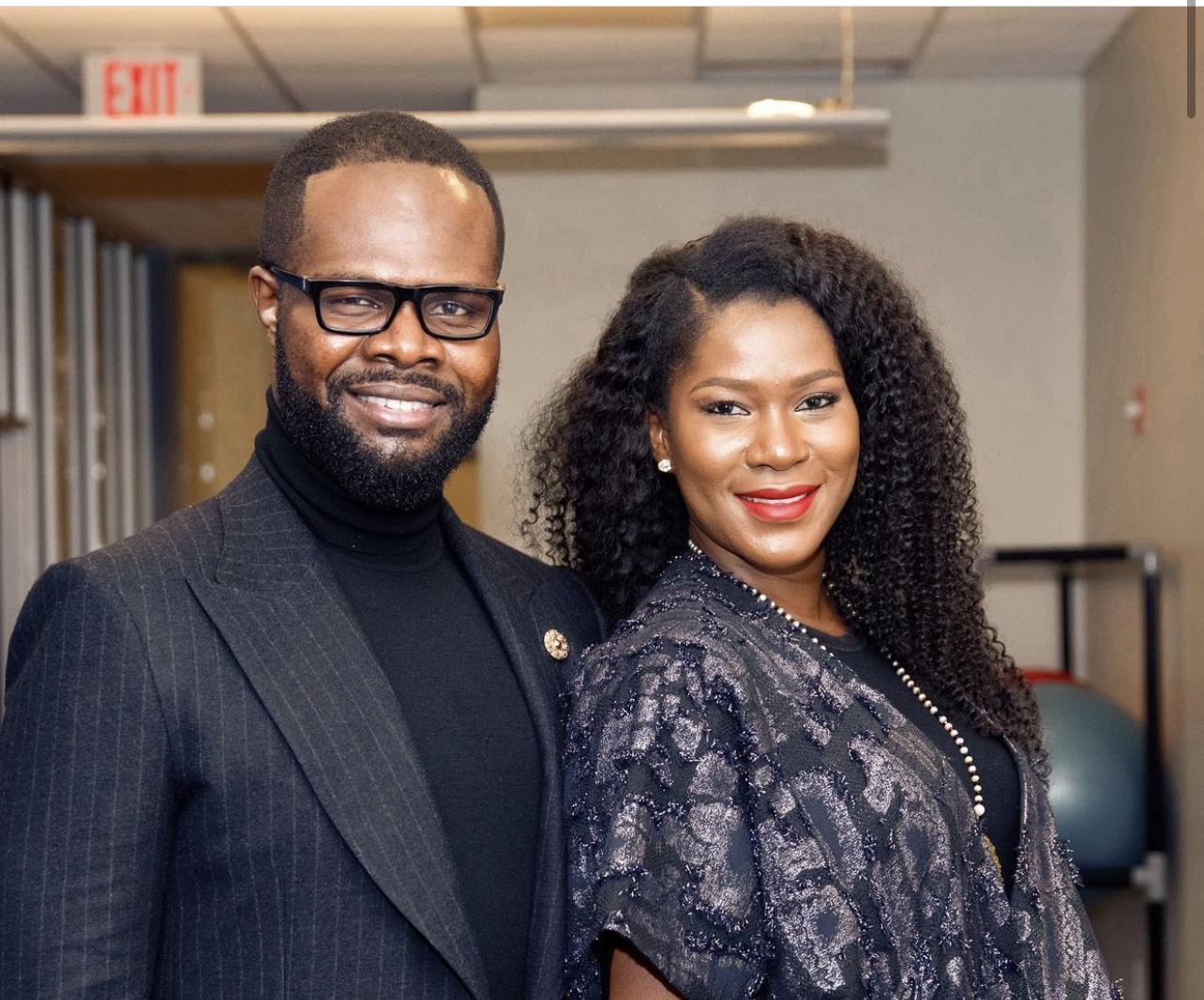
Personal Life
Stephanie Okereke Linus is a celebrated actress, filmmaker, devoted mother and public figure whose personal life has been marked by both challenges and triumphs.
Before her marriage to Linus Idahosa, Stephanie was briefly married to a Nigerian footballer, Chikelue Iloanusi but the marriage ended in divorce. Details of this period remain private because of her preference to keep personal matters out of the public eye.
Several years ago, Stephanie Okereke Linus survived a serious motor accident several years ago which affected her leg and required medical attention and rehabilitation. Despite this challenge, she demonstrated resilience, returning to work and continuing her film and humanitarian activities without allowing the incident to slow her down.
On 21 April 2012, Stephanie married Linus Idahosa, a Nigerian entrepreneur, in a private ceremony in France. The couple has two children and maintains a family life that balances privacy with public engagements. Stephanie often shares glimpses of her family life on social media, reflecting a blend of modern family values and cultural heritage.
In addition to her family life, Stephanie Okereke Linus continues to pursue her professional and humanitarian endeavours. She often credits her family for providing support and inspiration in her creative projects and advocacy work. Her personal life also reflects her commitment to continuous learning, having studied English and Literary Studies at the University of Calabar and later attending the New York Film Academy to develop her filmmaking skills.
Legacy and Influence
Stephanie Okereke Linus has built a lasting legacy in both Nollywood and social advocacy, making her one of the most respected figures in contemporary African cinema. Her influence spans acting, filmmaking, mentorship, and humanitarian work, and leaves a mark on audiences, colleagues, and the next generation of creatives.
She is widely credited with helping to elevate Nollywood standards through her commitment to quality storytelling and socially relevant films. By producing and directing works such as Through the Glass and Dry, she demonstrated that Nollywood films can combine entertainment with advocacy, thus inspiring other filmmakers to tackle pressing social issues through storytelling.
Her dedication to professionalism, versatility, and continuous learning has set a benchmark for aspiring actors and filmmakers. Stephanie’s ability to balance acting, directing, producing, and humanitarian work has made her a role model for young creatives, especially women in an industry where leadership opportunities behind the camera are limited.
Through her Extended Hands Foundation and films addressing social issues, Stephanie has influenced public discourse on maternal health, child marriage, and women’s rights in Nigeria and across Africa. Her work demonstrates the power of celebrity activism, a demonstration of how public figures can use their platforms to create tangible social change.
Stephanie Okereke Linus also invests in mentoring young actors and filmmakers, encouraging professionalism, creativity, and social consciousness. Her emphasis on education, skill development, and ethical storytelling has influenced a generation of Nigerian creatives to aspire to global standards while maintaining cultural authenticity.
Her films have been screened at international film festivals, and she has collaborated with global organizations such as UNFPA and UN Women to further extend her influence beyond Nigeria. Her work has helped Nollywood to gain visibility and credibility on the world stage, thus highlighting African narratives to international audiences.
In Conclusion…
Stephanie Okereke Linus stands as a remarkable figure in Nollywood and beyond that combines talent, creativity, and purpose. From her early acting days to her award-winning roles, from her directorial projects to the socially impactful film, she has consistently demonstrated versatility and dedication. Beyond entertainment, her humanitarian efforts through the Extended Hands Foundation highlight her commitment to women’s health, child advocacy, and social change.
Her journey reflects the power of determination, skill, and vision. Stephanie Okereke Linus has influenced Nollywood’s growth and international recognition, and has also inspired countless young actors, filmmakers, and activists. Her legacy is one of artistry intertwined with advocacy, a demonstration that cinema and celebrity can be leveraged to effect meaningful change.
Stephanie Okereke Linus remains a trailblazer, role model, and influential voice whose contributions continue to define the future of African cinema and humanitarian work.
References
- https://en.wikipedia.org/wiki/Stephanie_Okereke_Linus
- https://stephanielinus.com/bio/
- https://biography.igbopeople.org/biography/stephanie-okereke-linus/
- https://www.uyomoneygist.com/2025/01/10/stephanie-okereke-biography-age-origin-husbands-and-net-worth/
- https://pcm.wikipedia.org/wiki/Stephanie_Okereke_Linus
- https://accessnollywood.net/news/biography/biography-of-stephanie-okereke-/85/
- https://www.nigeriaa2z.com/2012/05/10/stephanie-okereke/
- https://www.prnewswire.com/news-releases/a-list-nollywood-actress-stephanie-okereke-linus-builds-global-film-brand-while-giving-back-to-society-184922721.html
- https://www.modernghana.com/nollywood/952/stephanie-okereke.html
- https://www.nyfa.edu/film-school-blog/film-school-student-stephanie-okereke-in-the-news/
- https://www.ghanamma.com/2009/10/17/biography-stephanie-okereke/
- https://www.nollymeter.com/actor/271
You might want to check this out …