


African Culture and Traditions
Umu-Okpu in Igbo Culture: The Case of Nnewi

Learn the meaning of Umu-Okpu in Igbo culture, with the practice in Nnewi as a case study; how the institution works; its roles in ritual and social life; membership and meetings; modern adaptations; and why it still matters today.

In Nnewi society, just like in many other communities in Anambra State and Igboland, the institution of Umu-Okpu represents one of the most respected pillars of Igbo tradition. The term Umu-Okpu refers to women who were born into a particular kindred or lineage but are married to other communities.
Though they have moved to their husbands’ homes, their bond with their father’s lineage remains strong and sacred. They are seen as the daughters of the soil whose roots cannot be erased, no matter where marriage takes them.
Among Nnewi people, Umu-Okpu occupy a special social and cultural status. They serve as moral voices, peacebuilders and protectors of their kindred’s integrity. Their role extends beyond family gatherings or ceremonies. They are deeply involved in resolving disputes, maintaining peace and safeguarding ancestral inheritance. When a conflict arises within the kindred, the intervention of Umu-Okpu often brings calm and fairness, as their position allows them to speak without bias or personal gain.
The institution of Umu-Okpu is guided by strong values of respect, unity and truth. These women are revered not only for their wisdom but also for their courage to stand for justice within their natal homes. Their gatherings are marked by rituals, songs and traditions that connect them to their ancestral homes and reinforce their commitment to their families’ heritage.
In Nnewi today, despite the influence of modernity, Umu-Okpu remain a vital part of the community’s traditional governance system. They play visible roles in social events, traditional marriage ceremonies, land matters and even in the moral upbringing of younger generations. Their continued relevance shows how traditional institutions can adapt and thrive even in changing times.
This article explores the concept of Umu-Okpu in Nnewi, tracing its origin, functions and evolution. It examines how these women have maintained their cultural roles while embracing modern realities.
Through their stories and enduring presence, Umu-Okpu remain a reminder of the unbreakable bond between identity, duty and belonging.
The Meaning of Umu-Okpu
To understand what or who Umu-Okpu are, it helps to look at the meaning of the term itself. In Igbo language, Umu means “children” or “descendants,” while Okpu refers to “maiden” or “daughter.” Together, Umu-Okpu simply means “the daughters of a family/kindred/lineage.” In singular term, that is for a married daughter, it is “Nwa-Okpu”.
In Nnewi, this term describes women who were born into a particular kindred or village but are married, whether within or outside the community. Even after marriage, they remain forever recognized as daughters of their fathers’ houses.
The idea behind Umu-Okpu is rooted in belonging and continuity. A woman may leave her father’s compound to live with her husband, but she never loses her identity or rights in her natal home. Her birth ties her to her father’s house, ancestors and lineage, and this connection is lifelong. Because of this, she has both the privilege and responsibility to contribute to the family’s affairs whenever the need arises.
In simple terms, Umu-Okpu are daughters who act as bridges between families and communities. They are valued not just for being born into the lineage but for the role they play in keeping peace, unity and respect among their people. Their opinions matter during family meetings, land discussions and traditional events. They are often the first to intervene when misunderstandings arise, using their respected status to calm tensions and promote reconciliation.
Among Nnewi people, Umu-Okpu are seen as daughters who never truly leave home. Their presence in family matters reminds everyone that a daughter’s bond with her birthplace does not end with marriage. This enduring relationship gives Umu-Okpu both emotional and cultural importance. They symbolize love, loyalty and the unbroken link between a person’s origin and identity.
In everyday life, when Nnewi people refer to Umu-Okpu, they are speaking of women who carry both affection and authority. These are the daughters whose blessings are sought before major decisions, whose songs and prayers bring healing during conflicts and whose return to their father’s compound is always welcomed with respect. Through them, the spirit of kinship stays alive across generations.
Brief History and Origin of Umu-Okpu in Nnewi

The history of Umu-Okpu in Nnewi can be traced to ancient Igbo customs that placed great value on kinship, identity and ancestry. In traditional Igbo society, belonging to a lineage was not just a matter of birth but a sacred bond that carried both privilege and responsibility.
Women, though they married into other families, were never considered strangers to their father’s houses. This belief gave rise to the institution of Umu-Okpu as a collective identity for all daughters of a kindred who had married outside it but remained spiritually and socially connected to their roots.
In the early days of Nnewi, as the town evolved into a complex society with multiple villages and extended family systems, Umu-Okpu began to play an important role in preserving family harmony. They were recognized as a neutral and respected group that could intervene in conflicts without bias. This was because they had no direct stake in inheritance or land ownership in their father’s house. Yet, they cared deeply about their family’s honour and peace. Their opinions were valued and their involvement was seen as a blessing from the ancestors.
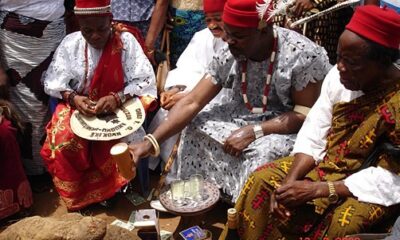
Traditionally, Umu-Okpu had specific rituals and gatherings that reaffirmed their identity as daughters of the lineage. They visited their natal homes during major festivals, burials, marriages and family meetings. During such occasions, they dressed in traditional attire and performed songs and dances that celebrated unity and kinship. These gatherings were not only social events but also cultural acts that renewed their connection to their ancestral homes.
Over time, the role of Umu-Okpu expanded beyond family boundaries. In Nnewi, they began to serve as mediators between families, custodians of moral values and advisers in community matters. Their influence was felt in matters of reconciliation, inheritance disputes, and even in the installation of traditional leaders. Their presence symbolized continuity and a reminder that daughters are the heart of every family and their voices must never be silenced.
Even today, the historical roots of Umu-Okpu remain visible in the cultural life of Nnewi. Although modernity has changed how families interact and how traditions are observed, Umu-Okpu continue to uphold the same principles that defined their ancestors, namely, loyalty, unity, justice and the eternal bond between a daughter and her father’s home.
The Operations of Umu-Okpu in Nnewi Today
In contemporary Nnewi, Umu-Okpu continue to play vital roles that connect tradition with modern community life. Although society has evolved and many aspects of daily living have changed, their values and responsibilities remain relevant. Their operations are guided by the same principles of peace, unity and moral leadership that have defined them for generations.
Umu-Okpu in Nnewi are organized along family, kindred and village lines. Each kindred has its own group of daughters who meet regularly to discuss issues affecting their families and the larger community. These meetings may take place during festive seasons, family ceremonies, or when a conflict requires their attention. During such gatherings, they speak as one voice as they offer advice, resolve disputes and promote harmony.
When a serious disagreement arises within a kindred, they are often called upon to intervene. Their approach to conflict resolution is deeply rooted in fairness and empathy. They listen to all sides, encourage reconciliation and remind everyone of the shared bond of blood and ancestry. Because they are daughters and not direct inheritors of land, their neutrality gives them moral authority in matters that might otherwise divide the family.
Apart from conflict resolution, Umu-Okpu also participate actively in cultural and social events. They play significant roles during traditional marriage ceremonies, burial rites and festivals. Their presence adds prestige and legitimacy to these occasions. In some cases, their blessings are considered essential for a successful event. They also use these gatherings to remind younger generations of the importance of respect, responsibility and communal living.
In modern times, Umu-Okpu have extended their influence beyond traditional boundaries. Many of them are educated and hold positions of leadership in business, religion and politics. Despite their modern lifestyles, they remain committed to their cultural duties. Some Umu-Okpu groups have formed associations that engage in community development projects such as helping widows, supporting education and contributing to local infrastructure.
Their ability to balance tradition with modernity shows the resilience of the institution in Nnewi. They are not just custodians of culture but also agents of progress. Their continued involvement in family and community affairs keeps the values of kinship, unity and integrity alive.
Through their actions, they demonstrate that being a daughter of Nnewi is not just a birthright but a lifelong commitment to peace, service and the preservation of heritage.
Membership and Organizational Structure of Umu-Okpu in Nnewi
In Nnewi, membership of Umu-Okpu from a lineage is based strictly on birth and family ties. Every woman born into a particular kindred automatically belongs to that group as soon she gets married traditionally, regardless of where she resides after marriage. The bond is lifelong and cannot be broken by distance or circumstance. Even if a woman marries outside Nnewi or relocates abroad, she remains part of her father’s lineage and can participate in activities or decision-making whenever she returns home.
To ensure proper coordination, the married daughters of each kindred are organized into structured groups. Each family unit has its own circle of daughters which collectively forms the larger kindred body. These groups often meet during major cultural or family events, and their activities are overseen by designated leaders chosen from among them. Leadership is usually based on seniority, wisdom and the ability to command respect. In some cases, the oldest or most respected woman in the group serves as the chairperson or spokesperson.
Meetings are held to discuss family matters, plan visits and handle issues requiring their input. The gatherings are marked by traditional greetings, prayers and symbolic gestures that reaffirm unity and shared ancestry. Decisions are made collectively, and every member’s opinion is valued, regardless of her social or economic status. This inclusiveness strengthens their sense of belonging and responsibility to their lineage.
Membership also comes with certain expectations. They are expected to uphold the values of respect, honesty and peace. They must act as moral examples, helping to prevent conflicts and ensuring that family members maintain good conduct. When they visit their father’s homes, they are treated with respect and offered traditional hospitality, as their presence symbolizes blessings and goodwill.
In many parts of Nnewi, Umu-Okpu have adopted modern organizational methods. Some have executives, financial records and welfare committees that support members during times of need such as illness, childbirth or bereavement. Others contribute to development projects in their kindreds, helping to fund community halls, scholarships and healthcare programmes.
The structure of these groups reflects the deep respect Nnewi people have for order and collective responsibility. It ensures that every married daughter remains connected to her roots while contributing to the growth and stability of her extended family. This blend of tradition and organization keeps the institution strong and relevant, even in today’s world.
The Impact of Urbanization and Modern Life on Umu-Okpu in Nnewi
Over the years, urbanization and modern lifestyles have brought significant changes to the way Umu-Okpu function and relate to their ancestral homes. Migration, education and exposure to new ideas have reshaped their roles, interactions, and even the way they express their identity. Yet, despite these changes, their importance within the family and community structure remains strong.
In the past, most of these women lived close to their natal homes and were easily available to attend meetings, resolve disputes or participate in ceremonies. Today, many live in cities across Nigeria and abroad. This shift has made physical participation in family affairs more challenging.
However, modern communication tools like mobile phones, WhatsApp and social media have made it possible for them to remain connected. Meetings are sometimes planned around festive seasons or major events when many daughters return home, allowing them to reconnect and fulfill their duties.
Education and professional exposure have also influenced their outlook. Many of the members of Umu-Okpu now hold degrees, run businesses, or occupy positions of authority in different sectors. This exposure has strengthened their confidence and expanded their influence within the community. Their contributions now extend beyond traditional roles to include leadership in development projects, charity initiatives and advocacy for women’s rights and education.
Urban life has also introduced changes in their appearance and lifestyle. In the past, gatherings were marked by traditional attire and rituals. But today, many combine modern fashion with cultural symbols. The songs and dances that once defined their meetings are sometimes replaced with shorter, more flexible forms of celebration that fit into busy schedules. Nevertheless, the core values of unity, respect and responsibility remain unchanged.
Another noticeable effect of modern life on the concept of Umu-Okpu is the way younger generations of daughters view their identity. Some raised in cities or abroad may have limited understanding of traditional customs. To address this, many groups have started mentorship programmes where older women educate younger ones about family history, ancestral values and the importance of maintaining ties with their roots. This has helped to preserve the essence of the institution despite changing times.
In essence, urbanization has not weakened the bond between these women and their father’s homes. It has simply transformed how that bond is expressed. Through adaptability and innovation, they continue to uphold their heritage while embracing the realities of modern living. Their ability to evolve while staying connected to tradition is a testament to their resilience and the enduring relevance of the Nnewi spirit.
A Glimpse into the Practice of Umu-Okpu in Nnewi

To understand how this tradition functions in everyday life, it helps to look closely at how Umu-Okpu operate in one of Nnewi’s villages. Each of the four quarters – Otolo, Uruagu, Umudim, and Nnewichi has well-organized Umu-Okpu along families/kindreds/lineages that embody the customs and values passed down through generations. These groups, though similar in purpose, may differ slightly in organization or customs, depending on the history and traditions of each setting.
In a typical Nnewi village, Umu-Okpu is a recognized body that works hand in hand with other community structures such as Umunna and women’s organizations. They meet periodically to discuss matters affecting their families and the community at large. Their meetings are often held in a member’s natal compound or the kindred Obi, and they begin with prayers, traditional greetings and libations to the ancestors.
For instance, in Otolo Nnewi, the Umu-Okpu of a particular kindred came together to resolve a long-standing boundary dispute between two brothers. The brothers had quarreled for years, and the matter could not be settled peacefully. When their Umu-Okpu intervened, they called both men, listened to their sides and reminded them of their shared blood and family name.
Out of respect for them, the brothers, eventually agreed to reconcile. The Umu-Okpu then marked the occasion with songs of unity and thanksgiving. This incident reflects how their influence brings peace where there was once conflict.
Another example is traced to Uruagu where the daughters have taken on a developmental role by raising funds to renovate their kindred’s community hall. Despite living in different cities, they contributed financially and returned home for the inauguration ceremony. Their collective effort demonstrated how the institution has adapted to modern realities without losing its communal spirit.
Similarly, Umu-Okpu play a vital role during major cultural events like the Iri Ji. They arrive dressed in colourful traditional attire, sing songs and offer symbolic gifts to the elders. Their participation is both a show of loyalty to their roots and an affirmation of their place in the cultural life of the community.
These examples from different quarters of Nnewi show that the concept of Umu-Okpu is not merely symbolic but deeply practical. Whether settling disputes, promoting development or strengthening cultural bonds, they continue to prove that a daughter never stops being a part of her father’s house. Their involvement keeps families united and ensures that the values of peace, respect and community service endure across generations.
Clearing Common Misconceptions About Umu-Okpu in Nnewi
Over time, several misconceptions have arisen about the role and identity of Umu-Okpu in Nnewi. These misunderstandings often come from people who are not fully aware of the depth of their cultural and social importance. Clearing up these misconceptions helps to better appreciate the wisdom behind the institution and the reasons it remains respected in Nnewi society.
One common misunderstanding is that daughters have no real power or influence since they do not inherit family land. In reality, their strength lies not in ownership but in moral authority. They command deep respect because their voices carry truth, fairness and ancestral backing. Their neutrality in land and inheritance matters makes them trusted mediators whose decisions are often accepted by all sides.
Another misconception is that the group is mainly ceremonial, that is, it is only active during marriages, burials or festivals. While they do play visible roles in such events, their responsibilities go much deeper. They engage in conflict resolution, moral guidance and even community development. In many parts of Nnewi, they are key contributors to social projects and welfare initiatives, proving that their influence extends beyond traditional ceremonies.
Some people also assume that the institution belongs only to older women. This is not true. Every woman born into a family is part of the group, regardless of age. The older members usually lead and mentor the younger ones, ensuring that knowledge and traditions are passed down. Younger women are encouraged to participate actively, learn the customs and understand their role in sustaining family harmony.
There is also a mistaken belief that these women are in opposition to their brothers or the Umunna. On the contrary, Umu-Okpu and Umunna often work hand in hand. Each has its place in maintaining balance within the family system. The daughters’ role complements that of their brothers, especially in promoting peace and protecting the family’s reputation. When the two groups collaborate, conflicts are resolved more quickly, and unity is strengthened.
Lastly, some modern observers think the institution is outdated in today’s world. Yet, its continued relevance in Nnewi proves otherwise. The daughters have adapted to modern life while keeping their traditions alive. Many now combine cultural duties with professional achievements and community service. This blend of tradition and progress is one of the reasons the institution continues to thrive.
By clearing these misunderstandings, it becomes obvious that Umu-Okpu in Nnewi are not a passive or symbolic group but an active and respected force for unity, justice and cultural preservation. Their presence ensures that no matter how much society changes, the values of peace, kinship and mutual respect remain at the heart of the community.
Emergence of City and Diaspora Branches of Umu-Okpu Nnewi

In recent years, a new and remarkable development has emerged among the married daughters of Nnewi. As many of them have moved to cities across Nigeria and abroad, they have begun to organize themselves under a broader, unified identity known as Umu-Okpu Nnewi. This modern arrangement brings together married daughters from all four quarters of Nnewi – Otolo, Uruagu, Umudim, and Nnewichi, regardless of their specific kindreds or family backgrounds. The aim is to maintain unity, strengthen their cultural ties and support one another even while living far from home.
These associations have become popular in major Nigerian cities such as Lagos, Abuja, Enugu, and Port Harcourt, as well as in international locations like Houston in the United States and London in the United Kingdom. The most notable examples are Umu-Okpu Nnewi Lagos and Umu-Okpu Nnewi Houston, which have grown into well-organized bodies with leadership structures, regular meetings, welfare programmes, and community outreach initiatives.
In Lagos, for instance, Umu-Okpu Nnewi holds monthly or quarterly meetings where members discuss family matters, cultural activities, and ways to assist their hometown. They also use these gatherings to provide mutual support, celebrating births, marriages and career milestones, while also standing by one another during times of loss or hardship. The group frequently contributes to developmental projects in Nnewi, such as donations to hospitals, schools, and community centers.
Similarly, the Umu-Okpu Nnewi Houston branch serves as a vibrant cultural link for Nnewi married daughters living in the diaspora. Members come together to celebrate traditional festivals, teach their children about Nnewi values, and offer support to one another in a foreign land. Through cultural events, charity drives, and mentorship programs, they have become ambassadors of Nnewi heritage abroad. Their gatherings often feature traditional songs, prayers, and symbolic sharing of kola nuts — a reminder that even far from home, their ancestral identity remains alive.
These city and diaspora branches have also become platforms for empowerment and social impact. Many members are professionals, business owners, and community leaders who use their networks to mentor younger women and support charitable causes. They sponsor educational programmes, empower widows and single mothers and raise awareness about health and wellbeing. Their sense of unity and purpose reflects the resilience of Nnewi women and their ability to adapt tradition to modern realities.
What makes this development truly remarkable is how it blends the old and the new. The traditional spirit of Umu-Okpu demonstrated in sisterhood, respect, service and cultural pride is now expressed through modern organization and global networking. Whether in Nnewi, Lagos, or Houston, these women remain bonded by their shared heritage. They continue to uphold the same values that defined their ancestors while embracing the opportunities of contemporary life.
The rise of these new branches shows that being a daughter of Nnewi is not confined by geography. It is a lifelong identity that transcends borders, uniting women across the world in service to their community and in celebration of who they are.
The Enduring Relevance of Umu-Okpu in Nnewi
In today’s fast-changing world where many cultural values are being replaced by modern lifestyles, the continued importance of Umu-Okpu in Nnewi cannot be overlooked. Beyond their traditional duties, they still play a vital role in maintaining social balance, cultural continuity and moral strength within the community.
They continue to act as custodians of family honour and advocates of justice and peace. In situations where conflicts arise within families or between kindreds, their calm reasoning and respected position often bring quick and lasting resolution. Their involvement in conflict mediation has helped prevent feuds and prolonged disagreements that could have divided families or communities.
They also serve as a bridge between the old and new generations. Through their meetings, cultural events and charitable projects, they pass on ancestral values to younger women, encouraging them to uphold respect, humility and responsibility. This mentorship role keeps traditional values alive even among younger Nnewi women who live in cities or abroad.
Moreover, Umu-Okpu remain a strong force in promoting social welfare. Whether contributing funds to assist a widow, supporting a community project or rallying around families in mourning, their collective empathy strengthens the spirit of unity that defines Nnewi society. Their ability to come together across marital, economic and social differences demonstrates the enduring power of kinship and shared heritage.
Essentially, Umu-Okpu matter today because they help to preserve the moral fabric of Nnewi. They remind the community that progress should never mean abandoning one’s roots. Through their continued presence and service, they embody the timeless truth that a people who remember where they come from will always know where they are going.
In Conclusion…
The practice of Umu-Okpu in Nnewi is a representation of resilience, identity and enduring sisterhood. From their ancient roots as the moral guardians and peacekeepers of their kindreds to their modern expressions as organized associations in cities and abroad, these married daughters of Nnewi have continued to uphold the values that define their community.
In an age when traditional institutions are fading, Umu-Okpu stand as a reminder that culture can evolve without losing its soul. Their transformation from village-based custodians of family honour to global ambassadors of Nnewi heritage shows how tradition can thrive alongside modernity. Whether mediating disputes at home, contributing to development projects, or fostering unity among themselves in Lagos, Houston, or beyond, their collective strength continues to inspire.
The challenges of urbanization, cultural change and global migration have not weakened their bond. Instead, they have encouraged them to redefine their roles, embracing new platforms and broader networks while staying true to their ancestral identity.
Ultimately, the continued relevance of Umu-Okpu in Nnewi reflects the enduring wisdom of Igbo society that daughters are not just born into families, but into responsibilities to nurture peace, preserve heritage and strengthen the ties that hold a people together.
This is a testament to the timeless power of womanhood rooted in culture, love and community spirit.
References
- https://www.vanguardngr.com/2021/03/why-umuada-is-powerful-and-respected-in-igbo-land/
- https://discover.hubpages.com/relationships/Umu-Okpu-In-Igbo-Sociopolitical-Group
- https://otu-umuokpuhouston.org/
- https://ngcheck.com/indigenous-umuokpu-nnewi-concept/
- https://www.e-asianwomen.org/Synapse/Data/PDFData/0274AW/aw-34-1-85.pdf
- https://artbyrewa.com/umuada
- https://punchng.com/umuada-how-igbo-lands-powerful-sisterhood-terrifies-women-silences-men-ii/
- https://umuokpunnewihouston.org/
- https://ozikoro.com/the-vital-role-of-umu-ada-and-umu-okpu-in-igbo-society/
You might want to check this out…