African Culture and Traditions
Understanding the Concept of Nwadiani || The Beloved Children of Married Daughters in Igbo Land

Nwadiani in Igbo land is simply used to refer the children of married daughters who are usually loved, honoured, yet set apart in a unique way. This essay explores the meaning, place, customs, and changing roles in modern Igbo society.

In every culture, there are words that carry more than their direct meaning — they carry emotions, memories, and entire worldviews. Among the Igbo people of southeastern Nigeria, one such word is “Nwadiani.” To an outsider, it may sound like just another family title. But to the Igbo, Nwadiani is a deeply meaningful concept that captures the delicate bond between a family and the children of its married daughters.
To call someone Nwadiani is to acknowledge a special kind of love — one that is full of warmth, pride, and protection, yet framed by tradition and boundaries. It expresses how the Igbo people view relationships through both blood and belonging. It tells the story of how affection flows across generations, even when lineage follows the father’s line.
The concept of Nwadiani sits quietly at the heart of Igbo family life, reminding us that kinship is more than inheritance or clan. It is about the invisible thread that ties a daughter to her home, no matter how far marriage takes her. Understanding Nwadiani is, therefore, a doorway into understanding the Igbo soul — a people whose culture blends tenderness with structure, and sentiment with social order.
Who Is a Nwadiani?
The word “Nwadiani” is one of those expressions in the Igbo language that carries both a literal meaning and an emotional weight. Literally, it means “the child of a daughter”. Someone born by a woman who has married and started her own family elsewhere. But in the true Igbo context, Nwadiani is more than just that. It is a word filled with affection, respect, and identity.
When an Igbo person says, “Nwadiani anyi a biago” translated “our daughter’s child has come”, there is often a glow of happiness in their voice. The Nwadiani is not seen as a stranger but as a beloved visitor, a living reminder of the daughter who married away. In traditional Igbo belief, when a woman gets married, she becomes part of her husband’s lineage, yet she never truly stops belonging to her father’s home. Her children, therefore, are treated as special guests, not permanent members of the clan, but never outsiders either.
The idea of Nwadiani captures the Igbo people’s deep sense of balance. It shows how they combine strict lineage rules which follow the father’s line with soft emotional bonds that honour the mother’s side. A Nwadiani might not inherit land or titles from their mother’s people, but they are always welcomed with open arms, celebrated at family gatherings, and protected in ways that go beyond words.
In many homes, the arrival of a Nwadiani is a joyful event. Gifts are exchanged, meals are shared, and jokes flow freely. It is as if the community is saying, “You may not belong here by lineage, but you belong here by love.”
That simple truth that love can travel across family lines is what gives the word Nwadiani its lasting beauty and power.
The Origin of Nwadiani

To understand where the idea of Nwadiani comes from, you have to look closely at how Igbo society is built. The Igbo people are traditionally patrilineal, meaning that family identity, inheritance, and ancestral roots all pass through the father’s line. A child is seen as belonging to their father’s family and village, not their mother’s.
Yet, even with this system, the Igbo never forgot the place of the daughter, and that is how the idea of Nwadiani was birthed. When a woman marries, she leaves her father’s home to join her husband’s family. Still, her connection to her family of birth never dies. Her children, though born elsewhere, are seen as carrying part of her blood and spirit. They are the living link between two families.
In earlier times, this idea was more than emotional. It was social and spiritual. The Igbo people believed that a daughter remains “Ada anyi”, no matter where she goes. Her child(ren), they are an extension of her and must be received with honour. This belief helped maintain strong bonds between families and villages, strengthening unity through marriage ties.
The Nwadiani concept also reflects the Igbo people’s sense of justice and fairness. While inheritance followed the father’s side, affection and moral duty extended to both sides. Parents continued to look after their daughters and their daughters’ children, seeing it as a blessing when they visited. In many communities, there were special ways of welcoming them, e.g. offering kola nut, gifts, or even small ceremonies that expressed joy and gratitude.
So, the idea of Nwadiani grew naturally out of the Igbo way of life. A culture that values both structure and sentiment, law and love. It reminds everyone that family is not just about who owns the land, but also about who carries the blood.
How Nwadiani is Seen and Treated in Igbo Society
Among the Igbo, a Nwadiani is more than just a relative, he is seen as a symbol of love, memory, and continuity. When a Nwadiani visits their mother’s family, it is as though the daughter herself has returned home. The joy that follows is heartfelt. Elders smile, mothers rush to bring food, and the atmosphere instantly changes. It’s not just a visit, it’s a celebration of kinship.
The Nwadiani holds a special and delicate place in Igbo culture. Loved deeply but treated with respectful distance. They are often described as “guests who belong,” people who carry the family’s blood but not its inheritance. This is never seen as rejection, but as a way of keeping lineage clear while still nurturing love across family lines.
In most Igbo villages, when the children of a married daughter arrive, they are welcomed warmly with kind words and every other gifts available. There is a popular saying: “Oso chuba Nwadiani, O gbaga Ikwu nne ya” meaning, a daughter’s child never experiences evil in their mother’s home. This means that no matter what happens outside, a married daughter’s child(ren) is always safe, fed, and loved in their maternal home.
This special treatment also shows up during cultural events. At weddings, burials, or festivals, tthey are often asked to perform symbolic acts of honour. Their presence is seen as a blessing. A proof that the family’s daughters are well married and remembered. When they bring gifts, the whole village takes notice. It is a mark of respect and goodwill.
At the same time, certain traditional boundaries remain. The Nwadiani does not take part in decisions about family land or ancestral matters. They are honoured guests, not inheritors. Yet, this does not reduce their value. In fact, the way they are treated with affection, humour, and grace reflects the Igbo understanding that belonging is not only about ownership, but about blood and heritage.
To this day, many families proudly tell stories of their married daughter’s children – how they visit often, support their uncles and cousins, and keep the bond between families alive. The love given to them is never forced. It flows naturally, like water that remembers the path to its source.
Ceremonies, Visits, and the Place of Nwadiani in Igbo Tradition
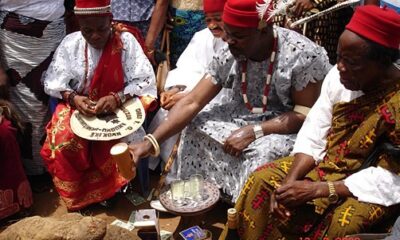
In Igbo culture, ceremonies are not just social gatherings, they are living classrooms where values, identity, and relationships are displayed for everyone to see. Within these events, the Nwadiani often holds a place of pride and tenderness. Whether it is a wedding, a funeral, a title-taking ceremony, or a community festival, the presence of married daughters’ children adds a layer of honour and emotional depth to the occasion.
When a Nwadiani arrives at their mother’s village for a ceremony, people notice. Their arrival symbolizes continuity, proof that the family’s daughters are not forgotten and that their ties to the land of their birth still run deep.
At weddings, they are often asked to present gifts, join in dances, or say blessings on behalf of their mother’s family. It is their way of showing appreciation for the love their mother received. During funerals, their presence carries both emotion and respect. They come with gifts, sometimes goats, drinks, or cloths, to honour the life of a grandparent or uncle. Their contributions are never taken lightly. They are publicly acknowledged with gratitude and prayers.
In some Igbo communities, there are even special songs and proverbs reserved for such moments. Such expressions are not mere greetings, they are affirmations of shared history, affection, and blood ties that never fade.
Even outside major ceremonies, ordinary visits by married daughters’ children are treated with respect. A family might kill a chicken, pour palm wine, or prepare special delicacies to welcome them. These acts are not about wealth but about meaning, because it is a reminder that a child of the daughter must never be treated casually. Each visit renews the invisible thread of kinship that binds two families together.
Through these traditions, the Igbo people show that relationships are not only preserved by rules but also by gestures of love and honour. Every smile, meal, and word of blessing exchanged with a Nwadiani keeps the old wisdom that, though a daughter may marry out, her roots remain unbroken, and her children are forever part of the story of her people.
What It Feels Like to Be a Nwadiani
Technically, every Igbo man/woman is a Nwadiani in their maternal homes. To be a Nwadiani is to grow up surrounded by love that feels both familiar and special. It is to have two homes: one where you belong by birth and another where you belong by maternal bond. When you visit your mother’s people, you’re received with joy that seems to come from generations before you. The warmth is deep, the laughter is genuine, and every meal offered carries the unspoken message: “You are one of us.”
Yet, being a Nwadiani also comes with an awareness of boundaries. You know you are loved, but you also know where tradition quietly draws the line. You can visit, celebrate, and contribute, but you do not share in inheritance or decision-making. In some villages, elders remind the Nwadiani kindly that they belong but do not own. And though that may sound restrictive, it is not meant to hurt, rather, it is part of the cultural rhythm that keeps lineage order clear.
Many Nwadiani describe the experience as a mix of pride and humility. Pride, because they are always treated with special honour; humility, because that honour does not come with power. They understand their place as bridges between two families, carrying the spirit of their mother wherever they go.
There is a quiet dignity in this position. The Nwadiani often feels a sense of duty to uphold the good name of both sides. When they behave well, it reflects well on their mother’s family. When they give or visit, it strengthens family ties. In that way, being Nwadiani becomes a role of responsibility as much as identity.
And beyond the traditions and rituals, there’s something emotional about it all. Many Nwadiani speak of the comfort they feel when they step into their mother’s compound. The familiar smells, the faces that look like theirs, the stories told by old relatives who remember their mother as a girl. In those moments, they don’t feel like guests, they feel like home itself.
To live as a Nwadiani is to walk in two worlds with grace, carrying the blood of one family and the love of another. It is to learn that true belonging is not always written in inheritance documents, but in the warmth of welcome, in the smiles that never fade, and in the simple joy of hearing someone say, “Nwadiani nno translated, our daughter’s child, you are welcome.”
Boundaries, Rights, and What Tradition Allows the Nwadiani

In Igbo culture, love and order walk side by side. Nwadiani enjoys deep affection and honour, but tradition also sets clear boundaries around what they can and cannot do within their mother’s family. These limits were never meant to exclude or hurt. Instead, they were designed to preserve lineage, identity, and social balance.
The Igbo family system is patrilineal. Meaning that children belong to their father’s lineage. So, while Nwadiani shares blood ties with their mother’s people, they do not inherit land, property, or ancestral titles from that side. The land belongs to the male descendants of a common ancestor, and it is passed down through the father’s line to preserve continuity.
This is why, when the children of the married daughters visit their mother’s home, they are treated as honoured guests rather than full members of the lineage. They can eat from the family table, take part in ceremonies, and speak freely with affection. But when it comes to land sharing or family decisions, they respectfully step aside. It’s a balance between love and custom, and everyone understands it.
There are also social and marital boundaries. In some Igbo communities, a Nwadiani is not allowed to marry within their mother’s village. This rule helps prevent accidental incest, since they share blood ties with that community.
Religious and ritual restrictions exist too. For instance, a Nwadiani cannot pour libation to the ancestors or take part in certain lineage sacrifices. Those duties are reserved for direct male descendants of the family line. However, they are free and even encouraged to bless, pray, and support their maternal family in other ways.
Despite these boundaries, Nwadiani holds great moral and emotional rights. They are always welcome. They have the right to visit, to be heard, and to be protected. In disputes, they can speak as voices of peace. When they bring gifts, those gifts are received with both hands. When they grieve, their tears are respected. And when they celebrate, their joy becomes everybody’s joy.
Over time, as society changes, some of these restrictions have softened. Many modern Igbo families now treat Nwadiani as full kin, especially, in cities where traditional land inheritance is no longer the main issue. Yet, even with these changes, the traditional understanding remains clear on the fact that the children of married daughters may not inherit the land, but they inherit something greater: the love, protection, and lifelong connection of their mother’s people.
Nwadiani in Today’s Igbo Society
Culture does not stand still. It shifts and grows with the people who live it. The place of grandchildren from married daughters has changed over time, shaped by education, religion, migration, and new family patterns. What used to be guided strictly by custom is now being redefined by love, understanding, and a broader sense of belonging.
In the past, such grandchildren were treated with special respect but also clear limits within their mother’s family. Today, many Igbo households see them simply as part of the wider family circle. As people move to cities and raise their children away from ancestral villages, the old lines between “father’s people” and “mother’s people” are beginning to fade.
Modern education and faith have played a big part in this change. Christian teachings on unity and equality, for example, have made it easier for families to embrace everyone without stressing boundaries. Parents now encourage their children to cherish both sides of their heritage and to build relationships grounded in mutual care.
The rise of women’s empowerment has also added new meaning. Daughters today are educated, successful, and often key supporters of both families. Naturally, their children are seen as bridges linking generations and strengthening family bonds. It’s now common to see these grandchildren contributing to community projects, sponsoring education, or rebuilding ancestral homes. Their efforts bring pride and influence to their maternal roots.
With migration, intermarriage, and technology reshaping how families live, some young people may not even know the term Nwadiani. But the spirit behind it still lives in every phone call, every homecoming, and every meal shared across generations.
When a daughter brings her children home, it’s not just a visit, it’s a renewal of kinship. Even if the old ceremonies fade, the feeling remains timeless.
In cities, people may now use “Nwadiani” jokingly or affectionately as a reminder of home. In villages, the word still carries respect and warmth. And online, cultural blogs and communities continue to explain and celebrate it, helping younger generations understand their roots.
Still, in some rural communities, traces of the old traditions remain strong. Boundaries around inheritance or ritual roles are sometimes observed. Yet, conversations are happening in family gatherings and community meetings about how to honour tradition without excluding anyone.
In truth, the story of these grandchildren mirrors the story of Igbo culture itself, of constantly balancing heritage with modern life. It reminds us that culture should not be a wall, but a doorway that keeps history alive while allowing room for growth and renewal.
The Deeper Meaning of Nwadiani in Igbo Society
The beauty of the Nwadiani concept lies in how it expresses dual belonging. It says, “Even when life separates us, love keeps us connected.”
It teaches us that family is not about who stays or who leaves, but who remembers and cares. It also shows how Igbo people value both continuity and boundary. Every child must know where they come from, yet respect the order of lineage.
In a way, Nwadiani carries the same message as motherhood itself. The message of love that stretches across homes, villages, and generations.
In Conclusion…
Love Beyond Lineage
The concept of the Nwadiani (the grandchildren born to a family’s married daughters) is one that beautifully reveals the heart of Igbo culture. It shows how the people value kinship, respect, and balance, even across family lines. For generations, customs surrounding these grandchildren have helped preserve family identity and order. Yet, beyond the rules and rituals lies something deeper – the spirit of belonging that never fades.
Traditionally, they were treated as cherished guests. Loved deeply, honoured openly, yet, gently reminded that they belong elsewhere by lineage. This may seem restrictive to modern eyes, but within that structure was a quiet wisdom that ensured fairness, continuity, and the clear passing of inheritance.
However, time has brought change. Education, migration, faith, and modern values have softened the old borders. Families now focus less on where a child “belongs” and more on how love and support can be shared across generations. The grandchildren of today return home not as visitors, but as proud sons and daughters of two families, carrying blessings from both sides.
In truth, the Nwadiani concept teaches an enduring lesson that family is both where you come from and where you are accepted with open arms. The Igbo saying, “A child is a child, wherever they come from,” captures this truth simply. Whether one inherits land or not, the real inheritance is love. The kind that travels across generations and keeps families united, no matter how the world changes.
And so, the tradition continues, not as a boundary, but as a bridge. In the laughter of grandchildren returning home, and in the prayers of their maternal people, the concept of the Nwadiani lives on, reminding every Igbo heart that love, respect, and connection are the true pillars of belonging.
References
- https://www.inigerian.com/ewu-nwadiana-and-all-that-jazz/
- https://www.nigerianjournalsonline.com/index.php/ODEZURU-IGBO/article/view/
- https://www.elixirpublishers.com/articles/1673069734_201910006.pdf
You might want to check this out…