


Anambra News
Utuh: The Resilient Cultural Town of Nnewi South, Anambra State

Located in the heart of Nnewi South Local Government Area of Anambra State, Utuh is a community that balances tradition, democratic leadership, and grassroots progress. Though not as widely known as its neighbors, Utuh continues to strengthen its voice through education, peacebuilding, cultural preservation, and youth development.

Location and Boundaries
Utuh is located southeast of Ukpor, the headquarters of Nnewi South LGA. It is bordered by Osumenyi, Ezinifite, Unubi, and Akwaihedi, forming part of the cultural belt of southern Anambra. The town lies within easy reach of Nnewi and Ekwulobia, making it accessible for trade, education, and travel.
Its proximity to larger commercial centers allows residents to benefit from both rural calm and urban connectivity. Utuh also plays a role in local politics, youth training programs, and regional cultural exchange.
Utuh Villages and Structure
Utuh is made up of two primary villages:
- Ebenator
- Enugwu
Each village consists of various kindreds (umunna) and compounds. While the village structure appears simple, it forms the basis of community identity and representation. Village elders and youth leaders serve as the first level of conflict resolution and community service. They are also crucial during cultural festivals and communal development projects.
History and Origins
The town’s roots trace back several centuries. Oral tradition suggests that its first settlers migrated from neighboring parts of the old Aguata region in search of fertile land and security. Many families came from ancient Igbo clans with links to Nri civilization, the spiritual and political heart of early Igboland.
Over generations, Utuh evolved from a small agrarian settlement into a peaceful, culturally conscious town. The name “Utuh” is associated with unity and resilience, qualities the people have proudly carried into modern times. Despite periods of political tension, the community has consistently chosen dialogue and togetherness over conflict.
Leadership and Traditional Authority
For decades, Utuh operated under a strong democratic system led by the Utuh Development Union (UDU). The UDU holds elections for the position of President-General, who represents the town on issues of development, security, youth empowerment, and education.
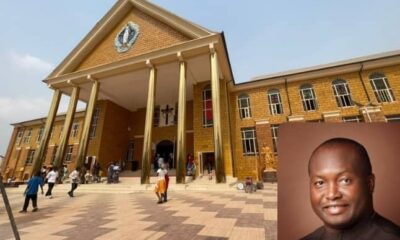
However, in November 2018, a major milestone was reached when His Royal Highness Igwe Peter Ilomuanya was officially recognized by the Anambra State Government as the traditional ruler of Utuh. This formal acknowledgment reinstated the town’s monarchy system alongside its civic governance.

Igwe Peter Ilomuanya with Chioma Nwosu
Today, Utuh enjoys the balance of:
- A democratically elected President-General
- A culturally respected traditional ruler (Igwe)
- Village councils and elders
This dual-leadership system has contributed to the town’s peaceful atmosphere and developmental focus.
Masquerades and Cultural Life
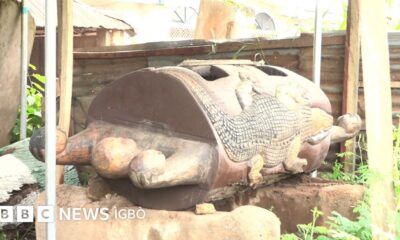
Like many Igbo communities, Utuh holds fast to the sacred masquerade tradition known as mmanwu. Masquerades are spiritual symbols that represent ancestral spirits. During festivals like the New Yam Festival (Iri Ji) and town celebrations, beautifully costumed masquerades parade through the town, accompanied by drummers and dancers.
Masquerade culture is not only entertainment, it is a form of spiritual engagement, a way to enforce community morals, and a rite of passage for many youths. Each age-grade participates in preparing, performing, and preserving this rich art form.
The appearance of masquerades during events, especially during burials of elders, also signals respect for ancestors and the continuation of Igbo heritage.
Festivals and Events
Utuh celebrates several annual events that bring together indigenes at home and in the diaspora:
- Iri Ji (New Yam Festival): Celebrated between August and September, it marks the beginning of harvest. Elders present the first yam, and the town comes alive with masquerades, music, and feasts.
- Community Day: Usually held in December, this event showcases cultural dances, fundraising, award presentations, and youth talent displays.
- August Meeting: This is a gathering of women in the community, where they discuss family welfare, town hygiene, education support, and economic empowerment initiatives.
Education and Schools
Utuh places high value on education. The town is home to:
- St. Paul’s Secondary School, operated by the Catholic mission
- Government Technical College, which provides technical and vocational training to local youth
The community also participates in Anambra State’s “1 Youth 2 Skills” initiative, aimed at equipping young people with practical skills. A government inspection team visited Utuh in 2025 to assess training centers, confirming the town’s active involvement in state youth programs.
Occupation and Livelihood
Most of the residents engage in farming, producing cassava, yam, maize, vegetables, and palm oil. Others are traders, artisans, and civil servants. Young men often work in nearby towns while contributing financially to community projects.
The local market, Orie Utuh, serves as a commercial hub for exchanging goods with nearby villages, especially during festive seasons.
Religion and Spiritual Life
Christianity is the dominant religion in the town, with most people belonging to:
- Catholic Church
- Anglican Communion
- Pentecostal Churches
Despite this, traditional Igbo beliefs are still respected, especially in areas such as land inheritance, burial rites, and masquerade worship. The people have successfully blended their modern faith with ancestral practices, preserving a cultural identity rooted in Igbo heritage.
Security and Community Development
Utuh has an active vigilante group backed by the community union and the Igwe-in-council. This group works with youth groups and elders to maintain peace, resolve disputes, and protect public spaces during festivals or elections.
In recent years, the leadership has initiated:
- Water supply repairs to health centers
- Road maintenance
- Installation of streetlights
- Plans to build a public library
Challenges and Hopes for the Future
Utuh, like many rural towns in Nigeria, faces:
- Inadequate electricity supply
- Poor road networks
- Youth unemployment
- Limited healthcare access
Yet the people remain hopeful. With their strong communal spirit, they are investing in education, skills, and development. The peaceful coexistence of traditional and civic leadership gives the town an edge in unity, transparency, and growth planning.
Conclusion
Utuh may not be a large or famous town, but it is a model of cultural resilience, grassroots governance, and youth-focused progress. From its sacred masquerades to its commitment to education and transparent leadership, This is a town on the rise, rich in values, proud of its roots, and hopeful for the future.
Related Articles
Osumenyi: A Peaceful and Progressive Town in Nnewi South, Anambra State
Isuofia: The Inspiring Town Leading Anambra’s Progress and Shaping Soludo’s Legacy