






West African Kingdoms
Benin Kingdom: The Rise, Power, Bronzes, and the 1897 British Invasion

Benin Kingdom was one of West Africa’s most influential empires known for its powerful rulers, advanced politics, artistic heritage which included the famous Benin Bronzes, and the transformative events of the 1897 British invasion.
For centuries, the Benin Kingdom stood as one of Africa’s most powerful and organized empires. Long before colonial rule reached West Africa, the Benin Kingdom had built a sophisticated political system, commanded loyal armies, nurtured master artists, and traded confidently with Europe. At the heart of this kingdom was the Oba of Benin, a ruler whose authority combined governance, spirituality, and culture into a single institution that guided the Edo people for generations.
Yet, the story of the Benin Kingdom is not only about power and prosperity. It is also about loss. In 1897, the British forces invaded Benin City, looted thousands of priceless artworks now known as the Benin Bronzes, and brought an abrupt end to the independence of the kingdom. Those events changed the course of its history and still echo in global conversations about restitution and cultural heritage today.
To learn about the Benin Kingdom means understanding a civilization that was deeply organized, artistically advanced, and globally connected long before colonization. From its early origins and rise under great Obas to the famous 1897 British invasion, this is the full story of the Benin Kingdom, its enduring legacy, and why it remains one of the most important empires in African history.
Origins of the Benin Kingdom
The story of the Benin Kingdom began long before the arrival of Europeans on the West African coast. Deep in the forested region of what is now Edo State in southern Nigeria, the early communities were already organized into structured societies with leadership systems, spiritual traditions, and growing urban centres. Over time, these communities developed into one of the most enduring monarchies in African history.
The Ogiso Era
Before the rise of the Obas, Benin was ruled by kings addressed as Ogisos, a title often translated as “King of the Sky.” According to Edo oral tradition, the Ogisos governed the land for many generations, and established early systems of administration and ritual authority. While exact dates are debated by historians, many accounts place the Ogiso period between around the 9th and 12th centuries.
During this era, Benin was already developing political organization. The capital began to grow into a structured settlement, and leadership was centralized under the Ogiso rulers. Oral histories mention several Ogisos who contributed to the early stability of Benin Kingdom, though written records from this period are limited.
Over time, internal conflicts and dissatisfaction with the final Ogiso ruler created a turning point. The kingdom entered a period of transition that would eventually lead to a new form of leadership.
The Rise of the Oba Dynasty
The shift from the Ogiso system to the Oba monarchy marks a defining chapter in the origins of the Benin Kingdom. According to well-preserved Edo oral traditions, the chiefs of Benin sought help from the powerful Yoruba kingdom of Ife during a time of political crisis. They invited a prince from Ife to help restore order.
That prince’s son, Eweka I is widely recognized as the first Oba of Benin. His reign, traditionally dated to the 13th century, and established the hereditary monarchy that would guide the Benin Kingdom for centuries. Under Eweka I, authority became more centralized, and the title “Oba,” meaning “king” became the symbol of both political and spiritual leadership.
This moment was more than a simple change of ruler. It marked the beginning of a dynasty that strengthened palace institutions, expanded territorial influence, and laid the foundation for the powerful empire that Benin would become. The monarchy brought stability, clear succession practices, and a unified identity under the Oba.
Early Growth of Benin City
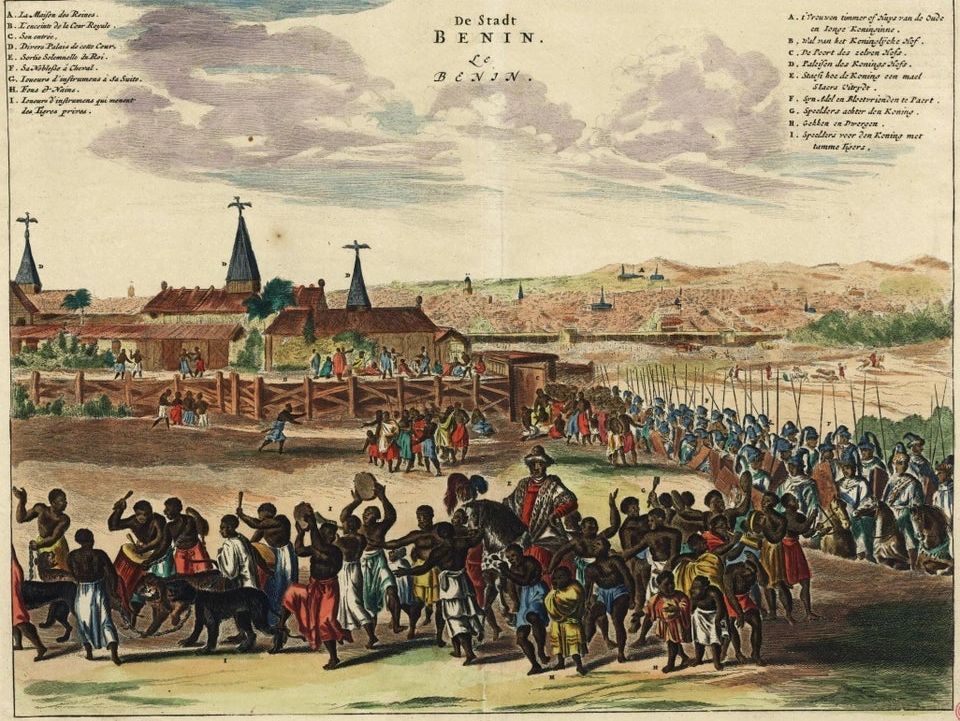
With the establishment of the Oba dynasty, Benin City began to grow into a major urban centre. Over time, it became known for its carefully planned layout, earthworks, and defensive walls. Later, European visitors would describe the city as orderly and impressive, with wide streets and structured compounds.
The early Obas worked closely with titled chiefs and palace societies to manage governance, trade, and military organization. This collaborative system ensured that power was not chaotic but structured, thereby giving the Benin Kingdom a strong internal foundation.
Blending Myth and History
The origins of the Benin Kingdom combine oral tradition and historical research. Like many ancient societies, Benin preserved its past through storytelling, royal records, and artistic representations. While some details are rooted in legend, historians agree that by the 13th and 14th centuries, the Benin Kingdom had clearly emerged as a centralized and organized state.
What stands out most about its beginnings is continuity. The Oba dynasty established in those early centuries still exists today in ceremonial form. That unbroken line of kingship is rare in world history and speaks to the strength of the system created at the founding of the kingdom.
The origins of the Benin Kingdom form the roots of a civilization that would grow into a major West African power, produce world-renowned art, and leave a legacy that continues to shape conversations about culture, heritage, and identity today.
The Political Structure and Power of the Oba

At the centre of the Benin Kingdom stood the Oba who was not simply a political ruler but the spiritual father of the people, the chief judge, the military head, and the living symbol of unity. The stability and long life of the Benin Kingdom were closely tied to the strength of this institution.
From the 13th century, beginning with the reign of Eweka I, the Oba became the focal point of governance. Over time, the monarchy grew into a structured and layered system that allowed the kingdom to manage its capital, surrounding towns, trade networks, and military forces with remarkable order.
The Oba as Sacred and Political Leader
The authority of the Oba was rooted in both spirituality and governance. In Edo belief, the king was chosen through divine order and maintained a special link with the ancestors. He performed important rituals for the land, the harvest, and the well-being of the people. Festivals such as Igue were centered around the palace and strengthened loyalty to the throne.
This sacred role gave the Oba moral authority. At the same time, he held practical power. He controlled foreign relations, approved trade agreements, led military campaigns, and settled major disputes. Land allocation, taxation, and diplomatic decisions all passed through the palace.
However, the Benin Kingdom was not governed by impulse or isolation. The Oba ruled with the support of an established council system that ensured continuity and institutional strength.
The Council of Chiefs and Governance Structure
The political system of the Benin Kingdom was highly organized. Chiefs were grouped into categories with defined duties.
The Uzama n’Ihinron were the senior kingmakers. They confirmed the selection of a new Oba and played a ceremonial role during coronation. Their position ensured that succession followed accepted tradition.
The Eghaevbo n’Ore, often described as town chiefs handled civil administration within Benin City. They oversaw urban management, community affairs, and the execution of royal policies.
The Eghaevbo n’Ogbe, known as palace chiefs served within the royal court. They supervised palace rituals, treasury matters, royal workshops, and communication between the Oba and other officials.
This layered arrangement allowed the kingdom to function efficiently. While the Oba had final authority, governance involved consultation and long-standing procedure. This structure helped to prevent instability and maintained continuity across generations.
Military Strength and Territorial Expansion
A stable political system supported a disciplined and organized military. Under strong rulers such as Oba Ewuare, the Benin Kingdom expanded significantly. Ewuare reorganized the capital, strengthened palace institutions, and led successful campaigns that brought surrounding territories under Benin influence.
The defensive system of Benin City became famous. Massive earthworks and moats surrounded the capital. Modern research has identified these earthworks as some of the largest in the pre-modern world. They protected the city and stood as a visible sign of centralized authority.
During the reign of Oba Esigie, the kingdom maintained strong military readiness while also strengthening trade and diplomatic relations. Esigie is remembered for securing the throne during internal disputes and maintaining external stability during growing contact with European traders.
Law, Justice, and Social Order
The Oba served as the highest judicial authority. Serious cases were brought before the palace, and judgments were based on custom, precedent, and consultation with the chiefs. Local disputes within villages were often settled by community leaders, though appeals could reach the royal court.
Social order in the Benin Kingdom was organized around guilds, age groups, and hereditary roles. Skilled workers such as bronze casters, ivory carvers, and blacksmiths belonged to palace guilds that operated under royal supervision. These guilds ensured quality, preserved techniques, and maintained loyalty to the Oba.
Women also played defined roles within the palace life and the society. The Queen Mother, known as the Iyoba held influence and had her own palace in certain periods of Benin history. Her position added another layer to the political and ceremonial system of the kingdom.
Balance Between Authority and Tradition
Although the Oba held supreme power, tradition guided his actions. Ritual obligations, ancestral reverence, and council advice created boundaries that protected the system from sudden change. Succession rules were clear. Titles were inherited or granted according to established norms. This combination of sacred authority and administrative organization gave the Benin Kingdom unusual durability.
For centuries, this political structure allowed the Benin Kingdom to manage trade, defend its territory, commission world-renowned art, and maintain internal order. The power of the Oba was not accidental. It was supported by institutions, rituals, and a disciplined administrative network that kept the kingdom strong long before colonial forces altered its path.
The legacy of that system still lives on today in the continued presence of the Oba of Benin as a respected cultural and spiritual leader in modern Nigeria.
Expansion, Trade, and International Relations
As the Benin Kingdom grew stronger internally, it also expanded outward. Power in Benin was not limited to palace walls or ritual authority. It extended into surrounding territories through organized military campaigns, strategic alliances, and controlled trade routes. By the 15th and 16th centuries, the Benin Kingdom had become one of the most influential states in West Africa.
One of the key turning points in the expansion of the Benin Kingdom came during the reign of Oba Ewuare. After securing his throne during a period of internal tension, Ewuare strengthened the army and reorganized the capital. He then led campaigns that brought neighbouring communities under Benin authority.
Through military success and political negotiation, the Benin kingdom extended its influence across large parts of present day southern Nigeria. Conquered territories often paid tribute to the Oba and recognized Benin’s authority while maintaining some local leadership structures. This approach allowed the kingdom to grow without constant rebellion.
Later on, the rulers continued this pattern of expansion. Under Oba Esigie, the Benin kingdom maintained its territorial reach and secured trade connections that boosted its wealth and prestige.
Trade had long been part of life in the Benin Kingdom, even before the Europeans arrived on the West African coast. The kingdom was connected to regional markets through forest and river routes. Goods such as palm oil, kola nuts, cloth, ivory, and pepper moved between Benin and neighbouring regions.
These internal trade systems strengthened the economy and supported the palace. The Oba regulated commerce and ensured that key goods passed through royal oversight. This allowed the crown to collect tribute and maintain control over economic activity.
In the late 15th century, Portuguese traders arrived along the West African coast. The Benin Kingdom soon established diplomatic and commercial relations with Portugal. This was not a one sided encounter. Benin negotiated its position carefully and maintained control over the terms of engagement.
Through this trade, the kingdom exported ivory, pepper, textiles, and later, enslaved persons during the Atlantic slave trade era. In return, it received copper, brass, firearms, and luxury goods. The imported brass became especially important. It was melted down and used by palace guilds to create what are now known as the Benin Bronzes.
The European visitors during the 16th and 17th centuries described Benin City as organized and impressive. Some accounts spoke of wide streets, large compounds, and structured urban planning. These descriptions challenged European assumptions about African societies at the time.
Unlike some coastal states that became heavily dependent on European powers, the Benin Kingdom limited foreign influence within its capital. The Oba controlled when and how traders could enter the city. Foreigners were not allowed unrestricted movement. Trade was monitored, and political authority remained firmly in Edo hands.
At different points in history, the Benin kingdom also reduced or redirected its involvement in certain forms of trade, including the Atlantic slave trade. This flexibility showed that the Benin Kingdom was not a passive participant but an active decision maker in its foreign relations.
Trade strengthened the economy of the Benin Kingdom and supported its artistic growth. Copper and brass from European trade fed the metal casting guilds attached to the palace. Ivory carvings flourished as well. Foreign contact also introduced new artistic influences which were mixed with local styles in uniquely Edo ways.
At the same time, the kingdom maintained its identity. Foreign goods did not replace local traditions. Instead, they were absorbed into an existing system that was already stable and organized.
By the 18th and early 19th centuries, however, European powers were shifting from trade partnerships to territorial ambition. What had once been commercial contact gradually turned into political pressure. The same international networks that once strengthened the Benin Kingdom would later become pathways for colonial intervention.
Still, during its height, the Benin Kingdom stood as a confident state with military strength, economic organization, and diplomatic awareness. Its expansion and international relations were not accidental developments. They were the result of careful leadership, disciplined governance, and strategic engagement with both African neighbours and European traders.
The Benin Bronzes
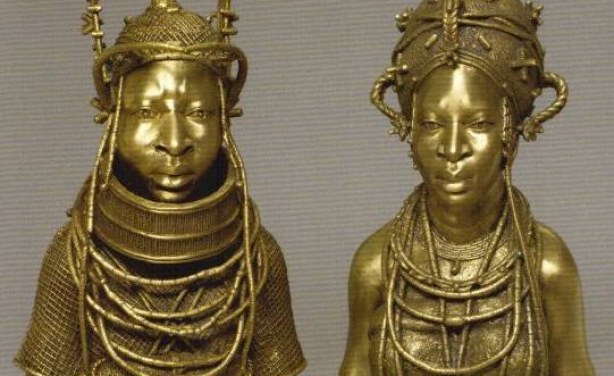
One of the most celebrated legacies of the Benin Kingdom is its artistic output, especially the collection known today as the Benin Bronzes. These metal plaques and sculptures were primarily crafted between the 14th and 19th centuries by skilled guilds in the capital of the kingdom. They decorated the royal palace and served ceremonial, historical, and symbolic functions.
The Benin Bronzes included detailed brass plaques, portrait heads, and smaller objects depicting ceremonial life, royal processions, and encounters with foreigners. Many pieces were created using the lost-wax casting technique to showcase an extremely advanced understanding of metalworking rarely matched in the world at that time.
These artworks were deeply tied to the Oba’s authority and the spiritual life of the Benin Kingdom. They commemorated rulers, depicted historic events, and stood as physical statements of the kingdom’s identity and continuity.
Today, the Benin Bronzes are central figures in debates about cultural heritage and restitution. Thousands of these objects were taken from the Benin kingdom during colonial conquest and now reside in museums and private collections across Europe and the United States. In recent years, efforts have intensified to return these artifacts to Nigeria. Some notable repatriations have been made from institutions in the Netherlands and other countries.
The 1897 British Invasion and the Fall of the Kingdom
The story of the Benin Kingdom reached one of its most dramatic chapters in 1897 when the British forces invaded Benin City. This event was not just a military defeat, it would change the course of the history of the kingdom, displaced the Oba, and lead to the looting of thousands of priceless artworks, including the Benin Bronzes.
By the late 19th century, the British Empire was expanding its influence along the West African coast. The Benin Kingdom had long maintained its sovereignty by controlling trade, territory, and foreign relations carefully. British traders, however, sought greater access to resources, especially palm oil and other commodities, and attempted to impose political control over the region.
In early 1897, a British delegation was sent to Benin City to negotiate trade and political matters. Accounts indicate that the mission was ambushed near the city, and resulted in the deaths of several British officials. While historical interpretations differ on the reasons and circumstances, the incident was used as justification for a full-scale military response.
In February 1897, approximately 1,200 British soldiers advanced on Benin City. The Oba at the time, Oba Ovonramwen attempted to defend the city but the British forces were well-armed with modern firearms and artillery.
After several days of combat, the British captured and burned much of the city. The royal palace, the administrative centre, and several key structures were destroyed. Thousands of cultural artifacts, including the famous Benin Bronzes were seized and transported to Europe. Oba Ovonramwen was deposed and exiled to Calabar where he spent the rest of his life under British supervision.
The invasion brought an abrupt end to the political independence of the Benin Kingdom as the kingdom was incorporated into the British-controlled Niger Coast Protectorate which was a precursor to colonial Nigeria. Traditional governance structures were largely dismantled, and the Oba’s authority was severely limited.
Yet, the cultural and spiritual influence of the Oba and the palace system persisted. Even under colonial rule, the Oba remained a symbolic and ceremonial figure who preserved traditions and ceremonies that connected the Edo people to their history.
One of the most lasting effects of the invasion was the looting of the kingdom’s treasures. The British shipped thousands of artifacts, including bronze plaques, ivory carvings, and ceremonial objects, to Europe. These pieces were dispersed across museums and private collections in London, Berlin, Paris, and New York.
The loss of these artifacts was devastating, not only economically but culturally and spiritually. The items represented centuries of history, royal authority, and artistic achievement. Their absence disrupted traditional ceremonies and removed tangible connections to the past.
The 1897 invasion remains a defining moment in the history of the Benin Kingdom. It symbolized the violent interruption of a sovereign African state by colonial forces. At the same time, it highlighted the resilience of Benin culture, as the Oba institution and community traditions survived, despite political defeat.
In recent decades, efforts to repatriate the looted Benin Bronzes have gained momentum. Several European museums have returned artifacts, and acknowledged the historical injustice. These returns have renewed interest in the history, culture, and art of the Benin Kingdom, and allowed its story to be told more fully to a global audience.
The British invasion of 1897 was not the end of the Benin Kingdom. It was a turning point, a moment that altered political power but could not erase the cultural strength, artistry, and identity that continue to define the Edo people today.
The Benin Kingdom Under Colonial Rule
After the 1897 British invasion, the Benin Kingdom lost its political independence but it did not disappear. While the colonial authorities imposed new governance systems, many aspects of Benin’s social, cultural, and spiritual life endured, and preserved a sense of identity that continues to this day.
Following the fall of Benin City, the territory was absorbed into the British-controlled Niger Coast Protectorate. British officials reorganized administration, introduced new laws, and imposed taxation. Traditional structures were subordinated to colonial authorities, and the Oba’s political power was severely restricted. Local governance became part of a larger colonial hierarchy designed to facilitate trade and resource extraction.
Despite these changes, the British recognized the Oba’s symbolic authority. This was partly a practical decision. The Oba was central to Edo identity, and ignoring him completely risked social unrest. The Oba retained ceremonial duties, continued to preside over certain rituals, and remained a respected figurehead, even as real political control lay in colonial hands.
Under colonial rule, the palace remained a focal point for Edo cultural life. Rituals, festivals, and palace ceremonies continued as a way of preserving traditions that had defined the kingdom for centuries. The Oba and palace chiefs acted as custodians of these practices, ensuring that sacred knowledge and artistic expertise survived despite foreign dominance.
Guilds of artisans, particularly bronze casters and ivory carvers, continued their work, though often under altered economic conditions. The skills that produced the Benin Bronzes and other masterpieces were maintained and passed down to ensure that the artistic legacy of the Benin Kingdom did not vanish.
The Edo people adapted to colonial rule in various ways. Some local leaders collaborated with the British administrators to protect community interests while others found subtle ways to resist foreign authority and preserve autonomy. This period saw the emergence of a dual system – formal governance under the British and traditional governance rooted in Edo customs and rituals.
Although education, trade, and infrastructure introduced by colonial authorities changed aspects of daily life, the spiritual and social structure of the Benin kingdom remained largely intact. The Oba’s role as a unifying figure helped the community to navigate these changes while maintaining a connection to its precolonial past.
Even in the 20th century, the Oba remained central to Edo identity. The position of Iyoba, or Queen Mother also retained importance, to highlight the continued role of women in palace politics and cultural life. Ceremonial functions and royal festivals provided continuity by linking contemporary Edo society to centuries of tradition.
By preserving these structures, the Benin Kingdom demonstrated resilience in the face of colonial disruption. The Oba’s spiritual and cultural authority outlasted political subjugation, thereby allowing the kingdom’s heritage to survive for future generations.
The colonial period also set the stage for contemporary efforts to reclaim and celebrate Benin heritage. The looted Benin Bronzes, once dispersed across Europe, became central to discussions about restitution and historical justice. At the same time, the continued prominence of the Oba and palace institutions ensured that the cultural heart of the Benin Kingdom remained alive.
Even today, Benin City is a place where history, tradition, and identity converge. Though the colonial rule changed political structures, it could not erase the legacy of the kingdom. The survival of these traditions is a testament to the strength of the Benin Kingdom and its enduring place in African history.
The Oba of Benin Today
The Benin Kingdom may have lost its political independence during the colonial rule but the institution of the Oba remains a living symbol of Edo heritage, culture, and identity. Today, the Oba of Benin is not a political ruler in the modern sense, yet, his influence over cultural, spiritual, and social life is profound and respected both locally and internationally.
The modern Obas serve as custodians of tradition. They oversee palace rituals, festivals, and ceremonies that date back centuries, ensuring that Edo customs continue to thrive. Events such as the Igue festival are still celebrated with the Oba at the centre, to reaffirm the connection between the monarchy, the community, and ancestral beliefs.
The Oba’s palace in Benin City remains a cultural hub that hosts not only ceremonies but also artisans, scholars, and visitors interested in Edo history. The palace is a living museum where the history of the Benin kingdom is preserved through oral storytelling, artworks, and carefully maintained traditions.
The Oba retains spiritual significance as a link between the living Edo community and their ancestors. Many Edo people consult the Oba on matters of tradition, ritual, and social guidance. Even in modern Nigeria, this spiritual role commands respect, as it bridges generations and connects contemporary society with centuries of history.
The Oba plays a key role in efforts to reclaim and preserve Benin heritage. In collaboration with government and cultural organizations, the Oba has supported initiatives to recover the looted Benin Bronzes and restore palace artifacts. These efforts are central to broader conversations about cultural restitution, historical justice, and the global recognition of African art.
Beyond culture and spirituality, the Oba remains a unifying figure for the Edo people. The monarchy provides continuity and stability in a rapidly changing world. For local communities, the Oba embodies the resilience of the Benin Kingdom in reminding Edo people of their rich history, artistic legacy, and social traditions.
The Oba of Benin is now recognized internationally as a representative of one of Africa’s most sophisticated precolonial kingdoms. Scholars, diplomats, and art historians consult and collaborate with the palace on exhibitions, research, and heritage projects. This recognition strengthens the global importance of the Benin Kingdom and ensures that its story reaches audiences far beyond southern Nigeria.
The role of the Oba today illustrates the ability of the Benin Kingdom to adapt while preserving its core identity. Though no longer a political ruler in the colonial or modern state sense, the Oba continues to shape cultural, spiritual, and artistic life. Through ceremonial authority, advocacy for heritage, and spiritual guidance, the Oba maintains the living legacy of a kingdom that has endured for centuries.
The presence of the Oba of Benin today is a testament to the enduring strength of the Benin Kingdom. It shows that even in the face of conquest, colonization, and modern challenges, the identity, culture, and traditions of this remarkable kingdom is still thriving.
In Conclusion …
The story of the Benin Kingdom is a story of resilience, artistry, governance, and identity that continues to inspire and educate people around the world. From its origins under the Ogisos to the powerful Oba dynasty, from its sophisticated political structures and expansive trade networks to the creation of the world-famous Benin Bronzes, the kingdom highlights the ingenuity and complexity of precolonial African civilizations.
The artistic achievements of Benin, especially the Benin Bronzes continue to captivate global audiences. More than historical artifacts, these works are symbols of human creativity, technical skill, and cultural memory. They document the history of the kingdom, celebrate its leaders, and highlight the Edo people’s profound connection to tradition.
The political structure of the Benin Kingdom offers a lesson in effective governance. The Oba’s role combined spiritual authority, judicial oversight, military leadership, and administrative control. A network of chiefs and guilds ensured stability, succession, and societal order. This sophisticated system allowed the kingdom to endure for centuries and demonstrates that African states had well-organized, complex political systems long before colonial intervention.
Even after the devastating British invasion of 1897 which led to the loss of independence and the looting of cultural treasures, the Benin Kingdom endured. The Oba remained a ceremonial and spiritual leader, and palace traditions continued. Today, Benin City is a living testament to cultural continuity where rituals, festivals, and crafts thrive despite historical disruption.
The Benin Kingdom matters in global discussions about art, heritage, and restitution. Efforts to return the looted Benin Bronzes are not only about returning the objects, they are about recognizing the historical and cultural importance of a civilization that shaped West African history. The legacy of the kingdom challenges outdated narratives, highlights Africa’s contributions to world culture, and emphasizes the importance of protecting and preserving heritage.
For Nigerians, Africans, and the world, the Benin Kingdom is a source of pride and inspiration. Its story reminds us that sophisticated states, rich artistic traditions, and complex social systems existed long before colonialism. It teaches that culture, identity, and history can survive even when political power is lost.
In studying the Benin Kingdom, we see more than history. We see lessons in leadership. We see creativity, resilience, and the enduring power of human achievement. Its legacy continues to shape identity, inform cultural discourse, and inspire generations to preserve and celebrate the remarkable civilization that once ruled the forests and rivers of southern Nigeria.
References
- https://www.britannica.com/place/Benin-historical-kingdom-West-Africa
- https://education.nationalgeographic.org/resource/kingdom-benin/
- https://en.wikipedia.org/wiki/Kingdom_of_Benin
- https://en.wikipedia.org/wiki/Benin_Bronzes
- https://en.wikipedia.org/wiki/Benin_Expedition_of_1897
- https://www.britishmuseum.org/about-us/british-museum-story/contested-objects-collection/benin-bronzes
- https://www.reuters.com/world/africa/nigerias-museum-agrees-with-royal-ruler-custody-benin-bronzes-2025-02-26/
- https://apnews.com/article/benin-bronzes-netherlands-nigeria-looted-78eab1381f1e219507e2d7607ed41d4f
- https://historicalnigeria.com/oba-ewuare-ii-and-benin-bronze-return/
You might want to check this out …