



Igbo culture
Igbo Traditional Musical Instruments: Types, Cultural Significance, and Historical Origins

Igbo traditional musical instruments are deeply rooted in culture, history, and community life. Explore their types, origins, and cultural importance in Igbo society.

Long before microphones, speakers, and streaming playlists, sound in Igbo land had a different kind of power. It carried across compounds, travelled through village squares, and gathered people without a single written word. A single strike on the Igbo traditional musical instruments could signal joy, warn of danger, invite a meeting, or set the rhythm for celebration.
In many Igbo communities, music was never just background noise. It was part of daily living. Farmers heard it in the distance while working. Elders recognized messages hidden in drum patterns. Dancers moved not just to rhythm but to meaning passed through generations.
The story of Igbo traditional musical instruments is really the story of a people communicating, remembering, and celebrating life through sound. From the deep voice of the Ekwe to the sharp call of the Oja and the steady beat of the Ogene, each instrument carries its own role in community life and cultural memory.
This article takes you into that world. It explores the types of Igbo traditional musical instruments, where they came from, and why they still matter in Igbo culture today.
Historical Origins of Igbo Traditional Musical Instruments
The history of Igbo traditional musical instruments goes back as far as the early development of Igbo society itself. These instruments were not introduced at a single point in time. They grew slowly out of everyday life, shaped by community needs, available materials, and shared cultural practices passed down through generations.
In early Igbo communities, people relied on what was around them to create sound. Wood from trees, clay from the soil, animal skins, and metal from local blacksmithing all became the foundation for instrument making. Over time, these materials were carefully crafted into instruments that served both practical and cultural purposes.
Igbo life in the early 20th century had music deeply woven into social organization, and Igbo traditional musical instruments were already well established in rituals, village communication, and ceremonial life long before colonial documentation began.
In traditional Igbo society, sound was also a form of communication. Before modern systems like radio or mobile phones, drums and gongs carried messages across distances. Certain rhythms were understood within and between communities, allowing information to move quickly without spoken words. This practical use helped to shape the early development and importance of instruments such as wooden slit drums and metal gongs.
Religious and spiritual life also played a key role in the origins of these instruments. Music was often used in shrines, ancestral worship, and festivals that marked important seasons of the year. Instruments helped to create an atmosphere of reverence and connection during these moments, making them essential to both public and private ceremonies.
As Igbo society expanded and trade increased between communities, musical traditions also evolved. New styles of playing developed, and instruments became more specialized. Some were reserved for royal or titled gatherings, while others were used in everyday village life.
Across all these changes, one thing remained constant. Igbo traditional musical instruments continued to serve as a bridge between communication, culture, and identity, carrying the lived experiences of the people through sound rather than written record.
Types of Igbo Traditional Musical Instruments
The world of Igbo traditional musical instruments is rich, practical, and deeply connected to everyday life. Each instrument has a clear role, and most of them were designed not just for music, but for communication, ceremony, and community expression. They are usually grouped based on how they produce sound – percussion, wind, and idiophones.
Percussion Instruments
Percussion instruments are the heartbeat of Igbo music. They provide rhythm, structure, and energy during performances, dances, and ceremonies. In many cases, they also carry messages that people in the community can understand. They include:
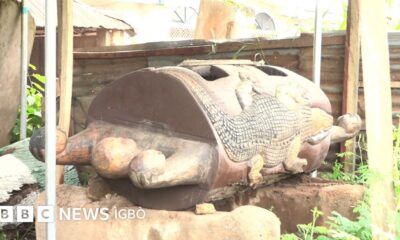
Ekwe (Wooden Slit Drum). The Ekwe is carved from a solid piece of wood with a hollowed interior. When struck with a stick, it produces deep, resonant tones that can travel across long distances. In many communities, the Ekwe was used to call meetings, announce important events, or alert people during emergencies. It is one of the most important Igbo traditional musical instruments because of its dual role in music and communication.
Ikoro (Large Communal Drum). The Ikoro is larger than the Ekwe and is usually placed at a central village square. It is not played casually. When sounded, it signals major community events such as assemblies, warnings, or significant announcements. Because of its importance, it is often treated with respect and sometimes has cultural restrictions around who can play it.
Udu (Clay Pot Drum). The Udu is made from baked clay and originally served as a water storage pot before being adapted into a musical instrument. It produces a soft, bass-like sound when tapped or struck. In ensemble performances, it adds depth and balance to other instruments. The Udu remains one of the most unique Igbo traditional musical instruments because of its origin and distinct tone.
Wind Instruments
Among Igbo traditional musical instruments, wind instruments produce melodic sounds that often guide dances, storytelling, and ceremonial performances. They are known for their expressive and sometimes speech-like tones. They include:
Oja (Wooden Flute). The Oja is a small wooden flute carved with precision. It is highly respected in Igbo music because skilled players can make it “speak” in tones that resemble human language patterns. It is often used in masquerade performances, festivals, and important gatherings. Among Igbo traditional musical instruments, the Oja stands out for its expressive and communicative ability.
Opi (Horn Instrument). The Opi is made from animal horn or metal in some variations. It produces strong, sharp sounds that are used for announcements and ceremonial openings. It is commonly associated with traditional rituals and public events where attention needs to be drawn quickly.
Idiophones and Metal Instruments
Idiophones are instruments that produce sound through the vibration of their own material without strings or membranes. In Igbo music, they are widely used for rhythm and coordination. Examples:
Ogene (Metal Gong). The Ogene is one of the most recognizable Igbo traditional musical instruments. It is made of iron and shaped like a flattened bell. When struck with a stick, it produces a sharp, metallic sound that guides dancers and supports other instruments in a performance. The Ogene is also used as a communication tool in traditional settings. Its patterns and rhythms can signal messages understood within the community, making it both musical and functional.
Across all these categories, Igbo traditional musical instruments show a clear pattern. They are not only built for performance, they are also built for meaning, communication, and cultural expression in everyday Igbo life.
Ichaka (Traditional Rattle Instrument). The Ichaka is a traditional rattle instrument commonly used in Igbo music performances. It is usually made from dried gourds, seeds, beads, or woven materials that produce rhythmic shaking sounds when moved by hand. Among Igbo traditional musical instruments, the Ichaka is valued for its ability to maintain rhythm and add energy to songs and dances. It is often played alongside drums, gongs, and flutes during festivals, ceremonies, and community gatherings.
In many performances, the Ichaka helps to keep timing steady for singers and dancers. Its bright, repetitive sound blends easily with other instruments, making it an important supporting instrument in traditional ensembles.
The instrument is especially common in cultural dances, women’s musical groups, and folk performances across many Igbo communities. Though simple in appearance, the Ichaka plays an important role in preserving the rhythmic foundation of traditional Igbo music.
Cultural Significance of Igbo Traditional Musical Instruments
The value of Igbo traditional musical instruments goes far beyond sound or performance. In Igbo society, these instruments carry meaning, memory, and identity. They are woven into how people celebrate, communicate, mourn, and connect with both the visible and invisible parts of life.
Music in Igbo culture is never separate from community life. It is present in the way people gather, the way they tell stories, and the way important moments are marked. Through this, Igbo traditional musical instruments become more than cultural objects. They become voices of tradition.
One of the most important roles of Igbo traditional musical instruments is communication. Before modern tools like phones and radios, communities relied on sound to pass messages across distances. Instruments such as the Ekwe and Ogene were used to send coded signals. Certain rhythms could announce meetings, warn of danger, or invite people to the village square. These sounds were widely understood within communities, making music a shared language rather than just entertainment. This form of communication required attention, memory, and cultural understanding, which strengthened community bonds.
Festivals in Igbo culture are incomplete without music. Events such as the New Yam Festival, masquerade outings, and cultural gatherings rely heavily on Igbo traditional musical instruments to create atmosphere and guide movement.
Drums, flutes, and gongs help to set the pace of dance and bring energy to the crowd. The sound of these instruments signals joy, unity, and participation. They also help to organize the flow of events, from processions to performances. In these moments, music becomes a shared experience that brings people together regardless of age or status.
Igbo culture has a strong oral tradition where history, values, and lessons are passed through spoken word, songs, and performance. Igbo traditional musical instruments play a supporting role in this system. Storytellers often use instruments to guide rhythm and emphasize key parts of a story. Songs accompanied by instruments help to preserve historical events and moral teachings in a way that is easier to remember and pass on. This makes music an important tool for cultural preservation.
Many Igbo traditional musical instruments are also used in spiritual settings. In traditional religious practices and ancestral ceremonies, music helps to create a sacred atmosphere. Drumming, flute playing, and gong rhythms are used during rituals to mark transitions, honour ancestors, or invite spiritual presence. In these contexts, sound is believed to help connect the physical world with the spiritual one. Because of this role, instruments are treated with respect and often handled with cultural care.
Igbo traditional musical instruments also help to define identity. Each community or region may have its own style of rhythm, performance, or instrument use. These differences create a sense of belonging and cultural pride. When people hear familiar sounds, they often feel connected to their roots. Music becomes a reminder of who they are and where they come from. It also strengthens unity during communal events where shared sound brings people together in a single cultural experience.
From birth celebrations to funerals, Igbo traditional musical instruments are present at almost every major life event.
- At weddings, they create joy and rhythm for dance
- At title-taking ceremonies, they honour achievement and respect
- At funerals, they express grief, reflection, and remembrance
- At masquerade displays, they guide movement and performance
In each case, the instruments help to give structure and emotional depth to the occasion.
Across all these functions, Igbo traditional musical instruments remain central to cultural life. They carry messages that go beyond words and help to preserve the living memory of the Igbo people through sound, rhythm, and shared experience.
Social and Ceremonial Uses

In Igbo society, life is rarely quiet or without rhythm. From moments of joy to moments of sorrow, Igbo traditional musical instruments are always present, giving structure and meaning to how people gather and respond to events. These instruments are not treated as background elements. They are active participants in social life and ceremonial tradition. Every sound has a purpose. Every rhythm carries context. And in many cases, the instruments help to guide how people behave, move, and express emotion during important occasions.
Marriage is one of the most important social events in Igbo culture. During these ceremonies, Igbo traditional musical instruments set the tone for celebration and unity between families. Instruments like the Ogene, Udu, and Ekwe are commonly used to support dance groups and singers. The rhythms encourage movement, laughter, and participation from guests. Music helps to transform the ceremony into a shared celebration rather than a formal gathering. Beyond entertainment, the sound also signals approval, joy, and communal support for the union.
In Igbo culture, title-taking ceremonies are significant milestones that recognize achievement, leadership, and service to the community. These events are marked with respect and formality, and Igbo traditional musical instruments play a key role. Drums and gongs announce the arrival of titled individuals. The music often changes in tempo and intensity to match the dignity of the occasion. Each sound supports the sense of honour being given and helps the community participate in the recognition process. Without these instruments, the ceremony would feel incomplete.
Masquerade festivals are among the most visually and spiritually expressive traditions in Igbo culture. In these performances, Igbo traditional musical instruments guide every movement. Drums and gongs control the pace of the masquerades, signalling when they enter, dance, or exit the performance space. The Oja often adds a sharp melodic layer that interacts with the dancers’ movements. The instruments and masquerades work together, creating a coordinated performance that is both entertaining and culturally meaningful.
Funerals in Igbo society are not silent events. They are structured gatherings where music helps to express grief, respect, and remembrance. Igbo traditional musical instruments are carefully used to match the emotional tone of the occasion. Slow drum patterns, deep gong sounds, and mournful flute notes help to create an atmosphere of reflection. The music supports mourning while also honouring the life of the deceased. In some cases, music also helps to guide the transition from mourning to celebration of life, depending on age, status, and cultural customs.
Before modern communication systems, Igbo traditional musical instruments were essential tools for organizing community life. Instruments like the Ekwe and Ogene were used to call people to meetings or announce important events. Certain rhythms were widely understood by community members. When people heard specific patterns, they knew whether to gather, prepare, or respond to an urgent situation. This system made music a practical part of governance and social coordination.
Cultural festivals such as the New Yam Festival bring entire communities together, and Igbo traditional musical instruments are at the centre of these celebrations. Drumming, flute playing, and gong rhythms guide dances, processions, and performances. The instruments help to maintain energy throughout the event and ensure that different segments of the celebration flow smoothly. They also help to express gratitude for harvests, ancestors, and community well-being.
Across all these social and ceremonial uses, Igbo traditional musical instruments remain essential to how life is experienced and expressed. They give sound to emotion, structure to gatherings, and meaning to cultural identity in everyday Igbo life.
Modern Influence and Preservation
In today’s fast-changing world, Igbo traditional musical instruments continue to exist, but not in the same way they once did. Modern music, digital technology, and global culture have changed how people create and consume sound. Still, these instruments have not disappeared. Instead, they have found new spaces, new meanings, and new voices in contemporary life. What is clear is this. The sound of tradition has not gone silent. It is simply adapting.
One of the strongest signs that Igbo traditional musical instruments are still relevant is their presence in modern Nigerian music. Genres like highlife, Afrobeat, and contemporary Afro-fusion often draw from traditional rhythms and instruments. Instruments such as the Ogene and Udu are frequently used to add texture and cultural depth to songs. The Ogene, in particular, has become a recognizable rhythmic element in popular music, especially in eastern Nigeria. These sounds help modern artists stay connected to cultural identity while also appealing to wider audiences.
Many musicians now combine Igbo traditional musical instruments with electronic beats, guitars, keyboards, and digital production tools. This blending creates a new sound that respects tradition while embracing modern creativity. The Oja, for example, is sometimes recorded and layered into studio productions. Its distinct tone adds a cultural feel that cannot be easily replaced by digital instruments. This fusion shows that tradition and modernity can exist side by side without losing meaning.
Despite their influence in music, the everyday use of Igbo traditional musical instruments has declined in many communities. Modern communication tools have replaced instruments that were once used for announcements and messaging. The younger generations are also more exposed to global music styles which sometimes reduces interest in learning traditional instruments. In some areas, knowledge of how to play or even recognize certain instruments is fading. This shift has raised concerns among cultural scholars and community leaders.
To address this decline, various efforts are being made to preserve Igbo traditional musical instruments. Cultural associations, schools, and researchers are documenting instruments, teaching performances, and encouraging younger people to learn traditional music. Festivals and cultural days now often include performances that showcase traditional instruments. These events help to keep the knowledge alive and visible. Academic studies in ethnomusicology have also contributed by recording how instruments are made, played, and used in society. This documentation ensures that knowledge is not lost over time.
Education plays an important role in preservation. Some schools and cultural programmes now introduce students to Igbo traditional musical instruments as part of cultural studies or music education. Community elders and traditional performers also serve as living teachers. They pass knowledge through demonstration, storytelling, and practice rather than written instruction. This kind of learning helps to maintain authenticity and keeps the tradition grounded in real experience.
In recent years, there has been a growing interest in cultural identity among younger Igbo people. This renewed interest has led to a revival of attention toward Igbo traditional musical instruments. Social media, cultural festivals, and creative arts have made it easier to showcase traditional music to a wider audience. Many young performers now include traditional instruments in dance videos, stage performances, and cultural showcases. This renewed visibility is helping to restore pride in indigenous sound traditions.
Across modern influence and preservation efforts, Igbo traditional musical instruments continue to stand as symbols of heritage. While their role has changed, their importance has not diminished. They remain a living link between past and present, carrying cultural memory into the future through sound and rhythm.
Conclusion …
The story of Igbo traditional musical instruments is really the story of a people speaking through sound. Long before written records or modern technology, these instruments carried messages, marked important moments, and gave rhythm to everyday life in Igbo communities.
From the deep voice of the Ekwe to the expressive tone of the Oja and the steady pulse of the Ogene, each instrument has a clear place in culture. They are not just tools for music. They are part of communication, celebration, spirituality, and identity.
Even today, despite the influence of modern music and digital sound, Igbo traditional musical instruments have not lost their value. They continue to appear in festivals, contemporary music, cultural events, and educational spaces. At the same time, efforts to preserve and pass them on show that they still matter deeply to cultural memory.
What stands out most is this simple truth. These instruments carry more than sound. They carry history, belonging, and a sense of continuity from one generation to the next.
References
- Echezona, W. W. C. (1963). Igbo musical instruments (Doctoral research, University of Nigeria, Nsukka).
- International Library of African Music (ILAM), Rhodes University resources on African instruments: https://www.ru.ac.za/ilam/
- Thomas, N. W. (1913). Anthropological Report on the Ibo-Speaking Peoples of Nigeria. https://archive.org/details/anthropologicalr00thom
- https://nnewicity.com/music-in-igbo-culture-tradition-identity/