



African History
Abagana, Anambra: History, Culture, Landmarks and More

Abagana is a historic town in Anambra State, Nigeria. Discover its history, culture, villages, landmarks, and other things you need to know about the town.

The Abagana Ambush of 1968
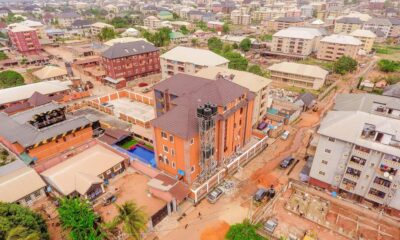
Abagana is a vibrant town in Anambra State, Nigeria known for its rich history, deep-rooted culture, and strategic location as the headquarters of Njikoka Local Government Area. Situated roughly 20 kilometers from Onitsha along the old Enugu–Onitsha road, Abagana has long been a centre of trade, governance, and community life.
The town is historically famous for the Abagana Ambush of 1968 during the Nigerian Civil War, a pivotal event that shaped its legacy in national history. Today, Abagana is a thriving community where tradition and modernity embrace, from colourful festivals and traditional customs to schools, libraries, and local businesses that drive its economy.
In this article, we explore everything about Abagana, including its geography, history, villages, culture, landmarks, and the opportunities and challenges shaping life in this remarkable town.
Location and Geography
Geographically, Abagana is positioned at approximately 6.1865° N latitude and 6.9799° E longitude within the West Africa Time zone (UTC +1). The town lies roughly 20 kilometres from Onitsha, along the old Onitsha–Enugu Trunk A Road which passes directly through Abagana and divides it into two halves. This strategic location has contributed significantly to its role in commerce, transport, and regional connectivity.
Abagana shares boundaries with several neighbouring towns and communities. To the north are Abba, Ukpo, and Enugwu‑Agidi while Nimo‑Owelle and Eziowelle lie to the south. On the eastern side, Abagana borders Enugwu‑Ukwu, and to the west, it is adjacent to Umunnachi and Ifitedunu. Its central position among these towns underscores its importance within Njikoka Local Government Area.
The town covers an area of about 9.2 square kilometres and is situated within the tropical rainforest/savanna‑transition zone typical of southeastern Nigeria. The terrain is varied, featuring streams and drainage patterns that influence land use and settlement. Certain areas, particularly near the highlands east of the old Onitsha–Enugu road are prone to erosion. This reflects the environmental challenges the town faces.
Abagana experiences a tropical climate characterized by a wet and dry season, with high rainfall and humidity consistent with the rainforest zone. These climatic conditions support agriculture which remains a major livelihood for residents, and shape the natural vegetation and landscape around the town.
History of Abagana

Ede Aro Festival
The history of Abagana is a mix of oral tradition, colonial‑era administration, and major events during the civil war. The exact founding history of Abagana is not captured in a single written chronicle. Instead, what we know comes largely from oral traditions passed down through generations.
One widely told narrative holds that Abagana, along with neighbouring towns like Nimo‑Owelle, Eziowelle, and Abba share a common ancestry. According to this tradition, these settlements stem from a man named Owelle and his wife Oma whose children eventually founded those respective towns.
Another account speaks of a forebear named Agana‑Diese or simply Agana believed by some elders to be the founding ancestor after migrating from elsewhere. The name Abagana likely originates from Ebe‑Agana. Over time, colonial-era encounters and ease of pronunciation may have transformed Ebe‑Agana or a variation such as Mba‑Agana into Abagana.
Because of its multi‑clan structure, the town is sometimes referred to as Abagana Ebo teghète, roughly meaning Abagana of nine clans/villages.
Despite these oral histories, there is no comprehensive, widely accepted written record that definitively traces the exact origin of Abagana. Thus, these narratives should be viewed as part of cultural memory rather than verified historical fact.
The modern administrative history of Abagana begins during British colonial rule. Records show that the first government influence in the area dates back to 1906 when after a British military expedition, the colonial authority established control over the town. In 1938, the colonial administration set up a customary court known as the Udoka Customary Court Abagana. This institution played a role in local governance through the colonial period.
By 1957, under a restructured local government system, Abagana served as headquarters for the then Niger County Council which covered what later became parts of present-day local government areas. In 1960, following the implementation of the Local Government Law for Eastern Nigeria, the Njikoka County Council was formed, with its seat still in Abagana.
Finally, under the unified local government reforms of 1976, the present-day Njikoka Local Government Area (LGA) was created, with Abagana confirmed as its administrative headquarters, a status the town retains today.
Through these administrative shifts, Abagana grew in importance, politically, socially, and economically as a centre for governance and community organization in the region.
Perhaps the most celebrated and defining historical event associated with Abagana is the Abagana Ambush which took place on 31 March 1968 during the Nigerian Civil War. On that date, a large military convoy of the Nigerian Army’s 2nd Division consisting of about 6,000 soldiers and over 100 vehicles was ambushed by a much smaller but strategically positioned group of Biafran forces under the command of Major Jonathan Uchendu.
The Biafran fighters used locally manufactured weapons, including the lethal Ogbunigwe rocket, firing it at a fuel tanker in the convoy. The resulting explosion destroyed many armoured and support vehicles, triggered further chaos, and resulted in heavy casualties. According to reports, a vast majority of the Nigerian soldiers in that convoy were killed or captured. This ambush dealt a major blow to the advancing federal forces and temporarily stalled their move into deeper Biafran territory.
The outcome of the ambush was so consequential that it forced a change in leadership. The Nigerian commander of the division, Col. Murtala Muhammed was relieved of duty and never again commanded a division. That was a drastic fallout from the defeat.
Because of this event, Abagana holds a special place in national collective memory. The ambush is widely remembered as one of the most significant Biafran victories and is often cited in accounts of the war.
After the civil war ended, Nigeria’s local government and administrative structures were reorganized. The post-war reforms led to the dissolution of some wartime administrative arrangements. However, by 1976, as already noted, the modern Njikoka LGA was officially established with Abagana as its headquarters.
Today, Abagana remains a key town in Anambra State. Its status as LGA headquarters means that it has continued to serve as a centre for governance, administration, and regional coordination. The town’s traditional leadership under its monarch known as Igwe Abagana remains in place. The current traditional ruler is Igwe Patrick Mbamalu Okeke.
Villages and Community Structure
Abagana is composed of several villages which makes it a multi‑village town rather than a single hamlet. According to one listing, the town consists of the following villages: Adagbe‑Abagana, Adagbo‑Oraofia, Adagbo‑Umuduna, Akpu‑Abagana, Amuenuye, Enora‑Oraofia, Enuora‑Umidin, Nahuru, and Uruokpala.
Because of this composition, locals sometimes refer to the town as Abagana Ebo Teghete which translates roughly as Abagana of nine villages. The traditional leadership of Abagana is headed by a monarch who carries the title Igwe Abagana. The current traditional ruler recognized publicly is Patrick Mbamalu Okeke.
In addition to traditional authority, Abagana has a community-based governance structure through a town union. The town union – Abagana Welfare Union (AWU) works alongside traditional leadership to manage community affairs, development projects, and local governance.
Land and property in Abagana follow customary land‑tenure systems. There are three major categories of land ownership, namely individual, family, and communal lands. Family lands are usually inherited while communal lands often remain under collective family or village ownership. This land‑use pattern reflects deep lineage and kinship structures that shape community organization in Abagana.
Because the villages are part of an interconnected whole, households often trace kinship across different villages, and clan identity remains important in social, cultural, and political relations.
Culture and Traditions

The culture and traditions of Abagana reflect a combination of long‑standing Igbo heritage and local customs that have evolved over time. Many of the town’s festivals, rituals, and communal practices are rooted in traditional belief systems while modern influences, especially Christianity have also shaped how some customs are observed today.
Traditional Beliefs, Ancestors, and Deities
Before the arrival of Christianity, the people of Abagana practiced indigenous religion. They believed in a supreme god known as Chukwu /Chineke/Chukwu‑Okike and also honoured various lesser deities, family gods, and ancestral spirits.
Wooden effigies and carved figures represented gods and ancestors, often kept in family shrines or obi were used for worship, seeking protection, guidance, and blessings for the community.
Even today, some traditional festivals honour these beliefs, even though, in many cases, customs have adapted to the influence of Christianity and modern life.
Key Festivals and Community Celebrations
Abagana has several cultural festivals that play a central role in community life, social cohesion, and identity preservation.
Ede‑Aro Festival: This festival celebrates the cocoyam harvest, a crop regarded as traditionally tied to women. The Ede‑Aro festival takes place yearly, typically on the last Afor market day of December at the town’s Afor market square. Women bring harvested cocoyams as thanksgiving offerings to the community’s Aroh deity to pray for protection and blessings. The festival includes masquerade performances, traditional rituals, music, dancing, and communal gatherings.
New Yam Festival (Iwa Ji / Iri Ji): As with many Igbo communities, Abagana celebrates the New Yam Festival annually. This event marks the end of the farming season and the beginning of the harvest season for yam, a staple crop. The festival serves as a period of thanksgiving to the ancestors and deities, communal feasting, and cultural display. During the festival, the first yams are ceremonially cut, blessed, often by the traditional ruler, before they are eaten by the community.
Royal/Traditional Ruler’s Festival (Ofala-style): There are local traditions tied to the reign of the traditional ruler. Such occasions include ceremonies where the Igwe, chiefs, and subjects gather, don royal regalia, and perform cultural rites that assert continuity of leadership and respect for tradition. These events foster unity, respect, and communal identity.
These festivals and cultural events help to ensure that younger generations remain connected to their roots, even as modern influences increase.
Masquerades, Music, Dance, and Communal Life
Like many communities across Igboland, masquerades play a vital role in Abagana’s traditional practices. Masquerades are believed to connect the living with the ancestral spirits. They often appear during festivals, ceremonies, and communal celebrations, performing dances and rituals that combine entertainment with moral and cultural teachings.
Music and dance are essential to these occasions. Drums, native instruments, songs, and communal dancing bring life to festivals. Through music and dance, stories about ancestors, moral codes, cultural heritage, and communal values are passed on. This reflects a broader Igbo cultural pattern where collective performance holds memory, identity, and unity together.
Beyond entertainment, masquerades in traditional times also served social functions. They could be involved in enforcing moral norms, addressing community issues, or warning against wrongdoing. They act as living embodiments of ancestral authority and social order.
Religion and Adaptation
With the arrival and spread of Christianity, many traditional religious beliefs and practices in Abagana have evolved. Churches now form an important part of community life which combines faith with cultural roots.
Despite this shift, many festivals and traditional events have been retained, not always in their original form but adapted to modern sensibilities. For instance, festivals may now emphasize community cohesion, cultural education, and heritage preservation rather than strictly spiritual or ritual purposes.
Community elders, traditional rulers, and families often play a role in ensuring that customs are preserved while the younger generations participate in ceremonies as a way of ensuring transmission of heritage. This blend of tradition and modern faith reflects a dynamic culture rooted, yet flexible.
Economy and Livelihood
Historically, Abagana’s economy has been driven by farming, trade, and craftsmanship. The fertile land supports cultivation of food crops such as yams, maize, cassava, plantain, and vegetables.
Because Abagana lies along an important road, that is, the old Enugu–Onitsha road, trading, both local and regional has benefited the town. Traders move produce, goods, and services between Onitsha, Awka, and other regions via Abagana.
With development over time, a portion of the population has taken up civil service, business, and other formal employment. According to one study, many residents are civil servants, students, traders, craftsmen, and farmers.
Agriculture remains important. Land use data shows that roughly 80% of land in the area is devoted to agricultural production which is a mixture of subsistence and commercial farming.
This combination of farming, trade, service, and education-based work gives Abagana a mixed economy. It helps the town balance tradition and modern aspirations.
Landmarks and Institutions
Abagana hosts a number of important public institutions, facilities, and landmarks that serve residents and contribute to its identity.
Public Library
The Abagana Divisional Library is one of the public libraries under the Anambra State Library Board. The library offers literacy and information services to residents, including children, youths, students, and adults.
Resources at the library include storybooks, textbooks, reference books, newspapers, magazines, audio‑visual materials, and space for reading and community events. The library also runs outreach and education programmes such as reading sessions and awareness campaigns.
However, like many public institutions in the region, the library faces challenges. These include under‑funding, limited infrastructure, shortage of updated resources, lack of ICT facilities and internet connectivity, and staffing issues.
Despite limitations, the library remains an important landmark and a symbol of learning, community knowledge, and cultural preservation.
Educational and Health Facilities
According to a local study, Abagana has a government-owned health centre that serves the community and nearby towns. The town also hosts several schools, more than fifteen primary schools and around five secondary schools. Such institutions support formal education and health care services, contributing to the social development of residents and making the town a hub for education and basic services within Njikoka LGA.
Religious Institutions
Most people in the town identify as Christians, primarily Catholics and Anglicans, though traditional beliefs still exist among some households.
One known religious landmark is St Peter’s Anglican Church described locally as the Mother Church that gave rise to other churches within Abagana.
Churches and other religious institutions play an important role in communal life in terms of shaping culture, social events, rites of passage, and community values
Contemporary Life, Challenges and Recent Events
Abagana today is a mix of tradition and modern pressures, just like many towns in Nigeria. Parts of the town, especially certain villages and stretches of land face environmental issues like erosion. According to project data, storm‑water flow and gullies have threatened properties and farmland.
There have been proposals for rehabilitation of an erosion corridor (Umudunu‑Uruokpala) under State‑level intervention efforts. At the community level, this environmental challenge affects settlement planning, agriculture, and shared heritage, thus creating urgency for sustainable development and infrastructure planning.
In recent years, Abagana has witnessed some troubling security and social incidents. In early 2023, gunmen attacked a police station and vigilante facility in the town. According to police reports, two vigilante operatives were killed, and parts of the police facility were burned down. In 2025, a 74‑year‑old woman was reportedly set ablaze in the town amid clashes involving alleged cult groups, sparking outrage and arrests.
Such incidents have underscored the need for strong community policing, youth engagement, social intervention, and security reinforcement in the town.
Despite the challenges, community structures, including the traditional leadership under the Igwe, town unions, civic associations, and communal institutions remain active. Local grassroots efforts, including those by residents, elders, and community youth, often work to restore peace, mediate conflicts, and rebuild social cohesion when issues arise.
The presence of public institutions like the library, schools, health centre gives hope for social development, education, and community resilience, if adequately supported.
Notable People from Abagana
Abagana has produced several individuals who have made important contributions to education, science, community leadership, and industry in Nigeria. These men and women have helped to impact the reputation of the town through their achievements and service, both locally and nationally. Below are some of the most recognized and verifiable figures from Abagana.
F. C. Ogbalu – A pioneer in Igbo language and education. He is widely regarded as the father of modern Igbo language and literature. He founded the Society for Promoting Igbo Language and Culture which has had major influence on preserving and standardizing the Igbo language.
Gordian Ezekwe – He was a respected mechanical engineer and inventor. During the civil war, he headed the Rocket Group of the Biafran Research and Production Directorate. Later, he served as Nigeria’s Federal Minister of Science and Technology.
Sir Joe Nwankwu – An industrialist and entrepreneur known for founding the Olympic Group which included businesses such as a drinks company, a packing industry, a maize-milling enterprise, and other industrial ventures. His enterprises contributed to regional industrial development in his time.
Dr Nwachukwu Anakwenze – A medical doctor and community leader who has recently been appointed Regent of the community (2025), following the traditional ruler’s passing. He previously served as the traditional prime minister of Abagana and is known for his active involvement in community affairs and diaspora-based mobilization of indigenes.
In Conclusion …
Abagana is a town that blends deep history, rich culture, and a strong sense of community. From its ancient roots in the larger Igbo civilization to its modern role in Anambra, the town has continued to grow while preserving the values that define it. Its festivals, traditional institutions, and communal lifestyle show how heritage remains important even in a changing world.
The people continue to thrive through agriculture, trade, education, and public service while notable figures from the town have contributed significantly to language development, science, leadership, and industry in Nigeria.
Abagana remains a place where tradition and progress meet. It offers a picture of resilience, unity, and cultural pride. Whether you are exploring its history, learning about its people, or simply getting to know Anambra better, Abagana stands out as a community with a strong identity and a living cultural heartbeat.
References
- https://en.wikipedia.org/wiki/Abagana
- https://www.emmason247.com.ng/blog/history-origin-culture-and-traditions-of-abagana-town-in-anambra-state/IDRbbWZCDV
- https://anglicanchurchabagana.afrihub.com/st-peter
- https://en.wikipedia.org/wiki/Njikoka
- https://en.wikipedia.org/wiki/Abagana_ambush
- https://ozikoro.com/abagana-the-history-and-traditions/
- https://documents1.worldbank.org/curated/en/598281468290161934/pdf/E29240V90P124900Box385433B00PUBLIC0.pdf
- https://www.iosrjournals.org/iosr-jpbs/papers/Vol6-issue3/B0630615.pdf
- https://en.wikipedia.org/wiki/Abagana_Divisional_Library
- https://thestreetjournal.org/unknown-gunmen-attack-police-station-in-anambra-kill-two-security-operatives/
- https://www.primebusiness.africa/big-crime-scene-in-anambras-abagana-as-74-year-old-woman-set-ablaze-cult-clash-put-town-on-edge/
You might also want to check this out …