





History and heritage
Adazi-Nnukwu, Anambra State: History, Culture, Festivals

Adazi-Nnukwu is a historic town in Anambra State rich in tradition, ancestral festivals like Onyekulum masquerade and the New Yam festival. It may not make headlines every day, but for many, it is a place of deep meaning. A home where history, tradition, and community come together.

Celebration of Newy Yam Festival in Adazi Nnukwu
Located in the heart of Anambra State, Adazi-Nnukwu is a town where history, culture, and tradition come alive. Known for its vibrant festivals, strong communal spirit, and rich Igbo heritage, it is more than a geographic location on the map of Nigeria.
From the mystical Onyekulum masquerade that commands respect and awe, to the joyful celebrations of the New Yam Festival, the town thrives as a hub of cultural pride and community unity.
With its three major clans, namely, Amolu, Nnukwu, and Amata, Adazi-Nnukwu is a town steeped in stories of resilience, ancestral wisdom, and social cohesion.
This article explores the captivating journey of Adazi-Nnukwu, diving into its history, cultural traditions, festivals, economy, and the enduring legacy of its people.
Whether you are a history enthusiast, a cultural explorer, or a curious traveller, the town offers another unique glimpse into the heart of Igbo land.
History of Adazi‑Nnukwu
Adazi‑Nnukwu is a with deep historical roots and a complex origin story. According to oral traditions documented in academic research, the founding of Adazi‑Nnukwu centres around a man named Okotu who is believed to have migrated from what is referred to in tradition as “Adda people.”
Okotu had two wives. From his first wife came the ancestors of Adazi‑Enu, Adazi‑Ani, and Adazi‑Nnukwu. His second wife gave birth to the lineages that later became Ichida, Amichi, and others.
The immediate founding ancestor of Adazi‑Nnukwu, according to these traditions is Obunnkwu, son of Okonikpa who in turn was a son of Okotu. Obunnkwu is said to have had an insatiable thirst for water which shaped his settlement patterns. He claimed the land near a stream but chose to settle slightly away because the location he was assigned was already inhabited.
Those original inhabitants included Umudiana who were regarded as the original people of what is now Adazi‑Nnukwu. Over time, other groups joined, namely, Amaide, Amolu, Nnukwu, and Amata. The migration of Amata reportedly came from Abba in present-day Njikoka LGA where they were hunters. They were accepted by Umudiana, and eventually merged into the emerging Adazi‑Nnukwu community.
Today, the town is organized into three major clans, namely, Amolu, Nnukwu, and Amata, and oral and historical sources identify 19 villages across these clans.
According to its oral history, the Amolu clan descends largely from Obunnkwu’s group. The Nnukwu clan includes people who trace their lineage directly to Okotu through Obunnkwu as well as the Umudiana. The Amata clan, as noted were immigrants/hunters who migrated from Abba.
The community’s first formally recognized traditional ruler under colonial rule was Ogbuefi Ojiako Ezenne, also called Adama. He served as a Warrant Chief during colonial times and later became Paramount Chief. Ojiako Ezenne came from the Amolu clan which is considered the senior clan in Adazi‑Nnukwu.
The historical composition of Adazi‑Nnukwu, combining indigenous Umudiana, immigrant Amata, and inter‑clan lineages reflects a common pattern among many Igbo communities which involves a blending of groups over time to form a cohesive town.
In addition, Adazi‑Nnukwu plays a shared traditional role with Nri, especially in ritual titles such as Ichi and Ozo. According to some scholars, the Umudiana, sometimes called “Adama” people of Adazi‑Nnukwu are recognized by both Adazi and Nri communities as original landholders. This gives them special status in ancestral and ritual matters.
Geography and Demographics
Geographically, Adazi-Nnukwu sits on both the northern and southern slopes of the Idemili River also known locally as Nne‑Mmili. The river is a significant natural feature in the area, and the community is partly defined by its proximity to this watercourse.
In terms of boundaries, Adazi‑Nnukwu is surrounded by Nri and Nimo on the north; Obeledu and Neni on the south; Agulu on the east and Oraukwu on the west.
Anaocha LGA in which the town is situated covers a land area of about 171.62 km². According to the 1991 census as reported on the Anaocha LGA site, the total LGA population was 199,093 at that time.
For Adazi‑Nnukwu itself, local government records report that the town had a population of approximately 16,000 people during a 1992 census. While more recent precise population figures for the town are limited, this number provides a baseline understanding of its size as a semi‑urban community.
Adazi‑Nnukwu is organized into three major clans – Amata, Nnukwu, and Amolu. Within these clans, there are several villages. According to Anaocha LGA sources, the community is made up of 19 recognized villages. The division into clans and villages is not only administrative, it also reflects social structure, land ownership, and local governance in the town.
As part of Anaocha LGA, Adazi‑Nnukwu experiences a tropical climate typical of southeastern Nigeria. The region has two major seasons – rainy season which spans from April to October and dry season from November to March. The average temperature is around 27.5°C, and the humidity is relatively high, typical of a tropical environment.
Adazi‑Nnukwu is primarily semi-urban. According to a 2023 study, the community engages significantly in farming, and there are at least two rivers that pass through or near the town. These water bodies support both agriculture and daily life activities.
Because of its location and land use patterns, the town combines rural characteristics such as farming, clan land with semi-urban traits like infrastructure, local trade, thus making it a unique blend in the Anaocha LGA.
Culture and Traditions

Onyekulum Masquerade
Adazi‑Nnukwu is deeply rooted in Igbo cultural heritage. Its traditions are woven through age-grade systems, sacred title-taking, and powerful masquerade practices that reflect both the spiritual and social life of the community.
One of the most important cultural institutions in the town is the system of title-taking, especially the Ichi and Ozo titles. In Adazi‑Nnukwu, as in other Igbo communities, Ichi title is highly respected. Historically, Ichi involved facial scarification. The traditional ritual would leave marks on the face to signify that a man had been initiated into a class of titled elders known as Ndi nze na Ozo. Only those with Ichi marks could go on to take the Ozo title.
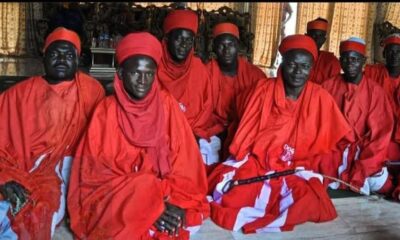
Over time, the ritual changed. Since the mid-20th century, Ichi initiation does not always involve scarification. Instead, some communities now use symbolic items like red caps and hand-fans to represent the status of an Ichi titleholder.
The Ozo title is an even more prestigious one and often follows Ichi. Ozo titleholders are seen as custodians of tradition, moral exemplars, and community leaders.
Holding either title normally comes with responsibilities. In Adazi‑Nnukwu, titleholders often play important roles in decision-making, rituals, and community governance.
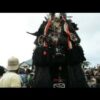
Perhaps the most iconic cultural symbol in Adazi‑Nnukwu is the Onyekulum masquerade. According to local tradition, Onyekulum is deeply spiritual, feared, and respected. Some of its defining features include the fact that the spirit of Onyekulum is believed to dwell in a forest called Offia Onyekulum. This forest is considered taboo and sacred, not a place for ordinary activity.
Unlike most masquerades that wear elaborate costumes, Onyekulum is dressed in natural materials made with grasses, leaves, and other parts of the forest. This makes it look more like a spirit than a human in costume.
Onyekulum is known for its quiet presence. It does not enter with drums or singing. Instead, its entrance is marked by the sound of rustling leaves, footsteps, and sometimes a haunting wind. The masquerade carries a thick wooden staff, interpreted by many as a spiritual symbol rather than a mere walking stick.
Onyekulum walks slowly and deliberately. It may stop suddenly, stand motionless, or change direction unpredictably. These actions are often interpreted as spiritual messages or warnings from ancestors. Onyekulum is regarded as a moral guardian. According to tradition, it intervenes when there is social disorder, punishing wrongdoing and reminding people of ancestral values.
This masquerade remains one of the most mystical and respected aspects of Adazi‑Nnukwu’s cultural identity.
In Adazi‑Nnukwu, culture and tradition serve social and moral functions. The Ichi and Ozo title systems help to maintain social order as titleholders are expected to live with integrity, contribute to the community, and uphold traditions. Onyekulum, as a spiritual figure carries symbolic weight in correcting social behaviour. Its presence is a reminder that the ancestors are watching and that moral conduct matters.
Traditional age-grade systems also help to organize community work, rituals, and festivals. These groups support communal labour, cultural events, and social cohesion. The town crier, another traditional institution plays a role in mobilizing the community for development and festivals. According to a study, the crier is a vital communicator that links modern development initiatives with traditional structures.
While many people in Adazi‑Nnukwu are Christian today, especially Catholics, traditional beliefs still influence cultural practices. For instance, even with the spread of Christianity, masquerade traditions like Onyekulum are maintained, not purely as superstition, but as markers of identity and moral authority. Title-taking continues to hold importance, although some of its practices have been adapted. The traditional town crier remains a bridge between the old and the new. He is respected both in cultural ceremonies and in modern community mobilization.
Festivals and Celebrations
Adazi‑Nnukwu is a town rich in tradition, and its festivals are deeply woven into the social and spiritual life of the community. From ancestral masquerades to harvest celebrations, these events bring the people together and remind them of their roots.
Adazi‑Nnukwu Cultural Festival
One of the most important celebrations in the town is the Adazi‑Nnukwu Cultural Festival held in the town hall and organized by the Town Union. At the festival, there are masquerade displays, especially by Onyekulum which is seen as a highlight. Women’s groups, age grades, and other community members perform traditional dances.
Community leaders often use the festival as a platform to emphasize the importance of preserving cultural identity. Chief Cyril Anetoh, President General of the Town Union, has repeatedly spoken about how the festival helps to strengthen Igbo heritage among indigenes. According to local voices, the festival has run for many years and is now a symbol of unity, tradition, and identity for Adazi‑Nnukwu.
Onyekulum Masquerade
A central figure in Adazi‑Nnukwu’s celebrations is the Onyekulum masquerade which appears during cultural events and is deeply respected within the community.
New Yam Festival (Iwa Ji)
Adazi‑Nnukwu also celebrates the New Yam Festival locally known as Iwa Ji. This is a major harvest festival in many Igbo communities. The festival is usually held at the end of August, marking the harvest of new yams and a moment of thanksgiving.
During the festival, the Adama of Adazi‑Nnukwu and his chiefs gather at the town hall to perform the first cutting of the yams. Almost all titled men and women in the community return home for the festival, making it a time of mass homecoming.
The New Yam Festival is a celebration of unity, peace, and identity. As with other Igbo communities, Iwa Ji festival in Adazi‑Nnukwu is a way of thanking the land, the ancestors, and the spiritual world for a good harvest.
Role of Festivals in Cultural Preservation
These festivals help to preserve Igbo heritage in Adazi‑Nnukwu. Through masquerades, title rituals, and communal gatherings, younger generations learn about ancestral values. They also strengthen social cohesion in that age grades, titled men, women groups, and the town union collaborate to organize and sustain these celebrations.
The festivals offer a platform for identity. At the cultural festival, leaders speak about the importance of tradition in a changing world. They act as spiritual reminders. Through Onyekulum, the community reaffirms its connection to the ancestral world, and through Iwa Ji, it acknowledges the importance of the land.
Economy and Local Industry of Adazi-Nnukwu
Adazi-Nnukwu economy is built on a mix of agriculture and pioneering aquaculture, with small-scale farming and a growing fish-processing business playing central roles.
Farming remains one of the core economic activities in Adazi-Nnukwu in consistence with patterns in its Local Government Area. Anaocha LGA where it is located is known for cultivating yam, cassava, and cocoyam. A scientific study conducted in Adazi-Nnukwu examined growth and yield of okra under different rates of poultry manure. This indicates that local farmers are engaged in vegetable cultivation and applying organic inputs like poultry manure to boost productivity.
A major industrial development in Adazi-Nnukwu is its smoked-fish processing plant run by Tee Martins Aquaculture and led by Emeka Martins Iloghalu. This facility processes dry fish, making packaged smoked fish that is free from insects and sand. The plant is reportedly not operating at full capacity. Currently, a 160 kg fish drier is being used per batch but plans are in place to expand with a 750 kg drier.
Iloghalu encourages youth engagement in aquaculture, noting that mobile fish ponds can be used by schools or retirees, and that there is a growing market for dry fish in the Southeast region.
To support the growth of aquaculture in the region, ECOWAS, in partnership with the Fisheries and Aquaculture Business Development Agency (FABDA) is training young people in modern fish production techniques.
Under this initiative, 200 youths are being trained in the TAENPROWIZ Fish Production Business System and Technology at a centre linked to the Adazi-Nnukwu Fish Production Village. This effort aligns with Anambra State’s broader goal to reach 51,000 metric tons of local table fish production annually.
The traditional town crier in Adazi-Nnukwu plays a significant role in mobilizing the community for development projects, including economic initiatives. According to academic research, the town crier helps to bring people together and sustain developmental momentum. This role supports the town’s economy by improving communication, encouraging participation in agricultural and aquaculture programs, and helping local leaders to share information about economic opportunities.
Education and Public Services

College of Nursing Sciences Adazi-Nnukwu
Adazi-Nnukwu is home to the College of Nursing Sciences located within St. Joseph’s Hospital in the town. In its 2024 matriculation ceremony, 218 first-year students of nursing and midwifery were welcomed. The College offers several accredited programmes, including Basic Nursing, Basic Midwifery, and Post-Basic Nursing, aligned with the Nursing and Midwifery Council of Nigeria (NMCN).
It has produced top-performers. In 2019, St. Joseph’s College of Nursing Sciences at Adazi-Nnukwu had a student who became the overall best in the Nursing & Midwifery Council examinations.
During the 2024 event, the school’s provost highlighted its skill acquisition programme to develop not just clinical skills but also hands-on vocational skills, especially for young women. Students at the college also advocate for Igbo language and culture preservation. In a cultural day event, they stressed the need to pass Igbo customs and language to the younger generation.
Adazi-Nnukwu is one of the few towns that can boast of a Community Library which is part of the Anambra State Library Board network. The library offers a variety of resources, including storybooks, textbooks, reference materials, newspapers, and even musical instruments.
Services include reader education, current-awareness programmes and document-delivery for the community. Adazi-Nnukwu Community Library is one of the branches under the Abagana Divisional Library which provides support and oversight. However, the library faces the challenges of limited funding, poor infrastructure, weak internet connectivity, insufficient staff and ICT capacity.
Public health services in Adazi-Nnukwu include both private hospitals and smaller public health posts. St. Joseph’s Hospital, Adazi-Nnukwu is a 24-hour secondary healthcare facility offering a wide range of services, including antenatal care, immunization, family planning, and emergency care.
St. Benedict Hospital, Adazi-Nnukwu also operates 24 hours and is licensed by the Nigerian Ministry of Health as a secondary healthcare centre. According to Anambra State budget documents, there is an Adazi-Nnukwu Community Reproductive Referral Health Centre and a health post in the town.
Notable People from Adazi‑Nnukwu
Adazi-Nnukwu has produced a few notable individuals whose influence spans traditional leadership and global fashion.
Ogbuefi Ojiako Ezenne was a warrant chief under colonial rule. He then became the Paramount Chief of Adazi-Nnukwu from 1921 until his death in 1944.
Victor Ogonna Ndigwe is a high-profile Nigerian model born in Adazi-Nnukwu. He is recognized internationally for modeling at major fashion weeks in Paris, Milan, London and campaigns with top fashion houses including Versace, Hermes, Dolce & Gabbana, Zara, and others.
Ikechukwu Emmanuel Chukwuma (Igwe Chukwuma / Ezeigbo Côte d’Ivoire) from the Nkpolo village in the Nnukwu clan of Adazi-Nnukwu is a businessman and traditional figure who holds a royal title.
These individuals reflect different aspects of Adazi-Nnukwu’s identity, from traditional authority and cultural heritage to global representation and modern entrepreneurship.
Challenges and Development
While Adazi-Nnukwu has rich cultural heritage and growing economic potential, the town also faces a number of development challenges.
There is the problem of infrastructural deficit. According to a report by an Anambra State lawmaker, road projects in Adazi-Nnukwu have been left abandoned. These bad roads limit ease of transportation for residents and constrain economic activities. Adazi-Nnukwu has been listed among the worst-affected erosion sites in Anambra State, in terms of erosion. The persistent gully erosion threatens land, property, and safety and makes development difficult.
A broader survey of Anambra State reveals that poor water supply, unstable electricity, and inadequate drainage are among the top problems facing many communities, including towns like Adazi-Nnukwu.
These infrastructure challenges reduce quality of life and also hamper business growth in the town.
There is the issue of development project implementation. Anambra State House of Assembly raised serious concerns over slow or failed implementation of fish-farm projects in Adazi-Nnukwu. Specifically, a contract for constructing hundreds of fish ponds, hostels, and associated infrastructure was started but remains incomplete, thus undermining the initial promise of improved local agriculture.
The Anambra Central Fish Village in Adazi-Nnukwu which was once funded as part of a major agricultural development scheme remains effectively uncompleted. This leaves potential jobs and economic benefits unrealized.
There are also challenges associated with institution and governance. In the past, Adazi-Nnukwu’s town union (ATDU) has suffered from leadership crises. Disputes over election procedures and legitimacy of leaders have occasionally disrupted community cohesion and slowed down collective decision-making.
Like many local governments across Nigeria, Anaocha LGA which includes Adazi-Nnukwu reportedly struggles with financial constraints. Such limitations reduce the ability of the local council to deliver essential public services or maintain infrastructure effectively.
There is the problem of public service and education shortfalls. At the College of Nursing Sciences (CONSA), Adazi-Nnukwu, students and staff have appealed to the Anambra State Government for more classrooms, hostel blocks, and administrative buildings. The present facilities are under pressure because of growing enrollment.
Adazi-Nnukwu Community Library which is part of the Anambra State Library Board faces significant challenges. There are issues with funding, infrastructure, ICT facilities, and staffing, and these limit its effectiveness as a center for learning and community development.
Environmental risks and vulnerability also pose some challenges. Because erosion is a major issue, it not only threatens homes and farmland, it alsso also reduces arable land available for farming. With a largely agrarian population, this risk undermines economic stability.
Although youth empowerment through agriculture and aquaculture has been proposed, the failure to complete promised infrastructure affects long-term sustainability. Without full implementation, many youth may not benefit economically.
Landmarks and Places of Interest in Adazi-Nnukwu

Adazi-Nnukwu hosts a number of notable landmarks that reflect its spiritual, educational, and communal life.
Afor Market Square (Festival Arena)
One of the most important public spaces in Adazi-Nnukwu is the Afor Market Square. According to academic research, this open-air space is used during major community festivals, especially the New Yam Festival.
The square is surrounded by buildings that can accommodate large crowds. Each structure reportedly holds up to three hundred people. There is a pavilion known as the Udoka Pavilion where the king and chiefs sit during festival events.
According to the same source, the square hosts a museum centre that preserves ancestral collections, a library, and a facility to store retired masquerades.
Onyekulum Forest / Sacred Site
One of the most mystical landmarks in Adazi-Nnukwu is the Offia Onyekulum, a sacred forest believed to be the home of the Onyekulum masquerade spirit. The forest is considered taboo and sacred. According to local tradition, it is not a regular forest but a spiritual place from which the Onyekulum emerges.
Because of its spiritual significance, the forest plays a key role during cultural festivals. Onyekulum masquerade is believed to return there after its public appearances.
St. Joseph’s Catholic Church, Adazi-Nnukwu
This is one of the major religious landmarks in the town. St. Joseph’s Catholic Church is located in Adazi-Nnukwu and serves as a centre of worship and community gathering. In July 2025, the Bishop of Awka Diocese officially inaugurated a new parish for this church, showing its ongoing importance to the local Catholic community. The church is closely linked to social services and development in the community.
St. Andrew’s Catholic Church
Another important religious site is St. Andrew’s Catholic Church in Adazi-Nnukwu. This church is located in one of the villages, and like St. Joseph’s, it plays an active role in communal life.
Bubendorff Memorial Grammar School
Bubendorff Memorial Grammar School is a key educational landmark in Adazi-Nnukwu. In November 2024, the Bishop of Awka Diocese visited the school and laid the foundation stone for a new storey building that will include an ICT hall, refectory, and more.
The school is important not just for education but also for community development, as the project is funded in part by the Parent-Teacher Association (PTA) which also built a borehole.
Loretto Special Science School
Another educational landmark is the Loretto Special Science School, a Catholic boarding school for girls in Adazi-Nnukwu. Founded in 1986, it offers science education and has played a strong role in the town’s educational landscape.
Okwu Afo Nnukwu Shrine
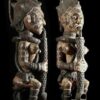
A deeply spiritual site in Adazi-Nnukwu is the Okwu Afo Nnukwu Shrine. This shrine has two separate chambers – a male section (Afo Nwoke) and a female section (Afo Nwanyi). In the male chamber lies a carved wooden board known as Azu which is a sacred symbol in the shrine. The female section is led by a priestess, and women perform their own rituals there.
In Conclusion…
Adazi-Nnukwu stands today as one of the most culturally proud and socially active towns in Anambra State. Its history, stretching from its ancient settlement patterns to its strong role within the Adazi community continues to shape the identity of its people. The town’s rich traditions, festivals, and strong sense of belonging show how communities can hold on to their heritage while still opening their doors to growth and development.
From its vibrant culture to its fast-improving economy, Adazi-Nnukwu remains a place where tradition and modern life meet. The town is constantly evolving, supported by its schools, churches, local industries, and community-driven services. Even with the challenges it faces, the resilience of its people continues to stand out.
For anyone seeking to understand Anambra’s cultural landscape, Adazi-Nnukwu is a community worth knowing. Its story is still unfolding, and its people remain committed to preserving what makes the town unique while building a future that generations will be proud of.
References
- https://www.anaocha.an.gov.ng/about/
- https://anaocha.com/names-of-villages-in-anaocha-lga/
- https://pub.abuad.edu.ng/Open_Access_Research_Projects_of_Universities_-_Batch_2/MASS%20COMMUNICATION/ROLE_OF_THE_TRADITIONAL_TOWN_CRIER_IN_MOBILIZING_ADAZI-NNUKWU_COMMUNITY_IN_ANAOCHA_LOCAL_GOVERNMENT_AREA_FOR_DEVELOPMENT%20.pdf
- https://www.nairaland.com/5348390/profiling-179-communities-anambra-state/
- https://en.wikipedia.org/wiki/Adazi-Nnukwu
- https://www.researchgate.net/publication/360271124_ADAZI-NNUKWU_BORN-AGAIN_BELIEVERS_ASSOCIATION_AND_SOCIO-RELIGIOUS_PARTICIPATION_A_CRITIQUE
- https://pub.abuad.edu.ng/Open_Access_Research_Projects_of_Universities_-_Batch_2/MASS%20COMMUNICATION/ROLE_OF_THE_TRADITIONAL_TOWN_CRIER_IN_MOBILIZING_ADAZI-NNUKWU_COMMUNITY_IN_ANAOCHA_LOCAL_GOVERNMENT_AREA_FOR_DEVELOPMENT%20.pdf
- https://atqnews.com/evolution-of-ichi-in-igboland/
- https://absradiotelevision.com/2025/01/03/adazi-nnukwu-celebrates-cultural-festival-calls-for-promotion-of-identity/
- https://nnewicity.com/the-almighty-onyekulum-masquerade-of-adazi-nnukwu-history-mystique-and-cultural-significance/
- https://www.manpower.com.ng/places/lga/111/anaocha
- https://www.ijtsrd.com/papers/ijtsrd30124.pdf
- https://www.anambradaily.com/2025/07/01/200-anambra-youths-set-for-training-on-taenprowiz-fish-production-business-system/
- https://en.wikipedia.org/wiki/Community_Library_Adazi_Nnukwu