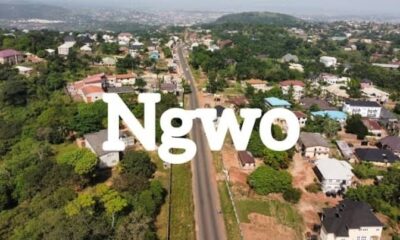




Enugu
How the Discovery of Coal in Enugu Sparked Growth and Shaped Nigeria’s Future

Not many people know that deep beneath the peaceful hills of Enugu lies a dark, glittering resource that once powered trains, ships, and even the early growth of Nigeria itself. This treasure, coal, was hidden in plain sight for centuries until British explorers stumbled upon it in the early 1900s.
Today, Enugu is fondly called the Coal City, and for good reasons. The discovery of coal didn’t just boost British colonial ambitions, it helped build roads, railways, cities, and memories that still shape Nigeria’s identity. But how exactly did the white men find coal in Enugu? What happened next? And how did this discovery affect the people who lived there? Let’s take a walk through history.

Coal mining in Enugu
Life in Enugu Before Coal
Before the sound of steam engines and the rush of miners, Enugu was a quiet hillside community mostly inhabited by the Ngwo people, a subgroup of the Igbo. The land was rich, the people were farmers, and the air was calm. The name “Enugu” comes from “Enu Ugwu,” meaning “top of the hill” in Igbo language.
Villagers lived simple lives, cultivating yams and cassava, hunting in the thick forests, and exchanging goods with nearby towns. There were no trains, no factories, and definitely no mines. But under their feet, something powerful was waiting to be found.
The Arrival of the British
By the early 1900s, the British had fully taken control of southern Nigeria and were hungry to find valuable natural resources to fuel their industries. They had one mission which was to explore the land and find what could benefit the British Empire.
In 1908, a British geologist named Albert Ernest Kitson was sent on an expedition to study the land around the Udi Hills, close to present-day Enugu. Kitson wasn’t looking for coal specifically. He was just examining the landscape, the rocks, and the soil searching for anything useful.
But during this exploration, he noticed something strange. The soil in some areas was dark, and the rocks looked like they’d been burned. After digging deeper and testing some samples, he and his team made a groundbreaking discovery, high-quality coal.

The Big Discovery, Udi Hills and the Black Rock
The first major discovery happened along the Udi Ridge, a chain of hills west of Enu-ugwu. Kitson and his team had stumbled upon surface-level mineral resources, visible pieces of black rock sticking out of the ground. Locals had probably seen these rocks for generations, but they never knew their value.
After lab tests confirmed that it was suitable for fuel and industry, the British knew they had struck gold or in this case, black gold.
Let the Mining Begin
By 1915, the British had officially opened the first coal mine at Udi. Miners were recruited from different parts of Nigeria, and work began. It wasn’t easy. The area was hilly, the weather unpredictable, and machinery had to be shipped in from overseas. But the British were determined.
By 1916, production had increased. More coal was being pulled from the hills and moved by carts to nearby depots. To speed things up, the British built a railway line connecting the state to Port Harcourt, a coastal city in present-day Rivers State. This railway was completed by 1917, making it easy to move the black gold from the mines to the port, and then out to the world.
Suddenly, Enugu transformed from a sleepy hilltop village to a booming colonial town.
Birth of a City
As the industry grew, so did Enugu. Roads were paved. Buildings rose. Workers came from far and wide. Some were skilled, many were not. The town expanded quickly. British colonial officers set up offices, residences, and administrative centers. They built homes for workers, schools for children, and hospitals to serve the growing population.
By the 1920s, it had become one of the most important towns in British Nigeria. It wasn’t just a mining camp anymore, it was a city in the making.
People from Igbo, Idoma, Yoruba, Hausa, and even beyond Nigeria came in search of work. Enugu became a melting pot of cultures and traditions. This mix of people brought life to the town music, food, language, and community. But beneath the surface, there were challenges too.
The British and the Business of Coal
The British didn’t just mine the black gold for fun. They had a clear purpose. It powered the steam engines used in trains, ships, and early factories. Before diesel and petrol became common, coal was the main source of energy.
Here’s how the coal from Enugu helped the British:
- Powered their railway locomotives for easier movement across Nigeria.
- Fueled ships docked at Nigerian ports.
- Supplied energy for colonial government buildings and industries.
- Was exported to other parts of the British Empire.
So while it came from Nigeria, it largely served the interests of the British colonial system.
Life for Nigerian Workers
While the mining industry brought development, it also brought hardship. Nigerian miners worked in tough conditions, long hours, poor ventilation, little protection, and low pay. The British controlled the profits, while the locals did the heavy lifting.
Some miners developed breathing problems from inhaling coal dust. Others suffered injuries from collapsing tunnels or machinery accidents. But for many families, the mining industry was still better than farming. It provided income, housing, and a new lifestyle even if it came with a cost.
Still, Nigerian workers began to speak up. They wanted safer conditions, fair pay, and better treatment.
Voices of Protest: The 1949 Coal Miners’ Strike
In November 1949, coal miners organized a peaceful protest to demand better wages and safer working conditions. Tensions had been building for months, and the workers had reached a breaking point.
During the protest at the Iva Valley Coal Mine, colonial police opened fire on the unarmed crowd. 21 miners were killed, and many more injured. The news spread across the country and caused outrage.
This tragic event became one of the key sparks in Nigeria’s growing independence movement. People began to question the fairness of colonial rule and demanded change.

The Decline of Coal Mining
Following Nigeria’s independence in 1960, coal mining continued under Nigerian leadership. However, by the 1970s, the industry began to decline. The discovery of crude oil in commercial quantities shifted attention away from coal. Oil became Nigeria’s main export and revenue earner.
Government neglect, poor management, and the lack of investment in infrastructure led to the gradual collapse of the mining operations. Equipment became outdated, mines were abandoned, and the once-thriving rail system fell apart. By the late 1990s, coal mining had nearly stopped.
Despite this decline, the impact of coal on Enugu and Nigeria at large remains visible. The physical structures, the rail lines, and even the memory of the miners are all still present.
Enugu Today
Today, the City is no longer a mining town, but it still wears its title with pride, The Coal City. The history of coal is part of its identity. The Iva Valley mine has become a memorial site. Roads like Zik Avenue and areas like Coal Camp remind locals of the city’s roots.
The city has grown into a major urban and political hub in southeastern Nigeria. It is known for its universities, government institutions, booming real estate, and rich culture. Though coal no longer fuels its economy, the foundation laid during the era still supports its growth.
There are even renewed calls for Nigeria to revive mining using modern and environmentally responsible methods. If done right, it could provide jobs and boost local economies.
Reflecting on the Legacy
Coal brought light and development to Enugu, but also suffering and resistance. It fueled trains, fed empires, and created jobs but it also took lives, exploited workers, and ignited protests.
The story of how the black gold was discovered in Enugu is not just a tale of geology or industry. It’s a story about people, about the locals who watched their town change overnight, about the workers who toiled underground, and about a nation slowly waking up to the price of colonialism.
As we reflect on that legacy, we’re reminded that every resource carries power and that how we use that power determines the future.
From under the hills of Udi, Nigeria rose up powered by black coal, but driven by human spirit.
Read about: Okposi Salt Lake || Ebonyi State’s Historic Wonder and Cultural Treasure