


Igbo Communities
Agbani Town in Enugu State: The Cultural, Educational and Administrative Centre

Agbani town in Enugu State is a vibrant centre of culture, education, and administration. Discover its history, festivals, markets, educational institutions, and modern growth in this detailed guide to one of Nkanu West’s most important towns.

Agbani town sits quietly in Enugu State, but its influence reaches far beyond its size. Known today as the administrative headquarters of Nkanu West Local Government Area, Agbani has grown into a place where culture, education, and public life meet in practical, everyday ways. It is a town defined by its history, sustained by its stradition, and transformed by its learning environment.
For generations, Agbani town has been part of the wider Nkanu story, rooted in Igbo customs, communal values, and deep ties to the land. Over time, its role expanded. The arrival of major institutions such as the Enugu State University of Science and Technology and the Nigerian Law School gave the town national relevance and re-invented its economy, population, and daily rhythm. Students, civil servants, traders, and long-time residents now share the same streets, markets, and public spaces.
Yet, Agbani has not lost its sense of self. Traditional festivals, village life, and market days continue to anchor the town, even as modern housing, busy roads, and growing services reflect steady urban growth. This balance between the old and the new is what defines Agbani today.
This article takes a clear and grounded look at Agbani town in Enugu State. It explores its origins within Nkanu land, its rise as an administrative centre, its role as an educational hub, and the cultural life that continues to give it meaning.
Through verified history and lived realities, it shows why Agbani remains one of the most important towns in this part of southeastern Nigeria.
Location of Agbani Town in Enugu State
Agbani town is located in the southeastern part of Nigeria, within Enugu State. It serves as the administrative headquarters of Nkanu West Local Government Area which places it at the centre of political and civic life for many surrounding communities. Its location has played a quiet but important role in influencing its growth and relevance over the years.
Geographically, Agbani town lies about thirty-five kilometres from Enugu city, the State capital. This moderate distance allows the town to enjoy both worlds. It remains close enough to Enugu for easy movement and access to major services, yet far enough to maintain its own pace of life and strong community identity. The road connections linking Agbani to Enugu and nearby towns support daily travel by students, traders, civil servants, and residents.
Agbani town is surrounded by other communities within Nkanu land with which it shares cultural ties, language, and history with its neighbours. The landscape around the town is marked by gentle hills, open farmlands, and rural settlements, reflecting the agricultural roots of the area. These physical features have long supported farming and trade which remain central to local life.
Because of its location, Agbani town has naturally become a meeting point between rural communities and institutional life. Its position within Enugu State makes it accessible, connected, and well suited to host major educational and administrative institutions.
This balance of geography and function affects how the town grows and how it is experienced by those who live in and visit it.
The Origins of Agbani and the History of Nkanu People
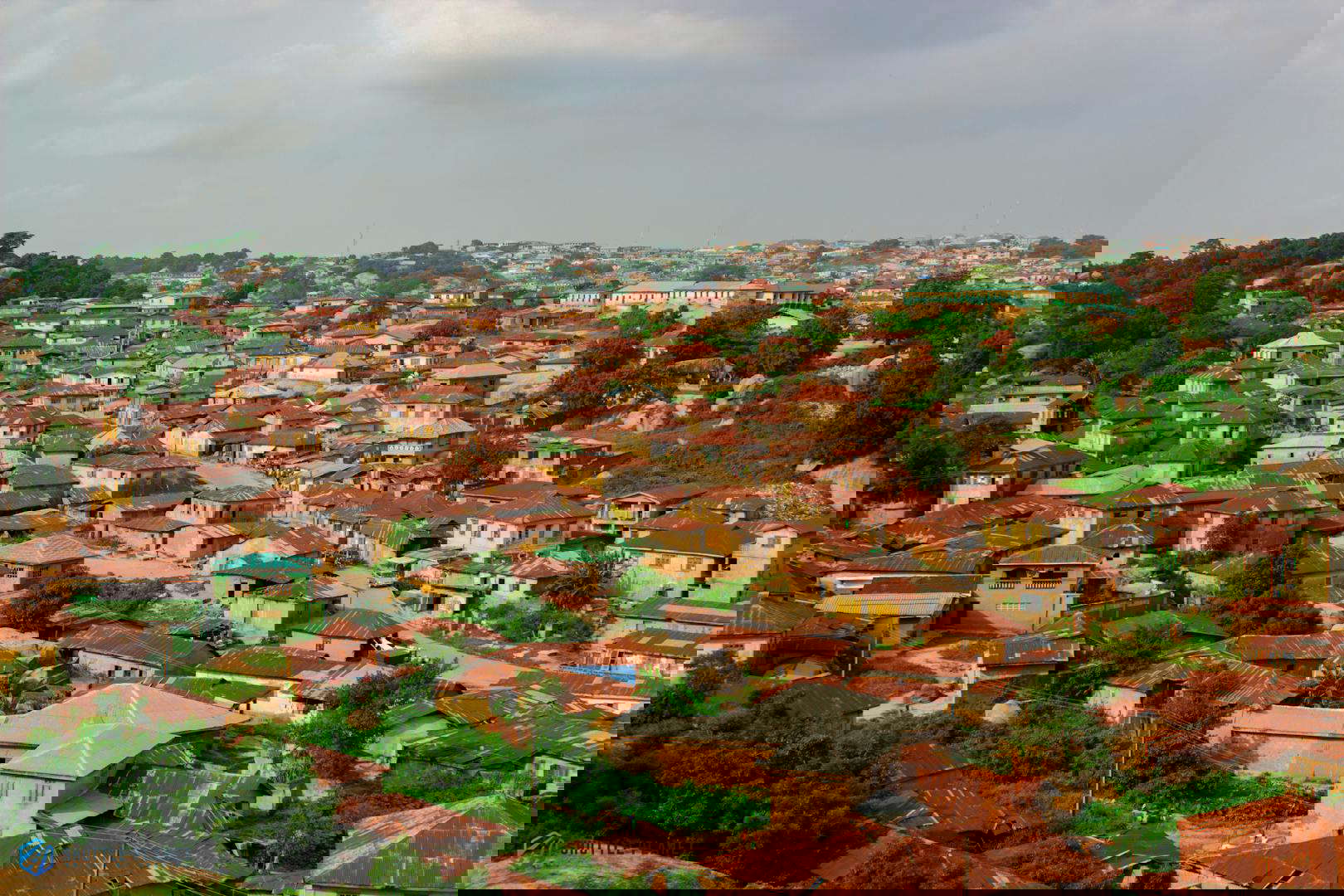
The history of Agbani town is closely tied to the wider story of Nkanu people. Nkanu people are one of the culturally distinct groups within Igboland. Long before modern boundaries and administrative structures were created, the people of this area had already established settled communities built around kinship, farming, and shared customs. Agbani emerged within this setting as part of a network of Nkanu settlements connected by ancestry, land, and tradition.
Like many Igbo towns, the early history of Agbani town is preserved largely through oral tradition. These accounts speak of gradual settlement rather than a single founding moment. Families and lineages settled near fertile land and water sources to form villages that later grew into larger communities. Over generations, these villages developed systems of governance, age grades, and communal decision-making that influenced social life across Nkanu land.
Nkanu people share language patterns, cultural practices, and religious beliefs that place them firmly within the broader Igbo cultural world. Farming was central to survival and identity, with yam holding special importance as a symbol of prosperity and hard work. Seasonal cycles of planting and harvest structured daily life and gave rise to festivals and communal rituals that are still observed today in Agbani and neighbouring towns.
Agbani town gradually gained prominence because of its location and ability to serve as a gathering point for surrounding communities. Markets, meeting places, and later, colonial administrative interests contributed to its growing influence. During the colonial period, the introduction of new systems of governance and infrastructure further reshaped its role within Nkanu land as it laid the groundwork for its later status as an administrative headquarters.
Despite these changes, Agbani town has retained a strong sense of historical continuity. Traditional leadership structures, respect for elders, and communal values remain part of everyday life. The history of Nkanu people is not treated as a distant past but as a living heritage that continues to inform identity, social relationships, and cultural expression in Agbani today.
Through its deep roots in Nkanu history, Agbani town stands as a reminder of how Igbo communities have preserved their identity while adapting to social, political, and educational changes. It is this mix of origin and evolution that gives the town its enduring character.
Agbani as the Administrative Headquarters of Nkanu West LGA
Agbani town holds a central place in local governance as the administrative headquarters of Nkanu West Local Government Area in Enugu State. This role has given the town lasting political and civic importance, and driven its growth and influence within the wider Nkanu region. For surrounding communities, Agbani is the point where local administration, public services, and official decision-making come together.
Nkanu West Local Government Area is one of the administrative divisions in Enugu State, and Agbani was designated as its headquarters because of its accessibility and established community structure. From this position, the town hosts key local government offices responsible for coordinating development projects, maintaining public records, and overseeing community affairs across the LGA. These functions have made Agbani a regular destination for residents from nearby towns and villages.
The presence of the local government headquarters has had a visible impact on Agbani town. Government buildings, improved road access, and increased commercial activity developed around administrative centres. Civil servants, visitors, and service providers contribute to daily movement and economic activity which add another layer to the social life of the town beyond its traditional roots.
This administrative status also strengthened its role as a meeting point between rural communities and State institutions. Public meetings, official events, and community consultations often take place in the town, thus reinforcing its position as a centre of coordination and leadership within Nkanu West.
While Agbani town has continued to evolve with educational institutions and urban growth, its role as the administrative headquarters of Nkanu West LGA remains one of its defining features. It anchors the town in public life and ensures that Agbani remains relevant in the governance and development of this part of Enugu State.
Agbani as an Educational Hub in Enugu State

One of the most remarkable aspects of Agbani town is its reputation as a centre of learning. Over the years, the town has earned the nickname “student town” because of the steady flow of students from different parts of Nigeria and even beyond. This reputation is anchored in the presence of several notable educational institutions that have made Agbani their home.
Enugu State University of Science and Technology (ESUT)
The Enugu State University of Science and Technology, popularly known as ESUT has one of its main campuses in Agbani. The university draws students interested in a wide range of disciplines, including science, technology, arts, and management studies. Its presence has brought new energy to the town, with ideas, innovation, and youthful enthusiasm becoming part of everyday life.
Students at ESUT live both on campus and in nearby neighbourhoods, thereby creating a dynamic local economy. Cafes, bookstores, hostels, and small businesses thrive on the steady demand generated by students and staff. This constant interaction between the town and the university community has shaped Agbani into a place that balances residential life, commerce, and learning seamlessly.
Nigerian Law School, Enugu Campus
Another major institution in Agbani town is the Nigerian Law School, Enugu campus. This professional school trains law graduates across the country as it prepares them for legal practice in Nigeria. Its location in Agbani attracts aspiring lawyers from all corners of the nation, thus giving the town a national academic footprint.
With both ESUT and the Nigerian Law School operating here, Agbani town has become a hub of educational diversity. Students from various backgrounds interact, share ideas, and contribute to the intellectual vibrancy of the town. The presence of these institutions also influences local culture, economy, and infrastructure which makes Agbani a town where education is not just a pursuit but a defining feature of its character.
Traditional Life, Culture and Festivals in Agbani
Beyond its role as an educational and administrative centre, Agbani town is deeply rooted in culture and tradition. Life here moves to rhythms defined over generations with a blend of the everyday life with the rich heritage of the Nkanu people. Community ties remain strong, and traditional values continue to guide how people live, work, and celebrate together.
In Agbani town, families and clans form the backbone of the society. Elders hold respected positions and play active roles in resolving disputes, guiding younger generations, and maintaining local customs. Age-grade systems where groups of people born around the same time take collective responsibility for community tasks still exist and contribute to the sense of shared responsibility. These traditions create a social structure that balances authority, cooperation, and respect for history.
Daily life in Agbani reflects this mix of continuity and change. Farming remains a core activity, with crops like yam, cassava, and vegetables affecting not only the economy but also its calendar. Village meetings, communal labour, and family gatherings are part of the social fabric that reinforces a sense of belonging and continuity.
Festivals in Agbani town are an expression of both gratitude and identity. The most prominent is the New Yam Festival locally known as Oriri Ani. This annual event celebrates the harvest and gives thanks for the fertility of the land. During the festival, families come together to share meals, offer prayers, and honour ancestral traditions.
Traditional dances, masquerade performances, and music are central to the celebrations. The masquerades, with their colourful costumes and symbolic movements not only entertain but also convey cultural stories and moral lessons. These festivities bring together people from Agbani and surrounding communities.
Other local celebrations mark life events, seasonal changes, and communal achievements. Markets, especially on designated market days like Eke, serve as both economic and social hubs where people meet, trade, and exchange news. In these spaces, tradition and daily life intersect naturally.
Even with the presence of large educational institutions and increasing urbanization, Agbani town has managed to maintain its cultural identity. Schools, students, and modern infrastructure coexist with traditional practices. The vibrancy of festivals, the respect for elders, and the rhythms of village life ensure that the cultural heartbeat of Agbani continues to thrive.
Agbani town’s traditional life and festivals are living expressions of identity. They connect the people to their history, sustain communal ties, and offer visitors a glimpse into the values, customs, and stories that have distinguished this remarkable community over centuries.
Eke Agbani Market and the Local Economy
One of the busiest and most vibrant parts of Agbani town is the Eke Agbani Market. For generations, it has been a central hub where commerce, community, and culture intersect. Apart from being a place to buy and sell, the market offers a space where the heartbeat of everyday life in Agbani can be felt.
Eke Agbani follows the traditional Igbo market calendar which is structured around the four market days – Eke, Oye, Afo, and Nkwo. While Eke is the main market day, the flow of trade in Agbani has grown so robust that commerce continues daily. Farmers, traders, and artisans from Agbani and surrounding communities converge here to sell agricultural produce, household items, clothing, and locally made crafts.
The market plays a crucial role in its economy. Agricultural produce such as yams, cassava, cocoyams, palm oil, and vegetables form the backbone of trade. The presence of the students of ESUT and the Nigerian Law School has further increased demand for food, clothing, and everyday goods. Cafes, small restaurants, and shops have flourished, and are creating a lively micro-economy that keeps the town bustling.
Eke Agbani Market is also a social hub. People meet, exchange news, and discuss community matters while shopping. Market days provide an opportunity for networking, maintaining social ties, and sharing cultural knowledge. Visitors can see traditional practices alongside modern business activities that provide a unique glimpse into life in Agbani town.
The market does more than facilitate trade as it strengthens the local economy and supports livelihoods. Farmers and traders depend on the market to reach customers while residents and students benefit from easy access to fresh produce and household essentials. At the same time, Eke Agbani preserves cultural traditions as the market remains closely tied to the rhythms of community life, including festival periods and special observances.
Through Eke Agbani Market, Agbani town presents a balanced blend of tradition and modernity. The town has managed to grow economically without losing the character and communal spirit that define it.
For anyone visiting or living in Agbani, a trip to Eke Market is an essential way to understand the town’s pulse, its people, and its vibrant daily life.
Religion and Social Institutions in Agbani
Religion plays an important role in shaping life in Agbani town. The majority of residents practice Christianity, and the town is home to numerous churches and religious organizations. These institutions influence not only spiritual life but also social cohesion, education, and community development.
Churches in Agbani town are active centres of worship, fellowship, and public engagement. They host weekly services, special events, and community programmes that bring people together beyond their spiritual commitments. Large congregations often gather for outreach initiatives, youth activities, and educational support programmes. These initiatives help to strengthen social bonds and encourage participation in communal life.
Christianity in Agbani has also influenced education. Many church organizations support schools and learning centres by providing scholarships, teaching resources, and mentoring programmes. This partnership between faith and learning complements the reputation of the town as an educational hub.
Beyond religious life, Agbani town has a network of social institutions that contribute to governance, welfare, and communal activities. Community centres, youth groups, and cooperative societies offer platforms for engagement, skills development, and local entrepreneurship. These institutions encourage residents to participate actively in civic life and maintain a sense of shared responsibility.
While Christianity is the dominant religion, Agbani town maintains respect for traditional beliefs and practices. Festivals, ancestral rites, and cultural celebrations continue alongside church activities in creating a community life where faith and tradition coexist. This balance ensures that modern developments do not erase the rich historical and cultural identity of the town.
Religion and social institutions in Agbani town do more than guide spiritual life. They provide structure, community support, and avenues for growth which make the town not only a place to live but also a space where people thrive socially, culturally, and intellectually.
Urban Growth and Changing Lifestyles
Agbani town has experienced steady growth over the past few decades by blending its traditional roots with modern urban life. Roads, housing developments, and businesses have expanded alongside educational and administrative institutions.
The presence of Enugu State University of Science and Technology and the Nigerian Law School has accelerated urban development in Agbani. New residential areas have sprung up to accommodate students, staff, and civil servants.
Streets that were once quiet are now lined with shops, cafes, hostels, and small businesses catering to the growing population. Infrastructure improvements such as better roads and electricity supply have made daily life more convenient while connecting the town more closely with Enugu city and neighbouring communities.
The residents have adapted to these changes in ways that balance modernity with tradition. Students bring new ideas, cultural trends, and energy into the community which help to influence fashion, entertainment, and commerce. Young families and professionals are drawn to Agbani because of its educational and economic opportunities.
At the same time, traditional practices continue to shape everyday life. Festivals, market days, and communal events remain important. Residents often participate in both modern activities and cultural traditions.
The modern Agbani is a community where people work, learn, socialize, and celebrate together. The combination of urban growth with traditional values has given the town a unique rhythm, one that is lively, welcoming, and deeply rooted in its history. Visitors to Agbani can see this vibrancy in the bustling streets, lively markets, and the steady flow of students and residents going about their daily lives.
Agbani town today stands as a model of how small towns can grow and modernize without losing the sense of identity that makes them special. Its urban growth and evolving lifestyles reflect a community that values both progress and heritage.
Notable Landmarks and Places of Interest in Agbani
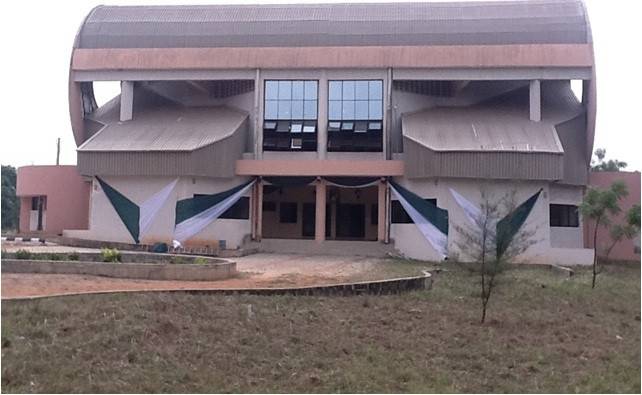
Nigerian Law School, Enugu Campus
Agbani town is rich with landmarks that reflect its history, culture, and modern growth. From educational institutions to markets and religious centres, these sites tell the story of a community that has grown while retaining its identity.
Enugu State University of Science and Technology (ESUT) Campus
One of the most prominent landmarks in Agbani town is the ESUT campus. Its academic buildings, libraries, and lecture halls are not only centres of learning but also hubs of activity that influence the daily rhythm of the town. The campus brings students, staff, and visitors from across Nigeria, thus giving Agbani a vibrant energy that permeates streets, cafés, and local businesses.
Nigerian Law School, Enugu Campus
Another important landmark is the Nigerian Law School, Enugu campus. As a professional training institution for aspiring lawyers, it draws students from every part of Nigeria. Its presence has added an intellectual and national dimension to Agbani town.
Eke Agbani Market
Eke Agbani Market remains one of the most iconic sites. It is not only a centre of commerce but also a place where culture and community life come alive. Visitors can experience the sights, sounds, and interactions that define Agbani’s social and economic heartbeat. The market is a living representation of tradition meeting modern trade.
Religious and Community Centres
Agbani town is home to several churches and religious institutions that serve as landmarks in their own right. These spaces host worship services, community gatherings, and social programmes. They also reflect the faith-driven character of everyday life in Agbani.
Natural and Historical Features
While Agbani is developing rapidly, its natural features which include gentle hills, farmlands, and open spaces remain points of interest. These areas offer a glimpse into its agricultural past and provide serene spaces amid the bustle of student life and market activity.
Each landmark in Agbani town tells a story. The educational campuses highlight its academic significance, the markets capture its economic life, religious centres reflect its spiritual heartbeat, and the natural landscape preserves the memory of its past. Together, these places make Agbani not just a town to visit but a community to experience fully.
In Conclusion …
Agbani town in Enugu State is an administrative or educational hub and also a community where culture, history, and modern life come together in a unique and harmonious way. From its origins within Nkanu land to its role as the headquarters of Nkanu West Local Government Area, Agbani has grown into a town that balances tradition and progress.
The educational institutions, namely, the Enugu State University of Science and Technology and the Nigerian Law School have transformed it into a centre of learning that draws students and intellectual energy from across the country. Meanwhile, landmarks like Eke Agbani Market, cultural festivals, and religious centres keep its heritage alive.
Modern development in Agbani town, including urban growth, new housing, and thriving local businesses reflects a community that is evolving while maintaining its identity. Festivals, village life, and communal institutions continue to remind everyone that Agbani is not only a place of progress but also a town with a strong heart and spirit.
Agbani town stands today as a model of balance; a town where education, culture, commerce, and community coexist, and offer both residents and visitors a sense of belonging, purpose, and connection. It is a place that celebrates its history while embracing the possibilities of the future.
References
- https://en.wikipedia.org/wiki/Agbani
- https://en.wikipedia.org/wiki/Nkanu_West
- https://www.thisdaylive.com/2017/09/29/35-years-after-agbani-community-takes-a-directional-course/
- https://nnewicity.com/nkanu-a-cultural-sub-ethnic-igbo-region/
- https://ng.worldorgs.com/catalog/agbani/market/ekeagbanimarket
- https://dunamisgospel.org/directory/digc-agbani-enugu/
- https://journalist101.com/2022/09/21/enugu-amakpu-agbani-community-set-to-celebrate-new-yam-festival/