






African Indigenous Technology
Indigenous Crafts of Precolonial Igbo Society: Ironworking, Pottery, Weaving and Traditional Technology

“Indigenous crafts of precolonial Igbo society” reveal a rich history of ironworking, pottery, weaving, and advanced traditional technology that shaped economy, culture, and daily life in Igboland before colonial influence.

Long before colonial influence reached southeastern Nigeria, everyday life in Igboland was already supported by skill, structure, and deep practical knowledge. Tools were not imported. They were made locally. Household items were not mass-produced. They were carefully crafted by hands that understood both function and meaning.
The indigenous crafts of precolonial Igbo society tell this story clearly. Iron was smelted in local furnaces and turned into farming tools that fed entire communities. Clay was shaped into pots that carried water, stored food, and supported daily living. Raffia and fibres were woven into mats, baskets, and cloth that moved through homes and markets. Wood was carved into masks and figures that carried spiritual and social significance.
These crafts were not separate from life. They were part of it, woven into farming, trade, religion, and community identity. They also reflected a society that valued skill, patience, and shared knowledge passed from one generation to the next.
This article explores how these crafts worked, who made them, and why they mattered so deeply in precolonial Igbo society.
Overview of Indigenous Crafts of Precolonial Igbo Society
The indigenous crafts of precolonial Igbo society were not isolated skills. They were a well-organized system of production that supported daily life, economy, and culture across Igboland. Every stage of living, from farming and cooking to trade and spiritual practice was supported by locally made tools and handcrafted objects.
In many communities, craftsmanship was highly specialized. Certain families and towns became known for specific skills such as ironworking, pottery, weaving, or woodcarving. This specialization strengthened exchange between communities, as people relied on one another for goods produced through different craft traditions within precolonial Igboland.
The indigenous crafts of precolonial Igbo society were deeply practical. Iron tools improved farming and helped to sustain agricultural life which formed the foundation of the economy. Pottery provided essential vessels for cooking, storing water, and preserving food. Weaving and basketry supported clothing, trade, and household needs. Woodcarving and beadwork carried both aesthetic and spiritual meaning, especially in rituals, festivals, and leadership symbols.
Knowledge of these crafts was preserved through apprenticeship rather than written records. Young learners acquired skills by working closely with experienced artisans, observing, practicing, and gradually mastering each stage of production. This system ensured continuity and allowed craft knowledge to survive across generations.
Beyond their practical value, theese indigenous crafts of precolonial Igbo society also carried social meaning. Items produced were often linked to identity, status, and cultural beliefs. Through these crafts, Igbo communities expressed creativity, organized labour, and maintained cultural continuity long before colonial influence changed traditional systems.
Ironworking and Blacksmithing in Igbo Society

Ironworking was one of the most influential components of the indigenous crafts of precolonial Igbo society. It was not only a technical skill, it was also a foundation for agriculture, warfare, and everyday survival. Long before colonial contact, Igbo communities had already developed methods of smelting iron ore and shaping it into useful tools and equipment.
Lejja in Enugu State and Igbo Ukwu provide strong evidence of early iron production in Igboland. This shows that iron smelting was practiced locally and formed part of a long-standing technological tradition. The presence of slag, furnaces, and iron objects confirms that ironworking was well established and widely practiced.
Blacksmiths played a central role in this system. They produced essential tools such as hoes, machetes, knives, axes, and spearheads. These tools supported farming activities which formed the backbone of Igbo economic life. Without iron tools, large-scale agriculture would have been far more difficult to sustain.
The work of blacksmiths also extended beyond farming tools. They produced household items, repair tools, and objects used in trade. In some communities, they also created items used in rituals and traditional governance. This made the craft both practical and socially important.
The indigenous crafts of precolonial Igbo society, especially ironworking were often organized through specialist families or guild-like groups. In places like Awka and other well-known craft centres, blacksmithing skills were passed down through generations. Apprentices learned by working closely with experienced smiths, gradually mastering the techniques of smelting, forging, and shaping metal.
Ironworking also carried cultural meaning. In many Igbo communities, iron was associated with strength and transformation. Because of this, blacksmiths often held respected positions, and their work was sometimes surrounded by rituals or traditional restrictions.
Overall, ironworking and blacksmithing were not separate from daily life. They were deeply integrated into farming, trade, and social organization, making them one of the most important pillars of the indigenous crafts of precolonial Igbo society.
Pottery Tradition in Precolonial Igboland

Pottery was one of the most widely practiced and practical elements of the indigenous crafts of precolonial Igbo society. It supported daily living in almost every household and played an important role in food preparation, storage, trade, and cultural practices across Igboland.
In many Igbo communities, pottery making was traditionally associated with women, though the practice and organization varied from place to place. Women who specialized in this craft relied on locally sourced clay which was carefully selected, cleaned, and prepared before shaping. The process required patience and skill, as the quality of the final product depended heavily on how well the clay was treated at each stage.
Potters shaped vessels by hand using simple but effective techniques such as coiling and molding. After shaping, the pots were left to dry before being fired in open kilns or outdoor firing pits. This process hardened the clay and made the vessels durable enough for daily use.
The products of pottery were essential to everyday life. Cooking pots were used for preparing meals, while larger containers stored water, palm wine, and other food items. Some pots were also used for fermentation and preservation. In addition, certain pottery items were reserved for ritual purposes, showing that this craft also carried cultural and spiritual importance.
Archaeological studies validate advanced ceramic traditions in precolonial Igboland. These discoveries show a variety of vessel types and decorative patterns, indicating that pottery was not only functional but also expressive of identity and cultural taste.
Trade also played a role in the spread and value of pottery. Pots were exchanged in local markets and sometimes moved between communities, thereby contributing to economic interaction within the region. Skilled potters were valued for their ability to produce durable and well-shaped vessels that met both domestic and commercial needs.
Within the broader context of the indigenous crafts of precolonial Igbo society, pottery stands out as a craft that combined utility, tradition, and creativity. It reflects how everyday objects were carefully made to serve both practical needs and cultural expectations in precolonial Igboland.
Weaving and Fibre Crafts
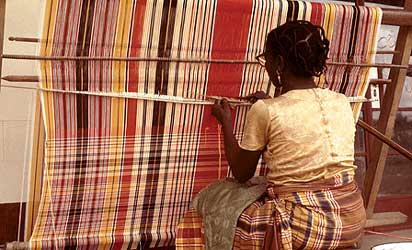
Weaving and fibre work formed an important part of the indigenous crafts of precolonial Igbo society, as they provided materials that were essential for clothing, storage, household use, and trade. These crafts were deeply connected to the natural environment, as artisans relied heavily on raffia palm, plant fibres, and other locally available materials.
In many Igbo communities, raffia palm was the most important raw material for weaving. Its fibres were processed, dried, and prepared before being turned into mats, baskets, bags, and decorative items. These products were used daily in homes for carrying goods, storing food, and organizing household activities. Mats were also used for sleeping and sitting, thus making weaving a direct part of everyday comfort and living.
Cloth production and textile weaving, though more limited in some areas, also existed in various forms before colonial influence increased the availability of imported fabrics. In some communities, locally woven cloth and raffia garments were used for clothing and ceremonial purposes. These items often carried meaning tied to identity, status, and cultural belonging.
Basketry was another highly developed skill within the indigenous crafts of precolonial Igbo society. Baskets were designed in different shapes and sizes depending on their use. Some were used for transporting agricultural produce, while others were used for market trade or household storage. The durability and flexibility of these baskets made them essential tools in both rural and trading life.
As part of the indigenous crafts of precolonial Igbo society, weaving was often a household skill passed down through generations. In many cases, knowledge was learned through observation and practice rather than formal instruction. Young learners would work alongside experienced family members, gradually developing the ability to produce functional and well-constructed items.
Beyond practicality, fibre crafts also carried cultural value. The patterns, shapes, and designs of woven items often reflected local identity and creativity. In festivals and ceremonies, specially prepared woven materials were sometimes used to mark important occasions.
Overall, weaving and fibre crafts were not just supportive household activities. They were a vital part of the indigenous crafts of precolonial Igbo society that connected natural resources to daily needs, trade, and cultural expression across Igboland.
Woodcarving and Mask-Making Traditions

Woodcarving and mask-making were among the most expressive elements of the indigenous crafts of precolonial Igbo society. These crafts went beyond simple decoration. They carried deep social, religious, and cultural meaning, and shaped how communities understood identity, spirituality, and authority.
In precolonial Igboland, skilled carvers worked mainly with locally available hardwoods. They produced a wide range of objects, including wooden masks, stools, doors, staffs of office, and figurative sculptures. Each item was carefully crafted with attention to form and symbolism, often reflecting the beliefs and values of the community.
Mask-making held a particularly important place in Igbo culture. Masks were not treated as ordinary objects. They were central to masquerade traditions which featured during festivals, funerals, and important communal ceremonies. These masks represented ancestral spirits, moral authority, and sometimes, social forces within the community. When used in performances, they helped to communicate ideas about justice, continuity, and respect for tradition.
The indigenous crafts of precolonial Igbo society are clearly seen in how carving was linked to both art and spirituality. Carved objects were often used in shrines, ritual spaces, and traditional governance. For example, staffs of office symbolized leadership while certain carved figures were believed to connect the living with the spiritual world.
Woodcarving was a highly respected profession. In many communities, it was passed down through apprenticeship. Young learners worked closely with master carvers, gradually learning how to select wood, use carving tools, and interpret symbolic designs. This learning process ensured that techniques and meanings were preserved across generations.
Beyond religious and political use, carved objects also played roles in storytelling and cultural memory. They visually represented myths, ancestral figures, and historical events, helping communities to pass knowledge without written records.
Within the wider system of the indigenous crafts of precolonial Igbo society, woodcarving and mask-making stand out for their artistic depth and cultural importance. They show how craftsmanship in Igboland was not only functional but also a powerful medium for communication, identity, and tradition.
Bead-Making and Metal Ornamentation

Bead-making and metal ornamentation formed an important and visually striking part of the indigenous crafts of precolonial Igbo society. These crafts were closely linked to status, identity, trade, and ritual life, and they often signalled social distinction within communities.
Beads in precolonial Igboland were made from different materials, including glass, stone, coral, and sometimes, locally sourced minerals. There are proofs from places like Igbo Ukwu that show a remarkable level of bead craftsmanship, with thousands of beads discovered alongside bronze and copper objects. This confirms that bead production and use were already highly developed long before colonial contact.
As part of the indigenous crafts of precolonial Igbo society, beads were not used only for decoration. They carried meaning. Certain beads were associated with leadership, spiritual authority, or wealth. They were worn during ceremonies, festivals, and important social events such as marriages and title-taking ceremonies. In many cases, bead patterns and arrangements communicated social status or community roles.
Metal ornamentation was also part of the broader system of the indigenous crafts of precolonial Igbo society. Artisans worked with copper, bronze, and other metals to produce decorative items such as armlets, anklets, ceremonial objects, and ritual pieces. These items were often carefully designed and sometimes combined with beadwork to create more elaborate forms of adornment.
Trade played a significant role in bead culture. Some materials, especially glass and coral beads, were obtained through long-distance trade networks that connected Igboland to wider West African and trans-Saharan exchange routes. This shows that Igbo craft systems were not isolated but part of broader economic interactions.
Bead-making also had cultural and symbolic importance. In many communities, beads were used in rituals and traditional ceremonies. They were sometimes associated with spiritual power, protection, or ancestral connection, depending on their type and context of use.
Overall, bead-making and metal ornamentation highlight how the indigenous crafts of precolonial Igbo society extended beyond practical production. They also expressed identity, authority, and cultural meaning, thus linking aesthetics with social life in precolonial Igboland.
Indigenous Technology and Innovation in Precolonial Igbo Society
The indigenous crafts of precolonial Igbo society were rooted in a wider system of knowledge that can best be described as indigenous technology. This was not technology in the modern industrial sense, rather a carefully developed body of skills, methods, and innovations used to solve everyday problems in farming, production, and community life.
At the centre of this system was practical intelligence applied to local resources. Igbo communities understood how to work with iron ore, clay, wood, and plant fibres to produce tools, vessels, and structures that met their needs. These processes were not random. They were refined over time through observation, experimentation, and experience passed across generations.
Iron smelting and forging stand out as one of the clearest examples of indigenous technological innovation. Archaeological sites such as Lejja and Igbo Ukwu provide evidence of early and complex iron production systems. These communities developed furnaces, controlled heating methods, and forging techniques that allowed them to produce durable tools for agriculture and warfare.
Agricultural innovation was another key area. Iron hoes, cutlasses, and digging tools improved farming efficiency and supported food production. Farming itself was adapted to seasonal cycles and local environmental conditions.
Among the indigenous crafts of precolonial Igbo society, ceramic production also demonstrates technical skill. Potters developed methods for preparing clay, controlling firing temperatures, and producing vessels that could withstand heat and long-term use. These techniques were refined through practice and shared within communities.
In weaving and fibre work, artisans learned how to extract, treat, and transform raffia palm fibres into usable materials. Basketry and mat making required precision in structure and pattern, ensuring strength and durability for daily use.
A key feature of the indigenous crafts of precolonial Igbo society was the system of knowledge transfer. Skills were not usually written down. Instead, they were taught through apprenticeship. Young learners worked closely with experienced craftsmen, learning step by step through demonstration and repetition until they achieved mastery.
Innovation also appeared in how tools and materials were adapted. Craftsmen often improved existing techniques to meet changing needs in agriculture, trade, and social life. This adaptability helped to ensure that indigenous technology remained relevant across generations.
Overall, indigenous technology in precolonial Igboland was practical, adaptive, and deeply integrated into daily living. It formed the foundation upon which the indigenous crafts of precolonial Igbo society operated.
Economic Importance of Indigenous Crafts
The indigenous crafts of precolonial Igbo society were not only cultural expressions. They were also the backbone of the precolonial economy in Igboland. Every major craft, from ironworking to pottery and weaving contributed directly to production, trade, and wealth circulation within and between communities.
At the local level, crafts supported everyday survival. Farmers depended on iron tools such as hoes and machetes to cultivate crops, while households relied on pottery for cooking, storage, and water supply. Woven baskets and mats made the movement and storage of goods easier. These items were not luxury goods. They were essential for daily life, which made craftsmanship a continuous economic activity.
Markets played a central role in the circulation of the indigenous crafts of precolonial Igbo society. The Igbo had a well-developed market system where goods were exchanged regularly. Crafted items such as pots, tools, baskets, and carved objects were traded alongside agricultural produce. This created a balanced economic system where both farming and craftsmanship supported one another.
Specialization was another important feature of the indigenous crafts of precolonial Igbo society. Certain communities became known for specific crafts, such as blacksmithing or pottery. This specialization encouraged interdependence, as no single community produced everything it needed. As a result, trade relationships developed between different regions of Igboland.
The indigenous crafts of precolonial Igbo society also contributed to wealth creation and social mobility. Skilled artisans could gain recognition and economic stability through their work. In some cases, successful craftsmen accumulated resources that improved their social standing within the community. Craft production was, therefore, not only about survival but also about status and opportunity.
Long-distance trade further expanded the economic reach of indigenous crafts. Items such as beads, metal ornaments, and specialized tools were sometimes exchanged beyond local markets. Igbo communities were connected to wider trade networks that extended across West Africa.
In addition, crafts supported a form of economic resilience. Because production was local and resource-based, communities could sustain themselves, even in the absence of external goods. This self-reliance was a key feature of the precolonial Igbo economy.
Overall, the indigenous crafts of precolonial Igbo society formed an interconnected economic system. They supported daily life, strengthened trade networks, encouraged specialization, and created pathways for wealth and social recognition across Igboland.
Cultural and Religious Significance of Crafts
In precolonial Igboland, craftsmanship was never limited to practical use alone. The indigenous crafts of precolonial Igbo society were deeply woven into culture, spirituality, and community life. Objects made by hand often carried meanings that went beyond their physical function. They linked people to beliefs, traditions, and the unseen world.
Many crafted items were used in religious and ceremonial settings. Carved wooden masks, for example, played a central role in masquerade traditions. These masquerades were not seen as entertainment alone. They represented ancestral spirits and moral authority, appearing during festivals, funerals, and important community events. The masks and costumes used in these performances were carefully crafted to reflect specific meanings and identities.
Iron objects also held spiritual significance in some communities. Beyond farming and warfare tools, certain iron items were associated with protection, ritual practices, and traditional authority. Blacksmiths themselves were often regarded with respect because their work was believed to involve powerful transformation of raw materials into useful and sometimes sacred objects.
Pottery also carried cultural meaning within the indigenous crafts of precolonial Igbo society. While many pots were used for cooking and storage, some were reserved for rituals, ancestral offerings, or ceremonial use. The form and decoration of these vessels could signal their purpose and importance within different cultural contexts.
Beads and ornaments were equally significant. In many Igbo communities, beadwork was associated with leadership, social status, and spiritual identity. Certain beads were worn during important ceremonies such as marriages, title-taking events, and festivals. They often communicated rank, achievement, or community belonging without the need for spoken explanation.
Woodcarving further strengthened the connection between craft and belief systems. Carved figures, stools, staffs, and doors were not only artistic expressions, they were also symbolic objects used in shrines, leadership spaces, and ancestral remembrance. These items helped to preserve stories, values, and spiritual ideas within the community.
The indigenous crafts of precolonial Igbo society also played a role in festivals and seasonal celebrations. Crafts provided the materials used in costumes, decorations, and ritual performances that marked agricultural cycles and communal gatherings. These events reinforced unity and collective identity.
Overall, indigenous crafts of precolonial Igbo society carried both visible and invisible meaning. They supported daily life while also connecting people to tradition, spirituality, and social order. Through them, communities expressed identity, preserved belief systems, and maintained continuity across generations.
Decline and Transformation During the Colonial Era
The arrival of colonial rule in Igboland brought major changes to the indigenous crafts of precolonial Igbo society. While these crafts had long supported local economy, culture, and daily life, new political and economic systems introduced by colonial administration began to alter how goods were produced, valued, and traded.
One of the most significant changes was the introduction of imported manufactured goods. Items such as metal tools, textiles, ceramics, and household utensils began to enter local markets in larger quantities. These goods were often cheaper or faster to acquire than locally made products which reduced the demand for some traditional crafts, especially in urban and mission-influenced areas.
The structure of production also changed. Before colonial rule, craftsmanship was largely based on apprenticeship systems and family traditions. With colonial economic expansion, wage labour and cash crop farming became more dominant. Many people shifted their focus from craft production to agriculture for export or paid employment. This affected the continuity of craft traditions.
Some aspects of the indigenous crafts of precolonial Igbo society also experienced disruption due to changes in trade networks. Traditional markets remained important, though, but they were increasingly connected to colonial economic systems that prioritized imported goods and external trade routes. This shift weakened some local exchange systems that had previously supported craft specialization.
Religious and cultural changes also influenced craft production. Missionary activities and new belief systems reduced the role of certain ritual objects and ceremonial practices where crafts like masks, carvings, and ritual vessels were central. In some areas, objects linked to traditional religion were discouraged or removed from public use, thereby affecting the cultural context in which artisans worked.
However, it is important to note that these indigenous crafts of precolonial Igbo society did not disappear. Instead, many of them adapted. Some blacksmiths continued producing tools for farming in rural areas. Pottery remained essential in households that still preferred traditional cooking and storage methods. Weaving and basketry also continued, especially in rural communities where local materials were still widely used.
Over time, the indigenous crafts of precolonial Igbo society began to shift from being purely functional systems of production to more specialized cultural expressions. In some cases, crafts became more associated with art, heritage, and identity preservation rather than everyday necessity.
Despite colonial disruption, many craft traditions survived and later became symbols of cultural resilience. Today, they are studied, preserved, and in some cases revived as part of efforts to reconnect with indigenous knowledge systems and historical identity.
Legacy of Indigenous Crafts in Modern Igbo Society
Even after major changes brought by colonial rule and modern industrial life, the indigenous crafts of precolonial Igbo society have not disappeared. Instead, they continue to live on in different forms, as they adapt to new realities while still carrying traces of older traditions.
In many parts of Igboland today, traditional crafts are still visible in everyday and cultural life. Pottery, for example, continues in some rural communities where locally made clay pots are still used for cooking, storage, and water cooling. Although modern containers are now common, traditional pottery remains valued for its durability and cultural familiarity.
Ironworking and blacksmithing also continue, especially in rural and semi-urban areas. Modern blacksmiths may use updated tools and techniques, but they still produce farming implements, metal repairs, and household tools. As such, the skills passed down from earlier generations remain relevant, even if the scale and demand have changed.
Weaving and basketry are another strong part of the indigenous crafts of precolonial Igbo society that still survive. Raffia baskets, mats, and woven items are widely used in homes, markets, and ceremonies. In many cases, these crafts have also entered the tourism and cultural heritage space where they are valued as expressions of identity and tradition.
Among the indigenous crafts of precolonial Igbo society, woodcarving has perhaps seen one of the most visible transformations. While it once served mainly religious and communal functions, today it also exists as an artistic and commercial craft. Carved masks, sculptures, and decorative pieces are now sold in markets, displayed in museums, and used in cultural performances that celebrate Igbo heritage.
Bead-making and ornamentation also remain significant, especially during traditional ceremonies like marriages, chieftaincy titles, and cultural festivals. Beads continue to symbolize status, identity, and cultural pride.
Beyond physical production, the legacy of these crafts is also preserved through cultural memory and education. Schools, cultural organizations, and historians continue to document and teach the importance of indigenous knowledge systems. Museums and archaeological research, especially findings from sites like Igbo Ukwu, have also helped to preserve awareness of early technological achievement in Igboland.
The indigenous crafts of precolonial Igbo society now also influence contemporary art and design. Modern artists often draw inspiration from traditional patterns, forms, and symbols to blend old techniques with new creative expressions. This shows that these crafts are not frozen in history, rather, they continue to evolve.
In a broader sense, the survival of these indigenous crafts of precolonial Igbo society represents cultural continuity. They remind modern Igbo society of a time skill, patience, and locally sourced knowledge shaped everyday life. Even as lifestyles change, these crafts remain a strong link to heritage, identity, and collective memory across generations.
Conclusion …
The indigenous crafts of precolonial Igbo society were more than practical skills used for survival. They formed a complete system of knowledge that supported economy, culture, religion, and social organization across Igboland. Ironworking provided tools that sustained agriculture and daily labour. Pottery made household life functional and stable. Weaving and basketry supported trade and domestic needs. Woodcarving, bead-making, and ornamentation gave meaning to identity, spirituality, and leadership.
What stands out across all these crafts is how deeply they were connected to community life. Production was not separated from culture or belief. Instead, craftsmanship was part of how people understood the world around them and how they passed knowledge from one generation to the next. Skills were learned through apprenticeship, practice, and close observation, ensuring continuity over time.
Historical and archaeological evidence, especially from sites such as Igbo Ukwu and Lejja, confirms that these traditions were highly developed long before colonial influence. They reveal a society that was technically skilled, creatively rich, and well organized in its systems of production and exchange.
Although colonial rule and modern industrialization changed many aspects of traditional craft life, these practices did not disappear. They adapted, survived, and continue to exist in new forms within the modern Igbo society. Today, they remain important markers of identity, heritage, and cultural memory.
Learning about these crafts helps us appreciate the depth of indigenous knowledge systems in Igboland and their lasting contribution to African history.
References
- Shaw, T. (1970). Igbo-Ukwu: An account of archaeological discoveries in Eastern Nigeria. Oxford University Press. https://global.oup.com/academic/product/igbo-ukwu-9780198132031
- Encyclopaedia Britannica. (n.d.). Iron Age. https://www.britannica.com/topic/Iron-Age
- Springer. (2019). Archaeological study of iron smelting in Lejja, Nigeria. https://link.springer.com/article/10.1007/s10437-019-09360-3
- Elsevier. (2026). Ceramic production in West Africa: A case study from Igboland. Journal of Archaeological Science: Reports. https://www.sciencedirect.com/science/article/pii/S2352409X26001501
- Cambridge University Press. (n.d.). Pottery-making in Igboland: An ethnoarchaeological study. https://www.cambridge.org/core/journals/proceedings-of-the-prehistoric-society/article/pottery-making-in-igboland-eastern-nigeria-an-ethnoarchaeological-study/4CBE65AE9BBAF4595149B9EB61D58138
- Encyclopaedia Britannica. (n.d.). African art: Igbo. https://www.britannica.com/art/African-art/Igbo
- Khan Academy. (n.d.). Igbo-Ukwu: An overview. https://www.khanacademy.org/humanities/art-africa/west-africa/nigeria/a/igbo-ukwu-an-overview
- UNESCO. (n.d.). Indigenous knowledge systems. https://en.unesco.org/themes/indigenous-peoples/knowledge
You might want to check this out …