




African Culture and Traditions
Ine Aho Festival in Issele-Uku

Discover Ine Aho festival – an age-long Issele-Uku custom. Learn the history, meaning, rituals, leadership, cultural importance, dates, and its tourism potential.
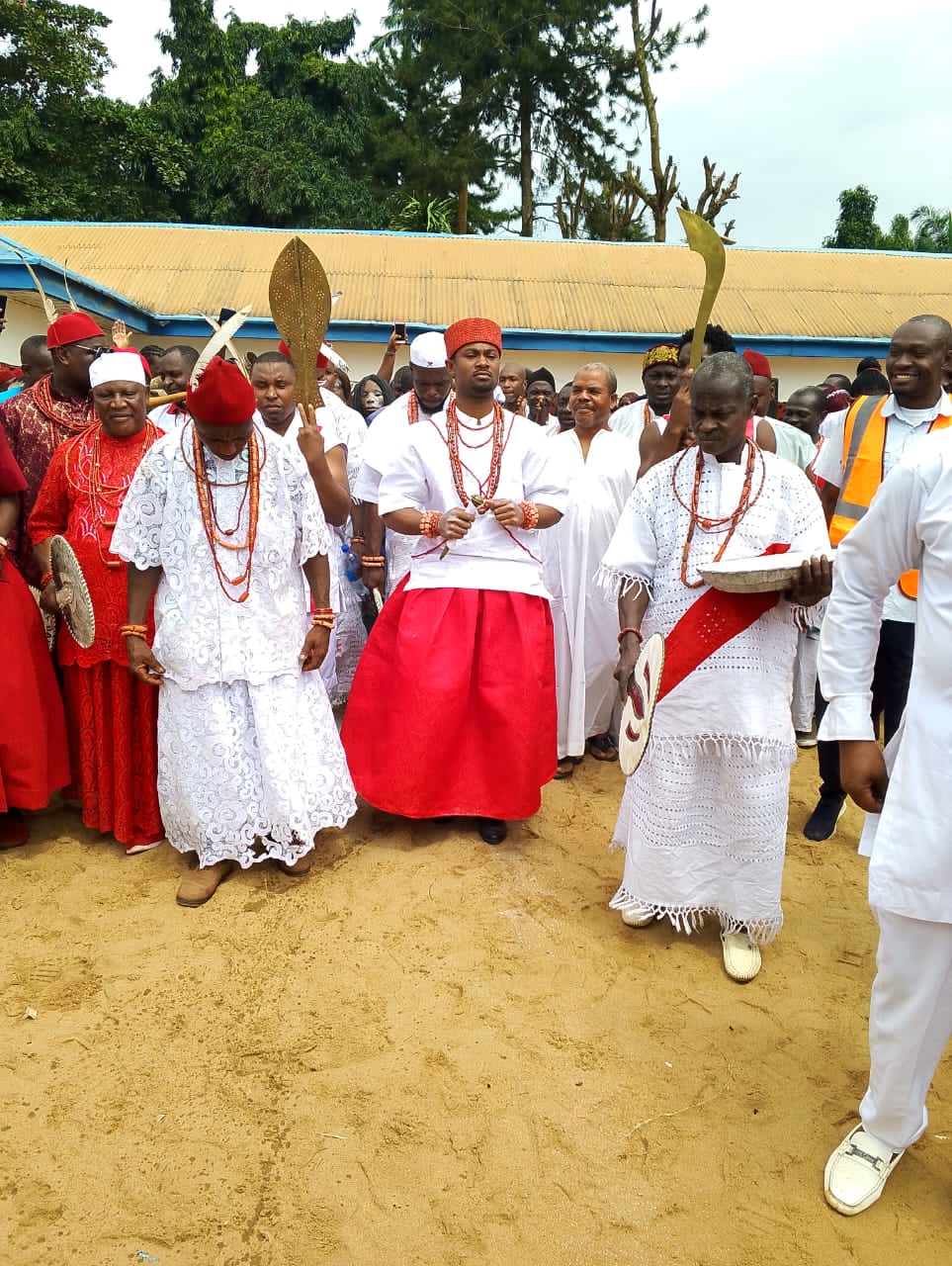
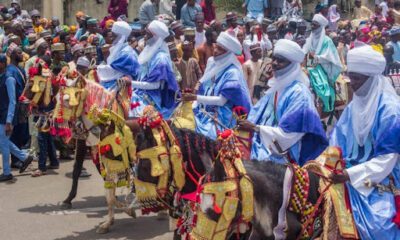
Every year, the peaceful town of Issele-Uku in Delta State bursts into colour, rhythm and deep tradition as its people gather for the famous Ine Aho festival. The air usually fills with the sound of drums, the sight of elegant royal processions and the joy of families returning home to celebrate their roots.
But beyond the music and dancing is something deeper. A sacred connection between the living and their ancestors. A renewal of the people’s spirit. A reminder of who they are. Ine Aho festival is a living story of heritage, unity and thanksgiving that has survived through centuries.
Whether you are a lover of culture, a traveller seeking authentic experiences or someone curious about African traditions, Ine Aho festival opens a window into the soul of a proud kingdom that continues to honour its past while embracing the present.
Origin of Ine Aho Festival
The origin of Ine Aho festival is deeply rooted in the ancient traditions and spiritual life of Issele-Uku people, one of the key Anioma communities in Delta State. To understand how this festival began, one must first look at the history of Issele-Uku itself,which traces its lineage to the Benin Kingdom.
Oral traditions tell that the founder of Issele-Uku, Prince Ujomor of Benin left his father’s palace and established a new settlement where he and his followers could maintain their customs and governance. Over time, this new settlement grew into a powerful kingdom with its own royal structure, rituals and calendar of festivals that reflected both Benin influence and indigenous Anioma values.
Ine Aho festival is believed to have emerged from a combination of these early influences, serving originally as a harvest thanksgiving and a renewal ceremony. The word “Ine” in the local dialect is associated with celebration and joy while “Aho” is connected to the yearly cycle, signifying a period of rest, renewal and thanksgiving after the farming season.
In ancient times, the people of Issele-Uku were mainly farmers who depended on yam and other crops. At the end of the farming year, they gathered to offer sacrifices to the gods and ancestors, thanking them for fertility of the soil, good harvests and protection from calamities. The festival also served as a period to cleanse the land spiritually and prepare for the next agricultural season.
Over generations, Ine Aho festival expanded beyond its agrarian purpose to include royal and social dimensions. It became a time when the Obi of Issele-Uku, the traditional ruler and spiritual head of the kingdom performed sacred rituals to bless the people, renew his covenant with the ancestors and reaffirm his leadership.
Chiefs and title holders also used the festival period to pay homage to the king, perform their hereditary duties and renew their oaths of allegiance. These royal rites gave the festival a unique blend of spirituality, governance and cultural pageantry that distinguished it from ordinary community gatherings.
Another important layer of the festival’s origin lies in its role as a social regulator. In the past, Ine Aho was not only a time of joy but also a time of truth. Through songs, dances and satirical performances, people expressed opinions about community issues, leadership and moral conduct.
Wrongdoing could be called out through symbolic acts, helping to maintain harmony and justice within the town. This tradition of open expression during the festival reinforced the idea that Ine Aho festival was both a time for celebration and for moral reflection.
The festival has since evolved but continues to carry these original meanings. While the royal rituals, ancestral offerings and symbolic performances remain central, modern versions of Ine Aho have embraced contemporary elements such as cultural displays, music concerts and community awards. Yet, at its core, the festival still represents the heartbeat of Issele-Uku’s identity – a bridge between its ancient Benin heritage, Anioma traditions and the enduring spirit of its people.
Today, when the people of Issele-Uku gather for Ine Aho festival, they are not merely observing a yearly event; they are reliving a centuries-old story of origin, survival and unity. The festival stands as a living testimony to the kingdom’s deep respect for its ancestors, its faith in divine providence, and its commitment to preserving culture in a changing world.
Purpose and Meaning

Ine Aho festival carries a wealth of meaning that touches every aspect of Issele-Uku people’s spiritual, cultural, social and moral life. To the people of this historic Anioma kingdom, the festival is not just an annual event but a sacred moment of gratitude, renewal, and reflection. It brings the entire community together in thanksgiving to God, the ancestors and the deities who are believed to guide, protect and bless the land. Each element of the celebration – every song, dance, ritual and gathering expresses the people’s deep sense of connection to their history and to one another.
At its deepest level, Ine Aho festival is a thanksgiving and renewal ceremony. It comes at the end of the agricultural year, when farmers have harvested their crops and can pause to give thanks for the bounty of the earth. The people see the festival as a time to express gratitude for rain, fertility of the soil, good health and protection from misfortune throughout the year.
The word “Aho” itself refers to the annual cycle or year, symbolizing the completion of one season and the hopeful beginning of another. By performing the rituals and offering sacrifices, the people seek blessings for continued prosperity and divine favour in the coming year.
The festival also serves a profound spiritual purpose. It is a time when the living commune with the ancestors, reaffirming their respect for those who came before them. In Issele-Uku’s worldview, ancestors are not gone, they are active spiritual guardians who watch over the community. Through prayers, libations and sacrifices, the people ask for their continued protection and guidance.
The Obi of Issele-Uku who is regarded as the spiritual father of the land, performs special rites within the palace to renew the bond between the living and the ancestral spirits. These sacred acts are believed to ensure harmony between the spiritual and physical realms, bringing balance and blessings to every household.
Beyond its spiritual dimensions, Ine Aho festival also has a royal and political significance. The Obi’s role during the festival is central. He presides over the ceremonies, offers blessings to the people and leads rituals that symbolize his divine mandate as the custodian of the land. The festival reaffirms his authority and strengthens the unity between the throne and the subjects.
Chiefs and titled men use this occasion to renew their allegiance, pay homage to the king and perform hereditary duties tied to their offices. These royal ceremonies remind the people of the importance of loyalty, order and respect for leadership, values that have helped sustain Issele-Uku’s stability over the centuries.
In addition, Ine Aho festival has an important social and communal meaning. It is one of the few times of the year when sons and daughters of Issele-Uku, both at home and abroad return to their roots. Families reunite, relationships are rekindled and old disputes are often settled in the spirit of peace.
The festival encourages forgiveness and togetherness, as everyone comes under one cultural umbrella to celebrate their shared identity. The air is filled with laughter, music and the smell of traditional food, creating a warm atmosphere of joy and belonging.
The festival is also a platform for education, moral reflection and social correction. In traditional times, elders and performers used the occasion to pass messages of wisdom through proverbs, songs and masquerade performances. Satirical plays and chants were used to address misconduct, dishonesty or social injustice in the community without malice but as a way to encourage better behaviour. Even today, these performances continue, reminding everyone that the festival is not only about merriment but also about truth, self-examination and moral renewal.
Another layer of meaning lies in the celebration of cultural identity. Ine Aho festival is a living classroom of Issele-Uku tradition. Through the dances, attires, chants and rituals, the younger generation learns about their origin, beliefs and customs.
It reinforces pride in their Anioma heritage and ensures that traditional knowledge is passed down through participation rather than mere instruction. The festival becomes a cultural mirror that reflects who the people are, where they come from and what values hold them together.
Finally, Ine Aho festival serves as a symbol of hope and continuity. It marks the passing of time not as an ending but as a cycle of renewal. Each year, as the drums sound and the people gather before their king, they are reminded that life itself moves in seasons of planting and harvesting, of hardship and celebration, of death and rebirth. The festival is a promise that the community will continue to thrive as long as its people remain united, grateful and faithful to their roots.
In essence, the purpose and meaning of Ine Aho go far beyond outward celebration. It is a sacred period of thanksgiving, ancestral connection, royal reaffirmation, moral instruction and cultural preservation. It binds the past, present and future of the Issele-Uku people together, reminding them that a community that honours its history and values will always find strength to face whatever lies ahead.
Timing and Duration of Ine Aho Festival
Ine Aho festival is celebrated annually in Issele-Uku, usually between the months of August and September, a period that coincides with the end of the farming season and the beginning of the harvest. This timing is not accidental. It reflects the deep agricultural roots of the community and their dependence on the rhythm of nature. The festival comes after months of hard work in the fields, serving as both a thanksgiving for a successful harvest and a prayer for continued blessings in the coming year.
Unlike many one-day festivals, Ine Aho festival is a seasonal celebration that unfolds over several weeks, sometimes, lasting close to a month depending on the year’s calendar and palace schedule. The dates are not fixed but are traditionally announced by the palace after due consultation with the Obi of Issele-Uku, the chiefs and custodians of the land’s customs. Once the dates are made public, preparations begin in earnest across families, quarters and institutions in the kingdom.
The festival period is divided into stages, each with its own meaning and set of activities. It often begins quietly with sacred prayers and ritual cleansing performed within the palace and ancestral shrines.
These early rites are not open to the general public but are crucial because they set the spiritual tone for the events that follow. During this phase, the Obi and the palace priests seek divine permission for the celebration and invoke the blessings of the ancestors upon the land.
Following these sacred preparations comes the most colourful and public stage of the festival, commonly referred to as Ine Onyimi or the “Ine Day.” This is the peak of the celebration marked by cultural performances, dances, masquerades and royal appearances.
It is the day when the entire community, including indigenes living in other parts of Nigeria and abroad, gathers in Issele-Uku to rejoice, exchange greetings and showcase their shared heritage. Ine Day embodies the spirit of unity, joy and thanksgiving that defines the entire festival.
After the public celebration, the festival gradually transitions into its closing phase which is often marked by important palace rituals such as Ihu Onicha or Ishu Onicha. These concluding ceremonies are solemn and symbolic.
They signify the end of the Ine season and the beginning of a new spiritual cycle for the kingdom. During this period, palace chiefs, titled men and elders perform their traditional duties, pay homage to the Obi and partake in prayers and sacrifices that reaffirm peace and prosperity in the land.
Altogether, Ine Aho festival may last from two weeks to one month, depending on the number of ceremonies and the extent of public participation that year. Each stage, from preparation, celebration to conclusion flows seamlessly into the next, creating a festival season that blends devotion, culture and communal joy.
The festival’s flexible duration also allows Issele-Uku indigenes living outside the town to return home and take part. For many families, this is the most anticipated time of the year, a period when old compounds come alive again with laughter, music and the sound of traditional drums echoing through the air. The extended timeline ensures that everyone, whether young or old, has a role to play and an opportunity to experience the richness of their heritage.
In essence, the timing and duration of Ine Aho festival reflect the deep harmony between the people, their land and their spiritual calendar. By aligning the celebration with the natural and agricultural cycles, Issele-Uku community reaffirms its connection to the earth, its ancestors and its future. Each year’s festival becomes not just a date on the calendar, but a sacred season of joy, of reflection and renewal.
Major Rituals and Public Events

Ine Aho festival is best understood as a sequence of rites that combine public spectacle with palace ceremonies. Here are the main types of events commonly observed during the festival. Each item describes what typically happens and why it matters.
Opening prayers and sacrifices
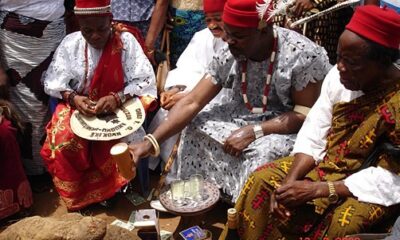
Before public merrymaking begins, the Obi and palace officers often perform spiritual rites to announce the festival and seek the favour of ancestors and gods. These private rites prepare the community and are considered essential for the success and protection of the events that follow.
Ine Day public celebration
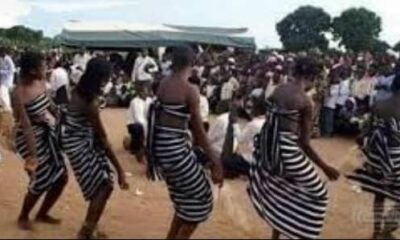
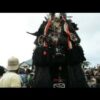
The central public day is often called Ine or Ine Onyimi. On this day the kingdom celebrates with dances, masquerades, music, marketplaces, and large gatherings. This is the time for wide community participation and public entertainment.
People from the town and diasporic communities return to join family reunions, enjoy food and celebrate their shared heritage. The day often features competitions, cultural dances, choral items and moments when people speak frankly about local matters in a satirical but accepted way.
Royal displays and warlike performance
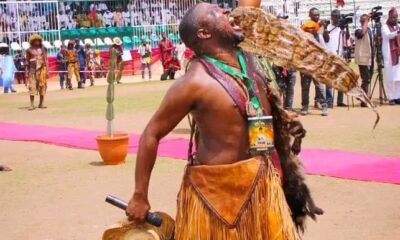
The festival showcases the monarch who appears in regal attire and performs acts that stress his role as protector and leader. In Issele-Uku, the king, often called Agbogidi Obi may perform or preside over warlike displays or symbolic movements that underline his traditional authority. These public displays link the present king to the ancient role of war leader and custodian of the people.
Ihu Onicha and Ishu Onicha rites
As the festival draws to a close, the Ihu Onicha or Ishu Onicha ritual is performed. This event is tied to the final series of palace rites in which chiefs pay homage, the monarch offers final sacrifices and symbolic acts like royal handshakes take place to mark unity and continuity.
Journalistic descriptions show that Ihu Onicha can be a major closing ceremony attended by title holders and palace chiefs in full regalia. The ritual often ends with the slaughtering and distribution of a goat or other offerings and with gunshots or other signals that the rites are complete.
Title holder ceremonies and homage
Several days often focus on the palace title holders. Chiefs such as the Osodi, Ide, Osoeze-Ebi and others perform their duties, pay homage to the Obi and take part in dances that identify their office responsibilities. These moments are public, colourful, and highly symbolic, reinforcing the palace hierarchy and cultural memory.
Private rituals and final prayers
After the public display ends, private rites continue for a short period. These include Eke Obo and Eke Nmo prayers or other offerings that finalize the spiritual calendar for the year. These acts draw a line of finality around the season and make sure all spiritual matters are settled. Observers often note that while some parts are open, other final rites remain within palace or family circles.
Leadership and Roles During the Festival
Leadership during the Ine Aho festival is structured around the palace and its chiefs. The Obi is the focal point and leads the spiritual and ceremonial calendar. In public events, the Obi appears in ceremonial dress, offers prayers, receives homage from chiefs and presides over key rituals. The Obi also acts as host and symbol of unity during parades and receptions.
The palace chiefs and title holders each have clearly defined roles. For example:
- The Osodi is responsible for the welfare of the queen and performs dances and homage on designated days.
- The Ide is a palace officer who supports ceremonial duties and can lead public processions.
- Osoeze-Ebi, Olikeze, Osigie and other titled leaders execute palace functions and often represent specific families or wards. These chiefs may lead specific processions or ritual acts and receive honours from the Obi.
Beyond traditional leaders, a festival committee usually manages logistics, public invitations, safety, schedule and promotion. The committee works with the palace to balance sacred rites and public entertainment.
Local government and cultural organizations frequently partner with the committee to support guests, security, and publicity.
Cultural Importance of Ine Aho Festival
Ine Aho festival holds deep cultural significance for the people of Issele-Uku. It is far more than a period of celebration. It is a time when the community reconnects with its history, renews its unity and strengthens its collective identity. The festival serves as a living reminder of who the people are, where they come from and the values that continue to bind them together across generations.
At its core, Ine Aho festival is a powerful expression of ancestral reverence. The people of Issele-Uku use this occasion to honour their forebears, thank them for their protection and seek continued blessings for the land. Every ritual, dance and song performed during the festival carries symbolic meaning rooted in the town’s cultural and spiritual heritage. The traditional prayers offered at shrines and the palace are not just religious acts but also affirmations of the community’s belief in continuity between the living and the ancestors.
The festival also promotes unity and togetherness. During Ine Aho, social divisions dissolve as families, age grades and social groups come together to celebrate as one people. This spirit of unity reinforces the values of cooperation, mutual respect and peace. It reminds both the young and old that the progress of the community depends on harmony and shared responsibility.
Cultural transmission is another major function of Ine Aho festival. Through participation in the various activities, young people learn the traditions, songs, dances and moral lessons of their ancestors. The festival serves as an open classroom where elders pass down the customs and practices that define the Issele-Uku identity. In a rapidly modernizing world, this role is especially important in preserving indigenous knowledge and preventing cultural erosion.
Ine Aho festival is also a time for displaying the rich artistic and aesthetic traditions of Anioma people. Traditional attire, royal regalia, drumming and masquerade performances showcase the community’s creativity and sense of beauty. These cultural expressions not only entertain but also communicate values such as courage, wisdom, discipline and respect for authority.
Furthermore, the festival reinforces the authority of the Obi and the traditional institution. The presence of the monarch and the performance of palace rites remind the people of their shared loyalty to the throne and the role of traditional leadership in maintaining order and continuity. The respect shown to the Obi during the festival underscores the deep-rooted belief in leadership that serves the people and protects the heritage of the land.
In a broader sense, Ine Aho festival strengthens the identity of Issele-Uku within the larger Anioma and Delta State cultural landscape. It distinguishes the community as one that values its history and proudly showcases its heritage to the world. Through the festival, the people assert their cultural independence and ensure that their unique traditions remain relevant in the modern era.
In essence, the cultural importance of Ine Aho festival lies in its power to connect generations, sustain identity and celebrate the values that define Issele-Uku. It is a yearly reminder that culture is not static but a living legacy that continues to inspire pride, unity and continuity among the people.
Tourism Potential of Ine Aho Festival

Ine Aho festival holds immense tourism potential that can significantly boost cultural awareness and local development in Issele-Uku and its surrounding communities. Beyond being a traditional event, it is a living cultural experience that attracts people who are curious about the history, rituals and colourful heritage of Delta North and the Anioma people. With proper promotion and organization, the festival could easily become one of Nigeria’s most admired cultural tourism attractions.
Visitors who attend Ine Aho festival are treated to a rich blend of tradition, music, dance and royal splendour. The festival offers tourists a front-row experience of the Anioma worldview. One that celebrates respect for elders, honouring the ancestors and the unity of family and community. The regal presence of the Obi of Issele-Uku and the display of traditional titles, masquerades and royal processions create a visual and emotional appeal that few cultural events can match.
One of the most attractive aspects for tourists is the authenticity of the celebration. Unlike modernized festivals that have lost their roots, Ine Aho festival retains its original customs and rituals. From the sacred palace ceremonies to the public dancing arenas, every part of the celebration reflects centuries of preserved tradition. Tourists who value genuine cultural immersion would find Issele-Uku a fascinating destination during the festival season.
The festival also contributes to the local economy through increased commercial activity. Hotels, restaurants, transport operators, craft vendors and local artisans all benefit from the influx of visitors. Many families living abroad plan their visits to coincide with the festival, bringing along friends and guests who want to witness the event firsthand. The presence of visitors from different parts of Nigeria and the diaspora enriches the cultural exchange and helps promote the identity of Anioma people to the wider world.
In addition to its cultural and economic value, Ine Aho festival can serve as a platform for heritage education and community branding. Organizing cultural exhibitions, traditional music performances and guided heritage tours during the festival could enhance its tourism appeal. Schools, universities and cultural institutions could also collaborate to document and showcase the history and meaning of the festival to global audiences.
There is also potential for media partnerships and digital promotion. The use of social media, photography and video storytelling could project the beauty of the festival beyond local boundaries. Documentaries, travel blogs and cultural vlogs featuring Ine Aho festival could attract tourists interested in experiencing authentic African traditions.
With consistent branding and the support of the Delta State Tourism Board, Issele-Uku could be positioned as a must-visit destination during the Ine Aho season.
If well managed, Ine Aho festival can play a major role in promoting sustainable tourism in the region. Its emphasis on community participation, respect for the environment and preservation of culture aligns perfectly with modern tourism values. The festival encourages visitors to appreciate cultural diversity while supporting local livelihoods.
Ultimately, Ine Aho festival is not only a celebration of tradition but also a valuable opportunity for cultural tourism and development. By investing in infrastructure, documentation and promotion, Issele-Uku can transform the festival into a globally recognized event that brings together people from different backgrounds to share in the joy, colour and heritage of Anioma people.
Evolution of the Festival in Contemporary Times
Over the years, Ine Aho festival has evolved while still maintaining its traditional essence. Modern influences, urban migration and changing lifestyles have reshaped how the festival is celebrated today. Yet, its spirit of unity, thanksgiving and cultural pride remains as strong as ever.
In earlier times, the festival was an entirely traditional affair, guided strictly by ancestral customs and observed mainly within the palace, shrines, and family compounds. Participation was mostly limited to indigenes, with little external influence. Today, however, the festival has become more inclusive and vibrant, attracting visitors from across Delta State, Nigeria, and even the diaspora. The inclusion of contemporary elements such as live music, cultural exhibitions and community parades has added new energy to the age-old celebration.
One of the most notable modern changes is the increased involvement of youth and community organizations. Younger generations now play active roles in planning, organizing and promoting the festival, often using social media platforms to share highlights, photos and stories with wider audiences. This digital presence has helped reawaken interest among indigenes living outside the town, making it easier for them to reconnect with their roots and participate, even virtually.
The role of the Issele-Uku Development Union (IDU) and other civic groups has also expanded. These organizations collaborate with the palace and traditional council to ensure that the festival remains well-coordinated and reflects the dignity of the community. Such partnerships have brought a more structured approach to logistics, security and event management, ensuring that the celebration runs smoothly while maintaining respect for tradition.
In addition, Ine Aho festival now serves as a platform for showcasing local talent and promoting small businesses. Local artisans, dancers, drummers and fashion designers display their creativity during the celebration. Entrepreneurs benefit from increased commercial activity as visitors patronize food vendors, souvenir stalls and hospitality services. This has strengthened the festival’s role as not only a cultural event but also an avenue for community empowerment and economic growth.
Despite the modernization, the sacred aspects of Ine Aho festival remain intact. The palace rituals, ancestral prayers and symbolic sacrifices are still observed by the Obi, chiefs and custodians of tradition. These ceremonies continue to anchor the celebration in spirituality and remind everyone of its original purpose which is, to thank the ancestors and seek divine blessings for peace and prosperity.
Efforts have also been made to preserve the traditional songs, dances, and rituals through documentation and education. Cultural enthusiasts and scholars have begun recording the oral histories and practices associated with Ine Aho to ensure that future generations understand its origins and meanings. Schools and cultural clubs within Issele-Uku now teach aspects of the festival as part of heritage education, helping to sustain its relevance in a changing world.
In today’s Issele-Uku, Ine Aho festival stands as a bridge between the past and the present. It blends the ancient and the modern, the sacred and the social, creating an experience that unites all indigenes regardless of age or background. While modern touches have enhanced its appeal, the essence of the festival, that is, thanksgiving, unity and cultural pride continues to shine through.
As Ine Aho festival continues to adapt to modern realities, its endurance is a testament to the people’s resilience and devotion to their heritage. Ine Aho festival remains a celebration of identity and continuity, reminding every son and daughter of Issele-Uku that tradition, when preserved and embraced, remains the strongest link between the past and the future.
Conclusion
Ine Aho festival stands as a timeless reflection of Issele-Uku’s soul. A celebration where faith, heritage and community blend into a single, living story. Each year, as the drums echo through the town and the air fills with song and colour, the people are reminded not only of their history but of their shared strength and identity.
What makes Ine Aho festival truly special is its ability to speak across generations. It invites the young to learn from the past, the elders to pass down their wisdom, and the entire community to renew its bond of unity. In a world where traditions are fading, Issele-Uku has managed to keep this one alive, evolving with time, yet, holding firmly to its roots.
Beyond its spiritual and cultural meaning, the festival has become a rallying point for progress. It inspires pride among indigenes at home and abroad, fuels local tourism and strengthens the economic and social life of the town. More importantly, it tells the world that culture, when cherished, can be both a bridge to the past and a direction toward the future.
Ine Aho festival is, therefore, more than an event. It is a living legacy. A yearly reminder that the people of Issele-Uku continues to thrive, grow and tell their story with grace, colour and purpose.
References
- https://tribuneonlineng.com/isele-uku-rounds-off-2025-ime-aho-festival-with-ihu-onicha-ritual/
- https://newtelegraphng.com/with-ine-festival-isele-uku-kingdom-solidifies-essence-of-communal-living/
- https://www.cshowcasenews.com/chief-krees-njiokwuemeni-pays-homage-to-issele-uku-monarch-as-community-celebrates-ine-aho-festival/
- https://aniomatrust.com/issele-uku-ine-festival-turns-carnival-as-obi-nduka-expresses-satisfaction-with-kingdoms-adherence-to-cultural-heritage/
- https://flashpointnews.wordpress.com/2022/09/17/issele-uku-ine-aho-festival-ends-with-ishu-onicha-as-6-palace-chiefs-pay-homage-to-obi-nduka/
- https://www.vanguardngr.com/2021/09/issele-uku-kingdom-celebrates-ine-festival/
You might want to check this out…