






Igbo Culture and Tradition
Iri Ekpe in Igbo Culture: The Traditional Inheritance System When a Man Dies Without a Male Heir

Iri ekpe in Igbo culture is a traditional inheritance system that transfers a man’s property to his closest male relative when he dies without a male heir. Learn its meaning, history, legal standing, and relevance today.
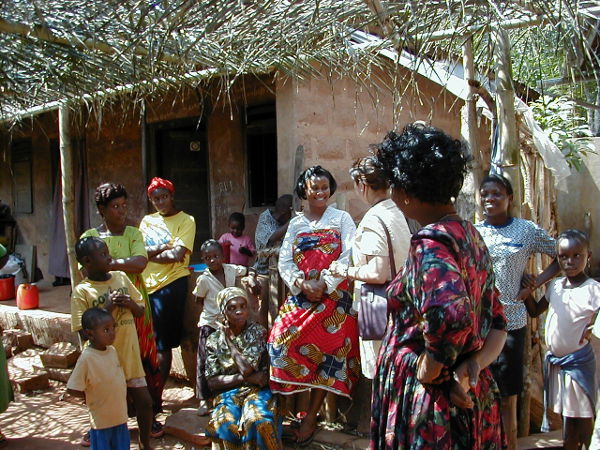
To Igbo people, land means more than property. It carries family name, history, and the memories of those who came before. A piece of ancestral land is not just owned. It is held in trust, protected, and passed on. That is why inheritance has always mattered deeply in Igbo culture. And few customs explain this better than Iri ekpe.
For generations, this culture has governed what happens when a man dies without a surviving male heir. In such cases, his landed property traditionally passes to another qualified male relative within the paternal lineage. It could be a brother, a nephew, or another close kinsman. The goal was simple. Keep the land within the family and preserve the lineage for future generations.
To outsiders, this may seem like an old legal rule. To the Igbo, it tells a much bigger story. It speaks of how the ancestors understood family, responsibility, continuity, and the sacred bond between land and identity.
Today, Iri ekpe in Igbo culture sits at the intersection of tradition, law, and modern values. It remains one of the most discussed aspects of Igbo customary inheritance, especially as conversations around gender, equality, and family rights continue to evolve.
Unravelling Iri ekpe is not just about studying an old custom. It is about understanding ourselves, our history, and the principles that have guided Igbo families for generations.
Meaning of Iri Ekpe in Igbo Culture
To truly understand Iri ekpe in Igbo culture, we must begin with its meaning. In many Igbo communities, the term refers to a customary inheritance practice that comes into effect when a man dies without leaving a surviving male child. In that situation, his landed property does not simply become ownerless. Rather, it passes to the nearest qualified male relative within his paternal lineage.
Depending on the community, you may hear it called Iri Ekpe, Ili Ekpe, Oli Ekpe, or Ori Ekpe, because Igbo dialects differ. However, the principle remains the same. The family property has to stay within the bloodline.
The male relative who inherits the property is known as the Ori Ekpe. He is usually a brother, nephew, paternal uncle, or another close kinsman from the same lineage. His role is not merely to take possession of the land. Traditionally, he assumes certain family responsibilities and becomes the custodian of property that carries ancestral significance.
Basically, Iri ekpe in Igbo culture is about continuity. It ensures that ancestral land remains within the family, the lineage endures, and the memory of the deceased is preserved through his paternal kin. For the ancestors, land was never just a personal asset. It belonged to the family, the living, and even the unborn.
Historical Origins of Iri Ekpe
To understand why Iri ekpe became such an important institution in Igbo culture, we have to look at how traditional Igbo society was organized. Long before colonial rule, the Igbo built their communities around family, lineage, and land. These three were inseparable.
The Igbo are a patrilineal people. A person’s identity, family name, and inheritance traditionally flowed through the father’s line. Sons were expected to continue the lineage, care for ancestral property, and maintain the family’s place within the community. Land, therefore, was never seen as ordinary property. It was the foundation of survival, status, and continuity.
In those days, family land was often held in trust across generations. A man had rights over the portion allocated to him, but he was also a custodian. He was expected to preserve it for his children and, especially, for his sons who would inherit after him. But what happened when a man died without a male heir?
That question gave rise to Iri ekpe. Rather than allowing ancestral land to pass outside the paternal family, Igbo customary law directed that it should go to the nearest qualified male relative. This could be a brother, a nephew, an uncle, or another agnatic kinsman. In this sense, the land remained where it was believed to belong, within the lineage.
This custom served a practical purpose. In an agrarian society where land meant food, wealth, and social standing, keeping property within the family was essential. It protected the economic security of the lineage and ensured that ancestral holdings were not fragmented or lost.
It also served a deeper cultural purpose. Among the Igbo, continuity mattered greatly. A family line was expected to endure, generation after generation. Iri ekpe provided a way to preserve that continuity, even when a direct male line came to an end.
Over time, the custom became firmly established in many Igbo communities. While local variations existed, the underlying principle remained remarkably consistent across much of Igboland. It was one of the ways the ancestors safeguarded family heritage and maintained social order.
How It Works
Understanding the process helps to appreciate why Iri ekpe has remained such an important part of traditional inheritance law in Igbo culture. It was never meant to be a hurried or secretive arrangement. In true Igbo fashion, family matters of this nature were handled openly, with consultation and the involvement of elders.
When a man dies without a surviving male child and has not left a valid will, the question of succession naturally arises. Since there is no son to inherit under customary law, the family turns to the paternal lineage to identify the next rightful heir.
The process usually begins with a family meeting. Close relatives, elders, and key members of the kindred gather to discuss the matter. This is not simply a formality. In Igbo society, decisions involving land and inheritance affect the entire lineage, not just one household.
The male relative chosen to inherit is known as the Ori Ekpe. Selection typically follows the principle of proximity within the paternal line. The first consideration often goes to a surviving brother of the deceased. If there is no brother, attention may shift to a brother’s son, a paternal uncle, or another close male kinsman from the same lineage. The goal is straightforward. The property should remain within the deceased man’s paternal family where it can continue to serve future generations.
It is important to note that Iri ekpe traditionally applies mainly to landed property, especially ancestral land. Personal belongings, business assets, and other movable property may sometimes be distributed differently, depending on local custom and family agreements.
Once selected, the Ori Ekpe assumes more than ownership. He becomes the custodian of the property and, in many cases, inherits certain family obligations. These may include preserving the land, protecting the interests of the widow and unmarried daughters, and ensuring that the deceased’s household remains secure.
Contrary to popular misconceptions, the Ori Ekpe could not simply appear and take over overnight. The rights of the widow were often protected. She typically retained the right to live in the matrimonial home and to use portions of the land, especially while she remained unmarried.
In many communities, family elders closely monitored the arrangement to prevent abuse. After all, land was too important to be left to individual whims.
Fundamentally, Iri ekpe in Igbo culture was designed to balance two priorities – preserve ancestral property within the lineage while also providing continuity and protection for the immediate family left behind. That balance is one reason the custom endured for generations.
Why Sons Traditionally Inherit Land in Igbo Society

To fully understand Iri ekpe in Igbo culture, we must first understand why sons traditionally occupied such a central place in Igbo inheritance. This was not simply about preference. It was deeply tied to how our ancestors organized family, property, and community life.
Traditional Igbo society is patrilineal. A child’s lineage, family name, and inheritance rights ordinarily flow through the father’s line. From birth, a son was seen as the one who would carry the family’s identity into the next generation. He would inherit the ancestral compound, maintain the family land, and ensure that the lineage did not come to an end.
Land, in particular, held enormous significance. It was the family’s most valuable asset. It provided food, livelihood, social standing, and security. More importantly, ancestral land was regarded as a sacred trust. A man did not own it in the modern sense. He held it on behalf of those who came before him and those who would come after him.
This understanding explains why sons were traditionally preferred as heirs. They were expected to remain within the paternal lineage, marry, raise children, and continue the family name on ancestral soil. Daughters, by contrast, usually married into other families and became part of their husbands’ lineages.
In practical terms, transferring ancestral land to daughters was often viewed as transferring it, eventually, to another lineage. For communities deeply committed to preserving family holdings, that was a serious concern.
This is where Iri ekpe becomes especially important in Igbo culture. When a man died without a surviving son, customary law provided an alternative. Rather than allowing the property to leave the paternal line, it passed to the nearest qualified male relative. In this sense, the family’s land remained within the lineage.
Sons also carried important cultural and spiritual responsibilities. They performed funeral rites, maintained ancestral shrines in traditional settings, and represented the family in community affairs. In the worldview of our ancestors, inheritance and responsibility were inseparable.
It is important to remember that these practices developed in a very different social and economic context. They were designed for a communal, agrarian society where family continuity depended heavily on male lineage.
Today, attitudes have changed significantly. Modern law recognizes the inheritance rights of daughters, and many Igbo families now share property among all children. Still, understanding why sons traditionally inherited land helps to better appreciate the historical roots of Iri ekpe in Igbo culture and the values that sustained it for generations.
Rights of Widows Under Iri Ekpe
One of the biggest misconceptions about Iri ekpe in Igbo culture is that a widow automatically loses everything when her husband dies without a male heir. That picture is far too simple, and historically, it is not entirely accurate.
Traditional Igbo customary law generally recognized that a widow had important rights, even though she was not usually considered the permanent owner of her husband’s ancestral land. Her position was often protected, especially where she remained in the matrimonial home and continued to identify with her late husband’s family.
In many Igbo communities, a widow retained the right to live in the family house for the rest of her life, provided she did not remarry outside the lineage. This right of residence was significant. It meant that the Ori Ekpe, the male relative who inherited her husband’s land could not simply evict her or take possession overnight.
Beyond housing, widows often retained the right to use portions of the family land for farming and sustenance. In an agrarian society, this was essential. Because farming was not merely an occupation. It was survival. A widow could also continue to use household items, maintain her living quarters, and oversee the welfare of her children, especially if there were daughters or younger dependants still at home.
It is important to understand that the Ori Ekpe inherited the reversionary interest in the property. In other words, he became the eventual custodian and successor, though his rights were often subject to the widow’s continued occupation and use. This arrangement was intended to strike a balance. The property remained within the paternal lineage while the immediate family of the deceased was protected.
Of course, customary practice varied from one community to another. Some families upheld these protections faithfully. Others, unfortunately, did not. Abuse and mistreatment certainly occurred, particularly where greed overshadowed tradition. That distinction matters. The abuse of a custom should not be mistaken for the custom itself.
Modern Nigerian law now offers much stronger protection for widows. Constitutional principles, statutory provisions, and court decisions have greatly limited attempts to dispossess widows unfairly.
Still, understanding the traditional rights of widows makes it possible to see that Iri ekpe was not originally designed to render women homeless. At its best, it sought to preserve both family property and family welfare.
Position of Daughters in the Traditional System
To properly understand Iri ekpe in Igbo culture, we also need to talk honestly about where daughters stood in the traditional system. This part of the story is often discussed with emotion today, but in the original context, it was informed by how Igbo society defined family structure, inheritance, and lineage continuity.
Traditionally, Igbo inheritance followed the paternal line. This means that family identity, property, and responsibility were expected to pass through sons. Daughters were very much valued within the family. But their place was understood differently once marriage entered the picture.
An unmarried daughter usually remained within her father’s household and could live there comfortably. She could use family resources, stay under the protection of her paternal home, and in many cases, farm portions of the land for her personal needs. She was still considered part of her father’s lineage at that stage.
However, marriage changed her formal membership in the lineage structure. Once a woman married, she was traditionally regarded as becoming part of her husband’s family. This shift is one of the key reasons Iri ekpe in Igbo culture developed the way it did. Since daughters were expected to join another lineage, inheritance of ancestral land was usually reserved for male children who would remain within the father’s family line.
In situations where a man died without sons, daughters were often not the primary inheritors of ancestral land under customary law. Instead, the property would pass to a male relative within the paternal family through Iri Ekpe. The thinking was that the land should remain in the same bloodline and not move into another lineage through marriage.
That said, it is important not to oversimplify the reality. Daughters were not completely excluded from family support. In many communities, they could still receive personal gifts, dowries, movable property, or even portions of land for use, depending on the family’s decision and local custom.
Also, in some cases, especially where families were closely bonded or where there were no strong male relatives, arrangements could be flexible. Families sometimes made informal agreements that allowed daughters or their children to benefit from the property.
Still, the general rule remained consistent in most traditional settings – Iri ekpe in Igbo culture prioritized male lineage continuity. That placed daughters outside direct inheritance of ancestral land.
Today, this aspect of tradition has changed significantly. Modern Nigerian constitutional law, reinforced by landmark court decisions such as Ukeje v. Ukeje (2014), now protects the inheritance rights of daughters equally. Many Igbo families now distribute property more fairly among all children, regardless of gender.
Cultural Importance of Iri Ekpe
When we talk about Iri ekpe in Igbo culture, we are not only discussing inheritance. We are also looking at how our ancestors tried to preserve identity, family strength, and continuity across generations. In traditional Igbo life, land was never just an economic asset. It was a symbol of belonging.
One of the most important cultural roles of Iri Ekpe was the preservation of ancestral land within the lineage. Families believed that land carried the presence of those who lived before them. It was where ancestors were buried, where rituals were performed in some communities, and where future generations were expected to build their lives. By ensuring that property stayed within the paternal family, Iri ekpe helped to maintain this connection between the living, the dead, and the unborn.
Another key importance was family continuity. In a society that valued lineage highly, the fear of a family line ending was serious. When a man died without a son, it was not just a personal loss. It was seen as a break in the chain of ancestry. The system provided a way to prevent that break by transferring responsibility to another male relative who could continue the family name and protect its interests.
There was also a strong social dimension. Land determined a family’s standing in the community. It influenced farming capacity, settlement patterns, and even participation in village affairs. By keeping land within the lineage, Iri ekpe helped to ensure stability within extended families and kindreds.
In addition, the system reinforced a sense of collective responsibility. The inheriting relative, the Ori Ekpe, was not expected to act purely as an individual owner. He was often seen as a custodian acting on behalf of the wider family. Elders and kindred members sometimes played a role in ensuring that he respected family obligations, especially toward the widow and dependants of the deceased.
It is also important to note that this custom reflected the communal nature of traditional Igbo life. Decisions about land and inheritance were rarely isolated matters. They involved consultation, consensus, and respect for lineage structure.
Basically, Iri ekpe was a cultural mechanism designed to protect continuity. It helped families avoid fragmentation of land, preserved ancestral identity, and ensured that property remained within the bloodline across generations.
While modern legal systems have introduced new approaches to inheritance, the cultural significance of Iri Ekpe still offers valuable insight into how our ancestors understood family, responsibility, and belonging.
Landmark Cases Affecting Iri Ekpe
The way Iri ekpe in Igbo culture is understood and applied today has been significantly shaped by Nigerian court decisions. While the custom exists firmly within Igbo customary law, modern constitutional principles have changed how far it can go in practice, especially where inheritance rights are concerned.
One of the most widely referenced cases is Mojekwu v. Mojekwu (1997). In this case, the Court of Appeal examined an Igbo customary practice in Nnewi that allowed property to pass to male relatives when a man died without male children. The court criticized aspects of the custom that were seen as discriminatory, especially against women. While the court did not deny the existence of the custom, it questioned its fairness in light of evolving constitutional values.
Another major and more decisive case is Ukeje v. Ukeje (2014). In this Supreme Court judgment, the court held clearly that any customary law that disinherits a female child from her father’s estate is unconstitutional. This case marked a turning point in inheritance law in Nigeria. It reinforced that daughters have equal inheritance rights under the Constitution, regardless of customary practices.
Together, these cases have a direct impact on Iri ekpe in Igbo culture. While the custom is still recognized as part of traditional Igbo inheritance history, its application is now limited by constitutional law. In practical terms, families can no longer rely on custom alone to exclude female children from inheritance.
These rulings show an important legal balance. Nigerian courts respect customary law as part of cultural heritage, but they also ensure that it does not conflict with constitutional rights.
Criticisms and Contemporary Debates

The discussion around Iri ekpe in Igbo culture today is not only historical. It is also deeply connected to ongoing debates about fairness, gender rights, and cultural identity.
One of the most common criticisms is that the custom historically excluded daughters from inheriting ancestral land. In modern legal and social thought, this is often viewed as unequal treatment based on gender. With constitutional guarantees of equality and several court decisions supporting daughters’ inheritance rights, many people now question whether the traditional rule can still be justified in its original form.
Another area of debate is the position of widows. While customary practice often allowed widows to remain in their matrimonial homes, there have been cases where they were pressured or displaced by extended family members. These experiences have contributed to public concern about how Iri ekpe was sometimes applied in practice, especially where disputes arose.
There is also a broader cultural debate. Some people see the system as an important part of Igbo heritage that helped to preserve family land and lineage continuity. Others argue that it reflects an older social structure that does not align with present-day realities, especially in urban settings where land ownership, nuclear families, and individual rights have become more prominent.
At the same time, many scholars and community leaders take a middle position. They argue that the original intention was not exclusion or injustice, rather preservation of lineage property in a communal society. From this perspective, the issue is not the existence of the custom itself; it is how it should be adapted to fit modern legal and social standards.
Today, these debates continue in families, courts, and academic discussions. What is clear is that Iri Ekpe is no longer applied in a rigid or uniform way. Instead, it exists as part of a broader conversation about how tradition and modern law can coexist in a changing society.
Iri Ekpe in Modern Igbo Society
In today’s Igbo communities, Iri ekpe no longer operates in the strict, uniform way it once did. Society has changed, families have changed, and the legal environment has also changed. What remains is a mix of tradition and modern legal practice, often negotiated within families rather than applied rigidly.
In many urban and semi-urban areas, inheritance is now guided more by written wills, family agreements, and statutory law than by strict customary rules. Parents are increasingly aware of the importance of documenting how their property should be shared to avoid disputes after death. This shift has reduced the automatic application of Iri Ekpe in many households.
One of the biggest influences on this change is education and awareness of constitutional rights. Court decisions such as Ukeje v. Ukeje (2014) have made it clear that daughters cannot be excluded from inheritance simply because of gender. As a result, many Igbo families now share property among all children, both male and female, especially in nuclear family settings.
Even so, Iri ekpe has not completely disappeared in Igbo culture. In some rural communities and in cases where there is no written will, elements of the custom may still appear during family deliberations. However, even in these cases, families are often more cautious, especially with the growing influence of statutory law and legal advice.
Another important change is the role of negotiation within families. Instead of strict automatic inheritance by a male relative, families now often sit together to reach agreements that consider fairness, the welfare of the widow, and the needs of all children. This reflects a shift from rigid custom to more flexible arrangements.
It is also common today for families to combine both systems. A father may leave a will that distributes property among children, while still recognizing certain traditional responsibilities within the extended family. In such cases, Iri ekpe may be there, but its application is adapted to modern realities.
What we see today is not the disappearance of tradition, rather, its transformation. Iri Ekpe has moved from being a strict rule of inheritance to a cultural reference point that still informs discussions about family land, lineage, and responsibility.
In modern Igbo society, the conversation is no longer only about who inherits. It is also about how to balance respect for tradition with fairness, legal rights, and the changing structure of the family.
Why Understanding Iri Ekpe is Still Significant Today
Even in today’s modern and fast-changing society, Iri ekpe is still relevant s. Not because it is always applied in its traditional form but because it helps us to understand where our inheritance systems came from and why certain family practices still surface during disputes.
Across many Igbo families, land remains one of the most sensitive assets. It is not unusual for disagreements to arise after the death of a family head, especially when there is no written will. In such moments, people often return, sometimes, unconsciously, to customary principles to argue their position. Understanding the custom helps to explain these family dynamics more clearly.
Another reason it still matters is its relevance in legal discussions. Nigerian courts continue to recognize customary law as part of the country’s legal system, as long as it does not conflict with the Constitution. Because of this, Iri ekpe remains a reference point in inheritance cases, even when its application is limited by modern legal principles.
It also matters for cultural understanding. Many younger Igbo people grow up in urban settings and may not fully understand how inheritance worked in traditional communities. Learning about the system gives context to older family decisions and helps to bridge the gap between generations. It explains why elders may think about land, lineage, and family responsibility in a particular way.
Beyond law and culture, there is also a social value. Conversations around inheritance are often emotional, especially when they involve widows, daughters, or extended family members. Having a clear understanding of Iri ekpe in Igbo culture helps to reduce confusion and prevents misinterpretation of tradition as pure injustice or as absolute rule.
Most importantly, it reminds us that our traditions were shaped by a specific way of life. They were responses to the needs of a communal, agrarian society where land, family continuity, and survival were closely connected.
Today, we live in a different world. But the history remains part of who we are. Understanding Iri Ekpe does not mean blindly following it. It means recognizing its place in our heritage and using that knowledge to make better, fairer decisions in the present.
The Balance Between Tradition and Modern Law
One of the most important conversations around Iri ekpe in Igbo culture today is how to balance long-standing tradition with modern legal principles. This is not a simple issue, because both sides carry weight. On one hand, there is cultural heritage that has guided families for generations. On the other hand, there is constitutional law that protects equal rights for all children.
Traditionally, Iri Ekpe was part of a wider system of customary law that helped Igbo families manage inheritance in a communal setting. It was designed for a time land was held within extended families, and continuity of the male lineage was central to identity and survival. In that context, the system made sense within its social environment.
However, modern Nigerian law has introduced a different framework. The Constitution guarantees equality before the law, and the Supreme Court has clearly ruled that daughters cannot be excluded from inheritance based on gender. Cases such as Ukeje v. Ukeje (2014) have reinforced this principle, especially in relation to family property disputes.
Because of this legal shift, Iri ekpe now exists more as a customary reference than a strict rule of law. In practice, its application must align with constitutional rights. This means that while families may still recognize traditional structures, they cannot use custom alone to deny rightful inheritance to any child.
At the same time, tradition has not lost its relevance. Many Igbo families still value the idea of keeping land within the extended family. In some cases, they find ways to respect both custom and law through mutual agreement. This may include shared inheritance, written wills, or family consultations that ensure fairness while still acknowledging cultural roots.
The balance, therefore, is not about choosing one side and rejecting the other. It is about understanding how Iri ekpe in Igbo culture fits into today’s legal and social reality. Tradition offers identity and continuity. Modern law offers protection and equality. Both have a place, but neither should operate in isolation.
For many families, the healthiest approach is dialogue. When inheritance is treated as a shared responsibility rather than a source of conflict, it becomes easier to honour cultural values while still respecting legal rights.
Ultimately, the story of Iri Ekpe today is not one of disappearance but of adaptation. It continues to exist within conversations, family decisions, and cultural memory, even as modern law sets the boundaries within which it can be applied.
Conclusion …
The story of Iri ekpe in Igbo culture is ultimately the story of how a people tried to preserve family, land, and identity across generations. It emerged in a time lineage continuity was central to survival, and when ancestral land was understood as something to be carefully protected within the paternal family line.
Through this custom, our ancestors created a system that ensured that when a man died without a male heir, his property would still remain within his bloodline. The Ori Ekpe became the custodian of that continuity.
At the same time, a closer look shows that Iri ekpe was never a simple or isolated rule. It existed alongside protections for widows, expectations of family support, and communal oversight by elders. Like many traditional systems, it was shaped by both structure and social responsibility.
Today, the context has changed. Modern law, constitutional rights, and court decisions have redefined inheritance in Nigeria. Daughters now have equal rights to inherit property, and families are increasingly adopting written wills and more inclusive arrangements. Yet, the cultural memory of Iri Ekpe still remains part of how many people understand family land and succession.
What stands out most is not just the practice itself, it is what it represents. It reflects a time land, lineage, and identity were deeply connected, and inheritance was seen as a duty to both the past and the future.
Understanding Iri ekpe in Igbo culture today helps us to do something important. It allows us to respect where we come from while also engaging thoughtfully with where we are now. It reminds us that culture is not static. It evolves, adapts, and continues to speak, even as the society changes around it.
References
- ResearchGate. (2022). Examining the scope and realities of Igbo customary law on inheritance rights. https://www.researchgate.net/publication/359619536_Examining_the_scope_and_realities_of_the_Igbo_customary_law_on_inheritance_rights
- Library of Congress. (2014). Nigeria: Supreme Court invalidates Igbo customary law denying female descendants inheritance rights. https://www.loc.gov/item/global-legal-monitor/2014-05-06/nigeria-supreme-court-invalidates-igbo-customary-law-denying-female-descendants-the-right-to-inherit/
- “Ukeje v. Ukeje (2014) LPELR-22724(SC) Case Summary.” Law Pavilion, https://lawpavilion.com/blog/ukeje-v-ukeje-2014-lpelr-22724sc/
- “Mojekwu v. Mojekwu Case Summary.” Lawyard, https://www.lawyard.ng/mojekwu-v-mojekwu-case-summary/
You might want to check this out …