
Cultural Festivals
Nka Dioka Festival in Neni: History, Meaning and Significance

Nka Dioka Festival in Neni is the cultural festival of Umudioka village in Neni, Anambra State that symbolizes the age-old Ichi scarification. Discover the history, meaning, and why this annual homecoming matters for culture, community and tourism.
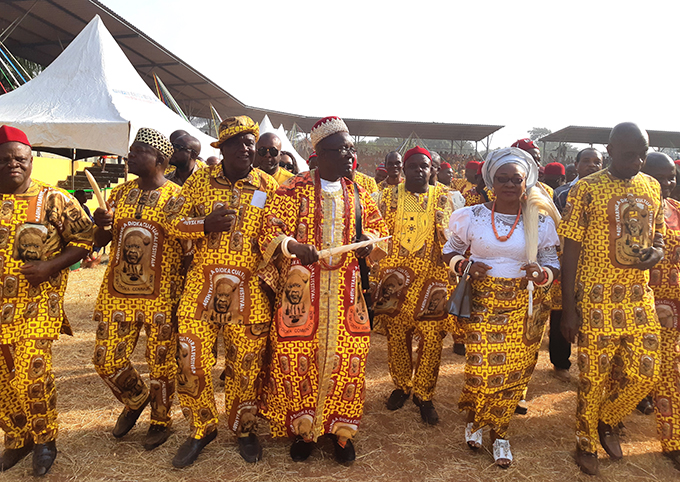
Ichi scarification and the Nka Dioka Festival in Umudioka, Neni
Nka Dioka Festival is a living story of identity, courage, artistry and ancestral pride. Every year in Umudioka, one of the oldest villages in Neni town in Anaocha Local Government Area of Anambra State, families return home from across Nigeria and the diaspora to honour a tradition that has survived hundreds of years. The festival shines a vibrant light on the heritage of the Dioka lineage – a community known for its ancient scarification craft, symbolic rituals, artistic mastery and deep knowledge of Igbo cultural history.
For many people hearing about it for the first time, Nka Dioka Festival may sound mysterious, yet, at its heart is a simple fact – that it is a homecoming of a people determined to preserve who they are. It celebrates the legacy of the Ichi scarification guild, recognizes the bravery of their forefathers, displays the beauty of Umudioka’s craftsmanship, and reconnects the younger generation to the stories behind their family names. In a world where many indigenous traditions are disappearing, the festival stands tall as one of the most authentic cultural events still practiced in southeastern Nigeria.
Beyond the colourful parades, symbolic rituals, dances and artistic exhibitions, the festival is a reminder that culture does not fade, as long as a community chooses to remember. This is why Nka Dioka Festival remains one of the most important cultural celebrations in Anambra State today – a bridge between the past and the present, and an annual reaffirmation of heritage, unity and communal pride.
Historical Background of Nka Dioka Festival
To understand Nka Dioka Festival, you must first understand the people behind it, that is, the Umudioka clan, one of the oldest and most culturally significant villages in Neni, Anaocha LGA of Anambra State. The festival is deeply connected to the ancient Dioka lineage, a group historically known across Igboland for their mastery of Ichi – the sacred facial scarification that marked honour, leadership and exceptional character.
Historical records and oral traditions trace the origin of Ichi scarification to the Nri-centered region of Igbo civilization. The Ichi marks were used to initiate men into prestigious guilds and to signify readiness for leadership, priesthood or specialized communal duties.
These marks also symbolized cleanliness, truthfulness, courage and a deep connection to the ancestors.
Among the groups entrusted with carrying out this sacred practice were the Dioka/Okala-Ichi guilds found in parts of Nri, Oraeri, Agulu, Adazi and Umudioka in Neni. This explains why Nka Dioka Festival still preserves aspects of this heritage today, even though the actual cutting is no longer practiced.
The word “Dioka” roughly translates to “masters of the craft” or “people of the lineages skilled in specialized cultural work.”
In Umudioka, these skills included Ichi scarification (for men); Itu-mbubo (traditional female scarification); Artistic body marking; Ritual knowledge; Carving and symbolic artwork.
These cultural responsibilities made Umudioka highly respected within the wider Neni community and across neighbouring towns.
Before colonial rule, initiation into the Dioka guild was not a public festival. It was a sacred rite performed for selected individuals who displayed moral discipline, bravery and readiness for communal responsibility.
However, when Ichi scarification began to decline in the early 20th century due to Christianity, colonial prohibition and changing cultural values, Umudioka people were determined not to let their heritage disappear. This led to an important revival movement in the early 1980s.
Historical accounts within the Umudioka community indicate that the modern form of Nka Dioka Festival was revived around 1982 through the efforts of the Eyisi Ebuluo Organization, a cultural group created to preserve the identity and history of the Dioka people. Their goal was simple,
to turn what was once a sacred initiation rite into a symbolic, non-harmful, cultural celebration that honours the legacy of their ancestors while adapting to modern values.
Since then, the festival has been held annually on December 31st. It has grown into a major cultural gathering in Neni town. It attracts sons, daughters, researchers, tourists, and cultural enthusiasts from Nigeria and abroad.
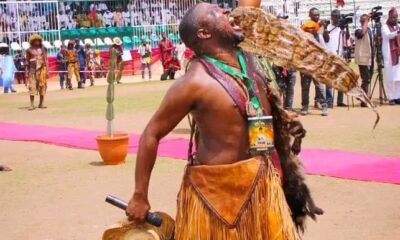
Today, Nka Dioka Festival keeps the memory of Ichi guild alive through symbolic reenactments, artistic displays, cultural storytelling, traditional dances, exhibitions of craftwork, and honouring elders who represent the lineage. While the original scarification is no longer performed, the values it represented, namely, integrity, bravery, discipline, and service remain the heart of the festival.
Understanding Umudioka: Village vs. Town
To properly understand Nka Dioka Festival, it is important to clarify something that often confuses people. There are two communities called Umudioka in Anambra State, but they are not the same place. One is a village, and the other is a town. This confusion is common online, especially among people who are not familiar with the traditional structure of Igbo communities. Because the names are similar, many assume they are one community, but history and geography clearly show they are different.
The Umudioka connected to Nka Dioka Festival is one of the nine villages that make up Neni town, located in Anaocha Local Government Area, Anambra State. The nine villages of Neni are Umudioka, Umueze, Egbengwu, Agukwu, Umuokpu, Umuowelle, Umuenu, Odidama, and Umuabani.
Umudioka is historically one of the oldest villages in Neni. It is culturally linked to the ancient Dioka lineage associated with Ichi scarification. It is the only Umudioka that hosts the Nka Dioka Festival. Its history, customs, and identity are tied to Nri-influenced traditions. Because of these ancestral links, Umudioka in Neni continues to preserve and celebrate the symbolic aspects of the Ichi tradition through the Nka Dioka Festival.
The second Umudioka is located in Dunukofia Local Government Area, also in Anambra State.
It is an autonomous town, just like neighbouring communities such as Ukpo, Ifitedunu and Nawgu. It is a stand-alone town, not a village under any other town. It has its own traditional ruler (Igwe), autonomous governance and community institutions. Its cultural festivals and traditions are different and not linked to the Nka Dioka Festival. It has no historical association with the ancient Ichi ritual guild of Nri and Neni.
Because both communities share the same name, many people mistakenly assume that Nka Dioka Festival belongs to the Umudioka in Dunukofia. This has caused wrong information on social media, incorrect tagging on news reports, and misleading online conversations about scarification traditions.
However, all historical, cultural and oral records confirm that the festival belongs exclusively to Umudioka village in Neni.
Other than sharing the same name and both being Igbo communities, the two Umudiokas do not share the same ancestry, historical cultural roles, traditional structures, or festivals. Their similarity is limited to naming which is a common occurrence in Igboland where several towns may share identical village names but have different origins.
The festival continues in Neni because Umudioka village directly descends from the Dioka/Ichi tradition. The village maintains symbolic reenactments of the Ichi heritage. Community elders and cultural historians confirm that their ancestors were part of the Okala-Ichi guild. The festival was revived in the early 1980s in this specific community to preserve its heritage. This also explains why Nka Dioka Festival attracts researchers, cultural groups and Igbo scholars who trace its authenticity to the Nri–Anaocha cultural sphere, not Dunukofia.
The Meaning of Nka Dioka
To understand the meaning of Nka Dioka, we must break the phrase into its two parts as used in Igbo culture: “Nka” and “Dioka.” Both words come from deep Igbo traditions, especially those linked to ancient crafts, age grades and specialist guilds.
In Igbo language, Nka refers to a group bound by age, skill, or a shared cultural responsibility. It can mean an age grade, a craft group, or a society that preserves specific knowledge. In many old Igbo communities, Nka played important roles in keeping traditions alive, training younger members and maintaining social order. Some Nka were responsible for the arts, some for music, some for masquerades, and others for specialized crafts.
The second part of the phrase, Dioka, is even more culturally significant. Historically, Dioka referred to families or lineages who were masters of certain sacred or skilled practices. Among these were the people specially trained in Ichi scarification, Itu-mbubo (female scarification), and symbolic body marking. These practices were not random; they were carried out by specific lineages recognized for their discipline, bravery and ritual purity. In the Nri-Awka cultural axis, including Neni, the Dioka lineages were associated with moral integrity, artistic skill and spiritual responsibility.
Putting both words together, Nka Dioka means the guild or group of the Dioka people – the community responsible for preserving the ancient knowledge and craft associated with Ichi symbolism. This explains why Nka Dioka Festival is not just a cultural event but a celebration of identity. It reminds the Umudioka people of their ancestry as holders of a respected tradition documented by researchers who recorded Ichi as one of the most important insignia of honour in early Igbo society.
Today, although the original scarification practice no longer takes place, the meaning behind Nka Dioka remains unchanged. It represents honour, skilled heritage, moral character and the responsibility of passing cultural knowledge from one generation to another. This is why Nka Dioka Festival in Neni continues to be celebrated proudly. It carries the memory of a people, their craft and their story.
Cultural Practices Highlighted in the Festival

Nka Dioka Festival highlights

Nka Dioka Festival Celebrates Umudioka’s Rich Cultural Heritage
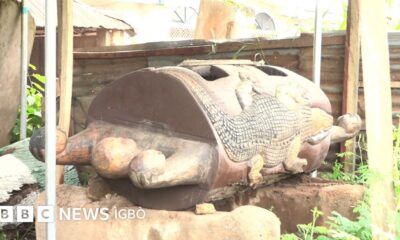
Nka Dioka Festival brings together several cultural practices that reflect the heritage of the Umudioka people and their connection to the old Dioka lineage. While the original Ichi scarification tradition is no longer performed, the festival preserves its memory through symbolic and artistic displays that are safe and respectful of modern values.
One of the key cultural practices highlighted during the festival is the symbolic reenactment of Ichi. Historically, Ichi marks represented honour, truthfulness, and readiness for leadership. British anthropologists like Northcote Thomas and scholars such as Elizabeth Isichei documented the importance of these marks in the Nri-Anaocha cultural region where Neni is located. During the festival, the reenactment is done through art, face painting, folklore, and explanations by community elders, not through real scarification.
Another practice linked to the festival is the storytelling and recognition of the Itu-mbubo tradition. Itu-mbubo was the female version of body marking used in the past to symbolize maturity and beauty in certain Igbo communities. Like Ichi, it is no longer practiced, but its meaning is preserved through narration, songs, and cultural teaching sessions.
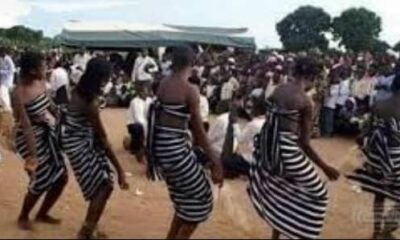
Traditional music and dance also play a major role in the event. Performances by local drummers, flute players, and dancers help recreate the atmosphere of precolonial ceremonies. Masquerades appear in some editions of the festival, depending on community arrangements for the year. These masquerades which are part of broader Igbo cultural heritage add colour and historical context.
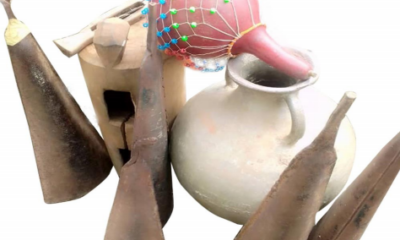
The festival also features exhibitions of artwork, carvings, textile pieces and other traditional crafts. These displays connect the Dioka people’s ancient skills to modern forms of creativity. Younger members of the community often present poems, dramas, or short cultural displays to show what they have learned about their identity.
Another important practice is the honouring of elders and cultural custodians. These elders help to explain the meaning of the festival and guide the symbolic aspects. They are also responsible for maintaining the oral history of the Dioka lineage which helps to prevent cultural loss.
Overall, the cultural practices highlighted in Nka Dioka Festival are centered on identity, storytelling, symbolic reenactment, and artistic expression. They help the community celebrate a heritage that was once at risk of fading due to colonial influence, Christianity, and modern lifestyle changes.
By presenting these practices in safe and educational ways, the festival allows younger generations to understand where they come from while still living comfortably in the modern world.
Festival Programme and Activities

Nka Dioka Festival Celebrates Umudioka’s Rich Cultural Heritage
Nka Dioka Festival follows a structured programme that reflects the traditions of Umudioka community and the historical role of the Dioka lineage. Although activities can vary slightly from year to year, the general pattern remains consistent. The festival is usually held on December 31, a date chosen to allow sons and daughters of the community who live in other towns and cities to return home for the celebration.
The day begins with a gathering of Umudioka indigenes at the village square. Elders, cultural leaders, age grades, women groups, and youth representatives assemble to mark the start of the event. Opening prayers and kola nut rituals are performed according to Igbo custom, symbolizing peace, unity, and the blessing of the ancestors.
This is followed by cultural parades. The different family groups and age grades march into the arena, often accompanied by drummers and flutists. The parade reflects the structure of Umudioka community and shows how each group contributes to the preservation of the festival. Children and young people also take part which helps them to learn the meaning of the celebration.
One of the key activities is the symbolic reenactment of the Dioka heritage. This includes storytelling about the Ichi tradition, explanations of Itu-mbubo practice, and demonstrations using artistic face markings or traditional ornaments. No real scarification is performed. The aim is to educate the public about the history of these practices which were documented in early works by scholars such as Northcote Thomas and M. D. W. Jeffreys.
Music and dance fill most of the afternoon. Traditional drumming groups perform, and in some years, masquerades appear as part of the entertainment. These performances help recreate the atmosphere of historical ceremonies and keep the artistic side of Umudioka culture alive.
The festival also includes a homecoming roll call or community census. This practice helps the elders to identify families that returned for the celebration and strengthens unity among villagers and those living outside Neni. Awards or special recognitions may be given to individuals who have contributed to the development of the community or supported cultural preservation.
The event usually ends with closing remarks from community leaders. They highlight the importance of maintaining Nka Dioka Festival, encourage the younger generation to stay connected to their roots, and express hopes for continued peace and progress in the new year.
Revival and Modern Evolution of the Festival
Scarification traditions fell sharply during the early 20th century because of missionary influence and colonial pressure which discouraged or outlawed many indigenous practices. In Neni, the practice largely stopped by the 1930s. Nka Dioka Festival is part of a longer cultural revival that began decades later. Local historians, cultural foundations and descendants of important families worked deliberately to remember and honour the Ichi tradition without returning to the physical cutting of the skin.
Modern organizers have, therefore, chosen symbolic reenactment as a route that balances authenticity and safety. Foundations such as the Eyisi Ebuluo Foundation helped to revive the festival’s public profile, promoting it as both a cultural event and a tourism opportunity. Today, it mixes scholarship, performance and community pride.
Cultural, Social and Economic Significance
The festival keeps the Ichi story alive in public memory. Where photographs, oral histories, and living testimony remain, younger people can learn more about the customs that shaped their people’s social world. This helps guard against cultural amnesia.
For families from Umudioka in Neni spread across cities and countries, the festival is a chance to reconnect. Elders meet young people, kinship ties are reaffirmed and the community’s narrative is retold. This builds social capital and helps to sustain local institutions.
In recent years, local entrepreneurs and vendors have used the festival to sell food, crafts and textiles. Cultural tourists sometimes attend, and local media cover the event. Festival growth presents an opportunity to create modest local income and to place Neni on cultural tourism maps.
The festival runs talks and exhibitions that help students and visitors understand heritage in an accessible way, combining scholarship and storytelling. That educational bridge is one of the festival’s most practical benefits.
Challenges Facing the Festival
Nka Dioka Festival faces several realistic challenges. Festivals require steady funding for venues, security and programming. Small local groups often struggle to cover costs.
Outside observers, sometimes, misread scarification history as “barbaric” without understanding its social context, which requires careful public education.
Organizers must balance authentic representation with ethical, health and legal norms which is why symbolic reenactment is used rather than the original practice.
There is a need for more rigorous scholarly documentation in form of oral histories, research publications, archives to secure the story of the festival for posterity.
The Future of Nka Dioka Festival
The future of Nka Dioka Festival depends on how well the community continues to balance tradition with modern realities. The festival has already survived major cultural shifts caused by colonial influence, the decline of scarification practices, and changing lifestyles. Its continued growth will rely on the commitment of Umudioka people, both at home and in the diaspora, to preserve their identity.
One important part of the future of the festival is documentation. As scholars have noted in studies on Igbo culture, many traditions disappear when they are not recorded or explained to the younger generation. Efforts to document the history of the Dioka lineage, the meaning of Ichi, and the origin of the festival will help future generations understand why it matters.
Youth participation will also play a major role. When children and young adults take part in parades, music, storytelling and cultural exhibitions, they develop a sense of ownership and pride. This ensures that Nka Dioka Festival does not become something only elders remember but something the whole community carries forward.
Another factor is modernization. The festival can continue to grow by using digital platforms to share videos, interviews, and historical information. This attracts researchers, tourists, and culture enthusiasts who are interested in Igbo heritage. Modern tools can help the festival gain visibility without losing its authenticity.
Finally, community unity remains essential. As long as Umudioka people support the event and treat it as a family homecoming, the festival will remain strong. With proper organization, cultural education and continuous involvement of all age groups, Nka Dioka Festival has a bright future and can remain a lasting symbol of heritage for many generations.
In Conclusion …
Nka Dioka Festival is a reminder of where Umudioka people come from and what their ancestors stood for. Even though the original Ichi and Itu-mbubo practices have faded, the values behind them are kept alive through symbolic reenactments, music, storytelling and communal unity. Each year, the festival brings families home, reconnects generations, and strengthens the cultural identity of Umudioka within the larger Neni community.
As modern life continues to change how people relate to their traditions, Nka Dioka Festival stands as a bridge between the past and the future. It teaches younger generations the importance of heritage and offers the community a chance to celebrate the craft, discipline, and honour that once defined the Dioka lineage. With ongoing documentation, youth participation, and community support, the festival will remain a living story for many years to come.
In a world where many cultures are slowly disappearing, Nka Dioka Festival shows that traditions can survive when a people choose to remember, celebrate and pass them on.
References
- https://en.wikipedia.org/wiki/Neni%2C_Anambra
- https://en.wikipedia.org/wiki/Umudioka
- https://re-entanglements.net/ichi-scarification/
- https://www.thisdaylive.com/2022/01/02/nkadioka-eyisi-ebuluo-foundationand-ichi-renaissance/
- https://www.nairaland.com/8326515/nka-dioka-festival-celebrates-umudiokas
- https://anaocha.com/the-umudioka-ichi-marks-in-time-pass/
- https://www.youtube.com/watch?v=7ov7Ur9MLYI
- https://nnewicity.com/history-and-meaning-of-ichi-facial-marks/