
Cultural Heritage
Ohafia War Dance: A Demonstration of Courage, Culture and Identity

Learn about Ohafia War Dance – a vibrant traditional performance by Ohafia people in Abia State, Nigeria. Discover its origin, meaning, attire, instruments, symbolism and cultural significance.
Introduction
When the deep sound of drums fills the evening air in Ohafia, and men adorned in red, white, and black surge forward with machetes glinting in rhythm, you know something powerful is in the offing.
It is not your regular dance. It is history in motion, courage reborn, and identity retold through movement. Ohafia war dance or Ikpirikpi Ogu as it is called in Igbo is more than a cultural performance. It is the living heartbeat of a people once known across eastern Nigeria for their unmatched bravery.
Long before Nigeria became a nation, Ohafia people carried a fierce reputation as fearless warriors. Victories in battle were not only remembered; they were celebrated in style through a dance that told stories of triumph, strength, and pride.
Today, the same dance continues to captivate audiences, no longer for the heads once taken in war but for the values it preserves – courage, achievement, and community spirit.
What makes Ohafia war dance so mesmerizing? Why does this centuries-old tradition still command respect in the modern world? Let’s journey into the story behind the drums and machetes: the origin, meaning, attire, instruments, symbolism, and the enduring cultural significance of a dance that defines a people and continues to awe the world.
The Origin
The story of the Ohafia war dance began many centuries ago with Ohafia people who were known as great warriors in the eastern part of Nigeria. In those days, bravery in battle was the pride of every man and war was seen as a way to protect the land and the people. Victorious warriors returned home to celebrations filled with music, dance, and storytelling. These celebrations slowly grew into what is now known as the Ohafia war dance.
The name “Ikpirikpi Ogu” which means “to carry war” reminds every one of the community’s fearless past. In those ancient times, a man who defeated an enemy and brought home a head was respected as a true hero. Bringing home the head was not just seen as violence, rather a sign that he had fought bravely, defended his people and earned his place among the honored men of the clan.
Over the years, life in Ohafia changed. Real wars faded away, and taking heads became a thing of the past. Yet, the people refused to let go of their history. Instead, they turned the practice into a symbolic tradition.
Today, the dance celebrates success of all kinds. Whether in education, business, leadership, or service to the community. To Ohafia people, it is no longer about fighting with weapons but about showing strength, courage, and achievement in life.
Through generations, Ohafia war dance has remained a proud reminder of the people’s heritage. It connects the present with the past, telling younger ones that courage and hard work are still the true marks of greatness.
The Meaning

Ohafia War Dance carries deep meaning for the people of Ohafia. It is not just a performance but a reminder of who they are, where they come from and what they stand for. Every movement, song, and costume in the dance tells a story about bravery, pride, and achievement.
For the individual, the dance once marked the journey into manhood. In the past, a man who fought bravely and returned home victorious was celebrated through this dance. It was a public way of saying he had earned respect and brought honour to his family.
Today, that same idea continues in a new way. Instead of fighting in wars, men and women now “fight” for success in education, business, or community service. When they achieve something great and return home, the dance becomes a way to celebrate their courage and hard work.
For the community, Ohafia War Dance is a shared memory that unites everyone. It reminds them of their ancestors’ bravery and the values that still matter – strength, unity, and determination. When the drums sound and the dancers move, the entire village comes alive with pride. It is a way of saying, “We are Ohafia people. We are strong, and we do not forget our roots.”
The dance also connects the past to the present. It allows the people to remember their history while passing lessons of courage to the younger generation. Through the rhythm, the chants, and the movement, Ohafia people keep their identity alive and ensure that the spirit of bravery never fades away.
The Attire
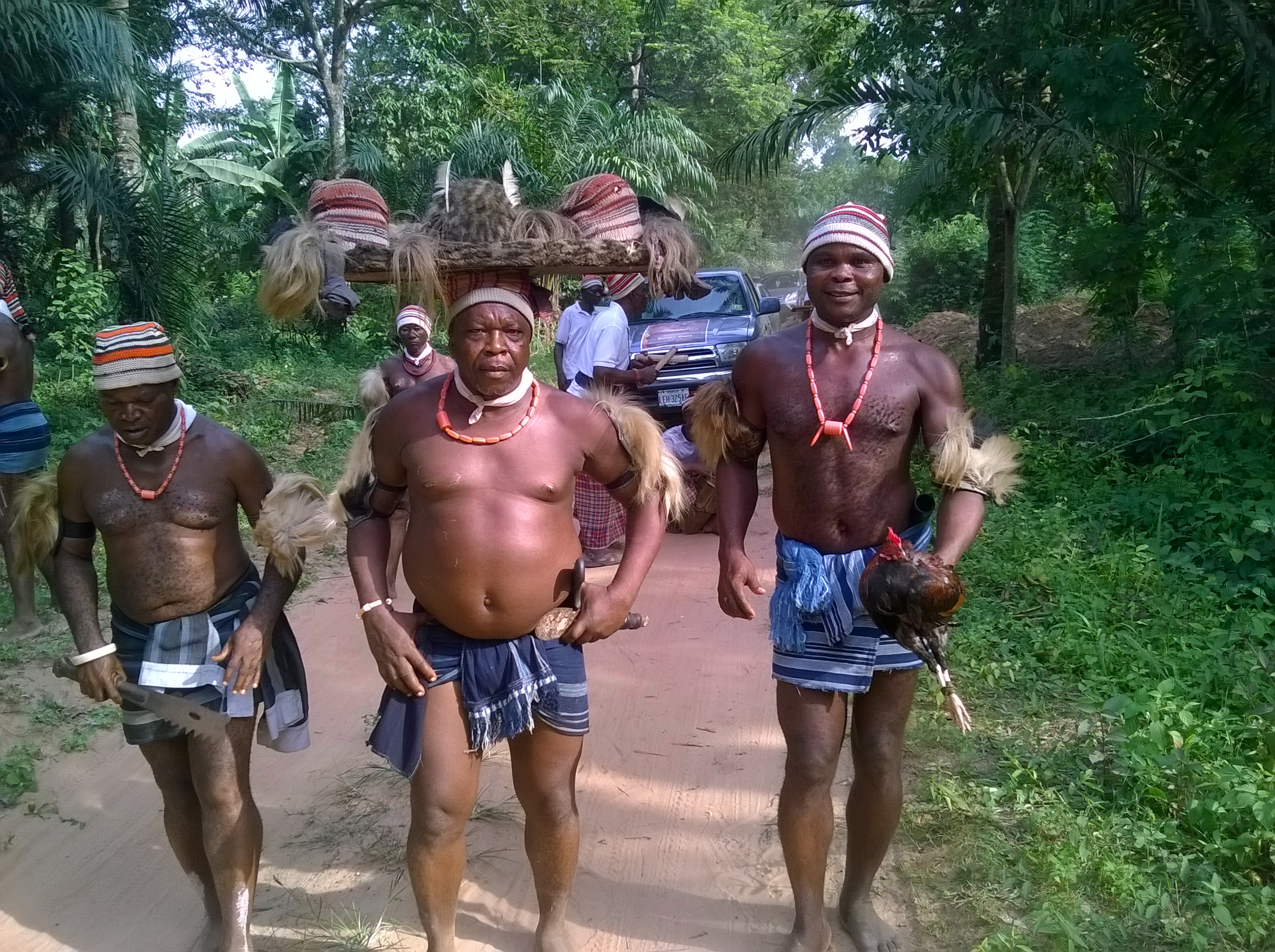
The attire used in Ohafia War Dance is one of the most striking parts of the performance. It is colourful, symbolic, and designed to reflect the power and pride of a warrior. Every item worn by the dancer has meaning and helps to bring the story of bravery to life.
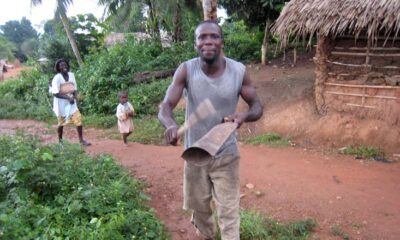
The main piece of clothing is a short, raffia skirt called nkpu made from dried palm fronds or grass. It allows the dancer to move freely while giving a wild, energetic appearance. Around the waist, some dancers wear bells or rattles that jingle with every step, adding rhythm to their movements. On the upper body, the dancer may wear animal skins, beads, or strings of cowries which represent wealth, status, and a connection to traditional beliefs.
One of the most famous items in the costume is the warrior’s cap known as okpu agu, often decorated with eagle feathers. The eagle feather is a mark of courage and victory. It shows that the wearer is fearless and has earned respect. Some dancers also paint their faces with charcoal or white chalk, creating patterns that make them look fierce and ready for battle.
To complete the look, the lead dancer carries a cutlass or machete which he raises and swings in rhythm with the drumbeats. The weapon is not used for harm but as a symbol of power and victory. Together, the attire transforms the performer into a living image of the ancient Ohafia warrior that depicts strength, pride and deep connection to his roots.
Every part of Ohafia War Dance costume serves a purpose. It does not just beautify the dancer, it helps to tell the story of courage, heritage, and the lasting spirit of Ohafia people.
The Instruments
The music of Ohafia War Dance is driven by traditional instruments that set the rhythm, energy, and spirit of the performance. These instruments do not just produce sound, they guide the dancers, tell the story and create the atmosphere that brings the ancient war scenes to life.
At the heart of the performance is the drum known locally as ikoro or udu. The drumbeats are deep and powerful, echoing through the air like the sound of warriors marching to battle. Each beat sends a message, calling the dancers to move, leap, and strike their poses in perfect rhythm. The drummers are highly skilled, and their hands move quickly, switching between fast and slow patterns that match the dancer’s story.
Another important instrument is the gong called ogene. Its sharp metallic sound cuts through the air, marking key moments in the performance. It often signals when the dancer should make a bold move or when the crowd should cheer.
Alongside the gong, there are rattles (ichaka) made from gourds filled with seeds or stones which add a soft shaking sound that blends smoothly with the drums.
Flutes are also used in some performances, producing short, high-pitched notes that mimic the calls of warriors or the voices of spirits. Together, these instruments create a powerful blend of sound that carries emotion, excitement, and pride.
Ohafia War Dance instruments do more than providing rhythm. Beyond that, they connect the people to their ancestors. Every beat, clang and shake tells a part of the story, reminding the people that their history and courage live on through sound and movement.
The Symbolism
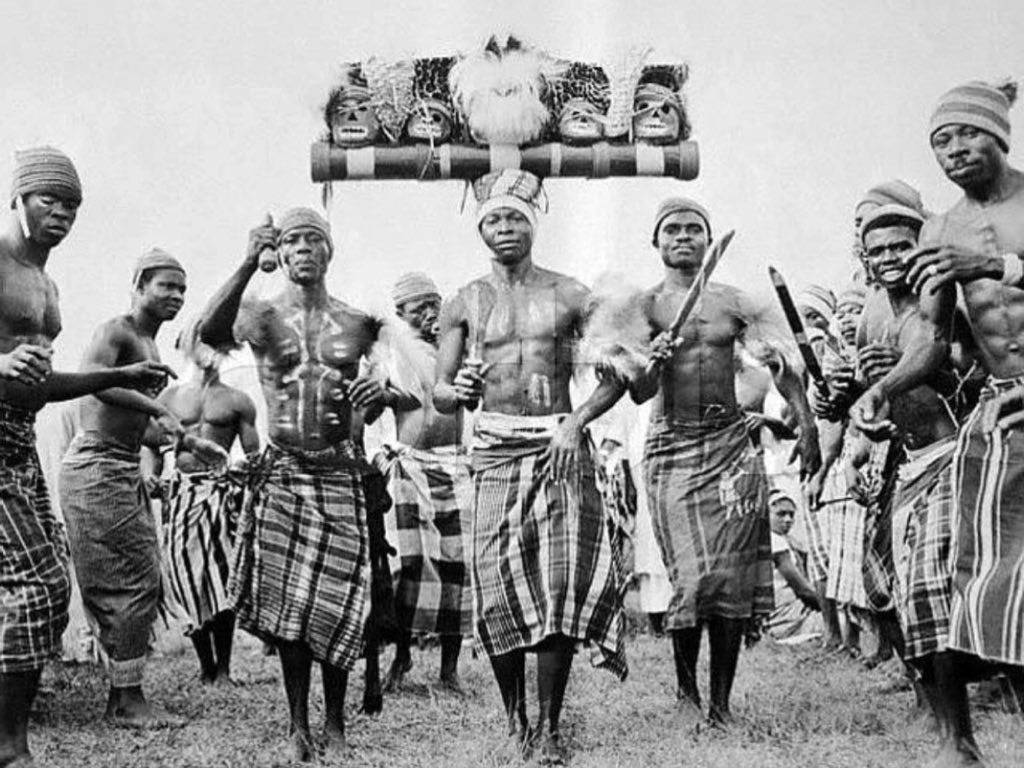
Every movement, object, and sound in the Ohafia War Dance is symbolic. Ohafia War Dance is rich in symbolism, with every movement, costume, and sound carrying deep meaning. More than entertainment, it is a living message about courage, pride and the unbroken spirit of Ohafia people.
The dance itself symbolizes bravery and victory. Each step, jump, and pose reflects the strength and confidence of a warrior who has faced challenges and overcome them. When the lead dancer swings his machete or raises it high, it represents triumph, not violence. It shows that the warrior has fought well, whether in battle or in life, and has earned honour for himself and his community.
The raffia skirt symbolizes the earth and the connection between the dancer and his ancestors. As it sways and rustles with every movement, it reminds the audience of the bond between the living and the spirits of those who came before.
The eagle feather on the warrior’s cap stands for excellence and leadership, qualities that the community values highly.
The face paint in black or white often represents the balance between life and death, strength and humility.
Even the instruments carry symbolic meaning. The drumbeat is the heartbeat of the people. A reminder of unity and rhythm in life. The gong’s sharp sound represents alertness and readiness to act when duty calls, while the rattle’s steady shake stands for the unending flow of life and tradition.
Altogether, Ohafia War Dance symbolizes the values that define Ohafia people, namely, courage, hard work, honour and community pride. It teaches that real victory is not only found in physical strength but also in character, wisdom, and meaningful contribution to the society.
The Cultural Significance
The Ohafia War Dance is not only a performance, it plays a vital role in cultural preservation, communal identity, social recognition and even tourism. Let us explore its significance in various domains.
Preservation of History and Identity
Because there are few written records of the earlier warrior exploits of the Ohafia people, the dance functions as a living archive. Through movement, costume and rhythm, it preserves the memories of past wars, captures the ethos of that time and links it to the present.
One study notes that the dance “positions participants in relation to the cycles of tradition and the contingent unfolding of history.” In that sense, Ohafia War Dance is a means by which the community remembers who it was, who it is, and who it wants to be.
Rite of Passage and Social Recognition
Historically, Ohafia War Dance was a public acknowledgement of manhood, courage and social ranking. Being eligible for the dance or leading it meant you had earned a place among the respected. Though the nature of the achievement has changed, now focusing on education, business, civic service, the principle remains returning home with honour and being celebrated. As such, the dance functions as a social glue that binds individual ambition to communal accolade.
Community Cohesion and Pride
When Ohafia War Dance is performed at festivals, rites, age-group ceremonies or public events, it brings the community together in a shared display of culture. Spectators, local participants and returning members all feel the same pride, the same heartbeat.
Through the dance, Ohafia people affirm that this is their story. In times when globalization and modernization threaten local cultures, this communal affirmation is vital.
Adaptation and Modern Relevance
Ohafia War Dance has shown remarkable adaptability. Though the context of head-taking is gone, the underlying grammar of achievement and recognition remains. Educated children, successful professionals, community builders may now take the symbolic “head” and be celebrated via the same tradition.
This adaptability keeps the dance relevant and ensures its survival. Furthermore, the dance now features in cultural festivals, tourism events, State occasions and intercultural showcases.
Tourism, Cultural Exchange and Economic Value
As interest in Nigerian traditional culture grows at home and abroad, Ohafia War Dance offers a powerful visual and experiential appeal. Tourists, cultural tourists, event planners and heritage researchers come to witness the costume, the rhythm, the movement.
This brings value to the community, strengthens cultural awareness and can stimulate local economy through festivals, performances, cultural troupes. The presence of the dance in media helps promote Ohafia people and their heritage.
Educational and Inspirational Value
For younger generations of Ohafia and Nigerians generally, the dance offers lessons of courage, identity, the value of returning home, the importance of remembering one’s roots. In a world where many young people drift away from local culture, the dance becomes a tangible symbol of cultural self-worth.
In view of all these, the cultural significance of Ohafia War Dance is expansive. It preserves, recognizes, affirms, adapts and inspires.
In Conclusion…
Ohafia War Dance stands today as one of Nigeria’s most powerful symbols of cultural pride and identity. What began as a celebration of victory in battle has transformed into a living tradition that honours courage, achievement, and the spirit of unity. Though times have changed, the dance continues to remind Ohafia people and everyone who witnesses it that bravery comes in many forms.
Through its striking movements, colourful attire and rhythmic drums, the dance speaks a universal language of strength and resilience. It teaches that the same determination once shown on the battlefield is still needed in everyday life, whether in education, leadership or community service. Each performance is a lesson in remembering one’s roots while embracing progress.
For Ohafia people, the war dance is more than a performance. It is a demonstration of identity. It tells their story to the world and keeps the legacy of their ancestors alive.
As modern life moves faster and cultures blend, Ohafia War Dance remains a bold reminder that tradition is not a thing of the past but a living bridge between history, the present and the future.
In every beat of the drum and every step of the dancer lies a timeless message that true victory is found in courage, unity and pride in one’s heritage.
References
- https://www.oriire.com/article/ikpirikpi-ogu-and-the-ancestral-might-of-ohafia
- https://quod.lib.umich.edu/p/passages/4761530.0006.006/–dancing-the-past-experiencing-historical-knowledge-in-ohafia?rgn=main;view=fulltext
- https://www.vanguardngr.com/2022/12/ohafia-war-dance-cultural-heritage-that-makes-ohafia-unique/
- https://teentrust.ng/the-ohafia-war-dance-a-dance-for-the-mighty-men/
- https://ozikoro.com/the-ikpirikpi-ogu-war-dance-a-symbol-of-bravery-and-culture/
- https://zodml.org/discover-nigeria/heritage-culture/ohafia-war-dance
You might want to check this out…