


History and heritage
Owerri (Owere): History, Culture, and the Ancient Origins of Imo State’s Capital

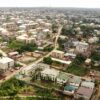
Owerri, known in the Igbo language as Owere, is the capital city of Imo State in southeastern Nigeria. It stands at the crossroads of history, culture, and modern development. Often called the Heartland City, Owerri has long been admired for its warmth, hospitality, and calm spirit. It is a city that seems to breathe peace, one whose people are known for their friendliness and communal lifestyle.
Owerri is surrounded by two sacred rivers known as Otamiri and Nwaorie. The town lies on a low hill, its landscape naturally fertile and rich with life. Over the years, it has grown from a quiet traditional settlement into one of the most vibrant urban centers in the eastern region. But beyond the modern roads, hotels, and busy markets lies an ancient story, a story that begins with one man, a torchlight, and the sound of running water. That man was Ekwem Oha, the legendary founder of Owerri.

The Founding of Owerri and the Story of Ekwem Oha
The story of Owerri’s origin is as old as the 14th century and is preserved through oral tradition. It is a tale often told by the elders of Owere Nchi Ise which is the five original villages that make up the city. According to legend, there once lived a man named Ekwem Oha, the first son of a woman called Arugo. Ekwem had a younger brother named Ndum.
When Oha, the father of Ekwem and Ndum, died, tradition demanded that the first son (Opara) should provide a cow for the funeral rites. Ekwem could not afford one and pleaded with his younger brother, Ndum (popularly called Ndumoha), to buy it. Ndum agreed but later demanded that the head, heart, and other symbolic parts of the cow which by custom belonged to the first son should be given to him as compensation.
Ekwem refused, and the dispute was taken before the elders of Uratta (Oha Uratta), who ruled in favour of tradition, confirming that the Opara must receive his rightful portions. Angry and humiliated, Ndum secretly plotted to kill Ekwem to take his inheritance by force
The plot leaked, and one night, Ekwem fled with his wife, children, servants, and supplies. They first took refuge in Egbu, where his sister was married. But fearing that Ndum might find him there, his sister advised him to continue his journey into the uninhabited forest for safety. Guided by a native torch known as Owa, they journeyed through the thick forest and finally arrived at a hilltop now called Ugwu Ekwema.
Exhausted but relieved, Ekwem and his family rejoiced, saying “Owerela ihe mara ya aka” meaning “He has taken what is rightfully his.” From this phrase came the name Owerri (Owere).
Their first meal in the new land was roasted old yam eaten with oil bean salad (ugba), a humble meal of thanksgiving to God for safety from wild animals and danger. That meal would later become the sacred symbol of Oru Owere, the festival that commemorates the founding of the city..
The Geography and Sacred Rivers
Owerri is a city naturally blessed with rivers, hills, and fertile land. The two major rivers, Otamiri and Nwaorie, have always been at the center of the people’s spiritual and physical life. The Otamiri River, discovered by Ekwem Oha himself near the area now known as Emmanuel College, provided water and served as a symbol of purity and protection. The people of Owerri believe that Otamiri is a living spirit, and in the early days, sacrifices were made at its banks to ensure peace and fertility.
The Nwaorie River, on the other hand, flows gently through the western part of the city. It is regarded as the “daughter river,” associated with calmness, beauty, and cleanliness. Because of its sacredness, Owerri people traditionally do not fish in Nwaorie or eat fish caught from it. Doing so was seen as a taboo, a way of disrespecting the spiritual forces that guard the city.
Another natural water body of cultural note is Lake Nwebere, located near Imo State University. Together, these rivers and the lake gave Owerri its natural charm, nourishing its farms and sustaining its people. Elders say that as long as Otamiri and Nwaorie continue to flow, peace will never depart from Owerri.
The Early Villages and Expansion
From the first settlement at Ugwu Ekwema, the descendants of Ekwem Oha began to grow and spread. They established new homes and hamlets, which over time became the five original villages of Owerri, known collectively as Owere Nchi Ise. These are:
- Umuororonjo
- Amawom
- Umuonyeche
- Umuodu
- Umuoyima
Each of these villages represents one branch of Ekwem’s descendants. For instance, Umuonyeche comes from Ekwem’s son Onyeche, Umuodu from Odu, and Umuoyima from Oyima. The names reflect lineage, family honor, and the sense of belonging that still binds Owerri people today.
As the families multiplied, some descendants migrated to neighboring lands, establishing new communities but always maintaining their link to the ancestral home. This is why, even today, you may find people in distant parts of Igboland who proudly trace their roots back to Owerri and refer to themselves as Owere people in diaspora.
Traditionally, marriage between members of the original Owerri villages was discouraged because of their shared ancestry. This custom ensured the preservation of purity within lineages and respect for the founding family. The five villages later became known for different roles including leadership, craft, trade, and defense, all working together under one ancestral bond.
The Oru Owere Festival
Every year, Owerri comes alive with music, food, and color during the Oru Owere Festival, also known as Oru Eze Owere. It is one of the oldest surviving cultural celebrations in Igboland and stands as a living reminder of Ekwem Oha’s first meal on Owerri soil.
The festival begins in June and lasts until mid-August. Its preparation is handled by the Oha Owere Traditional Council, the body of elders who represent the five founding villages. The festival is not a time of war, mourning, or quarrel. It is a season of peace — a time when no funeral ceremonies or cannon firing are allowed. The whole city observes it as a sacred period of unity.
The highlight of the festival is the roasting of the old yam (ji ukwu), eaten with oil bean salad (ugba). This act represents the meal Ekwem shared with his family when they first settled at Ugwu Ekwema. It reminds the people that gratitude is the foundation of every new beginning. Another symbolic part of the festival is the Mkpu Kpu Uzo, a feast made from corn porridge served to guests and neighbors as a token of goodwill and it is the day which the festival ends, it is important to know that this day is usually the Orie market days.
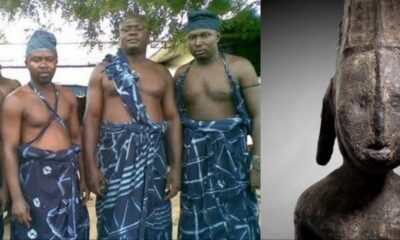
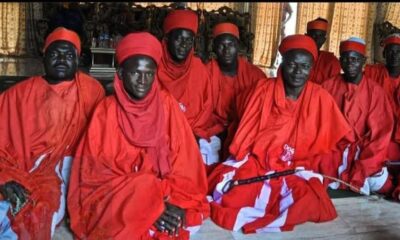
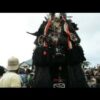
The highlight of Oru Owere is the grand procession at Ugwu Ekwema Civic Centre, where age grades, dance groups, and village unions display their culture through music, masquerades, and colorful attire. The king, known as the Eze Owere, usually leads prayers for peace, fertility, and progress. The festival brings home both indigenes and visitors from around the world, turning Owerri into a hub of tradition and festivity.
It is important to note that Oru Owere is not a New Yam Festival. While other Igbo towns celebrate the new yam to mark harvest time, Owerri people are not allowed to eat the new yam until the day after the Oru Owere festival. This distinction highlights the festival’s spiritual origin, it is not about crops, but about remembrance, peace, and the first thanksgiving meal of Ekwem Oha.
At its heart, the Oru Owere Festival celebrates identity. It reminds every Owerri son and daughter that they come from a lineage of justice, endurance, and unity. Even in modern times, when skyscrapers and hotels now stand where ancient shrines once stood, the people of Owerri still gather each year to honor that one man who followed the light of a torch and found a new home by the river.
Oru Owere Festival in Pictures

Oru Owere festival


The Monarchy and the Ozuruigbo Dynasty
Like many ancient Igbo towns, Owerri had a traditional monarchy long before the arrival of the British. Oral records suggest that the first organized kingship began around the late 17th century, between 1670 and 1680. The early leaders were chosen based on wisdom, character, and the respect they commanded among the people. Over time, the title of Eze Owere became hereditary within a noble family that traced its origin to one of Ekwem Oha’s descendants.
The first recognized king of Owerri was Eze Eke Onunwa, who ruled from around 1690 to 1735. He was followed by Eze Okorie Onunwa, and then Eze Iheanacho Okorie Onunwa. The dynasty continued with Eze Njemanze Iheanacho Okorie Onunwa, who became known as Ozuruigbo I, a title meaning “The King whose authority spans a
large area of Igboland” The Ozuruigbo title later became the official royal name for all kings of Owerri.
The throne passed through generations:
- Eze Eke Onunwa
- Eze Okorie Onunwa
- Eze Iheanacho Okorie Onunwa
- Eze Njemanze Iheanacho Okorie Onunwa (Ozuruigbo I)
- Eze Ihemeje Njemanze
- Eze Onwuegbuchulam Njemanze
- Eze Johnson Osuji Njemanze (Ozuruigbo II)
- Eze Rev. Samuel Njemanze
- Eze Reginald Anugwolu Njemanze (Ozuruigbo III)
- Eze Alexius Anumaku Njemanze (Ozuruigbo IV)
- Eze Emmanuel Emenyonu Njemanze (Ozuruigbo V) — the current monarch, who ascended the throne on 11 November 1989.
The Njemanze family became firmly established as the royal house of Owerri around 1840–1850. The process of choosing a new Eze follows ancestral tradition, the eldest man in the Akalonu Okorie kindred crowns the successor after ancestral rites are performed.
Historically, the kings of Owerri maintained peaceful relations with neighboring towns such as Nkwerre, Arochukwu, and even the ancient Benin Kingdom. Owerri kings were not only local rulers but also custodians of peace and mediators in disputes between communities. The late Eze Johnson Osuji Njemanze (Ozuruigbo II) was particularly influential, he represented the entire Old Owerri Province at the 1958 Constitutional Conference in London before Nigeria’s independence, a sign of the trust his people placed in him.
Even today, the Eze remains a symbol of unity and culture, presiding over festivals, land matters, and traditional ceremonies. The palace of the Ozuruigbo stands not merely as a royal home, but as a living museum of the city’s rich heritage.
The British Encounter and the Colonial Era
Owerri’s encounter with the British began in 1901. When colonial explorers arrived, they were struck by the town’s natural orderliness, hospitality, and peaceful atmosphere. The British saw Owerri as an ideal administrative center, both for its central location in the southeast and its accessibility by road from Aba, Onitsha, and Port Harcourt.
Soon, the town became the headquarters of the Owerri Division, and later the Owerri Province. The British established their first administrative quarters near the present-day Douglas Road and built one of the earliest hospitals in Eastern Nigeria, the Military Hospital, which later became the African Hospital, then General Hospital, and today the Federal Medical Centre (FMC) Owerri.
Education followed closely. In 1906, the Government School Owerri was established, producing some of the earliest educated elites in the region. Later, in 1935, the British founded the Government Secondary School Owerri, which became one of the most respected institutions in Eastern Nigeria, in 1952, the primary school was moved to wetheral road, owerri and renamed to Owerri township School
Owerri also played a significant role in the creation of Port Harcourt. Historical accounts note that when the British planned the new seaport city, it was done under the administration of Owerri Province. Many of the early laborers and traders who moved to Port Harcourt came from Owerri and its neighboring towns.
The early 20th century also saw the introduction of Christianity, Western law, and modern governance, but the British never erased the traditional structures. Instead, they worked with the local chiefs and the Eze, forming what they called the Native Authority System. This cooperation helped preserve the city’s peace and cultural balance during the colonial era.
Owerri was later redesigned by European town planners, including a Swiss firm, Finger Hooth & Partners, whose design formed the basis for what is today known as New Owerri. The town’s grid-style layout and broad roads still reflect that colonial influence.
Education and Missionary Influence
Owerri embraced education earlier than many other towns in southeastern Nigeria. The missionaries, especially the Roman Catholics, Anglicans, and Methodists, played a major role in shaping the city’s intellectual and moral foundations. Churches and schools sprang up across the villages, turning Owerri into an educational hub.
Institutions like Alvan Ikoku College of Education, Federal Government Girls’ College, and Government Secondary School Owerri became landmarks of learning. In later years, Imo State University (IMSU) and the Federal University of Technology, Owerri (FUTO) continued this legacy, attracting students from all parts of Nigeria.
Religion also transformed the town’s social life. The towering Assumpta Cathedral, with its grand dome visible from miles away, remains one of the most iconic Christian structures in Nigeria. Beside it stands the Anglican Cathedral and several other places of worship from Methodist to Pentecostal churches, and even mosques for the growing Muslim community.
Despite Christianity’s influence, Owerri still values its traditional art and spirituality. The famous Mbari Houses, located in the Mbari Cultural Centre, are open-air shrines that celebrate the creativity of the Igbo people through sculpture, music, and dance. In them, one finds the perfect blend of tradition and modern religion that defines Owerri’s identity.
Economic and Cultural Life
Before colonial times, the people of Owerri were primarily farmers, growing yam, cassava, maize, cocoyam, and vegetables. The fertile soil between Rivers Otamiri and Nwaorie made agriculture a reliable livelihood. Women traded in palm oil, fabrics, and pottery, while men specialized in farming, palm wine tapping, and craft.
Owerri was also one of the early sites where Shell D’Arcy (later Shell-BP) and Chevron began oil exploration in the late 1930s and early 1940s. Although the oil fields did not become as large as those in Port Harcourt, this period introduced the town to industrial labor and commerce.
After the Nigerian Civil War and the creation of Imo State in 1976, Owerri’s economy shifted rapidly from agriculture to services, trade, and hospitality. Hotels, restaurants, and entertainment centers began to dominate the landscape. Today, Owerri is often called the entertainment capital of Eastern Nigeria, home to numerous lounges, cultural centers, and nightlife spots that attract visitors from across the country.
Markets such as Eke Ukwu Owere, Relief Market, Akwakuma Market, and Nekede Market are economic lifelines of the city.
Culturally, Owerri remains one of the strongholds of Igbo creativity. From traditional dances and masquerade performances to music and fashion, the city continues to promote its artistic spirit. The saying “Owere bu obodo mmadu” meaning “Owerri is a city for everyone” reflects its openness to people of all backgrounds.
Modern Growth and Challenges
With the creation of Imo State in 1976, Owerri became the state capital and began to grow rapidly. The establishment of New Owerri, World Bank Estate, and Ikenegbu Layout transformed it from a traditional town into a modern city. Government offices, banks, hotels, and universities gave it a new identity, one that blends culture with modern progress.

Hospitality in Owerri
However, rapid urbanization brought challenges. The once calm rivers became polluted, traffic congestion increased, and waste management became a growing concern. The city’s expansion also led to land disputes and loss of some ancestral sites. Yet, despite these challenges, Owerri continues to evolve.
The younger generation is leading a new wave of innovation, from tech startups to creative arts and hospitality ventures. Efforts by both the government and local groups aim to preserve the city’s natural environment, protect its cultural sites, and maintain its reputation as one of Nigeria’s most peaceful cities.
Conclusion
Owerri’s story is one of endurance, peace, and pride. From the night Ekwem Oha left his homeland guided by the light of a native torch, to the modern skyline of New Owerri, the city has remained a symbol of resilience and unity. Its sacred rivers still flow, its festivals still bind its people, and its monarchy still stands as a guardian of tradition.
Owerri is more than a capital city, it is a cultural heartbeat of Igboland. Its people carry the same gentle spirit of their ancestors peaceful, proud, and welcoming. In every sense, Owerri truly lives up to its name as “Owere bu obodo mmadu”, a city that belongs to all humanity.
Read About: Owerri: The Hospitality and Nightlife Hub of South East Nigeria