



African Culture and Traditions
Owu Festival in Igboland: A Celebration of Heritage, Masquerades and Tradition

Owu Festival is a rich cultural celebration in Igboland that honours ancestry, tradition, and community through sacred dances, masquerade performances, and rituals that connect the living with the spirit world in meaningful ways.

Owu Festival is one of the most captivating cultural celebrations in Igboland. More than a festival, it is a living testament to centuries of tradition, community life, and spiritual connection. Across towns in southeastern Nigeria, the festival draws people together to honour the ancestors, showcase vibrant masquerades, and celebrate the values that have defined the Igbo society for generations.
From the rhythmic drumbeats that echo through village squares to the dazzling costumes of the masquerades, every moment is filled with meaning and history. Visitors and locals alike find themselves immersed in a world where culture, faith, and community intersect in joyful harmony.
For anyone curious about Igbo heritage, Owu Festival offers a window into the heart of these enduring traditions.
Origins and Meaning of Owu Festival
Owu Festival has deep roots in Igbo history and culture that stretch back centuries. It is a celebration that honours ancestry, tradition, and the spiritual forces believed to guide communities. The festival’s origins are closely tied to the appearance of masquerades locally called Okoroshi which are seen as manifestations of ancestral spirits. These masquerades are central to the festival as they symbolize the connection between the living and the spiritual world.
Communities that celebrate Owu Festival often link it to periods of agricultural significance such as post-planting or harvest seasons. It is a time to give thanks for blessings, seek protection for crops, and renew communal bonds. Over generations, the festival has also become a platform for passing down cultural knowledge, teaching younger generations the values of respect, unity, and reverence for the ancestors.
Beyond its spiritual meaning, Owu Festival serves as a reminder of identity. It brings together families, clans, and visitors to celebrate the rich heritage of Igboland. Each dance, costume, and ritual is a storytelling tool that preserves history and reinforces the traditions that define the communities that celebrate it. The festival is not just an event. It is a living bridge between past and present, between the ancestors and the people who continue their legacy.
Where Owu Festival is Celebrated

Owu Festival is celebrated in several communities across Igboland, especially in parts of Imo State where the tradition of cultural masquerade and community dance is strong. It is not tied to just one town or village. Instead, many places have adopted the festival as part of their annual cultural calendar, often rooted in local history and spiritual belief.
In Imo State’s Oru region, Owu Festival is most widely recognized. Communities such as Awo‑Omamma and Amiri in Oru East Local Government Area host annual celebrations where the festival plays a central role in expressing cultural identity and unity.
In these towns, preparations begin weeks before the day of celebration, with families and traditional leaders organizing rituals, dances, and masquerade performances that draw people from near and far.
Beyond Oru East, the influence of Owu festival spreads to neighbouring towns and villages. Some communities in Mbaitoli Local Government Area such as those in Umu‑Duru Ifakala and Mbieri also observe the Owu cultural festival with unique dance forms and rituals specific to their locality.
Other Igbo communities, even outside Imo State, have variations of the Owu or Okoroshi masquerade celebrations. For example, Okpuala Ogbaku in the Mbaitoli area celebrates the Owu‑Okoroshi festival during the peak of the rainy season where the masked Okoroshi figures perform to thank the ancestors and spirit forces believed to bless farmland and ensure good harvests.
In some places, Owu Festival tradition has extended beyond its original home base through cultural exchange or community interest. Some towns in Njaba, Mbaitoli, and other neighbouring clans perform the festival due to historic connections or influence from the core Oru region communities.
Across these locations, the common thread remains the same. Owu Festival is celebrated as a community event that blends traditional beliefs, masquerade performance, dance, and spiritual expression. It thrives not just as a cultural display but as a living part of communal identity in the parts of Igboland where it is practiced.
Community Preparation and Rituals
Owu Festival is not just a one-day event. It is the culmination of weeks of preparation, planning, and participation that involve the entire community. The festival reflects the collective spirit of Igbo towns where families, elders, and traditional institutions all play active roles to ensure that the celebration is meaningful, vibrant, and respectful of cultural norms.
Before the festival begins, young men and selected participants often undergo initiation and cultural training. This process, sometimes called Ito-Nkwa in some communities involves spiritual cleansing and instruction on how to perform the masquerade dances properly.
Participants are taught the significance of the rituals, the proper handling of sacred objects, and the etiquette required when performing in front of elders and the community. This training ensures that Owu Festival is preserved with authenticity and respect.
Families actively participate by preparing traditional foods, arranging palm wine, and crafting costumes and masks for the masquerades. Each family may sponsor specific elements of the festival, contributing to the collective display of culture. The village squares where most of the performances take place are cleaned, decorated, and prepared for both ceremonial and entertainment activities.
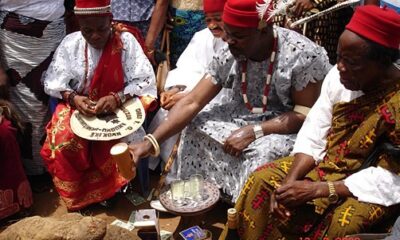
A crucial aspect of community preparation involves ritual offerings to the ancestors and deities. These offerings which often include yam, kola nuts, palm wine, and other local foods are presented to honour the ancestors and seek their guidance and blessings for the community.
Elders and priests conduct prayers and rituals to ensure spiritual harmony and protection. These rites reinforce the connection between the living and the spirit world which is central to the meaning of Owu festival.
Owu Festival is also a time for reconciliation and strengthening social bonds. Elders often mediate conflicts in preparation for the festival to ensure unity among families and clans. Invitations are extended to distant indigenes, neighbouring communities, and sometimes tourists to foster social cohesion and a sense of shared identity.
In many towns, masquerade performers hold practice sessions in the weeks leading up to the festival. These rehearsals help to ensure synchronized dance routines, precise movements, and proper ceremonial procedures. Music, drumming, and chants are refined during this time to achieve the desired impact during the main festival day.
The community preparation and rituals demonstrate that Owu Festival is more than a celebration. It is a structured, meaningful, and highly organized cultural event that embodies the values, traditions, and spiritual life of Igbo communities.
Masquerade Performance
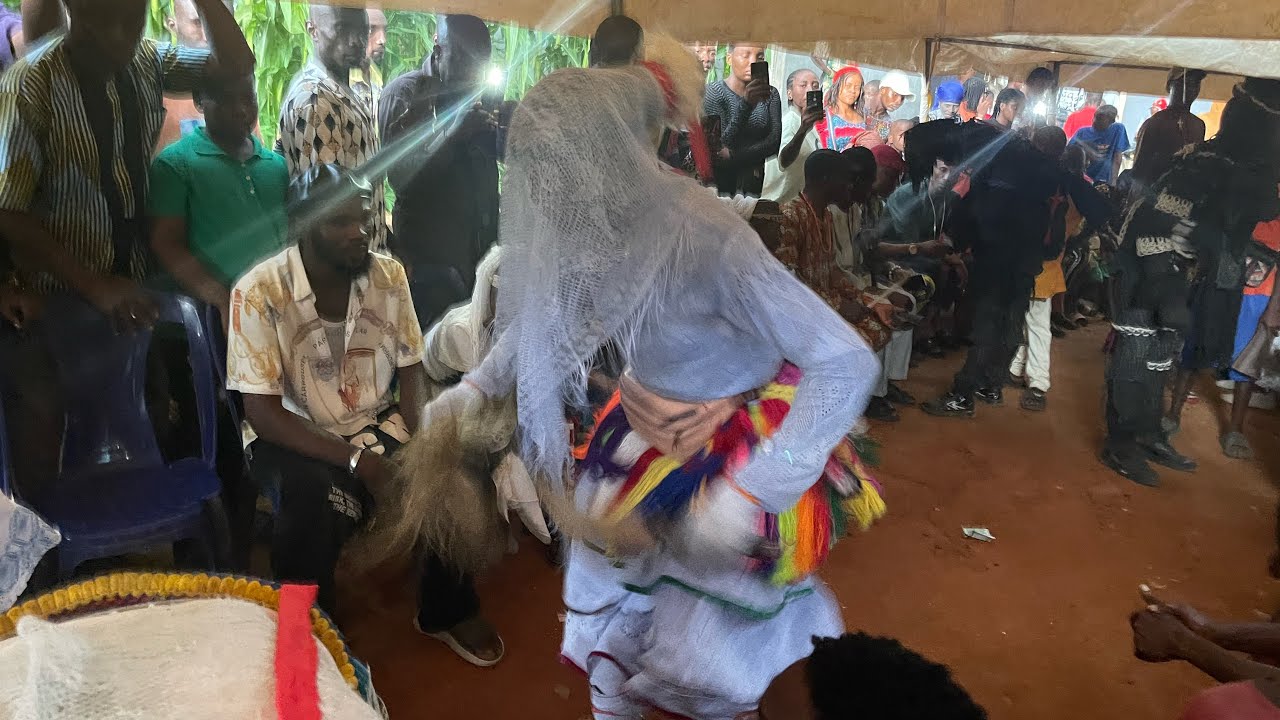
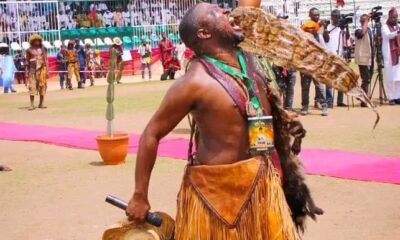
A central highlight of Owu Festival is the masquerade performance which brings energy, colour, and spiritual depth to the celebration. Masquerades, locally called Okoroshi are believed to embody the spirits of the ancestors, acting as intermediaries between the living and the spiritual world. Their appearance during the festival is both a cultural spectacle and a sacred ritual that draws the attention of every member of the community.
Masquerades wear elaborate costumes made from raffia, cloth, beads, and painted masks. Each costume has symbolic meaning that often represents a particular spirit, clan, or ancestral lineage. The designs, colours, and patterns are unique to specific communities and sometimes to particular families. The anonymity of the masquerade performers is key as it reinforces the belief that the spirit itself is present, not just the human behind the mask.
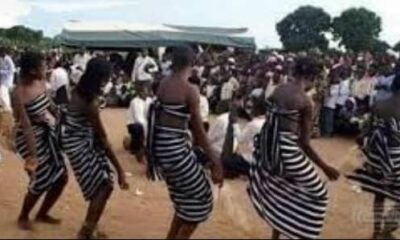
During Owu Festival, masquerades perform highly choreographed dances to the rhythm of traditional drums, flutes, and other indigenous instruments. The movements are both expressive and symbolic as they tell stories of past events, ancestral deeds, or moral lessons. Each masquerade often has a unique style, with some performing acrobatics while others execute slow, deliberate movements to convey respect and spiritual authority.
Masquerades do more than perform. They interact with the audience, sometimes playfully, sometimes with a sense of authority. Children watch in awe while adults respect the rituals and offer gifts such as kola nuts or small sums of money to show reverence. In some communities, the masquerade is believed to correct behaviour or provide spiritual guidance, thereby emphasizing the role of Owu festival in reinforcing moral values and social order.
The musical component of Owu Festival is crucial. Drums set the pace for the masquerades and signal changes in movements, entrances, and exits. The rhythm is often unique to each community, passed down orally through generations. Drummers are regarded as custodians of cultural memory, as they ensure that the traditional beats remain authentic and in harmony with the spirit of the festival.
The masquerade performance does not only provide entertainment, it preserves Igbo cultural heritage and reinforces spiritual beliefs. It provides an opportunity for communities to celebrate identity, educate younger generations, and connect with ancestral wisdom. Through the dances, costumes, and music, Owu Festival becomes a living archive of Igbo history and tradition that ensures that these practices endure in a rapidly changing world.
The masquerade performance is the soul of Owu Festival that turns the village square into a space where history, spirituality, and community come alive in vivid color and sound.
Symbolism and Cultural Significance
Owu Festival is more than just a visual spectacle or a community gathering. It carries profound symbolic meaning that reflects the values, history, and spiritual beliefs of Igbo communities. Every aspect of the festival, from the masquerades to the rituals, music, and communal participation serves a purpose that reinforces cultural identity and social cohesion.
At the heart of Owu Festival is the veneration of the ancestors. The masquerades or Okoroshi are seen as physical representations of ancestral spirits visiting the living. By performing dances, rituals, and processions, the festival honours these forebears and reminds the community of its roots. This ancestral connection encourages respect for elders, reinforces family and community bonds, and preserves the memory of past generations.
Owu Festival has historically served as a tool for maintaining social order. Masquerades are, sometimes, believed to correct misbehavior, promote honesty, and uphold communal values. Their presence reminds the community of the consequences of actions and encourages individuals to align with shared cultural norms. This way, the festival becomes not only a celebration but also a moral compass for the community.
Many communities align Owu Festival with agricultural cycles. The festival often occurs after planting or at the peak of the rainy season. Through offerings, dances, and rituals, participants express gratitude for fertile land, favourable weather, and abundant harvests. These practices underscore the close relationship between the Igbo people, their environment, and their reliance on spiritual guidance for sustenance and well-being.
Owu Festival is also a vehicle for passing down knowledge and cultural practices to the younger generations. Children and youths observe and sometimes, participate under guidance, learning the dances, songs, and meanings behind rituals. Through these immersive experiences, the festival preserves Igbo language, folklore, artistic expressions, and spiritual practices, and ensuries that cultural heritage continues across generations.
Finally, the festival strengthens communal identity. Families, clans, and neighbouring villages come together to celebrate shared heritage, thus reinforcing bonds and fostering a sense of belonging. Owu Festival showcases spiritual and historical significance and also the power of tradition to unite communities in joyful and meaningful ways.
Owu Festival is a living symbol of Igbo heritage, unity, and moral values. Its rituals and performances are more than cultural displays, they are expressions of identity, ancestral connection, and communal harmony.
Owu Festival Today
Owu Festival remains a vibrant part of Igbo culture. However, like many traditional celebrations, it faces modern challenges that affect participation and continuity. Urbanization, migration, and changing social values have altered the way some communities engage with the festival. Younger generations often move to the cities for education and employment, thereby reducing the number of participants available for traditional rituals and masquerade performances.
The spread of Christianity and Western education has influenced the perception of some traditional practices. In certain areas, older rituals or spiritual elements of the festival are now less emphasized, and some families choose not to participate fully. Despite this, communities strive to balance faith and tradition, and find ways to preserve the cultural aspects of the festival while respecting contemporary beliefs.
As Igbo communities expand into cities, fewer young people are present in their hometowns during festival season. This can make it challenging to maintain the large-scale community involvement that Owu Festival traditionally requires. In response, many towns actively encourage indigenes living elsewhere to return for the festival, thus emphasizing the importance of cultural continuity.
Despite these challenges, Owu Festival remains resilient. Cultural associations, traditional rulers, and elders in communities like Awo-Omamma, Amiri, and Mgbidi organize annual events that draw participants from near and far.
Schools and youth organizations are increasingly involved in promoting the festival by offering workshops, storytelling sessions, and training in masquerade dance and music. These initiatives help the younger generations understand the value of their heritage and ensure that the festival continues to thrive.
Interest from tourists and cultural enthusiasts has also contributed to the continuity. Visitors from other parts of Nigeria and beyond attend Owu Festival to witness its unique masquerade performances and rituals. This attention not only encourages local communities to maintain traditions but also promotes cultural pride and economic benefits through hospitality and local trade.
Today, Owu Festival stands as a testament to the adaptability and resilience of Igbo culture. Even in the face of modern pressures, communities find ways to honour their ancestors, preserve rituals, and pass on traditions to the new generations to ensure that the festival remains a cornerstone of Igbo identity.
Owu Festival and Its Role in Community Development and Tourism
Owu Festival serves as a cultural and spiritual celebration and also plays an important role in community development and tourism. In towns where the festival is celebrated, it brings together local residents, diaspora members, and visitors from across Nigeria and beyond.
This influx of people creates opportunities for local businesses, artisans, and performers to thrive. Vendors sell traditional foods, crafts, and festival souvenirs while accommodations and transportation services see increased demand during the festival period.
The vibrant masquerade performances, rituals, and dances attract tourists and cultural enthusiasts who want to experience authentic Igbo traditions. By drawing visitors to rural towns, the festival promotes cultural tourism and encourages communities to maintain their heritage and showcase it to a wider audience. This exposure also helps to preserve traditional music, dance, costume-making, and storytelling for future generations.
The festival provides a platform for local artisans, costume makers, drummers, and performers to showcase their skills. Young people learn traditional crafts, dance, and music which not only preserves culture but also creates opportunities for economic empowerment. Through workshops, training, and participation, youths develop pride in their heritage and gain practical skills that can translate into income during and after festival periods.
By engaging both locals and visitors, Owu Festival strengthens community identity. It provides a shared experience that reinforces social cohesion, unity, and pride. Elders, leaders, and cultural custodians use the festival as a platform to educate younger generations about traditions, values, and the significance of maintaining communal bonds.
Through tourism and community participation, the festival helps to sustain the cultural practices that might otherwise fade due to urbanization or modernization. Communities recognize that the economic and social benefits of preserving Owu Festival encourage continued investment in cultural activities and rituals. This ensures that the festival remains a living, dynamic celebration rather than a static tradition confined to history books.
In Conclusion …
Owu Festival remains one of the most vibrant and meaningful cultural celebrations in Igboland. It is a festival that connects communities to their ancestral heritage, spiritual beliefs, and shared traditions. Through its elaborate masquerade performances, carefully observed rituals, and communal gatherings, the festival preserves the values, history, and identity of Igbo people.
Despite the challenges posed by modern life, migration, and changing social norms, Owu Festival still thrives. Communities in Imo State and beyond actively work to ensure that the younger generations participate, learn, and appreciate the depth of their cultural heritage. By celebrating the festival, people honour the past, strengthen social bonds, and reaffirm their identity in a rapidly changing world.
In essence, Owu Festival is more than a cultural event. It is a living tradition, a celebration of community, and a testament to the resilience of Igbo heritage. Its continued observance ensures that the spirit of the ancestors and the richness of Igbo culture will be passed on to future generations by keeping history alive in every dance, song, and ritual.
References
- https://en.wikipedia.org/wiki/Masquerade_Festival_in_Igboland
- https://guardian.ng/art/celebrating-owu-okoroshi-cultural-performance-in-ogbaku/
- https://ozikoro.com/owu-festival-awo-omamma-a-rich-celebration-of-igbo-culture-and-unity/
- https://historicalnigeria.com/mask-spirit-and-community-igbo-masquerade-traditions-and-their-meaning/
- https://www.nigerianewspoint.org/2025/06/06/umuekwe-mgbidi-celebrates-owu-festival-in-grand-style/
- https://www.iosrjournals.org/iosr-jhss/papers/Vol14-issue5/A01450108.pdf
You might want to check this out …