






History and heritage
Ozo Title in Igbo Culture || All You Should Know About the Institution

Learn what the Ozo title is, where it began, its meaning, stages, rituals, rules, symbols, regional differences, and modern relevance in Igbo society. A clear, fact-checked insight into the Ozo title for students, researchers, and readers.

Among the Igbo people of southeastern Nigeria, only a few traditional institutions command as much respect and sacred reverence as the Ozo title. Deeply rooted in ancestry, morality and communal leadership, the Ozo title represents the highest level of honour and spiritual purity a man can attain within Igbo cultural society.
It is not merely a mark of wealth or social status, it is a lifelong covenant of truth, justice and service to one’s people. For centuries, the Ozo institution has stood as a moral compass that guides community life, preserves ancestral customs and upholds the integrity of Igbo tradition.
The Ozo title system combines both spiritual and civic responsibilities. Titleholders are seen as living ancestors, men who have symbolically “died” to their ordinary selves and been reborn into a sacred order where every word and action must reflect fairness and wisdom. Through elaborate rituals, sacred oaths and community recognition, the Ozo-titled man becomes a custodian of cultural values, an arbiter in disputes and a bridge between the living and the ancestral world.
Though the forces of modernity, religion and politics have reshaped aspects of the Ozo institution, it remains one of the most enduring symbols of Igbo cultural identity. Across towns and villages, from Nri and Awka to Onitsha and beyond, the Ozo title continues to define honour, authority and moral integrity. To understand the Ozo title is to understand a vital part of Igbo civilization itself.
This article takes you deep into the heart of the Ozo institution, exploring its meaning and origin, purpose and significance, stages and grades, rituals and initiation, rules and taboos, symbols and regalia, council structure, regional variations, and its place in the modern world.
Meaning and Origin of Ozo Title

The Ozo title is one of the oldest and most respected traditional institutions among the Igbo people of southeastern Nigeria. It represents the highest level of moral, social and spiritual attainment within many Igbo communities. Taking the Ozo title is not simply a matter of prestige or social standing. It is a sacred responsibility that binds the titleholder to a life of truth, integrity, justice and community service.
The Ozo-titled man is regarded as a person who has achieved full maturity in character and leadership. He is expected to live in accordance with the ancestral laws of the land and serve as an example to others in both private and public life.
The word “Ozo” is believed to have originated from the ancient Igbo ritual and social systems centered around the Nri civilization, one of the earliest known Igbo cultural and religious centres. The Nri people who are located in present-day Anambra State played a major role in defining the spiritual and moral order of the wider Igbo world.
Historical and anthropological studies, including those by Professor M. A. Onwuejeogwu, describe Nri as the cradle of the Ozo and Nze institutions where priests and elders developed systems that linked moral conduct with spiritual authority. From Nri, these practices spread across other Igbo regions, adapting to local traditions and beliefs while retaining their core purpose of upholding truth and justice.
The Ozo title became a marker of social hierarchy and moral authority in Igbo life. Those who held the title were trusted as custodians of customs, mediators in conflicts and representatives of the ancestors during rituals. In many towns, becoming an Ozo signified that a man had reached the peak of communal responsibility. He was seen as a bridge between the physical and spiritual worlds, having undergone a symbolic rebirth during his initiation rites.
Traditionally, a man could not be recognized as an Ozo unless he was known for upright behaviour, generosity and commitment to communal well-being. The process of becoming an Ozo often followed years of service and moral testing within the community. It was not enough to be wealthy, character and reputation were equally important. A man who had not demonstrated honesty, or who had unresolved disputes could be denied the title, regardless of his resources.
The Ozo title is closely associated with the Ofo, a sacred symbol of truth and ancestral authority. Only a man of proven integrity could rightfully hold the Ofo, and the Ozo title confirmed his eligibility. This connection between the Ozo institution and the Ofo system ensured that moral uprightness and social order remained inseparable in traditional Igbo society.
Over time, the Ozo institution became a unifying feature across Igboland, even though the rituals, ranks and symbols differ slightly from town to town. In some places, such as Nri, Awka and Enugu-Ukwu, the Ozo title has strong spiritual undertones. In others, such as Onitsha or Nsukka, it emphasizes leadership, community service and civic responsibility. Despite these local variations, the meaning of the Ozo title remains consistent. It stands as a sacred covenant between the titleholder, his community and the ancestral spirits.
The origin and continued existence of the Ozo title show how the Igbo people value moral discipline, truth and communal order. It is not just a traditional office but also a moral institution that has survived generations of change. Even with the coming of Christianity and colonial administration, the Ozo title remains an enduring emblem of Igbo identity and cultural continuity.
Purpose and Significance
The Ozo title serves as one of the strongest moral and social pillars of Igbo society. It goes beyond being a symbol of prestige or seniority. At its core, it is an institution designed to promote ethical leadership, maintain social harmony and preserve the spiritual balance of the community. For centuries, the Ozo title has shaped how Igbo people organize authority, enforce truth and pass on cultural values from one generation to another.
One of the primary purposes of the Ozo title is to uphold truth and justice. In many Igbo communities, Ozo titleholders are seen as custodians of the truth. Their word is considered binding, and their testimony carries significant weight in communal matters.
When disputes arise over land, marriage or inheritance, Ozo men are often called upon to mediate or preside over the settlement. Their decisions are believed to be guided, not only by human reasoning but also by ancestral wisdom. This makes the Ozo institution central to the traditional justice system.
Another important function of the Ozo title is to serve as a moral compass for society. An Ozo titleholder is expected to live a life that others can emulate. He must be disciplined, generous, honest and self-controlled. By his behaviour, he sets the standard for what is considered acceptable conduct within the community.
This expectation is so strong that the disgrace of one Ozo man can bring shame to the entire body of titleholders. As a result, members of the institution continually watch over each other to maintain integrity and dignity.
The Ozo institution also has deep spiritual significance. It represents the link between the living and the ancestors. An Ozo man is seen as a living spirit, one who has symbolically died and been reborn through initiation. In this new state, he becomes a channel through which blessings and ancestral guidance flow to the community.
He participates in important rituals such as purification rites, harvest festivals and funerals of fellow titleholders. Through these activities, the Ozo man helps to sustain the spiritual order that binds the people to their history and belief system.
In many towns, the Ozo title plays a vital role in governance. Ozo men often form councils that advise traditional rulers, deliberate on local issues and enforce community laws. They act as mediators between the ruler and the people, ensuring that justice and tradition are upheld. Their collective authority helps preserve continuity in leadership, especially in communities that have no centralized kingship.
The Ozo title also signifies social responsibility. Titleholders are expected to contribute to community development, assist in public works and support the needy. During festivals and ceremonies, Ozo men often sponsor feasts and provide hospitality, reinforcing the Igbo value of communal sharing. In some places, they take on the responsibility of settling strangers, safeguarding the land and protecting sacred sites.
Beyond governance and spirituality, the Ozo title reinforces social hierarchy and respect for seniority in Igbo culture. It marks the transition from ordinary adulthood to a revered state of elder-hood. This transition ensures that the community continues to have wise and experienced leaders to guide its affairs. The title, therefore, serves both as a reward for good character and a reminder of ongoing duty.
In summary, the Ozo title is a cornerstone of Igbo moral and cultural life. It promotes honesty, unity and accountability while preserving ancestral traditions. Through the Ozo institution, Igbo people maintain a balance between spiritual belief, ethical conduct and community leadership.
Its enduring presence today shows that the principles it stands for, namely, truth, justice, service, and moral uprightness remain essential values in Igbo society.
Stages and Grades of Ozo Title
Ozo title is not a single event. It is a structured process that unfolds in stages, often over many years. Each stage represents a deeper level of initiation, moral refinement and community responsibility. It is both a spiritual and social journey, marking a man’s steady rise in rank and influence within the traditional Igbo hierarchy.
Though the structure varies slightly among different Igbo communities, most follow a similar sequence that begins with aspiration and ends with full initiation into the sacred brotherhood of titled men.
The journey to becoming an Ozo titleholder begins with the Igbu ichi which was historically a prerequisite in some ancient towns like Nri, Awka and Aguleri. The ichi marks symbolized purity and identification with the ancestors. While this practice has declined over time, it formed part of the spiritual preparation that set candidates apart for the sacred office.
After the period of preparation, the man seeking the title must consult his family, kindred and diviners to ensure that his lineage is free from serious taboos or spiritual impediments. The family’s approval is crucial because the title brings honour, not only to the individual but also to his entire lineage. Once cleared, the aspirant proceeds to the different stages of initiation.
In traditional communities like Awka, Nri and Onitsha, the Ozo title is divided into grades or ranks, often reflecting the social status, wealth and moral standing of the initiate. The common stages include Ozo Nnunu (junior or lower grade), Ozo Idi (middle grade) and Ozo Nnukwu or Ozo Ukwu (senior or higher grade). Each grade involves distinct rites, gifts to the community and contributions to the Ozo council. Advancement from one grade to another may take years, as each level requires financial readiness, proven integrity and continued community service.
During the initiation process, the aspirant undergoes elaborate rituals that symbolize his spiritual rebirth. He takes sacred oaths of purity, truthfulness and justice. He also receives blessings from elders and ancestors, confirming his readiness to uphold the moral standards expected of titled men.
Ceremonies typically include public feasting, presentation of kola nuts, traditional dances and offerings to ancestral deities. The climax of the ceremony is when the initiate is formally declared an Ozo man and presented to the community as one who has entered the house of the ancestors.
Some communities have as many as seven or more grades of Ozo, with each conferring distinct privileges and duties. In Onitsha, for instance, titles range from Ozo Ndu, Ozo Ezeani, to Ozo Chinyelugo, each representing a higher status of moral and spiritual authority. In other areas like Nsukka and Nri, the structure emphasizes sacred service and mediation roles rather than prestige.
Regardless of regional variation, all Ozo titleholders are regarded as custodians of truth, mediators in disputes and living symbols of ancestral virtue. The higher one rises within the Ozo ranks, the greater the expectation of wisdom, fairness and leadership.
The stages and grades, therefore, are not just social markers but reflections of a man’s moral evolution, community service and devotion to the timeless values of Igbo culture.
Rituals and Initiation

The initiation into the Ozo title is one of the most sacred and symbolically rich rites in Igbo traditional life. It is not merely a celebration of wealth or social achievement; it is a profound spiritual transformation that marks the transition from ordinary manhood to a sacred state of ancestral responsibility. The Ozo initiation is a covenant between the initiate, the ancestors and the gods, binding him to a life of truth, justice and moral integrity.
Before the initiation takes place, the aspirant undergoes a long period of preparation, often lasting months or even years. This period includes consultations with diviners to confirm spiritual readiness, the settling of any outstanding debts or disputes, and the offering of sacrifices to appease family ancestors. The candidate must be morally upright, financially stable and of good repute in the community. The Ozo title is considered incompatible with a life of dishonesty, greed or moral weakness.
The initiation ceremony usually begins in the aspirant’s family compound where close relatives and elders perform cleansing rites. Sacrifices of kola nuts, fowls, and sometimes, goats are offered to the family ancestors for blessings and protection. Traditional music and chants accompany these rites, invoking the presence of the spirits who witness the transformation about to take place.
A central element of the Ozo initiation is the symbolic “death and rebirth” of the candidate. The initiate is seen as one who dies to his former self and is reborn as a sacred being, a living ancestor among the living. This concept reflects the Igbo belief that titled men share in the spiritual authority of the ancestors and are accountable to both the visible and invisible worlds. During the ceremony, the initiate may sit in isolation while sacred invocations are made over his head, symbolizing separation from the ordinary life he once knew.
Afterward, the initiate is introduced to the Ozo council or Nze na Ozo society where he swears solemn oaths of loyalty, truth and purity. These oaths are binding for life. The initiate must never bear false witness, cheat, or engage in acts that bring shame to the title or his community. Violating these oaths attracts both social condemnation and spiritual consequences, as the ancestors are believed to punish transgressors.
The climax of the initiation involves the public recognition of the new Ozo titleholder. Dressed in white attire symbolizing purity, and adorned with the okpu ozo (red cap) and akwete or George wrapper, the newly initiated man is paraded around the village square amid drumming, dancing and jubilation. Friends and well-wishers present gifts while elders confer blessings and chant his new title name as a mark of his new spiritual and social identity.
The ceremony also involves the exchange of symbolic items such as the ofo staff which represents justice and ancestral authority, and the ngwu tree branch or feathers used in blessings. Each of these objects carries deep spiritual significance, reminding the Ozo man of his duty to stand for truth and to maintain peace in the land.
In some regions like Awka and Nri, the initiation extends over several days, involving visits to shrines, offerings to deities and formal acceptance by the community’s Ozo council. In other towns such as Onitsha, Ogidi or Nsukka, local variations exist, but the essence remains the same – a sacred rebirth into a moral and spiritual brotherhood.
The rituals of Ozo initiation, thus, serve multiple purposes, namely, sanctifying the individual, strengthening communal bonds, and renewing the covenant between the living and the ancestors. It is through these elaborate rites that the Igbo people preserve their moral compass, ensuring that leadership, honour and justice are rooted not in power or wealth but in sacred responsibility and ancestral trust.
Rules and Taboos
Ozo title in Igbo culture is governed by a strict moral and spiritual code that distinguishes titleholders from ordinary members of the society. These rules and taboos are not arbitrary; they serve as moral safeguards that preserve the purity, integrity and sacred character of the Ozo institution. Every man who enters the Ozo order is bound by these lifelong obligations which reflect the community’s deepest values of truth, justice, respect and spiritual discipline.
One of the most important rules guiding Ozo titleholders is the commitment to absolute truthfulness. An Ozo man must never lie, bear false witness, or manipulate justice for personal gain. In traditional belief, falsehood is a grave sin that offends both the ancestors and the gods.
A titled man’s word is expected to be as binding as an oath. When an Ozo man speaks, his statement is treated as sacred truth. For this reason, Ozo titleholders often serve as mediators and judges in community disputes where their integrity is beyond question.
Another key rule is the requirement of purity, both moral and ritual. An Ozo man must avoid actions considered unclean or dishonourable such as adultery, theft, deceit, or drunkenness. He must maintain a life of moderation and self-control, serving as an example of good character to the younger generation. In many communities, an Ozo man cannot perform certain rituals or enter sacred spaces, if he is in a state of impurity such as after attending a funeral or engaging in sexual relations, until he undergoes purification rites.
There are also taboos that guide the social conduct of Ozo men. Traditionally, an Ozo titleholder must not eat or drink in public, marketplaces or while standing. He is expected to dine with dignity, seated and in private, as a mark of discipline and respect for his title. It is also taboo for him to raise his voice in anger during public arguments or to engage in physical fights. The Ozo title demands calmness, restraint and wisdom in all circumstances.
In some Igbo towns, there are dietary and behavioural restrictions attached to the title. For instance, an Ozo man may abstain from eating certain animals such as python which is considered sacred in some regions. He is also forbidden from associating with people known to be outcasts (osu) or engaging in acts that compromise the spiritual sanctity of his title.
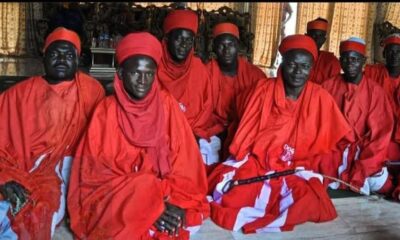
The Ozo man’s appearance and dress are also regulated. The wearing of the okpu ozo (red cap) and ozo beads is reserved exclusively for initiated titleholders. It is taboo for a non-titled man to wear these symbols of authority, as doing so is considered an act of sacrilege. The red cap, in particular, is a public emblem of honour, signifying that the wearer has undergone the sacred rites and carries the moral weight of ancestral authority.
Furthermore, Ozo men are expected to avoid political corruption and deceit. In traditional Igbo thought, leadership is not about dominance but service. Therefore, any titled man who uses his position for exploitation or oppression is seen as desecrating the sacred trust bestowed upon him. Such a man risks public disgrace, the withdrawal of communal respect and even ancestral retribution.
One of the strongest taboos is against the desecration of oaths or the misuse of the ofo staff, the sacred symbol of justice held by Ozo men. The ofo is believed to carry spiritual power, and swearing falsely by it can bring severe misfortune, sickness, or death. It serves as a constant reminder that truth and justice must never be compromised.
Even in death, Ozo titleholders are bound by sacred observances. Their burial follows specific rites befitting their status, including the placement of their ofo staff beside them, symbolizing their continued link with the ancestors.
These rules and taboos, though demanding, elevate the Ozo man to a higher standard of living that blends moral uprightness with spiritual discipline. They ensure that the Ozo institution remains a pillar of integrity and continuity in Igbo culture. While modernity has softened some of these restrictions, the core values of truth, purity and justice continue to define the identity and honour of every true Ozo titleholder.
Symbols and Regalia

Ozo title is not only a spiritual and social institution but also a visual expression of honour and identity. Its symbols and regalia embody the sacred authority, dignity and ancestral connection of the titleholder. Each item associated with the Ozo man carries deep cultural meaning, reflecting centuries of tradition and spiritual continuity in Igbo life. These symbols are not worn for decoration; they are sacred insignia that announce the wearer’s status, purity and commitment to the values of truth, justice and service.
One of the most recognizable symbols of the Ozo title is the okpu ozo, the distinctive red cap. This cap, often richly embroidered or beaded represents authority, integrity and moral excellence. It is worn only by men who have undergone the full Ozo initiation, and its use is strictly regulated by custom. In many Igbo communities, the red cap immediately identifies a man as an onye ozo – a titled man who has been spiritually reborn and recognized as a custodian of tradition. The colour red itself signifies vitality, courage and the life force that connects the living to the ancestors.
Another essential symbol is the ofo staff, a sacred emblem of justice and ancestral power. The ofo is often a small, carved stick made from the branch of a spiritually significant tree such as the ogirisi or akpu. It represents truth, legitimacy and divine authority. Only those who live upright lives and maintain moral purity can rightfully hold the ofo.
During rituals, meetings or judgments, an Ozo man raises the ofo to invoke ancestral witness and affirm that his decisions are rooted in justice and truth. To swear falsely while holding the ofo is considered one of the gravest offenses in Igbo tradition.
Beads also form a significant part of the Ozo regalia. The mgbaji (ankle and wrist beads) and aka ozo (neck beads) symbolize wealth, purity and social distinction. Traditionally made from coral, ivory, or locally crafted materials, these beads are believed to carry protective and spiritual energy. They also reflect the Ozo man’s connection to the divine and his responsibility to maintain peace and balance within the community.
The akwete or George wrapper is another important aspect of the Ozo man’s attire. Often woven in traditional patterns or imported as luxurious fabric, the wrapper is tied around the waist and paired with a flowing shirt or tunic. This elegant dressing style represents refinement and respectability. During ceremonies, an Ozo man’s attire is completed with a staff or walking stick, another symbol of authority and wisdom.
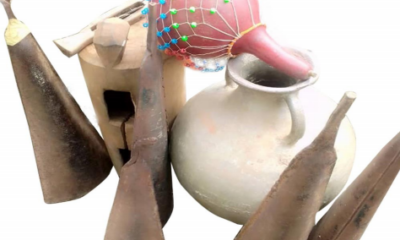
In addition to personal attire, certain ritual objects are closely linked with the Ozo institution. Among these are the ngwu (a branch or feather used in blessings), the udu (earthen pot used in ancestral offerings), and the okike (a symbolic bell or gong used during rites). Each of these items carries specific spiritual functions within Ozo ceremonies. The ngwu is used to invoke blessings and ward off evil while the okike is used to call attention during rituals, symbolizing the voice of the ancestors.
The Ozo house or obi ozo itself is also a powerful symbol. It serves as the meeting place for titled men and a shrine for ancestral communion. Within this space, sacred objects such as the ofo, ancestral masks and ritual stools are kept, representing continuity between past and present generations. The architecture and layout of the obi ozo reflect harmony, balance, and order, values central to Igbo cosmology.
Even the way an Ozo man carries himself is symbolic. He is expected to walk with measured dignity, speak calmly and exhibit self-restraint at all times. His public comportment is, itself, a living symbol of the discipline and purity required of one who has entered the sacred order.
Together, these symbols and regalia form a visual language through which the Igbo community recognizes and honours its moral leaders. They remind both the wearer and the observer of the sacred responsibilities that accompany the Ozo title. Beyond aesthetics, they are tangible connections to the ancestors, the land and the spiritual order that sustains Igbo life.
Essentially, the regalia of the Ozo title serves as both a badge of honour and a sacred reminder. Every piece, from the red cap to the ofo staff tells the story of a man who has pledged his life to truth, justice and the preservation of his people’s heritage.
The Ozo Council
The Ozo Council, often called Nze na Ozo is the governing body of titled men within an Igbo community. It represents the collective moral and spiritual authority of the Ozo institution and serves as an advisory and judicial body to the traditional ruler or community assembly. Membership in the council is reserved for men who have completed all stages of Ozo initiation and are known for their integrity, wisdom and commitment to truth.
The council meets regularly in the obi ozo (Ozo house) to deliberate on matters affecting the community. These include resolving disputes, performing ancestral rituals, overseeing festivals and maintaining customary laws. Because Ozo titleholders are regarded as living ancestors, their decisions carry great weight and are believed to have spiritual backing. The council operates by consensus, emphasizing fairness, reconciliation and respect for tradition.
Each member of the Ozo Council has both collective and individual responsibilities. Senior members known as Ozo Nnukwu or Ozo Ukwu guide the younger titleholders and preside over initiation ceremonies. They also act as custodians of the sacred objects and traditions associated with the Ozo institution.
Beyond governance, the Ozo Council serves as a moral compass for the entire community. Its members are expected to lead by example, uphold peace and support community development. In many Igbo towns, no major decision, whether political, religious, or social is taken without the blessing or counsel of the Ozo Council.
Though modern political structures have changed local administration, the Ozo Council continues to play a vital role in preserving cultural order, mediating conflicts and ensuring that Igbo values of justice and honour endure across generations.
Regional Variations
While the Ozo title is a common institution across Igboland, its practices and interpretations differ slightly from one region to another. These variations reflect the diversity of Igbo customs, local histories and spiritual traditions, even though the core values of purity, truth and leadership remain constant.
In Nri and Awka considered the spiritual heartland of the Ozo institution, the title carries deep religious significance. Here, Ozo men are closely linked to priestly functions and ancestral worship. The Nri people, in particular, view Ozo titleholders as mediators between the living and the ancestors, upholding sacred laws and performing purification rites for the community.
In Onitsha and neighbouring riverine areas, the Ozo title has a more political tone. Titleholders often serve as kingmakers, royal advisers and custodians of tradition around the Obi’s palace. Their role is tied to governance, justice and the preservation of royal authority.
In places like Nsukka, Arochukwu and Orlu, the emphasis is more on moral leadership and community service than ritual authority. The Ozo title there identifies respected elders and benefactors who contribute to the welfare of their people, sometimes, blending traditional values with Christian ethics.
Even within the same State, each town adapts the Ozo system to fit its cultural identity. For instance, Awka and Nteje may share similar rituals but differ in initiation stages or hierarchy of titles.
Yet, regardless of local variations, the Ozo institution everywhere signifies honour, moral discipline and continuity of ancestral heritage.
Modern Relevance
In today’s world, Ozo title continues to hold deep cultural and moral significance, even as Igbo society modernizes. Though some traditional rites have been simplified to align with changing beliefs and lifestyles, the essence of the institution remains honour, integrity and service to the community.
Many contemporary Ozo titleholders combine their traditional roles with modern professions in business, politics and religion. They use their influence to promote peace, unity and community development, often serving as cultural ambassadors who bridge the gap between old traditions and new realities.
The moral authority of Ozo men still carries weight in resolving disputes and guiding local affairs. In many towns, community leaders and churches now collaborate with Ozo councils in fostering social harmony and ethical conduct.
Even among the younger generation, there is a growing appreciation for the Ozo institution as a symbol of identity and heritage. It reminds Igbo people at home and in the diaspora of their roots, their values and the need to preserve what defines them as a people.
Thus, while its outward form may evolve, the Ozo title remains a timeless institution that continues to inspire respect, moral uprightness and cultural pride in Igbo society.
In Conclusion…
Ozo title stands as one of the most enduring pillars of Igbo civilization. A sacred institution where culture, spirituality and morality intersect. It represents, not just a title of prestige but a lifelong calling to truth, justice and community service. From its ancient roots in Nri and Awka to its presence in modern cities and diaspora communities, the Ozo institution continues to embody the Igbo ideal of leadership founded on integrity and ancestral wisdom.
Though times have changed, the values upheld by the Ozo title remain profoundly relevant. In a world where moral standards and cultural identity often seem eroded, the Ozo system reminds the Igbo people of who they are: a community guided by truth, respect and responsibility. The rituals, symbols and rules that surround the Ozo institution are not relics of the past but living expressions of a people’s moral vision that seeks harmony between the spiritual and the social, the individual and the collective.
As modern Igbo society continues to evolve, the challenge lies not in abandoning tradition but in preserving its spirit while adapting it to today’s realities. The Ozo title, therefore, remains more than an honour. Iit is a moral compass, a link to ancestry, and a testament to the enduring strength of Igbo culture.
In every red cap, every ofo staff, and every oath of truth, the heartbeat of Igbo heritage continues to echo, reminding generations that dignity and integrity are the truest marks of greatness.
References
- https://en.wikipedia.org/wiki/Nze_na_Ozo
- https://phd-dissertations.unizik.edu.ng/repos/81062077550_168609121304.pdf
- https://www.multidisciplinaryjournals.com/wp-content/uploads/2016/05/FULL-PAPER-INITIATION-AND-BURIAL-RITES-OF-OZO-TITLED-MEN-IN-IGBOLAND.pdf
- https://journals.sagepub.com/doi/10.1177/2158244016689129
You might want to check this out…