

Biography
Pete Edochie: Biography of a Nollywood Legend

Pete Edochie is a Nollywood icon whose remarkable life, career, and legacy have define African cinema. Discover his journey, iconic roles, awards, and enduring influence.
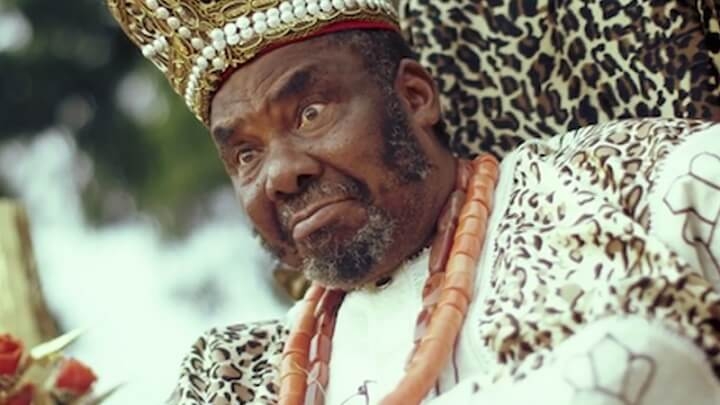
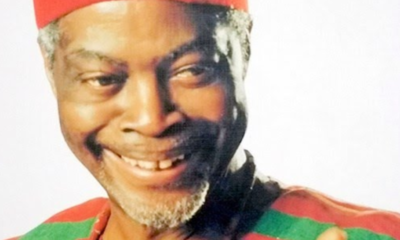
Pete Edochie is one of Nigeria’s most celebrated actors and a true legend of Nollywood. With a career spanning over five decades, he has become synonymous with powerful performances, iconic roles, and a commanding presence that captures audiences across generations.
From his breakthrough portrayal of Okonkwo in the television adaptation of Chinua Achebe’s Things Fall Apart to starring in hundreds of films that have shaped modern Nigerian movie industry, Pete Edochie has consistently set the standard for excellence in acting.
Known for his deep voice, dignified demeanour, and ability to bring complex characters to life, he has earned both national and international recognition, including prestigious awards and honorary doctorates.
In this article, we explore the life, career, personal journey, and lasting legacy of Pete Edochie. This offers a detailed look at why he remains a timeless icon in African cinema.
Pete Edochie’s Early Life and Education
Pete Edochie was born on 7 March 1947 in Zaria, Kaduna State, Nigeria. He is of Igbo descent, from Nteje in Anambra State, Nigeria.
Growing up in the north, Pete began his formal education at St. Patrick’s and St. James Primary School, Zaria. After primary school, he advanced to St. John’s College, Kaduna for his secondary education.
To further enhance his knowledge in media and communication, Pete travelled to England to study at the School of Journalism and Television, England. This educational exposure would lay the foundation for his future in broadcasting and acting.
This blend of northern upbringing, early schooling in Zaria and Kaduna, and later formal media education abroad gave Pete Edochie a unique background that shaped both his worldview and his versatility in storytelling and performance.
Career Beginnings
Before Pete Edochie became a household name in Nollywood, he began his professional journey in broadcasting and journalism. In 1967, at the age of 20, he joined the Eastern Nigeria Broadcasting Corporation (ENBC) as a junior programmes assistant.
Through dedication and skill, he rose steadily within the organization, eventually becoming Director of Programmes. At various times, he also served as Deputy Managing Director and occasionally acted as Managing Director. His work involved overseeing programme content, mentoring staff, and ensuring high-quality broadcasts.
During this period, Pete Edochie received further training in broadcasting at the BBC in England which helped to sharpen his skills in media presentation and production.
His broadcasting career gave him a solid foundation in voice modulation, presentation, and public engagement. These skills would later become his trademarks in acting. Though successful in media, Pete Edochie, eventually transitioned fully into acting in the early 1980s, thus marking the start of his legendary career in Nollywood.
Breakthrough Entry into Acting
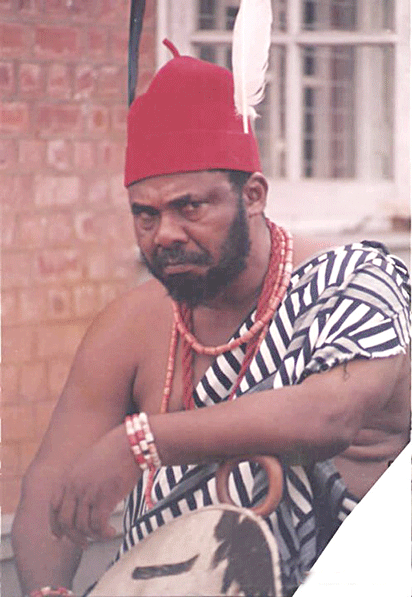
Pete Edochie as Okonkwo in Things Fall Apart
The moment Pete Edochie took on the role of Okonkwo in the television adaptation of Things Fall Apart marked a defining turning point, not only in his own life but for Nigerian screen acting as a whole. Even though what we now call Nollywood didn’t exist when he made that debut, Pete Edochie’s powerful performance in 1985 propelled him into prominence and effectively laid the groundwork for his legendary status.
Before stepping into Okonkwo’s sandals, Pete Edochie had already built a respectable career in broadcasting. But when he was cast for Things Fall Apart, audiences saw a side of him far beyond radio programmes and FM announcements. The combination of his commanding voice, dignified bearing, and understanding of dramatic presence which he honed over the years as a broadcaster and media professional made him a natural fit for a role steeped in cultural and dramatic gravitas.
Pete Edochie has shared in interviews how the casting process unfolded. A former colleague at broadcasting, then working as a zonal director at the Nigerian Television Authority (NTA) recommended him for the role. He was invited to audition at the main auditorium of University of Nigeria, Enugu, and just a moment after he walked in, a foreign costume designer reportedly exclaimed: “if this man could act, that’s the man we want for the role.” Within minutes, the producers reportedly concluded the audition as they all agreed he was perfect. That instant recognition set the stage for his career‑defining performance.
When Things Fall Apart aired, it resonated deeply with audiences. For Pete Edochie, the impact was immediate. He didn’t just gain fame, he earned respect, admiration, and long-lasting recognition. According to him, his performance drew international attention. So much so that the British Broadcasting Corporation (BBC) flew into Nigeria to interview him.
Meanwhile, the author of the novel, Chinua Achebe reportedly continued to call him “Okonkwo” as a sign of his approval and the indelible mark he left on the character.
For many Nigerians and Africans, Pete Edochie’s Okonkwo became the definitive screen embodiment of Achebe’s tragic hero – a fearless warrior, a proud man, shaped by tradition and tragedy. That portrayal connected deeply with viewers’ sense of identity and culture, making Edochie instantly unforgettable.
It’s important to note that when Pete Edochie played Okonkwo, there was no Nollywood industry as we now recognize it. He has himself said that the film industry, as a structured home video‑and‑film business only emerged years later with what is often marked as the beginning of Nollywood in 1992.
Yet, his work in Things Fall Apart laid a foundation. His success showed the potential and power of Nigerian-led storytelling, created demand for more local productions, and arguably helped to inspire what became Nollywood. Because of that performance, Pete Edochie is often hailed as one of the pioneers, an early icon whose talent helped to bridge broadcast, theatre, and film acting into what would eventually become a booming film industry.
In essence, for Pete Edochie, playing Okonkwo was both a job and a defining moment. It transformed him from a respected broadcaster into an enduring icon; from a radio voice to the face of African storytelling. And though time has passed and many roles followed, Okonkwo remains arguably his most powerful claim to fame.
Acting Career and Notable Works

After his breakthrough role as Okonkwo in Things Fall Apart, Pete Edochie quickly established himself as one of Nigeria’s most prolific and respected actors. Over the decades, he has acted in hundreds of films and television productions, spanning multiple eras of Nigerian cinema, from early televised dramas to the home-video boom of the 1990s, and into the modern streaming era.
Pete Edochie became widely recognized for his commanding presence, deep resonant voice, and his ability to convincingly portray authority figures such as kings, chiefs, patriarchs, and wise elders. These traits made him a go-to actor for roles requiring dignity, moral weight, and cultural authenticity.
Some of his most notable works include the television adaptation of Things Fall Apart which brought him national and international acclaim, and the classic supernatural-adventure film Igodo: The Land of the Living Dead (1999) in which his performance reinforced his reputation for commanding traditional epic roles.
He also starred in Rituals (1997), part of the 1990s wave of films centered on power, mysticism, and social themes, where his portrayal of morally complex characters anchored the drama. In Billionaire’s Club (2003), Pete Edochie played a wealthy, influential man involved in secret societies, a role that showcased his skill in embodying power and complexity.
More recently, he appeared in the acclaimed film Lionheart (2018) directed by Genevieve Nnaji where he portrayed Chief Ernest Obiagu, a patriarch balancing tradition and modern business realities. Additionally, films such as Egg of Life, Holy Ghost Fire and Living with Death illustrate his versatility and show that he can handle a variety of genres beyond the traditional patriarchal or leadership roles
Pete Edochie’s style resonates strongly with audiences because of his commanding presence and authentic portrayals. His deep, resonant voice, calm but authoritative demeanor, and ability to deliver lines with emotional depth make his characters believable, whether as a traditional chief, a father, or a man of influence. Many of his roles draw on Nigerian, especially Igbo, cultural themes such as respect for elders, tradition, morality, and power dynamics which helped his performances to resonate deeply with African audiences.
Across decades, he has successfully adapted to evolving cinematic styles, moving from early TV drama to video-film Nollywood and modern streaming productions while remaining a central figure. This adaptability has allowed him to bridge generations of Nigerian storytellers, carrying values from traditional storytelling into modern cinematic formats. Even in recent years, his involvement in films such as Lionheart demonstrates his enduring relevance and continued contribution to the industry.
For many moviegoers, Pete Edochie is an actor and a symbol of dignity, tradition, and cinematic excellence. His performances have set audience expectations for serious acting in Nigerian films, and his influence continues to shape actors and filmmakers across generations. Through his long and versatile career, he has cemented a legacy as one of Nollywood’s foundational figures, inspiring respect, admiration, and emulation.
Awards, Honors, and Recognition
Through the course of his storied career, Pete Edochie has received numerous awards and honours, from national recognitions to honorary degrees to underscore his influence and legacy in Nollywood and African cinema.
In 2003, he was honoured by the Nigerian government with the national title Member of the Order of the Niger (MON). This is one of Nigeria’s formal national honours and is a reflection of his contribution to the arts and entertainment industry.
In 2014, he received the AMVCA Industry Merit Award, a prestigious recognition presented by Africa Magic to honour lifetime contribution and outstanding impact on African film and television.
More recently, in September 2023, Pete Edochie was conferred two honorary doctorates by ISTM University in Togo. The honours include a Doctorate in Literature, a Doctorate in Arts, and together with them, a Lifetime Achievement Award in recognition of his decades‑long excellence and influence in the creative arts.
Beyond these major honours, in 2025, he was named a recipient of the Celestine Ukwu Memorial Award, conferred by the foundation bearing the name of the late music legend. This award recognized Pete Edochie’s legacy and his support for colleagues and humanitarian contributions in the entertainment industry.
These honours, namely, national awards, industry merit awards, academic recognitions, and humanitarian acknowledgments reflect not only Edochie’s talent as an actor but also his broader role as a cultural icon, mentor, and pillar of integrity in the entertainment world.
Personal Life

Throwback of Pete Edochie’s family
Pete Edochie is married to Josephine Edochie and the couple has been together for many decades. Together, they are parents to six children: five sons and one daughter.
- Leo Edochie -the firstborn son.
- Uche Edochie – their second child and son.
- Linc Edochie – another son, who also works in the film industry.
- Gene Edochie – another son, known for working in design/architecture and creative fields.
- Yul Edochie – the youngest son, a prominent actor and filmmaker, following in his father’s footsteps.
- Eva Edochie – their only daughter.
Despite the fame associated with the Edochie name, the family tends to keep a relatively low profile, especially children outside of acting. Some of them like Uche, Gene, and Leo have chosen careers outside entertainment, in fields such as engineering, design, art, or business.
Pete Edochie is a practicing Christian (Catholic).
Over the years, the couple’s long marriage has drawn public admiration. As at their 53rd wedding anniversary, they publicly celebrated their union with thanks and thanksgiving, acknowledging their children and grandchildren for honour and support.
Although public life, celebrity status often draws speculation, Pete Edochie has generally avoided scandalous exposure. For example, rumours linking him romantically to another actress with a similar surname, that is Rita Edochie have been addressed and clarified as she is not his wife but married to his younger brother.
In 2009, there was a scare when Pete was briefly kidnapped but he was later released unharmed.
Overall, beyond his public persona as a veteran actor, Pete Edochie remains a devoted husband, father, and patriarch proud of his family and committed to stability, values, and privacy.
Challenges and Turning Points
Over his decades‑long journey in entertainment, Pete Edochie encountered several significant challenges and turning points, moments that tested his resolve but also helped to shape his legacy.
Before fame in film, Pete Edochie had a stable career in broadcasting. He began in 1967 as a junior programmes assistant at the then Eastern Nigeria Broadcasting Corporation (ENBC), rising to positions such as Director of Programmes, and later, Acting Managing Director.
But his broadcasting career hit a turning point when the station became politicized. The move disrupted operations and triggered a management shake‑up, and he was among those asked to leave.
That dismissal could have ended his professional journey but instead, it became a pivot. As Pete Edochie later revealed in interview, after losing his broadcasting job, he received a film offer – a first acting gig with payment of ₦50,000, much higher than his former monthly salary of ₦9,000. He credited his wife’s support for that transition because when he told her his job was gone, she encouraged him to seize the opportunity.
This risk of leaving a stable job for an uncertain film career was a major turning point. For many, that would be too risky but for Pete Edochie, it became the beginning of a legendary acting career.
Even after establishing himself in film, his career faced turbulence. In 2005, he was among a group of top Nollywood actors placed under a one-year ban by Actors’ Guild of Nigeria (AGN). The ban often referred to as the “G8” ban stemmed from allegations that the actors were charging producers excessively high fees due to their A‑list status.
For a veteran actor like Pete Edochie, the ban disrupted momentum at a time when the Nigerian film industry was evolving rapidly. The ban was widely seen as a shock to Nollywood, with fears that it might damage the industry’s growth. However, the ban was later lifted, and he, along with the others returned to acting.
Perhaps the most alarming challenge in his life came in 2009. On August 16 that year, Edochie was reportedly kidnapped at Nkpor, a suburb of Onitsha in Anambra State. The next day, August 17, he was released unharmed. Though he emerged physically safe, such an event surely shook him and his family. For a public figure like him, the kidnapping highlighted the real dangers that can accompany fame. Yet, despite this terrifying ordeal, he continued his acting career.
Pete Edochie’s first big acting role came in the 1980s, well before what is now known as the modern Nigerian film industry, Nollywood, emerged in the early 1990s. This means that he witnessed and adapted through major changes in the entertainment landscape, from radio broadcasting, to television drama, to home‑video films, and eventually to contemporary cinema and streaming-era productions.
Adapting across these eras required flexibility because it involved different acting styles, different audience expectations, and evolving production values. Pete Edochie’s ability to remain relevant grounded in experience but open to change is itself a tribute to his resilience and commitment. In his own words, he has emphasized that when he started acting, there was nothing like Nollywood.
Influence and Legacy
Pete Edochie is a veteran actor who is widely regarded as a pillar of Nigerian cinema and whose influence and legacy continue to shape the industry.
When Pete Edochie starred as “Okonkwo” in the television adaptation of Things Fall Apart, back in 1985, the film industry we now call Nollywood didn’t yet exist. He has often reminded us that he is older than Nollywood itself. Through that performance, he earned attention not just in Nigeria but beyond. The international broadcaster, BBC reportedly flew in to interview him about the role.
Many consider that portrayal as a foundational moment, a turning point that showed the power of Nigerian-led storytelling and helped pave the way for what Nollywood would become.
Over decades, Pete Edochie became known for a distinctive style – a deep, commanding voice; a calm but authoritative presence; and the ability to convey wisdom, gravity, and cultural nuance. These traits influenced how strong, traditional characters such as kings, chiefs, elders, patriarchs came to be portrayed in Nigerian films.
Many younger actors and industry professionals look up to him. His consistency over time, from early televised plays, through the home-video boom, into modern cinema and streaming demonstrates versatility and resilience, and offera model for longevity that many upcoming actors aspire to.
By bringing literary works like Things Fall Apart to life, he helped to connect African literature and oral tradition to the screen, thus giving a generation a visual representation of stories rooted in cultural and historical identity. Many of his roles were deeply rooted in Nigerian, particularly Igbo cultural identities. As such, he has helped to preserve and celebrate African heritage, values, proverbs, and traditional authority through film.
Beyond entertainment, his works often touched on themes of morality, tradition, social change, and generational dynamics which makes him a social voice, and not just a film star. Government officials and cultural commentators have acknowledged his impact on societal values, cultural revival and social engineering.
As one of the earliest and most respected voices in Nigerian film, Pete Edochie has indirectly mentored many through his example, his professionalism, and by opening doors for younger actors. His longevity and relevance across changing industry tides show that consistent dedication to craft can stand the test of time. His personal legacy also continues through his children, some of whom are active actors.
In September 2024, Pete Edochie was formally appointed as the Royal Patriarch and Commander of Tradition and Customs of the Ikenga Abiama Dynasty Foundation, as a recognition of his role as a cultural custodian and his contribution to preserving Igbo customs and heritage.
His honours and awards, from traditional regal recognitions, industry merit awards, to lifetime achievement accolades reflect not just his acting prowess but his broader status as a respected elder, cultural ambassador, and pioneer.
Today, Pete Edochie’s legacy lives on in multiple ways. He remains a touchstone for authenticity and integrity in acting. His movies are still watched by new generations. The values, depth, and traditional themes he championed remain relevant, and influence filmmakers and audiences alike.
In a fast‑changing industry where trends come and go, his work stands as a reminder of what happens when talent and discipline come together, respect for culture, and dedication to craft. For many, he is a veteran actor and a foundational chapter in the story of African movies.
In Conclusion …
Pete Edochie’s journey from a young broadcaster in Eastern Nigeria to one of Nollywood’s most respected and legendary actors is a story of talent, resilience, and dedication. Over decades, he has entertained audiences and shaped the standards of acting, elevated Nigerian storytelling, and bridged generations of filmmakers and viewers. His iconic roles, such as Okonkwo in Things Fall Apart, and his commanding presence in films like Lionheart demonstrate his versatility and ability to bring depth and authenticity to every character he portrays.
Beyond the screen, his influence extends to culture, tradition, and mentorship. He has preserved Nigerian heritage through his work, inspired countless young actors, and maintained integrity in both his personal and professional life. His numerous awards, honours, and recognitions, from national titles to lifetime achievement awards reflect the broad respect he commands.
Despite facing challenges, including career setbacks, industry politics, and personal dangers, Pete Edochie has remained steadfast. Today, he is not only a Nollywood legend, he is a symbol of cultural pride, professionalism, and inspiration for generations to come. His legacy continues to resonate such that his name will remain synonymous with excellence in Nigerian movies for decades ahead.
References
- https://en.wikipedia.org/wiki/Pete_Edochie
- https://www.manpower.com.ng/people/15940/pete-edochie
- https://www.vanguardngr.com/2024/03/7-things-to-know-about-veteran-nollywood-actor-pete-edochie-celebrating-77th-birthday/
- https://www.withinnigeria.com/entertainment/2023/09/04/pete-edochie-honored-with-double-doctorate-degree-at-76-video/
- https://lifestyle.thecable.ng/pete-edochie-reflects-on-4-decade-acting-career/
- https://www.vanguardngr.com/2023/01/vanguard-awards-pete-edochie-godfather-of-the-big-screen/amp/
- https://nigerianwaves.com/biography-of-pete-edochie-and-net-worth/
- https://bsgistnews.com/2024/09/17/pete-edochies-biography/
- https://www.nigeriaa2z.com/2012/04/07/pete-edochie-an-enigma-in-nollywood/
- https://celebritygig.com/cgi-sys/suspendedpage.cgi
You might want to check this out …