



Culture
The Asara Festival of the Ukpor People: A Celebration of History, Victory, and Culture

Festivals in Igbo land are more than just gatherings for merriment. They are living traditions that carry the memory of history, victory, unity, and the survival of a people. One of the most important cultural events in southeastern Nigeria is the Asara Festival of the Ukpor people, also called Ịgba Asara. This festival is not held every year like Christmas or New Yam festivals. Instead, it comes once in a long while, sometimes after ten years, sometimes fifteen, and sometimes even after twenty years. For the people of Ukpor, in Nnewi South Local Government Area of Anambra State, the Asara Festival is a grand reminder of their strength, identity, and victory in history.
In this article, we will look at the origin, meaning, historical background, rituals, cultural significance, controversies, and modern-day adaptations of the Asara Festival, explaining why it remains one of the greatest cultural heritages of the Ukpor people.
The Historical Background of the Asara Festival
To truly understand the Asara Festival of the Ukpor people, one must travel back in time to a defining moment in their history, a conflict remembered as the War of Agbaja. This war was not just an ordinary quarrel between neighbors, it was a struggle for dignity, freedom, and the right of a community to control its own destiny.
Long ago, in precolonial times, the Nnewi kingdom was one of the strongest and most feared neighbors of Ukpor. With their organized leadership and reputation for producing powerful warriors, Nnewi sought to dominate the surrounding communities. Their leaders imposed a harsh and humiliating demand that men from Ukpor and other nearby towns had to provide free labor on Nnewi farmlands and other projects. This forced labor came without reward, without respect, and without choice.
For the proud people of Ukpor, this was an unbearable insult. They valued their independence, their sweat, and their honor. To work like slaves on the soil of another kingdom was something they could not accept. Instead of surrendering quietly, the people of Ukpor decided to resist. They did not stand alone. They rallied with other villages forming the Ekweteghete, a coalition of nine allied communities. Together, they made a vow, they would not bow to oppression.
This resistance sparked what would later be remembered as the War of Agbaja, because both Ukpor and Nnewi were part of the wider Agbaja group of communities. Nnewi, confident in its military might, sent its warriors to subdue Ukpor and crush their defiance. Among these warriors was a legendary fighter named Metuh, whose strength and courage had struck fear in many hearts.
But history remembers that on this battlefield, the Ukpor people triumphed. With bravery, unity, and determination, they defeated the Nnewi forces, including the feared Metuh. This victory was not just a military success, it was a moral victory, a declaration to all of Igbo land that even smaller communities could rise up and overcome powerful neighbors when they stood together with courage.
For the people of Ukpor, this triumph was too great to be forgotten. It demanded a celebration worthy of the sacrifice, pain, and glory of that war. And so, their leader, Eze Obiukwu, the king of Ukpor at the time, took the first step. He slaughtered a cow, a prized animal of great value, as a symbol of victory, thanksgiving, and renewal. The meat was shared freely among his people, and everyone both young and old, men and women were invited to eat, drink, sing, and dance.
The celebration did not end there. As the news of victory spread, other villages joined in the merriment. They too brought cows, some of the biggest and strongest from their herds, and displayed them for comparison. The cows were not just animals, they were symbols of pride, wealth, and honor. People admired their size and beauty before they were finally slaughtered, roasted, and shared. What mattered most was not whose cow was bigger, but that everyone ate together in unity. No one was left out, for victory belonged to all.
This grand feast of cows, laughter, dancing, and sharing became the foundation of what is now known as the Asara Festival. The word Asara itself, rooted in the Igbo language, means merriment, joy, and communal feasting. From that moment onward, it was decided that this extraordinary victory must always be remembered, not through silence or mere storytelling, but through a living festival of togetherness, where generations would gather to eat, drink, dance, and recall the bravery of their ancestors.
Thus, what began as a spontaneous celebration of triumph gradually grew into the greatest cultural festival of Ukpor, one that still lives on many centuries later.
Meaning and Spirit of the Festival
The Asara Festival is not just about eating meat or drinking palm wine. It is deeply symbolic. It represents:
- Victory over oppression – a reminder of how Ukpor resisted and overcame subjugation.
- Unity and togetherness – seen in the communal feasting where everyone partakes equally.
- Joy and thanksgiving – expressed through dancing, music, masquerades, and merriment.
- Cultural pride – a bold declaration that Ukpor people will always honor their past.
For the Ukpor community, Asara is a way of saying –We remember who we are, we remember where we came from, and we will never forget the struggles that made us strong.
Frequency and Timing of the Festival
Unlike annual festivals such as the New Yam (Iri Ji), the Asara Festival is not fixed to a yearly cycle. Instead, it is celebrated at long intervals, sometimes ten years, sometimes fifteen, and sometimes even twenty. The decision is made by traditional leaders and custodians of the culture.
The festival is usually announced by a respected titleholder known as the Dara of Ukpor, who traditionally has the duty of proclaiming the date. This announcement brings excitement across the town, as preparations begin months in advance. Because of its rarity, every edition of the Asara Festival is treated as a once-in-a-generation event, often remembered for decades.
Rituals and Celebrations
The Asara Festival is marked by several unique activities and rituals:
1. Cow Competition and Feasting
At the heart of the festival is the display of cows. Different villages in Ukpor bring their cows, which are compared to see which one is the largest and healthiest. This is symbolic of strength, wealth, and prestige. After the display, the cows are slaughtered and shared for communal feasting. Meat and drinks flow freely, and no one is left out.
Click here to watch videos of the Asara Ukpor 2019 celebration
2. Music and Dance
Traditional Igbo music is central to the celebration. Drums, flutes, gongs, and local instruments are played to accompany cultural dances. Young men and women dress in their best traditional attires, adorned with beads and colorful fabrics, and perform dances that display joy and unity.
3. Masquerades
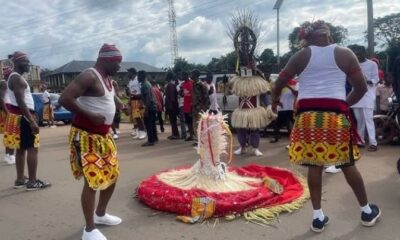
Masquerades (mmọnwụ) add mystery and excitement to the festival. They entertain the crowds with dramatic performances, dances, and displays of strength. Masquerades also serve as spiritual and cultural symbols, reminding the community of the link between the living and the ancestors.
4. Ceremonial Speeches
The town’s elders, traditional rulers, and cultural custodians give speeches to remind the people of the meaning of Asara. They retell the story of the War of Agbaja and the significance of unity in the face of oppression.
5. Church Blessings in Modern Times
In earlier times, cows for the festival were presented at shrines and blessed traditionally. Today, to align with Christian beliefs, the cows are blessed in churches before being slaughtered. This adaptation shows how the community has reshaped the festival to remain relevant in a modern religious society.
Attire and Cultural Display
During Asara, Ukpor people showcase the beauty of Igbo fashion. Men wear isiagu tops, wrappers, and red caps, symbolizing dignity and authority. Women adorn themselves with wrappers, blouses, beads, and headscarves. Children also appear in cultural outfits.
Dance groups, age grades, and associations march in colorful processions, while drummers and singers keep the air alive with Igbo rhythms. This blend of sound, color, and movement makes the festival a spectacular sight.
The Question of Religion and Controversy
Over the years, the Asara Festival has faced some controversies, especially from Christian groups. Some churches, especially the Catholic Church in Ukpor, once discouraged members from participating, arguing that the festival had roots in idolatry, particularly through its past association with Udo Ukpor, a local figure who was later deified.
However, the Ukpor Improvement Union (U.I.U.) and cultural leaders have worked hard to clarify that Asara is a cultural festival, not a religious one. They emphasize that it existed long before the worship of Udo Ukpor and that today’s celebrations have removed any practices linked to idol worship.
Click here to watch the PG of Ukpor talk about the history of Asara Festival and inclusivity of the church in present day times.
By introducing church blessings, inter-denominational services, and cultural education, the festival has successfully rebranded itself as a celebration of history, identity, and culture rather than a religious ritual.
Cultural Importance to Ukpor and Beyond
The Asara Festival serves many important roles in the life of the Ukpor people:
- Historical Memory – It ensures that the story of the War of Agbaja is never forgotten.
- Unity – It brings together all sons and daughters of Ukpor, including those abroad, to reconnect with their roots.
- Tourism and Identity – The festival attracts visitors from other towns and even international tourists, showcasing the richness of Igbo culture.
- Education of the Youth – Younger generations learn about their heritage and values through storytelling, dances, and participation.
- Community Development – Major festivals like Asara often inspire fundraising and projects for the progress of the town.
The Modern Face of Asara Festival
In today’s world, the Asara Festival is no longer just a local affair. With the influence of social media, photography, and video coverage, each edition of the festival reaches a wider audience. Young people record and share performances online, bringing global attention to Ukpor’s cultural pride.
Modern editions of the festival now include:
- Interdenominational church services for peace and unity.
- Cultural exhibitions showcasing arts, crafts, and history.
- Meetings of diaspora Ukpor sons and daughters who come home from Lagos, Abuja, or abroad to reconnect.
- Media coverage that documents the grandeur of the event for future generations.
Conclusion
The Asara Festival of the Ukpor people is more than just a celebration. It is a living history, a remembrance of victory, a symbol of unity, and a proud display of Igbo culture. From its origin in the War of Agbaja to its modern adaptation in the 21st century, Asara has survived as one of the most significant festivals in southeastern Nigeria.
Though it is rare and held only once in a decade or more, each edition leaves unforgettable memories. Through dance, masquerade, feasting, attire, and rituals, the festival continues to unite Ukpor people and remind them of their strength. By blending tradition with modern faith practices, the Asara Festival stands as proof that culture can adapt and thrive without losing its essence.
Read More: Asala Festival, Amichi, Anambra State || Tourism, Culture and Traditions