


Igbo Communities
Eze Ndígbo Na Ghana Speaks: “I Am Not a King, Just Cultural Leader”

Eze Ndígbo na Ghana Speaks to VeryDarkMan: “I Am Not a King in Ghana, I Am Just Eze Ndígbo”

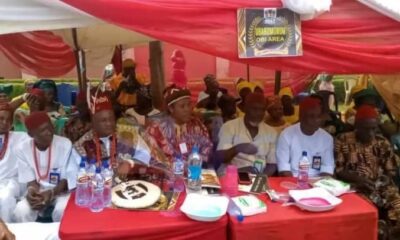
Eze Ndígbo na Ghana Dr. Chukwudi Jude Ihenetu during an interview with VeryDarkMan(VDM)
For many years, the office of the Eze Ndígbo Na Ghana has attracted attention, admiration, and sometimes controversy. Some people believe the Eze Ndígbo is a king in Ghana, while others say he is trying to create a new kingdom in another man’s land. These arguments became louder after videos went viral about an “Igbo Village” project in Ghana. To clear the air, Nigerian social media activist and commentator, VeryDarkMan (VDM), visited His Royal Majesty Eze Dr. Chukwudi Jude Ihenetu, the current Eze Ndígbo in Ghana. Their conversation, shared widely on Instagram and Facebook, gave many people a clearer understanding of what the title really means and what the Eze stands for.
The title Eze Ndígbo, when directly translated from Igbo, means “King of the Igbo people.” But in Ghana, it does not mean a political king or a traditional ruler in the Ghanaian sense. Instead, it is a diaspora leadership position created to help Igbo people living in Ghana stay united, preserve their culture, and speak with one voice.
Eze Dr. Chukwudi Jude Ihenetu explained to VDM that there has been an Eze Ndígbo in Ghana for more than 30 years, and he is not the first to occupy the office. According to him, the position was created to make sure the Igbo community has a cultural leader who can guide them, represent them in community matters, and organize cultural celebrations such as the New Yam Festival. He was elected in 2012 and crowned later that year, after winning an election that was contested by other candidates. Since then, he has served as the head of the Igbo community in Ghana.

His Royal Majesty Eze Dr. Chukwudi Jude Ihenetu
One of the strongest points Eze Ihenetu made during the conversation was the fact that he is not a king in Ghana. “Our Ghanaian hosts understand this very well, and that is why we are living peacefully here,” he said. He explained that while his title is Eze Ndígbo, it is purely cultural and meant for Igbo people living in Ghana. It does not give him power over Ghanaians or any Ghanaian land.
To make the matter clearer, he compared the situation with other communities. The Yoruba community in Ghana has their own Oba. Other groups such as Moroccans, Chinese, and Indians also have cultural leaders. Therefore, the Igbo people having their own leader is neither new nor threatening. “When I go to Nigeria and meet traditional rulers like the Ooni of Ife, I step down from this seat and I become their subject. I don’t even parade myself as a king in Nigeria. My mission is cultural, not political,” he said.
Click here to Watch the interview video
One of the biggest controversies surrounding Eze Ihenetu is the viral story of an Igbo Village in Ghana. Reports claimed that he had acquired large portions of land in Accra to build a village with streets named after Igbo heroes, markets, schools, and a 2,000-seat hall. Some Ghanaian traditional councils even reacted by warning against such a project. But according to the Eze, the truth is different. He explained to VDM that the idea for an Igbo Village actually started back in 2013, when he had just been crowned. The plan was to create a center for culture, business, and learning, just like the Chinese have their Chinatown in many countries.
Unfortunately, the land that was identified for the project was under dispute, and the matter dragged on for years. In the end, the project never took off. “If we had succeeded, it would have been a place of pride, not a kingdom inside another man’s country,” he explained. He stressed that the project was about promoting Igbo culture and trade, not about building a new political kingdom in Ghana.
Another issue raised during the conversation was the problem of locked Igbo shops in Ghana. Over the years, Ghana’s Ministry of Trade and Industry has enforced laws that ban foreigners from engaging in retail trade. This has affected many Igbo traders, who often engage in small retail businesses.
According to the Eze, most Igbo traders would prefer wholesale, but many local Ghanaian customers usually buy on credit and refuse to pay. This situation forces traders to sell in smaller quantities just to survive. The Eze also pointed out that while the law affects all foreigners, its enforcement seems to target Igbo traders more. “I have been meeting with authorities, and things are already getting better,” he said with confidence. He assured his people that his office is in dialogue with the Ghanaian government to make life easier for Nigerian traders, while still respecting Ghanaian laws.
Another accusation often thrown at him is about his residence, which some people call a palace. Critics have argued that he is living like a king. But during the interview, he explained that the building is his personal home, which he constructed long before he became Eze Ndígbo. “I built it because God blessed me as a businessman. Later, I was chosen as Eze Ndígbo, but that doesn’t make me a king,” he said. The house may look like a palace to outsiders, but for him, it is simply his private residence.
Eze Ihenetu also made it clear that he respects Nigerian monarchs and does not equate himself with them. “When the Ooni of Ife or any other Nigerian king visits, I step down from this seat and they take over. I become their subject, because I am not a king. I don’t even parade myself as a king when I travel to Nigeria,” he said. This statement was important in correcting the impression that he was trying to place himself on the same level as Nigerian first-class monarchs.
The Eze Ndígbo title may not be a kingship under Ghanaian law, but it is still very meaningful to Igbo people in the diaspora. It gives them a sense of unity in a foreign land, a channel of communication with Ghanaian authorities, a custodian of culture who organizes festivals like the New Yam Festival, and a mediator during times of conflict or misunderstanding. For many Igbo in Ghana, the title is a bridge that connects them to home while also helping them integrate peacefully with their Ghanaian hosts.
VeryDarkMan, known for his bold style of questioning and exposing controversial matters, played an important role in this story. His visit to the Eze’s home provided a platform for the leader to speak directly to the public. The videos shared online attracted thousands of views and comments, showing that the issue is of great interest not only to Nigerians and Ghanaians but also to Africans in the wider diaspora. By giving the Eze a chance to speak plainly, VDM helped reduce misinformation and allowed people to hear directly from the man at the center of the controversy.
The interview between Eze Ndígbo Ghana and VeryDarkMan has shed new light on issues that have long caused confusion and debate. From the meaning of his title, to the Igbo Village project, to the challenges of Igbo traders, the Eze has made it clear that he is not a king in Ghana. Instead, he is a cultural leader chosen by his people to protect their identity and ensure unity. At the end of the day, his mission is simple: to preserve Igbo culture, unite his people, and maintain peaceful relations with their Ghanaian hosts.
Read About: Afịa-Ọlụ Nnewi Festival 2025: World’s Tallest Yam Pyramid and Colourful Closing Highlights
All You Need to Know About Eze Ndígbo Na Ghana and VeryDarkMan
Who is the Eze Ndígbo Na Ghana?
The Eze Ndígbo Na Ghana is Dr. Chukwudi Jude Ihenetu, a Nigerian businessman and cultural leader chosen by the Igbo community in Ghana.
Is the Eze Ndígbo Na Ghana a king in Ghana?
No. The Eze Ndígbo Na Ghana is not a king in Ghana. It is a cultural title for Igbo people in the diaspora, created to help them preserve traditions and stay united.
When was Dr. Chukwudi Jude Ihenetu elected as Eze Ndígbo Na Ghana?
He was elected and installed as Eze Ndígbo Na Ghana in 2012, following a community decision to have a unifying cultural leader for the Igbo in Ghana.
Why did VeryDarkMan visit the Eze Ndígbo Na Ghana?
VeryDarkMan visited the Eze Ndígbo Na Ghana to hear directly from him about controversies, such as claims of kingship, the “Igbo Village” project, and the challenges Igbo traders face in Ghana.
What is the Igbo Village project in Ghana?
The Igbo Village project was an idea started in 2013 to create a cultural and commercial center for Igbo people in Ghana, with schools, malls, and cultural spaces. It did not materialize because of land disputes.
Why are Igbo shops sometimes locked in Ghana?
Many Igbo traders face issues with Ghana’s trade laws, which restrict foreigners from engaging in retail trading. Although the law affects many foreigners, Igbo traders are often hit the hardest.
Does the Eze Ndígbo Na Ghana live in a palace?
No. The building people call a palace is actually his personal home, which he built before becoming Eze Ndígbo Na Ghana.
What is the role of the Eze Ndígbo Na Ghana?
The role is to unite Igbo people in Ghana, promote their culture, resolve disputes, and maintain good relations with Ghanaian authorities.