

History and heritage
Uli || The Airstrip Town

Uli is a historic town in Ihiala LGA of Anambra State, Nigeria. Let’s explore the history, geography, villages, leadership, economy, markets, beliefs, festivals, food, notable people, landmarks and other things about this airstrip town.

Uli is a historic and culturally vibrant town located in Ihiala Local Government Area of Anambra State, southeastern Nigeria. Often described as one of the most notable towns in the region, Uli stands out for its deep-rooted traditions, hardworking people and remarkable place in Nigeria’s modern history.
The town came into national prominence during the Nigerian Civil War (1967–1970) when it hosted the famous Uli Airstrip – an important humanitarian and military lifeline for the Biafran side. But beyond its wartime legacy, Uli is a thriving community blessed with fertile lands, rich cultural festivals, strong town unions and an enduring spirit of unity.
Today, Uli is both traditional and forward-looking. It blends the warmth of rural life with the progress of education, commerce and community development, thanks to the presence of the Chukwuemeka Odumegwu Ojukwu University campus and the industriousness of its people.
From the farmlands that yield yam and cassava to the bustling village markets and colourful New Yam Festivals, Uli tells the story of a people deeply connected to their land and heritage.
This article takes you on a journey through Uli, exploring its history, geography, governance, economy, beliefs, festivals, cuisine and the remarkable individuals who make it a town of pride and promise in Anambra State.
A Brief History of Uli
The town of Uli is situated at the extreme south-eastern corner of Ihiala Local Government Area in Anambra State, Nigeria, lying between the confluence of the rivers Atamiri and Enyinja and extending towards the lower Niger floodplain. The region is part of the broader Igbo heartland, and archaeological evidence from Anambra State suggests human-settled activity in the wider area dating back many centuries.
While detailed early-settlement records for Uli as a distinct community are scarce in published sources, its modern historical significance is inextricably tied to the events of the Nigerian Civil War that lasted between 1967-1970.
Following the secession of the Republic of Biafra in May 1967, the Biafran leadership and engineers sought to maintain an air-link to the outside world after major airports fell under federal control. One of their key projects was the creation of a makeshift airstrip near Uli, often referred to by its codename “Annabelle”.
Constructed from stretches of straight roadway in the Uli area, the airstrip was declared operational around August 1968. It became a major channel for relief supplies, food and medicine being flown in under difficult and often dangerous conditions.
Some accounts claim that at its peak Uli, handled hundreds of tons of supplies nightly, making it the busiest air‐corridor of its kind in Africa at that time. The airstrip’s operations were clandestine, with flights landing at night and using coded frequencies to avoid detection.
As the war drew to a close, the final operation of the federal forces, codenamed Operation Tail‑Wind, took place in January 1970 and included the capture of Uli, among other locations. After the war, the airstrip was abandoned and much of its former infrastructure became overgrown or was absorbed by subsequent development.
In the post-war years, Uli has gradually rebuilt and diversified its role in the region. It remains an agricultural town with farmland and riverine terrain, and over time, educational infrastructure has been added, including a campus of the Chukwuemeka Odumegwu Ojukwu University.
While the legacy of the civil war gives the town a special place in Nigeria’s modern history, the community now combines traditional life, farming and educational growth as it looks ahead.
Location and Geography
Uli is located in the southeastern part of Ihiala Local Government Area of Anambra State, Nigeria. Geographically, the town lies near the border between Anambra and Imo States and occupies a strategic position along the Owerri–Onitsha highway corridor. It is surrounded by neighbouring communities such as Ihiala, Amorka, Umuduru and Lilu, forming a network of settlements that share historical and cultural ties.
The terrain of the town is a mix of gently undulating plains, farmlands and river valleys. The town is drained by rivers such as Atamiri and Enyinja which flow toward the lower Niger floodplain, creating fertile alluvial soils suitable for agriculture. These water bodies not only support farming but also influence the town’s microclimate and ecology.
Uli experiences a tropical wet-and-dry climate typical of southeastern Nigeria, with two main seasons: the rainy season which spans from April to October, and the dry season spanning from November to March. Average annual rainfall ranges between 1,800 and 2,200 millimeters while temperatures remain fairly high throughout the year. The fertile soil and favourable weather conditions support a wide range of crops, including yam, cassava, maize, vegetables, and plantain, which form the basis of the local economy.
Accessibility has improved over the years due to road connections linking Uli to nearby towns such as Ihiala, Ozubulu, Orlu,and Owerri. The presence of Chukwuemeka Odumegwu Ojukwu University (Uli Campus) also adds to the town’s landscape, combining natural beauty with modern development.
Overall, the geography and location of the town make it an agriculturally rich and strategically positioned community within Anambra State.
Villages and Communities that Make Up Uli
Uli is made up of several villages and kindreds that together form the larger community. These villages are the foundation of the town’s social, political and cultural life, each with its own ancestral roots, leadership structure and traditions. Collectively, they contribute to the unity and identity of Uli as one of the prominent towns in Ihiala Local Government Area.
According to community records and oral traditions, the town comprises a number of autonomous villages, including Ihite, Eziama, Umuaku, Umudim, Umuoma, Umueze, Umuogbu, Umuakuaba, Awo Uli, and Ubahu Uli, among others.
Each of these villages is further divided into smaller kindreds and family compounds, forming tightly knit social units that promote cooperation and mutual support.
Every village has its own elders’ council and village assembly which work closely with the town union and traditional leadership to maintain order, settle disputes and oversee community development projects. The villages are linked through a common cultural heritage, shared festivals and intermarriages which foster a sense of oneness despite individual village identities.
In recent years, the growing population and expansion of Uli have led to the establishment of new residential clusters and extensions of older villages. Yet, the traditional village structure remains central to the town’s organization, guiding its social values, governance and community spirit.
Leadership and Traditional Authority
Uli operates under a traditional leadership system that mirrors the broader Igbo pattern of community governance. At the top of this structure is the traditional ruler, commonly addressed as the Igwe of Uli who serves as the custodian of culture, customs and peace within the town. The Igwe’s authority is recognized by both the people and Anambra State Government under the system of recognized traditional institutions.
Supporting the Igwe is a council of chiefs and elders made up of titled men, village heads and representatives from the various communities that make up Uli. These elders play advisory and judicial roles, helping to mediate disputes, enforce customary laws and uphold moral values. The town also operates through age-grade systems and family heads who ensure discipline and communal cooperation at the grassroots level.
In addition to the traditional council, Uli has a vibrant Town Union which works hand-in-hand with the Igwe’s cabinet in promoting community development, resolving social matters and representing the town’s interests in external affairs. The union also liaises with indigenes in the diaspora to mobilize resources for local projects.
The traditional institution in Uli commands respect and loyalty from the people, serving as a symbol of unity and continuity. Over the years, successive traditional rulers have contributed to the town’s progress by fostering peace, encouraging education and preserving the town’s cultural heritage. Through this leadership structure, Uli continues to maintain harmony between traditional values and modern governance.
Economy and Resources
The economy of Uli is primarily agrarian, with the majority of its residents engaged in farming and related activities. The town’s fertile soil, coupled with its favourable tropical climate supports the cultivation of staple crops such as yam, cassava, maize, cocoyam, vegetables, and plantain. Farming is largely done on a subsistence and small-scale commercial basis, with most households maintaining family farms passed down through generations.
In addition to crop farming, many residents engage in palm produce processing, particularly palm oil and kernel production which are major sources of income. The abundance of oil palm trees across the community has made palm produce an important agricultural resource for both domestic use and local trade. Fishing, though on a smaller scale, also takes place along rivers like Atamiri and Enyinja which provide both food and livelihood for nearby families.
Trading and small-scale businesses form another pillar of the local economy of the town. The town has several markets where agricultural produce, livestock and household goods are bought and sold. Traders from neighbouring towns such as Ihiala, Amorka and Orlu frequently visit these markets, creating a vibrant commercial network. Petty trading, tailoring, carpentry and motorcycle transport services also provide daily income for many residents.
The presence of Chukwuemeka Odumegwu Ojukwu University (Uli Campus) has further diversified the town’s economy. The influx of students, academic staff and visitors supports small enterprises such as hostels, restaurants, printing shops and transport services, thereby boosting local commerce.
Uli also has natural resources, including fertile farmland and pockets of clay and laterite deposits used for building and local craftwork. With its agricultural potential and entrepreneurial spirit, the town has a strong foundation for rural development. However, challenges such as inadequate infrastructure, limited access to modern farming tools and fluctuating market prices still affect productivity.
Despite these, Uli people remain industrious and self-reliant, continuously seeking ways to improve their standard of living through hard work and community cooperation.
Major Markets

Markets play a vital role in the economic life of Uli, serving not only as places of trade but as social hubs where farmers, traders and consumers meet regularly. One of the main documented sites is the marketplace at the Uli Civic Centre Arena which is designated as a market location for the town in the listings of Ihiala Local Government Area.
At this market and in smaller village‐markets around the town, farmers bring staple crops such as cassava, yam, plantain and vegetables. Traders from the town and neighbouring communities purchase these goods for redistribution in larger towns. The physical layout of these markets is typically open stalls and temporary structures rather than large enclosed shopping malls.
In addition to agricultural produce, Uli Centre Junction area functions as a commercial nexus. Shops along Onitsha–Owerri expressway, near Uli offer household goods, fabrics, services and transportation links, supporting the market life of the town.
While detailed data on the exact number of shops or the daily market turnover in the town are limited, state‐level reports show that Uli contributes among the rural market set in Anambra State, which in total has more than 300 local markets listed.
Overall, market activity in Uli is a blend of local agricultural trade, small business services around the university campus and regional commerce through the trade routes linking Uli with surrounding communities.
Deities, Totems, Traditional Beliefs and Religion
Uli people live within the cultural and spiritual world of Igbo indigenous religion commonly known as Odinani while also being predominantly Christian today.
In the traditional belief system of the region, including neighbouring communities in Ihiala Local Government Area, the supreme creator is known as Chukwu or Chineke. Beneath Chukwu, there are numerous other deities known as alusi or arusi and ancestral spirits who serve specific functions: the god of earth, fertility and morality for example.
Families and kindreds maintain ancestral shrines (nkebunze) where libations and sacrifices are offered to deceased ancestors believed to continue to oversee the affairs of the living.
Among the deities known in Ihiala and surrounding communities are:
- Ala who controls fertility, land and moral order.
- Local tutelary spirits associated with rivers or towns (for example the river deities or guardian spirits of the land).
- Personal gods called chi which tie to an individual’s spiritual nature or destiny.
In the traditional life of Uli environs, certain animals were regarded as sacred or symbolically linked to deities and ancestors. For example, the royal python, monkey and alligator appear in records of symbolic animals in Ihiala LGA. These animals were often defiled in the sense that they were not hunted or eaten by the people who revered them.
Today, Christianity is the dominant religion in the town with the vast majority of residents adhering to Christian denominations. Nonetheless, traditional beliefs persist in various forms. Many families still perform ancestral rites, seek the counsel of diviners or herbalists, observe traditional taboos and maintain shrines.
In Uli region, traditional healers, diviners and herbalists play an important role. They practice indigenous medicine and spiritual counselling, combining herbal remedies with spirituality. This practice is still common in Ihiala LGA.
Because the town is an agricultural community, belief in the land goddess (Ala) and ancestral spirits of the soil remains strongly tied to harvest, planting and communal welfare. Respect for the land and family lineage is interwoven with religious practice. Many festivals e.g. the New Yam Festival have both agricultural and spiritual dimensions in the town.
In summary, religious and spiritual life in Uli reflects the broader Igbo tradition of a supreme creator, many local deities and ancestors, sacred animals and land-spirits, and a continuing interplay between Christianity and indigenous belief.
The traditions of Odinani remain alive through rituals, shrines, age-grade and family practices, even as modern faiths dominate the daily lives of most people.
Festivals and Cultural Life
Uli town takes part in cultural celebrations that reflect its agrarian roots and communal identity. A key event is the annual New Yam Festival locally known as Iri Ji which marks the end of the farming season and gives thanks for the year’s harvest. In October 2024, the Oluoha of Umuaku village in Uli held a formal Iri Ji festival at his palace, drawing villagers and indigenes from home and abroad.
In addition to the New Yam Festival, there is an older festival known as “Odi” in the ancient Uli kingdom. Odi festival occurred once every three years and included rites such as Ibeyi Nzu, Itipia Nzu, Igbo Ehi Atammiri, Icho mma anu ahu, and Iti Nmanwu an Igba egwu. This festival honoured the goddess of the Atamiri River and celebrated protection and communal welfare among the people.
Masquerades and cultural dances also feature in Uli cultural life. These appear during festivals and communal gatherings, often involving age-grades and village groups. Through such performances, younger and older residents connect with tradition, display craftsmanship in masks and costumes, and give expression to communal identity.
The wider region in Anambra State has many such festivals which combine masquerade displays, dance and thanksgiving rituals such as the April 2024 state-level Iri Ji festival that featured masquerades from all twenty-one local government areas.
Beyond the major festivals, Uli cultural calendar includes village gatherings, title-taking ceremonies, performances by local musical groups and communal feasting during key events. These activities reinforce social bonds, preserve traditional art-forms and support inter-village collaboration.
In Uli, festivals and cultural life are built around agriculture, thanksgiving, ancestry and performance. They play vital roles not just in marking the harvest and worshipping land and water spirits but also in uniting villages, directing youth into communal roles and keeping tradition alive in a changing world.
Town Unions and Community Organizations
Uli has an active community-organization structure built around its Town Union and various village development groups. One of the main bodies is the Uli Progressive Union (UPU), officially listed among the recognized town unions in Ihiala Local Government Area.
The UPU acts as a central forum for all the villages and quarters of the community, bringing together representatives from the villages, age-grade leaders, diaspora groups and stakeholders from youth and women’s wings.
Through the Town Union, the community mobilizes resources for development projects, advocates for infrastructure and liaises with government agencies and indigenes abroad.
Aside from the central union, there are village or quarter-based organizations, often called development unions or improvement associations which work at grassroots level. These form the link between individual villages and the broader Town Union, ensuring that local issues get raised and addressed.
According to historical studies of the region, such structures have evolved significantly. Town unions now act as agents of community development, undertaking infrastructural projects, promoting education, coordinating diaspora funds and managing communal lands. r
Women’s and business interest groups also feature. For instance, the trade of basket-weaving by women in Uli has been supported through associations seeking government support and development funds.
Despite their importance, the Town Union and associated organizations face challenges. A recent industry report described the governance of UPU as having slipped into neglect, pointing to poor maintenance of roads and weak oversight of community funds.
Essentially, Uli Town Union and community organizations serve as vital platforms for collective action, development mobilization and cultural unity. While structures exist and have achieved concrete project outcomes, there remains work to strengthen governance, transparency and community engagement.
Local Dishes and Cuisine
In Uli, the daily diet and festive meals reflect the rich food traditions of Igbo land, adapted to local produce and ways of cooking.
The foundation of meals in Uli is the tubers and roots grown in the surrounding farms. Yam, cassava and cocoyam are commonly cultivated in the region and form major parts of the diet. Studies of the broader Ihiala area (which includes Uli) list yam and cocoyam among the primary food crops. Cassava is processed into garri and fufu, and these are regularly served with soups.
Local meals typically combine the staple with richly flavoured soups made from palm oil, local leaves, seeds and fish or meat. For example, egusi soup and onugbu soup are popular across Igbo communities and are noted in regional food-studies as key soups.
Another important soup in Anambra and Igbo areas is ofe akwu which uses palm fruit pulp and is enjoyed widely. Vegetables like and ugu are often added in the soups, while smoked fish and local meat give flavour.
At festivals, harvest times or family gatherings in Uli, more elaborate dishes appear. A key dish is pounded yam. It is served with soup and is considered a prestige dish for guests and celebrations. Property-guide profiles for Ihiala LGA list pounded yam among preferred meals. Garri and fufu accompany everyday meals as well, especially when cassava has been harvested and processed.
Another specialty is boiled or roasted plantain, or snacks made from groundnuts and palm kernel, which reflect the region’s produce.
In Uli, beyond nourishment, food is social and symbolic. Meals are shared at village gatherings, age-grade meetings, festivals, like the New Yam Festival and house-warming ceremonies. The new yam season marks a time when the first yams are offered in thanksgiving, and the cooked yam dishes are central to the festival meals. Visitors often find that eating together in the compound, sharing food with neighbours or returning home for festive meals, reinforces community bonds.
Though the town follows many of the wider Igbo food traditions, local farmers and households adapt recipes to what is available. For example, locally grown vegetables may vary, and fish from nearby rivers may replace imported stock. These adaptations keep the cuisine fresh and grounded in the land.
In summary, the cuisine is built on staple crops from the land, rich soups and sauces crafted with local ingredients, and the social value of shared meals. From pounded yam with rich soup to boiled plantain with palm-kernel snacks, food in Uli binds the people, land and culture together.
Prominent Sons and Daughters
Uli has produced a number of accomplished individuals who have made significant contributions to entertainment, public service, business, and philanthropy. Among them are:
- Chinwoke Mbadinuju (Late): Former Governor of Anambra State.
- Emeka Daniel Okonkwo (E-Money): A well-known Nigerian businessman, investor and philanthropist. He is the CEO of Five Star Group and the elder brother of musician Kcee. E-Money is recognized for his humanitarian gestures, community development projects, and support for youths through employment and empowerment initiatives.
- Kingsley Chinweike Okonkwo (Kcee): A renowned Nigerian musician and songwriter. He is known for hit songs that have earned him national fame and is co-owner of Five Star Music with his brother, E-Money.
- Chief Sylva Okolieaboh:” From Umuoma village, Uli, he served as the Accountant-General of the Federation. He has been instrumental in bringing federal attention to his hometown, including facilitating key infrastructure projects such as road rehabilitation.)
- Ambassador Henry Iyke (“Onwa na Ala Uli”): A respected philanthropist and businessman. He is widely recognized for his community service, provision of social amenities and youth empowerment projects in Uli.
These individuals reflect various pathways through which the people make significant contributions to the town, the state and the nation, whether through culture, philanthropy or public service.
Landmarks and Tourist Attractions
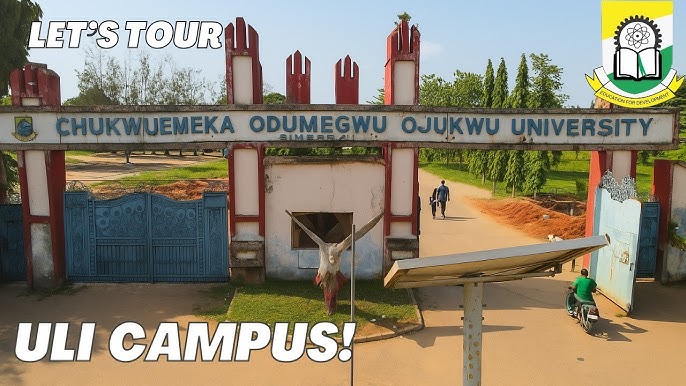
Uli has several landmarks that are of local and historic interest:
- The Uli airstrip site. The remnant and memory of the wartime airstrip is central to the town’s modern history. Wartime accounts, memoirs and historical pieces discuss how the airstrip became a humanitarian corridor and a place of dramatic evacuation in 1970. Today the airstrip location is largely reclaimed by development but remains an important historical site for visitors interested in Nigeria’s civil war history.
- Chukwuemeka Odumegwu Ojukwu University, Uli campus. The Uli campus of the university (formerly the Anambra State University campus) is a visible and working landmark. The campus brings students, lecturers and academic activity to the town and is a source of local commerce, small hotels and services that serve the academic community. Campus tours and university maps list Uli as one of the campuses of the university.
- Uli Centre Junction (Onitsha-Owerri Expressway Hub): The junction at Uli, along the major Onitsha–Owerri expressway functions as a commercial and transportation landmark. According to local listings it is a nexus where transport, trade and everyday life converge. Here you’ll find shops, eateries, motor-parks and traders, making it one of the more dynamic public spaces in Uli. While it is not a “tourist attraction” in the conventional sense, for those interested in local culture and urban-life transitions, it offers real insight into how Uli operates today.
- Rivers and local wetlands. The Atamiri and Enyinja waterways and the Usham lake bordering parts of the local area present natural scenery and sites for small-scale fishing and nature observation. These areas are important to the town’s food systems and ecosystem services.
Challenges and Positive Outlook
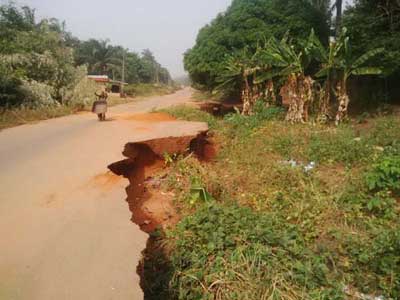
Like many growing towns in southeastern Nigeria, Uli faces a blend of developmental challenges and opportunities. Despite its strategic location along the Onitsha–Owerri Expressway and its historical significance, several issues continue to limit the town’s full potential.
Infrastructure remains one of its biggest hurdles. Many internal roads are in poor condition, especially those leading to rural villages and farms. Drainage systems are either inadequate or poorly maintained, leading to erosion and flooding during the rainy season. The remnants of the once-vital Uli airstrip, though historically significant, have largely been abandoned without any structured preservation or redevelopment effort.
Electricity supply has also been a persistent challenge. For over two decades, the Chukwuemeka Odumegwu Ojukwu University (Uli Campus) and surrounding communities struggled with unstable power supply, affecting both economic and educational activities. While the Anambra State Government has recently pledged to restore electricity, implementation remains slow in certain areas.
In addition, youth unemployment, rural-urban migration and limited industrial activities have kept the local economy largely dependent on small-scale trading, subsistence farming and remittances from indigenes living abroad. Waste management and environmental sanitation are also areas that require stronger community participation and government support.
Notwithstanding these challenges, Uli continues to show strong signs of resilience and growth. The town benefits from its strategic location on a major transport corridor, linking Anambra to Imo and other southeastern states. The presence of Chukwuemeka Odumegwu Ojukwu University has made the town an educational hub, attracting students, staff and investment opportunities to the area.
Recent government attention to road rehabilitation, power restoration and youth empowerment programmes promises gradual but steady development. UPU and other community associations in Nigeria and abroad continue to mobilize resources for community projects ranging from borehole construction to school renovations and scholarship schemes.
Furthermore, with its rich history, cultural heritage and proximity to commercial cities like Ihiala, Nnewi and Owerri, Uli is well-positioned to benefit from future infrastructural upgrades and tourism initiatives.
If properly harnessed, these strengths could transform the town into a vibrant educational, historical and commercial destination in southeastern Nigeria.
In Conclusion…
Uli stands as a town of deep historical roots, resilient people and evolving opportunities. From its storied past as a key location during the Nigerian Civil War to its modern-day identity as home to Chukwuemeka Odumegwu Ojukwu University, Uli remains a blend of tradition, education and enterprise. Its people, known for their industriousness, hospitality and communal spirit have carried the town’s legacy beyond its borders through notable achievements in business, governance, academia and entertainment.
While infrastructural decay, erosion and inadequate government presence remain pressing challenges, the outlook is far from bleak. The growing involvement of its indigenes in community-driven projects, youth empowerment and cultural preservation signals a hopeful turn for the town’s future.
The revitalization of key public facilities, investment in tourism around its historic landmarks and improved infrastructure could further unlock the town’s potential as both a heritage and educational hub in southeastern Nigeria.
In essence, Uli is a living testimony of resilience, progress and cultural pride. With its people’s unwavering commitment to development and unity, the town is poised to rise steadily, ensuring that its name continues to echo in the story of a thriving and forward-looking Anambra State.
References
- https://en.wikipedia.org/wiki/Uli%2C_Anambra
- https://punchng.com/uli-the-legend-the-neglect/
- https://warhistory.org/%40msw/article/mercenaries-and-the-uli-airstrip
- https://coou.edu.ng/campus.php
- https://en.wikipedia.org/wiki/New_Yam_Festival_of_the_Igbo
- https://ihiala.org/about/
- https://www.projectclue.com/agricultural-economics/project-topics-materials-for-undergraduate-students/evaluation-of-agricultural-practices-and-impacts-on-environment-and-food-security-in-nigeria-a-case-study-of-ihiala-local-government-area-of-anambra-state
- https://thenews-chronicle.com/cassava-processing-plant-inaugurated-in-anambra/
- Memoirs and historical pieces on Uli airlift and last flight out of Uli — Alan Brough and other historical pages recounting the airlift.
You might want to check this out…