





African Culture and Traditions
Otu Odu || The Ivory Women of Onitsha

A clear, respectful and fact checked look at the Otu Odu title society. This explains the history, the ceremony, symbols and meanings, social and political roles, and why it still matters today. Ideal for researchers, students and anyone curious about Onitsha culture.

Among the many traditional institutions that give Onitsha its rich cultural character, Otu Odu stands out as one of the most dignified and enduring. Known as the “Ivory Women of Onitsha,” this prestigious title society represents grace, influence and service. The women who belong to it i.e. Ndi Odu are easily recognized by their elegant white attire and distinctive ivory adornments, symbols of purity, wealth and honour.
Far beyond its visual splendour, Otu Odu embodies deep social, moral and historical meaning. It honours women who have demonstrated integrity, generosity and leadership within the family and community.
Through their presence and example, they uphold the ideals of womanhood and the cultural values that sustain Onitsha society. The institution reflects how traditional recognition systems can coexist with modern life, reminding younger generations that prestige is not only about wealth but about character and contribution.
This article explores the full story of Otu Odu: its history, ceremonies, symbols and contemporary relevance. It also examines how the society shapes the social and political life of Onitsha and why, even today, the “Ivory Women” remain powerful custodians of identity, dignity and continuity.
Brief History of Otu Odu
The women’s title society known as Otu Odu in Onitsha traces its origins to the earliest social hierarchies of the Onitsha people of present-day Anambra State. According to scholarly research, the term Odu literally means “elephant tusk,” symbolizing honour, prestige and social standing.
In the decades leading up to the mid-20th century, the institution existed as a more private network of distinguished Onitsha women. Women of character, influence and affluence who would receive the “Odu” title and its associated ornaments. This informal practice was described as a more private and individual affair of famous Onitsha women of character and affluence.
The society’s history dates back to the early days of Onitsha. But it was formally established in 1959 by the then Chinyelugo J.U. Etukokwu. Under the leadership of Chief J.U. Etukokwu, the individual holders of the Odu title were brought together in a structured society, with defined membership, regalia and public recognition.
This formalization marked the transition of Otu Odu from a loosely arranged honour into a recognized socio-cultural institution for women in Onitsha. Its objectives included giving public prestige to deserving women and creating a forum for women of distinction to interact and promote community progress.
Over the years the society has become deeply embedded in the social fabric of Onitsha. It is listed among the paramount traditional associations of the city, alongside the male title-societies and age-grades. For example, the list of Onitsha entities includes “Otu Odu” among the key women’s societies.
In recent documentation, the society is recognized not only for its symbolic value but also for its role in cultural preservation and community service. Otu Odu is described as the highest title any Onitsha woman aspires to acquire, reflecting both tradition and modern ambition.
Thus, the historical journey of Otu Odu spans the informal origins in Onitsha traditional society, formal institutional structuring in 1959, and gradual evolution into a respected body of titled women who support cultural continuity, social recognition and communal development.
Traditional Meaning and Early Significance
Before the modern understanding of Otu Odu as a symbol of leadership and service, the title had a more exclusive and sacred meaning within the traditional structure of Onitsha society. In the earlier centuries, long before colonial influence and formal documentation, Odu referred not just to a social honour but to a deep spiritual and communal recognition. It was a sacred mark of womanhood and authority reserved for women who had attained maturity, wealth and moral uprightness.
Traditionally, the Odu title was linked to purity, fertility and continuity of lineage. A woman who bore the title was regarded as a matriarch. A mother figure who represented moral strength and the spiritual health of her household and lineage. It was believed that such women carried blessings for their families and the community, and their words carried weight in domestic and communal affairs.
In the early Onitsha, the title was not something anyone could buy or rush into. It was earned through years of proven conduct, hard work and contribution to communal life. The community recognized women who helped maintain peace, showed generosity to the needy and supported traditional rites such as marriages, naming ceremonies and funerals. When such a woman was chosen for the Odu title, it was both a spiritual and social event. A confirmation that she had lived a life worthy of emulation.
The title also had economic undertones. In precolonial times, Otu Odu women were often successful traders or women of means who contributed to market development and trade relations across the Niger. Their wealth and influence were not seen as personal gains but as tools for supporting families, sponsoring community feasts and hosting traditional gatherings. The ivory ornaments they wore were visual symbols of that prosperity and status.
In those days, Otu Odu was not a formal society with structured leadership as it is today. It was more of a circle of respected women recognized across the quarters of Onitsha. Their gatherings were private and revered, often accompanied by traditional music and rituals that highlighted their sacred role in the preservation of peace and harmony.
Thus, before modernization and formal organization in 1959, the meaning of Otu Odu was deeply rooted in spirituality, motherhood and community stewardship. It stood as a moral compass in society, showing that womanhood in Onitsha was not defined by age or appearance but by integrity, generosity and the ability to nurture and sustain life – values that still shape its meaning today.
Contemporary Meaning
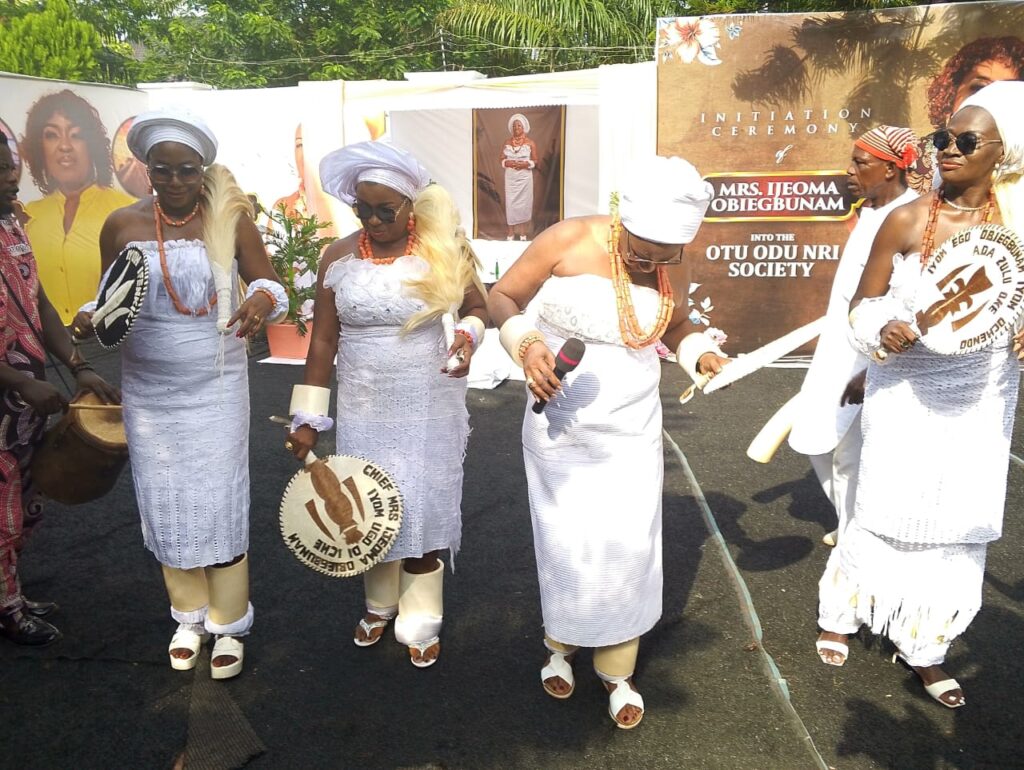
In today’s Onitsha society, Otu Odu remains a symbol of prestige, service and womanhood. It represents the highest traditional honour a woman can attain within the Onitsha community. The title is not given lightly. It is reserved for women of proven character, generosity and social standing. Being a member of Otu Odu identifies a woman as one who has distinguished herself through integrity, responsibility and commitment to the well-being of others.
Membership is selective and carefully supervised by the existing body of Ndi Odu. Women who aspire to join must either be natives of Onitsha or married to Onitsha men, and they must receive the recommendation of a current member. Before being considered, candidates are expected to have contributed positively to their family, their church and the larger community. They must also demonstrate that they can uphold the moral standards, dignity and traditions that the Otu Odu represents.
For many, the title is both a reward for years of hard work and an invitation to greater service. Members of Otu Odu are not only celebrated for their achievements but are also expected to use their influence for community development. They often lead charitable activities, mentor younger women and participate in civic and cultural events that promote unity and progress. In Onitsha today, Ndi Odu are regarded as custodians of tradition and models of womanly excellence.
Otu Odu society also provides a platform for women to participate more actively in social and cultural governance. Through meetings, consultations, and representation in community forums, members lend their voices to discussions on family, education, health and moral values. In doing so, they sustain the balance between tradition and modern civic life.
In the modern sense, therefore, Otu Odu continues to define dignity and leadership among Onitsha women. It bridges the past and the present by reminding the community that true honour comes not from wealth alone, but from character, service and the positive legacy one leaves behind.
Eligibility for Otu Odu
Becoming a member of Otu Odu is one of the highest honours an Onitsha woman can receive. It is not an open invitation but a carefully guided process reserved for women who meet strict moral, social and cultural standards. The requirements go beyond wealth or age. They reflect a woman’s character, her role in the family and her contribution to the community.
To qualify, a woman must first be of Onitsha origin or married to an Onitsha man. This rule preserves the cultural identity of the title and ensures that members understand and respect Onitsha customs. Widows of Onitsha men may also qualify, if they have maintained good standing within their husband’s kindred and continue to uphold the family’s reputation.
Character and integrity are the foremost qualifications. A prospective member must be known for honesty, respect, humility and moral uprightness. Otu Odu title is seen as a reflection of inner purity. So, women of questionable conduct or those involved in public scandals are never considered. The community and existing members often scrutinize the background of any candidate before approving her admission.
Social responsibility is another key criterion. A woman who seeks the title must have shown clear commitment to helping others through acts of kindness, community projects, church activities, or family support. Many Ndi Odu are women who have contributed significantly to education, business, health, or charity in Onitsha. Their recognition as titled women serves as both appreciation and encouragement for continued service.
Financial readiness also matters. Though the Otu Odu title is not sold, there are financial obligations tied to the ceremony, the uniform and the upkeep of the society. A woman must be able to bear these responsibilities without strain. This ensures that members can participate fully in the group’s charitable and cultural activities.
Age and family stability are also taken into account. Traditionally, a woman must be mature, often a mother or grandmother, with a stable home and respected lineage. In modern times, the society has become more flexible, welcoming younger women who have distinguished themselves through professional success, leadership or humanitarian work, as long as they embody the core values of Otu Odu.
Finally, admission requires endorsement by at least one existing member of the society who serves as a sponsor or guarantor. This sponsorship is not taken lightly as the recommender’s reputation is also at stake. After nomination, the candidate’s name is presented to the larger body for discussion and approval. Only after a thorough vetting process and the fulfillment of ceremonial requirements can she be formally initiated and adorned with the symbolic ivory ornaments.
In essence, qualification for Otu Odu goes beyond privilege. It is a recognition of virtue, achievement and service. It is given to women who have earned the trust of their community, who carry themselves with dignity, and who use their influence to promote peace, development and the enduring values of Onitsha womanhood.
The Ceremony

Otu Odu ceremony combines public celebration with moments that are private to members. Exact practices differ by family, by the scale of the event, and by the wishes of those involved. The broad stages that often appear are announcement, presentation, oath, adornment, procession and thanksgiving.
The ceremony typically begins with an announcement to the wider community or, if the event is smaller, to invited friends and family. For larger title takings, the family sends formal invitations and notify relevant chiefs, church leaders and community bodies. When the ceremony is public, it is common for the Onitsha traditional council or other local leaders to be present. Public notice can also appear in church bulletins or local news columns.
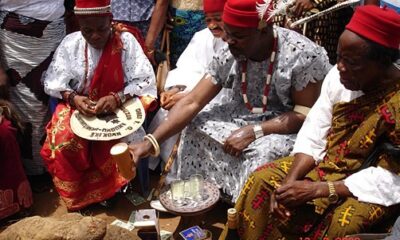
On the day of the ceremony, the candidate is presented. Close family and sponsors escort her. The gathering often includes prayers, either in a church or in a family setting where a thanking ritual takes place. Depending on faith and family tradition, religious leaders and elders offer blessings and words of guidance. This stage signals community approval and a formal welcome into the circle of titled women.
Leaders of Otu Odu may administer a pledge or oath. The pledge expresses the responsibilities that come with the title. It states, in different words for different groups, that the new member will protect the dignity of the title, act with good character and serve the wider community. This moment links the personal achievement of the candidate to a public promise of service.
The most striking part of the ceremony is the use of ivory ornaments. Traditionally, the ornaments are actual ivory bracelets or anklets. In modern practice, symbolic or alternative materials may be used where ethical or legal concerns about ivory exist.
The candidate will be adorned with these ornaments, and she often wears a white wrapper and traditional headgear for the event. Those visible signs mark the change in status and make it easy for the community to recognize Ndi Odu
After the formal parts of the ceremony, there is usually a procession or parade, traditional music and communal dancing. These celebrations vary in scale. Sometimes, the event is a large outdoor festival. Other times, it is a dignified family gathering. Regardless of size, music and movement are important ways the community marks the occasion and shows support for the new member.
Often, the ceremony ends with a reception that includes food, speeches and sometimes, an organized collection for a charitable cause. Some Ndi Odu use their title to set up or support projects like school scholarships, health clinics or public works. The reception can be a practical start to such commitments as members announce plans or raise funds.
Symbols and Their Meanings
Every aspect of the Otu Odu society carries deep symbolic meaning. From the ivory ornaments to the white attire and ceremonial language, each element tells a story about honour, purity and social responsibility.
These symbols are not mere decorations. They express the values, beliefs and identity of Onitsha womanhood. Understanding them helps to appreciate why the Otu Odu title continues to command respect and admiration across generations.
Ivory
Ivory remains the defining symbol of Otu Odu. In the culture of Onitsha, the elephant tusk stands for wealth, strength and honour. Wearing an ivory bracelet or anklet signals that the woman carries community trust and social weight. For observers, the ivory is shorthand for a particular kind of social capital that includes money, reputation and influence.
Photographs and museum style displays highlight how central this symbol is to public identity as Ndi Odu. Because of modern laws and ethical concerns about ivory, some groups now use alternatives that carry the same meaning without harming wildlife.
White Cloth
White clothing is another important symbol. White wrappers and head ties signal dignity, purity and solemnity. When Ndi Odu gather in their white garments, it marks the solemn nature of the title and the decorum expected of members. Mixing white dress with the ivory ornaments creates a strong, recognizable visual code for Onitsha and for visitors.
Language and Titles
The words used in the ceremonies, including local names and greetings matter. Ndi Odu is the phrase for members. Using correct local terms and the Onitsha dialect shows respect. Avoiding loose or inaccurate labels helps preserve cultural meaning. For journalists or researchers, accurate use of names, titles and phrases prevents misunderstanding and helps build trust with the community.
Socio-Political Impact
Otu Odu plays a real civic role in Onitsha. The society is a network of women with resources and social influence. That influence appears in several ways such as:
Leadership and advisory roles:
Members often advise on women’s and family issues. Where traditional councils consult community leaders, Ndi Odu can provide perspectives on family welfare, education and local development. Their advice is valued because it is rooted in longstanding social practice and in their role as respected women of means. This advisory function helps shape local decisions that touch children, health and social support.
Philanthropy and community projects:
Historically, and today, Ndi Odu have been active in funding or supporting projects. The society’s members can mobilize money and labour for building projects, scholarships or community health work. In recent years, similar title societies have been visible when communities lacked public funding for basic needs.
That capacity to organize private resources makes Otu Odu an important civic actor in Onitsha. Academic studies of title taking describe these practical contributions and their effects on local development.
Social cohesion and networks:
Otu Odu also strengthens networks among families and across neighbourhoods. By bringing together women from different parts of Onitsha, the society builds ties that help in times of need. Those ties make it easier to coordinate mutual help, business ventures and cultural events. Social cohesion of this kind is a key reason why title taking continues to matter even in the modern era.
Cultural Significance
Otu Odu society holds a central place in the cultural identity of Onitsha. It represents a bridge between tradition and modern life, showing how the community continues to value honour, integrity and service in its women. Through the society’s activities and ceremonies, the people of Onitsha preserve customs that have shaped their sense of belonging for generations.
At its core, Otu Odu serves as a living link to the past. The rituals, songs, attire and moral codes associated with the title remind the community of the virtues that guided their ancestors, namely, respect for elders, responsibility to family and commitment to the common good. Whenever Ndi Odu gather in their white garments and ivory ornaments, they not only celebrate achievement but also renew cultural memory, ensuring that young people understand and value their roots.
The society also provides a cultural framework for female leadership. In a world where traditional authority was often dominated by men, Otu Odu created a respected space for women to express influence and wisdom. The title gave women a collective voice in social matters, especially in issues concerning families, markets and moral conduct. Even today, Ndi Odu are seen as moral custodians – women whose opinions carry weight in community discussions and whose example inspires others.
Beyond Onitsha, Otu Odu has come to represent a symbol of Igbo womanhood and cultural pride. Its image often appears in festivals, exhibitions and documentaries that celebrate Igbo heritage. The ivory, the white cloth and the graceful demeanour of Ndi Odu have become visual emblems of purity, discipline and elegance. These expressions of culture continue to attract interest from historians, artists and cultural enthusiasts.
In every sense, Otu Odu society is more than a title. It is a tradition that preserves Onitsha cultural spirit. It stands as a reminder that true prestige in the community comes from service, respect and a deep connection to one’s heritage.
Gender and Respect
In Onitsha, Otu Odu reflects a deep respect for womanhood and the unique roles women play in upholding social order. Far from being a mere honorary title, it is a system that recognizes women’s influence, leadership, and moral strength. Through the Otu Odu institution, women gain visibility, voice and authority within the traditional hierarchy, not by competing with men, but by complementing them in the shared duty of preserving community harmony.
Otu Odu title challenges the notion that traditional Igbo society was entirely patriarchal. In fact, it shows that Onitsha people understood leadership as a partnership between men and women, each contributing in their distinct capacities. While men occupied chiefly or judicial roles, women in Otu Odu served as custodians of morality, advisors and mediators in family and communal disputes. Their opinions were respected, and their presence in ceremonies carried symbolic and spiritual weight.
Becoming an Odu woman elevates one’s social standing significantly. She becomes a model of dignity and moral discipline, often consulted in sensitive matters concerning family honour, widowhood practices, or market affairs. Her conduct is expected to be beyond reproach as she represents the collective virtue of Onitsha women. Young women look up to Ndi Odu for guidance and mentorship, seeing them as living examples of grace and integrity.
The society also promotes mutual respect among women themselves. Members of Otu Odu treat one another as equals within their sacred sisterhood, regardless of wealth or background. This bond reinforces the traditional value of community and solidarity, reminding all that respect is both earned and shared.
Ultimately, Otu Odu embodies the Onitsha belief that respect for gender roles does not mean subordination but balance. By honouring women who demonstrate wisdom, charity and strength of character, the institution continues to affirm the essential role of women in sustaining both cultural and moral order in Onitsha society.
Current Debates and Changes
Like many traditional institutions, Otu Odu is not untouched by the winds of modern change. In recent decades, debates have emerged about how the society should adapt to contemporary realities while preserving its original essence. Some argue that the exclusivity and expensive nature of the initiation process make it inaccessible to younger generations of women who may equally embody the virtues the society represents. Others feel that modernization has diluted the sacredness of the title, turning it into a status symbol rather than a mark of moral excellence and service.
There are also discussions about how Christianity and Western education have influenced the perception of Otu Odu. While older generations view it as a sacred institution that honours womanhood and community values, some younger or more religiously conservative women question the spiritual undertones and rituals associated with it. This has led to efforts in some circles to reinterpret the society’s practices in ways that align more comfortably with modern religious and ethical values.
Another point of conversation is the role of Otu Odu women in today’s civic and political spaces. Traditionally, members were advisors and mediators within the community, but modern Onitsha women are increasingly educated, professional and politically active. Some cultural leaders believe the Otu Odu society could evolve to reflect these shifts by allowing members to play stronger advocacy roles in areas like women’s rights, education and cultural preservation.
Because real ivory is linked to threats to wildlife and to international trade restrictions, many communities face a choice. Some Ndi Odu continue to use traditional ivory where it is legally held or passed down. Other groups use symbolic alternatives that keep the meaning while avoiding harm. This is a live discussion inside communities and among cultural leaders.
Some parts of the ceremony are deliberately private. That privacy protects sacred moments and the dignity of members. At the same time public parts educate and engage the wider community. For outsiders who want to attend, researchers and journalists, the right approach is to ask permission, to explain the purpose of coverage and to respect private boundaries.
Despite these debates, the Otu Odu institution continues to command deep respect in Onitsha. Many women still aspire to it, not only for its prestige but also for the opportunity to belong to a circle that connects them to their roots. Some groups have also introduced reforms to make initiation more inclusive, transparent, and relevant to modern life without losing its core cultural meanings.
In essence, Otu Odu is navigating the delicate balance between tradition and transformation. The debates surrounding it reveal a society in dialogue with itself, striving to uphold the dignity of womanhood while embracing the realities of the 21st century.
In Conclusion…
Otu Odu institution remains one of the most enduring symbols of Onitsha womanhood. A living link between the past and the present. Rooted in the ancient values of purity, dignity and service, it has evolved into a cultural institution that continues to shape the moral and social identity of the community. Through its members, Otu Odu embodies the grace, wisdom and leadership that Onitsha women have always brought to their families and society at large.
While modernization has brought new interpretations and challenges, the essence of Otu Odu endures. It honours women who live by truth, compassion and integrity. It is a reminder that true prestige lies not in wealth or status, but in character and contribution to the common good.
In a world that often rushes toward change, Otu Odu stands as a testament to continuity, a proof that tradition, when anchored in meaning and purpose, can remain vibrant and relevant across generations. The ivory it celebrates is more than an ornament. It is a symbol of strength refined by time, just like the women who proudly wear it.
References
- https://guardian.ng/life/otu-odu-in-igboland/
- https://imeobionitsha.org/igbu-odu/
- https://www.apas.africa/journal/JASSD_3.3.6.pdf
- https://primepointers.com/2025/06/20/serving-ndi-odu-was-eventful-and-progress-oriented-okosi/
- https://commons.wikimedia.org/wiki/File%3AThe_Otu-Odu_Women_also_known_as_Ivory_Women_of_Onitsha_at_the_Ofala_Festival%2C_Anambra_State.
You might want to check this out…