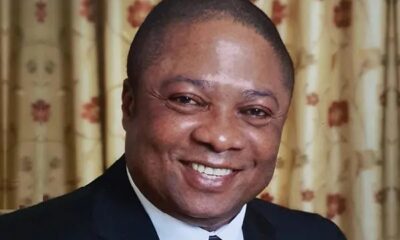



Billionaire businessmen
What Happened to the People’s Club of Nigeria and Where It Stands Today


People’s Club of Nigeria – A Club of Prestige, Pride, and Powerful Names
In the heart of Igboland’s post-war rebirth, a unique brotherhood was born. It wasn’t a political party. It wasn’t a union. It was something deeper, a symbol of class, culture, and the collective pride of Igbo elites.
If your father or uncle belonged to the People’s Club of Nigeria, chances are you’ve seen him in their spotless white uniform, red cap, and golden embroidery. You probably even heard their name in classic highlife music, especially the famous 1981 tribute by Chief Oliver De Coque.
But today, the same People’s Club, once the pride of southeastern Nigeria sits largely forgotten by a younger generation.
So what really happened?
Born from War: The Story Behind the Club’s Founding
The People’s Club of Nigeria International was founded in 1971, just a year after the end of the Nigerian-Biafran Civil War. The Igbo people had endured displacement, loss, and the crushing effects of economic exclusion. But like always, they were determined to rebuild.
It was in Aba, Abia State, that a visionary man, Prince Titus Ike Ume-Ezeoke (Onyima I of Amichi) gathered a group of successful Igbo businessmen, professionals, and community leaders to form what was first called the Okaa Group.
Their vision:
- Rebuild social confidence among Igbo elites
- Celebrate success, unity, and dignity after the war
- Foster charity, community leadership, and shared pride
However, the Okaa Group was viewed with suspicion by the military regime at the time and was disbanded.
Not discouraged, the founders rebranded with a more neutral name: People’s Club of Nigeria.
This strategic change allowed the group to gain official registration and become a recognized institution.

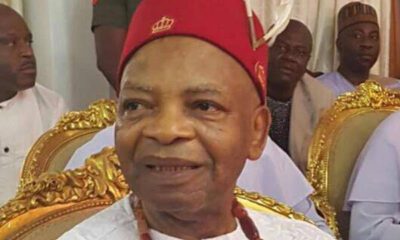
Princ Ezekiel, founder People’s Club of Nigeria
A Club of Only the Best
From its inception, membership wasn’t open to just anyone.
To join, you had to be:
- A man of proven integrity
- Financially independent
- Morally upright and community-involved
- Committed to service and charity
The club’s motto captured its spirit:
Unity, Love, and Service
It was a badge of honor, a social institution that prioritized discipline, reputation, and excellence.
Celebrated in Song: Oliver De Coque’s 1981 Masterpiece
By 1981, the club had become so influential that highlife legend Chief Oliver De Coque released a track titled:
“10th Anniversary of People’s Club of Nigeria”

This song was more than music. It was a public tribute to the club’s vision and members.
The song served three key purposes:
- Immortalized the club in Nigerian music and pop culture
- Celebrated unity and brotherhood among elite Igbos
- Preserved the names of major businessmen and cultural icons
Some members mentioned in the song include:
- Prince Titus Ike Ume-Ezeoke – Onyima I of Amichi (Nat’l President)
- Chief Ike Ojukwu – Onyeoma Eji Ejemba of Awka-Etiti
- Chief Augustine Ilodibe – Ogbuefi Nnanyelugo of Nnewi (Founder of Ekene Dili Chukwu)
- Chief Oliver Ilozue – Onu Na Ekwulu Ora of Umuoji
- Chief R. N. Okonkwo – Eze Nwachinemelu
- Igwe Akum Nweze – Igwe Umuoji
- Lady Vero Onyia – Ezenwanyi Obinagu – Udi
- Chief J.O. Nwankwu – Onwa Na-Etili Ora of Abagana
These were more than names, they were traditional rulers, industrialists, philanthropists, and proud sons and daughters of Igboland.
The song made People’s Club a household name, even for those who were not members.
A Headquarters Fit for Kings: Onitsha’s Glory
Although the first meetings were held in Aba, the national headquarters of the People’s Club was later built in Onitsha, along Onitsha–Owerri Road, in Awada Layout.
The headquarters was a symbol of everything the club stood for unity, achievement, and prestige.
Key facilities at the Onitsha headquarters include:
- A large multi-purpose hall for meetings and national events
- A massive open field (nicknamed “the big hole”) for parades and public shows
- A lawn tennis court, swimming pool, and football pitch
- An on-site hotel and guesthouse for visiting members and dignitaries
This headquarters was where some of the most extravagant events in southeastern Nigeria were hosted.
The Women Behind the Men
Though the People’s Club was officially male-only, the women played a major role in the background and foreground.
They formed a highly organized Ladies Wing, which helped uphold the values and vibrancy of the club.
Women’s roles in the club included:
- Coordinating hospitality and protocol
- Managing charity projects, hospital visits, and cultural outreach
- Supporting their husbands at club ceremonies
- Hosting children’s and family events
Women like Lady Vero Onyia and Madam M.C. Eneli became icons in their own right, proof that the club’s spirit of excellence extended to both genders.
Expansion Across Nigeria and Abroad
Over the years, the club grew beyond Aba and Onitsha.
Nigerian branches were founded in cities like Lagos, Enugu, Owerri, Port Harcourt, Kano, Warri, Jos, Makurdi, Asaba
International branches emerged in:
- Houston
- London
- New York
- Johannesburg
Each chapter had a Chairman, many of whom were recognized in Oliver De Coque’s song. Notable mentions include:
- Chief J.C. Mbadugha – Makurdi Branch
- Chief D.L. Ugoh – Kano Branch
- Chief F.U.O. Adigwe – Warri Branch
- Chief Emmanuel Eze Nwenyi – Calabar Branch
- Chief D.O. Udemezue – Jos Branch
These branches helped the club maintain visibility and relevance, both at home and in the diaspora.
The Golden Era of People’s Club
By the mid-1980s to early 2000s, the People’s Club of Nigeria had entered what many refer to as its golden era. This was the period when the club’s name carried maximum prestige, not just among Igbo communities, but even nationally and in diaspora enclaves.
The Peak Years Were Marked By:
- Regular conventions held with grand ceremonies, cultural displays, and international guests
- Membership growth both locally and internationally, especially among the elite and successful businessmen
- Civic projects such as scholarships, health outreach, and support for widows and orphans
- Media recognition through mentions in songs, features in newspapers, and guest appearances on TV and radio
The People’s Club of Nigeria became a cultural blueprint. Igbo men in other countries tried to imitate its structure — with uniforms, ranks, and charitable goals.
Events of Elegance
Every gathering was well-orchestrated. Uniforms were worn with pride. The men moved in formation. The women’s wing arrived in coordinated outfits, sometimes accompanied by live bands or local dancers. Speeches were given. Elders were honored.
In many families, it was a proud moment when your father or uncle was introduced as a member of the People’s Club.
The Beginning of the Decline
But no institution lasts forever in its original form. By the late 2000s, signs of decline began to show.
1. Aging Founders and Members
Many of the original members were aging. Some had passed away. The second generation, their sons, showed little interest in continuing the tradition.
2. Cultural Shifts Among the Youth
The new generation was more attracted to:
- Church fellowships
- Online communities
- Business and tech-based groups
Younger Igbo elites preferred investing in ventures, networking in more modern spaces, or relocating abroad.
3. Lack of Digital Presence
While other groups evolved with websites, newsletters, and social media, the People’s Club of Nigeria was slow to adapt. Its powerful brand became invisible online.
4. Internal Conflicts
Some branches experienced leadership tussles. Others were riddled with disagreements about succession, money, or regional pride. In some cases, these issues led to court cases and disbandments.
5. Diminished Public Interest
Over time, the public stopped hearing about the People’s Club. New generations had no emotional connection to it. Schools stopped inviting them. Events went uncovered by media. And gradually, silence replaced the music and uniforms.
Legacy Still Visible
Despite the silence, the legacy of People’s Club of Nigeria still lives on.
- Their headquarters in Onitsha still stands tall, although with fewer activities.
- Many elderly members still hold meetings, attend funerals, and host family events under the club name.
- Families still preserve photo albums and plaques from the glory days.
- Some diaspora branches, like those in Houston or New York, still host occasional dinners or conventions.
Even if the club isn’t as active as before, its cultural impact has not been erased.

Texas Branch

A Model of Unity
The People’s Club proved that Igbo men across villages and titles could unite for a common cause. They showed that wealth could serve culture, and prestige could mean service, not just show-off.
Cultural Footprints Include:
- Promotion of Igbo dress culture (isi agu, red caps, beads)
- Encouragement of disciplined social gatherings with structure
- Charity as a public obligation for the wealthy
- The visibility of Igbo titles and town-based honorifics outside political spaces
Can It Rise Again?
While the club has clearly slowed down, it doesn’t mean it can’t rise again. In fact, some younger elites are beginning to rediscover the value of identity and legacy.
To thrive again, the People’s Club of Nigeria would need to:
- Embrace digital tools: websites, Instagram, YouTube
- Recruit younger professionals and allow hybrid forms of membership
- Partner with town unions and schools for youth engagement
- Highlight success stories from the past to inspire pride
With Nigeria’s renewed interest in cultural heritage and Igbo pride movements growing stronger, there’s room for revival.
Where the People’s Club of Nigeria Stands Today
Today, the People’s Club of Nigeria still exists but not in the same grandeur it once enjoyed.
Its national headquarters in Onitsha still stands, although no longer bustling with weekly ceremonies or frequent conventions. The once-lively tennis courts, guesthouses, and massive celebration grounds remain, but now carry more echoes of the past than the voices of new members.
The club is still functional especially among the older generation. Elderly members still meet under the banner of the People’s Club. They attend funerals of one another, organize charity visits, and celebrate landmark birthdays with their signature uniforms and rituals.
Several diaspora branches especially in New York, London, and Houston also continue to hold annual dinners, fundraisers, and cultural events. However, even these are often led by first-generation Nigerian immigrants in their 60s and 70s.
But what’s missing?
Younger Igbos especially second- and third-generation Nigerians are not joining.
Many factors explain this:
- Changing social values: Today’s younger generation is less interested in formal, title-based associations.
- Digital disconnect: The club has no strong online presence to attract or inform new members.
- Generational gap: The structure and tone of the club have not been adapted to fit modern social dynamics.
- Inward focus: The club often appears exclusive or too traditional, which alienates upwardly mobile professionals.
Still, there are visible signs that a revival is possible, especially if:
- The club modernizes its outreach
- Digital tools are embraced for storytelling and membership
- Programs are created for mentorship, scholarships, and youth leadership
Conclusion
The People’s Club of Nigeria once symbolized everything elite, elegant, and united about Igbo identity after the civil war. It blended wealth with wisdom, culture with class, and tradition with pride.
Today, while its presence has faded in the eyes of the younger generation, its story remains one worth remembering and possibly reviving. With intentional digital transformation and a more inclusive spirit, the People’s Club of Nigeria can rise again, not just as a symbol of the past, but as a guiding torch for future Igbo unity and excellence.
Related Articles