
Igbo culture
The Remarkable Role of Traditional Healers (Dibia) in Igbo Traditional Medicine and Indigenous Healing Practices

Dibia in Igbo traditional medicine plays different roles such as healer, diviner, and custodian of indigenous medical knowledge. Explore the practices, history, and cultural importance.

In many Igbo communities, when illness goes beyond what ordinary eyes can explain, people do not always rush first to a hospital. They often begin by asking a deeper question: what is really behind this sickness? That question introduces the role of the Dibia in Igbo society.
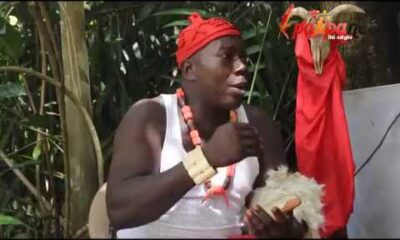
The Dibia is a respected figure in Igbo traditional medicine who can be a healer, diviner, and custodian of indigenous knowledge. Long before modern clinics and laboratories became common in many parts of Igboland, the Dibia served as the first point of understanding for health, misfortune, and balance in life. Illness was rarely seen as only physical. It could be connected to nature, relationships, or spiritual imbalance, and the traditional healer was the one called to interpret these layers.
This article explores the role of Traditional Healers (Dibia) in Igbo traditional medicine, with focus on how they diagnose illness, use herbal knowledge, perform spiritual healing, and maintain cultural order within their communities. It also looks at how their practice has survived colonial influence, adapted to modern times, and continued to attract both cultural and academic attention.
To understand Igbo traditional medicine fully, one must first understand the Dibia not just as a healer but as a bridge between knowledge systems where health, spirituality, and community life meet in a deeply interconnected way.
Understanding Igbo Traditional Medicine
Igbo traditional medicine is not built around a single idea of illness. It is a wide system of knowledge shaped by daily life, observation of nature, and long-standing cultural beliefs. In many Igbo communities, health is understood as balance. When the body, mind, spirit, and social environment are in harmony, a person is considered well. When any of these areas is disturbed, illness or misfortune may appear.
This approach makes Igbo traditional medicine deeply holistic. It does not separate the physical from the spiritual in a strict way. A headache, for example, may be treated with herbs, but it may also be linked to emotional stress, conflict within the family, or spiritual imbalance. Because of this, treatment often involves more than one method at the same time.
At the centre of this system is a strong relationship with the natural environment. Forests, rivers, farmlands, and even household spaces are seen as sources of healing materials. Plants, roots, bark, seeds, and oils are carefully identified and used for different conditions. This knowledge is passed through experience, observation, and oral teaching across generations.
Igbo traditional medicine also reflects the belief that human life is connected to forces beyond what can be seen. In many cases, illness is not only treated as a physical condition but also as a sign that something in the wider order of life needs attention. This is where spiritual interpretation sometimes becomes part of the healing process.
Traditional medicine in communities like the Igbo often combines practical herbal treatment with cultural and spiritual understanding of disease, especially in settings where modern healthcare was historically limited or inaccessible.
In this context, Igbo traditional medicine is best understood as a living system. It continues to exist in both rural and urban spaces, and adapts to changing times while still holding on to its core idea that health is not only about the body but about the whole of human experience within nature and society.
Who Is the Dibia?
The Dibia is one of the most important figures in Igbo traditional medicine and spiritual life. In simple terms, the Dibia is a traditional healer. But in practice, the role goes far beyond treating illness. He may also serve as a diviner, herbal practitioner, counsellor, and cultural custodian, depending on training and calling.
In many Igbo communities, the traditional healer is the person people consult when ordinary explanations are not enough. When sickness lingers, when misfortune repeats itself, or when families seek clarity on troubling events, he is often called to interpret what is happening and suggest a path forward.
There is no single type of Dibia. The role is diverse and specialized. Some are known as Dibia afa who use divination systems to interpret hidden causes of problems. Others are Dibia mgborogwu who focus more on herbal preparation and physical treatment of ailments. There are also those who work closely with spiritual rituals, often referred to as Dibia mmụọ, dealing with cleansing, protection, and restoration practices.
Training is usually not formal in the modern sense. Instead, knowledge is passed through apprenticeship. A young learner spends years with an experienced practitioner, observing, assisting, and gradually learning how to identify plants, interpret signs, and understand the deeper meanings attached to health and misfortune. Over time, this learning becomes both practical and deeply cultural.
Historical accounts of Igbo society consistently describe the Dibia as a respected authority in matters of health and spirituality. These practitioners were central to community life, especially in diagnosing illness, prescribing herbal remedies, and performing ritual acts tied to healing and balance in the society.
What makes the traditional healers especially significant is not only the medical knowledge they hold but the way they connect different aspects of life. Health, morality, spirituality, and social harmony often come together in their work. In this sense, the Dibia is not only a healer of the bod, he is also a guide who helps individuals and communities make sense of life’s disruptions.
The Role of Dibia in Diagnosis and Healing
In Igbo traditional medicine, the process of healing does not begin with treatment alone. It begins with understanding what is wrong and why it is happening. This is where the Dibia plays a central role. Diagnosis is not only about identifying symptoms. It is also about interpreting the deeper causes of illness, whether physical, emotional, social, or spiritual.
When a person seeks help from a traditional healer, the first step is usually careful observation and questioning. The Dibia listens to the patient, studies the signs on the body, and considers the wider context of the person’s life. In many cases, illness is believed to have multiple layers. So, the explanation may go beyond what is physically visible.
One of the key methods used in diagnosis is divination, often through the Afa system. This practice is used to seek insight into hidden causes of misfortune or illness. Through symbolic interpretation, the Dibia may identify whether the problem is linked to natural causes, personal conflict, or spiritual imbalance. This does not replace physical observation, rather it works alongside it in the healing process.
After diagnosis, treatment follows in a structured way. The Dibia may recommend herbal remedies prepared from plants, roots, bark, or oils. These remedies are often based on long-standing knowledge passed through generations and tested through experience in the community. In some cases, the treatment is purely herbal. In others, it is combined with guidance on behaviour, rest, or lifestyle adjustment.
Healing may also include ritual actions. These are not separate from medicine in the traditional sense. They are part of restoring balance. Ritual cleansing, prayers, or symbolic acts may be used to address what is believed to be the root cause of the illness. The goal is not only recovery of the body but also restoration of harmony within the person and their environment.
The Dibia’s role is both diagnostic and therapeutic, as it combines herbal pharmacology with divination and ritual practice in a unified approach to health care.
What makes this role significant is the way it treats health as a complete experience. The Dibia does not separate the physical body from the emotional or spiritual condition of the patient. Instead, all aspects are considered together, and healing is directed toward restoring overall balance rather than addressing symptoms alone.
Herbal Knowledge and Indigenous Pharmacology
One of the strongest foundations of the Dibia tradition in Igbo society is herbal knowledge. This knowledge is often described as indigenous pharmacology because it involves the careful use of natural substances for healing purposes. It is built on close observation of plants, seasons, soil, and human responses to different remedies over long periods of time.
In Igbo traditional medicine, plants are not used randomly. Each herb, root, bark, or seed is selected for a specific purpose. Some are used to treat fever, stomach disorders, infections, or pain. Others are prepared for cleansing, strengthening the body, or supporting recovery after illness. The preparation methods also matter. Herbs may be boiled, crushed, soaked, burned, or combined with other natural ingredients, depending on the intended effect.
This knowledge is not written in textbooks in the traditional sense. It is passed orally from one generation to another, usually through apprenticeship under an experienced Dibia mgborogwu. The learner spends years observing how plants are identified, harvested, prepared, and administered. Over time, this practical training becomes a detailed understanding of natural medicine systems.
The environment plays a major role in this practice. Forests, riversides, and farmlands are seen as natural pharmacies. Knowledge of where specific plants grow and how they should be harvested is an important part of the healing tradition. Sustainable harvesting is also a quiet but important aspect of this system, since many plants are only effective when collected at the right stage of growth.
Research on ethnomedicine in Nigeria confirms that traditional herbal practices remain widely used in many communities, especially where access to modern healthcare is limited or expensive. These studies also note that indigenous plant-based medicine forms an important part of primary healthcare in rural areas.
Within the Dibia system, herbal knowledge is not separated from spiritual understanding. The use of plants is often guided by both practical experience and cultural interpretation of their meaning and function. This combination of observation and belief forms a complete system of healing that has been sustained across generations.
Even today, many communities continue to rely on herbal remedies either as a first option or alongside modern medical care. This shows that indigenous pharmacology is not only a historical practice but also a living system that continues to adapt to changing times while maintaining its core knowledge base.
Spiritual and Ritual Functions of the Dibia
In Igbo traditional medicine, healing is not limited to what can be seen or physically measured. For many communities, health also includes spiritual balance. This is why the Dibia is not only a healer of the body but also a practitioner who works within the spiritual dimensions of life.
The spiritual role of the Dibia is based on the belief that certain illnesses, repeated misfortunes, or unusual life challenges may have causes that go beyond physical explanations. In such situations, the Dibia may be consulted to help identify whether there is spiritual imbalance, social conflict, or disruption in harmony between the individual and their environment.
One important part of this role involves cleansing practices. These are rituals carried out to restore balance and remove what is believed to be harmful spiritual influence. Depending on the situation, the Dibia may recommend symbolic washing, herbal baths, or specific ritual actions designed to bring relief and renewal. These practices are understood within the culture as part of the healing process, not separate from it.
The Dibia may also conduct protective rituals. These are intended to support individuals or families who feel vulnerable to repeated misfortune or spiritual disturbance. Such practices often combine herbal preparations with spoken invocations or symbolic actions that express protection and restoration.
Another key aspect of the spiritual function is mediation. The Dibia is often seen as someone who can interpret messages or signs believed to come from the spiritual realm. In doing so, they help individuals understand situations that may otherwise feel confusing or overwhelming. This interpretive role is closely linked to divination practices and is treated with seriousness within the traditional system.
Healing practices often combine herbal treatment with ritual actions and spiritual interpretation, reflecting a worldview where physical and spiritual well-being are closely connected. It is important to understand that these rituals are not performed randomly. They are guided by long-standing cultural knowledge and are carried out within specific contexts. For many who rely on the Dibia, these practices provide emotional relief, cultural meaning, and a sense of restored order in their lives.
Through these spiritual and ritual functions, the Dibia maintains a role that goes beyond medicine alone. They help individuals navigate experiences that affect both health and life stability, ensuring that healing is understood as a full return to balance.
Dibia in Igbo Social and Cultural Life

The Dibia holds an important place not only in Igbo traditional medicine but also in the wider social and cultural life of the community. In many Igbo societies, the Dibia are more than healers. They are also trusted advisors, cultural custodians, and participants in key community events where health, morality, and social order come together.
In everyday life, people often consult the Dibia when situations feel uncertain or emotionally heavy. This may include family disputes, repeated misfortune, or questions about important decisions. In such cases, the Dibia is expected to provide insight that helps individuals and families understand what is happening and how to respond. This role places the traditional healer at the centre of community decision-making in many traditional settings.
The Dibia is also present in major cultural ceremonies. During rites of passage such as birth, marriage, and burial, their involvement is often seen as important for ensuring balance and harmony. In these moments, health is not viewed only in physical terms. It is also connected to social order and spiritual stability. The presence of the Dibia helps to reinforce this understanding within the community.
Beyond ceremonies, the Dibia often serves as a keeper of oral knowledge. This includes knowledge of medicinal plants, historical memory, and cultural values. Much of this knowledge is passed orally, and the traditional healer plays a key role in preserving it through teaching and practice. In this way, they contribute to cultural continuity across generations.
In some communities, the traditional healer also participates in informal conflict resolution. Their interpretations, advice, or ritual guidance may be used to address disputes and restore peace between individuals or families. This makes their role both medical and social, since healing in Igbo thought is closely linked with restoring harmony within relationships.
Traditional healers are central figures in maintaining both health and social balance, especially in communities where indigenous systems of knowledge remain active.
Through these roles, they become part of the everyday structure of community life. Their influence extends beyond treatment rooms or ritual spaces into the heart of social interaction where decisions, relationships, and cultural practices are shaped and sustained.
Colonial Influence and the Decline of Traditional Healing
The arrival of colonial rule in Igboland brought major changes to how health, knowledge, and authority were understood. Before this period, the Dibia stood at the centre of Igbo traditional medicine, guiding communities through illness, spiritual concerns, and social challenges. With colonial administration and missionary activity, however, new systems of healthcare and belief began to take root, and this affected how indigenous healing was viewed.
One of the most significant changes was the introduction of Western biomedical practice. Hospitals, clinics, and formally trained medical personnel were established in urban and mission areas. These systems were presented as more “scientific,” while indigenous healing practices were often described in negative or dismissive terms. As a result, the authority of the Dibia was reduced in many public settings, even though their services remained important in rural communities.
Christian missionary influence also played a major role in this shift. Many missionaries discouraged or openly rejected traditional spiritual practices, including divination and ritual healing. Practices associated with the Dibia were sometimes labelled as incompatible with Christian teachings. This led to social pressure that pushed some practitioners to operate more quietly or within limited community spaces.
Despite these changes, traditional medicine did not disappear. In many rural areas where access to hospitals was limited, people continued to rely on the Dibia for both physical and spiritual care. Even in urban settings, some individuals still sought traditional healers privately, especially when modern treatment did not provide answers to complex or persistent conditions.
Colonial and postcolonial medical systems did not fully replace indigenous healthcare practices. Instead, both systems often existed side by side, with communities moving between them, depending on need, accessibility, and belief systems.
Over time, however, the social status of traditional healers became less formalized in public institutions. The loss of official recognition and the decline of apprenticeship systems in some areas also contributed to reduced transmission of knowledge. This created a gap between older generations of practitioners and younger people who were increasingly exposed to Western education and healthcare.
Even with these challenges, the influence of the Dibia tradition has not been erased. Instead, it has adapted quietly, continuing in many communities while also facing new questions about documentation, regulation, and cultural preservation in the modern era.
Revival and Contemporary Relevance of Dibia Practices
In recent years, there has been a noticeable return of interest in indigenous knowledge systems across Africa, and the Dibia tradition in Igbo society is part of this renewed attention. What was once pushed to the margins in some places is now being re-examined through cultural research, public health discussions, and identity conversations.
One reason for this revival is the growing global interest in herbal and plant-based medicine. Many people are now paying closer attention to natural remedies and traditional approaches to wellness. In this context, the knowledge held by the Dibia, especially in herbal preparation and indigenous pharmacology, is being revisited as a valuable source of insight rather than dismissed as outdated practice.
Academic research has also played an important role. Scholars in ethnomedicine, anthropology, and African studies have continued to document how traditional healers operate within their communities. These studies show that Dibia practices often combine herbal treatment, divination, and ritual knowledge in ways that reflect a structured understanding of health and illness.
At the same time, cultural identity movements within Igbo communities and the wider African diaspora have encouraged a renewed appreciation of indigenous systems. For many people, the Dibia represents not only a healer but also a symbol of cultural continuity. This has led to efforts to preserve oral knowledge, document herbal practices, and support cultural education initiatives.
In some modern settings, there is also growing discussion about how traditional medicine can work alongside contemporary healthcare. While the two systems are different in approach, there is increasing recognition that both play roles in addressing health needs, especially in communities where access to medical services may still be limited or uneven.
This revival does not mean a return to the past without change. Instead, it reflects an ongoing process of adaptation. Some practitioners now operate in more structured environments, while researchers continue to explore ways of documenting indigenous knowledge responsibly. As such, the Dibia tradition is not static. It continues to evolve while holding on to its core principles of healing, interpretation, and balance.
The contemporary relevance of the Dibia lies in this balance between tradition and modern life. It shows how indigenous knowledge systems can remain meaningful, even as societies change, offering perspectives on health that are rooted in long cultural experience and community understanding.
Challenges Facing Traditional Healers Today
Despite renewed interest in indigenous knowledge, the Dibia system in Igbo traditional medicine continues to face several serious challenges in modern society. These challenges affect how traditional healers practice, how they are perceived, and how their knowledge is passed to the younger generations.
One of the most persistent issues is social stigma. In many urban and semi-urban settings, traditional healing is sometimes viewed with suspicion or misunderstood. This has created a gap between modern healthcare users and indigenous practitioners. As a result, some people prefer not to openly acknowledge that they consult traditional healers, even when they still do.
Another major challenge is the loss of knowledge through weak apprenticeship systems. Traditionally, Dibia knowledge is passed orally and through long-term training under experienced practitioners. However, with modernization, formal education, and migration, fewer young people are entering apprenticeships. This weakens the natural transmission of herbal and spiritual knowledge across generations.
There is also the issue of lack of formal recognition within national healthcare structures. While traditional medicine is widely used in many African communities, it is not always fully integrated into official health systems. This limits opportunities for regulation, collaboration, and structured development of indigenous medical knowledge.
Closely related to this is the challenge of documentation. Much of the Dibia system relies on oral tradition, observation, and practice rather than written records. Without careful documentation, valuable knowledge about herbal treatments and diagnostic practices risks being lost over time, especially as older practitioners pass away.
Modernization has also contributed to environmental pressure. Some medicinal plants are becoming harder to find due to deforestation, urban expansion, and changes in land use. Since many traditional remedies depend on specific natural resources, this affects the availability of ingredients needed for healing practices.
Ethnographic studies on indigenous healing systems in Nigeria note that traditional medicine faces both cultural and structural challenges, including reduced transmission of knowledge and limited institutional support in contemporary healthcare systems.
There are also ethical and regulatory concerns. Because traditional healing practices vary widely, there is ongoing discussion about how to ensure safety, authenticity, and responsible practice without undermining cultural integrity. Finding this balance remains an important issue in health policy discussions.
Despite these challenges, the Dibia tradition continues to exist in many communities. However, its future depends on how well it can adapt to modern realities while still preserving the core knowledge and cultural values that have sustained it for generations.
The Future of Igbo Traditional Medicine
The future of Igbo traditional medicine is closely tied to how communities choose to value, preserve, and adapt their indigenous knowledge systems. The practice associated with the Dibia is not disappearing, rather, it is standing at a turning point where tradition and modern life continue to interact in new ways.
One important direction is documentation and research. For many years, most knowledge in traditional medicine has been passed orally. Today, scholars, cultural institutions, and health researchers are increasingly working to record herbal practices, healing methods, and cultural interpretations of illness. This helps to protect knowledge that might otherwise be lost as older practitioners pass away without apprentices to continue their work.
Another growing area is integration with modern healthcare discussions. In some contexts, there is increasing recognition that traditional medicine and modern medicine can exist alongside each other, especially in primary healthcare. While they differ in method and philosophy, both address human health needs. The challenge moving forward is finding safe and respectful ways to support collaboration without erasing cultural identity.
There is also rising interest in ethnomedicine and plant-based research. Scientists and researchers continue to study medicinal plants used in traditional systems to better understand their properties and possible applications. This does not replace traditional knowledge, but it opens opportunities for deeper validation and broader understanding of indigenous pharmacology.
At the community level, the future of Igbo traditional medicine also depends on cultural education and awareness. When the younger generations understand the history and meaning behind traditional healing, they are more likely to value it as part of their heritage. This can encourage renewed interest in apprenticeship and knowledge preservation.
However, the future is not without challenges. Issues such as environmental degradation, reduced transmission of knowledge, and changing belief systems continue to affect the practice. Medicinal plants must be protected, and spaces for learning must be supported, if the tradition is to remain active and relevant.
Even with these concerns, the Dibia tradition shows strong signs of endurance. It continues to adapt quietly within communities, responding to modern realities while maintaining its core principles of healing, interpretation, and balance.
In the end, the future of Igbo traditional medicine is not only about survival. It is about continuity, adaptation, and respect for a knowledge system that has supported communities for generations.
Conclusion …
The story of the Dibia in Igbo traditional medicine is also the story of how a people have long understood health, illness, and balance in life. Across generations, the Dibia has stood as a healer, diviner, herbal practitioner, and cultural guide, helping individuals and communities make sense of both visible and hidden aspects of well-being.
From diagnosis through divination, to the careful use of herbal knowledge, and the performance of rituals tied to restoration, the role of the Dibia reflects a system of medicine that is deeply connected to nature, spirituality, and social life. It is not a fragmented practice. It is a unified way of understanding the human experience within a wider environment.
Even though colonial influence, modernization, and changing belief systems have affected how traditional healing is viewed, the practice has not disappeared. Instead, it has continued in different forms, adapting to new realities while still holding on to its core ideas. In many communities, the Dibia remains a source of knowledge, guidance, and healing where modern systems do not always provide complete answers.
Today, as interest in indigenous knowledge grows again, Igbo traditional medicine is receiving renewed attention from researchers, cultural institutions, and health discussions. This renewed focus highlights the importance of preservation, documentation, and respectful engagement with traditional systems.
Ultimately, the Dibia represents more than a healing profession. It represents a living heritage of knowledge that connects health with culture, environment, and human relationships. Understanding this role helps to preserve not only medical traditions but also a deeper sense of identity and continuity within Igbo society.
References
- Okoro, K., & Nwokike, K. I. (2024). The Dibia in Igbo traditional socio-political and metaphysical economy: An interrogation. IgMin Research. https://doi.org/10.61927/igmin176
- Agbo, P. O. (2024). Who will re-fix the contest of Baal and the true God? Analysing the re-surging dibia practices in an African community. Humanities and Social Sciences Communications. https://doi.org/10.1057/s41599-024-04141-8
- Ugwu, C. (2023). Amidst clinical dissonance: Offensive agency as a survival strategy in plural Southeastern Nigeria. Journal of African & International Studies. https://doi.org/10.1177/00020397231162115
You might want to check this out …