




African Culture and Traditions
Akatakpa Festival: An Age Old Obollo Cultural Heritage

Akatakpa Festival is a vibrant, age‑old cultural heritage of Obollo people in Enugu State, Nigeria that features fiery masquerades, traditional Onwa Esaa rituals, and a powerful story of reform and renewal.

Akatakpa Obollo Festival
Akatakpa Festival is one of Nigeria’s most intriguing and vibrant cultural celebrations that represents an age-old heritage among the Obollo people in Enugu State. Rooted in centuries-old traditions, the festival brings to life the rich history, ancestral customs, and striking masquerades of the people.
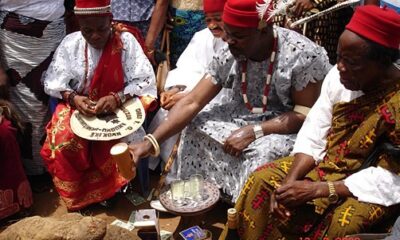
Celebrated during the Onwa Esaa period of the traditional Obollo lunar calendar, Akatakpa festival is a spectacle of music, dance, and costumes, and a living testament to the community’s social values, spiritual beliefs, and cultural identity.
From its fiery masquerades that historically enforced moral codes to its modern-day, peaceful processions, Akatakpa festival bridges the past and the present, and offers visitors and locals alike a chance to witness a cultural renaissance in action.
For anyone interested in Nigerian festivals, traditional masquerades, and Obollo heritage, Akatakpa festival is an unforgettable journey into a community that honours its ancestors as they embrace safe and vibrant cultural expression.
History of Akatakpa Festival
The history of Akatakpa festival is deeply woven into the fabric of Obollo tradition, ancient spirituality, and communal identity. For generations, Obollo people of Udenu Local Government Area in Enugu State have observed a sacred period known as Onwa Esaa, a native lunar month that falls roughly between July and early August.
Onwa Esaa was historically a time set aside for ancestral veneration, reflection, and community renewal. During this period, Akatakpa masquerades would come alive in powerful and symbolic displays. In early tradition, these masquerades wielded long whips and moved through the town in the evening or at night as a way of enforcing moral behaviour and reminding people of their ancestral responsibilities.
These practices had a dual purpose of honouring the ancestors and maintaining social order. In effect, Akatakpa masquerades acted as enforcers of tradition, and served as both spiritual guardians and moral judges.
As time passed, the sacredness of the festival eroded in some quarters. By the late 20th century and into the 2000s, what was once a respected institution began to attract controversy. Reports surfaced of extortion and violence. The fearsome Akatakpa Uchichi, the traditional night masquerade increasingly became associated with mob-like behaviour.
One particularly alarming event happened in 2018 when two Catholic priests were attacked in Ogbodu-Aba, a community in Udenu known for Akatakpa activities. This incident exposed how far away some operators had drifted from the festival’s original values.
Religious tension also played a role. Some Christian leaders in Obollo voiced strong opposition to the masquerades arguing that they disrupted church activities or represented pagan beliefs.
The growing unrest did not go unnoticed. In 2019, stakeholders in Ogbodu-Aba, including local elders, the traditional ruler, and government officials held a meeting with the then-Governor Ifeanyi Ugwuanyi. They agreed to ban the Akatakpa masquerades in that community altogether. This decision came after years of repeated incidents and widespread concern over safety and community well-being.
Part of the deeper meaning of the Akatakpa tradition involves Ekwensu, a spiritual being in the Obollo cosmology. According to oral traditions and some academic sources, during Onwa Esaa, devotees of Ekwensu would offer sacrifices, and masqueraders would symbolically represent both good and bad aspects of this spirit. In one ritual, men who participated in masking would retire their canes at an anthill while making symbolic sacrifices, marking a form of spiritual release from Ekwensu’s influence.
By the early 2000s, the cultural crisis around Akatakpa festival had reached a tipping point. The reverence for the ritual began to fade under growing reports of misuse. But in recent years, especially by 2025, there has been a deliberate effort to reclaim and reform the festival.
Community leaders, local government officials, and traditional rulers came together to restore Onwa Esaa to its rightful place in Obollo culture. Under the leadership of the Chairman, Aka Eze Aka, reforms were introduced which included ending the dangerous night masquerades (Akatakpa Uchichi) and replacing them with daytime processions called “Akatakpa Eshushe”, number-tagging masquerades so that they can be held accountable, making the tradition safer and more transparent, and strengthening security by involving local neighbourhood watch units to monitor masquerade movements.
These reforms paid off. According to reports, the 2025 Onwa Esaa passed peacefully with none of the usual violence, disruption, or extortion. The success of this transformation has been described as a cultural renaissance, not just for Obollo but as a possible model for other communities seeking to balance tradition and modern governance.
The Masquerades of Akatakpa Festival

The life of Akatakpa Festival is in its masquerades, and not just as dancers but as powerful symbols of identity, spirituality, and social order in Obollo land.
The most famous figures of the festival are the Akatakpa masquerades themselves. Historically, these are not gentle dancers. They are fierce, commanding, and deeply ritualistic. According to Obollo oral history, during Onwa Esaa, these masquerades would roam the streets at night, brandishing long whips and chasing people in wild, exaggerated displays.
The masquerades were not just for entertainment. Their role was partly moral enforcement. The masquerades would whip individuals, partly to create noise, partly to remind the living of their moral obligations. Interestingly, the elderly were often spared, perhaps, out of respect, because of their physical fragility.
At the climax of Akatakpa festival, scores, sometimes, hundreds, according to oral accounts of these masked figures would parade through the town. Many of them collected gifts, either cash or kind from spectators who admired their boldness.
Akatakpa are not the only masquerades in Obollo land. Over time, the community has celebrated several other types of masquerades that are less aggressive, but just as meaningful – Okikpe, Okpokwu, Ukwuidenyi, Mgbudike. These masquerades serve cultural and social roles in the community without necessarily being associated with the same intensity or fear as Akatakpa.
One of the deeper layers of meaning behind Akatakpa masquerades comes from their connection to Ekwensu, a powerful spiritual being in Obollo cosmology. According to interviews and research, during Onwa Esaa, some of the masquerades represent Ekwensu’s dual nature, both good and bad.
There is a powerful ritual tied to this belief. On the penultimate day of the festival, men who have masked during Onwa Esaa are expected to retire the walking cane they used to a red anthill. They make a symbolic sacrifice, often money as a way of being set free from Ekwensu’s influence, or at least marking the end of that masquerading period.
Then, on the final day, the eldest man of the community collects these canes, performs rites, and burns them. This act is meant to expel any ill influence and formally close that cycle of masquerade and power.
In many parts of Obollo and neighbouring Igbo communities, masquerades are surrounded by gendered norms and mystique. In Amachalla, Enugu‑Ezike, for example, women are traditionally not allowed to come close to Akatakpa masquerades. The belief is that some masquerades hold mystical power. Proximity is a taboo, and can be dangerous.
This sense of mystery and fear helps maintain the cultural weight of the masquerades. They performers and embody ancestral spirits and social power.
Today, the role of Akatakpa masquerades is shifting. While their traditional functions remain in the cultural memory, reforms have changed how they appear and act. Their dangerous night-time performances have largely been replaced by more regulated daytime processions. To make them more accountable, each masquerade is now assigned a number tag during performances, so their behaviour can be traced.
These changes reflect a community that respects the power of its masquerades, but also wants to keep them safe, meaningful, and rooted in tradition rather than chaos.
Modern Evolution and Reforms

In recent years, Akatakpa Festival has undergone a remarkable transformation that blends deep respect for tradition with thoughtful governance and community safety. What was once a time of fear and disorder has begun to feel more like a hopeful cultural rebirth.
A major turning point came under the leadership of Aka Eze Aka, the Chairman of Udenu Local Government Area. His administration has shown a clear commitment to preserving Obollo heritage, not by suppressing tradition but by managing it wisely.
One of his first actions was to strengthen local security. He delivered 20 new motorcycles to the community’s patrol team, boosting their capacity to respond quickly during festival times. This move shows that preserving culture and securing community don’t have to be separate goals. They can support one another.
Perhaps the boldest reform has been the shift away from the traditional night masquerades toward safer, regulated daytime processions. This change was backed by the Oha Obollo-in-Council, the community’s traditional ruling assembly, and signals strong grassroots support for renewal.
By moving the festivities into daylight, the community has reduced the risk of violence and restored Akatakpa Festival’s spiritual dignity.
To ensure the masquerades remain accountable, a new system of number-tags was introduced. During the 2025 Onwa Esaa festival, every performing masquerade was assigned a visible tag, making it easier to report misconduct. This is a powerful step toward restoring trust as masquerades are no longer anonymous forces, but identifiable participants bearing responsibility.
Security isn’t just symbolic, the reforms are backed by action. Under Aka Eze Aka’s leadership, neighbourhood watch units were mobilized to monitor masquerade activities and ensure compliance with the new rules. And beyond that, the local government has reaffirmed its commitment to safety. In 2025, Chairman Aka strengthened law enforcement presence and coordinated with traditional institutions to prevent excesses during the festival.
In addition to internal reforms, there have been external checks and balances. For example, Igbo-Eze South Local Government Area recently suspended all Akatakpa activities in the Iheakpu-Awka community after a serious incident in August 2025 in which a commuter was allegedly assaulted during a procession. That decision followed a careful review by security agencies and local leaders, emphasizing that cultural practices cannot come at the cost of public safety.
Other local governments are also getting involved. Some councils have passed measures to ban masquerades from carrying weapons and attacking women. These reforms, though not unique to Obollo, reflect a wider shift in how Igbo communities are rethinking the role of masquerades in modern society.
The 2025 Onwa Esaa festival was described by many as peaceful, harmonious, and transformative. There was no report of forced levies, no widespread violence, and critically, local markets operated as normal. For Obollo people, this was more than a well-run festival. It was a reclaiming of their cultural dignity and spiritual purpose.
By grounding reforms in both tradition and modern governance, the community demonstrated that culture does not have to be abandoned to be preserved. Instead, with respect, accountability, and leadership, Akatakpa festival can thrive again, not as a relic of the past but as a living heritage rooted in unity, pride, and safety.
Cultural Significance of Akatakpa Festival
Akatakpa Festival represents a living bridge between the past and the present for Obollo people. Onwa Esaa, the festival period is treated as a sacred time for remembering the ancestors, asking for protection, and renewing community ties. The rituals and gatherings are acts of communal memory that reflect who the people are and where they come from.
The ritual presence of Akatakpa masquerades once served as a form of social governance. In older times, masquerades performed roles that combined spiritual power and civic authority. They reminded people of moral obligations, enforced local taboos, and marked communal boundaries. Even when those functions were misused, the origin of the practice was rooted in maintaining order and shared values.
Spiritually, Akatakpa festival is tied to Obollo cosmology and belief systems. Scholarly work and local testimony link parts of the masquerade tradition to veneration practices and to deities such as Ekwensu. These spiritual layers give the masquerades a weight that goes beyond costume and dance. For many participants, the festival is a time to make offerings, resolve spiritual obligations, and seek blessings for the year ahead.
Akatakpa Festival also shapes identity and intergenerational life. Elders use the occasion to pass stories and codes of behaviour to young people. Families repair social bonds and reassert their place in the community. This living transmission of culture makes Onwa Esaa a school of memory where language, song, and ritual practice are taught and relearnt each year.
Because the masquerades embody both danger and protection in local imagination, they carry a powerful emotional charge. That intensity is why communities have struggled with balancing tradition and safety. Recent reforms that make performances accountable and safer help to preserve the festival’s meaning while protecting people. In that sense, Akatakpa festival today is both a statement of continuity and an experiment in cultural resilience.
Finally, Akatakpa festival offers cultural value that goes beyond Obollo land. When conducted with respect, it can attract visitors, encourage cultural tourism, and create economic opportunities for local artisans and traders. More importantly, it can model how traditional communities keep their identity alive while adapting to modern expectations of safety and human rights.
Challenges and Controversies
Although Akatakpa festival is steeped in rich history and community pride, it has not escaped serious challenges. These controversies are rooted in past violence, social friction, and efforts by local authorities to strike a balance between preserving tradition and protecting people.
One of the most pressing issues has been the violent behaviour of some masquerades. In August 2025, officials from Igbo-Eze South Local Government suspended all Akatakpa masquerade activities in the Iheakpu-Awka community after a commuter was reportedly assaulted during a procession. The LGA chairman, Barr. Ferdinand Ukwueze emphasized that cultural practices must not be used to intimidate or harm others. He warned that any masquerade involved in violence would face legal consequences.
There are communities that have gone even further than suspension. Ogbodu-Aba in Udenu LGA banned Akatakpa masquerade activities in 2019. This decision followed repeated reports of brutality tied to masquerade performances. During heated meetings involving the State governor and local traditional leaders, stakeholders agreed that the risks posed by the masquerades had become too much.
For some in Ogbodu-Aba, the ban has become part of daily life. As reported, they now live in a community where cultural festivals tied to masquerades are taboo. The traditional ruler at the time, HRH Igwe Peter Ejeh defended the move, saying that a harmful tradition should not be allowed to persist.
Another serious concern has been gender-based violence during masquerade performances. In February 2025, Igbo Etiti Local Government issued a strict order that masquerades are no longer allowed to carry weapons such as canes or whip people, especially women and girls. The chairman, Dr. Eric Odo declared that cultural practices must respect human rights, and that violent masquerades would be held legally accountable.
Some of the controversy also touches on the fear that Akatakpa masquerades can be exploited as a cover for crime or cult-like behaviour rather than genuine cultural expression. Critics argue that masquerade rituals, when not properly regulated, risk being a way to hide criminal activity under the guise of tradition.
The tension between preserving cultural heritage and protecting citizens is real. Local governments have taken actions through issuing suspension orders, bans, and more regulation. These moves reflect a growing consensus that tradition should be celebrated but not at the cost of lives or human dignity.
In Conclusion …
Akatakpa festival remains one of the most defining cultural expressions of Obollo people, a tradition that has survived centuries of change, migration, and modernization. Its masquerades, rituals, songs, and communal spirit all tell the story of a people determined to preserve their identity. Even with the challenges the festival has faced in recent years, from safety concerns to community bans, the heart of the celebration continues to beat strongly among those who hold it dear.
Today, the festival stands at a crossroads. On one side is its deep cultural heritage, cherished by elders, storytellers, and custodians of tradition. On the other is the modern push for safety, accountability, and peaceful celebration. The reforms introduced by local authorities show a community learning to protect both its people and its heritage, a proof that culture can evolve without losing its soul.
For Obollo people and all who witness it, Akatakpa festival remains a reminder of ancestry, unity, and the complex journey of preserving culture in a changing world. As new generations grow up with a safer, more community-centered version of the festival, one thing is certain, the spirit of Akatakpa is far from dying. It continues to stand as a proud symbol of Obollo resilience and history.
References
- https://nigerianfinder.com/igbo-festivals-in-nigeria/
- https://ikengaonline.com/2025/08/19/onwa-esaa-obollo-2025-a-cultural-renaissance-led-by-responsible-governance-by-jude-eze/
- https://theconcourse.com.ng/onwa-esaa-obollo-2025-a-cultural-renaissance-led-by-responsible-governance/
- https://tribuneonlineng.com/echoes-amachalla-akatakpa-masquerade-festival/
- https://www.withinnigeria.com/2023/12/06/ogbodu-aba-inside-enugu-community-where-masquerades-cultural-festivals-are-taboo/
- https://www.vanguardngr.com/2019/06/akatakpa-masquerades-banned-in-enugu-community/
- https://www.igwebuikeresearchinstitute.org/journal/IGWEBUIKE%20JOURNAL_8_1_9.pdf
- https://emekaesogbue.blogspot.com/2017/06/a-short-history-of-obollo-clan-in-enugu.html
- https://static1.squarespace.com/static/647b919e03c628180e9aad41/t/65dcfe7bb48a1e278366b324/1708981886075/2187-Article+Text-6993-2-10-20220308.pdf
- https://esutmonitor.com/2025/05/21/udenu-council-chairman-aka-eze-boosts-security-with-20-new-motorcycles/
- https://www.opinionnigeria.com/enugu-lg-chairman-suspends-akatakpa-masquerade-after-violence-in-community/
You might want to check this out …