




Biography
Theresa Onuorah || Life, Career and Legacy of the Queen of Egedege

Theresa Onuorah is a legendary Igbo traditional musician and dancer known as the Queen of Egedege. Read her life story, musical journey, major works, cultural impact, and lasting legacy.

Across Igboland, Theresa Onuorah is a name that rings a bell and carries emotion, memory and pride. For many people, she is more than a performer. She is the voice that reminds them of home, of moonlit nights, of celebrations filled with colour and tradition. Her music is woven into the cultural fabric of southeastern Nigeria, and her presence on stage has, for decades, felt almost spiritual.
As the Queen of Egedege, she transformed a local performance tradition into a powerful symbol of identity, using her voice, dance and storytelling to preserve a heritage that might otherwise have faded.
Today, Theresa Onuorah stands as one of the most respected cultural icons in Nigeria. Her journey from a talented Unubi girl, to the leader of one of the most recognizable traditional music troupes is a story of passion, resilience and devotion to culture. Through her performances, she has opened the eyes of younger generations to the beauty of Igbo music and inspired countless artists who now blend tradition with modern sound.
This article takes you into Theresa Onuorah’s world. It explores her early life, her rise to fame, her impact on Nigerian entertainment, her personal experiences and the lasting legacy she continues to build.
Whether you already know her music or you are discovering her for the first time, this introduction sets the stage for understanding why Theresa Onuorah remains an unforgettable cultural treasure.
Early Life and Cultural Roots of Theresa Onuorah
Theresa Chizeberum Onuorah was born on January 9, 1942 in the quiet town of Unubi, located in the Nnewi South Local Government Area of Anambra State, Nigeria. From an early age, music was more than a pastime for her. It was part of her very being, rooted deep in her family’s traditions.
Her father was a respected egwu ekpili musician, a traditional Igbo performer whose rhythms and melodies echoed through their home. Growing up in this environment, Theresa was immersed in the cultural sounds of her people. Rather than a formal childhood in classrooms, her early years were filled with songs, drums and the raw energy of village performance.
As a young girl, Theresa Onuorah often joined her father’s performances, learning not just the music, but the spirit behind it. By her teenage years, she was already traveling with local groups, performing at weddings, festivals and family gatherings across Southeastern Nigeria.
Her passion for music, though profound, came with trade-offs. According to her story, her touring and performance schedule made formal education difficult. So, she prioritized her art and cultural calling instead.
This rich background steeped in Igbo tradition and shaped by her father’s musical influence not only gave Theresa Onuorah her voice, it laid the foundation for the cultural legacy she would go on to build – the Egedege dance and music she became known for.
The Birth of Egedege Stage Tradition

The story of Egedege as a formal stage tradition is deeply rooted in community, history and the creative vision of Theresa Onuorah. Though the dance and music style existed long before she came onto the scene, it was Theresa who transformed it into the royal, theatrical performance that people now associate with her name.
Egedege origins can be traced back to Unubi, Theresa Onuorah’s hometown. There, in the days before its stage fame, it began as a humble moonlight dance performed by young people in the village. These performances were not grand concerts consciously arranged. They happened outdoors, by the glow of the moon, with dancers twirling and singing under the sky.
In 1985, Theresa Onuorah gave this tradition a new life. She founded what is now known as the Egedege Dance Troupe of Unubi which has molded the old folk dance into a formal cultural expression. Under her leadership, Egedege was no longer just a village pastime, it became a stage art, combining dance, singing and live instrumentation.
Part of what makes Egedege uniquely theatrical is its entrance. The performance often begins with elaborate flute playing, a signal that the group is about to appear. When Theresa Onuorah, the queen of the troupe steps on stage, she is carried in under a big umbrella as a symbol of royalty while another person gently fans her. Her arrival marks the heart of the performance, and singing begins once she takes the microphone.
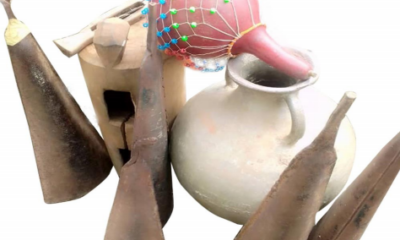
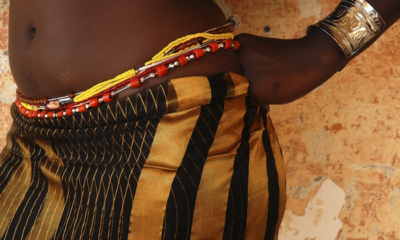
Her royal-style costume also tells a story. She usually dresses in richly decorated robes, bead necklaces and a crown adorned with ostrich feathers. Her dancers and musicians, too, wear traditional outfits comprising raffia skirts, ankle jingles and red ribbons. The instruments she and her troupe use, that is, metal gong (ogene), udu, ekwe, flute bring out a sound that is both nostalgic and highly symbolic of Igbo heritage.
Perhaps most telling is the meaning of the word “Egedege.” In Igbo slang, it suggests richness and bravery, an apt name for a performance style that carries regal energy and cultural weight. Because of that meaning, Egedege performances are often featured at significant events such as royal functions, festivals and other ceremonies associated with prestige.
Over time, thanks to Theresa Onuorah’s vision, the Egedege Dance Troupe became more than a local group. They travelled across southeastern Nigeria, performing at weddings, festivals and high-profile occasions, helping to cement Egedege as a celebrated and respected cultural art form.
Essentially, what began as a moonlit village dance evolved into a powerful stage tradition because of Theresa Onuorah’s dedication. She honoured the past and also gave Egedege a presence that could be seen, heard and felt on big stages.
Musical Style and Performance Elements
Theresa Onuorah’s musical style is deeply rooted in Igbo tradition. However, she elevates it with a regal flair that makes every performance feel like a celebration. Her sound is a beautiful blend of Egedege and highlife carried by her powerful, resonant voice and toned by traditional Igbo instruments.
At the heart of her music are instruments that speak straight to the soul of Igbo culture. The ogene, udu, ekwe and the ọjà all combine to form an ensemble that is both rhythmic and melodic. These instruments don’t just provide background, they are part of the storytelling. The udu gives a deep, bass-like pulse while the ogene and ekwe weave a more urgent, celebratory rhythm.
Vocally, Theresa Onuorah often uses a call-and-response approach that invites backup singers or dancers into the conversation, creating a feeling of community and shared energy. Her lyrics don’t just entertain, they also reflect on life, culture and tradition.
Her performance structure is deeply theatrical. She doesn’t simply walk onstage. Instead, the entrance of her troupe is announced by flute playing as the oja flute signals that something grand is beginning. When Theresa Onuorah arrives, she is carried in like a queen under a large umbrella, with someone fanning her from behind. Only once she takes the microphone does the singing begin to blend voice and instrument in a way that feels both spontaneous and deeply ritualistic. She, sometimes, dances while she sings, moving gracefully as the beat of the ogene, udu and ekwe guides her.
Costume is a major part of her performance identity. Theresa Onuorah’s outfit is royal in every sense. She wears elaborately decorated robes, richly beaded necklaces and a crown adorned with ostrich feathers. In her hand, she might hold a horsetail and a bronze staff. Those are symbols of authority and tradition. Her dancers match this energy with raffia skirts, ankle jingles and red ribbons, and together, they form a synchronized visual spectacle.
All these elements – voice, instruments, dance, costume come together to make Egedege not just a performance but a living piece of Igbo royalty. It feels deeply traditional. But then, when Theresa Onuorah is on stage, there is also something very modern, and that is a celebration of identity, strength and community.
Career Milestones and Recorded Works

Queen of Egedege and Flavour
When you think of Queen Theresa Onuorah, what often comes to mind is not just her graceful dance, a lifetime of music that has woven its way through generations is also there. Her journey in the public eye spans decades and is a blend of cultural preservation, powerful collaborations, and a commitment to keeping Igbo tradition alive.
Theresa Onuorah’s recorded career really began to take shape in the late 1970s. She released her first major album in 1976, at around 34 years old. That was considered a bold step for someone deeply rooted in traditional performance rather than the commercial music scene. Her early work included tracks such as Oba Egwu and Ogene Ekwubego Mu Na Onye Ga-Agba Egbu, which helped her to establish herself as a force in highlife and Igbo traditional music.
Less than a decade later, in 1985, Theresa Onuorah channelled her passion into something bigger. She founded the Egedege Dance Troupe of Unubi, and that marked a turning point. Rather than just singing, she was building a full performance company, one that combined dance, music, costumes, and storytelling in a way that brought Egedege to life on stage.
Over the years, Theresa Onuorah built a rich discography. Her albums speak to her deep cultural roots and artistic vision. Some of her well-known albums are Oba Egwu, Onwunwa Mu Na Chimo, and Ogene Ekwubego Mu Na Onye Ga-Agba Egbu. These recordings reflect not just a musical journey, but a mission to preserve, elevate and share Igbo tradition.
One of her more recent releases is the EP Egwu Ndi Oma (2018) which includes a song of the same name. Even decades into her career, she continued to create, showing that her talent and spirit were timeless.
Theresa Onuorahs’s catalogue also includes throwback singles like Ekwueme Ego 1 (Adazi Nnukwu) which listeners still share and celebrate today.
Perhaps one of the most striking chapters in her recorded work came in 2021 when she featured on the song “Egedege” by Larry Gaaga, alongside Flavour and Phyno. Produced by Masterkraft, the collaboration was not only a hit, it was a bridge between generations, blending Theresa’s traditional voice with contemporary highlife and modern production.
However, that wasn’t Theresa Onuorah’s only modern re-emergence. In 2024, she came together again with Larry Gaaga, Flavour and Phyno for another single titled “Obodo”. And in an impressive display of cross-generational respect, Kcee, a major current-day Nigerian artist tapped her for his track “Champion”, produced by Masterkraft. This collaboration highlighted how she remains relevant and celebrated across musical eras.
Through her recordings, Theresa Onuorah has done more than release songs, she has documented a cultural heritage. Her albums and singles act like a living archive that preserves rhythms, dances and stories that might otherwise fade. From her early studio recordings in the 1970s to her revitalized presence on tracks with younger musicians, she has threaded together tradition and innovation.
Her recorded work is a testament to her longevity, not just in life but in relevance. By stepping into modern collaborations, Theresa Onuorah has ensured that Egedege is not only remembered but reimagined.
Personal Life and Family
Behind the crown, the elaborate robes and the rhythmic dance steps, Theresa Onuorah is a mother, a partner and a woman with a rich personal history that has helped to shape her onstage presence.
Born in Unubi, Anambra State, she became a public figure through the Egedege dance and music. But off-stage, she has woven together a life filled with complex relationships. Though much about her private family life remains intentionally low-profile, she is married to Godwin Igboebisi, a long-term relationship sources say has spanned over three decades, and together, they have children.
Yet, not all of Theresa Onuorah’s story fits neatly into one chapter. Before her marriage to Godwin, she had a past relationship with Chief Pericoma Mezuo Okoye, a well-known traditionalist and musician. From that union came Speed Darlington (Darlington Okoye), a US-based singer, dancer and online personality who has publicly acknowledged Theresa as his mother.
TheresaOnuorah’s bond with her children reflects a loving but discreet motherhood. Her relationship with Godwin Igboebisi, her husband is described as stable and long-standing, even if she does not often spotlight her personal life.
In many ways, her private life mirrors the grace she brings on stage which is rooted in tradition, marked by strength and lived with purpose. Her role as wife and mother hasn’t just shaped her worldview, it has enriched her artistry. Knowing the person behind the performance helps to project how deeply Theresa Onuorah’s legacy is grounded not only in culture, but also in the ties that bind her to family and heritage.
Theresa Onuorah’s Cultural Significance

Queen of Egedege and KCee
Theresa Onuorah is a living symbol of Igbo heritage. Her work matters deeply because she bridges generations. She revives traditional Igbo culture and brings it into the modern world in a way that feels powerful, relevant and full of dignity.
First, her leadership in Egedege dance and music has preserved a vital part of Igbo heritage. Egedege is a royal-style cultural performance that blends drama, ritual, storytelling, and traditional instruments. Under Theresa Onuorah’s guidance, what was once a more private or local moonlight dance has become a full-fledged stage tradition that people across Igbo land and beyond now recognize.
Theresa Onuorah’s performances are deeply symbolic. The entrance on flute signals that something sacred is beginning; she is carried in like a queen, and her dancers wear elaborate traditional costumes with beads, raffia and vibrant designs. Through these, she brings Igbo aesthetics, identity and royalty to life in a way that honours the past.
But her influence is not stuck in history. When Theresa Onuorah was featured on the 2021 hit “Egedege” by Larry Gaaga, alongside Flavour and Phyno, she helped to reintroduce Egedege to a younger and broader audience. This was not just a musical comeback, it was a cultural resurgence. That track sparked renewed interest in traditional Igbo sounds, and it showed how powerful and relevant indigenous music can be in today’s world.
Beyond performance, Theresa Onuorah uses her songs to teach, to reflect, and to call her people to remember who they are. In “Ijele Elubego,” for example, she weaves messages about acceptance, identity and cultural pride. Her voice becomes not just a melody, but a vessel for wisdom that reminds listeners to hold on to Igbo traditions, even as life changes.
Scholars also note that her music resonates with Igbo people in the diaspora. For those far from home, her songs evoke nostalgia, connection, and a sense of belonging to something deeply rooted. That way, Theresa Onuorah preserves tradition and carries it forward, across time and place.
At its heart, her cultural impact is about identity, memory, and continuity. Through her work, she has made Egedege more than a dance or a genre. theresa Onuorah has made it a living, breathing symbol of Igbo strength, heritage and pride. Her legacy encourages future generations to value where they come from, to learn from the past, and to create anew without forgetting.
Challenges She Has Faced
Theresa Onuorah’s path to becoming the Queen of Egedege was not always smooth. Behind her powerful stage presence and regal performances lie real obstacles she had to navigate, ones that shaped her resilience as much as her art.
Growing up in Unubi, Theresa Onuorah was drawn into music from a very young age. Her father, a traditional egwu ekpili musician, mentored her in performance rather than academics. Because of this early immersion in music, she had very little opportunity to pursue formal education. This trade-off which was a choice between schooling and her cultural calling meant that she carried forward her traditions but also had to make sacrifices most performers don’t.
Even after founding her Egedege troupe in 1985, Theresa Onuorah faced the challenge of keeping a deeply traditional art form alive in a modernizing world knowing that Egedege was rooted in rural, moonlight dances and heavily dependent on indigenous instruments and storytelling. For a long time, her style did not gain wide acceptance beyond Southeastern Nigeria. According to an interview, parts of the broader Nigerian entertainment industry saw her music as too spiritual or traditional to fit into mainstream appeal.
Maintaining a traditional dance troupe and live performance company is not cheap. Costumes, instruments, and transporting dancers are expensive. While Theresa Onuorah did perform at high-status events, i.e. weddings, chieftaincy ceremonies, funerals which brought in money, these bookings were not always consistent. Running a company of dancers and musicians meant that she had to balance tradition with the practical need to generate income, and that challenge was heavier in times when cultural arts were undervalued commercially.
As modern Nigerian music evolved, with Afrobeat, hip-hop, and pop dominating the airwaves, Theresa Onuorah’s traditional style risked being seen as old school. She needed to find ways to stay relevant without losing her roots. This tension of how to preserve Egedege as a traditional art but also make it speak to younger generations has always been real for her.
Given the deeply cultural and sometimes spiritual nature of her performances, Theresa has also had to contend with misconceptions. Some have interpreted her music and dance as mystical or ritualistic in a way that doesn’t always align with how she sees her art. Over the years, she has worked hard to counter these perceptions by presenting Egedege not just as religious spectacle, but as cultural storytelling rooted in Igbo tradition.
On a personal level, Theresa Onuorah has had complex relationships, especially around her children and past partnerships. For example, her relationship with Chief Pericoma Okoye and their child has been part of public conversation. Raising children while leading a troupe meant balancing motherhood with her public life, and that comes with emotional weight. Also, ensuring that her cultural legacy would outlive her meant she had to think about succession, that is, how to keep the Egedege troupe going beyond herself.
Now in her eighties, Theresa Onuorah still performs and creates. But then, age naturally brings physical and health challenges. Staying active on stage, handling the demands of performance, and travelling are harder as time goes on. While she continues to command respect and admiration, the reality of aging adds another layer to the perseverance that she needs to keep her legacy alive.
In Conclusion …
Theresa Onuorah is a performer. A storyteller. A cultural custodian. A bridge between the past and the present. Through Egedege, she has preserved a piece of Igbo heritage, transforming village dances into stage spectacles that resonate across generations. Her voice, her movements, and her presence carry the weight of tradition while embracing the possibilities of modern music.
Her journey was not without struggles. She has had to deal with sacrifices in education, the challenge of keeping traditional art relevant, and the pressures of family and public life. Yet, it is precisely through these challenges that her resilience shines. Every performance, every recording, and every collaboration tells a story of dedication, creativity, and cultural pride.
Theresa Onuorah’s legacy reminds us that culture is not static. Instead, it lives in people who dare to honour it, innovate with it, and share it with the world. She shows that one person’s passion can preserve history, inspire future generations, and create a sense of identity that reaches far beyond the stage. The Queen of Egedege has entertained, taught, inspired, and elevated culture. She has ensured that the music, the dance, and the spirit of her people continue to thrive.
References
- https://en.wikipedia.org/wiki/Theresa_Onuorah
- https://en.wikipedia.org/wiki/Egedege_Dance
- https://www.legit.ng/ask-legit/biographies/1463910-queen-theresa-onuorahs-biography-age-children-net-worth/
- https://buzznigeria.com/who-is-theresa-onuorah-speed-darlingtons-mother/
- https://anambrapeople.com.ng/2024/01/16/meet-theresa-onuorah-and-pericoma-parents-of-singer-speed-darlington/
- https://schoolgist.ng/theresa-onuorah-biography-age-family-house-music-and-net-worth
- https://notjustok.com/songs/videos/larry-gaaga-egedege-ft-flavour-phyno-theresa-onuorah/
- https://www.ghanamma.com/ng/2022/02/22/i-went-to-see-my-biggest-son-theresa-onuorah-says-as-she-shares-new-photos-with-larry-gaaga/
- https://ozikoro.com/unveiling-the-power-of-egedege-the-story-of-queen-theresa-onuorah/
- https://www.colorado.edu/amrc/sites/default/files/attached-files/amrc_journal_v.27_web.pdf
- https://soundwela.site/music/high-life/queen-theresa-onuorah-etu-ayisi-ejegwu-na-obodo-mmiri/
- https://www.nairaland.com/5662235/egedege-africa-lessons-theresa-onuoras
- https://www.alimoche.co.uk/post/enchanting-egedege-the-musical-legacy-of-queen-theresa-onuorah
You might want to check this out …