





History and heritage
Unubi Town: History, Culture, People, Other Things

Unubi is a lively town in Anambra State, Nigeria, with a proud cultural life, deep-rooted history, and a living tradition. Discover Unubi history, Culture, people and other things.

Unubi is a vibrant town nestled in Nnewi South Local Government Area of Anambra State, Nigeria. Known for its rich cultural heritage, deep-rooted history, and dynamic community life, it offers a unique glimpse into the traditions, people, and everyday rhythm of southeastern Nigeria.
From the lively Egedege dance performances that have captured the attention of cultural enthusiasts, to the bustling local markets and family-centered communities, Unubi is a living story of resilience, tradition, and growth.
This article explores Unubi covering its history, geography, cultural practices, economy, notable people, infrastructure, and future prospects, and providing readers with a complete, verified, and engaging profile of the town.
Whether you are a researcher, traveller, or someone interested in Igbo culture, this will help you understand why the town is a significant part of Anambra State and Nigeria at large.
Historical Background of Unubi
Tracing Unubi’s origin feels like piecing together a story told around the fire, because much of what is known comes from the memories of elders, from oral tradition, and from stories passed through generations. Unlike some places with years of written records, Unubi remains under-documented in formal archives. According to local historians, that is largely because earlier generations prioritized community memory over written records.
The name “Unubi” itself is said to come from two Igbo words: “Uno” meaning home, and “Ubi” meaning farm. This makes sense as many early settlers in the area were farmers, and the land around the community was once open and fertile.
Local oral accounts suggest that the first settler came from the north, possibly from the nearby Ezinifite area, and established his home on the land that would become Unubi. To mark his claim and to protect his territory, he set up a shrine under a tree known as Akpu, and was making annual offerings in return for protection.
As more families arrived, the settlement grew. The founder extended his presence southward, building more shrines as he went, one at Umuegbe, another at the site of what today is near Unubi Boys’ Secondary School. It was at that point that he and the early settlers gave their growing community the name Unubi, uniting their identity around the farmland and their shared spiritual commitments.
Christianity came to the communtiy gradually in the early 20th century. Roman Catholic missionaries arrived around 1917‑1918, and by 1918 the Catholic Church was formally established. About two years later, around 1920, Anglican missionaries from the Church Missionary Society also began working in the area. Over time, Christianity replaced many of the old traditional practices, though not entirely. In some cases, elements of old beliefs blended with Christian practice, and created a kind of syncretism in local religious life.
One more fascinating piece of Unubi’s past is its Ogba cave, also called ogba. In earlier times, this cave served as a kind of spiritual court of appeal. According to local tradition, when there was a serious dispute and the identity of a culprit was unclear, suspects would be asked to go into the ogba. It was believed that the truth would emerge from there.
The role of the town in local governance changed in more recent history. According to historical records of Anambra State’s administrative development, Unubi was included in Nnewi South when the local government areas were reorganized.
Geography and Physical Setting
Unubi is tucked into the lush, low-lying landscape of Nnewi South, in Anambra State, southeastern Nigeria. According to geographic data, its coordinates are approximately 5.9603° N latitude and 7.0416° E longitude. The town rises to about 191 meters above sea level, giving it moderate elevation that supports both farming and habitation.
The town lies within the tropical savanna climate zone, according to climate classification. This means that it experiences distinct wet and dry seasons which shape how the land is used. The surrounding terrain is gently rolling rather than flat, This feature blends well with the wider Nnewi South geography.
The soil in and around Unubi is typical of southeastern Nigeria’s rural areas – fertile and well-suited for agriculture, especially for crops like cassava, yams, and vegetables. Because of its elevation and soil type, the town supports both food crops and small-scale farming.
As part of Anambra State, the community shares in the region’s humid climate. Annual precipitation is relatively high, and the area has rich vegetation typical of a rainforest/savanna transition zone. Temperatures can be warm, and humidity tends to be fairly high, especially during the rainy months.
Unubi itself is not documented as having major rivers within its immediate boundary. However, it lies within a local government area (Nnewi South) that is crisscrossed by streams and small watercourses. These water systems help to sustain the farmland around the town. However, as with many towns in the region, managing surface water during heavy rains can be a challenge, especially where drainage infrastructure is limited.
Unubi is not isolated. Through local roads, it connects with nearby towns like Ekwulumili which lies to its north, and Amaekwulu. Because of this, residents can travel to and from the community for work, trade or services. The town is part of a network of settlements in Nnewi South that together contribute to the social and economic life of the LGA.
Its location places it well within reach of larger commercial hubs. For example, the town lies in a region influenced by Nnewi which is a major industrial and commercial city in Anambra State.
The moderate elevation and good soil make farming viable, and that helps to support the local economy. The climate ensures that crops can grow during the wet season, but local farmers must also plan for the long dry period. Its position within a network of roads and nearby towns gives Unubi access to trade, transport, and services, and makes it more than just a farming settlement.
Culture and Heritage

Egedege Dance
In Unubi, cultural life flows deeply and is rooted in Igbo tradition. The town holds fast to the old ways, even as it embraces change, and its heritage shines brightest through one of its most famous expressions – the Egedege dance.
Egedege is a royal‑styled Igbo dance and music tradition that originated in Unubi. According to local histories, the earlier version of Egedege was once a moonlit dance made by young people in the community.
But in 1985, Queen Theresa Onuorah, a native of Unubi formally founded the modern Egedege Dance Troupe. Since then, she has helped to transform the dance into a powerful symbol of Igbo cultural identity.
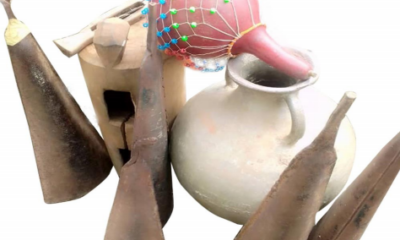
The name “Egedege” comes from Igbo slang that connotes richness and bravery. It makes sense that the dance was once reserved for royal homes or families of high social standing. It is not just about beauty or pageantry. The performance combines traditional instruments like the ogene, udu, ekwe, and the oja, alongside strong vocals and dance movements.
In Unubi, Egedege dance is woven into many important cultural moments. It is performed at weddings, title-taking ceremonies, funerals, and festivals. These are not just for show as the dance carries meaning, history, and social values. Through its lyrics, movement, and instruments, Egedege connects people to their ancestors, calls out social themes, and reinforces community identity.
Queen Theresa’s performances have helped make the dance well-known across southeastern Nigeria. She has recorded albums, released songs, and toured, thus making Egedege a living tradition that is both rooted in Unubi’s past and, yet, growing with the present.
One of the most important strengths of Egedege is how it has stayed alive across generations. Some performing families in the dance troupe trace their participation back decades. The family‑oriented nature of the tradition helps to ensure that the music, dance, and values are passed from parents to children. Even as new generations bring their own energy, Egedege remains grounded in what it means to be Igbo and from Unubi.
Egedege is a cultural statement. Its performances often include messages about social issues, respect, bravery, and tradition. It reminds the people of Unubi, and anyone who watches that heritage matters, and that art can preserve memory, teach values, and carry the spirit of a community forward.
Social Life and Community Structure
In Unubi, life revolves around a warm sense of belonging. Family ties, age‑grades, town unions, and traditional leadership all work together to shape everyday life. The system isn’t just social, it guides how people live, make decisions, and come together in moments of joy and crisis.
At the heart of the social fabric of the town is the extended family which is the building block of community. Like many Igbo communities, the family extends beyond the nuclear unit. Then come kinship groups or umunna where several related families trace their descent to a common ancestor and often meet to discuss communal issues. Scholars identify this patrilineal kinship model as central in many Igbo towns.
This system gives individuals both belonging and responsibility. Elders advise, settle disputes, and guide younger people while younger generations contribute to community life through work, respect, and participation.
Unubi has a well-organized town union, sometimes called the Unubi Town Development Union or UDU that plays a major role in local development and unity. The union organizes community projects, coordinates age-grade activities, and ensures connections between people in the diaspora and those at home.
One powerful example of how Unubi comes together through its town union is during the Mass Return celebration, held every few years. This is a special event that brings home sons and daughters of the town, those living in the city, in other states, or abroad to reconnect.
During this five-day celebration, people participate in a parade, talent shows, cultural dances, and a lighting of the unity torch. It is a time for renewing relationships, celebrating family, and building support for communal development like health outreaches or infrastructure.
The traditional ruler in Unubi is a respected symbol of continuity, tradition, and communal identity. He works alongside community chiefs, cultural associations, and the town union to guide cultural practices, resolve disputes, and represent the town in larger forums.
Like many Igbo towns, age-grade systems play a big role in social organization in the town. These are groups of people who were born around the same time and grow together in responsibility and community work. Age grades help to handle social projects, mobilize people for celebrations, and represent youth views in the town union.
During events such as the Mass Return, different age groups pull together to run cultural dances, organize sports, and help with logistics. This system ensures that younger people are not left out and have a structured way to contribute.
Religion is a central part of life in Unubi. Many residents are Christians, and religious institutions, especially local churches are important gathering points for social interaction, moral support, and community service. But tradition is also alive. Despite Christianity, many cultural practices remain strong, and traditional leadership continues to matter.
Villages and Quarters That Make Up Unubi
Unubi is made up of a few distinct villages, each with its own history and identity. Local and postal records show that Anakom, Etitinabo, and Nkwukwo are the core villages that make up the town.
According to a customary land‑ownership study, these three villages – Anakom, Etitinabo, and what is called Isimba in the study are among the original settler lineages whose descendants still hold land in the town.
Land in the community is deeply connected to these villages. A customary‑law research paper explains that land ownership is divided into different categories, namely, communal (belonging to the entire town), village-level (belonging to each of these villages), clan-level, family-level, and individual holdings.
This structure shows how important those core villages are and attests to the fact that they are not just names on a map but real social and legal units where land is passed from one generation to the next, and where communal decisions are made.
Economy and Occupations
Life in Unubi is rooted in a blend of agriculture, small trade, and the influence of nearby industrial hubs. Though not highly industrialized in itself, the town benefits from being part of Nnewi South Local Government Area which has a vibrant economy shaped by both rural and industrial activities.
Agriculture remains a backbone for many of its people. In 2025, the Unubi Youth Association distributed over 900 tree seedlings of economic species, including bitter kola, cocoa, orange, soursop, guava, and breadfruit to local farmers. This effort is part of the Anambra State “Operation Farm to Feed” campaign, and shows how agriculture is both a livelihood and a growth path for the community.
Because the soil around Unubi is fertile, many households use their land to grow food crops like yam, cassava, maize, and vegetables. These crops serve both the local population and nearby markets. This pattern reflects the larger economic behaviour across Anambra State where smallholder farming is very common.
The economic life of the town is deeply connected to trade. It is part of Nnewi South LGA which lies close to Nnewi, a major industrial and trading city often called the “Japan of Africa.” The industrial strength of Nnewi, particularly in automobile and motorcycle spare parts supports the economic ecosystem in the region. Many people living in Unubi benefit from trade links or commute for business or work.
Unubi economy also includes important small business and craft activity. Artisans in the area are involved in carpentry, tailoring, and other service trades. These skilled workers play a key role in local economic life and fill every-day needs for other residents.
In addition, transport services such as motorcycle taxis or small buses support the movement of goods and people and help farmers to send produce to the market and enable residents to reach trade centres in nearby towns.
Notable People from Unubi
Unubi has produced individuals who have made significant cultural contributions as well as some who have made the headlines in various ways. Among them are:
Queen Theresa Onuorah
Theresa Onuorah is perhaps the most famous person from Unubi. Born on 9 January 1942 in Unubi, Anambra State, she is widely known as Queen Theresa Onuorah and is the founder of the Egedege Dance Troupe.
High Queen Chioma Onuorah
Another cultural figure from Unubi is Chioma Onuorah, also known as High Queen Chioma Onuorah with a stage name – Ojiugo Anawalueze. She was born on 6 August 1979 in Unubi, Nnewi South LGA.
Prof. Maduabuchi Joseph Nwankwo.
He is a Professor of Medical Rehabilitation / Neuro‑Physiotherapy at Nnamdi Azikiwe University. On 26 January 2023, he received an Ozo title – “Chinyerugo” in his home community, Unubi.
Chief Chukwujekwu Onuorah, aka “Egbe‑Ejiejeogu”
Unubi has also had more controversial figures. One of them is Chief Chukwujekwu Onuorah, also known as “Egbe‑Ejiejeogu”, a high chief and traditional native doctor. He was arrested by the Department of State Services (DSS) in connection with the abduction, beheading, and decapitation of Hon. Okechukwu Okoye, an Anambra lawmaker.
According to a human rights group, he is blood-related to Queen Theresa Onuorah. His case drew national attention because of the gravity of the crime and his traditional status in Unubi.
Infrastructure and Public Services in Unubi
In Unubi, the infrastructure that supports daily life is a mix of local efforts and broader government projects. While there are challenges, recent initiatives show real progress in areas like health, power, and roads.
Road access is a critical concern for the town and its surrounding communities. Anambra State government, under Governor Chukwuma Charles Soludo has prioritized rural road construction to improve connectivity.
Some of the road projects approved by the State council specifically target local government areas like Nnewi South, which includes Unubi. These new routes are meant to link remote communities to markets, schools, and health centres which could significantly reduce travel times and stimulate local economic life.
Power supply in Unubi reflects a broader pattern in rural and semi-urban parts of Anambra. Unreliable grid electricity means many homes and public institutions rely on alternative sources. According to a structure plan for Nnewi and nearby towns, electricity supply is erratic, and many rely on private generators to make up the shortfall.
Public healthcare is improving. In 2025, the Nnewi South Local Government rolled out solar-powered electricity for its primary health care facilities, including the one in Unubi to ensure 24-hour service at these centres.
This solar project is especially meaningful. By reducing reliance on the main grid, it helps health centres avoid frequent blackouts and improves their ability to serve patients at any time of day or night.
In the broader Nnewi area which includes Unubi, there are a number of public and private health institutions. According to a city structure plan, these include general hospitals, clinics, and other health facilities. For more advanced care, many Unubi residents may access the Nnamdi Azikiwe University Teaching Hospital in nearby Nnewi.
Educational infrastructure in and around Unubi is also shaped by regional development plans. According to the Nnewi‑area structure plan, there are numerous public primary and secondary schools in the area.
On the state level, Anambra’s 2025 infrastructure budget includes large investments in school facilities, including the development of “smart schools” across LGAs. These schools will likely benefit students in smaller communities like Unubi, and help to improve access to modern classrooms and learning environments.
Water infrastructure is an ongoing challenge. According to the structural planning documents, many suburban and rural communities which likely include Unubi have inadequate water coverage which makes access to safe public water a critical development priority.
Landmarks and Places of Interest

The Stone House in Unubi
Though Unubi is a small town, it has sites that reflect its rich history, culture, and traditions. From historic churches to traditional caves and vibrant festival grounds, these places tell the story of the community and its people. Here are some of the key landmarks and places of interest in the town:
Unubi Ogba (Traditional Cave)
Unubi has a cave known locally as an ogba which is historically used as a site for dispute resolution and traditional gatherings. This cave is significant in understanding the cultural heritage and traditional justice system of the community.
Ebenezer Anglican Church, Unubi
Established around 1920, Ebenezer Anglican Church is one of the oldest religious structures in the town. Beyond its spiritual role, it stands as a piece of the town’s historical architecture and a centre for community life.
Mass Return Festival
Unubi Mass Return festival, held every few years transforms the community into a lively hub of cultural activity. Visitors can witness parades, traditional dances, title-giving ceremonies, and performances by cultural troupes like Egedege.
Chief Uche Okafor’s Stone House
There is also a stone house which was built in Unubi by an indigene – Nnazuruoha Chief Nzedioranma Uche Okafor, Onyima Dike N’ututu of Igboland. The man made a promise to himself that he will build a house that will make everyone that passes by to stop and admire the building, and today, that vision is being achieved as the house has become a tourist attraction. According to his son, Chief Edozie U. Okafor, the house took his father 20yrs to complete.
In Conclusion …
Unubi stands out as a community that carries its past with pride while steadily shaping its future. Its story is woven from the strength of its people, the depth of its traditions, and the quiet resilience that defines rural towns in Anambra State.
From its historic cave and century-old church to the colourful Mass Return celebrations, Unubi offers a window into the values that have held the community together for generations.
Even as it faces challenges like inconsistent infrastructure and limited public services, the town continues to benefit from new development efforts in road construction, healthcare, and education across Nnewi South.
Its farmers, traders, artisans, scholars, and professionals, including respected figures like Prof. Maduabuchi Nwankwo show that Unubi is a place where heritage and ambition walk side by side.
Ultimately, Unubi is a living community rooted in history, enriched by culture, and driven by the hope that each generation will leave the town better than they met it. For anyone seeking to learn about the southeastern Nigeria, Unubi represents an important piece of the puzzle.
References
- https://en.wikipedia.org/wiki/Nnewi_South
- https://www.mindat.org/feature-2319712.html
- https://zw.maptons.com/2886367
- https://ozikoro.com/the-egedege-dance-a-traditional-dance-from-unubi/
- https://www.iosrjournals.org/iosr-jhss/papers/Vol.%2025%20Issue2/Series-9/A2502090107.pdf
- https://ediss.sub.uni-hamburg.de/bitstream/ediss/11263/1/Bernard%20Nwabueze%20Obi_Dissertation.pdf
- https://www.vanguardngr.com/2019/03/anambra-community-celebrates-mass-return-with-pomp-and-pageantry/
- https://postcodes.naijaz.com/directory/states/anambra/lgas/nnewi-south/ruralAreas/unubi/villages
You might want to check out …