



History and heritage
Awgbu Town || Towns in Anambra State

Learn about the vibrant heritage of Awgbu in Anambra State – its history, leadership, villages, culture, festivals, cuisine and more. A warm and engaging lead to this Igbo town.

If you’ve ever travelled through the rolling hills and fertile plains of Anambra State, chances are you must have heard about Awgbu – a beautiful and historic Igbo town tucked within the Orumba North Local Government Area.
Known for its warm-hearted people, rich traditions, and famous raffia-palm wine, Awgbu represents the very soul of southeastern Nigeria’s cultural and communal life. From its vibrant Eke-Awgbu Market and colourful New Yam Festival to its time-honoured village structure and forward-looking town union, this town is a fascinating blend of the old and the new.
In this article, we will take you on a journey through the history, leadership, villages, festivals, economy, local dishes, and other valuable details about Awgbu.
Whether you are researching towns in Anambra State, exploring your roots, or simply curious about Nigerian communities, Awgbu offers a living story of unity, hard work, and cultural pride that continues to inspire its people today.
A Brief History of Awgbu
Awgbu is one of the oldest and most culturally rich towns in Anambra State. It is located in the Orumba North Local Government Area and has long been known for its peaceful people, fertile land, and strong community life.
Oral history says that the town was founded by early settlers who came together to form family groups that later grew into villages. These early inhabitants built meeting houses called obu where elders gathered to make decisions and settle community matters.
Before the arrival of colonial rule, Awgbu thrived as a farming and trading community. The people cultivated yams, cassava, cocoyam, and vegetables, and also tapped raffia palms to produce palm wine, which became one of the town’s main sources of pride.
During the colonial period, new systems of administration, education, and religion were introduced. Although these changes influenced the people’s way of life, the town still held on to its customs and festivals.
Over time, Awgbu has grown into a vibrant community that balances tradition with progress. Many of its indigenes now live and work across Nigeria and abroad. Yet, they continue to return home for major events like the Iri Ji (New Yam Festival) and town-union meetings.
The story of Awgbu is one of resilience, unity, and pride in heritage. A reflection of the broader spirit of the Igbo people.
Location and Geography

Awgbu is located in the Orumba North Local Government Area of Anambra State, in southeastern Nigeria. It sits in a beautiful valley surrounded by green fields, farmlands, and streams that support farming and daily life. The town enjoys a calm, rural atmosphere while remaining close to major towns and cities in the region.
Awgbu shares boundaries with several neighbouring communities. To the north, it borders Umuawulu and Amaetiti; to the east, it connects with Ndikelionwu and Omogho; to the south, it meets Amaokpala and Nanka; while Agulu and Mbaukwu lie to the west. This central position makes Awgbu easy to reach from different parts of Anambra State and beyond.
The town’s landscape is rich and fertile, making it suitable for agriculture, especially, the cultivation of yam, cassava, and raffia palms. Its location also makes it a link between other communities in the Orumba area, helping trade, movement, and cultural exchange. With a postal code of 423128, Awgbu stands as one of the most accessible and naturally blessed towns in Anambra State.
Leadership and Traditional Authority in Awgbu
Like many towns in Anambra State, Awgbu has a respected system of traditional leadership that helps to maintain peace, unity, and cultural order. At the top of this structure is the traditional ruler, known as the Igwe Awgbu. Currently, His Royal Highness, Igwe Michael Okechukwu (Atu Mgbedike Ezekanunu II) is the Igwe.
He is recognized as the custodian of the town’s culture and traditions. The Igwe represents Awgbu at State and regional levels; oversees community matters; and works with the people to promote development.
Before Igwe Michael Okechukwu, the throne was held by Igwe Michael Ezeayom (Eze di Ora Mma I), who was widely respected for his wisdom and contributions to the town’s unity. The Igwe’s palace is a central place for decision-making, dispute resolution, and the celebration of cultural events.
Beyond the central kingship, Awgbu also has leadership structures at the village and clan levels. Each of the main villages has its own council of elders and titled men who handle local matters. These village leaders, often called ndi ichie or ndi okpara, work closely with the Igwe and the Awgbu Progressive Union (APU) to ensure harmony in the community.
This layered leadership system helps the town preserve its traditions while managing modern governance. It ensures that every village and family has a voice, making community life both organized and deeply connected to its cultural roots.
Villages and Communities in Awgbu
Awgbu is made up of several villages that together form one united community. Each village has its own identity, history, and customs, but all share the same roots and sense of belonging to the larger family. These villages are closely linked by kinship, trade, and tradition.
The main villages in the town are Ugwu, Abonator, Osikwu, Ozulumba (also called Amugo), and Mbuluko. Each of them plays an important role in the cultural and social life of the town. Within these villages are smaller family groups (Umunna) and compounds that make up the community structure.
Every village has a council of elders, titled men, and youth groups who handle village affairs. They meet regularly to discuss issues affecting their people, organize community work, and support cultural events. During festivals and major town celebrations, each village contributes in its own way, from preparing traditional dances and masquerades to hosting guests and providing food.
This village system has helped the town maintain unity and order over the years. It encourages cooperation among the people, strengthens family bonds, and ensures that development decisions start from the grassroots.
Together, these villages form the heart of Awgbu.
The Main Market in Awgbu
The heartbeat of daily life in the town is its main market, known as Eke-Awgbu. This market is more than just a place to buy and sell goods. It is a social and cultural centre where people from different parts of the community meet, exchange news, and strengthen friendships.
Eke-Awgbu operates on the traditional Igbo four-day market week i.e. Eke, Orie, Afor, and Nkwo, with the Eke day being the busiest. Traders from neighbouring towns such as Amaokpala, Ndikelionwu, and Oko also come to the market to trade, making it a lively hub of activity.
In the early morning, the market buzzes with the voices of sellers displaying farm produce such as yam, cassava, cocoyam, vegetables, and palm oil. There are also sections for meat, fish, spices, and locally made crafts.
Over the years, modern stalls and lock-up shops have been added, giving Eke-Awgbu a blend of traditional and modern appeal.
For many people, going to Eke-Awgbu is not just about going to buy or sell, it is about connecting with others and feeling the pulse of the town.
Eke-Awgbu remains a symbol of the town’s industrious spirit and unity. It reflects the hardworking nature of Awgbu people and continues to play a vital role in the local economy.
Deity, Totem & Traditional Beliefs
Like many Igbo communities, the people of Awgbu have deep spiritual roots and strong respect for their ancestral heritage. Traditional beliefs once guided every part of daily life, from farming seasons and marriage customs to conflict resolution and community festivals.
The town’s principal deity is Udo, regarded as a spirit of peace, justice, and protection. In the past, people visited the shrine to seek blessings, settle disputes, or give thanks after a successful harvest. Even though Christianity is now widely practiced, respect for this ancient heritage remains part of the community’s story.
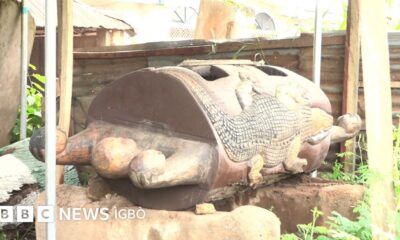
A well-known totem in the area is the python, seen as a sacred creature that must not be harmed. Locals believe it symbolizes peace and serves as a reminder of the bond between the people and their ancestors. When found in homes or farmlands, it is gently guided away rather than killed. This is a practice that shows deep respect for life and nature.
Traditional priests and custodians of culture still play a role in preserving old customs. They ensure that rituals, folk songs, and proverbs are not forgotten.
This connection to the past continues to shape the people’s identity, reminding everyone that faith, respect, and community are at the heart of their way of life.
Traditional Festivals and Cultural Life

The cultural life of Awgbu town is rich, colourful, and full of meaning. Festivals are not just celebrations. They are moments when families reconnect, ancestors are honoured, and traditions are renewed. Each year, the community comes alive with music, dance, and a strong sense of togetherness.
One of the most important celebrations is the New Yam Festival (Iri Ji). This event marks the beginning of the harvest season and expresses gratitude to God and the ancestors for a fruitful year. It is usually held in September. During the festival, the first yam is offered in thanksgiving before everyone else can eat from the new harvest. The day is filled with traditional dances, masquerades, feasting, and visits from friends and relatives.
Another significant occasion is the Ofala Festival which is associated with the traditional ruler. It serves as a public renewal of his authority and a time for the entire community to celebrate unity and progress. The event attracts people from within and outside the town, all dressed in their best traditional attire.
Masquerade performances also play a big part of the town’s cultural life. They are seen during festivals and important ceremonies, symbolizing the spirits of ancestors who come to bless and entertain the living. Each masquerade group has its unique style, costume, and drum rhythm that reflect the creativity and spirit of the people.
More than entertainment, these celebrations help to preserve their heritage and strengthen community bonds. Even with the growth of modern lifestyles, the people continue to hold on to these customs with pride, ensuring that their children grow up knowing where they come from and what they stand for.
Town Union and Community Organization
At the heart of community life is the Awgbu Progressive Union (APU), the central body that brings all sons and daughters of the town together. The union serves as the main link between the people at home and those living in other parts of Nigeria and abroad. Through the APU, development projects are planned, community welfare is managed, and cultural values are upheld.
The union operates under an elected leadership headed by a President-General, assisted by other officers such as the Secretary, Treasurer, and Public Relations Officer. Each village in the town also has its own local branch that reports to the central body. This structure ensures that every part of the community has a voice in decision-making.
The APU holds regular meetings where issues affecting the town are discussed, ranging from road repairs and youth empowerment to education and security. Major town events and annual general meetings are also coordinated by the union, bringing together indigenes from far and near to discuss progress and share ideas for growth.
Apart from the town union, there are other groups that support community life. These include women’s associations, youth movements, cultural clubs, and age grades, all of which contribute in their own ways to peace and development. The collaboration among these groups has helped maintain harmony and a strong sense of belonging among the people.
Through these well-organized structures, the community continues to thrive, blending traditional values with modern leadership. The APU stands as a symbol of unity and progress, ensuring that the collective voice of the people remains strong and focused on a better future.
Economy and Resources
The economy of Awgbu town is built on hard work, enterprise, and a mix of traditional and modern livelihoods. Agriculture has always been the backbone of local life, with most families involved in farming both for food and for income.
The fertile soil and favourable climate support the growth of crops such as yam, cassava, cocoyam, maize, vegetables, and palm produce. Many households also keep livestock like goats, chickens, and pigs, which provide both food and additional income.
In recent years, trade and small-scale businesses have become just as important. The town’s main market and smaller daily stalls support local commerce, with traders dealing in farm produce, textiles, building materials, and household goods. Young people are also venturing into services such as tailoring, motorcycle transport (okada), carpentry, and hairdressing.
Palm oil processing is another key activity in the area. Several families own small oil mills where palm fruits are processed for sale within and outside the community. The town is also known for its clay and sand deposits, which are used for building and pottery. These natural resources continue to support artisans and builders in the area.
Education and migration have also played a big role in shaping the local economy. Many indigenes work as teachers, civil servants, traders, and professionals in cities like Awka, Onitsha, and Lagos, sending support home for community development projects. This steady link between home and the outside world has helped improve infrastructure and living standards.
Overall, the town’s economy reflects the resilience and creativity of its people – a balance of tradition, self-reliance, and adaptability to modern opportunities.
Local Dishes and Culinary Traditions
Like many Igbo communities, food is a big part of life in Awgbu, and every meal tells a story of culture, family, and togetherness. The people are known for their rich and tasty traditional dishes, most of which are made from locally grown ingredients. Cooking is often done with fresh produce from home gardens or the local market, giving every meal a natural, homely flavour.
One of the most popular meals is fufu served with a variety of soup, especially ofe onugbu (bitter leaf soup) or ofe oha.
Abacha, also called African salad, is another signature delicacy enjoyed during gatherings and festivals. It is made from dried shredded cassava mixed with palm oil, pepper, garden egg, ugba (oil bean), ogiri, onions, and any animal protein of choice. It is often served cold and paired with palm wine – a drink that holds cultural importance during traditional meetings and celebrations.
The people also enjoy ukwa , a nutritious dish often cooked with corn, palm oil, or beans. Nkwobi and isi ewu (spiced cow foot and goat head) are also loved delicacies often served in homes and local joints, especially, when entertaining guests.
These dishes bring families and friends together. Whether during festivals, weddings, or ordinary evenings, sharing a meal reflects hospitality, unity, and the warmth that defines community life.
Prominent Sons and Daughters of Awgbu
Awgbu has produced many outstanding men and women who have distinguished themselves in leadership, business, education, religion, and community development. Their achievements reflect the strong values of hard work, unity, and service deeply rooted in the community’s culture.
One of the most celebrated figures from the town is Chief (Dr.) Ernest Ezeajughi, former Mayor of Brent in the United Kingdom and current Chief of Staff to the Governor of Anambra State, Professor Charles Chukwuma Soludo. His story of excellence and service, from public leadership abroad to governance at home continues to inspire the younger generation.
Another respected son of the soil is Chief Okey Ezeibe, a successful entrepreneur, philanthropist, and community builder. He has played a major role in Awgbu’s development through projects that improve the lives of residents, such as the construction of the modern police station near Eke-Awgbu Market.
Chief Ezeibe is also associated with the Awgbu Microfinance Bank Nigeria Limited, where his leadership and business experience have supported local financial growth. His generosity and commitment to community safety, education, and infrastructure have earned him lasting respect among his people.
Professor Pius Ezeajughi is another distinguished personality from the town, known for his work in education and research. His academic excellence and contribution to knowledge continue to bring honour to the community.
The town is also blessed with dedicated teachers, clergy, entrepreneurs, and professionals in different parts of Nigeria and abroad. Many of them actively support local initiatives, offer scholarships, and contribute to the projects of the Awgbu Progressive Union (APU).
These accomplished sons and daughters are a source of pride to the entire community. Their commitment to excellence and social responsibility shows the strength of the values that define Awgbu.
In Conclusion …
Awgbu stands as one of the most vibrant and culturally rich towns in Anambra State. From its deep historical roots to its strong community spirit, the town tells a beautiful story of tradition meeting progress. Its people remain proud of their heritage, their values, and their shared vision of development built on unity and hard work.
The community’s structure, from its traditional leadership and village system to the active Awgbu Progressive Union (APU) reflects how self-help and cooperation continue to drive growth. Its festivals, market life, and rich cuisine all reveal a people deeply connected to their land and culture, yet, open to modern ways of living.
With distinguished sons and daughters contributing across the world, Awgbu continues to grow in influence and recognition. These achievers are a reminder that small towns can produce global citizens when education, culture, and community pride work hand in hand.
As the town looks to the future, its greatest strength remains its people. Hardworking, peaceful, and committed to preserving their identity.
Awgbu is not just a place on the map of Anambra State. It is a thriving community whose story continues to inspire hope, unity, and progress for generations to come.
References
- https://en.wikipedia.org/wiki/Awgbu
- https://en.wikipedia.org/wiki/List_of_villages_in_Anambra_State
- https://mapcarta.com/N7752046485
- https://royalliteglobal.com/advanced-humanities/article/view/1679
- https://re-entanglements.net/tag/awgbu/
- https://www.researchgate.net/publication/381370695_Bolstering_the_Impact_of_Town_Unions’_Administration_and_Community_Development_Initiatives_in_Igboland_A_Study_of_APU_in_the_Awgbu_Community_of_Anambra_State_Nigeria
You might want to check this out …