





Anambra News
Ogidi Town, Anambra State: The Cultural Homeland of Legends

Introduction
Located in the heart of Idemili North Local Government Area, in Anambra State, Nigeria, Ogidi stands as a proud emblem of Igbo heritage, culture, and intellectual history. It is famously recognized as the hometown of Africa’s legendary writer, Chinua Achebe, but beyond that, Ogidi is a town rooted in tradition, strength, and community. It is a place where cultural festivals still command reverence, where age-grade systems are respected, and where the deep values of the Igbo people still shape everyday life.
More than a dot on the map, Ogidi plays a symbolic role in the spiritual and cultural geography of southeastern Nigeria. It is a town that balances its ancient customs with modern education, that celebrates both ancestral deities and Christian traditions, and that remains a hub of communal pride in the region.

Location and Boundaries
Ogidi is situated just a few kilometers east of Onitsha, along the Enugu–Onitsha Expressway, making it easily accessible to visitors, traders, and tourists. It shares boundaries with several other culturally significant towns, including
- Nkpor to the west
- Umuoji and Eziowelle to the north
- Ogbunike to the east
- Umunnachi and Umuodioka to the south
This strategic location places Ogidi in the middle of a dense network of Igbo towns with shared customs, intermarriages, and collaborative festivals. Its connectivity to Onitsha also ensures regular interaction with urban developments, without losing its rural charm.
Historical Background and Ancestral Roots
According to oral tradition and community records, Ogidi traces its roots to Ezechuamagha, a revered progenitor believed to be a descendant of Eri, the legendary ancestor of many southeastern Igbo communities. The people of Ogidi identify with the broader Eri clan and share spiritual, linguistic, and cultural affinities with neighboring towns like Nri, Umueri, and Aguleri.
The town’s name, Ogidi, is believed to symbolize strength and steadfastness. It attributes that its people are known for, especially in defending their land, culture, and values. As the town grew, it developed a structured system of governance rooted in age-grade responsibilities, elder councils, and respect for ancestral shrines.
Town Layout and Village Structure
Ogidi is composed of nine villages, each with its unique lineage and role in town affairs. These villages are traditionally organized and tied to family compounds that have been maintained for generations. The village system forms the backbone of local administration, land ownership, and cultural practice.
Each village is further divided into kindreds (umunna) and maintains its own village square, which serves as a place for meetings, ceremonies, and dispute resolution. While Christianity has transformed some practices, many traditional rites and festivals remain intact within these family units.
Important town matters are deliberated by the Council of Elders (Ndi Ichie), while younger generations participate in age-grade associations that carry out sanitation projects, road maintenance, and festival planning.
The Richness of Ogidi’s Culture
Culture remains at the heart of life in Ogidi. While the town has embraced modern religion, especially Anglicanism and Catholicism, it has also maintained many traditional rites, particularly during festivals and ancestral observances.
Among the most iconic features of Ogidi’s cultural identity is the Nwafor Ogidi Festival, an 11-day celebration of harvest, thanksgiving, and ancestral honor. Held annually in July, this event is one of the most vibrant festivals in Anambra State, attracting visitors from across Nigeria and beyond.
The festival begins with traditional prayers and a ritual cleansing of the land, followed by music, drumming, wrestling matches, masquerade parades, and dance performances.
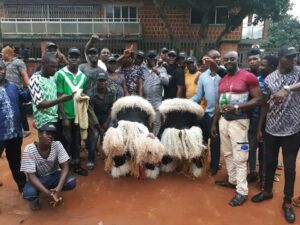
Masquerades during the Nwafor Ogidi Festival
Spiritual Symbols and Sacred Animals
Like several other Igbo towns, Ogidi holds pythons (eke) as sacred animals, especially among the older generations. Killing a python is considered a serious taboo, and traditional protocols require that if one dies by accident, it should be given a proper burial. This spiritual reverence connects back to the people’s belief in Ani (the Earth goddess) and Chi (personal deities) who watch over the land and its inhabitants.
Even with the influence of Christianity, these older beliefs continue to inform social behaviors, particularly among traditionalists, elders, and during festivals like Igu Aro (the declaration of the New Year in Igbo calendar).
Religious Balance: Christianity and Traditionalism
Ogidi is a town where the old and the new walk side by side. Churches mostly Anglican, Catholic, and Pentecostal are found in nearly every village, and Sunday worship is a deeply rooted part of community life. However, the town still honors its sacred forests, ancestral shrines, and deity houses, especially during cultural ceremonies.
This spiritual duality gives Ogidi a layered identity. While Christian hymns fill the air on Sunday, traditional chants and drumbeats rise during community festivals. The Christian elite, including priests and bishops from Ogidi, often return home during cultural events, acknowledging their roots while participating in more modern expressions of faith.
Economy and Livelihood
Ogidi has transitioned from a largely agrarian community to a more diversified economy, thanks to its proximity to Onitsha, one of West Africa’s biggest commercial cities. However, agriculture still plays a vital role in the town’s economy, with many families cultivating yam, cassava, maize, oil palm, and vegetables on small to medium-sized family plots.
The town also hosts markets where local farmers, traders, and artisans sell produce, crafts, and household goods. Ogidi women are especially known for trading in foodstuffs, fabrics, and palm oil, continuing a tradition of enterprise that has helped sustain family incomes for generations.
One of Ogidi’s most prominent economic centers is the Ogidi Building Materials Market (also referred to as the Building Materials International Market, Ogidi). Strategically located along the Enugu–Onitsha Expressway, this market has grown into a major hub for the construction industry in southeastern Nigeria. It attracts buyers and sellers from across Anambra, Enugu, Imo, and beyond, offering a wide variety of goods such as cement, roofing sheets, plumbing materials, tiles, paints, and hardware tools. The market is not only a commercial success but also a major employer of labor, supporting truck loaders, artisans, sales agents, wholesalers, and logistics operators.
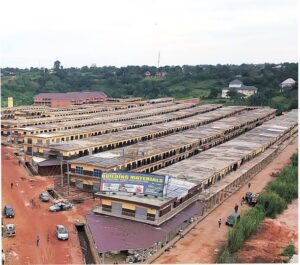
Builders market, ogidi
Thanks to this commercial growth, modern influences like banking services, hospitality businesses, real estate development, and transport ventures are steadily rising. Many of Ogidi’s youths are involved in import and export trade, leveraging nearby Onitsha’s network, while others contribute to the local economy through remittances from urban centers across Nigeria and abroad.
Education and Enlightenment
Ogidi places high value on education and has produced distinguished academics, civil servants, and professionals. The town boasts a number of government-owned and private schools, such as:
- Ogidi Boys Secondary School
- Ogidi Girls Secondary School
- St. Philip’s Nursery and Primary School
- Iyienu College of Nursing (adjacent to the mission hospital)
These institutions provide education from foundational levels through to specialized medical training. The Anglican and Catholic missions have historically played a key role in establishing quality schools and literacy programs in the community.
Many sons and daughters of Ogidi have gone on to study at top Nigerian and foreign universities, returning home as lawyers, engineers, doctors, writers, and teachers.
Healthcare and Public Services
Healthcare in Ogidi is anchored by the Iyienu Mission Hospital, founded in 1907 by the Church Missionary Society (CMS). This institution is not only a regional medical referral center, but also one of the oldest hospitals in eastern Nigeria. It offers a wide range of services, including:
- General and specialized surgery
- Maternal and child health care
- HIV/AIDS programs
- Community outreach services
- Training for nurses and midwives
In addition, smaller clinics, chemist shops, and traditional healing homes are spread across the town. Public health awareness is relatively high, thanks to religious and civic education efforts.
Infrastructure and Modern Development
Over the years, Ogidi has made significant strides in infrastructure, including
- Tared township roads, connecting inner communities to the Onitsha–Enugu expressway
- Electricity supply, though still irregular, has seen some improvement with solar initiatives
- Clean water access through boreholes and government-sponsored water schemes
- Telecommunications: most mobile networks are active in the area, with data coverage allowing access to online education and business
The presence of NGOs and Ogidi Development Unions in the diaspora has further driven progress in road rehabilitation, school renovations, and health facility upgrades.
Governance and Community Leadership
Ogidi operates a dual governance system, a mix of traditional rulership and modern administrative leadership. The traditional structure includes:
- Igwe-in-Council: Headed by the traditional ruler (Igwe), assisted by red-cap chiefs (Ndi Ichie)
- Age Grades: Known as Ogbo, they handle development projects and public order
- Women’s Wings: Particularly active in health education, sanitation, and cultural events
The town’s Igwe (king) plays a ceremonial and cultural role, offering spiritual leadership and maintaining customs. The current traditional ruler is Igwe Pharmacist Alex Uzo Onyido (Ezechuamagha), a respected community figure and entrepreneur. He succeeded Igwe Walter Anugwu and is widely seen as a bridge between tradition and modernization.

Igwe Onyido
In civic terms, Ogidi falls under Idemili North LGA, with elected councilors and political representation in Anambra State government.
Tourism and Cultural Renaissance
Tourism in Ogidi is most vibrant during the Nwafor Festival, when thousands return home to celebrate with masquerades, traditional dances, wrestling contests, and communal feasting. The festival not only reinforces unity but also serves as an economic booster for local vendors and service providers.
Ogidi also attracts interest due to:
- Iyienu Hospital’s history
- The ancestral compound of Chinua Achebe
- Traditional markets and ancient trees regarded as sacred
As heritage tourism becomes a growing trend in Nigeria, Ogidi is well-positioned to tap into this opportunity, particularly if efforts are made to promote its cultural assets more actively.
Notable People from Ogidi
Despite its modest size, Ogidi has produced individuals who have made significant impacts nationally and internationally, especially in literature, entertainment, energy, and public service. These sons and daughters have not only excelled in their fields but have also contributed to the visibility and pride of their hometown.
Chinua Achebe (1930–2013)
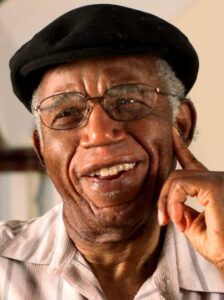
Chinua Achebe
Perhaps the most famous son of Ogidi, Chinua Achebe is celebrated across the world as the father of modern African literature. His groundbreaking novel Things Fall Apart (1958) has been translated into over 50 languages and is taught in schools and universities around the globe.
Achebe’s works were deeply influenced by Igbo traditions, colonial history, and post-independence Nigeria, and he consistently referenced his roots in Ogidi. Even after decades abroad, he chose to be buried in Ogidi, a testament to his lifelong connection to the town. His home in Ogidi has become a site of literary and cultural pilgrimage.
Tony Umez

Tony Umez
A household name in Nollywood, Tony Umez is a veteran actor known for his emotional roles and commanding screen presence. Born in Lagos but hailing from Ogidi, he has appeared in over 200 Nigerian films across genres and languages. Umez often speaks proudly of his Ogidi roots and cultural heritage in interviews, and he continues to be one of the town’s most visible figures in Nigerian entertainment.
Catherine Uju Ifejika
A trailblazer in Nigeria’s oil and gas industry, Catherine Uju Ifejika is one of the few women to head a major energy company in Africa. As the Chairperson and CEO of Brittania-U Nigeria Limited, she has been recognized internationally for her leadership and corporate innovation. She hails from Ogidi and represents a modern success story that combines education, enterprise, and hometown loyalty.
Ogidi has also produced numerous academics, senior civil servants, engineers, and medical professionals contributing to both national development and the diaspora community. Though less public-facing, these individuals continue to uphold the legacy of excellence that the town is known for.
Conclusion
Ogidi is more than just the birthplace of literary icon Chinua Achebe, it is a vibrant, dynamic town that embodies the values of Igbo resilience, education, tradition, and innovation. From its ancient roots as a clan-based settlement to its modern role as a culturally rich urban town, Ogidi continues to stand as a symbol of excellence and identity.
Whether during the drumming of the Nwafor Festival or the quiet reading of Achebe’s works, Ogidi’s voice echoes through time, reminding us that greatness often grows from deep roots.
With sustained development, cultural promotion, and youth empowerment, Ogidi is poised not only to preserve its legacy but to build a future worthy of its past.
Related Topics
Awkuzu Town, Anamlbra State: A Tapestry of History, Culture & Resilience
Ogbunike Town, Anambra State: History, Heritage, and the Sacred Caves