






History and heritage
Eziowelle Town, Anambra State: History, Culture and Traditions

Eziowelle is a town in Anambra State known for its history, culture, and traditions, including village life, festivals, leadership, education, and community development.

Elimede Festival in Eziowelle
Eziowelle is one of the historic towns of Idemili North Local Government Area in Anambra State, Nigeria known for its deep cultural roots, strong community values, and enduring traditions. Often described as a peaceful and welcoming place, Eziowelle has a name that translates to “a good place,” a meaning that reflects both its environment and the character of its people.
Located a short distance from the commercial city of Onitsha, the town occupies an important cultural and historical position within the Idemili axis of Anambra State.
For generations, Eziowelle has preserved its identity through oral history, festivals, traditional leadership, and communal living. The town traces its origin to ancient Igbo ancestry and shares historical ties with neighbouring communities such as Nimo, Abagana, and Abba. Its social structure is built around well-defined villages, strong kinship systems, and respect for elders, all of which continue to influence daily life. Agriculture, education, religion, and cultural ceremonies remain central to its existence, even as modern development gradually transforms the landscape.
This article presents a detailed and fact-checked overview of Eziowelle, covering its history, geography, village structure, culture, festivals, traditional governance, religion, education, economy, notable people, and contemporary life.
Written in clear and everyday English, it offers a warm and engaging account of Eziowelle as both a traditional Igbo community and a living town adapting to modern realities while holding firmly to its heritage.
Historical Background of Eziowelle
The history of Eziowelle is closely linked to the wider history of the Idemili area of Anambra State and the ancient settlement patterns of Igbo people. Oral traditions and documented community accounts show that Eziowelle is one of the old towns in Idemili North Local Government Area, with roots that go back several centuries. Its name which means “a good place,” reflects how early settlers viewed the land as suitable for settlement, farming, and communal life.
Eziowelle is traditionally regarded as part of a group of related communities that trace their origin to a common ancestral source associated with the name Owelle. According to widely accepted historical accounts, the town is considered the first settlement among the Owelle communities, followed by towns such as Nimo, also known as Nimo Owelle, Abagana, and Abba.
These towns share similarities in customs, festivals, and aspects of traditional governance, pointing to a shared ancestral background that has shaped their identities over time. This historical connection remains important in inter-community relations and cultural understanding within the Idemili axis.
Early settlement in Eziowelle developed gradually through migration, land acquisition, and expansion of family lineages. The founding families established homesteads that later grew into organized villages. Over time, these villages evolved into the five main villages that make up present-day Eziowelle. Each village traces its roots to specific ancestors and migration histories which are preserved through oral tradition and family records.
Like many Igbo communities, Eziowelle operated a decentralized system of governance before colonial rule. Authority was shared among elders, family heads, and age-grade groups. Decisions affecting the community were taken collectively, with strong emphasis on consensus, respect for tradition, and communal welfare. This system helped to maintain social order and cultural continuity for generations.
During the colonial period, British administrative influence introduced new political and judicial structures to the area. These changes affected land administration, taxation, and local governance in Eziowelle, as they did in many parts of southeastern Nigeria. Despite these external influences, the town retained its core traditions and adapted modern systems to fit its cultural values.
After Nigeria’s independence, Eziowelle became part of the administrative structure of Anambra State and later Idemili North Local Government Area. Since then, the town has continued to balance tradition with change, preserving its historical identity while responding to social, educational, and economic developments. Today, the historical background of the town remains visible in its village structure, leadership institutions, festivals, and strong sense of shared ancestry.
Geography and Location
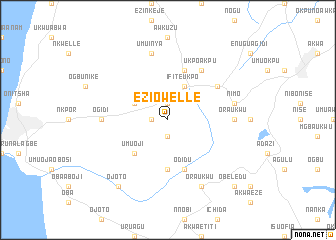
Eziowelle is a town situated in Idemili North Local Government Area of Anambra State in southeastern Nigeria. The town lies approximately 23 kilometers east of Onitsha, one of the region’s major commercial cities which makes it accessible by road and closely connected to surrounding communities. Its location places it within the Idemili cultural and historical axis, an area known for its rich Igbo heritage and longstanding settlement patterns.
The town is bordered by several neighbouring communities, namely, Abatete, Abacha, Nimo Owelle, Abagana, Ogidi, and Umunachi. These boundaries define its geographic extent and influence social, economic, and cultural interactions with its neighbours. The location also provides fertile land for agriculture which remains a major occupation for residents.
Eziowelle is made up of five primary villages – Umuikwele, Umunnama, Ezinimo, Okpaliko, and Ubulu, with each occupying specific areas within the town. The village layout reflects historical settlement patterns where each village establishes its own farmland, compounds, and community spaces while contributing to the overall structure of the town.
The town experiences a tropical climate typical of southeastern Nigeria, with distinct wet and dry seasons. The fertile soil and favourable weather conditions support cultivation of crops such as yams, cassava, vegetables, and maize. Streams and small water bodies in and around the town provide water for domestic use and irrigation.
The strategic location of the town near major towns and transport routes has facilitated trade and cultural exchange. The town remains a hub where traditional life intersects with modern influences and balances its historical identity with the conveniences and opportunities offered by its geographic setting.
Villages and Community Structure
Eziowelle is composed of five major villages, each with its own distinct identity, lineage, and history. These villages form the backbone of its social, political, and cultural organization. The five villages are:
- Umuikwele
- Umunnama
- Ezinimo
- Okpaliko
- Ubulu
Each village is further divided into kindreds and extended families which serve as smaller social units responsible for communal activities, dispute resolution, and preservation of traditions. Village elders and family heads play key roles in decision-making, ensuring that customs and norms are maintained.
Umuikwele is traditionally recognized as one of the oldest settlements in Eziowelle with its founding families establishing the first homesteads. Umunnama grew through migration from neighbouring communities and contributed significantly to the agricultural and social development of the town. Ezinimo has a rich history linked to early settlers who migrated from surrounding areas while Okpaliko and Ubulu were later settlements that integrated into the town, adding to its cultural diversity.
The villages collectively participate in the governance and cultural life. They are represented in the town union and council of elders which oversee community decisions, festivals, and development projects. Age-grade groups, women associations, and youth organizations within each village contribute to communal labour, security, and social welfare.
This village-based structure ensures that Eziowelle remains a closely-knit community where family ties and ancestral heritage are highly valued. It also allows the town to maintain a balance between tradition and modernity with each village supporting both local customs and broader town initiatives.
The community structure in Eziowelle exemplifies the Igbo model of decentralized governance where power and responsibilities are shared among various social units while upholding unity and collective welfare. This system has enabled it to preserve its cultural heritage over generations while accommodating social and economic changes.
People and Social Life
The people of Eziowelle are predominantly Igbo, one of Nigeria’s largest ethnic groups known for their industriousness, strong community values, and rich cultural heritage. The town has a population that blends long-established indigenes with residents who have migrated from neighbouring communities and created a vibrant and cohesive society.
Family and kinship are central to social life in Eziowelle. Most households are extended families where multiple generations live together or maintain close ties. Respect for elders is deeply ingrained, and elders are often consulted in matters ranging from family disputes to community decisions. Lineage plays a significant role in determining inheritance, leadership roles, and social responsibilities.
Community life in Eziowelle revolves around communal activities and mutual support. Age-grade systems are an important aspect of social organization. These groups consist of people of similar age who work together on communal projects such as maintaining roads, organizing festivals, and supporting members in times of need. Women’s associations also contribute to social cohesion by promoting cultural practices, economic activities, and charitable initiatives.
Markets, festivals, and social gatherings are central to the social life. Market days provide opportunities for trade and networking while festivals bring people together to celebrate culture, harvest, and community achievements. These events strengthen bonds among residents and reinforce a sense of identity and belonging.
Education and religion also shape social life in Eziowelle. Schools, churches, and community centres serve as spaces for learning, worship, and social interaction, thus fostering communal values and offering opportunities for personal growth. Christianity is widely practiced alongside the respect for traditional customs which enables a harmonious coexistence of modern and ancestral influences in everyday life.
Overall, the people are known for their hospitality, communal spirit, and commitment to preserving cultural heritage, thus making social life in the town both rich and engaging.
Culture and Traditions
Eziowelle has a rich cultural heritage that reflects the broader Igbo traditions of southeastern Nigeria. The town places great emphasis on maintaining its customs, values, and practices which are evident in daily life, social events, and community governance.
Central to Eziowelle culture is the respect for elders and ancestors. Elders play a crucial role in decision-making, dispute resolution, and the preservation of moral and social norms. Family and lineage remain important, and community members uphold traditions that have been passed down through generations.
Traditional customs in Eziowelle include ceremonies marking births, marriages, and funerals. These events are celebrated with music, dance, feasting, and symbolic rituals that reinforce community ties and cultural identity. Masquerade performances are particularly significant during festivals, serving both spiritual and entertainment purposes.
Eziowelle also has specific traditional taboos and cultural norms. For instance, the python is considered sacred, and it is neither hunted nor eaten. This signifies the deep respect for ancestral beliefs and natural symbols. The community observes customary laws and practices that guide behaviour, maintain social harmony, and connect people with their heritage.
Cultural expressions in Eziowelle are also evident in traditional music, dance, attire, and crafts. Songs and dances are performed during ceremonies and festivals, often accompanied by drums, flutes, and other indigenous instruments. Traditional attire, including colourful wrappers and beads is worn during special occasions to emphasize the identity and pride of the town in its heritage.
Religion and spirituality are intertwined with culture. While Christianity is widely practiced, many residents continue to observe cultural rituals that honour the ancestors and the spiritual world. This harmonious blend of faith and tradition ensures that Eziowelle culture remains vibrant and relevant in contemporary life.
Through its culture and traditions, Eziowelle not only preserves its history but also fosters a sense of unity, pride, and belonging among its people, thereby making the town a model of enduring Igbo heritage.
Festivals and Celebrations
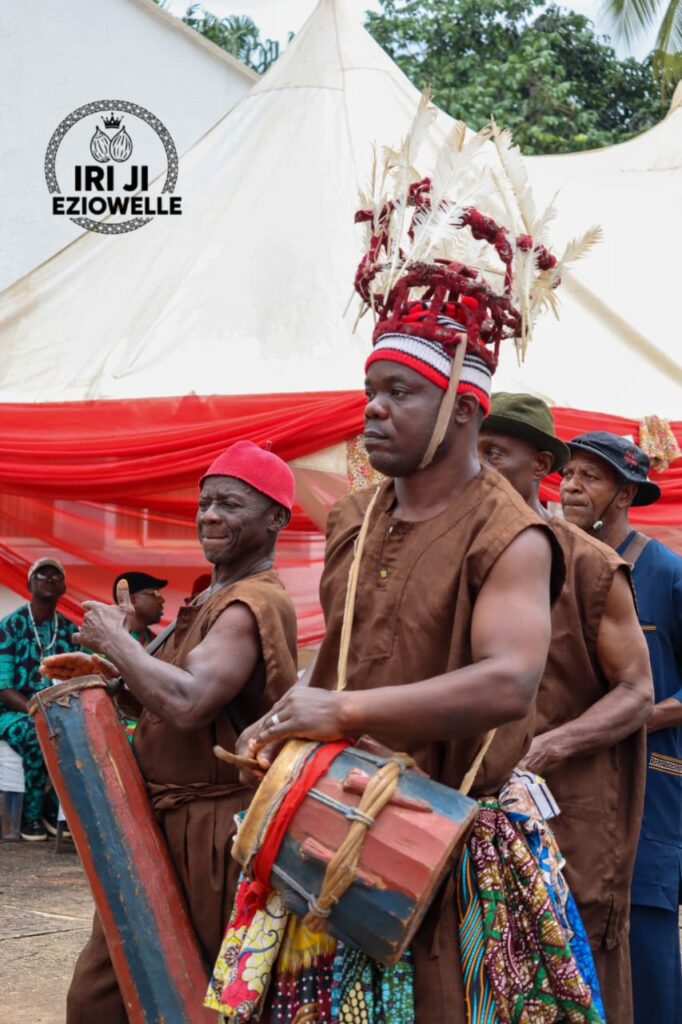
Eziowelle is known for its rich calendar of festivals and cultural celebrations which play a central role in preserving its traditions and strengthening community bonds. These events attract indigenes from near and far and create opportunities for social interaction, cultural expression, and economic activity.
One of the major traditional festivals in Eziowelle is the Elimede Festival celebrated annually at the beginning of the year. This festival includes masquerade performances, wrestling competitions, traditional dances, and communal feasting. It serves as a time for thanksgiving, reinforcing cultural values, and fostering unity among the different villages. The festival also provides opportunities for young people to showcase their talents and for families to strengthen social ties.
Another significant cultural event is the New Yam Festival locally known as Iwaji which celebrates the harvest season. The festival includes prayers for a bountiful harvest, offerings of the first yams, and communal feasting. During this period, traditional taboos such as the reverence for the python are observed. The python is considered sacred, and harming it is strictly forbidden. This reflects deep respect for ancestral beliefs.
Eziowelle also observes the Solemn Assembly on December 31 each year. This event is a day of thanksgiving for the past year and prayers for protection and blessings in the new year. It brings the entire community together for reflection, worship, and communal harmony.
These festivals and celebrations are not only cultural highlights, they are avenues for promoting unity, intergenerational bonding, and economic activity. Vendors, artisans, and local businesses benefit from increased trade during these periods while younger generations learn the values and traditions that have sustained the town for centuries.
Through its vibrant festivals, Eziowelle preserves its rich heritage, strengthen communal ties, and provide a platform for cultural expression to ensure that its traditions remain alive for future generations.
Traditional Governance and Leadership

Eziowelle maintains a traditional system of governance that portrays the Igbo model of decentralized leadership where authority is shared among elders, family heads, and community institutions. The political and social organization of the town is structured to balance communal decision-making with respect for cultural norms.
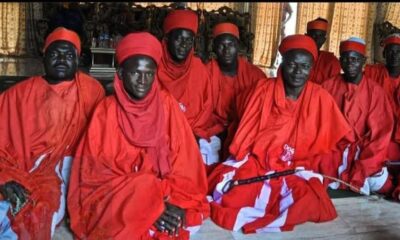
At the top of the traditional hierarchy is the Igwe who holds the title Owelle of Eziowelle in honour of the founding ancestor, Owelle. The Igwe serves as the spiritual and cultural leader of the community who provides guidance on issues of tradition, customs, and communal welfare. The current Owelle of Eziowelle is Igwe Mike Okonkwo Etusi who is widely respected for his role in preserving the heritage of the town and promoting development.
Supporting the Igwe is a council of elders which includes senior family heads, titled men, and representatives from each village. This council advises the Igwe, mediates disputes, and ensures that community decisions reflect consensus and fairness. Age-grade groups and women’s associations also contribute to governance by handling specific social and cultural responsibilities, such as organizing festivals, community development projects, and welfare activities.
Eziowelle Town Union works alongside traditional leadership to manage modern community affairs. While the Igwe and council uphold customs and ceremonial roles, the Town Union focuses on infrastructure, education, and social services which bridge traditional governance with contemporary civic administration.
Traditional governance in Eziowelle emphasizes participation, accountability, and respect for heritage. Community meetings are conducted openly, and important decisions often require the input of elders, family heads, and village representatives. This structure ensures that leadership is inclusive, culturally grounded, and responsive to the needs of the people.
Overall, the blend of traditional authority and modern civic structures in Eziowelle allows the town to maintain its cultural integrity while engaging effectively with contemporary challenges, thus making leadership both relevant and respected.
Religion and Belief Systems
While many people in Eziowelle are Christians, traditional religious beliefs remain respected. Cultural practices related to ancestors, festivals, and sacred symbols like the python show the mix of faith and heritage.
Christianity, introduced during the colonial era now coexists with traditional customs. Churches play major roles in education and social life while traditional festivals and beliefs reinforce community identity.
Education and Social Institutions
Education has been an important focus in Eziowelle for decades. Originally, the town had four primary schools, two run by the Roman Catholic Church and two by the Anglican Church. These schools were taken over by the government after the Nigerian Civil War but were later returned to church control.
Among the primary schools, Uzubi Central School Eziowelle is well known. The town also hosts several private schools.
For secondary education, Eziowelle has three schools:
- Community Secondary School Eziowelle, formerly known as Owe Girls
- Queen of the Rosary Secondary School Eziowelle, a Catholic school with a large student population
- Standard International Secondary School, an Anglican-run school known for good academic results
These educational institutions provide opportunities for the local youth and attract students from surrounding areas.
Economy and Occupations
The economy of Eziowelle is primarily agrarian where farming form the backbone of livelihoods for most residents. Its fertile land and favourable climate support the cultivation of staple crops such as yams, cassava, maize, vegetables, and cocoyams. Farming is often organized along family and village lines, with households managing plots of land for both subsistence and commercial purposes.
In addition to agriculture, trading and small-scale businesses contribute significantly to the local economy. Market days in Eziowelle and neighbouring towns provide opportunities for the sale of farm produce, household goods, and handcrafted items. Residents also engage in petty trading, artisanal work, and services that support the community’s daily needs.
The town has a tradition of craftsmanship and artisanal skills which include pottery, weaving, and carpentry that are passed down through generations. These skills supplement farming income and contribute to local commerce.
Education and professional occupations are also emerging as key economic drivers. Many indigenes of Eziowelle work in teaching, civil service, healthcare, and business within Anambra State and other parts of Nigeria. Some residents have migrated to urban centres or abroad and are sending remittances that support family development and community projects in the town.
Festivals and cultural events also indirectly support the economy by attracting visitors and stimulating trade in food, clothing, and cultural artifacts. For example, the Elimede Festival and New Yam Festival create seasonal opportunities for small businesses and vendors.
Overall, Eziowelle economy amplifies a blend of traditional agriculture, artisanal crafts, trading, and modern professional engagements. This combination sustains livelihoods, supports community development, and preserves its cultural and economic resilience.
Development and Modern Life
In recent years, Eziowelle has developed several modern facilities. The Eziowelle Civic Centre is a hub for recreational activities, sporting events, and cultural celebrations. It includes a standard football pitch that hosts matches for local teams and events such as Idemili Day which celebrates the culture and unity of the broader area.
The town also has a Magistrate’s Court which serves legal needs for Eziowelle and surrounding communities.
Like many Nigerian towns, Eziowelle faces challenges related to development, security, and infrastructure. In recent years, law enforcement operations addressed criminal activities that affected the town, with police arresting suspects involved in kidnapping and robbery to improve safety for residents.
Notable People from Eziowelle
Eziowelle has produced several individuals who have made significant contributions to religion, education, culture, and public life, both locally and internationally. The town takes pride in these personalities whose achievements have brought recognition to their community.
The most widely known figure from Eziowelle is Cardinal Francis Arinze, a senior member of the Catholic Church. Born in Eziowelle in 1932, Cardinal Arinze has played a major role in the global Catholic community by serving as Prefect of the Congregation for Divine Worship and the Discipline of the Sacraments at the Vatican. He is recognized internationally for his work in interfaith dialogue, liturgical reform, and promoting religious understanding.
Eziowelle also celebrates community leaders, traditional title holders, and successful entrepreneurs who use their resources and influence to support development projects, schools, and healthcare initiatives within the town. Their contributions reinforce the culture of giving back to the community and preserving its rich heritage.
Through its notable people, Eziowelle demonstrates the potential of local talent to influence society positively by blending traditional values with modern achievements. These individuals continue to inspire younger generations and strengthen its identity on both regional and international platforms.
Landmarks and Places of Interest
Eziowelle is a town with several notable landmarks and places that reflect its history, culture, and community life. These sites are important not only for their functional roles but also as symbols of its identity and heritage.
One of the most prominent landmarks is the Catholic Church of Eziowelle, also known as St. Joseph’s Catholic Church. This church is historically significant as it played a key role in the educational and spiritual development of the town. It has been a centre for worship, community gatherings, and moral guidance for generations. The church is also closely linked to Cardinal Francis Arinze, one of Eziowelle’s most famous indigenes.
The Queen of the Rosary Secondary School and Community Secondary School Eziowelle are important educational landmarks in the town. These schools have contributed to its reputation for valuing education and producing successful graduates in various fields.
For cultural and recreational activities, the town has the Eziowelle Civic Centre which includes a standard football pitch and open spaces for community events, sports, and cultural festivals. The civic centre is a hub that draws both residents and visitors during events such as the Elimede Festival and Idemili Day.
The Magistrate Court in Eziowelle is another key location that serves legal and administrative functions for the town and surrounding areas. It represents modern governance structures working alongside traditional leadership.
Natural features in and around Eziowelle, including fertile farmlands and small water streams are also part of its identity. These areas are important for agriculture, community gatherings, and leisure activities. The layout of the town, with its five villages and central meeting areas highlights the integration of community, culture, and nature.
Overall, the landmarks and places of interest in Eziowelle echo its cultural richness, historical significance, and modern development and make the town both a heritage site and a living, functional community.
Challenges and Community Issues
Eziowelle has experienced some local issues like boundary disputes with neighbouring towns, e.g. Ogidi. This affects villages such as Ezinimo and Uruoji. Anambra State Boundary Committee has been involved in mediating these disputes to maintain peace.
At times, internal disagreements over community leadership and policies have also occurred. These challenges are part of the evolving story of Eziowelle as it balances tradition with modern community governance.
Eziowelle Today
Today, Eziowelle remains a community rooted in tradition, even as it embraces modernity. Its cultural celebrations, educational institutions, and community facilities show a town that values its heritage and future.
Visitors to Eziowelle will find warm hospitality, rich traditions, and a people proud of their history. The community continues to foster unity and development by welcoming indigenes and non-indigenes who respect its customs and contribute positively to its growth.
In Conclusion …
Eziowelle stands as a remarkable example of a Nigerian town where history, culture, and tradition are deeply woven into everyday life. From its origins as the first of the Owelle communities to its five vibrant villages, the town has maintained a strong sense of identity, social cohesion, and respect for ancestral heritage. Its people are guided by a system of traditional governance, communal values, and active participation in festivals, religious life, and community development.
The rich cultural practices of the town such as the Elimede Festival, the New Yam Festival, and the observance of ancestral customs highlight the importance of preserving heritage while embracing modernity. Education, agriculture, trade, and professional endeavours contribute to the economy and ensure that the town continues to thrive in contemporary times.
Eziowelle has also produced notable personalities, most prominently Cardinal Francis Arinze whose achievements have brought pride and international recognition to the community. At the same time, local leaders, educators, and entrepreneurs continue to strengthen its development and cultural preservation.
In essence, Eziowelle is a community that embodies unity, resilience, and cultural richness. It demonstrates how traditional values can coexist with modern life to create a town that is not only historically significant but also forward-looking, welcoming, and vibrant. Eziowelle remains a shining example of Igbo heritage, community spirit, and enduring tradition.
References
- https://en.wikipedia.org/wiki/Eziowelle
- https://www.emmason247.com.ng/blog/history-origin-culture-and-traditions-of-eziowelle-town-in-anambra-state-/eIeWGIbIW
- https://www.anambradaily.com/2025/09/23/new-yam-festival-why-eziowelle-indigenes-dont-kill-consume-python-monarch/
- https://independent.ng/eziowele-community-in-anambra-to-celebrate-flogging-of-cane-cultural-festival/
- https://thesun.ng/day-of-honour-in-idemili/
You might want to check this out …