






African Culture and Traditions
Egwu Imo-Oka: Celebrating A Living Cultural Heritage in Modern Times

Egwu Imo-Oka is a living festival that links Awka people to their heritage, spiritual beliefs and community life. Explore its origin, spiritual rituals, cultural significance, and how it adapts in the modern world.

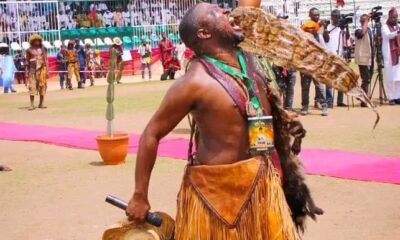
Masquerades performance at Egwu Imo Awka
Egwu Imo-Oka is one of the most important cultural and spiritual festivals of Awka people in Anambra State, Nigeria. Celebrated every May, the festival honours the Imo-Oka shrine, a revered spiritual guardian believed to protect the town and its inhabitants from harm.
The festival is a vivid expression of Awka heritage, blending ritual, performance and community life in a way that has survived for centuries. At the heart of the celebration are masquerades, traditional drumming, dances and prayers, all performed to mark the beginning of the farming season, seek blessings for peace, fertility, prosperity, and renew the community’s bond with its ancestral spirits.
A unique feature of the festival is the sacred white-bellied monkey considered a messenger of the shrine. According to tradition, these monkeys once warned the town of impending danger and are still treated with care during the festivities. Egwu Imo-Oka brings together elders, priests, women, youth and visitors in a shared space of celebration, teaching and reflection.
Beyond its spiritual and cultural importance, the festival showcases the living traditions of Awka people, demonstrating how communities preserve identity, social values and heritage through ceremonial practices.
Today, Egwu Imo Awka is not only a local festival but also a point of interest for cultural enthusiasts, researchers and tourists seeking to understand the richness of Igbo traditions. Its performances, rituals and ceremonies offer a window into a culture that balances sacred observance with communal celebration, making it a living symbol of Awka history, resilience and continuing cultural relevance.
Meaning of Egwu Imo-Oka
The festival known as Egwu Imo-Oka stands at once as a celebration, a spiritual act and a reaffirmation of community identity. The name itself carries meaning in several parts. The word Egwu in Igbo language commonly refers to dance, festival or performance. The term Imo is derived from Imo‑Oka (or Imoka) – the name of the shrine and deity honoured by the people of Awka. The full phrase, therefore, points to the festival of Imo‑Oka shrine in Awka – the dance, the ceremony, the season of renewal.
One layer of the meaning is protection. According to the traditions of Awka, the Imo‑Oka deity acted as a shield for the town. The name Imoka is often explained locally as “the protector of Awka.”
In the story of the origin, the shrine’s power is linked to the warning by white‑bellied monkeys, messengers of the deity which led the community to avoid harm in times of danger. The monkeys remain sacred, and the covenant with them continues to this day, making the festival also a mark of gratitude.
Another important meaning has to do with the agricultural cycle. Egwu Imo-Oka falls at the beginning of the planting season in Awka traditional calendar. This means that the festival is not only about remembering the past but about asking for rain, fertile soil and abundant harvests. It links spiritual practice with the daily work of farming and community survival.
The festival also serves as a public affirmation of cultural continuity. It gathers Awka people who live in the town and those who are far away, re‑uniting them through dance, masquerade, music and ceremony.
It becomes a way of saying: “We remember who we are, where we come from, and we will carry that forward.” Scholarly work notes that the Imo‑Oka festival plays a focal role in encouraging identity, unity and continuity among the people of Awka.
In sum, Egwu Imo-Oka means much more than a once‑a‑year party. It means protection, renewal, gratitude, agricultural hope and cultural identity. It is a bridge between the sacred and the ordinary, between ancestors, community and land.
Origins of Egwu Imo-Oka
The origins of Egwu Imo-Oka stretch deep into the past of Awka people, blending history and myth in a way that gives the festival its power and identity. Reliable accounts show that the festival grew from two inter‑woven strands: the establishment of a protective shrine and the consecration of a potent charm turned deity.
In one tradition, when the people of Awka were repeatedly threatened by neighbouring war‑raids, especially by forces under Okoli Ijeoma of Ndikelionwu, the elders dispatched emissaries to a known centre of herbal‑medicine and ritual power at Akoto, in present‑day near Idoma land to invite a medicine‑man who could prepare a protective charm.
That man, often identified in local memory as Okoyeke delivered a powerful charm that was buried or installed at what became the Imo‑Oka shrine in Amachalla‑Awka. The curse of invasion was lifted, and the people interpreted the success as the birth of a new sacred force.
At the same time, the myths emphasize the role of monkeys, especially the white‑bellied or “sacred” monkey of Awka as messengers of the shrine. One telling of the origin says that when the town was under siege by the community of Nawfia, the forest around Imo‑Oka which housed the monkeys became their camp.
The monkeys alerted Awka people to the impending attack. Warriors assembled and repelled the invaders. The community, thereafter, dedicated the monkeys to the shrine. The symbol endures, making the monkey both a totem and living sign of the shrine’s protective power.
As the protective charm became worshipped, the community instituted annual rites to thank and honour the new shrine‑deity. The festival that emerged, that is, Egwu Imo Awka was scheduled to coincide with the start of the planting season in May, according to the Awka lunar calendar. Scholarly work records that the festival was thus, established to mark a ritual transition from danger to security, from the unprotected past to a protected future.
Another version speaks of the shrine being imported from outside Awka. Some traditions refer to Abia State (Ada people) or even Igala influences in the former Midwestern region. Whatever the exact origin, the adoption of the Imo‑Oka deity speaks to the ways Awka people incorporated spiritual systems from neighbouring lands into their own protective structure.
Summarily, the origin of Egwu Imo-Oka is not a single event but a process of communal threat, ritual response, sacred installation, mythic messenger (the monkey) and annual ritualization of those origins.
This layering of history and myth gives the festival its depth, its communal resilience and its continuing relevance for the people of Awka.
Cultural and Spiritual Significance
The festival known as Egwu Imo-Oka holds deep cultural and spiritual meaning for the people of Awka, far beyond its vibrant masquerades and public dances. Passing through generations, the festival continues to serve as a vital link between the past and present, between the human, the spiritual and the natural. Scholarly work affirms that the festival plays a focal role in encouraging identity, unity and continuity among the people of Awka community.
One of the festival’s foundational spiritual themes is protection. Local narratives and cultural writing indicate that the shrine of Imo‑Oka became the guardian of Awka when the people faced threats of invasion or misfortune.
The white‑bellied monkeys of the shrine believed to be messengers of the deity symbolize this protective covenant. During Egwu Imo-Oka the community renews that promise of protection, giving thanks for past safety and praying for continued guarding of the town from danger.
The timing of Egwu Imo-Oka is more than convenient. It falls around the beginning of the planting season in Igbo/Awka traditional calendar. Many rituals and songs at the festival explicitly refer to rain, fertile land, the streams and the blacksmithing‑craft roots of Awka.
This way, the spiritual intertwines with daily survival. The festival thus, becomes a public act of asking for fruitful crops, healthy children and the steady work of the hands. The link between ritual and the land underscores how deeply the festival is rooted in Awka lifeways.
Beyond its spiritual role, Egwu Imo-Oka functions as a school of cultural memory. According to research, in a world where many feasts have faded, this festival remains one of the few major communal rituals still widely celebrated in Awka.
Through masquerade processions, music, women’s market‑dances and communal gatherings, the festival transmits values, clan knowledge and social cohesion. Younger generations learn about how their town views the earth, the spirit world and the relationship between both. The festival thereby reinforces what it means to be Awka in a changing world.
Egwu Imo-Oka is also a communal festival in the full sense. Clans, age‑grades, men, women and children all participate in different ways. The communal preparation and participation help strengthen unity and reinforce social ties. As community reports note, the festival is an opportunity to thank and appreciate shared heritage. It is not merely a ritual confined to the shrine but a living event in the markets, the streets and the fields of Awka, thus bringing together the sacred and the everyday.
One of the most distinctive spiritual‑cultural features of Egwu Imo-Oka is the sacred status accorded to the white‑bellied monkey. The monkey is seen not just as a symbol but as a living link to the shrine and to the natural world. The fact that hurting or eating the monkeys is taboo in Awka tradition illustrates how the festival anchors human life within the larger ecology. This natural dimension reminds us that the festival is spiritual, cultural and ecological all at once.
At its heart, Egwu Imo-Oka is a festival of renewal. It is a time for the community to look back in gratitude, to remember who they are and where they came from, and to look forward with hope for the year ahead. The rites, the dances, the masquerades and the stream‑visit all mark transitions from old to new, from danger to promise, and from seed to harvest. In a society where change is constant, the festival anchors a sense of continuity and purpose.
Essentially, the cultural and spiritual significance of Egwu Imo-Oka lies in its rich layering of protection, fertility, identity, community, ecology and renewal. It is not simply a local spectacle, it’s a meaningful expression of how Awka people understand their world, their land and their place within it.
Spiritual Ceremonies

Women Dance group
The spiritual ceremonies of Egwu Imo-Oka are the heart of the festival that link the people of Awka to the Imo-Oka shrine, their ancestors and the rhythms of the natural world. These rituals are carefully structured and performed in specific sequences to maintain both sacredness and community engagement. Each ceremony is steeped in symbolism and reflects centuries of tradition.
Opening Rite: Ede Mmuo
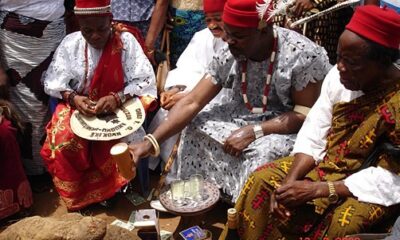
The festival begins with Ede Mmuo, or the spiritual opening of the season. This ritual is led by the shrine custodians and elders who prepare the town for the festival. Offerings of kola nuts, yams and palm wine are made to the Imo-Oka deity, accompanied by prayers and invocations. This opening signals that the community is entering a sacred period, and all participants are expected to observe ritual rules and respect the shrine’s authority.
Renewal of Protection: Ogwu Oghugha
Ogwu Oghugha is the rite for renewing the shrine’s protective powers. Priests and elders recite chants that call upon the Imo-Oka deity to continue safeguarding the town from harm. This ceremony emphasizes the historical covenant between the shrine and the people reinforced by the sacred white-bellied monkeys. Through this ritual, participants reaffirm communal responsibility and spiritual vigilance.
Women’s Dance and Blessing: Opu Eke
Women play a central role in Egwu Imo-Oka through the Opu Eke dance performed in public spaces such as markets and courtyards. The dances are accompanied by rhythmic songs calling for fertility, health and prosperity. The dance also symbolizes the important role women play in sustaining cultural memory, community cohesion and spiritual balance. It provides a public avenue for invoking blessings while entertaining the town.
Masquerade Procession: Egwu Imo-Oka
The masquerade procession is the most visually striking part of the festival. Masquerades representing ancestral spirits and supernatural beings move through the streets, performing dances that convey moral lessons, historical narratives and social order.
Each masquerade has specific symbolism, costume and behaviour which are often taught and passed down through generations. The procession demonstrates the integration of entertainment, pedagogy and ritual, emphasizing both the spiritual and cultural dimensions of the festival.
Closing Ritual: Water Blessing
The festival concludes with a water blessing at the Imo-Oka stream where offerings of food, drink and symbolic items are made. This final ritual is a gesture of gratitude and a call for continued prosperity, fertility and health. The stream itself is considered sacred as it links the festival to the land and emphasizes the ecological consciousness embedded in the tradition.
All these spiritual ceremonies within Egwu Imo-Oka function to reinforce communal identity, ensure spiritual protection and maintain the link between the people and their ancestors. They serve as reminders of historical events such as invasions and protection by the shrine while fostering social cohesion and shared responsibility for preserving culture.
Each ritual, from offerings to masquerades, combines spirituality, performance and education to keep the festival meaningful for both the participants and observers.
Community Performances

Masquerade on the streets of Awka during the Egwu Imo-Oka Festival
Egwu Imo-Oka is not only a spiritual festival, it is also a vibrant showcase of community creativity, social cohesion and cultural expression. The festival transforms the town into a stage where traditions, performances and everyday life converge.
The masquerades are central to community performances. Each masquerade represents ancestral spirits or supernatural beings and follows specific behavioural codes. Some masquerades are playful and entertaining while others carry stern moral lessons. The movement, music and interaction with spectators communicate history, values and social rules. According to local tradition, the masquerades also protect the community from wrongdoing and maintain order during the festival.
Drumming is more than musical accompaniment. It is a ritual language. Specific rhythms signal different parts of the festival, announce the arrival of masquerades or mark important spiritual moments. The call-and-response songs performed by men, women, and youth involve the entire community and are often improvised to reflect current events, communal concerns or blessings for families. This participatory performance style ensures that all attendees are spiritually and socially engaged.
Women’s dances, particularly in market areas are both spiritual and social. The Opu Eke and other dances invoke blessings for fertility, health and economic prosperity while providing opportunities for social interaction. Women dress in traditional attire and often carry symbolic items like food, palm wine or decorated fans, reinforcing their role as custodians of cultural memory and communal wellbeing.
The festival often includes mock contests such as tests of endurance, wrestling or display of traditional skills. These performances allow youth and age-grades to demonstrate strength, dexterity and respect for ancestral customs. They also serve as entertaining lessons for younger spectators who learn the town’s values through observation and participation.
Unlike typical performances, these community activities are intertwined with spiritual meaning. Every dance, drum pattern and masquerade movement aligns with the spiritual calendar of the Imo-Oka shrine. Even playful or theatrical performances maintain respect for the sacred spaces, the elders and the established rituals.
Community performances serve as a living classroom. Observers learn about Awka history, ethics, cosmology and social expectations. Performances are often accompanied by storytelling that explains the significance of rituals, ancestral deeds or natural symbols such as the sacred monkeys or streams. This ensures continuity of knowledge, keeping younger generations connected to their roots while adapting performances for modern audiences.
Through these public performances, Egwu Imo-Oka fosters unity among clans, age-grades and families. It also engages visitors and cultural enthusiasts from outside Awka, providing a window into Igbo traditions while emphasizing respect for sacred customs.
The festival balances communal participation with hospitality, ensuring that cultural transmission occurs without compromising ritual integrity
Modern Relevance and Adaptation of the Festival
While Egwu Imo-Oka is rooted in centuries-old traditions, it remains a living festival that evolves with modern life. The community has adapted its practices to contemporary realities without losing the spiritual and cultural essence that defines it.
One of the most significant adaptations is the involvement of younger generations. Youths now actively participate as masqueraders, drummers and dancers, often learning traditional steps alongside new, creative expressions.
Local schools and cultural groups, sometimes, organize training sessions to ensure that the younger generation respects the sacred rules while contributing fresh energy to performances. This approach bridges the gap between tradition and modernity, ensuring the festival remains relevant for new generations.
In recent years, the festival has gained wider visibility through social media, video recordings and online reporting. These platforms allow Awka indigenes in the diaspora to witness and participate virtually, strengthening communal ties and promoting cultural pride globally. However, the community carefully manages the documentation to protect sacred rituals and prevent misrepresentation of the festival’s spiritual aspects.
Egwu Imo-Oka attracts tourists and researchers interested in Igbo culture. The local council and shrine custodians have developed guidelines to ensure that visitors respect sacred spaces, rituals, and customs. Tourists can witness performances, interact with local craftsmen and learn about cultural symbols such as the white-bellied monkeys. However, they are discouraged from photographing restricted ceremonies or participating in sacred rites. This balance ensures that cultural tourism benefits the community economically and educationally without compromising spiritual integrity.
The COVID-19 pandemic provided a modern test of the festival’s resilience. In 2020, authorities temporarily suspended large gatherings, prompting shrine custodians and community leaders to rethink how to conduct essential rites safely. Smaller, family-centered rituals were observed, and some performances were recorded or streamed for wider audiences. This experience showed that Egwu Imo-Oka can adapt to global health challenges while preserving its core cultural and spiritual values.
The modern relevance of Egwu Imo-Oka lies in its ability to connect the past and the present. It allows Awka people to express pride in their heritage while engaging with global audiences. The festival also reinforces ethical, ecological and social values that are still pertinent today, namely, respect for elders, protection of sacred animals, communal responsibility and celebration of human creativity.
Modern adaptation goes hand in hand with preservation. Elders, shrine custodians, cultural associations and local government authorities collaborate to document rituals, educate youths, and organize public performances responsibly. Through these efforts, the festival continues to thrive as a dynamic, living tradition that balances spiritual depth, cultural identity and contemporary engagement.
Preservation of the Heritage
Egwu Imo-Oka is a living testament to the history, values and spiritual identity of Awka people. Preserving this heritage has become a central concern for community leaders, elders and cultural advocates.
One of the key strategies for preservation is systematic documentation. Scholars, cultural associations and local media work together to record the festival through photography, video and written accounts. Educational programs in schools and cultural workshops teach younger generations about the significance of the Imo-Oka shrine, the masquerades and the sacred rituals. This ensures that knowledge is passed down accurately and helps prevent the loss of traditional practices.
Active participation by the community is another vital aspect of heritage preservation. Elders mentor youths in masquerade performance, drumming and ritual etiquette. Women teach traditional dances and songs. This hands-on approach allows young people to internalize cultural norms while feeling connected to their history. The festival becomes a platform for intergenerational learning and reinforces social cohesion.
Preserving the spiritual integrity of Egwu Imo-Oka is central to heritage conservation. Sacred spaces such as the Imo-Oka shrine and its surrounding forests are protected. The white-bellied monkeys considered messengers of the shrine are treated with care and respect. Rules against disturbing or harming them are strictly enforced. These practices reinforce the connection between the community, the land, and its spiritual guardians.
Heritage preservation also includes promoting responsible cultural tourism. Visitors can witness the festival and learn about Awka traditions while being guided to respect sacred ceremonies. This approach helps generate economic benefits for the community and raises global awareness about Igbo culture without compromising spiritual practices.
The festival has adapted to modern realities, including technology and public health considerations without losing its essence. Live streaming, smaller ritual gatherings and structured performances ensure that Egwu Imo-Oka remains accessible, relevant and resilient. These adaptations safeguard the festival for future generations while maintaining its traditional spirit.
Ultimately, the preservation of Egwu Imo-Oka is about continuity. It reinforces the Awka identity, teaches respect for cultural and spiritual values and connects the past, present and future. By protecting rituals, performances and sacred symbols, the community ensures that the festival continues to be a vibrant expression of their heritage for generations to come.
Global Significance of Egwu Imo-Oka
While Egwu Imo-Oka is deeply rooted in the traditions of Awka people, its cultural and spiritual richness has drawn attention beyond Nigeria. The festival provides insight into Igbo cosmology, community life and indigenous performance art, making it a point of interest for scholars, tourists and cultural enthusiasts around the world.
Universities, cultural institutes and researchers studying African history, anthropology and ethnomusicology often cite Egwu Imo-Oka as a living example of how communities maintain spiritual practices while celebrating social cohesion. The masquerades, drumming patterns and ritual performances offer tangible evidence of centuries-old traditions that continue to guide moral, ecological and social values.
Egwu Imo-Oka has potential as a model for sustainable cultural tourism. Visitors can experience the festival while learning about the sacred white-bellied monkeys, ritual sites and community-centered practices. By respecting sacred spaces and local customs, tourists gain authentic engagement with the culture, creating opportunities for intercultural dialogue and economic support for the community.
The festival also holds significance for the Igbo diaspora worldwide. Through social media, live streams and cultural exchange programmes, Awka indigenes living abroad can participate virtually in the festival. This connection reinforces identity, pride and continuity of traditions among Igbo communities globally, and fosters appreciation for indigenous practices in a global context.
Artists, performers and cultural practitioners from different countries study Egwu Imo-Oka for inspiration in music, dance, costume design and storytelling. The festival demonstrates the universality of using performance to teach, entertain and maintain social values, offering a model for integrating spirituality, art, and community engagement.
By highlighting Egwu Imo-Oka on global platforms, the festival contributes to the appreciation and recognition of African indigenous heritage. It challenges stereotypes, emphasizes the complexity of African spiritual and social systems and positions Awka culture as both historically significant and dynamically contemporary.
The global significance of Egwu Imo-Oka lies in its ability to connect local tradition with global curiosity. It shows that cultural festivals are not only a celebration of the past but also a living platform for education, engagement and intercultural exchange, demonstrating the resilience and relevance of Awka heritage on a worldwide stage.
In Conclusion…
Egwu Imo-Oka is a living testament to the enduring spirit, culture and faith of a people. Through its dances, masquerades, rituals and community performances, the festival connects generations, honours ancestral protection and celebrates the deep bond between humans, spirits and the land.
It has evolved over time, adapting to modern realities while maintaining its sacred essence, ensuring that younger generations continue to learn and participate in meaningful ways.
Beyond its local significance, Egwu Imo-Oka offers the world a window into the richness of Igbo traditions, the creativity of communal expression and the power of heritage to foster identity and unity.
Whether experienced in person or observed virtually, the festival exemplifies how cultural practices can remain relevant, vibrant and globally inspiring. By preserving and celebrating Egwu Imo-Oka, the people of Awka not only honour their past but also ensure that their traditions continue to educate, inspire, and resonate for generations to come.
References
- https://umuigbo.com/imo-awka-festival/igbo-culture
- https://eajournals.org/wp-content/uploads/Harnessing-Awka-traditional-festival-for-Tourism-promotion.pdf
- https://www.igwebuikeresearchinstitute.org/o_journals/amamihe_1734081693.pdf
- https://absradiotelevision.com/2025/05/26/awka-community-concludes-egwu-imoka-festival-in-grand-style/
- https://www.thenigerianvoice.com/movie/55941/awka-stands-still-for-imo-oka-festival.html
- https://nnewicity.com/imo-awka-festival-awkas-biggest-traditional-masquerade-celebration/