African Traditional Institutions
Ekpo Society: Exploring the Full History of Ibibio Ancestral Masquerade Institution

Ekpo Society is an ancestral masquerade system of the Ibibio people that involves spiritual meaning, community governance, traditional law, and artistic expression which together form one enduring cultural institution in southeastern Nigeria.
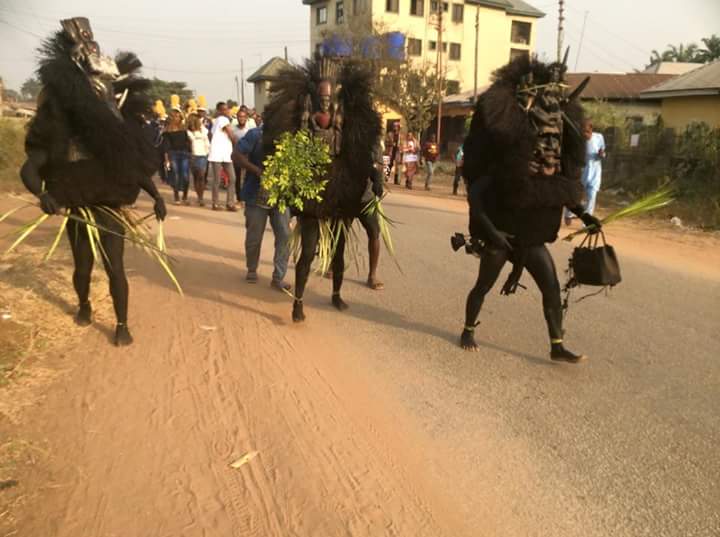
Beyond being a masquerade tradition, the Ekpo Society is one of the most powerful ancestral institutions in Ibibio history. In many villages across Ibibioland, the sudden appearance of an Ekpo mask once meant that the ancestors themselves had stepped into the public square. Children became quiet. Elders stood alert. The air shifted. Because what looked like performance was something deeper. It was law, memory, spirituality, and authority wrapped in carved wood and layered costume.
Among the Ibibio people of present-day Akwa Ibom State, the Ekpo Society has long served as an ancestral masquerade system with real social power. It guided moral conduct. It enforced community rules. It preserved belief in the continuing presence of the dead among the living. To understand the Ekpo Society is to understand how the traditional Ibibio society governed itself before colonial rule and how cultural institutions still carry meaning today.
Many people confuse Ekpo with other secret societies in southern Nigeria. Others reduce it to a festival entertainment. But the Ekpo Society is more layered than that. It stands at the meeting point of spirituality, governance, art, and identity.
This article takes you inside the Ekpo Society, exploring its origins, structure, masquerade traditions, judicial role, artistic symbolism, colonial transformation, and modern relevance using verified historical and cultural sources.
If you want to understand how ancestral authority once moved through an entire community and how that legacy continues in contemporary Ibibio culture, you are just in the right place.
Who Are the Ibibio People?
The Ibibio people are one of the major ethnic groups in southern Nigeria. They are primarily found in Akwa Ibom State, with related communities in Cross River State and parts of Abia State. Today, millions of people speak the Ibibio language which belongs to the Benue–Congo branch of the Niger–Congo language family. Ibibio is widely spoken in markets, homes, churches, and traditional gatherings across the region.
Historically, the Ibibio did not form a single centralized kingdom. Instead, the society was organized around clans, villages, and extended family compounds. Authority rested in councils of elders, titled men, and respected lineage heads. Leadership was community based rather than monarchic. Decisions were often made collectively, and institutions like the Ekpo Society played a role in maintaining order and settling disputes.
The traditional Ibibio religion centered on belief in a supreme creator known as Abasi, along with powerful deities and ancestral spirits. The ancestors were not seen as distant or forgotten. They were considered active participants in daily life. This worldview explains why institutions such as the Ekpo Society carried both spiritual and social authority. The living and the dead were connected in a continuous moral relationship.
Economically, the Ibibio were known for farming, fishing, palm produce, trade, and craft production. The coastal and riverine communities engaged in regional trade networks long before colonial rule. Artistic traditions flourished as well, including wood carving, body adornment, music, and masquerade performance.
The colonial rule in the late nineteenth and early twentieth centuries introduced new political systems, Christianity, Western education, and urban development. Over time, many Ibibio people embraced Christianity, and modern governance structures replaced traditional authority systems. Even at that, the cultural identity remained strong. Festivals, language, kinship ties, and ancestral institutions continue to anchor community life.
Understanding who the Ibibio people are is essential to understanding the Ekpo Society, because the Ekpo did not exist in isolation. It grew out of a society that valued ancestry, collective responsibility, moral conduct, and communal harmony. To explore Ekpo is to step into the wider story of Ibibio history, belief, and cultural endurance.
Origins and Historical Development of the Ekpo Society
The Ekpo Society did not begin as a festival attraction or public spectacle. It emerged from the spiritual foundations of the early Ibibio society where the line between the living and the dead was never seen as completely closed. In Ibibio belief, the ancestors remained present in community life. They could guide, protect, warn, and even discipline the living. Ekpo grew out of this worldview.
The word Ekpo in the Ibibio language means spirit, ghost, or ancestor. This meaning is central to understanding the institution. The Ekpo Society developed as a formal way to represent ancestral presence within the village. Through masked performance, ritual practice, and structured membership, the society gave visible form to invisible spiritual authority.
Early Roots in Ibibio Cosmology
Traditional Ibibio religion recognized a supreme creator known as Abasi, alongside various deities and ancestral forces. The ancestors were believed to observe moral conduct and community behaviour. When order was threatened, it was thought that ancestral forces could intervene. The Ekpo Society became one of the organized channels through which this intervention was expressed.
Because early Ibibio communities were organized around clans rather than centralized kingdoms, they relied heavily on shared belief systems and communal enforcement of norms. The Ekpo Society offered both spiritual legitimacy and social structure. Its masked figures represented not individual performers but ancestral authority itself.
Although exact dates cannot be established due to the oral nature of early history, ethnographic accounts from the late nineteenth and early twentieth centuries confirm that Ekpo was already a fully developed institution before colonial administration expanded into southern Nigeria. Scholars who documented Ibibio customs during the colonial period described Ekpo as an established ancestral masquerade system with ritual, judicial, and social functions.
Growth as a Community Institution
Over time, the Ekpo Society expanded beyond ritual appearance into broader governance roles. As villages grew and interactions between clans increased, communities required systems to regulate disputes, theft, land matters, and moral behaviour. The Ekpo Society gradually assumed responsibility in these areas.
Its authority was effective because it rested on collective belief. When an Ekpo mask appeared publicly, it was not regarded as a man in costume. It was treated as an ancestral spirit. This belief gave the society influence that did not rely on physical force alone. The fear of ancestral punishment carried weight in everyday life.
The structure of the Ekpo Society also developed complexity. Membership became organized through initiation stages. Certain masks represented higher spiritual ranks. Some Ekpo types were associated with youthful spirits, while others symbolized elder ancestors with judicial authority. These distinctions allowed the society to address different social functions within the same institutional framework.
Interaction with Neighbouring Groups
The Ibibio share cultural and linguistic connections with neighbouring groups such as the Annang and Efik. While each group developed its own institutions, there were similarities in masquerade traditions across the region. It is important, however, not to confuse Ekpo with Ekpe which is a separate institution associated more strongly with Efik and Cross River societies.
Ekpo remained distinct in its emphasis on ancestral embodiment through masquerade performance within Ibibio communities. Its rituals, mask styles, and organizational patterns were shaped by local belief and practice rather than imported wholesale from neighbouring systems.
Colonial Contact and Change
When the British colonial administration expanded into what is now Akwa Ibom State in the late nineteenth century, traditional institutions encountered new political structures. Colonial officers often misunderstood indigenous secret societies and sometimes, restricted their activities. Christian missionaries also challenged ancestral practices, and encouraged converts to distance themselves from traditional rituals.
Despite these pressures, the Ekpo Society did not disappear. In many communities, it adjusted its public role. Its judicial authority declined as colonial courts replaced traditional dispute resolution systems. However, its ceremonial and cultural importance endured. The masquerade performances continued during festival seasons, though sometimes, with modified meanings.
Continuity into the Modern Era
Today, the Ekpo Society remains part of Ibibio cultural memory and, in some communities, active practice. While its legal authority no longer functions as it once did, its presence as an ancestral masquerade system continues during cultural festivals and traditional events.
Its historical development shows how an institution can begin as a spiritual expression and grow into a system that supports governance, morality, and identity. The Ekpo Society stands as evidence of how deeply spiritual belief and community organization were intertwined in traditional Ibibio life.
Understanding these origins helps to place the Ekpo Society within its proper historical context. It is not a recent invention, nor merely entertainment. It is a product of centuries of belief, adaptation, and communal experience within the Ibibio society.
Structure and Organization

Fundamentally, the Ekpo Society is a traditional ancestral institution among the Ibibio people. It is best understood as a structured masquerade society with spiritual authority and social responsibility. While many people first encounter Ekpo through its dramatic masks and public appearances, the visible performance is only one layer of a much deeper system.
Ekpo is not simply a dance group or seasonal festival troupe. It is an organized body with rules, ranks, initiation processes, and defined responsibilities within the community.
A Traditionally Male Institution
Historically, membership in the Ekpo Society was restricted to initiated males. Boys were introduced gradually into community traditions as they matured, but full participation required initiation. This initiation was not casual. It marked a serious transition into deeper cultural knowledge and responsibility.
Initiation rites varied between communities, but they generally involved instruction about ancestral beliefs, secrecy obligations, and the expected moral conduct of members. Once initiated, a man became part of a structured body that operated both privately and publicly.
Women and non-initiates were traditionally excluded from inner knowledge of the society. They could witness public masquerade appearances, but the identities of mask wearers and ritual processes were kept confidential. This secrecy protected both the sacred dimension of Ekpo and its authority.
Hierarchical Organization
The Ekpo Society was not flat or informal. It operated with internal ranks and distinctions. Different categories of Ekpo masks represented varying spiritual levels and social authority.
For example, documented mask types such as Idiok Ekpo are often associated with more fearsome or wandering ancestral spirits. These figures could appear in ways that carried warnings or enforced moral discipline. In contrast, Mfon Ekpo masks are often described as representing more peaceful or benevolent ancestral forces. These distinctions show that the society organized spiritual symbolism carefully rather than randomly.
Higher-ranking members typically had greater ritual responsibility and decision-making influence. The elders within the society played central roles in determining when masquerades would appear, what matters required intervention, and how disputes should be handled.
Relationship to Community Governance
In traditional Ibibio society, there was no centralized state government in the modern sense. Authority was distributed among the elders, family heads, titled men, and institutions such as the Ekpo Society. The society did not replace elders’ councils, rather, it worked alongside them.
When community standards were violated, the Ekpo Society could be called upon to act. A masked appearance was not merely symbolic. It carried weight. Because the mask was believed to embody ancestral presence, its words and actions were treated with seriousness.
This gave the Ekpo Society influence in areas such as settling disputes, enforcing communal decisions, protecting property, and addressing antisocial behaviour
Its authority rested less on physical force and more on shared belief in ancestral power.
Sacred Spaces and Meeting Places
The Ekpo Society also operated within designated sacred spaces. In many communities, shrines or forest areas were associated with ancestral spirits and society gatherings. These spaces were treated with respect and often restricted from casual entry.
Meetings were private. Discussions about ritual timing, disciplinary measures, and spiritual matters were conducted away from public view. This separation between public performance and private deliberation strengthened the society’s mystique and authority.
The Mask as Institutional Symbol
The mask is central to understanding Ekpo’s structure. It is not just decoration, it functions as the visible identity of the society. When an Ekpo mask appears, it signals that the institution itself is present.
The carved wood, painted surfaces, and attached materials carry symbolic meaning rooted in Ibibio cosmology. The mask transforms the wearer into a representative of ancestral power. In doing so, it allows the society to operate in both spiritual and social dimensions at once.
Adaptation Over Time
With the colonial rule and the spread of Christianity, the structure of the Ekpo Society experienced change. Its judicial authority diminished as colonial courts took over legal matters. However, its organizational identity did not vanish. In many communities, Ekpo retained ceremonial and cultural functions even as its political power declined.
Today, the Ekpo Society may operate with less direct enforcement authority than in the past, but its structured organization and ancestral symbolism remain important in preserving the Ibibio heritage.
Getting to know the structure and organization of the Ekpo Society makes one thing clear, and that is the fact that it is not a random performance. It is a carefully arranged ancestral system that once stood at the centre of governance, morality, and spiritual life in Ibibio communities.
Ekpo as an Ancestral Masquerade Institution

To understand the Ekpo Society, you must first understand what Ekpo means to the Ibibio people. In the Ibibio language, Ekpo refers to a spirit or ghost, often understood as the presence of an ancestor. This belief forms the foundation of the Ekpo masquerade tradition. When an Ekpo mask appears in public, it is not viewed as simple entertainment. It is treated as the visible presence of the ancestral world among the living.
In traditional Ibibio cosmology, the boundary between the living and the dead is not final. The ancestors are believed to continue watching over their families. They reward good conduct and punish wrongdoing. The Ekpo masquerade provides a cultural and ritual channel through which these ancestral forces are expressed.
The Meaning of the Mask
The mask is central to the Ekpo Society. Once worn, the individual behind it is no longer addressed as an ordinary person. He becomes Ekpo. The transformation is both symbolic and social. Community members relate to the masked figure as an ancestral being. This belief gives the masquerade authority and power within the public space.
Ekpo masks are carved from wood and often painted. They vary in design depending on the type of spirit represented. Some masks appear calm and dignified. Others look severe, with exaggerated features that create a sense of warning. Museum collections and ethnographic documentation confirm these distinctions.
For example, Idiok Ekpo masks are often darker and more intense in expression. They are associated with wandering spirits or forces that may discipline the community. In contrast, Mfon Ekpo masks are usually lighter in tone and linked with more benevolent ancestral presence. These categories show that Ekpo is not a single costume but a system with internal spiritual classification.
Costume and Performance
The full Ekpo masquerade includes more than a mask. The costume often covers the entire body. Raffia fibres, cloth, and other materials conceal the performer completely. This concealment strengthens the illusion of spiritual embodiment. The community is meant to see a spirit, not a human being.
Ekpo performances take place during specific seasons or ritual periods. The masquerade may appear in village squares, along pathways, or near sacred groves. Drumming, chanting, and rhythmic movement accompany the performance. The sounds signal the arrival of Ekpo and alert the community.
During appearances, Ekpo may interact with the public in controlled ways. It may deliver messages, issue warnings, or participate in ceremonial acts. In earlier times, some appearances were connected to moral enforcement. The presence of Ekpo carried seriousness because it was believed to represent ancestral judgment.
Spiritual Authority in Public Space
The power of the Ekpo masquerade lies in collective belief. The community accepts that ancestral spirits can manifest through ritual performance. This shared understanding creates a social environment where the masquerade’s presence commands respect.
Children are taught from an early age that Ekpo is not to be mocked or challenged. Adults also observe careful behaviour during appearances. This discipline does not depend on physical force, rather, it rests on spiritual conviction.
The Ekpo Society, through masquerade performance creates a moment where the unseen world becomes visible. It allows the community to experience its spiritual beliefs in a tangible form.
Art, Memory, and Identity
Beyond spiritual and social functions, Ekpo masquerades are also works of art. The carving styles, painted patterns, and performance movements contribute to Ibibio artistic heritage. Scholars and museums around the world have documented Ekpo masks as important examples of African art.
Yet. within Ibibio society, the mask is not primarily art for display. It is a living object with ritual meaning. Its beauty or intensity is connected to its spiritual purpose. This connection between art and belief makes Ekpo unique. The aesthetic element cannot be separated from the ancestral role it plays.
Continuity in Modern Times
Today, the Ekpo masquerade continues in many communities, though often within a more cultural or ceremonial context. While modern religion and urban life have influenced traditional practices, the symbolic meaning of Ekpo remains strong. During festivals and heritage events, Ekpo performances remind people of their ancestral roots.
As an ancestral masquerade institution, the Ekpo Society sits at the heart of Ibibio cultural expression. It brings together belief, artistry, public ritual, and communal memory. Through the mask, the past speaks to the present, and the living are reminded that they are never alone in their history.
The Ekpo Festival Season
The Ekpo Festival Season is the most visible aspect of the Ekpo Society for the general public. Yet, it represents only a part of the institution’s deeper spiritual and social functions. For the Ibibio people, the festival is a time when ancestral spirits are believed to return to the living world. Through masquerade performances, the community celebrates, remembers, and interacts with the ancestors.
Timing and Purpose
The festival typically occurs after the harvest season, often between mid-year and late-year in many Ibibio communities. This timing aligns with agricultural cycles with the aim of ensuring that food is available for communal gatherings. The season is also a period for moral reflection and community renewal. During this time, the Ekpo Society emerges publicly to affirm social order, observe behaviour, and remind people of ancestral oversight.
Public Appearances and Rituals
During the festival, masked Ekpo figures appear in village squares, along the streets, and near sacred groves. Performances involve rhythmic drumming, chanting, and synchronized movements that announce the arrival of the ancestral spirits. The masks, often accompanied by full-body costumes, conceal the wearer completely, and transform the human into the perceived presence of an ancestor.
While some performances are celebratory, others serve as warnings or corrective displays. For example, mischievous behaviour by community members might be addressed symbolically through the appearance of stern or intimidating masks. Children are taught to watch respectfully, and adults observe proper conduct, thus reinforcing the cultural authority of Ekpo without physical enforcement.
Community Participation
Although the Ekpo Society itself is traditionally male and secretive, the festival involves broad community participation. People gather to witness the masquerades, share in the music, and participate in complementary ceremonies such as offerings or prayers to ancestors. Women and non-initiated observers are typically present but maintain a respectful distance from the masked performers.
Symbolism and Social Function
The festival season offers more than entertainment. It is a tangible expression of the Ibibio worldview where the living and the dead coexist in moral and spiritual dialogue. Each performance carries meaning. Some masks signal protection, others warn of potential punishment, and some simply honour the guidance of the ancestors.
By appearing in public spaces, Ekpo creates a shared experience that strengthens communal bonds. People are reminded of their history, cultural identity, and the ongoing influence of the ancestors in daily life.
Continuity and Modern Adaptation
In contemporary Ibibio communities, the Ekpo Festival Season continues as a symbol of cultural heritage. Even as Christianity and modern governance have altered traditional practices, the festival retains its social and spiritual significance. Today, some festivals are adapted for tourism or cultural education but they still preserve the essence of ancestral connection and community cohesion.
The Ekpo Festival Season, therefore, is both a celebration and a living lesson that embodies the belief that the ancestors remain present and that their guidance and oversight continue to shape Ibibio life. It is a time tradition, performance, and spirituality converge to offer a rare glimpse into the heart of the Ekpo Society.
Political and Judicial Roles of the Ekpo Society
The Ekpo Society was not only a spiritual institution but also a key part of governance in traditional Ibibio society. Its influence extended far beyond masquerade performances to shape social order, enforce rules, and mediate conflicts. In communities without centralized government, the society functioned as both a moral compass and a regulatory body.
Law Enforcement and Social Control
Before colonial administration, Ibibio villages relied on institutions like the Ekpo Society to maintain social discipline. Ekpo masks were not mere symbols, they carried the authority of the ancestors. When a masked figure appeared, it signaled that the community was under the watchful eye of ancestral spirits. This presence was enough to encourage obedience and deter wrongdoing.
The society dealt with a wide range of social issues, including theft, disputes over land or property, marital conflicts, and breaches of community rules. For example, a person accused of stealing might be publicly confronted by an Ekpo mask. The mere appearance of the masked figure could elicit confession, restitution, or reconciliation.
This system worked because it combined spiritual belief with social expectation. People trusted that the ancestors could punish wrongdoers, even if human enforcers were not present. The fear of Ekpo, therefore, reinforced communal harmony without relying solely on physical force.
Judicial Authority
The Ekpo Society also played a formal judicial role in some Ibibio communities. The elders and high-ranking members of the society adjudicated disputes and determined punishments. Decisions were made according to custom, and guided by ancestral principles. In cases of serious offense, the society could impose sanctions ranging from fines and public reprimand to ritual acts intended to cleanse wrongdoing.
The hierarchical structure of Ekpo ensured that decisions were consistent and respected. Higher-ranking members oversaw ceremonial enforcement and interpreted ancestral guidance, while lower-ranking initiates carried out tasks such as appearing publicly or delivering messages. This organization allowed the society to function effectively as a local governance system.
Protection and Community Oversight
In addition to judicial functions, the Ekpo Society helped to protect villages and enforce community norms. Masks could be deployed along the borders or at communal spaces to deter outsiders from wrongdoing. During festivals and important communal events, Ekpo performances reminded the community of ancestral oversight and the importance of ethical behaviour.
By embodying the ancestors, the society provided a form of moral and social authority that was difficult to challenge. This combination of spiritual and judicial power made Ekpo an integral part of Ibibio governance.
Interaction with Other Institutions
The Ekpo Society worked alongside the elders’ councils, family heads, and other traditional institutions. While it did not replace these authorities, it complemented them by giving spiritual weight to their decisions. For example, a council might declare a dispute resolved, but the presence of Ekpo at a public ceremony reinforced the decision and ensured compliance.
Continuity and Adaptation
With the arrival of colonial rule and modern governance structures, the judicial and political roles of the Ekpo Society diminished. Colonial courts assumed legal authority, and Christian missionaries discouraged ritual enforcement. However, the symbolic role of Ekpo persisted. Even today, the society is recognized as a cultural institution that expresses the historical approach of the Ibibio people to morality, social order, and ancestral authority.
Essentially, the Ekpo Society served as both guardian and judge. Its political and judicial functions were rooted in spiritual belief, community trust, and hierarchical organization which made it a cornerstone of traditional Ibibio governance.
Symbolism of Ekpo Masks and Artistry
The Ekpo masks are more than decorative pieces or performance tools. They are central to the identity, authority, and spiritual meaning of the Ekpo Society. Every carved detail, painted pattern, and material choice carries a purpose that expresses ancestral power, moral guidance, and communal memory. Understanding the artistry of Ekpo masks is essential to appreciating their role in Ibibio culture.
Representing Ancestors
Each mask is a physical embodiment of a spirit. When worn, the performer transforms into the ancestor with the aim of allowing the living community to experience direct contact with the spiritual realm. The mask gives form to what is otherwise invisible, that is, ancestral presence, moral judgment, and spiritual authority.
The Ibibio believe that the ancestors watch over their families and communities. Through Ekpo masks, this belief is made visible. The appearance of a mask signals that ancestral attention is present and that behaviour is being observed. This connection strengthens cultural norms and values in a tangible way.
Types of Ekpo Masks
Ethnographic studies and museum collections identify different classes of Ekpo masks, each with distinct meanings:
- Idiok Ekpo masks: These masks which are often carved with intense or exaggerated features symbolize wandering or stern spirits. They are associated with moral correction and social discipline. Their intimidating presence served as a visual reminder of the consequences of wrongdoing.
- Mfon Ekpo masks: These masks are typically lighter in colour and more harmonious in appearance, and they represent benevolent ancestral forces. They appear to bless the community, mark celebrations, and convey protection.
Some masks are also linked to specific rites or age groups within the society. Higher-ranking masks may be reserved for senior members who guide rituals, while others are used for broader public performance.
Artistic Features
The artistry of Ekpo masks reflects both symbolic meaning and technical skill. Common artistic features include:
- Exaggerated facial elements – Large eyes, open mouths, and sharp angles signal alertness, ancestral power, or moral severity.
- Colour and surface decoration – Paint and natural pigments highlight spiritual qualities. Dark tones often convey seriousness, while lighter colours suggest protection and benevolence.
- Material layering – Raffia, cloth, and other attachments conceal the performer to emphasize transformation and complete embodiment of the spirit.
Artisans typically follow traditional patterns passed down through generations. While creativity is valued, symbolic conventions guide design. This ensures that the mask communicates the intended ancestral message to the community.
Art as Cultural Memory
Ekpo masks are both functional and historical. They preserve stories, values, and beliefs visually. Each mask represents not only a spiritual entity but also the collective memory of a community. They serve as teaching tools that remind the people of their ancestry, morality, and the history of social governance.
Museums worldwide, including the University of Michigan Museum of Art and private collections recognize Ekpo masks for their artistic and cultural significance. Yet, within the Ibibio society, the value of the mask is inseparable from its ritual and symbolic purpose.
Performance and Transformation
The artistry of the mask is fully realized during performance. Movement, drumming, and chanting bring the mask to life, and complete the transformation from human to ancestral spirit. The combination of visual design and ritual performance creates a powerful presence that commands attention, respect, and sometimes awe.
Modern Relevance
Even today, artisans continue to carve and decorate Ekpo masks, preserving both the artistic skill and cultural knowledge. During festivals and heritage events, masks are displayed and danced to keep alive centuries of spiritual and aesthetic tradition.
In essence, the symbolism and artistry of Ekpo masks are inseparable from their function as instruments of ancestral authority, moral guidance, and cultural memory. Each mask tells a story, enforces a lesson, and connects the living with the unseen world of the ancestors.
Colonial Encounter and Transformation
The arrival of the European colonial rule in southern Nigeria brought profound changes to the Ekpo Society and traditional Ibibio life. During the late nineteenth and early twentieth centuries, British administrators, traders, and missionaries entered Ibibioland with new governance structures, laws, and religious ideas. These encounters reshaped the social, judicial, and spiritual functions of Ekpo while testing the resilience of ancestral traditions.
Misunderstanding and Restriction
The colonial authorities often misunderstood the Ekpo Society. To outsiders, masked rituals appeared secretive, intimidating, or even threatening. British officials sometimes, labelled societies like Ekpo as “primitive” or “dangerous,” particularly because the masks represented authority beyond colonial control. Missionaries also viewed the masquerades as pagan practices that conflicted with Christian teaching.
As a result, the colonial administrations occasionally restricted certain rituals or public appearances, especially those that were associated with discipline or punitive action. Secretive lodges and private rites were scrutinized, and public enforcement of traditional laws by Ekpo figures was curtailed.
Adaptation of Roles
Despite these challenges, the Ekpo Society did not disappear. Instead, it adapted. Its ceremonial role became more prominent than its judicial role. While the ancestors were still honoured through masquerade performance, the fear of supernatural punishment diminished as colonial courts assumed legal authority.
Public appearances during festivals shifted to emphasize cultural performance, entertainment, and community identity. In some cases, the younger ones began to see Ekpo as a heritage tradition rather than a direct spiritual authority. The society became a bridge between the past and the present, thereby preserving cultural memory, even as its original governance functions faded.
Continuity Through Cultural Practice
Colonial influence also led to the documentation of Ekpo by anthropologists, missionaries, and colonial officers. Written accounts, photographs, and museum collections captured mask designs, rituals, and festival practices. While these records were often filtered through a European lens, they preserved the knowledge of the Ekpo system that might otherwise have been lost.
At the same time, communities continued to value Ekpo for its spiritual and social significance. The masked figures remained a focal point of festivals and ceremonial life.
Transformation in Social Perception
Over time, the role of the Ekpo Society shifted from one of judicial and political enforcement to primarily cultural and educational influence. It became a symbol of Ibibio identity that reminded communities of their ancestral roots. Today, Ekpo still features in festivals, performances, and heritage programmes with the aim of allowing the modern audiences to witness its artistry and ancestral significance while respecting the traditions that have endured for centuries.
The colonial encounter, therefore, was both a challenge and a turning point. It curtailed certain functions but also helped to solidify the Ekpo Society as a resilient cultural institution.
Ekpo Society in Contemporary Ibibio Life
Even in modern times, the Ekpo Society remains a living part of Ibibio people culture. While colonial rule and Christianity reduced its political and judicial authority, the society continues to define cultural identity, heritage preservation, and community cohesion. Today, Ekpo functions primarily as a cultural and ceremonial institution rather than a legal authority.
Cultural Preservation and Festivals
In contemporary Ibibio communities, Ekpo masquerades are central to festivals, public ceremonies, and heritage events. The masks, costumes, and performances serve as reminders of ancestral presence and traditional values. Families and communities continue to teach the younger ones about Ekpo as a way of ensuring that the knowledge of its symbolism, rituals, and artistry is preserved.
Festivals featuring Ekpo attract not only local participants but also tourists and cultural enthusiasts. These events showcase the artistry, music, and dance of the society, thereby allowing the Ibibio to celebrate their identity as they educate outsiders about their traditions. The public presence of the masquerade still inspires awe and respect, even as its spiritual enforcement role has declined.
Educational and Artistic Significance
The Ekpo Society has also become an important subject for education and research. Scholars, anthropologists, and museum curators study the masks, performance styles, and social structures of Ekpo to understand traditional governance, spiritual life, and artistic heritage. Schools and cultural centres in Akwa Ibom State, sometimes, include Ekpo in lessons about Ibibio history, folklore, and art.
Artisans continue to carve and decorate masks using traditional techniques. These practices ensure that the craftsmanship and symbolic knowledge embedded in Ekpo remain active. Contemporary artists often adapt traditional motifs for exhibitions.
Spiritual and Community Relevance
While the Ekpo Society no longer enforces laws in the modern legal sense, it still carries spiritual and moral significance for many people. Communities recognize the importance of ancestral guidance, respect, and ethical conduct. The masquerade performances, while largely symbolic today continue to remind individuals of the values upheld by the ancestors.
Adaptation to Modern Life
Modernization has influenced how the Ekpo Society operates. Urbanization, Christianity, and formal education have changed the social environment in which Ekpo functions. Some traditional restrictions, such as male-only initiation or secretive rites are less strictly enforced in certain areas. However, these adaptations have not erased the identity of the society. Instead, they allow Ekpo to coexist with contemporary life that bridges history and modernity.
In some communities, Ekpo has also become part of cultural tourism and heritage programmes. Performances are staged during public events to showcase the artistry and ancestral significance of the society to a broader audience. This approach preserves tradition and promote economic and educational benefits.
Continuity and Identity
The continued presence of the Ekpo Society in contemporary Ibibio life highlights the resilience of indigenous institutions. It illustrates how ancestral beliefs, artistry, and social values can endure even amid major social, political, and religious transformations. For the Ibibio people, Ekpo remains a symbol of identity, morality, and connection to the past.
Ultimately, the Ekpo Society today functions as a guardian of cultural memory, a source of artistic inspiration, and a bridge between ancestral tradition and contemporary Ibibio life. It continues to inform communal values, preserve heritage, and provide a living link to the ancestral world.
Common Misconceptions About the Ekpo Society
The Ekpo Society is often misunderstood, both by outsiders and even by some within Ibibio communities. These misconceptions can reduce its rich cultural and spiritual significance to mere entertainment or “secret cult” stereotypes. Recognizing these misconceptions helps to clarify the true nature of Ekpo as a complex ancestral institution.
Many people assume that Ekpo is purely a cultural performance or festival spectacle. While the masquerade is highly visible during festivals, this is only one aspect of the society. Traditionally, Ekpo carried spiritual, judicial, and moral authority. Masked figures represented ancestors, enforced rules, and guided community behaviour. The performance is a public manifestation of a deeply rooted system rather than a casual show.
Because of superficial similarities, some people confuse the Ekpo Society with the Ekpe Society which is more closely associated with the Efik, Ibibio neighbours, and Cross River communities. Although both involve masquerades and secretive initiation, they are distinct institutions. Ekpo is specific to the Ibibio people and reflects their unique cosmology, social structure, and ancestral governance.
Colonial and missionary accounts, sometimes, portrayed Ekpo as threatening or even violent. While some masks appear fearsome and were historically used to enforce moral conduct, the society’s intent was protective and disciplinary rather than harmful. Its authority relied on community belief in ancestral oversight, not physical coercion. The “fear” associated with Ekpo was a social tool to uphold ethics and cohesion.
Another common misconception is that the society has disappeared entirely under modernity, Christianity, or urbanization. While its judicial and political powers have declined, Ekpo remains an active part of Ibibio cultural identity. Festivals, heritage events, and educational programmes still feature Ekpo to preserve its artistic, moral, and ancestral significance.
Ekpo is not an open social club. Membership is traditionally restricted to initiated males, and inner knowledge is closely guarded. Women and uninitiated community members may observe performances but do not access the society’s secrets or internal governance roles. The initiation process and hierarchy maintain its spiritual and social authority.
Clarifying the Truth
Identifying these misconceptions is crucial for understanding the depth of Ekpo. It is not merely performance, nor is it inherently sinister. It is a structured ancestral institution that historically combined spirituality, governance, social regulation, and artistic expression.
By separating myth from reality, we can recognize the Ekpo Society as a living testament to Ibibio cultural resilience, creativity, and ethical organization, rather than reducing it to stereotype or folklore.
In Conclusion …
The Ekpo Society stands as one of the most remarkable cultural institutions of the Ibibio people. More than a masquerade performance or a festival spectacle, it is an ancestral system that historically combined spiritual authority, social governance, moral guidance, and artistic expression. Through its masks, costumes, and rituals, Ekpo made the presence of the ancestors tangible, and reminded the community of the enduring connection between the living and the dead.
Over centuries, the society adapted to changes brought by colonial rule, Christianity, and modern governance. Its judicial and political roles have diminished, yes, but its cultural, artistic, and spiritual significance still continues. Today, Ekpo performances during festivals and heritage events preserve a rich history, educate the new generations, and celebrate Ibibio identity.
Learning about the Ekpo Society allows us to value how traditional institutions balanced morality, community cohesion, and spiritual belief. It highlights the creative ways the Ibibio people connected the visible and invisible worlds, using artistry, ritual, and collective belief to maintain social order. Far from being a relic of the past, Ekpo remains a living expression of ancestral wisdom and cultural pride that offers insight into the values, governance, and worldview of the Ibibio people.
In exploring Ekpo, we see a culture that honours its ancestors, respects its tradition, and continues to find relevance in modern life. The society reminds us that heritage is not only about preserving objects or stories but about keeping alive the principles, lessons, and identity that define a community.
References
- https://en.wikipedia.org/wiki/Ekpo_Society
- https://umma.umich.edu/objects/mask-1984-1-266/
- https://www.jacarandatribal.com/items/mask—ibibio
- https://artsandcultureplace.blogspot.com/2016/06/culture-ekpo-society-masks-of-ibibio.html
- https://emuseum.as.miami.edu/objects/20660/cap-crest-mask-idiok-ekpo
- https://www.amyas.net/product/mfon-ekpo-ibibio-mask/
- https://en.wikipedia.org/wiki/Ibibio_people
You might want to check this out …
https://nnewicity.com/the-ekpe-secret-society-of-the-efik-people/