




African Cultural Heritage
The Ekpe Secret Society of the Efik People: History, Rituals, and Cultural Legacy

Ekpe secret society has been a central institution among the Efik people for centuries that has influenced law, society, and culture through graded ranks, rituals, and symbolic while maintaining an enduring legacy in Southern Nigeria and beyond.

For centuries, the Ekpe secret society has held a unique place in the lives of the Efik people of south-south Nigeria. Beyond a collection of rituals and symbols, Ekpe was once the beating heart of governance, justice, and social order in the Old Calabar. It guided trade, resolved disputes, and maintained peace long before modern laws arrived. Today, its mysteries still captivate historians, scholars, and anyone curious about African cultural heritage.
Going through the story of Ekpe is like stepping into a world where symbolism carries weight, masquerades command attention, and secret codes connect generations. Every initiation, every ceremonial mask, and every ukara cloth tells a story of community, spirituality, and identity. This is the living legacy of the Efik people preserved through centuries of change and colonial influence.
In this article, we explore the Ekpe secret society in depth. From its origins and intricate hierarchy to the rituals, symbols, and cultural significance that still resonate today, we uncover how this remarkable institution defined the Efik society and continues to inspire fascination around the world.
Who Are the Efik People?
The Efik people are an ethnic group mainly found in Cross River State, Nigeria, particularly around the historic city of Calabar. Known for their rich traditions, lively festivals, and intricate social structures, the Efik have long been recognized for their cultural sophistication and influence in the region.
Historically, the Efik were traders, diplomats, and mediators. Their strategic location along the coastal waterways allowed them to interact with neighbouring communities and European merchants during the pre-colonial period. This interaction brought wealth, ideas, and new cultural influences. Yet the Efik maintained a strong sense of identity rooted in their own customs and governance systems.
Language plays a central role in Efik culture. The Efik language which is part of the Cross River linguistic group is not just a means of communication but a carrier of traditions, oral history, and folklore. Through storytelling, proverbs, and songs, the Efik pass down values, history, and lessons from one generation to the next.
Central to their society are institutions like the Ekpe secret society which historically governed law, trade, and spiritual life. Through Ekpe and other cultural structures, the Efik preserved social order, nurtured leadership, and maintained cultural continuity. Their communities were tightly knit with a strong emphasis on family, respect, and collective responsibility.
The legacy of the Efik people is not only local but also far-reaching. Their customs, beliefs, and art forms have influenced neighbouring groups in southern Nigeria and even diasporic communities abroad, and have left an enduring imprint on West African cultural history.
Origins and History of the Ekpe Secret Society
The Ekpe secret society has its roots deep in the forests and riverine communities of south-southern Nigeria with origins that trace back to the Ekoi (Ejagham) people of the Cross River region. Over time, the Efik people adopted and adapted the society, and made it central to their social, political, and spiritual life. The name Ekpe translates to “leopard” which symbolizes strength, mystery, and authority, and this connection to the leopard spirit became a cornerstone of the identity of the society.
In its earliest form, Ekpe secret society was primarily a spiritual institution that served as a channel through which the ancestral and forest spirits were believed to influence human affairs. Members were expected to honour these spirits, uphold moral standards, and maintain harmony within the community. As Efik settlements grew and trade expanded, the society evolved, and took on roles that went far beyond spiritual guidance.
By the 18th and 19th centuries, Ekpe secret society had become a powerful governing body in the Old Calabar. Its authority extended into lawmaking, dispute resolution, and the regulation of trade, especially in palm oil, ivory, and later interactions with European traders.
Membership in Ekpe secret society offered not only spiritual insight but also social status and political influence. Those who advanced through its ranks gained authority in the community, and their decisions often informed the direction of entire towns.
The society was carefully organized with initiation rites and graded levels that ensured members portrayed loyalty, integrity, and commitment to communal values before attaining higher positions. Ceremonies were elaborate, often combining masked performances, chants, music, and ritual acts designed to convey both spiritual and social messages.
Historically, Ekpe secret society also influenced neighbouring communities and similar societies across southern Nigeria. Its codes, symbols, and rituals inspired other secret societies, and created a network of cultural exchange that extended even beyond the region. Moreover, elements of the Ekpe secret society survived in diasporic traditions, most notably in Abakuá societies in Cuba where the descendants of African migrants preserved aspects of the ceremonial and symbolic heritage of Ekpe.
The historical importance of Ekpe secret society cannot be overstated. It was not merely a secret society in the mystical sense. It was an institution that balanced power, morality, and culture, and linked governance with spiritual authority. Through Ekpe, the Efik maintained law and order, facilitated trade relations, and preserved a strong sense of identity in a time of dynamic social change.
Structure and Organization of Ekpe

Ukara: Ritual Cloth of the Ekpe Secret Society
The Ekpe secret society represented far more than a spiritual circle. It functioned as a structured institution with clear hierarchies, responsibilities, and rules which gave it both authority and respect in the Efik society. Membership was exclusive, traditionally limited to men, and gaining entry was both a mark of honour and a commitment to communal duty.
Ekpe secret society operated through a graded system where members progressed through ranks over time. Each rank often associated with names such as Nkanda, Nyamkpe, Okpoho, and others brought increased responsibilities, ceremonial knowledge, and social recognition. Advancement required not just payment of initiation fees but also demonstrating loyalty, moral integrity, and dedication to upholding community values.
Central to the society were Ekpe lodges also called palaver houses where members gathered to discuss matters of governance, law, and ritual. These lodges were considered sacred spaces, and decisions made there were binding within the community. Here, Ekpe leaders would preside over disputes, determine fines, and organize communal activities. The lodges also served as venues for initiation ceremonies where new members underwent symbolic rites to signify their commitment to the society.
Leadership within Ekpe secret society was not solely about authority. It combined ritual knowledge and practical governance. Higher-ranking members held the power to enforce rules, interpret symbolic codes, and oversee ceremonial events. These roles ensured that Ekpe maintained order, guided spiritual practices, and reinforced a shared sense of identity among the Efik people.
The hierarchy of the society also created a network of mentorship. Senior members taught the younger initiates not just rituals but also the ethics, values, and expectations of the community. This system allowed knowledge to be preserved across generations with the aim of linking spiritual authority to everyday social order.
Through its organized ranks and structured practices, the Ekpe secret society became a model of governance embedded within culture. It balanced the mystical and the practical, and ensured that Efik communities could navigate challenges, maintain social cohesion, and preserve their traditions, even during times of change and external influence.
Rituals, Symbols, and Practices
The Ekpe secret society is perhaps best known for its rituals, symbols, and ceremonial practices which gave it both mystique and authority in Efik society. These practices communicated power, moral authority, and social cohesion. Each ritual, each mask, and every symbolic object had meaning and purpose.
Masquerades and the Leopard Spirit
At the heart of the Ekpe ceremonies are masquerades, often representing the spirit of the leopard. Members believed that the leopard symbol embodied strength, vigilance, and justice. During public events, masked performers, sometimes called Idem Iquo acted as messengers of Ekpe, and commanded attention and respect. Their movements, dances, and ritual gestures carried messages understood only by initiates. These masquerades were central to festivals, public adjudications, and initiation ceremonies.
The masquerades also reinforce social norms and spiritual beliefs. Offenders might be warned or sanctioned through ritual performances, thus, creating a system where moral and legal authority intertwined. Community members, even those not part of the society learned lessons through observation of these ceremonies.
The Secret Script
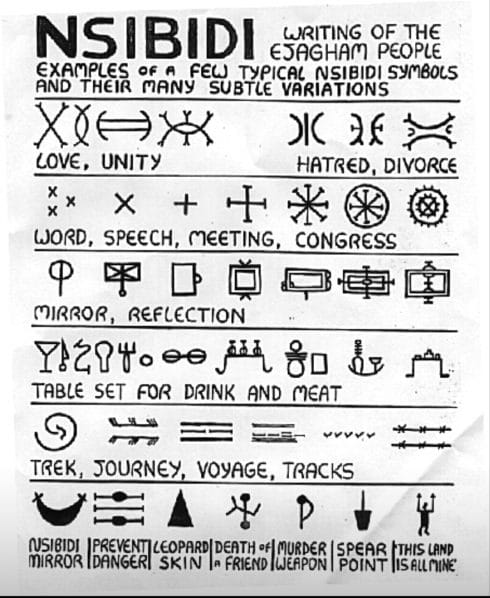
A defining feature of the Ekpe secret society is Nsibidi, an ancient symbolic system used to convey messages, rules, and ritual knowledge. Unlike ordinary writing, Nsibidi is an ideographic script that combines symbols to communicate complex ideas about morality, relationships, and community obligations. Within Ekpe, only initiated members could interpret these symbols. This is a way of ensuring secrecy and maintaining the authority of the society.
Nsibidi appeared in many forms – carved on wood, painted on walls, embroidered onto ukara cloth, or even represented through gestures during ceremonies. This symbolic language allowed the society to transmit knowledge across generations while maintaining an aura of secrecy.
Ukara Cloth and Ritual Objects
Ukara cloth is a textile uniquely associated with the Ekpe secret society. Decorated with Nsibidi symbols, it was worn during initiation ceremonies, special festivals, or displayed in Ekpe lodges. Each design represented rank, lineage, or specific ritual knowledge. The cloth not only signified membership but also reinforced a sense of identity and belonging.
Other ritual objects include sticks, sacred leaves, and masks, each carrying spiritual or moral meaning. For instance, sticks are, sometimes, used to emphasize authority during ceremonies, while specific masks represent the leopard spirit or ancestral guidance. Every item plays a role in teaching, guiding, or enforcing the values central to the society.
Initiation Ceremonies
Joining the Ekpe secret society was not casual. Initiation was a carefully orchestrated process, often lasting days and involving a series of tests, rituals, and symbolic performances. New members were introduced to Nsibidi, ceremonial practices, and ethical codes. They also learned their duties toward the community, their responsibilities within the lodge, and the moral expectations of being an Ekpe member.
Initiation also had a performative aspect. Community members, even those not part of Ekpe could witness parts of the ceremonies which reinforced social cohesion and communicated the society’s moral and spiritual authority.
Through its rituals, symbols, and practices, the Ekpe secret society shaped Efik culture in profound ways. It was a system where spiritual belief, social order, and cultural identity came together. The ceremonies, symbols, and codes were not simply traditions. They were tools that guided community behaviour, maintained moral standards, and ensured the continuity of Efik heritage.
Cultural and Social Significance
The Ekpe secret society was more than a ritual institution. It served as the backbone of Efik society that guided social order, moral behaviour, and communal decision-making. Its influence reached into almost every aspect of daily life, from resolving disputes to regulating trade and public conduct.
Governance and Law
Before formal governmental structures existed in the region, Ekpe secret society acted as a form of local government. Leaders within the society made decisions that affected the community, settled conflicts, and enforced justice. Fines, sanctions, and public admonishments were often carried out through Ekpe rituals, thus, giving them both spiritual and societal weight. In this way, the society maintained order while reinforcing shared values.
Social Cohesion and Identity
Membership in Ekpe secret society offered status and respect. Initiates were recognized as upholders of tradition, morality, and communal well-being. By participating in ceremonies, understanding Nsibidi, and honouring cultural rituals, members connected deeply with their heritage and with each other. This network of shared responsibility strengthened communal bonds and created a sense of belonging that extended across Efik towns.
Influence on Art and Culture
Ekpe’s impact extended into arts, music, and literature. Masks, ceremonial dances, and ukara cloth designs influenced Efik artistic expression while the Nsibidi symbols defined visual storytelling and communication. Through these creative forms, the society preserved knowledge, celebrated identity, and passed down traditions from one generation to the next.
Regulation of Trade and Morality
Ekpe secret society also played a practical role in economic life. Members could mediate disputes over trade, enforce agreements, and ensure fairness in transactions. At the same time, Ekpe guided moral behaviour by discouraging theft, dishonesty, or actions that could harm the community. The combination of ethical oversight and ritual authority made the society a stabilizing force in Efik towns.
The cultural and social significance of Ekpe secret society illustrates why, more than a secret society, it was a living institution that intertwined governance, morality, art, and communal identity, and ensured that Efik traditions endured, even in times of social change.
Criticism, Misconceptions, and Colonial Interference
Despite its importance, the Ekpe secret society has often been misunderstood, especially by outsiders. Early European missionaries and colonial administrators frequently misinterpreted its rituals and symbols as mere superstition or even threatening practices. The secrecy of the society, gender restrictions, and use of symbolic language created confusion for those unfamiliar with Efik culture.
Colonial accounts, sometimes, painted Ekpe as a dangerous or mystical institution by exaggerating its secrecy and mystique. Missionaries who were unfamiliar with the spiritual and societal roles of the society labelled certain ceremonies as “pagan” or morally suspect. These misconceptions overlooked the practical governance, social cohesion, and moral guidance that Ekpe secret society provided within Efik communities.
During the colonial period, authorities occasionally restricted Ekpe activities. British administrators aimed to impose formal legal systems, Christian teachings, and European governance structures as they viewed indigenous institutions as obstacles. Some rituals were discouraged or moved to private spaces while public authority shifted to colonial courts and councils.
Even today, the Ekpe secret society faces criticism. Some people view secret societies like Ekpe as outdated, exclusive, or patriarchal, arguing that they limit access to cultural knowledge. However, scholars emphasize that such criticism often stems from a lack of understanding of the historical functions of the society.
In Efik communities, Ekpe secret society still symbolizes moral guidance, social cohesion, and cultural pride, even as its political power has diminished.
The Legacy of Ekpe Secret Society Today
The Ekpe secret society no longer wields the formal legal and political authority it once had. Yet its cultural influence continues to thrive among the Efik people and beyond. Today, Ekpe is celebrated not only as a historical institution but as a living symbol of Efik identity, tradition, and community values.
Masquerades, ceremonial dances, and ukara cloth are still central to cultural festivals in Calabar and surrounding Efik communities. These public events allow the broader community to witness elements of Ekpe rituals while honouring their history. For many, participation or observation of these traditions is a way to connect with ancestry, understand moral lessons, and strengthen communal bonds.
The symbolism of Ekpe secret society still inspires art, literature, and music. Nsibidi symbols which were once used primarily for secret communication now appear in contemporary artwork and educational materials to teach history and cultural pride. Artists and scholars draw on Ekpe motifs to preserve heritage, spark interest in traditional knowledge, and celebrate Efik culture worldwide.
The influence of the Ekpe secret society is not limited to Nigeria. Historical migrations and the transatlantic slave trade carried elements of it to the Americas. For instance, Abakuá societies in Cuba preserve rituals, symbolism, and organizational structures reminiscent of Ekpe, and illustrating the society’s global cultural footprint.
Even in modern times, Ekpe secret society serves as a moral compass and cultural anchor. Communities look to its stories, symbols, and traditions for guidance on ethics, communal responsibility, and identity. While the society’s political role has faded, its ability to foster social cohesion, teach values, and maintain a sense of shared history remains strong.
The legacy of Ekpe affirms that even as societies evolve, cultural institutions that connect people to their past, ethics, and community can endure. Through festivals, art, diaspora connections, and moral guidance, the Ekpe secret society influences Efik life and enrich the broader understanding of West African heritage.
Similar Secret Societies in the Region
The Ekpe secret society was not the only traditional institution of its kind in southern Nigeria, though it was among the most influential. Neighbouring communities developed societies with comparable purposes of maintaining social order, guiding moral conduct, and preserving cultural knowledge.
For instance, the Ekpo society found among the Efik and Ibibio people shares similarities with Ekpe in its use of masks, ritual performances, and moral authority. Like Ekpe, Ekpo ceremonies were both public and secretive, also using symbolic language and masquerades to educate, entertain, and enforce community norms.
Other secret societies in the region such as the Obon and Idem also served specialized roles, from spiritual guidance to conflict resolution. Each society had its own rituals, symbols, and codes. Yet they often drew on common cultural elements, and reflected shared beliefs about spirituality, community, and justice.
These societies created a network of cultural exchange that allows communities to adapt ideas, ritual practices, and social organization from one another. The similarities highlight the broader West African tradition of secret societies as mechanisms for governance, education, and cultural preservation.
While the names, rituals, and symbols varied, the purpose remained consistent, and that was to unite communities, enforce ethical conduct, and transmit knowledge across generations. In this context, Ekpe secret society stands out for its complexity, longevity, and influence, both locally and in the wider African diaspora.
Scholarly Perspectives and Documentation
The Ekpe secret society has long drawn the attention of historians, anthropologists, and cultural scholars who view it as both a governance system and a spiritual institution. Academic research highlights how Ekpe combined ritual authority, social regulation, and cultural preservation, thus, making it an essential aspect of the Efik society.
Scholars note that Ekpe was not merely a “secret society” in the mystical sense. Its structure, codes, and rituals functioned as a social institution regulating trade, conflict resolution, and moral behaviour. By studying initiation ceremonies, symbolic scripts like the Nsibidi, and ceremonial objects such as ukara cloth, researchers have uncovered how the society transmitted knowledge across generations.
Fieldwork and oral histories reveal the ways Ekpe members balanced spiritual beliefs with practical governance. Anthropologists document that decisions made in Ekpe lodges carried both moral and social weight that enforced communal values in a manner that external legal systems could not fully replicate.
Academic interest also extends to the diaspora where elements of Ekpe rituals and symbolism appear in Afro-Caribbean societies. Researchers studying Abakuá in Cuba trace their origins to the Cross River region. This confirms how the practices of the Ekpe secret society migrated and adapted across continents.
Overall, scholarly work emphasizes that Ekpe secret society is both a historical and living institution that offers insights into African systems of governance, social cohesion, and cultural continuity. It stands as a well-documented example of how secret societies shaped communities, preserved traditions, and influenced broader regional and diasporic cultures.
In Conclusion …
The Ekpe secret society remains one of the most remarkable cultural institutions of the Efik people. From its origins with the Ekoi and adoption by the Efik, to its role as a centre of governance, moral authority, and spiritual guidance, Ekpe influenced the society in ways that went far beyond rituals and secrecy. Its graded hierarchy, elaborate initiation ceremonies, symbolic codes, and ceremonial objects all contributed to a system that balanced culture, law, and community cohesion.
Even today, the Ekpe secret society still inspires admiration and respect. Masquerades, festivals, and artistic expressions keep its symbols alive while scholars, historians, and the Efik community itself preserve its stories and teachings. Beyond Nigeria, its influence can be traced in the diaspora where the traditions adapted and survived.
More than historical insight, studying the Ekpe secret society provides a window into how African communities created complex systems of governance, education, and social cohesion long before modern institutions. It is a testament to the resilience, creativity, and enduring cultural identity of the Efik people.
For anyone interested in African history, culture, and the intersection of tradition and society, Ekpe secret society remains a fascinating story of power, symbolism, and legacy that continues to resonate across generations and continents.
References
- https://www.britannica.com/topic/Ekpe-society
- https://en.wikipedia.org/wiki/Ekpe
- https://en.wikipedia.org/wiki/Efik_people
- https://archive.org/details/peoplesofsouther01talb
- https://www.hup.harvard.edu/catalog.php?isbn=9780674010915
- https://www.upress.state.ms.us/Books/V/Voice-of-the-Leopard
- https://historicalnigeria.com/the-efik-and-the-ekpe-society-power-ritual-and-identity-in-old-calabar/
- https://ozikoro.com/the-ekpe-society-how-a-secret-leopard-society-became-the-judicial-legislative-and-executive-branch-of-the-efik-state/
- https://nnewicity.com/the-efik-people-of-nigeria/