


Biographies & Personalities
Flora Nwapa: The Legendary Igbo Woman Who Pioneered African Women Writers

Flora Nwapa was a Nigerian novelist and pioneering Igbo woman who transformed African literature and opened doors for generations of female writers.

In 1966, a novel titled Efuru entered the African literary scene and quietly shifted its centre of gravity. Its author, Flora Nwapa was not writing about warriors or colonial politics. She was writing about a woman’s life in an Igbo community. With that single book, Flora Nwapa became the first African woman to publish a novel in English internationally, and African literature would never be the same.
This Flora Nwapa biography tells the story of a Nigerian writer who insisted that women’s voices belonged at the heart of storytelling. Born in Oguta and educated at University College Ibadan and the University of Edinburgh, she carried both tradition and modern education into her work. She understood the quiet strength of market women, the pressures of marriage, the dignity of motherhood, and the longing for independence. She wrote about these realities with honesty and calm authority.
Flora Nwapa did more than publish novels. Through books such as Efuru, Idu, and One Is Enough, she expanded the space for African women in literature. She later founded her own publishing house to create opportunities for other writers at a time access was limited. Her influence reaches beyond her pages. Anyone searching for Flora Nwapa books or the true story behind her groundbreaking career will find not only a writer but a pioneer whose work continues to guide conversations about African women’s writing, even today.
Flora Nwapa’s Early Life and Education
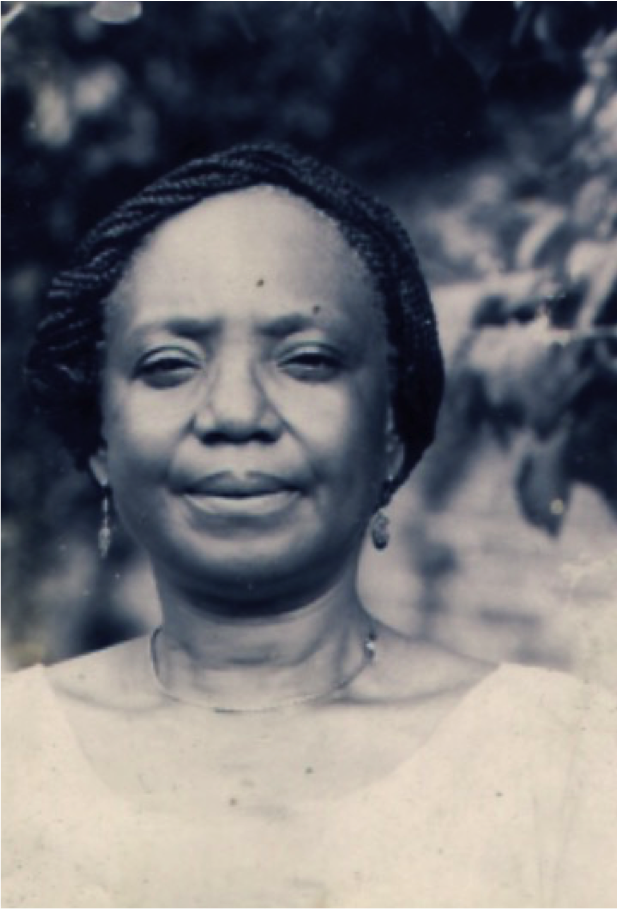
Flora Nwapa was born Florence Nwanzuruahu Nkiru Nwapa on January 13, 1931 in Oguta, a lakeside town in present day Imo State in southeastern Nigeria. Growing up in Oguta meant growing up in a close knit Igbo community where stories, customs, and shared memory were part of daily life. These early surroundings would later appear vividly in her fiction, especially in Efuru where village life is described with intimacy and care.
She was the first of six children in a family that valued learning. Her father, Christopher Ijeoma worked with the United Africa Company, while her mother, Martha Nwapa was known locally for her involvement in drama and community activities. From an early age, Flora Nwapa was surrounded by conversation, performance, and storytelling. Education was not treated as a luxury in her home. It was a necessity.
Flora Nwapa began her schooling in Oguta before moving on to secondary education in Port Harcourt and later at Methodist Girls High School in Lagos. At a time when many Nigerian girls did not have extended access to formal education, her academic journey already set her apart. She showed strong ability in literature and the humanities, and these subjects would later become the base for her career.
Her university education began at University College Ibadan which was then affiliated with the University of London and widely regarded as Nigeria’s premier institution of higher learning. There, she earned a Bachelor of Arts degree in 1957. University College Ibadan was a vibrant intellectual environment in the 1950s. It produced some of the most important Nigerian thinkers and writers of the period. Being in that space exposed Flora Nwapa to debates about identity, culture, colonialism, and the future of African literature.
Eager to deepen her training, Flora Nwapa travelled to the United Kingdom shortly after graduation. She enrolled at the University of Edinburgh in Scotland where she obtained a Diploma in Education in 1958. Living abroad broadened her perspective but it did not distance her from home. Instead, it strengthened her desire to write stories rooted in her own culture. She would later draw from both her Nigerian upbringing and her international exposure in crafting narratives that felt authentic, yet globally accessible.
When she returned to Nigeria, she stepped into the field of education. She worked as an education officer in Calabar and later taught English and geography at Queen’s School in Enugu. Teaching was not merely employment for Flora Nwapa. It was part of her belief that knowledge empowers communities. Her years in the classroom also kept her closely connected to young minds, especially girls whose experiences and aspirations influenced the women she later portrayed in her novels.
The early life and education of Flora Nwapa show the steady formation of a writer who understood both tradition and modern scholarship. They reveal a young woman who moved confidently between Oguta and Edinburgh, between oral storytelling and academic discourse. These foundations prepared her for the groundbreaking literary path she took.
Teaching and Public Service
After completing her studies at the University of Edinburgh in 1958, Flora Nwapa returned to Nigeria with a clear sense of purpose. She believed deeply in education and saw it as a tool for national growth. Her first professional steps, as already stated were in the classroom and in educational administration where she worked closely with young Nigerians at a time the country was approaching independence.
Flora Nwapa began her career as an education officer in Calabar. In this role, she was involved in school supervision and curriculum matters which helped to improve learning standards. She later taught English and geography at Queen’s School in Enugu, one of the leading girls’ secondary schools in eastern Nigeria.
Teaching young women during this period left a lasting impression on her. She observed their ambitions, their limits, and the expectations placed on them by the society. These lived realities later found their way into her fiction where female characters pursue education, business, marriage, and independence in different ways.
Her administrative career continued when she joined the University of Lagos as an assistant registrar. Working in a university setting exposed her to a growing intellectual community in postcolonial Nigeria. The country was building new institutions, and there was a strong belief that educated Nigerians would guide the future.
The Nigerian Civil War which lasted from 1967 to 1970 disrupted many lives across the eastern region. After the war, Flora Nwapa moved into public service at the state level. She served as Commissioner for Health and Social Welfare in the former East Central State from 1970 to 1971. In this capacity, she worked on programmes aimed at rebuilding communities and assisting vulnerable groups affected by the conflict.
She later became Commissioner for Lands, Survey, and Urban Development, a position she held until 1974. These roles placed Flora Nwapa at the centre of postwar reconstruction efforts. Her work focused on policy, housing, welfare, and urban planning during a period when stability and recovery were urgent priorities.
Flora Nwapa’s years in teaching and public service reveal another dimension of her life beyond literature. She was not only concerned with storytelling. She was invested in education, governance, and social welfare. Her understanding of community life was not theoretical. It came from direct engagement with schools, civil servants, and families navigating change.
This practical experience deepened the realism in her novels. When Flora Nwapa wrote about women managing households, trading in markets, raising children, or coping with hardship, she drew from what she had seen and encountered firsthand.
Her time in public service also strengthened her belief that African women needed platforms, resources, and representation. That belief later led her into publishing where she made yet another lasting contribution towards African literature.
Literary Breakthrough

By the early 1960s, Flora Nwapa had already built a career in education and public service. Writing, however, was quietly becoming central to her life. She began working on a novel that drew directly from the rhythms of Igbo society and the lived experiences of women she had known since childhood.
In 1962, Flora Nwapa completed the manuscript of Efuru. At the time, there were very few African women in print, especially in the international literary space. Unsure of the next step, she sent her manuscript to Chinua Achebe who was then associated with the African Writers Series at Heinemann. Achebe encouraged her work and supported its publication. In 1966, Efuru was released by Heinemann, thus making Flora Nwapa the first African woman to publish a novel in English internationally.
The publication of Efuru was a turning point not only for Flora Nwapa but for African literature as a whole. The novel did not centre on colonial administrators or political upheaval. Instead, it focused on the life of a woman in an Igbo community. Efuru, the protagonist is intelligent, independent, and deeply connected to her culture. She marries for love, faces personal loss, builds her own economic strength through trade, and confronts expectations around motherhood and marriage.
What made Efuru distinctive was its calm attention to women’s inner lives. Flora Nwapa wrote about daily routines, market trade, friendship, spirituality, and family obligations with careful detail. She portrayed women as active participants in their communities not as background figures. In doing so, she expanded what African fiction could explore.
The novel also offered insight into Igbo cosmology and belief systems, especially through the presence of the lake goddess Uhamiri who plays a symbolic role in Efuru’s life. Rather than dismissing traditional belief, Flora Nwapa treated it with seriousness and familiarity. Readers encountered a world that felt lived in and authentic.
Critical reception to Efuru acknowledged its originality. Scholars later noted that Flora Nwapa opened space for African women to tell their own stories in their own voices. The book was widely read and studied both in Nigeria and abroad, and remains one of the most important works in the discussions of African women’s writing.
For anyone exploring Flora Nwapa biography or searching for her books, Efuru stands at the centre of her literary journey. It was more than a debut novel. It marked the arrival of a writer who believed that the experiences of African women deserved depth, dignity, and global attention.
Major Books and Themes
After the success of Efuru, Flora Nwapa continued writing novels, short stories, poetry, and children’s literature. Each of her works reflected her deep understanding of women’s lives, family dynamics, and the social and cultural context of Nigeria. Her books do not simply tell stories, they explore the choices women make, the responsibilities they carry, and the resilience required to navigate tradition and modernity.
Major Books
Idu (1970)
Idu tells the story of a devoted woman in a small Igbo community. The novel focuses on her relationships with her husband, children, and extended family. In Idu, Flora Nwapa examines the balance between duty and personal desire, especially as Idu faces loss and societal expectations. The book highlights themes of love, sacrifice, and the deep bonds that connect women to family and community.
Never Again (1975)
Set against the backdrop of post‑Civil War Nigeria, Never Again deals with the aftermath of conflict and the efforts to rebuild family and community life. Through her characters, Flora Nwapa explores resilience, reconciliation, and the emotional toll of war on women and children. The novel is notable for its sensitivity and attention to the human costs of national upheaval.
One Is Enough (1981)
In One Is Enough, Flora Nwapa presents a woman who challenges traditional gender roles while striving for independence and self-respect. The protagonist’s journey emphasizes education, economic activity, and personal agency. The book highlights the importance of women claiming space for themselves in both family and society.
Women Are Different (1986)
This novel celebrates women’s resourcefulness and strength in everyday life. Through multiple characters, Flora Nwapa portrays women managing households, raising children, and contributing to community wellbeing. The narrative conveys admiration for the intelligence, resilience, and adaptability of women navigating changing social norms.
Collections of Short Stories and Poetry
Flora Nwapa also wrote short stories and poetry. This Is Lagos and Other Stories (1971) and Wives at War and Other Stories (1980) explore urban and domestic life, and highlight women’s experiences in different settings. Her poetry collection, Cassava Song and Rice Song (1986) draws on imagery from rural life and daily labour, and gives voice to ordinary experiences with lyrical attention.
Themes in Flora Nwapa’s Writing
Several key themes run across her body of work:
Women’s Agency
Flora Nwapa’s writing centres women who make choices, manage challenges, and assert independence. Whether in rural villages or cities, her characters navigate personal and societal expectations with intelligence and courage.
Family and Community
Family is a cornerstone in her narratives. She explores marriage, motherhood, and kinship while showing how women contribute to the cohesion of their communities. The actions of her characters reflect the responsibilities women bear and the influence they exert.
Cultural Identity
Through rituals, beliefs, and customs, Flora Nwapa captures Igbo life with care. Traditional practices are presented as meaningful, complex, and integral to the experiences of the characters, particularly in Efuru and Idu.
Resilience and Adaptation
Many of her works show women responding to loss, war, or social change. Her characters adapt without losing dignity or compassion. This embodies the strength of ordinary people facing extraordinary circumstances.
Economic Independence
Trade, farming, and business feature prominently in her books. Flora Nwapa emphasizes women’s economic activity as essential to autonomy and community influence in reflection of the reality of of the lives of Nigerian women.
Across novels, short stories, and poetry, Flora Nwapa consistently celebrates women while portraying life honestly and compassionately. Her stories connect cultural specificity with universal human experiences, thus making her work resonate across generations and countries.
This collection of Flora Nwapa’s works and the themes she explored reveal why she is regarded as a pioneer in African literature and a guiding figure for women writers.
Publishing and Entrepreneurship
Flora Nwapa was not content with writing novels alone. She understood that for African literature to thrive, African writers needed opportunities to publish and reach readers. At a time the publishing industry in Nigeria was limited, particularly for women, Flora Nwapa took bold steps to create her own platforms.
In 1974, she founded Tana Press, the first publishing house owned by a woman in Nigeria and one of the earliest independent presses in West Africa. Through Tana Press, she published her own novels, short stories, and children’s books. More importantly, she opened doors for other African writers who struggled to have their work printed and distributed. The press focused on books that highlighted African life, culture, and perspectives by ensuring that stories about African women and communities could be told by Africans themselves.
A few years later, Flora Nwapa established the Flora Nwapa Company to further expand her influence in publishing. She also produced books for children, understanding that cultivating a reading culture required access to stories written by Africans for African children. Her efforts helped to normalize the idea that women could lead literary enterprises, manage businesses, and influence cultural production.
Flora Nwapa’s publishing work portrayed her belief that storytelling and literacy are powerful tools for social change. By creating her own publishing houses, she controlled the means of production for her stories and gave visibility to others who shared her vision. This entrepreneurial spirit made her a pioneer not only in literature but in African cultural entrepreneurship.
Through her ventures, Flora Nwapa demonstrated that African literature could be written, produced, and circulated by Africans, especially women without relying solely on foreign publishers. Her contributions in publishing amplified the voices of African women and left a lasting legacy in the literary and cultural world.
Flora Nwapa’s work as a publisher is as significant as her novels. It illustrates her commitment to literature, culture, and empowerment beyond the page.
Personal Life
Flora Nwapa’s personal life was intertwined with her writing, public service, and publishing work. She was married to Chief Gogo Nwakuche, and together they had three children. Family was central to her life, and she managed to balance the responsibilities of motherhood with a demanding career in education, government, and literature.
Despite her busy professional life, she remained deeply connected to her roots in Oguta. She drew inspiration from her family, her community, and the everyday experiences of women around her. These observations informed her novels, and allowed her to portray the lives of women with authenticity, warmth, and nuance.
Flora Nwapa also valued education and mentorship. She remained involved in academic circles throughout her life. She lectured on African literature in Nigerian universities and abroad. Her work introduced students to African storytelling traditions, cultural practices, and the role of women in the society.
Travel was a part of Flora Nwapa’s life as well. Her studies in Scotland and subsequent trips abroad exposed her to different cultures and perspectives which enriched her writing. Yet no matter where she went, her stories remained rooted in Nigerian experiences, in particular, the lives of Igbo women navigating social, economic, and familial challenges.
Her personal values which included resilience, compassion, and dedication to community are evident in her literature and professional pursuits. Flora Nwapa’s life shows how one can combine creativity, service, and family, even while staying true to one’s cultural identity. She remains a role model for writers, educators, and women seeking to make an impact through both their personal and professional lives.
Legacy and Influence
Flora Nwapa passed away on October 16, 1993 in Enugu, Nigeria, at the age of 62. Yet her influence has continued to grow, far beyond her lifetime. She is remembered not only as a talented novelist but also as a pioneer who transformed African literature by centering the experiences of women.
Her work opened doors for generations of African women writers. Authors such as Buchi Emecheta, Ama Ata Aidoo, and Chimamanda Ngozi Adichie have acknowledged the importance of Flora Nwapa’s contributions. By showing that women’s stories could be central, compelling, and internationally recognized, she inspired countless writers to tell their own stories without compromise.
Beyond literature, her legacy lives in publishing. Tana Press and the Flora Nwapa Company revealed that African authors could take control of their work from writing to production. Her efforts created opportunities for other writers to have their voices heard and their stories published locally and internationally.
Flora Nwapa’s novels are still studied in schools and universities worldwide. Efuru, Idu, and her other works are considered foundational texts in African literature courses, women’s studies programmes, and postcolonial studies. Her stories offer insight into Igbo culture, women’s agency, and the social changes that shaped modern Nigeria.
Her influence extends beyond the academia. Readers around the world connect with the resilience, wisdom, and everyday courage of her characters. Through her stories, Flora Nwapa helped to influence a vision of African women as active, capable, and central to the narrative of their societies.
Simply put, Flora Nwapa’s life and work created a lasting impact on literature, publishing, and cultural representation. She did more than write novels, she redefined what African literature could include, who could write it, and who could read it. Her contributions still inspire, educate, and encourage readers and writers to value women’s stories and voices in every context.
In Conclusion …
Flora Nwapa’s life was a remarkable mix of creativity, courage, and commitment. From her childhood in Oguta to her education in Nigeria and Scotland, she carried the experiences of her community and the lessons of her culture into every novel, story, and initiative she pursued. Her debut with Efuru not only marked a literary milestone but also paved the way for African women to write, publish, and share their own narratives with the world.
Through her novels, short stories, poetry, and publishing ventures, Flora Nwapa highlighted the lives of women with honesty, compassion, and respect. She wrote about marriage, motherhood, independence, and resilience, and created characters that remain relatable across generations. Her work in publishing gave voice to other writers and showed that African literature could thrive under African stewardship.
Flora Nwapa’s legacy surpasses the books she wrote. It is the inspiration she offered to women and writers everywhere. Her life demonstrates the power of storytelling, the importance of education, and the impact of creating space for others to be heard. Today the story behind her groundbreaking career pinpoints not just a writer but a pioneer whose influence still inform African literature and celebrate women’s voices.
Flora Nwapa opened doors. She opened them wide. And those doors remain open for every African woman who dares to tell her story.
References
- https://www.britannica.com/biography/Flora-Nwapa
- https://en.wikipedia.org/wiki/Flora_Nwapa
- https://www.dw.com/en/flora-nwapa-nigeria-mother-of-modern-african-literature-african-roots/a-53197517
- https://www.ascleiden.nl/content/library-weekly/flora-nwapa
- https://www.bloomsbury.com/uk/author/flora-nwapa/
You might want to check this out …