






African Culture
Ichafu: The Powerful Story Behind the Igbo Women Head Tie Tradition

Ichafu is the traditional Igbo head tie that carries deep cultural meaning, elegance, and identity. Explore its history, significance, styles, and modern evolution in Igbo dressing.

At many Igbo gatherings, you can tell when a woman is fully dressed without asking. It is not when the wrapper is tied, or when the blouse is worn. It is the moment the Ichafu is tied. That final step changes everything. It gives the outfit the completeness. And the appearance becomes even clearer.
Ichafu, the Igbo head tie is often treated as a simple accessory. But within the Igbo traditional dressing, it does more than decorate. It completes. It signals readiness for an occasion. It carries a sense of order that people who grew up around it immediately understand, even if they have never tried to explain it.
What makes the concept of Ichafu interesting is how familiar it is, and yet, how little it is clearly documented. It shows up at weddings, funerals, church events, and family gatherings. But its meaning is mostly preserved through practice, not formal records. You see it. You learn it. You wear it.
This piece looks closely at Ichafu, not just as a head tie but as a cultural element within Igbo traditional dressing. It explores what it means, where it likely comes from, and how it has continued to adapt without losing its place in everyday cultural expression.
What Is Ichafu?

Ichafu is the traditional Igbo head tie worn by women as part of their traditional attire. It is a piece of fabric wrapped around the head, usually styled to match or complement the blouse and wrapper worn for cultural or social occasions.
In practical terms, Ichafu is simple. It can be made from the same material as the outfit or from a contrasting fabric chosen to stand out. It is tied in different ways depending on personal style, the type of event, and sometimes, the level of formality required.
Within Igbo dressing, Ichafu is not treated as an optional extra. For many women, it is what completes the outfit. Without it, the dressing can feel unfinished, especially for occasions like traditional weddings, funerals, or ceremonies.
At the same time, Ichafu is not defined by one fixed style or strict rules. Unlike some other cultural head ties, there is no single standard way to tie it. This flexibility allows room for creativity while still staying within a recognizable cultural form.
So, while it may appear to be just a head tie, within the context of Igbo traditional dressing, it functions as a finishing element that brings structure, balance, and cultural meaning to the overall appearance of a typical Igbo woman.
Origins and Historical Background
Tracing the origin of Ichafu is not as straightforward as pointing to a single date or written record. Like many elements of Igbo traditional dressing, its history is layered and largely preserved through practice rather than formal documentation.
What can be said with reasonable confidence is that the idea of covering or dressing the head is not new in Igbo society. Across many African cultures, including among the Igbo, clothing developed first for basic needs and gradually took on social and cultural meaning. Early forms of dress were simple, and over time, they became more elaborate as communities evolved, interacted, and adapted.
In this context, Ichafu can be understood as part of that gradual development. It likely began as a practical or modest form of head covering which later grew into a more refined and expressive part of women’s dressing. There is no strong evidence to show that it existed in a fixed, named form in precolonial times. Instead, what exists is a continuity of head covering practices that eventually took on clearer identity in modern usage.
Another important point is the role of cultural exchange. As trade, migration, and later colonial contact expanded across regions, styles of dressing also changed. Fabrics became more varied, and new ways of tying and presenting clothing emerged. It is within this broader movement that Ichafu, as it is recognized today likely developed into a more defined feature of Igbo traditional dressing.
Because much of Igbo history was transmitted orally, detailed descriptions of clothing practices were not always written down. Knowledge was passed through observation, participation, and everyday life. Women learned how to tie Ichafu by watching others, not by reading instructions. This has helped the practice to survive, even without extensive written records.
Today, Ichafu stands as a living cultural element. Its roots may not be fully documented in academic texts but its presence across generations speaks to a history that has been carried forward through use, adaptation, and continuity.
The Cultural Significance of Ichafu

To understand Ichafu, you have to look beyond the fabric itself. In Igbo traditional dressing, the head tie is not just added for beauty. It carries meaning that people recognize, even when it is not spoken out loud.
A Sense of modesty and composure. In many Igbo settings, how a person presents themselves matters. Dressing well is tied to respect, both for oneself and for the occasion. Ichafu contributes to that sense of composure. Covering the head can suggest maturity and self-awareness, especially during formal events.
Though it is not enforced in a strict way, it is understood. When a woman ties her Ichafu, it often signals that she is properly dressed for where she is going.
Completing the outfit. There is a common feeling among many Igbo women that an outfit is not fully put together until the Ichafu is in place. The blouse and wrapper may already look good, but the head tie brings balance. It does a few quiet things at once. It frames the face, it connects visually with the rest of the outfit, and it gives the dressing a finished appearance
Without Ichafu, especially at traditional events, a woman’s dressing can feel incomplete.
Tied to occasion and social setting. Ichafu also helps to mark the kind of event a person is attending. You are more likely to see it at traditional weddings, funerals, title-taking ceremonies, and cultural gatherings. In these spaces, dressing carries meaning. Wearing Ichafu shows that the wearer understands the importance of the moment and is participating fully.
In some cases, the way it is tied or the fabric chosen may align with the tone of the event. For example, more subdued styles may appear at funerals while brighter and more elaborate styles show up at weddings.
A quiet indicator of identity. While Ichafu may not always carry strict symbolic codes, it still speaks to identity. It connects the wearer to Igbo traditional dressing and to a wider cultural background. For the women in the diaspora or those living outside their hometowns, wearing Ichafu can be a way of staying connected. It is a visible link to home, even in unfamiliar spaces.
Room for personal expression. Another important aspect of Ichafu is flexibility. There is no single approved way to tie it. This allows each woman to express herself differently. Some of the preferences may take the form of simple and neat styles; bold and layered designs, or soft, loosely tied looks.
This freedom means that while Ichafu is cultural, it is also personal. Two people can wear it in completely different ways and still be recognized within the same tradition.
Carried through practice, not just words. One of the most meaningful things about Ichafu is how its significance is passed down. It is not usually taught through formal instruction. It is learned by watching, helping, and doing. A younger girl may learn how to tie it just by observing her mother, aunt, or older sister getting ready for an event. Over time, she picks it up naturally. This everyday transfer of knowledge keeps the practice alive.
In the end, Ichafu holds its place in Igbo traditional dressing not because it is written about in detail but because it is used, understood, and carried forward. It brings together modesty, identity, beauty, and participation in a way that feels natural to those who wear it.
When and Where Ichafu Is Worn
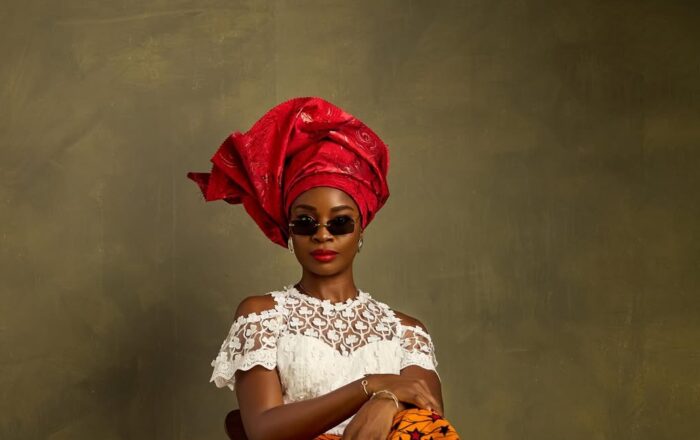
The traditional Igbo head tie is most visible during moments that carry cultural or social significance. It is not just a decorative piece but a signal that the wearer understands and honours the context of the occasion. Some of the occasions or events women can tie Ichafu to include:
Traditional weddings (Igba nkwu). Here, women dress in coordinated blouses and wrappers, with Ichafu putting the look together. It communicates elegance and readiness for the ceremony while also reflecting respect for the traditions being observed. Bright, carefully styled head ties are often preferred to complement the celebratory nature of the event.
Funerals. At funerals, Ichafu takes on a more subdued role. The style and colour of the head tie are often chosen to match the mood of the gathering. Wearing Ichafu in these settings shows respect for the deceased and the family, and signifies awareness of social norms during moments of mourning.
Title-taking and cultural ceremonies. Ichafu is also worn during title-taking ceremonies, festival celebrations, and other cultural events. Women attending these occasions use the head tie as part of a polished and culturally aware appearance. In some cases, the style or fabric may indicate the role of the wearer or the significance of the event in a way thst subtly conveys the social context without words.
Religious and social gatherings. Beyond formal cultural events, Ichafu remains a part of church gatherings, family celebrations, and community events. While the style may be less elaborate than at weddings or title ceremonies, wearing it maintains a sense of formality, respect, and connectedness to tradition.
Modern and everyday adaptations. Today, Ichafu is not limited to formal events. It has moved into modern fashion, casual cultural gatherings, and even diaspora celebrations. Women may adorn the head tie for photoshoots, festivals abroad, or community events to maintain a link to Igbo traditional dressing, thereby blending heritage with personal style.
In all these settings, Ichafu serves a dual purpose – it is both practical and symbolic. It completes the outfit, signals awareness of the occasion, and acts as a subtle expression of identity. Wherever it is worn, it continues to tie the wearer to a living cultural tradition.
Styles and Ways of Tying Ichafu
One of the most fascinating aspects of Ichafu is its versatility. While it may appear as a simple head tie, the way it is styled can completely change the look of the outfit. In Igbo traditional dressing, the head tie is not just functional, it is a canvas for personal expression and cultural storytelling.
Some women prefer their Ichafu tied in a straightforward, clean style. This approach often involves folding the fabric neatly and securing it close to the head. It creates a polished appearance that works well for funerals, formal gatherings, or events where understated elegance is preferred.
For celebratory events like weddings or festivals, more elaborate Ichafu styles are common. These involve multiple folds, layers, or pleats that create height and texture on the head. The layers can be arranged to match the blouse and wrapper, thus adding symmetry and visual balance to the outfit. Layered styles often communicate confidence and sophistication.
Modern trends have introduced bolder, artistic ways of tying Ichafu. Women may use fabric with contrasting patterns or bright colours, and tie it into shapes that stand out and make a statement. These designs often appear at weddings or fashion events and allow the wearer to express individuality while still adhering to cultural tradition.
Some styles involve loosely wrapping the Ichafu around the head with the aim of creating a softer, flowing effect. This casual approach can work for social gatherings or informal ceremonies. Even when tied loosely, it maintains its cultural significance and completes the dressing.
Unlike some fashion trends, there is no formal instruction for tying Ichafu. Most women learn by watching others – their mothers, aunts, or older sisters. The practice is passed down organically, with techniques refined over time. This transfer of knowledge ensures that the skill remains alive, even as styles evolve.
Regardless of style, Ichafu serves dual purposes. It holds hair neatly, supports modesty, and visually unifies the outfit. At the same time, the choice of style, colour, and arrangement reflects the wearer’s personality, the occasion, and cultural understanding.
In simpler term, Ichafu is both practical and expressive as it provides countless possibilities for women to present themselves in ways that are culturally grounded, elegant, and uniquely personal.
Understanding the Difference Between Ichafu and Gele

It is common for people to compare Ichafu with the Yoruba Gele. But while they share similarities as head ties, they occupy different cultural spaces and have distinct characteristics. Understanding these differences helps appreciate the uniqueness of Igbo traditional dressing.
Gele is deeply rooted in Yoruba tradition and has been well documented over decades. It has a structured history and formalized styles associated with Yoruba ceremonies, particularly weddings and festivals.
Ichafu, on the other hand is tied to Igbo culture. Its practice has been passed mainly through observation and generational teaching rather than formal documentation. While it fulfills a similar role in completing the traditional outfit, it is less rigid in terms of structure and formal rules.
Gele is often highly structured,and requires precise folding and pleating to achieve the tall, layered, and sculpted look commonly seen in Yoruba weddings. The fabrics are stiffened in many cases to hold their shape.
Ichafu, however, is generally more flexible. It can be neatly wrapped, loosely tied, or layered creatively but without the strict structural requirement seen in Gele. This flexibility allows for a variety of personal styles within the cultural framework, thereby letting women adapt Ichafu to different occasions and moods.
Both serve as symbols of elegance, social awareness, and cultural pride. But Ichafu tends to emphasize practical completion of the outfit, while Gele often doubles as a statement piece that draws attention to the head and the skill involved in tying it. Ichafu communicates readiness for the occasion and participation in tradition. Gele communicates artistry, social sophistication, and sometimes, status, particularly in elaborate ceremonial contexts.
In some modern discussions and fashion media, the terms Ichafu and Gele are used interchangeably, especially when people outside the respective cultures see a head tie and assume it is the same.
While they may appear similar to an untrained eye, it is more accurate to recognize that Gele belongs to Yoruba cultural identity. Ichafu belongs to Igbo cultural identity. Each has evolved within its own community with its own rules, expectations, and aesthetics
Essentially, Ichafu and Gele share the concept of the head tie but differ in history, formality, and expression. Appreciating these distinctions deepens understanding of the cultural significance embedded in traditional African dressing.
Modern Influence and Evolution

Over time, Ichafu has evolved from a purely traditional element into a dynamic part of Igbo dressing that reflects both heritage and modern style. While it remains rooted in culture, contemporary fashion, social trends, and global exposure have expanded how it is perceived and worn.
Today, Ichafu is not limited to weddings, funerals, or cultural festivals. Designers and fashion enthusiasts incorporate it into everyday and semi-formal outfits. Fabrics now include lighter materials, contemporary prints, and blends that make tying easier while adding visual appeal.
The modern Ichafu is often paired with blouses and skirts that are influenced by both African and global fashion trends. This allows women to maintain cultural authenticity while experimenting with colours, patterns, and textures.
Platforms like Instagram, Pinterest, and TikTok have increased the visibility of Ichafu. Influencers and content creators showcase unique tying techniques, vibrant fabrics, and creative combinations that expose a broader audience to the Igbo head tie.
This digital presence has also encouraged the younger generations to embrace Ichafu. Many women in the diaspora now wear it at cultural events, weddings, or community gatherings abroad in a way that is helping to preserve the tradition while adapting it to new environments.
Modern trends have led to some combination with other African head tie traditions. While Ichafu remains distinct from Gele, exposure to different styles has inspired hybrid designs and new tying techniques. This exchange has contributed to creativity without erasing the cultural roots of Ichafu.
Despite these modern adaptations, Ichafu still fulfills its original purposes which include completing an outfit, signalling respect for the occasion, and expressing cultural identity
The head tie has simply grown to accommodate personal style, social trends, and the global stage. As such, it demonstrates that culture is living and adaptable, able to retain meaning, even as its appearance evolves.
The modern Igbo head tie shows that tradition and creativity can coexist. It remains a visible link to Igbo traditional dressing, even as it allows women to express themselves in ways that feel both contemporary and culturally grounded.
Misconceptions About Ichafu
Despite its visibility and long-standing role in Igbo traditional dressing, Ichafu is often misunderstood. Some misconceptions reduce its cultural depth or misrepresent its purpose. Addressing these misunderstandings helps to preserve its significance.
One common misconception is that Ichafu exists purely for aesthetic appeal. While it undeniably adds elegance to an outfit, this view overlooks its cultural meaning. Ichafu signals readiness for an occasion, shows respect for tradition, and reflects identity. It is as much a cultural statement as it is a style choice.
Because Ichafu and the Yoruba Gele both serve as head ties, they are sometimes, assumed to be identical. In reality, it belongs to Igbo tradition, with flexible styles and generational teaching. Gele, by contrast is more structured, with formalized folds and pleats tied to Yoruba customs. Mistaking one for the other ignores the unique cultural context of each.
Another misconception is that Ichafu lacks historical or cultural roots because it is not heavily documented in academic texts. In truth, its history is preserved through practice, oral teaching, and observation across generations. The lack of written records does not diminish its significance. It is a living tradition, passed from mother to daughter and adapted across time and place.
While Ichafu is most commonly associated with weddings, funerals, and ceremonies, this is not its only context. Many women tie it to church, community gatherings, or even casual cultural events. The misconception that it is exclusively for formal occasions limits understanding of its flexibility and contemporary relevance.
By addressing these misconceptions, it becomes clear that Ichafu is far more than fabric on the head. It is a meaningful, adaptable, and enduring part of Igbo traditional dressing that carries cultural identity, personal expression, and social awareness in every fold.
Ichafu in Contemporary Igbo Identity

Today, Ichafu still plays an important role in defining and expressing Igbo identity, both within Nigeria and across the diaspora. It is a visual connection to culture, community, and personal heritage.
For many Igbo women, tying Ichafu is a way to honour their roots. At weddings, festivals, church events, or community gatherings, it signals belonging and participation in a shared cultural history. Even in modern settings where Western attire is common, it retains its relevance by marking the wearer as connected to Igbo roots.
For Igbo communities abroad, Ichafu often serves as a link to home. Women wear it during cultural celebrations, family events, or photoshoots to maintain a sense of continuity and to showcase identity to the younger ones. It becomes a way of telling a story without words. This visually asserts that culture and tradition are alive, no matter the location.
Though it still retains its roots, Ichafu has adapted to contemporary lifestyles. The younger generations may pair it with modern clothing or experiment with bolder styles. Yet, even in these creative expressions, it continues to reflect values associated with Igbo dressing, that is, elegance, respect, and readiness for occasion.
While Ichafu carries collective cultural meaning, it also allows for personal expression. Each woman can choose fabrics, colours, and tying styles that resonate with her personality or mood as a way of blending identity, creativity, and cultural heritage.
In contemporary Igbo life, Ichafu is both a cultural anchor and a personal statement that ties women to their community, signals respect for tradition, and allows individuality to shine. Through its presence, it keeps Igbo identity visible, celebrated, and evolving across generations and geographies.
In Conclusion …
Ichafu is a cultural emblem woven into the fabric of Igbo women traditional dressing. From its practical beginnings as a modest head covering to its place in weddings, festivals, and modern fashion, it has maintained a unique presence that combines elegance, identity, and social awareness.
Its significance goes beyond appearance. Ichafu communicates respect for occasion, ties women to their cultural roots, and offers a space for personal expression. It is passed down through generations, learned through observation and practice with the aim of ensuring that the tradition remains alive, even without extensive written documentation.
Today, Ichafu continues to evolve by embracing creativity, modern trends, and global influences, even as it retains its cultural meaning. Whether worn in a village ceremony, an urban gathering, or a diaspora celebration, it signals pride, readiness, and connection.
Ultimately, Ichafu is a quiet storyteller. Every fold, wrap, and choice of fabric carries meaning. It is a visible link between the past and the present, culture and individuality, tradition and style. For the women who wear it, it is not just a head tie, it is a living expression of Igbo identity.
References
- https://www.icotthusa.org/content/igbo-culture-and-tradition
- https://ozikoro.com/ichafu-a-headgear-that-tells-a-thousand-stories/
- https://www.bellanaija.com/2018/03/chika-oduah-headtie-binds-us/
- https://mykingsgate.co.za/info/igbo-women-attire-23937/
- https://igbocommunitieslondon.org/costumes/
- https://en.wikipedia.org/wiki/Gele_%28head_tie%29
- https://belijose.wordpress.com/2016/03/22/our-gele-or-ichafu-2
- https://unx-art.net/products/ichafu-2023
You may want to check this out …