


Igbo Culture & Heritage
Traditional Igbo Dance: Deep Meaning, Origin, Types, and Cultural Significance

Traditional Igbo dance is a vibrant cultural expression with deep meaning, rich origins, many unique forms, and profound cultural significance that has been passed down through generations.

Traditional Igbo dance is a part of life for the Igbo people of southeastern Nigeria. It involves more than just steps and body movement. It is a way of telling stories, passing values, and sharing history from one generation to the next. In villages, towns, and even cities, people gather to perform dances that mark important moments, like harvests, weddings, coming-of-age celebrations, or community festivals.
Each dance carries meaning. Some celebrate youth and strength. Others honour courage or signal social milestones. Movements, rhythm, and costume all work together to communicate what words cannot fully express. Traditional Igbo dance is both personal and communal. It connects people to their families, communities, and heritage.
In this article, we take a closer look at the essence of traditional Igbo dance. We explore its origins, the different types performed across Igbo communities, and the roles these dances play in preserving culture and identity.
From the energetic dances performed by young men to the elegant dances by young women, traditional Igbo dance inspires pride, teach values, and bring people together.
Understanding Traditional Igbo Dance
Traditional Igbo dance is one of the ways the Igbo people express their culture, values, and shared history. Aside being performances to watch, these dances are expressions of community, identity, and history. Every movement carries meaning. Every rhythm tells a story. From small village gatherings to major festivals, dance has been a way for the Igbo people to celebrate life, teach values, and connect with one another.
Traditional Igbo dance is deeply rooted in daily life and social practices. Some dances are performed by young men to display strength and agility, while others are led by women to express grace and maturity. Many dances mark significant moments, like marriages, naming ceremonies, harvest festivals, or the passage into adulthood. In all cases, dance is a language. A way of communicating that combines music, movement, and cultural knowledge.
To understand these dances also means to appreciate the role of music and costume. Traditional instruments like drums, gongs, flutes, and bells provide the rhythm that guides the dancers. Clothing, beads, and accessories often indicate the purpose of the dance, the status of the performers, or the occasion being celebrated. The combination of movement, music, and attire transforms each performance into a living story that reflects the values and heritage of the Igbo people.
By learning about traditional Igbo dance, we can see how culture, history, and community come together in a single, shared experience. It is a practice that connects generations, preserves traditions, and continues to inspire pride in Igbo identity today.
What It Meant Historically
Long before written records, the Igbo people shared knowledge and traditions through song, storytelling, and movement. Traditional Igbo dance was a central part of this cultural transmission. It was a way to communicate history, social norms, and community values without relying on words alone. Every performance carried lessons about life, courage, respect, and belonging.
Historically, these dances were tied to daily life and seasonal cycles. Some marked the planting or harvest of crops by giving thanks for abundance and encouraging cooperation among community members. Others celebrated important social events, like the transition of youth into adulthood, marriages, or the recognition of warriors and leaders. In each case, dance was not just entertainment, it was a living record of community life.
The movement, rhythm, and music of traditional Igbo dance served as a form of memory. Steps and patterns were repeated across generations with the aim of ensuring that knowledge and stories of the past were never lost. Certain dances also had spiritual significance as they connect participants to their ancestors and reinforce a sense of continuity between the living and those who came before.
In essence, traditional Igbo dance was both a cultural archive and a teaching tool that allowed communities to celebrate achievements, honour traditions, and guide the younger ones in understanding their place in the world. This historical role continues to inform how dances are performed today, thereby maintaining a link between the past and present.
How Traditional Igbo Dance Works
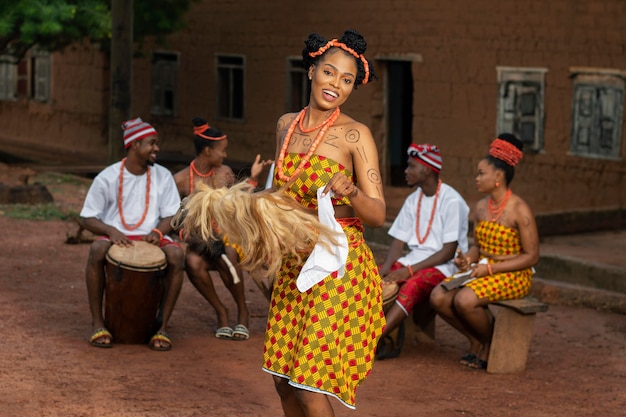
At first glance, traditional Igbo dance may look like a series of steps set to music. But then, it is much more than that. Each movement is deliberate, and each rhythm carries meaning. The dancers, musicians, and audience are all part of a shared experience. The performance is a conversation in motion where music guides the body, and the body responds with expression, energy, and emotion.
Music is at the base of every performance. Drums, gongs, flutes, and bells provide the beats that dancers follow. The rhythm often sets the pace, intensity, and mood of the dance. Faster beats encourage lively jumps and spins, while slower rhythms allow more graceful, controlled movements.
In many communities, musicians and dancers practice together for months, learning to respond to each other instinctively. This creates harmony between sound and motion that is both precise and expressive.
Costumes also play a key role in traditional Igbo dance. Clothing, beads, raffia, and other adornments are carefully chosen to reflect the occasion, the status of the performers, or the message of the dance. The way dancers move with these costumes adds another layer of meaning. Every turn, step, and gesture becomes a way to tell a story.
Many dances are organized by age, gender, or social group. Young men might perform high-energy dances to display strength, while young women perform movements that show grace and elegance. Group formations often change throughout a performance, thereby creating patterns that communicate unity, hierarchy, or celebration.
The beauty of traditional Igbo dance lies in its balance between structure and freedom. While steps, rhythms, and formations are learned and practiced, dancers also bring personal expression, improvisation, and creativity. This combination of discipline and spontaneity is what makes the dances rich, alive, and uniquely tied to the communities that nurture them.
Through music, movement, and costume, traditional Igbo dance creates a living connection between the performers and the audience, between the past and the present, and between individual expression and communal identity. It is an art form that teaches, celebrates, and brings people together in ways words alone cannot.
Types of Traditional Igbo Dance
Traditional Igbo dance comes in many forms, each of which has its own purpose, style, and story. Across different communities, dances celebrate youth, bravery, beauty, or social milestones. Some are lively and energetic while others are graceful and ceremonial. Learning about the types of Igbo dances shows the diversity and richness of the culture.
Here are some of the most unique and popular types of traditional Igbo dance:
Atilogwu Dance
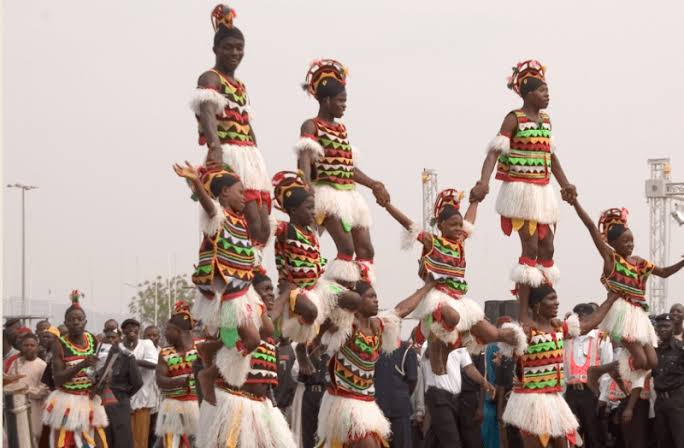
Among the many forms of traditional Igbo dance, the Atilogwu dance is, perhaps, the most energetic and widely recognized. Its name which is loosely translated as “added charm” hints at the incredible skill and athleticism required of performers. The dance is traditionally performed by young men and is a display of strength, agility, and coordination.
Atilogwu is known for its acrobatic movements that include flips, high jumps, spins, and rapid footwork. Every movement follows the rhythm of drums, gongs, flutes, and other traditional instruments. The music sets the pace while the dancers respond in a way that is both precise and expressive. This combination of rhythm and motion is a defining feature of traditional Igbo dance.
The origins of Atilogwu are closely tied to festivals, harvest celebrations, and communal gatherings. Historically, it was a way for young men to demonstrate their vitality and physical skill to their community. Over time, it has become a cultural emblem of youth and energy in Igbo society.
Costumes are an essential part of the performance. Dancers wear brightly coloured attire, often adorned with beads and raffia which accentuate their movements. The visual impact of the costume, combined with the rhythm and athleticism of the dance makes Atilogwu a captivating spectacle.
Today, Atilogwu is performed in villages, towns, and even on international stages. It is a testament to the endurance and vibrancy of traditional Igbo dance. Beyond entertainment, the dance preserves cultural values, inspires pride, and teaches the younger ones about the importance of discipline, practice, and community participation.
Nkwa Umuagbogho (Maiden’s Dance)

Nkwa Umuagbogho, often referred to as the Maiden’s Dance is one of the most elegant forms of traditional Igbo dance. Unlike the athletic energy of Atilogwu, this dance emphasizes grace, poise, and rhythm. This makes it a showcase of beauty and social maturity.
Traditionally, Nkwa Umuagbogho is performed by young women, especially those reaching adulthood. The dance allows them to display elegance, discipline, and confidence. Movements focus on the waist, shoulders, and hands which then create flowing patterns that are both expressive and symbolic. Each gesture can convey social messages, from readiness for marriage to the display of personal refinement.
Music is foundational to Nkwa Umuagbogho. Traditional instruments, such as drums, gongs, and flutes set the pace and tone. The movements of the dancers respond to the rhythm, and in doing that, weave a performance that is both harmonious and visually captivating. Costumes which are often brightly coloured and decorated with beads and traditional cloth enhance the storytelling aspect of the dance.
Historically, the Maiden’s Dance was performed during festivals, naming ceremonies, and community celebrations. It served as both entertainment and social instruction that taught the younger members of the community about cultural values, femininity, and poise. Through the dance, girls were guided in understanding social expectations while being celebrated for their maturity and readiness to assume adult roles.
Today, Nkwa Umuagbogho remains an important expression of traditional Igbo dance. It is performed in schools, cultural events, and festivals as a way of preserving the elegance and meaning of the practice for new generations. The dance remains a symbol of beauty, cultural pride, and the continuity of Igbo heritage.
Egedege Dance

The Egedege Dance is one of the most celebrated forms of traditional Igbo dance known for its royal elegance and ceremonial flair. Unlike the high-energy jumps of Atilogwu or the graceful poise of Nkwa Umuagbogho, Egedege is distinguished by its regal presentation, storytelling, and elaborate performance.
The modern Egedege dance was popularized by Queen Theresa Onuorah of Unubi in Anambra State. Traditionally, the dance was performed during important events such as festivals, weddings, funerals, and community ceremonies. Its performance symbolizes social status, pride, and the cultural richness of the Igbo society.
Costumes are central to the impact of Egedege. Performers wear vibrant traditional attire that includes elaborately decorated headgear, beads, and raffia. The visual elegance of the dancers complements the rhythmic music which is provided by flutes, gongs, drums, and other percussion instruments. Each movement, step, and gesture is carefully choreographed to convey stories, honour tradition, and engage the audience.
Egedege is often led by a principal performer referred to as the queen who guides the ensemble through the sequence of the dance. While the dance is structured, it allows room for individual expression as a way of showcasing both personal skill and collective harmony.
This dance continues to be a cornerstone of traditional Igbo dance that bridges the past and the present. Today, Egedege is performed at cultural festivals across Nigeria and even internationally, thereby offering audiences a glimpse into Igbo heritage and the beauty of its ceremonial arts. The dance not only entertains but also preserves stories, values, and traditions that are central to Igbo identity.
Ikpirikpi Ogu (Ohafia War Dance)

The Ikpirikpi Ogu which is also known as the Ohafia War Dance is a unique form of traditional Igbo dance that celebrates bravery, strength, and the historical legacy of warriors. Originating from the Ohafia community in Abia State, this dance has roots in a time the Ohafia people were known for their courage and warrior spirit.
Unlike other dances that celebrate festivals or social milestones, Ikpirikpi Ogu was historically performed to honour the feats of warriors returning from battle. Movements in the dance mimic combat actions, and showcase strength, agility, and fearlessness. Performers often carry symbolic weapons such as swords or sticks which reflect the martial tradition of the community.
Music is an essential part of the war dance. Drums, gongs, and other traditional instruments create powerful rhythms that guide the movements of the dancers. The beats are often strong and commanding, to match the intensity of the choreography. Costumes are typically made of raffia, beads, and traditional cloth which accentuate the movements and add visual impact.
While the original purpose was tied to warfare and heroism, today, Ikpirikpi Ogu is performed during festivals, cultural events, and community celebrations. It serves as a living memory of the courage and resilience of the Ohafia people that reminds the audiences of their history and identity.
Through Ikpirikpi Ogu, traditional Igbo dance preserves stories of heroism, fosters communal pride, and continues to inspire the younger generations. The dance reveals that Igbo cultural expression is not only about celebration but also about remembering and honouring the past.
Other Dance Forms

Egwu Ogene
Beyond Atilogwu, Nkwa Umuagbogho, Egedege, and Ikpirikpi Ogu, there are numerous other traditional Igbo dance forms that reflect the diversity and creativity of Igbo communities. Each dance carries its own purpose, style, and story that highlight the richness of Igbo cultural expression.
Egwu Ogene is a popular dance that focuses on intricate footwork and coordination. Often performed during festivals and social gatherings, it uses the Ogene as the primary instrument to create a distinctive rhythm that guides the movements of the dancers. This dance encourages group participation and community engagement, thus making it both entertaining and socially significant.
Egwu Adamma is another notable dance, often performed by young women to celebrate beauty, elegance, and social grace. It is usually part of cultural festivals or coming-of-age ceremonies, and its fluid movements showcase poise, charm, and the artistry of feminine expression.
Mkpokiti is a communal dance performed during celebrations, like weddings, harvests, and town festivals. It often involves synchronized group movements, storytelling through gestures, and a strong connection between the musicians and the dancers. The dance reinforces unity, cooperation, and shared identity within the community.
Other lesser-known dances exist across different Igbo towns and villages, and each reflects local traditions, values, and histories. While some dances emphasize athleticism, others highlight elegance, storytelling, or ceremonial importance. Together, these forms show that traditional Igbo dance is not a single style but a rich collection of practices that express the full spectrum of Igbo life.
By exploring these other dances, we see how traditional Igbo dance continues to adapt and thrive in a way that preserves cultural knowledge as well as provides entertainment, social cohesion, and a sense of pride for communities.
Cultural Significance and Social Roles
Traditional Igbo dance provides more than entertainment. It is a vital part of Igbo culture that carries history, values, and social meaning. Each dance tells a story, celebrates community, and strengthens social bonds. Through movement, music, and rhythm, these dances teach, honour, and connect people across generations.
One of the most important roles of traditional Igbo dance is the preservation of history. Many dances, like the Ikpirikpi Ogu recall past events, heroic deeds, or the achievements of the community. They act as living archives that keep the memory of the ancestors and their accomplishments alive. This oral and performative tradition ensures that the younger generations learn about their heritage in a vivid and engaging way.
Traditional Igbo dance also plays a social role. Certain dances mark key life events like births, marriages, initiation into adulthood, or harvest celebrations. They provide a structured way for communities to recognize achievement, passage, or social status. For example, Nkwa Umuagbogho teaches young women grace and poise as well as celebrates their transition into adulthood. Atilogwu highlights youth, strength, and agility with the aim of reinforcing communal values around energy, skill, and teamwork.
Beyond education and commemoration, traditional Igbo dance fosters unity. Many dances are performed in groups which requires coordination, timing, and cooperation. This group dynamic reinforces social cohesion and a sense of belonging. Even spectators are part of the experience as they join in clapping, singing, or responding to the rhythm, thereby making the event communal rather than purely performative.
Spiritual and ceremonial significance is another important aspect. Some dances honour the deities, ancestors, or spirits. Music, costume, and movement all work together to create a ritual space where physical, social, and spiritual elements intersect.
In contemporary Igbo society, traditional Igbo dance continues to inspire cultural pride and identity. It is performed at festivals, schools, cultural exhibitions, and even on international stages as a reminder to both the Igbo people and the world of the richness of their heritage. The dances serve as living bridges between the past and the present. That way, they keep the traditions alive as they engage new audiences in meaningful ways.
Through these cultural and social roles, traditional Igbo dance becomes a way of life, a teacher, and a connector of communities that preserves values as it celebrates the vibrancy of the Igbo culture.
Music and Performance Elements
Music is at the heart of every traditional Igbo dance. It is the guide, the heartbeat, and the language through which stories are told. Drums, gongs, flutes, and other indigenous instruments provide rhythm and energy that set the pace for the movements of the dancers. Each drumbeat signals a step, jump, or turn that create a seamless connection between sound and motion.
The performance of traditional Igbo dance is carefully coordinated. Dancers often practice for weeks or months to perfect timing, synchrony, and expression. Movements are designed to match the intensity and mood of the music, whether the beat calls for high-energy jumps in Atilogwu or slow, graceful steps in Nkwa Umuagbogho. Precision and responsiveness to rhythm are essential, as the dance and music exist in constant dialogue.
Costumes and adornments are key performance elements. Beads, raffia, brightly coloured cloth, and other traditional materials accentuate movement, to add visual storytelling to the dance. The way dancers manipulate these items – swishing skirts, shaking rattles, or moving headgear enhances the audience’s understanding of the story or message being conveyed.
In many dances, call-and-response is a prominent feature. Musicians may play a sequence, and dancers respond with a series of steps or gestures, thus creating interaction between the performers. This interaction often extends to spectators who clap, sing, or shout encouragement, thereby making the dance a communal experience rather than a purely performative one.
Another critical element is spatial formation. Group dances like Mkpokiti or Egwu Ogene use patterns, circles, and lines to communicate unity, hierarchy, or narrative progression. The arrangement of dancers adds meaning beyond individual movement.
Overall, the music and performance elements of traditional Igbo dance work together to create a rich, immersive experience. Rhythm, costume, choreography, and audience participation combine to tell stories, honour traditions, and celebrate the cultural heritage of the Igbo people.
Traditional Igbo Dance Today
The traditional Igbo dance remains a rich and meaningful part of contemporary Igbo life. While some dances were once limited to villages and specific ceremonies, today, they appear in schools, cultural festivals, community events, and even on international stages. The dances are still entertaining, educating, and inspiring pride in Igbo heritage.
Modern performances often combine traditional elements with contemporary influences. For example, costumes may incorporate modern fabrics or designs while maintaining traditional patterns and colours. Musicians, sometimes, combine indigenous instruments with keyboards or drums to create new rhythms with the goal of allowing the dance to appeal to the younger audiences while preserving its cultural essence.
Schools and cultural organizations play a key role in keeping these dances alive. Many young Igbo people learn dances like Atilogwu, Nkwa Umuagbogho, or Egedege as part of cultural programmes. This ensures that the traditions are passed on and that the dances remain relevant in a rapidly changing world.
Festivals, both within Nigeria and internationally provide platforms for traditional Igbo dance to reach broader audiences. Performances at events like the New Yam Festival, Igbo Cultural Day celebrations, and diaspora festivals showcase the energy, elegance, and history of Igbo communities to people across the globe. These performances affirm cultural identity and strengthen communal ties among the Igbo people.
At the same time, traditional dances have found new roles in entertainment, education, and tourism. Dance troupes perform at cultural shows, competitions, and media productions. This makes traditional Igbo dance a bridge between the past and the present. This adaptability reveals the resilience of Igbo culture, and shows that even centuries-old practices can evolve while retaining their core meaning.
In essence, traditional Igbo dance today is not frozen in history. It is a living, breathing art form that continues to celebrate heritage, bring communities together, and inspire pride across generations.
In Conclusion …
Traditional Igbo dance is a living reflection of Igbo culture, history, and community values. From the athletic leaps of Atilogwu to the graceful elegance of Nkwa Umuagbogho, the ceremonial richness of Egedege, and the heroic narrative of Ikpirikpi Ogu, each dance tells a story and connects people across generations.
These dances preserve history, teach social values, and celebrate life’s milestones. They unite communities, honour the ancestors, and give young people a way to express identity and pride. Even today, traditional Igbo dance keeps thriving and adapting to modern stages, schools, and cultural events, even as it keeps the essence of Igbo heritage alive.
Getting to understand and appreciate these dances is not only an exploration of artistry and rhythm. It is an insight into the heart of Igbo culture. A culture that celebrates life, courage, beauty, and community through every step, beat, and gesture.
References
- https://face2faceafrica.com/article/igbo-traditional-dance
- https://africawelshnews.com/index.php/blog/12-world/269-igbo-traditional-cultural-play-and-dance-and-its-benefits-for-igbo-children-and-adults-in-the-diaspora
- https://www.icotthusa.org/content/igbo-culture-and-tradition
- https://en.wikipedia.org/wiki/Atilogwu
- https://en.wikipedia.org/wiki/Egedege_Dance
- https://en.wikipedia.org/wiki/Ohafia_War_Dance
You might want to check this out …