



Anambra News
Ihembosi Town: History, Culture, People, Challenges, and Resilience

Ihembosi is a historic town located in Ekwusigo Local Government Area of Anambra State, Nigeria. It is one of the communities that form the Anaedo cultural cluster, sharing boundaries with Nnewi, Ozubulu, Okija, and Ukpor. The town holds a special place in Igbo history because of its cultural richness, ancestral traditions, and resilience in the face of numerous challenges. The name Ihembosi is often interpreted to mean “The Light of the Day”, symbolizing hope, renewal, and guidance.
Strategically, Ihembosi lies in a corridor that connects several commercial and cultural hubs of Anambra State. Its closeness to Nnewi, an industrial center, and Onitsha, a major commercial city, has influenced its growth, even though development has been slowed by ecological and infrastructural problems. Despite its struggles, Ihembosi remains a proud custodian of Igbo heritage, where oral traditions, cultural festivals, religious practices, and communal solidarity continue to define the identity of its people.
Location and Geography
Ihembosi is situated in the southeastern part of Nigeria, within Ekwusigo Local Government Area of Anambra State. Geographically, it is positioned between some of the most vibrant communities in Igbo land. To the north and west, it shares boundaries with Ozubulu and Nnewi, to the south, it borders Okija in Ihiala Local Government Area, and to the east, it stretches toward Ukpor in Nnewi South. This strategic positioning has historically made it a connecting link between communities engaged in trade, farming, and cultural exchange.
The land in Ihembosi is generally fertile and supports agriculture, which has been the traditional occupation of its people. However, the soil is highly susceptible to erosion, a problem that has devastated large portions of the community in recent decades. Gully erosion has cut across villages such as Umuohi, Ubahu, Otukwe, and Umuabo, swallowing farmlands, homes, and roads. The once vibrant Ihembosi-Ozubulu-Ukpor road, a key access point, has been rendered almost impassable in some sections due to neglect and poor drainage systems.
In terms of climate, Ihembosi experiences the typical southeastern Nigerian weather, that is, two main seasons: the rainy season and the dry season. The rains are heavy, often contributing to the worsening erosion, while the dry season offers a reprieve for farming and cultural activities. Its geography, while blessed with fertile land, has unfortunately also made it a hotspot for ecological disaster, yet the community continues to adapt and survive.
Origins, History, and Identity
The history of Ihembosi is deeply tied to the larger history of the Igbo people. Oral traditions trace the town’s ancestry to Otolo, one of the four quarters of Nnewi, suggesting that the earliest settlers of Ihembosi were descendants of the same patriarchal lineage. This connection explains the close cultural and social ties between Ihembosi and Nnewi.
Another version of Ihembosi’s origin story links the community with Mbosi, a neighboring town in Ihiala. According to this account, both towns share a common ancestry, and the similarity in their names is seen as evidence of their brotherhood. The cultural bonds between Ihembosi and Mbosi continue to this day, as both communities maintain social and marriage ties.
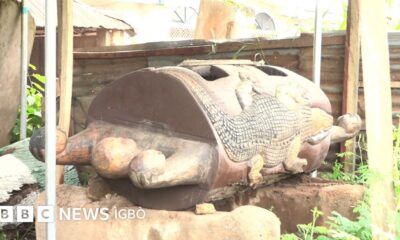
One fascinating aspect of Ihembosi’s identity is its cultural totem, the African giant white-tailed rat (ewi). Among the people of Ihembosi, the ewi is regarded as sacred and is not hunted or eaten. This practice symbolizes the people’s reverence for ancestral traditions and the deep symbolic relationship between humans and animals in Igbo cosmology.
The arrival of colonial administrators and Christian missionaries in the 19th and 20th centuries had a profound effect on Ihembosi. While many traditional practices survived, new religions and western education reshaped the town’s identity. Today, Ihembosi reflects a blend of ancient customs and modern influences, with its people preserving oral histories while also embracing Christianity and modern governance systems.
Internal Structure and Governance
Ihembosi is made up of several villages, which are the basic units of its social organization. Some of the major villages include Umunakwa, Umuabo, Uhualor, Ubahu, Umuohi, Otukwe, Chiekenta, and Onucha. Each village is further divided into kindreds and extended families, which serve as the foundation for communal life. These structures are not only social but also political, as they determine how responsibilities and leadership are shared.
The traditional rulership of Ihembosi lies with the Igwe, who serves as the symbolic and political head of the community. At present, Igwe Jerry Udechukwu Okolie is recognized as the town’s traditional ruler, though his reign has been marked by disputes and controversies. Some factions in the town have contested his leadership, accusing him of failing to unite the community. Despite this, the institution of the Igwe remains central to the town’s governance, as it represents continuity with ancestral authority.
Beyond the traditional ruler, the town also operates through the Ihembosi Development Union (IDU), which serves as the central town union. The union, alongside its diaspora branches, plays a significant role in community development, infrastructure, and welfare. Age grades also form an important part of governance. They act as engines of social order, mobilizing members for projects such as road clearing, security, and festival organization. Together, the Igwe, town union, and age grades constitute a tripartite system of governance that blends tradition with modern civic structures.

Ihembosi union
Cultural Life and Festivals
Culture remains one of the strongest pillars of Ihembosi’s identity. Traditional religion was once the dominant faith, with the people paying homage to local deities and ancestral shrines. These shrines were not only spiritual centers but also places of justice, conflict resolution, and community decision-making. Even today, traces of these practices remain, particularly during festivals and rites of passage.
One of the most important festivals in Ihembosi is the New Yam Festival, which is celebrated with pomp and pageantry. The festival marks the beginning of the harvest season and is a time for thanksgiving, feasting, and unity. During this period, masquerades parade through the streets, showcasing elaborate costumes and performances that embody the spirits of the ancestors. These masquerades are not only a form of entertainment but also a way of transmitting cultural values from one generation to the next.
Harvest rituals and smaller community festivals also punctuate the cultural calendar of Ihembosi. Women and youths play an important role in these events, particularly in organizing dances, songs, and traditional displays. In recent times, Christianity has influenced the way festivals are celebrated. With the dominance of Catholic, Anglican, and Pentecostal churches, many traditional rites have been modified or reinterpreted in line with Christian values. Nonetheless, the spirit of communal celebration remains strong, reflecting Ihembosi’s ability to preserve its heritage while adapting to modern faiths.
Education and Social Development
Education has played a transformative role in Ihembosi. From the early missionary schools to the present-day community and private institutions, learning has been a pathway to empowerment for many indigenes. Some of the notable schools in the town include Community Secondary School Ihembosi, Central School, Ubahu Community School, Chiekenta Primary School, and Otukwe Primary School. Additionally, Umuabu Primary School and Wisdom Secondary School are among the institutions shaping the younger generation.
Beyond local schools, diaspora groups and philanthropists have contributed immensely to education in the town. A prominent example is Dr. Ebuka Onunkwo, a businessman and philanthropist, who has offered scholarships, paid WAEC and NECO fees for hundreds of students, and sponsored community reading competitions. The Ihembosi in Diaspora (IID) group has also made efforts to renovate schools, supply textbooks, and organize literacy campaigns.
Churches in Ihembosi equally support education, especially the Catholic and Anglican missions, which have built schools and host extracurricular programs. Through these combined efforts, Ihembosi has raised a generation of scholars, professionals, and business leaders despite facing infrastructural setbacks.
Economy and Livelihoods
Traditionally, the economy of Ihembosi has been rooted in agriculture. Families cultivate yam, cassava, maize, and palm produce, which serve as both food and cash crops. Palm oil, in particular, has historically been a major source of wealth, used in trade with neighboring towns and in distant markets like Onitsha.
Local markets provide a hub for economic life, where women play a key role as traders in agricultural produce, household goods, and crafts. Artisanship like carpenters, blacksmiths, and tailors also contributes to the livelihood structure.
In the modern era, migration and diaspora remittances have become vital to the economy. Many sons and daughters of Ihembosi live abroad or in major Nigerian cities, sending money home to support families and community projects. Small businesses, retail shops, and transport services also thrive, while proximity to Onitsha and Nnewi ensures access to broader commercial opportunities.
Despite these strengths, the economy is under pressure from erosion, insecurity, and lack of infrastructure, which continue to threaten livelihoods.
Major Challenges
Ihembosi is a town with rich history and resilience, but it also faces some of the most pressing challenges in Anambra State.
Erosion and Flooding:
Perhaps the greatest challenge is gully erosion, which has devastated large parts of the community. Villages like Umuohi, Ubahu, Otukwe, and Umuabo have lost farmlands, homes, and roads to massive gullies that are in some places over 20 feet deep. According to reports, more than 12,000 hectares of land have been affected, displacing families and causing loss of lives. Erosion has also rendered the once vital Ihembosi-Ozubulu-Ukpor road nearly impassable, cutting the town off from neighboring communities.

Erosion affected area in ihembosi
Infrastructure Failures:
Linked to the erosion problem is the lack of proper infrastructure. Abandoned road projects, poorly constructed drainages, and lack of government maintenance have left the town vulnerable. Electricity supply is unstable, while schools and health centers often lack adequate facilities.
Insecurity:
Ihembosi has also struggled with security challenges, including cultism, drug abuse, and kidnappings. In one widely reported case, the traditional ruler, Igwe Jerry Udechukwu Okolie, was kidnapped, highlighting the scale of insecurity. Community youths have sometimes taken matters into their own hands, destroying suspected criminal hideouts.
Youth Unemployment and Drug Abuse:
With limited opportunities for formal employment, many youths face poverty and idleness. This situation has fueled drug abuse, especially the rise of “mkpurummiri” (crystal meth), which has ravaged many Igbo communities.
Leadership Tussles:
Disputes over traditional rulership have also caused division. Controversies surrounding Igwe Okolie’s leadership have led to petitions and counter-petitions, undermining unity in the community.
Together, these challenges paint a picture of a town struggling to balance its proud heritage with urgent modern crises.
Community Efforts and Resilience
Despite its struggles, Ihembosi has shown remarkable resilience. Community members at home and abroad continue to unite in the face of challenges.
The Ihembosi in Diaspora (IID) has been at the forefront of development efforts. The group has renovated schools, sponsored scholarships, funded erosion-control projects, and contributed to healthcare. They also organize community fundraisers to support infrastructure and welfare.
Philanthropists like Dr. Ebuka Onunkwo have made lasting impacts by paying school fees, supporting widows, and sponsoring youth empowerment initiatives. Churches also play a vital role by offering charity programs, youth mentorship, and social support.
Local youth groups have mobilized against insecurity, helping to dismantle criminal camps and supporting community policing efforts. Even in the face of erosion and poor government support, the people of Ihembosi continue to demonstrate self-help, resilience, and a deep commitment to their homeland.
Notable People of Ihembosi
Several individuals from Ihembosi have distinguished themselves in business, leadership, and philanthropy.
- Dr. Ebuka Onunkwo: A businessman and philanthropist, he is widely recognized for his contributions to education, youth empowerment, and community development. Through his foundations, he has provided scholarships and funded numerous projects in Ihembosi.

Dr Ebuka Onunkwo
- Igwe Jerry Udechukwu Okolie: The current traditional ruler of Ihembosi, though his reign has been marked by controversies and challenges, he remains a central figure in the town’s governance.
- Other diaspora achievers in business, education, and culture continue to bring honor to the town, contributing both financially and intellectually to its growth.

These figures embody the spirit of Ihembosi which is resilient, generous, and determined to shine as “The Light of the Day.”
Conclusion
Ihembosi is more than just a town in Ekwusigo LGA, it is a community of history, culture, and resilience. From its ancestral origins linked to Nnewi and Mbosi, to its vibrant festivals and communal life, Ihembosi embodies the spirit of the Igbo people. Yet, it stands at a crossroads, threatened by erosion, insecurity, and leadership disputes.
Despite these challenges, the town continues to shine through the efforts of its people, especially its diaspora and philanthropists who invest in education and infrastructure. Ihembosi’s story is one of endurance and hope. If its challenges are addressed with seriousness and unity, the town will not only survive but thrive, fulfilling its name as truly “The Light of the Day.”
Read more:Nteje Town, Anambra State: History, Culture, and People