
Festivals & Traditions
Nchaka Festival: Celebrating Ogba People’s Cultural Heritage in Rivers State

Nchaka Festival is an annual celebration of harvest, unity and cultural heritage among the Ogba people of Rivers State. This deeply rooted festival honours tradition, welcomes a new year and features rituals, dance, wrestling, thanksgiving and community gatherings that draw visitors from near and far.

When the sun begins to set on another farming year in Ogba land, a special energy fills the air. People gather, drums begin to beat, and laughter drifts through the markets and pathways of Rivers State. It is the season of the Nchaka Festival, a time Ogba people come together to celebrate their cultural heritage, give thanks for the year’s harvest, and renew bonds that hold families and communities close.
The Nchaka Festival is a living story passed down through generations where rich traditions meet the warmth of shared meals, song, dance, and ritual. From the first proclamation by the Oba of Ogba land to the final echo of festive music, Nchaka brings history alive. It invites everyone to witness a culture that treasures gratitude, unity, and the beauty of human connection.
In this article, you will explore the heart of the Nchaka Festival. You will learn about its origins, the people who celebrate it, the colourful rituals that mark its rhythm, and the meaning it holds in both ancient and modern life.
Whether you are discovering this festival for the first time or returning as a curious reader, you will find the story of Nchaka rooted in pride, community and the enduring spirit of the Ogba people.
Who Are the Ogba People?
The Ogba people are an indigenous ethnic group in Rivers State, Nigeria primarily found in the Ogba/Egbema/Ndoni Local Government Area. They are part of the wider Igbo cultural family but maintain their own distinct traditions, language, and social structures. Their communities are organized into clans and villages, each with unique customs. Yet, they all share a deep respect for the authority of the Oba of Ogba land, the traditional ruler and cultural custodian.
Historically, the Ogba people have been farmers, hunters, and traders, with a lifestyle closely tied to the land and seasonal cycles. Agriculture, especially the cultivation of yams, cassava, and other staple crops, has been central to their way of life. The annual rhythms of planting, harvesting, and thanksgiving have influenced not only their economy but also their cultural festivals, with the Nchaka Festival emerging as the most significant celebration of these cycles.
Language is a key marker of Ogba identity. They speak Ogba dialects of the Igbo language which are rich in proverbs, folklore, and oral history. Through storytelling, songs, and ceremonial speeches, the Ogba people preserve and pass down their history, moral lessons, and community values to each new generation.
The Ogba are also known for their warm hospitality, strong community bonds, and respect for elders. These qualities are especially visible during festivals and communal gatherings where social cohesion and shared identity are celebrated. The Nchaka Festival is the pinnacle of these expressions which showcase not only the Ogba people’s agricultural and spiritual traditions but also their artistry in dance, music, and costume.
Origins and Historical Significance of Nchaka Festival
Nchaka Festival is deeply rooted in the history and traditions of Ogba people. Its origins date back centuries, and emerge as a harvest celebration that marked the end of the farming season and honoured the spirits and ancestors believed to protect the land and its people. Agriculture has always been central to Ogba life, with yams considered the most important crop. The festival originally served as a thanksgiving for a bountiful harvest and as a spiritual ritual to ensure future prosperity.
Traditionally, the festival was timed with the ripening of yams, usually between November and December which signals that the harvest season had ended. Villagers would gather in the royal palace or central squares led by the Oba of Ogba land to perform rituals that expressed gratitude to both God and ancestral spirits. These rituals often included offerings of the first yams, prayers, and communal gatherings where the elders recounted stories of their past.
Nchaka Festival is not only about agriculture. It also served as a social and political event where disputes were resolved, youth were inducted into adulthood, and leadership hierarchies were reaffirmed. Through songs, dance, and masquerades, the festival communicated moral lessons, cultural values, and the importance of community cohesion. Each performance and ritual carried symbolic meaning that reflected respect for elders, communal responsibility, and the spiritual connection between humans and the environment.
Over the years, the festival has maintained these core traditions while adapting to modern times. Today, Nchaka Festival continues to honour the ancestors, celebrate the harvest, and strengthen social ties, thus making it a living testimony of Ogba cultural identity. Visitors and the younger generations witness firsthand the resilience of these customs and the pride of the Ogba people in preserving their heritage.
Royal Proclamation and the Start of Celebration
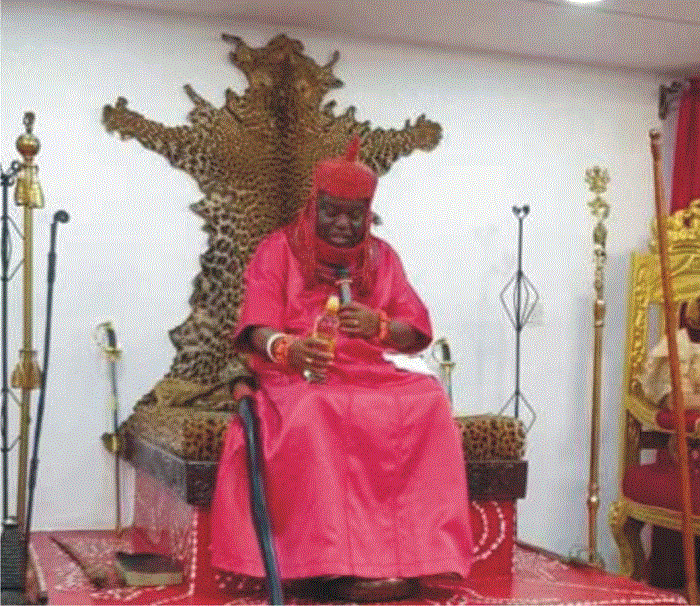
Every year, the Nchaka Festival officially begins with a royal proclamation by the Oba of Ogba land, the traditional ruler and cultural custodian of the Ogba people. More than a ceremonial announcement, this proclamation signals the start of a festival period where peace, unity, and cultural celebration take centre stage. During this time, quarrels are set aside, disputes are paused, and communities come together to honour tradition.
The proclamation usually takes place at a central gathering spot, often the palace square or a significant community venue. The residents from different villages, chiefs, elders, and festival committees join the Oba to mark the beginning of festivities.
Drums beat in rhythmic patterns, flutes and traditional horns signal the gathering, and colourful attire fills the scene. It is a moment that sets the tone for the celebrations that follow, and remind everyone of the spiritual, social, and cultural significance of the Nchaka Festival.
Following the proclamation, the Oba often delivers a speech highlighting the purpose of the festival, the importance of unity, and the need to honour the ancestors. The message encourages all participants to celebrate respectfully and to embrace the values of gratitude, generosity, and community spirit that the Nchaka Festival represents. The young and the old, the locals and visitors, all listen attentively knowing that this announcement begins a period of rich cultural expression, communal bonding, and festive joy.
This ceremonial start also includes symbolic acts such as the offering of the first harvested yams, prayers for protection, and blessings for the community. These traditions connect the people to their ancestors and the land, and reinforce the spiritual foundation of the festival, even before dances, masquerades, and feasting begin.
Key Rituals and Activities
Nchaka Festival comes alive through a series of rituals and activities that capture the heart of Ogba culture. Each ceremony, dance, and gathering is carefully woven into the festival in a way that creates a rich tapestry of tradition, spirituality, and communal joy.
The festival begins with cleansing rituals which is a symbolic way to prepare both the land and the people for the celebration. These rites often involve women and elders walking to rivers or streams to perform prayers and purifying acts. This practice honours ancestral spirits and ensures that the community begins the festival period with harmony and positive energy. Cleansing also signals a fresh start for the year ahead and reflects the deep connection the Ogba people maintain with nature and spiritual life.
A highlight of the Nchaka Festival is the thanksgiving ceremony centered around the new yam harvest. Yams, regarded as a sacred and essential crop are presented to the Oba and shared among the people. Families and friends come together to cook and enjoy communal meals as a way of reinforcing bonds and sharing blessings. Feasting is not only a celebration of abundance but also a practical way to pass down culinary traditions, recipes, and the culture of hospitality for which the Ogba people are known.
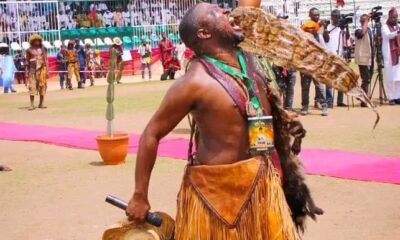
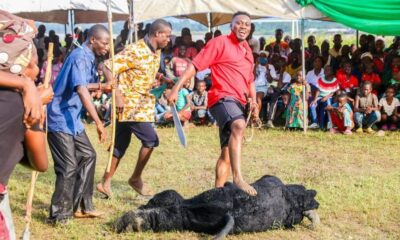
The festival features traditional wrestling competitions locally known as Mgba-Egwu which attract participants from different Ogba communities. These contests are a source of entertainment, pride, and cultural identity. Young men display strength, agility, and skill while spectators cheer and celebrate each match. The wrestling, along with other contests such as drum competitions and masquerade performances showcases the physical, artistic, and social aspects of Ogba culture.
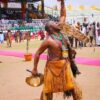
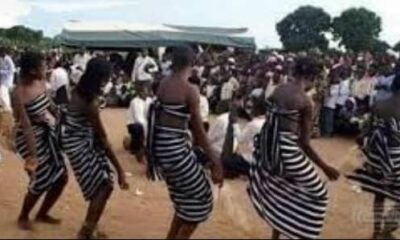
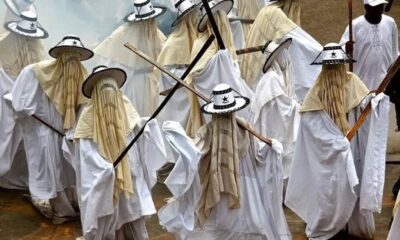
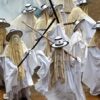
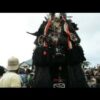
Colorful dances and masquerade performances are at the heart of the Nchaka Festival. Masquerades often represent ancestral spirits and serve as a living bridge between the past and present. Dancers, dressed in elaborate costumes and masks move gracefully to the beat of drums and flutes, telling stories of history, morality, and community values. These performances are both entertaining and educational as they teach the younger generations about Ogba traditions while they keep the visitors are captivated with vibrant visuals and rhythms.
Another key activity during the Nchaka festival is community visitations. The residents visit family, friends, and leaders to exchange gifts, share blessings, and strengthen relationships. These visits promote reconciliation and unity, and ensure that social ties remain strong. The elders often use this time to pass on wisdom and recount stories of the community’s history.
This combination of cleansing, thanksgiving, wrestling, dances, and communal visits creates an experience that is both spiritual and social, and offer a full picture of Ogba life and values. The rituals and activities make the Nchaka Festival not only a cultural highlight but also a living classroom where heritage, community, and joy come together in a meaningful way.
Cultural Significance and Community Unity

Nchaka Festival is both a celebration of harvest and a powerful expression of Ogba identity, heritage, and community values. Fundamentally, the festival reminds everyone of the importance of togetherness, gratitude, and continuity. By bringing people from different villages, clans, and even distant cities together, it strengthens bonds that might otherwise weaken over time.
One of the greatest contributions of Nchaka festival is its ability to unite generations. Elders, young adults, and children all participate in the rituals, dances, and storytelling. The elders pass down knowledge about customs, moral values, and the history of the Ogba people to ensure that the younger generations carry the culture forward. Children watch the dances, listen to songs, and learn about the meaning behind each masquerade, thus instilling a sense of pride and belonging from an early age.
The spiritual dimension of Nchaka Festival also reinforces community unity. Prayers and offerings made during the festival are intended to protect the land, bless families, and promote peace among neighbours. These rituals encourage a collective sense of responsibility, and remind the participants that the well-being of the community depends on cooperation, respect, and shared effort.
Social harmony is further promoted through activities like wrestling competitions, feasts, and community visits. Friendly competitions encourage camaraderie while feasting together fosters generosity and mutual respect. Gift exchanges during visitations highlight thoughtfulness and reinforce social bonds, thus creating an environment where everyone feels valued and included.
In essence, the Nchaka Festival serves as a living classroom for Ogba values. It is a time when culture, spirituality, and social life converge to produce a sense of belonging that goes beyond the festivities. This unity ensures that the Ogba people remain connected to each other and to their traditions, no matter where they live.
Modern Observance and Adaptation
While the Nchaka Festival has its roots in centuries-old traditions, it has evolved to remain relevant in modern times. Today, the festival blends ancient rituals with contemporary cultural expressions to create a celebration that honours the past and embraces the present.
One major adaptation is the inclusion of inter-community cultural competitions. The youth and community groups participate in organized dance contests, musical performances, and art displays that showcase both traditional and modern creative skills. These events allow the younger generations to engage with their heritage in ways that feel exciting and relevant while still respecting ancestral practices.
The festival has also become more inclusive. Religious diversity in Ogba land has grown over time, and the festival organizers now emphasize that everyone is welcome to participate, regardless of faith. Interdenominational prayers and blessings are often incorporated alongside traditional rituals with the aim of ensuring that the festival fosters unity across different belief systems.
Modern communication and media have also shaped the observance of the festival. Local newspapers, radio, and social media platforms now report on events, share festival highlights, and invite visitors from outside Ogba land to experience the celebrations. This exposure has helped the Nchaka Festival to attract attention from tourists, researchers, and cultural enthusiasts, thereby increasing pride among the locals while educating others about Ogba traditions.
Yet, despite these modern touches, the essence of the festival remains unchanged. Rituals such as thanksgiving for the yam harvest, masquerade performances, and community visitations continue to anchor the festival in its spiritual and cultural foundations. The balance between tradition and innovation allows the festival to thrive as it bridges generations and reinforces the Ogba people’s connection to their heritage.
Experiencing Nchaka Festival
For anyone eager to experience the Nchaka Festival firsthand, visiting Ogba land in Rivers State during the festival season is a journey into vibrant culture, tradition, and community life. The festival offers a unique opportunity to witness the rich heritage of the Ogba people while immersing oneself in their customs, music, dances, and rituals.
Visitors are greeted with a lively mix of colours, sounds, and aromas. Traditional dances and masquerade performances fill the streets and open spaces, with performers wearing elaborate costumes and masks. The rhythm of drums and flutes sets a celebratory tone that draws spectators into the heart of the festival. Each dance and movement tells a story that reflects the values, history, and spiritual beliefs of the Ogba people.
Food is another highlight of the Nchaka Festival. Guests can taste dishes made from the new yam harvest, alongside other traditional delicacies prepared by local families and community groups. Sharing meals provides a window into Ogba hospitality and the communal spirit that defines the festival.
The festival also features wrestling competitions, cultural exhibitions, and gift exchanges which offer the visitors an interactive experience of local traditions. Attending these events allows outsiders to appreciate the discipline, skill, and artistry involved in each activity while also fostering cultural understanding and respect.
For those planning a visit, it is recommended to arrive early in the festival season to witness the royal proclamation, the cleansing rituals, and the opening ceremonies. Interacting with the local residents, listening to the elders’ stories, and observing the ceremonies closely will provide a deeper appreciation of the significance of the festival.
Experiencing the Nchaka Festival does not just entail sightseeing, it means participating in a living culture. The warmth of the people, the vibrancy of the celebrations, and the depth of tradition make the experience unforgettable. Whether you are a cultural enthusiast, a researcher, or simply a traveller seeking meaningful experiences, the festival offers a rare glimpse into the heart of Ogba heritage.
In Conclusion …
Nchaka Festival stands as a vivid celebration of the Ogba people’s cultural heritage in Rivers State. It is a festival that weaves together spirituality, social unity, and tradition to create a vibrant tapestry of community life that has endured for generations. From the royal proclamation by the Oba of Ogba land to the cleansing rituals, wrestling competitions, masquerades, feasting, and communal visits, every moment of the festival reflects gratitude, togetherness, and pride in Ogba identity.
Beyond its rituals and festivities, Nchaka is a time families, friends, and entire communities reconnect to reaffirm bonds and ensure that cultural values are passed to the younger generations. It is a living testament to the resilience and continuity of the Ogba people which reminds everyone that heritage is not only preserved in history but also in the shared experiences, stories, and celebrations of today.
In modern times, Nchaka festival has adapted to include new forms of expression, intergenerational participation, and wider community engagement while still retaining the essence of thanksgiving, spiritual reflection, and social cohesion. Visiting or participating in the Nchaka Festival offers a rare opportunity to witness a culture in motion where every drumbeat, dance step, and ceremonial act carries the weight of history and the joy of living tradition.
The Nchaka Festival is the heartbeat of the Ogba people which celebrate their identity, their land, and their enduring spirit. It invites both the locals and visitors to not only observe but also participate in a story that continues to shape the cultural landscape of Rivers State for generations to come.
References
- https://incubator.wikimedia.org/wiki/Wp/ekp/Ogba_people
- https://dailytrust.com/nchaka-festival-where-humans-commune-with-spirits/
- https://nationalnetworkonline.com/2024/11/20/oba-of-ogbaland-proclaims-2024-nchaka-festival/
- https://nationalnetworkonline.com/2025/11/20/ogba-people-in-festive-mood-as-oba-of-ogbaland-proclaims-2025-nchaka-festival-renewed-call-that-festival-is-for-all-believers-and-should-be-celebrated-by-all-peacefully/
- https://ozikoro.com/nchaka-festival-a-celebration-of-heritage-spirituality-and-harvest-in-ogba-land-rivers-state/
You might want to check this out …