




Nigerian Ethnic Groups
Kalabari People of Rivers State, Nigeria: A People of History, Culture, Language, and Traditions

Kalabari people are a vibrant ethnic group in Nigeria with a rich history, unique language, and enduring cultural traditions. Discover their festivals, art, family structures, economy, and spiritual life in this comprehensive guide.

The Kalabari people of Nigeria are known to be a community with deep roots, rich traditions, and a history defined by rivers and oceans. From the water channels of the eastern Niger Delta to the modern towns and cities, their story is one of resilience, connection, and cultural pride. Many people know Nigeria for its major ethnic groups but the Kalabari people hold a unique place in the cultural landscape of the nation, and their way of life offers a compelling window into the diversity of Nigerian heritage.
Imagine a world built on waterways where canoes are more than boats, where music and masquerade are part of the rhythm of daily life, and where festivals carry centuries of meaning. For generations, the Kalabari people made these waters their home by building communities that thrived on fishing, trade, and relationships formed by the ebb and flow of rivers. Their language, art, and ceremonies tell stories of ancestors, spirits, and journeys that span time.
This article brings together the history, culture, language, and traditions of the Kalabari people in one place. You will learn where they come from, how they live, what they believe, and why their cultural identity remains strong today.
Whether you are learning about them for the first time or seeking deeper insight, the story of the Kalabari people is worth exploring and celebrating.
Who Are the Kalabari People?

The Kalabari people are an ethnic community that lives primarily in Rivers State, in the eastern part of Nigeria’s Niger Delta. They belong to the larger Ijaw-speaking population but have maintained a distinct identity through their language, traditions, and history. Life for the Kalabari has always been closely tied to water. Their towns and villages are built along rivers, creeks, and mangrove islands which makes boats and waterways essential to travel, trade, and daily life.
Historically, the Kalabari people organized themselves into extended family groups called canoe houses. More than family units, they were social, economic, and political entities that managed trade, protected members, and organized community events. This structure helped the Kalabari to thrive in both peaceful times and periods of conflict, and allowed them to control riverine trade and maintain social cohesion.
Kalabari people are also known for their rich cultural heritage which includes vibrant festivals, traditional music, dance, and elaborate art forms. Despite changes over centuries, including interactions with European traders and the spread of Christianity, they have preserved much of their ancestral identity. Today, they continue to balance modern life with traditions that have defined them for generations, thus keeping their history and culture alive for future generations.
Origins and Historical Background
The Kalabari people trace their roots to the Ijaw ethnic group, one of the oldest riverine communities in the Niger Delta. Oral histories and linguistic studies suggest that the Kalabari migrated from inland areas toward the river deltas centuries ago seeking fertile land, abundant fishing waters, and safer trade routes. Their settlements along the creeks, mangrove swamps, and islands allowed them to develop a unique river-based culture that distinguished them from neighbouring groups.
Historians often point to a legendary ancestor named Perebo Kalabari as the eponymous founder of the community. While exact details of early migration remain a mix of oral tradition and historical record, the story of Perebo Kalabari symbolizes the unity and identity of the people. Through generations, families spread across various river islands and formed towns such as Abonnema, Buguma, and Bakana which remain important Kalabari centres today.
By the fifteenth century, the Kalabari people had established themselves as key players in trade within the Niger Delta. Their access to waterways allowed them to connect inland markets with coastal trading posts. They became skilled negotiators trading palm oil, fish, and other local goods with European merchants who arrived along the West African coast. This role not only boosted their wealth but also helped them to build influence over neighbouring communities.
The riverine environment shaped the Kalabari society in ways that went beyond trade. Canoe houses became the backbone of social organization overseeing family welfare, collective fishing ventures, and defense against rivals. Leadership within these houses was often hereditary to ensure continuity of both authority and knowledge. This structure allowed the Kalabari people to maintain cohesion, even as external influences such as European contact and colonial administration introduced new social and economic pressures.
Over time, the Kalabari evolved from being primarily subsistence fishermen and farmers to becoming sophisticated traders and cultural custodians. Their settlements became hubs of activity where commerce, festivals, and social life intertwined seamlessly. This combination of adaptability and cultural preservation has helped the Kalabari people to endure through centuries, thus making them one of Nigeria’s most resilient and fascinating communities.
Language and Identity
The Kalabari people are defined as much by their language as by their customs. They speak the Kalabari language, a unique member of the Ijoid language family within the Niger-Congo group. This language has been carefully documented by linguists and remains one of the most widely spoken Ijaw dialects in the eastern Niger Delta. It is a living thread that ties the community together across generations.
Language is more than communication for the Kalabari. It is a marker of identity, a way to preserve history, and a tool for social cohesion. Families teach their children Kalabari from a young age to ensure that the next generation can speak with the elders, participate in ceremonies, and understand traditional storytelling. Through language, they maintain a connection to their ancestors, community values, and cultural memory.
Names and titles also carry significant meaning in Kalabari society. Personal names often reflect family heritage, spiritual beliefs, or significant life events. Community titles, particularly those linked to canoe houses indicate social roles, responsibilities, and status. This linguistic system reinforces identity and shows how closely language, tradition, and social structure are intertwined.
The Kalabari language is used not only in homes but also in festivals, songs, prayers, and ceremonial speeches. During masquerade performances, drumming and chanting often accompany storytelling in Kalabari, thus making the language central to cultural expression. Even as modern influences and the widespread use of English grow, many Kalabari communities remain committed to teaching and using their language with the understanding that it is key to preserving who they are.
In essence, the language of the Kalabari people is a vessel of their identity that holds their history, strengthens community bonds, and gives voice to traditions that have endured for centuries. For anyone exploring the Kalabari people, understanding their language is essential to appreciating their culture, worldview, and enduring sense of self.
Culture and Traditions
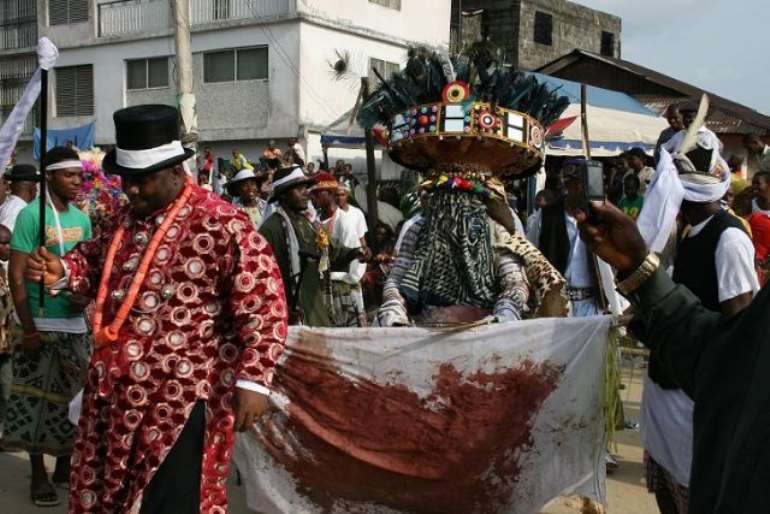
Owu Aru Suun Festival
The Kalabari people have a culture that flows as naturally as the rivers and creeks they call home. Their traditions are woven into daily life as they influence how they celebrate, work, and connect with each other. For the Kalabari, culture is not something separate from life, it is life itself.
Central to Kalabari society are canoe houses which are extended family units that serve as both homes and social organizations. Canoe houses manage trade, organize ceremonies, and provide protection for members. Membership is typically inherited, though it can also be extended through adoption. These houses create a strong sense of community where every member has a role, and decisions are made collectively.
Families within the canoe houses maintain deep connections with one another. The elders are highly respected, and their guidance is central to resolving disputes and making important community decisions. This structure ensures continuity as it allows the Kalabari people to preserve traditions, even as they adapt to change.
Festivals are vibrant expressions of Kalabari identity. Among the most celebrated is the Owu-Aru-Sun Festival, a gathering that brings together communities for music, dance, masquerades, and spiritual observances. These festivals honour the ancestors, celebrate communal achievements, and mark important times of the year.
Masquerades are a highlight of these celebrations. Participants wear elaborate costumes representing spirits and ancestors, and perform dances that narrate history, moral lessons, and myths. Music and drumming accompany these performances to create an immersive experience that reflects the community’s heritage.
Art is a vital part of Kalabari culture. Traditional wood carvings, especially the duein fubara ancestral screens depict leaders and commemorate historic events. These intricate works of art serve both aesthetic and spiritual purposes that connect the present with the past.
Music and dance accompany almost every aspect of life. Drumming patterns, flute melodies, and percussive rhythms guide dances during festivals, weddings, and rites of passage. Songs often tell stories, pass down wisdom, and celebrate the community’s achievements. Every movement, note, and rhythm has meaning that creates a rich tapestry of cultural expression.
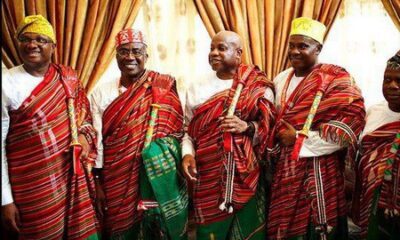
Traditional attire signals identity, status, and occasion. Men often wear colourful robes, hats, and carry ceremonial staffs during festivals while women wear vibrant wrappers, beads, and head ties. For Kalabari people, dress is not just decoration, it communicates belonging, pride, and respect for tradition.
Food is another cultural cornerstone for the Kalabari people. Their riverine environment provides a wealth of seafood which is central to local cuisine. Popular dishes include onunu, a mixture of pounded yam and ripe plantains often served with rich soups made from fish and spices. Meals are communal as they reinforce bonds and celebrate the bounty of their environment.
The culture and traditions of the Kalabari people reflect their deep connection to the water, family, and community. Through festivals, music, art, and everyday practices, they maintain a living heritage that honours their past.
Economy and Traditional Occupations

The Kalabari people have long relied on the rivers and creeks of the Niger Delta to sustain their economy. For generations, their daily life, trade, and social organization have revolved around water. Fishing is central in providing food for families and goods for local markets. Canoes are not only means of transportation but essential assets for fishing, trade, and transportation.
Fishing is part of the cultural fabric of the Kalabari people. Men and women often work together in fishing expeditions using nets, traps, and traditional techniques handed down through generations. The rivers and creeks provide fish, crabs, and other seafood that form the foundation of Kalabari cuisine and trade.
Among the Kalabari people, farming complements fishing. The farmers cultivate crops suited to the swampy environment such as cassava, plantains, yams, and vegetables. Palm trees provide both food and trade goods, including palm oil which became a major commodity in historical trade networks.
Historically, the Kalabari people played a key role in Niger Delta trade. Their strategic location along rivers allowed them to connect inland villages with coastal ports. They traded palm oil, ivory, seafood, and other goods with neighbouring communities and European merchants. This trade created wealth and elevated the Kalabari people as influential intermediaries.
Trade required careful planning and organization. Canoe houses managed commercial expeditions, coordinated storage of goods, and oversaw negotiations with traders. Leadership within these houses ensured that wealth was distributed fairly and that trade partnerships were maintained across generations.
Today, although many Kalabari still engage in fishing and farming, they have diversified into modern professions. Education has opened opportunities in teaching, government, healthcare, business, and entrepreneurship. Urban migration has introduced new economic activities while traditional occupations continue alongside them as they maintain the cultural link to the rivers and lands that gave the Kalabari people their identity.
The economic practices of the Kalabari people reflect resilience and adaptability. By balancing traditional livelihoods with modern professions, they preserve cultural knowledge while participating fully in contemporary society. Trade, fishing, farming, and community enterprise continue to define how the Kalabari sustain themselves and maintain social cohesion.
The economic life of the Kalabari people is a story of adaptation, resourcefulness, and deep connection to their environment. From the rivers that provide sustenance to the trade networks that brought influence and prosperity, their occupations have shaped not only their livelihood but also their culture and identity.
Religion and Beliefs
The Kalabari people have a spiritual life deeply connected to the rivers, ancestors, and natural environment that surround them. Traditionally, their religion centered on water spirits, deities, and ancestral worship. Water was not merely a resource, it was sacred and inhabited by powerful beings that guided, protected, or tested the community.
Among the Kalabari people, ancestral spirits were highly revered. Families would honour forebears through rituals, offerings, and festivals. One notable deity often mentioned in historical accounts is Awoamenakaso considered a mother figure of several local spirits. These spiritual practices reinforced social values, provided guidance, and strengthened communal bonds.
Spirituality also influenced daily life. Fishing, farming, and trade were accompanied by prayers and offerings to ensure safety, productivity, and prosperity. Festivals, masquerades, and dances often held symbolic significance as they represent not only entertainment but also spiritual connection to the divine and ancestral world.
With the arrival of European missionaries and colonial influence, Christianity spread among the Kalabari people. Today, a significant portion of the population identifies as Christian, even though they still observe traditional ceremonies. The Kalabari have found ways to blend traditional beliefs with Christian practices.
This blend of beliefs has created a layered spiritual life. A community member may participate in church services, yet also engage in the rituals honouring the ancestors or water spirits during festivals. This harmony reflects the Kalabari people’s respect for their heritage and their ability to adapt while preserving identity.
Religious life among the Kalabari people continues to shape social interaction, community cohesion, and cultural expression. Ceremonies, prayers, and spiritual observances remain central to weddings, funerals, and festivals. Even in modern urban settings, many Kalabari maintain these traditions, and thus teach the younger generations the importance of spiritual and cultural continuity.
Kalabari People in Contemporary Times
The Kalabari people still thrive in modern Nigeria as they balance centuries-old traditions with the demands of contemporary life. While their ancestors depended almost entirely on rivers for fishing, trade, and transportation, today the Kalabari have embraced education, urban living, and modern professions. Despite these changes, the community remains deeply connected to its cultural roots.
Many Kalabari people now live in cities within and outside Rivers State where they pursue careers in education, government, business, healthcare, and the arts. Even as they adapt to urban lifestyles, they still maintain ties to their hometowns through family networks, cultural associations, and festivals. Canoe houses, though less central to economic life than in the past still play an important social and cultural role by ensuring that the traditions and communal responsibilities continue.
Cultural preservation has become a key focus for the Kalabari people. Community leaders and youth groups organize festivals, dance performances, and storytelling events to ensure that the younger generations remain familiar with their history, language, and customs. Schools, sometimes, offer programmes that teach the Kalabari language, traditional crafts, and local history. These efforts highlight a shared commitment to keeping the community’s identity vibrant, even as globalization brings new influences.
Festivals remain central to life as they provide occasions for families and communities to come together. They are moments of celebration and reflection where music, dance, masquerades, and traditional attire remind participants of the rich heritage of the Kalabari people. Even in modern settings, these cultural expressions continue to reinforce identity and pride.
In addition, technology and social media have given the Kalabari people new ways to connect, document, and share their culture. Websites, videos, and online groups help to preserve traditions, promote festivals, and create a sense of belonging for Kalabari people living far from home.
The story of the Kalabari people in contemporary times is one of resilience and adaptation. They have embraced education, modern professions, and urban life without losing their cultural identity. Through language, festivals, family structures, and community efforts, the Kalabari people ensure that their history and traditions continue to flourish in a rapidly changing world.
Cultural Legacy and Significance
The Kalabari people have left a lasting mark on Nigeria’s cultural landscape. Their legacy is seen not only in their festivals, art, and music but also in their social organization, language, and spiritual life. Through centuries of adaptation, they have preserved traditions that connect them to their ancestors while influencing the broader Nigerian culture.
One of the most enduring aspects of their legacy is the canoe house system which has inspired social cohesion, collective responsibility, and leadership structures. These houses were historically central to trade, defense, and community decision-making, and they continue to serve as cultural anchors. They represent the Kalabari people’s ability to organize, collaborate, and maintain identity, even in changing circumstances.
Art and craftsmanship also form a critical part of their cultural heritage. The duein fubara ancestral screens, carved masks, and festival attire are not only aesthetically impressive but also carry historical and spiritual meaning. These artistic traditions have influenced contemporary Nigerian art and continue to inspire cultural practitioners across the country.
Festivals remain a living testament to Kalabari culture. Events such as the Owu-Aru-Sun Festival celebrate community, history, and spirituality while providing an opportunity for storytelling, music, and dance. These celebrations are ways the Kalabari people transmit values, knowledge, and identity to the younger generations.
Language also plays a key role in their legacy. The Kalabari language is a vessel for oral history, poetry, songs, and ceremonies. Preserving the language ensures that the nuances of Kalabari culture, social norms, and worldview are passed on intact.
The cultural significance of the Kalabari people extends beyond Nigeria’s borders. Scholars, artists, and historians study their traditions as examples of resilience, adaptation, and riverine culture. By maintaining a strong sense of identity, even while they embrace modernity, the Kalabari illustrate how communities can honour heritage and still thrive in contemporary society.
In Conclusion …
The Kalabari people of Nigeria offer a remarkable story of resilience, identity, and cultural richness. From their riverine origins and the intricate organization of the canoe houses to vibrant festivals, art, and music, they have preserved a way of life that reflects both history and community. Their language, spiritual beliefs, and traditional practices remain central to their identity, even as many embrace modern education, urban professions, and global influences.
Understanding the Kalabari people is more than learning about a tribe. It is a window into the diversity of Nigeria, the ingenuity of riverine societies, and the enduring power of culture to connect generations. By celebrating their traditions, documenting their history, and participating in festivals, the Kalabari people ensure that their heritage continues to thrive in contemporary times.
The story of the Kalabari people is a testament to how culture, community, and adaptability can coexist and offer lessons in preserving identity while embracing change.
References
- https://en.wikipedia.org/wiki/Kalabari_tribe
- https://en.wikipedia.org/wiki/Kalabari_Kingdom
- https://en.wikipedia.org/wiki/Kalabari
- https://en.wikipedia.org/wiki/Kalabari_language
- https://www.cambridge.org/core/journals/africa/article/abs/kalabari-worldview-an-outline-and-interpretation/CB2A643431549B930467F30471641059
- https://nationalexpressng.wordpress.com/2013/04/04/kalabari-kingdom-celebrating-a-unique-culture/
- https://nnewicity.com/owu-aru-suun-festival/