
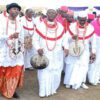


Nigerian Ethnic Groups
Ikwerre People of Rivers State: History, Origins, Culture, Language and Identity Explained

Ikwerre people are a distinct ethnic group in Rivers State, Nigeria with a rich history, language, culture, social structure, traditions and ongoing identity conversation that shows their unique place in the region.

The Ikwerre people are one of the most influential ethnic groups in Rivers State, yet their story is often told in fragments. To understand them is to understand a large part of Port Harcourt’s history, the cultural heartbeat of the upland Niger Delta, and a long conversation about origin, language and identity that still resonates today.
If you walk through many parts of Port Harcourt, Obio-Akpor, Emohua or Ikwerre Local Government Area, you are standing on ancestral Ikwerre land. Markets, schools, churches and busy streets now fill spaces that were once farming settlements and close-knit village communities. Beneath the modern city life lies a deeper story. It is a story of migration traditions, clan systems, age-long customs, and a people who call themselves Iwhuruọha.
Who exactly are the Ikwerre people? Where did they come from? Are they Igbo? Are they linked to Benin? Why has their identity sparked debate in academic circles and public discussions? These questions are not just political or linguistic. They are personal. They touch on belonging, heritage and memory.
The history of the Ikwerre people is layered and compelling. Oral traditions speak of ancient journeys. Linguistic studies classify the Ikwerre language within the Igboid family. Community declarations assert a distinct ethnic nationality. Over time, farming villages grew into urban centres, especially with the rise of Port Harcourt as an economic hub. Through all this change, the Ikwerre people have held on to their language, traditional institutions, festivals, and strong family structures.
This article takes a careful and balanced look at the Ikwerre people of Rivers State. It explores their origins and migration narratives, their language and cultural practices, their traditional governance systems, and the modern identity conversation that continues today.
Whether you are researching Nigerian ethnic groups, tracing family roots, or simply curious about the cultural history of Rivers State, this offers a clear and grounded introduction to the Ikwerre people and their enduring place in the region.
Who Are the Ikwerre People?
The Ikwerre people are an ethnic group indigenous to Rivers State in the South-South region of Nigeria. They are known traditionally as Iwhuruọha, a name many elders and cultural advocates still prefer because it connects the people directly to their ancestral identity. Today, the Ikwerre people are among the largest ethnic groups in Rivers State, and their homeland forms a major part of the greater Port Harcourt area.
Geographically, the Ikwerre people are concentrated in four main local government areas: Port Harcourt, Obio-Akpor, Ikwerre, and Emohua. Many towns and communities within these areas trace their roots to old Ikwerre clans and settlements. Places such as Isiokpo, Elele, Rumuji, Igwuruta, Aluu, Omagwa, Emohua, and Choba are widely recognized as core Ikwerre communities. Over time, urban expansion has blended traditional villages with modern city life, especially in Port Harcourt which sits on ancestral Ikwerre land.
The word “Ikwerre” itself is believed to have been popularized during the colonial era. According to historical accounts, British administrators adopted the term after hearing local expressions during negotiations with the community leaders. While the exact linguistic origin of the name is debated, it became the official label used in colonial records and has remained in government and public usage ever since.
Culturally, the Ikwerre people are organized around clans, extended families, and village networks. Community life traditionally revolves around the councils of elders, age grades, titled chiefs, and family heads who guide social and customary matters. Respect for lineage, land ownership, and ancestral heritage remains central to identity.
Language is another defining feature. The Ikwerre language which belongs to the Igboid branch of the Niger-Congo language family is spoken across the various clans, though with dialect differences. While many Ikwerre people also speak English and Nigerian Pidgin, especially in urban areas, the local language continues to carry cultural meaning and historical memory.
Beyond geography and language, the Ikwerre people are known for their deep connection to their land and for their active role in the social and political development of Rivers State. As Port Harcourt grew into a major commercial and oil-producing city, Ikwerre communities found themselves at the centre of economic and administrative change. This has influenced both their traditional structures and their modern identity.
At its heart, being Ikwerre is about belonging to a community with shared ancestry, shared customs, and a shared homeland. The Ikwerre people see themselves not only as citizens of Rivers State and Nigeria but as custodians of a distinct heritage that continues to evolve.
Origins and Migration Theories
The origins of the Ikwerre people have been discussed for decades by historians, linguists, community elders, and political leaders. Like many ethnic groups in Nigeria, their early history is preserved largely through oral tradition, later supported and sometimes, questioned by academic research. There is no single, universally accepted origin story. Instead, there are several well-known migration theories that help to explain how the people came to settle in what is now Rivers State.
Understanding these migration accounts is important because they are closely tied to identity. They influence how the Ikwerre people see themselves and how others classify them within Nigeria’s wider ethnic landscape.
The Benin Migration Tradition
One prominent oral tradition links the Ikwerre people to the ancient Benin Kingdom in present-day Edo State. According to this narrative, the ancestors of several upland Niger Delta groups migrated from Benin during the periods of political unrest or expansion centuries ago. In some versions of the story, a figure known as Akalaka is mentioned as an ancestral link between Benin and certain Niger Delta communities, including Ikwerre, Ekpeye, and Ogba.
Scholars who discuss this tradition note that many groups in the Niger Delta have similar migration accounts connected to Benin. These stories often speak of movement southward and eastward into forested regions where new settlements were established. While oral traditions are valuable cultural records, historians caution that they must be studied carefully alongside archaeological, linguistic, and documentary evidence.
At present, there is no definitive archaeological proof that fully confirms a direct Benin origin for all Ikwerre communities. However, the Benin migration narrative remains part of collective memory in some areas and continues to be referenced in cultural discussions.
The Igboid Linguistic Connection
Another widely discussed perspective focuses on language. The Ikwerre language is classified by linguists as part of the Igboid branch of the Niger-Congo language family. This classification is based on vocabulary patterns, grammar structures, and phonological similarities between Ikwerre and other Igboid languages.
Because of this linguistic relationship, some scholars argue that the Ikwerre people share historical roots with neighbouring Igbo-speaking populations. Historical migration from areas such as Ngwa, Arochukwu, Ohaji, and parts of present-day Imo and Abia States is, sometimes, mentioned in academic discussions. These movements could have taken place over centuries, resulting in cultural exchange and settlement patterns that shaped the development of Ikwerre communities.
It is important to note that linguistic classification does not automatically determine ethnic identity. Many communities across West Africa speak related languages while maintaining distinct ethnic identities. Still, the Igboid linguistic link remains one of the strongest academic references in discussions about the origins of the Ikwerre people.
Independent Ethnic Development
A third perspective emphasizes the distinct development of the Ikwerre people within their present homeland. Supporters of this view argue that while there may have been influences from neighbouring regions, the Ikwerre evolved as a separate ethnic nationality with its own political systems, customs, and territorial boundaries.
This position gained strong public attention in the mid twentieth century. In 1965, community leaders issued what became known as the Rumuomasi Declaration which asserted that the Ikwerre people constitute a distinct ethnic nationality within Nigeria. The declaration was part of broader political and identity movements taking place during that era, especially as minority groups in the Niger Delta sought recognition within Nigeria’s federal structure.
For many Ikwerre people today, this declaration remains a key historical moment. It affirmed their cultural autonomy and reinforced a sense of shared identity that extends beyond linguistic classification.
Migration Within Ikwerre Land
Beyond the larger origin debates, there is clear evidence of internal migration and settlement patterns within Ikwerre territory itself. Oral histories describe how early families moved from one settlement to another due to farming opportunities, disputes, trade, or population growth. Over time, these movements led to the formation of major towns such as Isiokpo, Elele, Emohua, Rumuji, Aluu, and Igwuruta.
These internal migrations contributed to dialect variations within the Ikwerre language and to differences in local customs among clans. Yet, despite these variations, there remains a strong sense of shared ancestry across Ikwerre communities.
A Balanced Understanding
When examining the origins of the Ikwerre people, it is helpful to approach the subject with balance. Oral traditions, linguistic evidence, colonial records, and modern political history each provide part of the picture. None on its own offers a complete answer.
What is clear is that the Ikwerre people have occupied their present territory in Rivers State for many generations. Over time, they built structured communities, developed a distinct language identity, organized traditional governance systems, and adapted to colonial and post-colonial change.
The migration theories do not weaken the identity of the Ikwerre people. Instead, they show that like many communities across Africa, their history is dynamic. It includes movement, interaction, adaptation, and continuity. Today, whether viewed through the lens of Benin tradition, Igboid linguistic ties, or independent ethnic evolution, the Ikwerre people stand as a defined and recognized group within Nigeria’s diverse cultural landscape.
Language and Identity

Language sits at the heart of who the Ikwerre people are. It connects families to their ancestors, links villages across generations, and carries the memory of a people whose homeland forms a large part of present-day Rivers State. When discussions arise about Ikwerre identity, language is often the first point of reference.
The Ikwerre people speak the Ikwerre language, also called Iwhuruọha. Linguists classify it within the Igboid branch of the Niger-Congo language family. This classification is based on shared vocabulary, grammar patterns, and sound systems observed between Ikwerre and other Igboid languages spoken in southeastern Nigeria.
Although it belongs to the Igboid cluster, Ikwerre is recognized as its own language. It has distinct pronunciations, expressions, idioms, and speech rhythms that set it apart in daily use. Communication between an Ikwerre speaker and a standard Igbo speaker is possible but it may require adjustment, depending on dialect differences.
Within Ikwerre land, dialect variations exist across communities such as Isiokpo, Elele, Emohua, Rumuji, Aluu, Omagwa, and Igwuruta. These differences developed naturally over time, as settlements expanded and families established new villages.
Because the Ikwerre language falls within the Igboid linguistic group, it has influenced ongoing discussions about ethnic identity. Some scholars point to linguistic ties as evidence of historical connections between the Ikwerre people and the neighbouring Igbo populations.
However, language alone does not define ethnicity. Across Nigeria and West Africa, many ethnic groups speak related languages while maintaining separate identities rooted in territory, political history, and social institutions.
For the Ikwerre people, identity includes ancestral land, clan systems, traditional leadership structures, and community history. In 1965, the Rumuomasi Declaration formally affirmed Ikwerre as a distinct ethnic nationality. This declaration remains significant in conversations about how the Ikwerre people define themselves within Nigeria’s multicultural setting.
In daily life, many Ikwerre people are multilingual. English is widely spoken in schools, churches, government offices, and business settings. Nigerian Pidgin is common in urban areas such as Port Harcourt where people from different ethnic backgrounds interact regularly.
Despite these influences, the Ikwerre language remains central in homes, traditional gatherings, marriage rites, funerals, and community meetings. Proverbs, praise names, folktales, and songs are often expressed in Ikwerre. These oral traditions carry meanings that are closely tied to culture and history.
Urbanization has influenced language use, especially among the younger generations. In response, cultural associations and community leaders encourage the preservation and teaching of Ikwerre language to maintain continuity.
For the Ikwerre people, language serves as a living archive. Place names preserve early settlement history. Personal names often carry meanings connected to family experiences, gratitude, spirituality, or social values. Words related to farming, rivers, seasons, and land use reveal the agricultural foundations of the community.
Through language, theelders pass on lessons about respect, kinship, conflict resolution, and moral conduct. It keeps the past present.
Today, the Ikwerre people navigate modern life while holding firmly to their cultural roots. Some emphasize linguistic connections within the wider Igboid family. Others highlight political and cultural distinctiveness. Both views exist within the community.
What remains consistent is a shared sense of belonging to Ikwerre land and heritage. The Ikwerre language continues to unite communities across Port Harcourt, Obio-Akpor, Emohua, and Ikwerre Local Government Areas.
In understanding the Ikwerre people, language provides valuable insight because it reveals historical ties, cultural depth, and the ongoing effort to preserve identity in a rapidly changing world.
Traditional Social and Political Structure
Before colonial administration and modern state systems, the Ikwerre people governed themselves through well-organized traditional institutions. Their social and political structure was rooted in kinship, respect for elders, and shared responsibility. Authority was not centralized in a single king across all Ikwerre land. Instead, leadership operated at village and clan levels. This allowed each community to manage its affairs while remaining connected through shared ancestry and customs.
Understanding the traditional structure of the Ikwerre people helps to explain how order was maintained long before modern government institutions arrived.
Clan and Village Organization
Ikwerre society is built around extended family lineages, often traced to a founding ancestor. These lineages form compounds, which make up villages, and villages belong to larger clan groupings. Each village functions as a semi-autonomous unit with its own leadership and decision-making processes.
Land ownership traditionally rests with families and lineages rather than individuals. Farming areas, forests, and community spaces are inherited through ancestral lines. This system strengthens family bonds and reinforces connection to the land.
Clans serve as broader identity groups. Even when families move to new settlements, they maintain links to their original clan roots. This network structure promotes unity while allowing flexibility in local governance.
Council of Elders
At the centre of political life among the Ikwerre people is the council of elders. Elders are respected men, often family heads or titled individuals who guide community decisions. Age is highly valued in Ikwerre culture because it is associated with wisdom, experience, and moral authority.
The council handles matters such as land disputes, marriage negotiations, inter-family conflicts, and community projects. Decisions are usually reached through dialogue and consensus rather than force. This method encourages participation and reduces long-term resentment.
In serious matters affecting the entire village, meetings are held in open spaces where the elders speak and others listen. This system fosters accountability because the leaders remain directly connected to the people they serve.
Traditional Rulers and Chiefs
While pre-colonial Ikwerre governance did not revolve around centralized kingship across all communities, individual villages often recognized chiefs or paramount rulers. These leaders represented the community in external relations and presided over cultural ceremonies.
During the colonial period, the British administration formalized some of these roles through the warrant chief system. This introduced changes to existing governance patterns. In modern times, recognized traditional rulers continue to play ceremonial and advisory roles within Rivers State’s political structure.
Traditional rulers serve as custodians of custom. They oversee festivals, settle disputes that cannot be resolved at lower levels, and represent their people in cultural matters.
Age Grades and Social Responsibility
Another important feature of Ikwerre social organization is the age grade system. Age grades group individuals born within a similar period into organized units. These groups carry out community tasks such as road clearing, security duties, festival preparation, and maintenance of public spaces.
Participation in age grades teaches responsibility, cooperation, and loyalty to the community. It also provides a structured path toward leadership, as individuals gain experience over time.
Age grades strengthen unity because members support one another during life events such as marriages, funerals, and communal celebrations.
Customary Law and Conflict Resolution
Customary law guides social conduct among the Ikwerre people. Rules concerning marriage, inheritance, land use, and moral behaviour are transmitted through oral tradition and community practice.
When disputes arise, they are addressed first within families. If unresolved, the matter moves to the village elders. The goal is reconciliation rather than punishment alone. Compensation, apology, or ritual settlement may be required, depending on the case.
This layered approach to conflict resolution helps to preserve relationships and community harmony.
Role of Women and Family Structure
Although political authority traditionally rests with the male elders, women hold significant influence within family and market life. Women manage household affairs, participate in farming and trade, and organize support networks during ceremonies.
Marriage links families together by creating alliances that strengthen social stability. Respect for motherhood and lineage continuity is deeply embedded in Ikwerre society.
Continuity and Change
Modern governance structures now operate alongside traditional institutions in Ikwerre land. Though, the local government councils and state authorities handle administrative matters, the traditional rulers and elders remain respected figures in cultural and community affairs.
Urbanization, education, and economic change have influenced social organization, especially in Port Harcourt and Obio-Akpor. Notwithstanding, many Ikwerre families continue to consult the elders during major decisions, particularly those involving land, marriage, and ancestral rites.
The traditional social and political structure of the Ikwerre people shows a community built on consultation, shared responsibility, and respect for ancestry. It is a system that has adapted over time while maintaining its core values of unity, order, and connection to land.
Culture and Traditions of the Ikwerre People

The Ikwerre people have a rich cultural heritage that reflects their history, environment, and social organization. Their traditions include ceremonies, festivals, music, arts, family customs, and spiritual practices. Culture for the Ikwerre people is not separate from daily life, rather, it is woven into how communities celebrate, work, govern, and pass knowledge from one generation to the next.
Marriage Customs
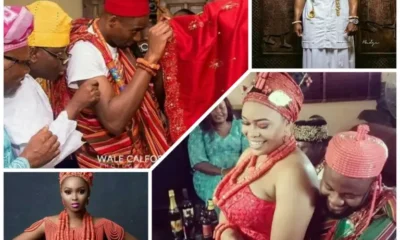
Marriage in Ikwerre communities is both a social and cultural event. It begins with family discussions and negotiations over the bride price which symbolizes respect and commitment rather than commercial transaction. Both families work together to agree on arrangements, and the process often strengthens community ties.
Marriage ceremonies include traditional rites such as introduction (Ibi Umunna) where families formally meet, and cultural celebrations with music, dance, and gifts. Extended families play active roles by offering advice, support, and guidance to the bride and groom. These practices reinforce family unity and ensure that cultural values are maintained.
Festivals and Ceremonies
The Ikwerre people celebrate festivals that honour their ancestors, mark the agricultural calendar, and strengthen community identity. Masquerade festivals such as Owu Festival are among the most visible traditions. During these events, performers wear elaborate costumes and masks to embody spirits, ancestors, or symbolic figures. Masquerades often serve as entertainment, moral instruction, and spiritual representation all at once.
The New Yam Festival is another important celebration that signals the end of the farming season and the beginning of harvest. Communities gather to give thanks, share food, and enjoy music and dance. Festivals also provide opportunities for intergenerational learning, as the elders tell stories, teach customs, and encourage participation among youth.
Religion and Spiritual Beliefs
Today, most Ikwerre people are Christians due to decades of missionary activity and church establishment in Rivers State. However, traditional beliefs remain influential in family and community life. Many Ikwerre households continue to honour the ancestors, respect sacred lands, and observe rituals that have cultural or spiritual significance.
Spirituality is often intertwined with practical life. For example, prayers, offerings, and festivals may be used to seek protection, fertility, or good harvests. This mix of Christian faith and traditional customs demonstrates the adaptability and continuity of Ikwerre culture.
Arts, Music, and Masquerades
Music and performance play central roles in Ikwerre cultural expression. Drumming, dancing, and singing accompany ceremonies, festivals, and communal work. Songs may convey historical events, moral lessons, or praise for the ancestors and leaders.
Masquerades are especially significant as they serve as visual and performative symbols of cultural identity. Each mask or costume represents a particular story or character, and performances often involve choreographed movement, music, and spoken or sung narratives.
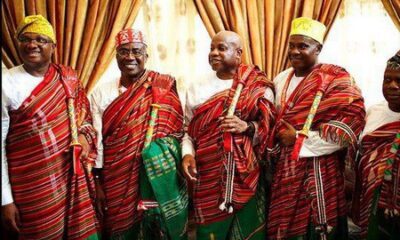
Other forms of art include carving, weaving, and traditional attire which are used during festivals, ceremonies, and social gatherings. These artistic expressions not only decorate the community life but also carry cultural meaning and historical memory.
Oral Traditions and Storytelling
Storytelling is central to Ikwerre culture. Elders use folktales, proverbs, and historical accounts to teach the younger generations about ethics, social norms, and history. Oral tradition preserves knowledge about migration, notable ancestors, moral lessons, and community achievements.
Through storytelling, young people learn about Ikwerre land, clan origins, and family heritage to ensure that cultural memory continues even in changing times.
Food and Cuisine
Food is another reflection of Ikwerre culture. Staples include yam, cassava, plantain, fish, and local vegetables. Meals often accompany social gatherings, festivals, and ceremonies with the aim of providing both nourishment and bringing families and communities together.
Traditional dishes are prepared using techniques passed down through generations, reinforcing connections to heritage and community identity.
Continuity in Modern Times
Urbanization and modernization have influenced cultural practices, especially in Port Harcourt and other urban centres. While some traditional ceremonies are simplified or adapted, the core values such as respect for elders, communal participation, and connection to ancestry remain strong.
Cultural associations, local festivals, and school programmes help to preserve Ikwerre customs for the younger generations. Through these practices, the Ikwerre people maintain their unique identity while engaging with the wider world.
Essentially, the culture and traditions of the Ikwerre people reflect a community that values family, ancestry, and collective memory. From marriage and festivals to music, art, and storytelling, these practices provide a vibrant, living connection to the past while shaping life in contemporary Rivers State.
Colonial Encounter and Political Evolution
The history of the Ikwerre people cannot be fully understood without examining the impact of colonial rule and the political transformations that followed. Like many ethnic groups in Nigeria, the Ikwerre people experienced significant changes in governance, social organization, and economic life during the British colonial period, and these changes continue to influence their political identity today.
The Ikwerre people first encountered European presence in the late 19th century largely through trade and missionary activity. Rivers State of which Ikwerre land is part of was strategically located along rivers and creeks that connected the interior to the Atlantic coast. European traders, missionaries, and administrators established bases in Port Harcourt and nearby areas, thereby bringing new economic opportunities, education, and religion.
The arrival of missionaries introduced formal schooling and Christianity which gradually altered social structures and created new leadership pathways. Missionaries often worked with local chiefs or elders to promote literacy, health, and Western legal concepts. This engagement laid the groundwork for changes in governance, social norms, and cultural practices.
The British imposed indirect rule in Rivers State, that is, a system that relied on local authorities to maintain order and implement colonial policies. In some Ikwerre communities, the British introduced the warrant chief system by appointing individuals to serve as intermediaries between the colonial administrators and the people.
This system was disruptive in some cases because it altered traditional governance. In Ikwerre society, authority was previously decentralized, being vested in the councils of elders and clan leaders rather than a single ruler. Colonial intervention, sometimes, created disputes over recognition, authority, and legitimacy. Yet, it also formalized some leadership structures that endure today.
During the mid-20th century, the Ikwerre people became politically active as Nigeria approached independence. Community leaders advocated for recognition as a distinct ethnic group within Rivers State. This period saw the emergence of ethnic associations, cultural unions, and political societies aimed at preserving the Ikwerre identity and promoting social development.
A landmark event was the 1965 Rumuomasi Declaration in which Ikwerre leaders formally affirmed their status as a separate ethnic nationality. This declaration addressed both political representation and cultural recognition and remains a reference point in contemporary discussions about identity.
After Nigeria gained independence in 1960, the Ikwerre people engaged actively in state and local politics. They sought fair representation in government structures, access to resources, and opportunities for education and development. Traditional rulers continued to play advisory and ceremonial roles while elected representatives took on administrative responsibilities at local and state levels.
Urbanization, especially the growth of Port Harcourt influenced political participation. Many Ikwerre people became involved in municipal governance, political parties, and advocacy organizations. Over time, this blend of traditional authority and modern political engagement has influenced contemporary Ikwerre leadership structures.
Today, the Ikwerre people are recognized as one of the major ethnic groups in Rivers State. They participate in local and state elections, contribute to policy discussions, and hold prominent positions in government, business, and civil society. At the same time, traditional institutions continue to mediate cultural and social affairs.
The Ikwerre Identity Conversation
The question of who the Ikwerre people are has been a topic of discussion for decades, both within Rivers State and in academic and political circles across Nigeria. This conversation revolves around history, language, culture, and politics, and it continues to shape how the Ikwerre people see themselves and how others recognize them.
Discussions about Ikwerre identity often begin with migration history. Some scholars and community narratives link the Ikwerre people to Igbo-speaking ancestors citing linguistic similarities and cultural overlaps. Others reference Benin migration traditions which suggest that certain communities in Rivers State share ancestry with groups from the ancient Benin Kingdom.
The coexistence of these perspectives has sometimes, led to questions about whether the Ikwerre are Igbo, a distinct ethnic group, or part of a broader Niger Delta identity. While the academic debate continues, most Ikwerre people emphasize lived experience, community memory, and cultural practices as the foundation of their identity.
Language plays a central role in the identity conversation. The Ikwerre language is classified as part of the Igboid family which links it linguistically to other Igbo languages. Some outsiders have used this connection to categorize the Ikwerre as Igbo.
However, many Ikwerre leaders and cultural advocates stress that language alone does not define ethnic identity. They highlight unique customs, ancestral land claims, traditional governance, and clan systems as evidence of a distinct Ikwerre nationality. For them, being Ikwerre is not only about language but also about shared history and territory.
A pivotal moment in the identity conversation was the Rumuomasi Declaration of 1965. During this event, Ikwerre leaders formally asserted their status as a separate ethnic nationality within Nigeria. This declaration aimed to preserve cultural heritage, secure political representation, and promote social cohesion.
The declaration has had lasting significance. It is frequently cited in political, legal, and cultural discussions about the Ikwerre identity and serves as a foundation for community advocacy and self-definition.
Urbanization and modernization have added new dimensions to the identity conversation. Many Ikwerre people live in Port Harcourt and other urban centres where interaction with diverse ethnic groups is constant. Intermarriage, migration, and economic opportunities have created a more fluid social environment.
Despite these changes, the Ikwerre continue to maintain cultural markers such as language, festivals, family structures, and ancestral land practices. Schools, cultural organizations, and community associations play important roles in teaching the younger people about Ikwerre heritage.
Political representation and recognition remain central to the identity conversation. In a multicultural state like Rivers, ethnic identity can influence access to government resources, leadership positions, and policy decisions. Many Ikwerre people advocate for recognition of their distinct status while also participating in broader state and national politics.
Cultural pride is also a defining factor. Celebrations of festivals, traditional ceremonies, and historical remembrance reinforce a sense of belonging and continuity. Through these practices, the Ikwerre assert that identity is a lived experience, community memory, and a shared vision for the future.
Ikwerre in Modern Times
The Ikwerre people continue to play a significant role in the social, economic, and cultural life of Rivers State and Nigeria at large. While their ancestral lands now host bustling urban centres such as Port Harcourt and Obio-Akpor, Ikwerre communities have found ways to preserve their heritage while engaging with modernity.
The growth of Port Harcourt into a major commercial and industrial hub has brought dramatic changes to traditional Ikwerre life. Many rural settlements have transformed into urban neighbourhoods with modern infrastructure, schools, and businesses. This urbanization has altered traditional occupations, lifestyles, and community structures.
Despite these changes, many Ikwerre families maintain strong ties to their ancestral villages. Festivals, family gatherings, and cultural events continue to provide spaces for community bonding, even for those who live in cities. These traditions help the younger ones to stay connected to their roots.
Education has become a cornerstone of modern Ikwerre life. Many young Ikwerre people pursue secondary and tertiary education locally and abroad in fields such as medicine, engineering, law, and business. Higher educational attainment has enabled the Ikwerre to participate actively in government, private enterprise, and professional sectors.
Schools and cultural programmes also play an important role in promoting the Ikwerre language, history, and traditions to ensure that modernization does not lead to cultural erasure.
While farming and fishing remain part of the Ikwerre economic landscape, urban employment and entrepreneurship dominate modern livelihoods. Many Ikwerre people work in oil and gas, banking, trade, and services in Port Harcourt. Others run businesses in real estate, transportation, and technology.
This combination of traditional and modern economic engagement reflects the community’s adaptability. Ikwerre people have leveraged urban opportunities while maintaining agricultural and craft practices in semi-urban and rural areas.
Modern Ikwerre people are active participants in Rivers State politics and governance. They hold positions in local, state, and national government and engage in advocacy, policy-making, and development initiatives. Traditional rulers and elders continue to influence cultural and community decisions. This creates a dual system of governance that blends heritage with contemporary political structures.
Modern life has not erased Ikwerre cultural practices. Festivals, marriage rites, masquerade performances, and storytelling remain central to community identity. Cultural associations, heritage organizations, and social clubs promote traditional arts, music, and the Ikwerre language. These efforts ensure that cultural continuity accompanies modern development.
Urbanization, migration, and globalization pose challenges for maintaining cultural identity. Language fluency among the younger people may decline, and traditional governance structures sometimes, face pressure from modern administrative systems.
However, these changes also present opportunities. Education, entrepreneurship, and technology have allowed the Ikwerre people to expand their influence beyond Rivers State. Cultural festivals, tourism initiatives, and media representation provide platforms to share Ikwerre heritage with a wider audience.
In Conclusion …
The Ikwerre people of Rivers State represent a vibrant and resilient community with deep historical roots, rich culture, and a dynamic presence in modern Nigeria. Their story is one of adaptation and continuity that blends centuries-old traditions with contemporary life in cities like Port Harcourt and beyond.
From migration narratives and linguistic heritage to traditional governance, festivals, and economic activities, the Ikwerre have maintained a distinct identity while engaging with the broader social and political landscape of Nigeria. The 1965 Rumuomasi Declaration, the preservation of their language, and the continuity of cultural practices reflect a community deeply committed to self-definition and heritage.
Modern Ikwerre people contribute significantly to politics, business, education, and the arts. They navigate challenges of urbanization and globalization while actively preserving language, customs, and communal bonds.
In essence, the Ikwerre people embody a story of history, resilience, and forward-looking identity. Their journey underscores the richness of Nigeria’s cultural diversity and highlights the enduring importance of heritage in shaping modern communities.
References
- https://en.wikipedia.org/wiki/Ikwerre_people
- https://en.wikipedia.org/wiki/Ikwerre_language
- https://www.ikwerreworld.org/en
- https://lateeftomori.wordpress.com/2025/07/07/meet-the-ikwerre-people-an-indigenous-group-in-rivers-state/
- https://dailypost.ng/2024/09/27/were-not-igbo-ikwerre-ethnic-group-insists/
- https://outravelandtour.com/the-ikwerre-people-culture-heritage-and-modern-identity/
- https://www.dailyjusticengr.com/ikwerre-identity-debate-reignites-as-amaechi-and-wike-reject-igbo-ancestry/
You might want to check this out …