

Biography
Remembering Jaja Wachuku: The Bookish Minister

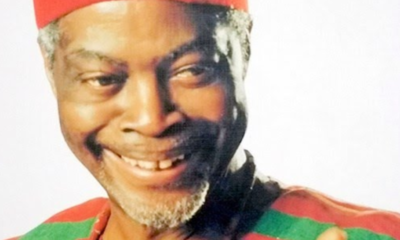
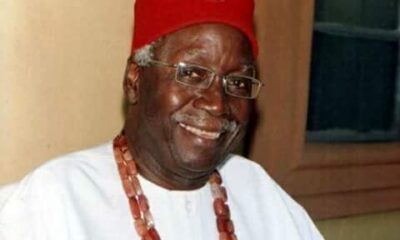
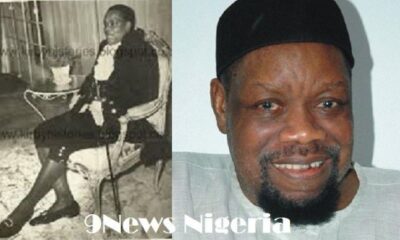
Today in history, we remember Jaja Wachuku, Nigeria’s first Speaker, first Permanent Representative to the United Nations, and first Minister for Foreign Affairs. This warm, fact-checked biography traces his early life, education, career, contributions to Pan-African diplomacy, role in the Rivonia matter, his famed personal library, and his lasting legacy.
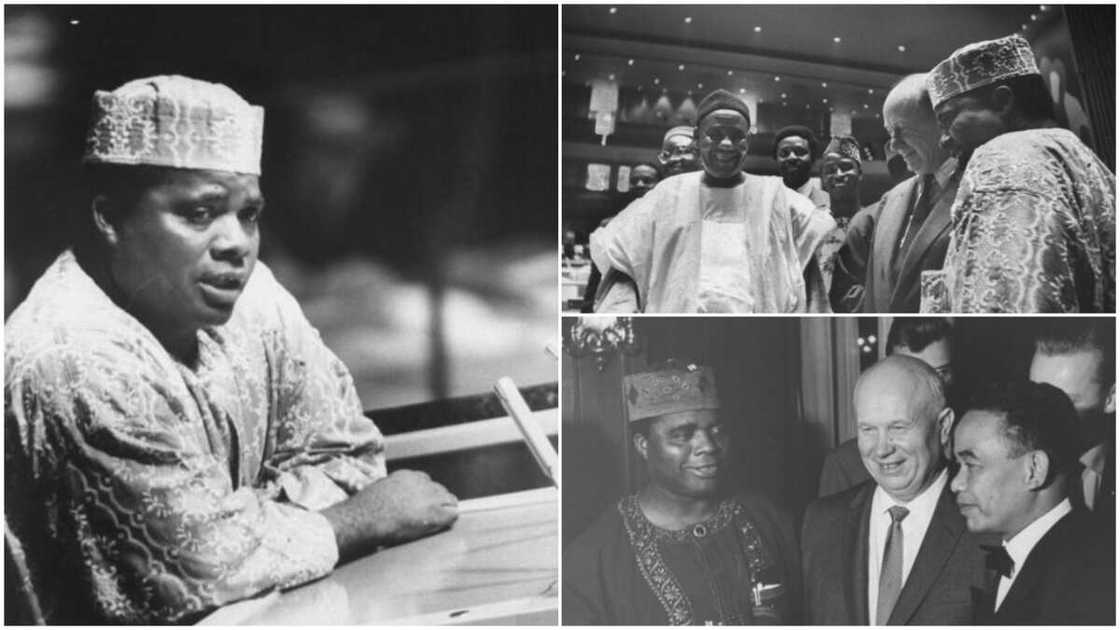
In telling the story of Nigeria’s rise to nationhood, Jaja Anucha Ndubuisi Wachuku – a man of intellect, courage and principle would naturally pop up. Known to many as The Bookish Minister, he was a lawyer, nationalist, diplomat and statesman whose influence helped shape the foundation of Nigeria’s political and foreign identity.
From the quiet town of Nbawsi in Ngwaland to the grand halls of the United Nations in New York, Jaja Wachuku stood tall as a voice for Africa’s dignity and independence.
He was Nigeria’s first Speaker of the House of Representatives, the country’s first Permanent Representative to the United Nations, and its first Minister for Foreign Affairs. This triple historic “firsts” placed him at the centre of Nigeria’s early diplomacy and governance.
But beyond his official titles, Jaja Wachuku was also a man of ideas. A lover of books. A believer in education. An advocate for justice. His diplomacy combined intellect with conviction, and his interventions at the height of South Africa’s apartheid struggle contributed to saving the lives of Nelson Mandela and other freedom fighters during the Rivonia Trial.
Remembered for his wit, eloquence, and quiet defiance such as the day he calmly protested a racist remark at the UN by pretending to sleep through the session, Jaja Wachuku remains an enduring symbol of dignity and intellect in public service.
Nearly three decades after his passing on November 7, 1996, his life continues to inspire generations of Nigerians who believe that leadership must rest on knowledge, vision and humanity.
This biography revisits the extraordinary journey of Jaja Wachuku, from his royal Igbo roots and stellar education to his groundbreaking roles in politics, diplomacy and Pan-African advocacy, this is celebrating the legacy of the man fondly remembered as “The Bookish Minister.”
Birth, Origin and Early Life of Jaja Wachuku
Jaja Anucha Ndubuisi Wachuku was born on 1 January 1918 in the village of Nbawsi, in Ngwaland located in what is now Abia State, Nigeria.
He was born into a royal lineage. His father was King Josaiah Ndubuisi Wachuku, Paramount Chief of Ngwa, often described as the Eze and head of the Ngwa people under the colonial administration of the then Aba Division.
His mother is identified as Queen Rebecca Ngwanchiwa Wachuku (née Nwaogwugwu), described as a land-owner and advocate for women’s rights in her community.
The Wachuku family traced its roots further back in Igbo land. According to the records, an ancestor named Mgbawa migrated from Umulolo in Eziama-Ntigha, to establish the family’s presence in Nbawsi in the latter part of the 17th century.
Because of this lineage, he was often referred to as a descendant of 20 generations of African chiefs in Igboland.
Growing up in Nbawsi, Jaja Wachuku inherited not just the title-holder family name but also the expectations of service and leadership that came with it. This background provided a strong cultural foundation and sense of identity that would shape his later public life.
His early exposure to both traditional authority and the colonial-educational world set the stage for a life that straddled formal legal training, public service and African nationalist commitment.
Education and Early Professional Life

After his strong early schooling in Nigeria, Jaja Wachuku embarked on an impressive academic and professional journey that laid the groundwork for his long career in law, public service and diplomacy.
In 1939, Jaja Wachuku matriculated at Trinity College Dublin in Ireland where he studied Legal Science. He distinguished himself academically, winning major prizes, including one in Roman Law, and was awarded a B.A. in December 1943 and an LL.B. in June 1944.
During his time at Trinity, he became the first African to be laureate in oratory at the College, and in 1941, he was elected an Executive Member of the College Historical Society. In November 1944, he was called to the Irish Bar at the King’s Inns in Dublin as one of the first Africans to achieve this.
After being called to the bar, Wachuku practiced law in Dublin for about three years, from roughly 1944 until 1947, while also engaging in scholarly work. At Trinity he held a research fellowship at the Department of International Law where he studied the “Juristic Status of Protectorates in International Law.”
In 1947, he returned to Nigeria to begin his legal career at home. From that year onward he practiced as a Barrister and Solicitor of the Supreme Court of Nigeria and also appeared at the West African Court of Appeal.
The combination of high-level legal training abroad and early professional practice gave Jaja Wachuku a strong foundation. His exposure to international law, his oratorical skill developed at Trinity, and his experience engaging with student-led African associations in Europe such as the Association of Students of African Descent in Ireland prepared him well for the public and diplomatic roles he would later assume.
Put simply, Jaja Wachuku’s education and early professional life were marked by exceptional academic achievement, early leadership in student and scholarly societies abroad, and a rapid transition into legal practice at home, setting the stage for his later significant contributions to Nigeria’s legislative and diplomatic history.
Rise in Nigerian Politics

Jaja Wachuku entered formal Nigerian politics during the crucial years leading up to independence, and thereafter, quickly assumed major legislative and diplomatic roles, reflecting both his personal capabilities and the historic moment of a nation coming of age.
Before rising to the top legislative office, he engaged in regional politics in Eastern Nigeria. He served in local-authority positions and was a member of the Eastern House of Assembly. In 1952, he was elected into the Eastern House of Assembly and held positions such as deputy leader of the opposition at regional level. This grounding at local/regional level laid the foundation for national-level service.
In 1959, representing the Aba Division, Jaja Wachuku was elected to the Federal House of Representatives, and in that same period, became the first indigenous (Nigerian) Speaker of the House of Representatives.
As Speaker, he succeeded the British official, Sir Frederic Metcalfe. One of the historic moments of his Speakership occurred on October 1, 1960, when Nigeria’s Instrument of Independence was received. As Speaker, he was part of the ceremony representing Nigeria’s legislature.
His Speakership placed him in a central role at a historic turning point i.e. Nigeria’s transition from colonial rule to independence. In this capacity, he helped oversee parliamentary business during the short period, just before full self-government and shortly thereafter.
Not long after serving as Speaker, Jaja Wachuku was appointed as Nigeria’s first Ambassador and Permanent Representative to the United Nations (1960-1961). Then, in 1961, he became Nigeria’s first Minister for Foreign Affairs and Commonwealth Relations, a post he held through much of the early post-independence era.
In these roles, he shifted from national legislature to shaping Nigeria’s external posture, using his legal training, oratorical skill and Pan-African convictions to position Nigeria on the world stage.
Through his early political rise, Jaja Wachuku symbolized more than just personal achievement: he represented a new generation of Nigerian leadership – educated abroad, committed to national sovereignty, and ready to engage internationally.
His election as Speaker was more than symbolic; it signalled Nigerian control of legislative institutions previously dominated by colonial officials. His subsequent diplomatic appointments ensured that Nigeria would have a voice in shaping global matters, particularly for Africa’s emerging independent states.
Jaja Wachuku’s rise in Nigerian politics was swift and historic. From regional assembly member to first indigenous Speaker of the House, to Nigeria’s first UN Ambassador and Foreign Affairs Minister. His trajectory reflected both his personal gifts and the changing political landscape of Nigeria in the late 1950s and early 1960s.
As the First Permanent Representative to the United Nations
In 1960, after Nigeria gained independence, Jaja Wachuku became Nigeria’s first Ambassador and Permanent Representative to the United Nations in New York. On October 7, 1960, Nigeria was admitted to the United Nations as a member State, and Wachuku hoisted Nigeria’s flag at UN headquarters that month.
As Nigeria’s first UN representative, he helped introduce the newly independent country to the world. International observers took note of his active style and his willingness to speak out on issues affecting Africa.
Jaja Wachuku used the United Nations platform to call attention to the problems of colonialism and racial discrimination in Africa. He spoke for African unity and for fair treatment of African peoples. His speeches and actions at the UN helped establish Nigeria’s early foreign policy tone and its moral stance on key continental issues. Time magazine in 1961 described him as a strong and energetic voice for Africa on the world stage.
As Minister for Foreign Affairs

In 1961, Jaja Wachuku became Nigeria’s first Minister for Foreign Affairs and Commonwealth Relations. This formalized his role as the chief diplomat of a newly independent Nigeria. In that office, he served from 1961 until 1965.
He worked to build Nigeria’s ties with other African countries and with the wider world. During his time as foreign minister, he helped organize the Afro-Asian group of States and supported African candidates for UN bodies. He received national and international honours during these years, including awards and chieftaincy titles that recognized his contributions.
As minister, he also held responsibilities for Nigeria’s positions in multinational discussions. He was part of efforts to shape policy on decolonization and African solidarity. His diplomacy combined firmness with a clear moral message. He built a reputation as a minister who spoke for principle as well as for national interest.
The Rivonia Matter and Support for Nelson Mandela
One of the most important episodes in Jaja Wachuku’s diplomatic career involved the Rivonia Trial in South Africa. The trial which ran between 1963 and 1964 ended with life sentences for Nelson Mandela and others.
Nations debated how to respond to the charges and to the possibility of capital punishment. Nigeria, through its foreign minister, argued strongly against the death penalty for the defendants. Records in historical diplomatic documents show that Nigeria’s foreign ministry, speaking through Jaja Wachuku, told diplomats that imposing the death penalty would place moderate African leaders in an impossible position and would have consequences for regional diplomacy.
Jaja Wachuku’s interventions at the United Nations and in diplomatic channels helped build international pressure against the execution. This work is part of how historians remember his role in the effort to save Mandela and others from the death penalty.
While many countries and leaders played roles in opposing apartheid, Jaja Wachuku’s position as Nigeria’s foreign minister made his voice significant. He spoke publicly and privately to press the case for clemency and for international action.
These efforts are cited in diplomatic histories that record how international pressure shaped the Rivonia outcomes.
The Sleeping Story at the United Nations
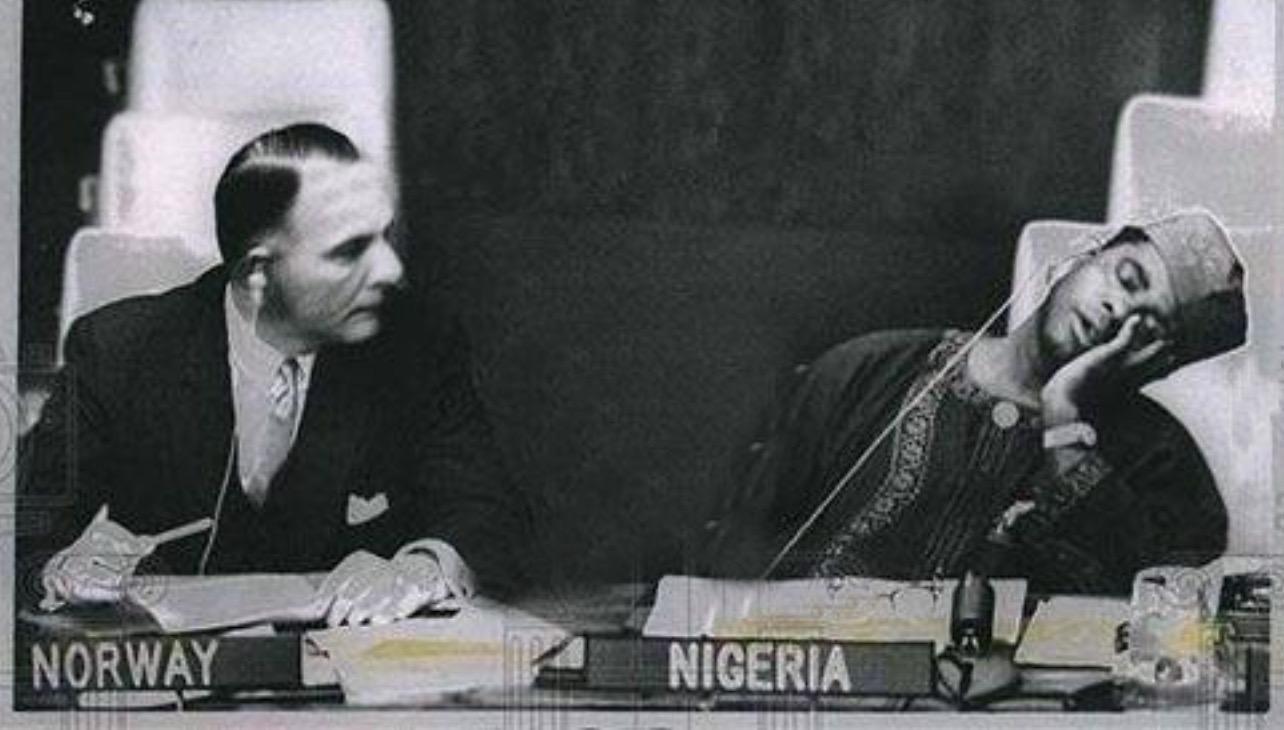
Jaja Wachuku’s Sleeping Protest
An often repeated anecdote involving Jaja Wachuku occurred during his early days as Nigeria’s first Ambassador and Permanent Representative to the United Nations in 1960. According to multiple sources, Wachuku was denied the opportunity to express his displeasure at a racist remark made during a UN meeting. Rather than participate, he quietly feigned sleep, thereby making a silent but powerful protest.
One detailed account published in the “Trinity College Dublin Discourse” series states that when his request to reply was refused, Jaja Wachuku decided to make a mockery of proceedings by pretending he had fallen asleep, and he ensured that all eyes were on him as he performed his own silent, but profoundly powerful protest.
Though the exact wording of the racist remark is not clearly recorded in the available public documentation, the gesture became symbolic of Nigeria’s and Africa’s refusal to passively accept second-class status at the international table.
The incident made headlines and helped cement Wachuku’s reputation, not just as a diplomat, but as a man of principle who understood the symbolic power of silent protest. It illustrated how a single gesture – quiet, composed, dignified could send a message more potent than a loud speech.
Over time, the story has taken on almost legendary status in Nigeria’s public memory, highlighting both the frustrations of newly independent African nations at the UN and the personal courage of their representatives.
In fact, the “sleeping story” at the United Nations is not simply a quirky anecdote, it is a snapshot of the early post-independence moment when African States were asserting their dignity, and when Nigeria’s voice, through Jaja Wachuku, began to be heard.
Personal Life and the Library
Jaja Anucha Ndubuisi Wachuku’s personal life was rooted in family, culture and an extraordinary commitment to learning. Equally remarkable was his private library – a physical manifestation of his intellectual habit that earned him the nickname “the Bookish Minister.”
In 1951, Jaja Wachuku married Rhoda Idu Oona Onumonu (1920–1994). Sources indicate they had five children: Chinedum, Nwabueze (now Mrs. Nwabueze Nwokolo), Ndubuisi, Emenuwa and Idu.
Rhoda was educated at Women Training College, Umuahia, and Achimota College in the Gold Coast (Ghana), and later studied in Scotland. The couple’s personal life was described as stable and supportive, giving Wachuku a strong home base while he served in public office.
Beyond his immediate family, Jaja Wachuku demonstrated a strong social and humanitarian commitment. After the Nigerian Civil War, he is reported to have adopted or extended support to numerous orphans. In his home community of Nbawsi, he engaged in local affairs and community development in addition to his national and international service.
One of the most distinctive features of Wachuku’s personal and professional identity was his private library at his country home in Nbawsi, Abia State. Both national and regional sources describe this collection as one of the largest one-man libraries in West Africa. His lifelong habit of reading, collecting books and engaging with ideas was not just a background detail, it became part of his public persona. Former Nigerian Prime Minister Abubakar Tafawa Balewa reportedly called him the “most Bookish Minister”.
During times of political strain, particularly during the civil war period, the library became a sensitive asset. One account notes that Nigerian soldiers, after the war, were shocked and dismayed to discover that Nigeria’s first Speaker of the House, first Ambassador to the United Nations, and first Foreign Affairs Minister had been in detention.
In the course of his detention and release, he managed to prevent the looting and destruction of his library located in his home village.
The significance of the library goes beyond its size. It symbolized Wachuku’s belief that public service must rest on intellectual foundations. His approach to diplomacy and politics, whether at home or abroad reflected the discipline, thoughtfulness and preparation one associates with a lifetime spent among books. In his hometown, the library was a resource for others. Scholars, students and visitors recognized its depth and breadth.
In his later years, even as he stepped back from high-profile diplomatic roles, Jaja Wachuku’s personal life and library stayed relevant. He remained involved in local community leadership in Imo/Abia region, supported education and learning initiatives, and passed on his values to his children and grandchildren. His family continues to honour his memory and the ethos of scholarship he embodied.
Jaja Wachuku’s personal life and his library were not separate from his public life, they were integral to it. He lived as a thinking man of action, rooted in family and community, committed to intellectual growth, and aware that books, ideas and values are the ballast of serious leadership.
Later Public Roles and Detention
After his landmark roles as Nigeria’s first Speaker of the House of Representatives and first Foreign Minister, Jaja Wachuku’s public life entered a new phase, one that was marked by community service, electoral politics under the Second Republic, the Nigerian Civil War, and a period of detention.
Following the end of the Nigerian Civil War), Jaja Wachuku returned to his native region and engaged in local and regional leadership. He focused on community development and governance in his home area of Nbawsi and parts of Umu-oma/Umuomainta in what is now Abia State.
Between 1970 and 1978, he served as Chairman of the Nbawsi and Umuomainta Town Council, and also as Chairman of the Nsulu Community Council. During this period, he also became involved with movements for the creation of new States, particularly the push for an Aba State and the creation of Imo State.
With the return of civilian rule in Nigeria’s Second Republic, Jaja Wachuku reentered national elective politics. He was elected Senator for the Aba Senatorial Zone, with his term recorded as beginning 1 October 1979 and ending 1 October 1983.
While in the Senate, he assumed prominent roles. He became a leader in the Nigerian Peoples Party (NPP) in the Senate and served as Chairman of the Senate Foreign Relations Committee. Some sources record that he later became Vice Chairman of that committee.
During his Senate service, he made public statements on foreign policy and pressed for diplomatic engagement with South Africa during the apartheid era, advocating dialogue and contact, not isolation and guns.
However, with the military coup of December 1983 that ended the Second Republic, his senatorial term was cut short and the political order changed.
During Nigeria’s Civil War, Jaja Wachuku’s role and circumstances became complex. Some sources state that he was detained by the secessionist Eastern region’s authorities under Chukwuemeka Odumegwu Ojukwu, reportedly because he spoke out against the recruitment of child soldiers and had fallen out with the secessionist leadership.
Then, at the end of the war, it is said that Nigerian Army Officer, Theophilus Danjuma and his battalion provided protection and escorted him home from detention. During that period of unrest, his private library in Nbawsi which had been proclaimed as perhaps the biggest one-man library in West Africa was at risk of being looted. He intervened to prevent its destruction or loss.
The later public roles and detention of Jaja Wachuku illustrate several important themes in his life:
- Resilience: After major diplomatic and legislative roles, he remained active and influential at local, regional and national levels, despite political upheaval.
- Local and national linkage: He bridged global diplomacy and local governance, serving both in the Senate and in community councils.
- Personal risk and principle: His willingness to speak out, even at the cost of detention points to his commitment to principle.
- Legacy preservation: His efforts to protect his library during conflict show how seriously he took intellectual heritage.
Summarily, Jaja Wachuku’s later years were not a quiet retirement but a continuation of his public service in community engagement, national politics, and moral action during crisis. While the national spotlight may have moved elsewhere, his actions during these years deepened the texture of his legacy.
Honours and Recognition
Jaja Wachuku received a range of honours during his lifetime and posthumously, reflecting his service to Nigeria, Africa and the world:
- He held the chieftaincy title “Ugo Ngwa” (Eagle and Pride of the Ngwa people), conferred by the Ngwa nation in 1949 and formally invested in 1971.
- He was awarded the national honour CFR (Commander of the Order of the Federal Republic of Nigeria).
- He earned an honourary doctorate D. (Honoris Causa) from Trinity College Dublin, Ireland.
- Internationally, he was honoured with the Blue Seal of the City of Philadelphia and the Key to the City of Atlanta, recognizing his diplomatic stature.
- Posthumously, in 2010, he received a Special Golden Jubilee Independence Award from Goodluck Jonathan, and in 2014, he was honoured as a Hero of the Struggle for Nigeria’s Independence during the nation’s centenary celebrations.
These honours underscore the respect accorded to Wachuku for his pioneering roles as Nigeria’s first Speaker of the House of Representatives, first Ambassador and Permanent Representative to the United Nations, and first Minister for Foreign Affairs, and for his contributions to African diplomacy and education.
Legacy
Jaja Wachuku left a complex and rich legacy. He was a lawyer and a parliamentarian. He was a diplomat who spoke plainly and forcefully for African dignity. He was a minister who worked to make Nigeria a key voice in the decolonizing world.
Through his role in the United Nations and as foreign minister, he helped build the international profile of Nigeria at a critical moment. He also contributed to the global effort to resist apartheid. Together, these activities make him an important figure in both Nigerian and African twentieth century history.
The image of the Bookish Minister also points to another part of his legacy. He modeled a public life that valued books, study and reason. For many younger Nigerians and scholars, he remains an example of a leader who combined learning with action. That blend of scholarship and statesmanship is part of why historians still study his speeches and decisions.
Death and Remembrance
Jaja Wachuku died on November 7, 1996. He passed away at the University of Nigeria Teaching Hospital in Enugu. He was 78 years old. After his death, friends, family and public commentators remembered him for his leadership, his scholarship, and his role at the United Nations. Over time, he has been included in lists of Nigeria’s founding political figures who deserve study and remembrance.
Since his death, scholars and institutions have continued to examine his life. Trinity College Dublin and other schools have hosted talks and memorials addressing his place in Irish and Nigerian history.
His speeches and public records continue to be cited in studies of postcolonial diplomacy and Pan-African action.
The Enduring Relevance of Jaja Wachuku
Jaja Wachuku still matters in contemporary Nigeria and beyond for several compelling reasons. He helped shape Nigeria’s international identity at the moment of independence by becoming the country’s first Ambassador and Permanent Representative to the United Nations, and then, its first Minister for Foreign Affairs, setting the tone for Nigeria’s foreign-policy principles of African unity and independence.
His diplomacy contributed to broader humanitarian outcomes, such as his interventions around the Rivonia Trial in South Africa, helping prevent the execution of Nelson Mandela and other anti-apartheid activists.
Wachuku modelled leadership grounded in intellectual preparation, showing that public service benefits from rigorous study, clarity of thought and a habit of learning – a message that remains relevant for today’s leaders and youth.
His commitment to speaking up for African dignity and claiming equality for newly independent States created a legacy of assertion and self-respect which younger generations can draw on as they navigate global challenges.
At the local level, his roots as a prince of Ngwaland and his engagement with both national and regional politics make him a figure of importance for people in his home region, reinforcing the link between local identity and national service.
In essence, Jaja Wachuku matters today, not only because of what he did, but because of what his life represents: a bridge between scholarship and service, between local roots and global stage, and between early independence hopes and the ongoing quest for African agency in the world.
In Conclusion …
Jaja Wachuku remains one of the most brilliant minds and courageous patriots in Nigeria’s history. His life was marked by a deep sense of purpose, an unyielding commitment to justice, and a belief in the power of knowledge to transform society.
From the halls of the United Nations to Nigeria’s first parliament, Wachuku embodied diplomacy, intellect and integrity at a time when the young nation was carving its identity on the global stage.
As Nigeria’s first Speaker of the House of Representatives, first Minister of Foreign Affairs, and first Permanent Representative to the United Nations, he laid the foundation for the nation’s foreign policy and international engagement. His fearless advocacy for African freedom and his intervention in saving Nelson Mandela and his comrades from the death penalty remain testaments to his vision of a liberated and united Africa.
Beyond politics and diplomacy, his immense personal library and love for learning showed his conviction that leadership must be rooted in knowledge. Prime Minister Abubakar Tafawa Balewa’s fond reference to him as the “Bookish Minister” captures the spirit of a man who valued wisdom as much as power.
Nearly three decades after his passing, Jaja Wachuku’s story continues to inspire a new generation of Africans who seek to blend intellect, courage, and compassion in public service.
Remembering him today is not just an act of nostalgia, it is a reminder that true leadership is about vision, principle and service to humanity.
References
- https://en.wikipedia.org/wiki/Jaja_Wachuku
- https://time.com/archive/6810438/united-nations-pride-of-africa/
- https://www.tcd.ie/media/tcd/secretary/pdfs/discourses/2025-patrick-geoghegan-on-jaja-wachuku.pdf
- https://history.state.gov/historicaldocuments/frus1961-63v25/d225
- https://cdn.un.org/unyearbook/yun/pdf/1961/1961_175.pdf
- https://ndnb.ng/biography/jaja-wachuku?
You might want to check this out…