
Anambra News
Sir Louis Ojukwu — Africa’s First Billionaire

Sir Louis Ojukwu: The First African Billionaire and Nigeria’s Business Pioneer
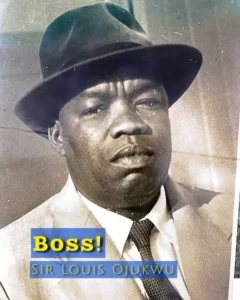
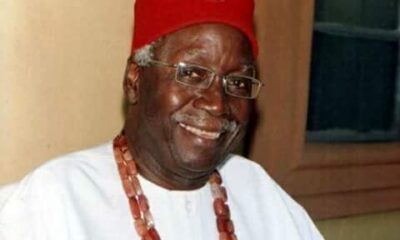
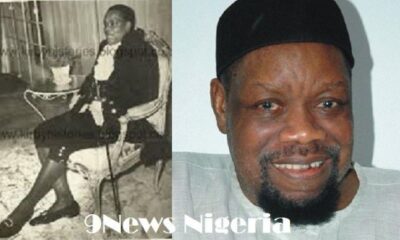
Sir Louis Phillip Odumegwu Ojukwu
Sir Louis Phillip Odumegwu Ojukwu stands tall in African history as a man whose name is forever tied to wealth, vision, and prestige. He is widely regarded as the first African billionaire, a title that did not come from chance but from relentless hard work, business wisdom, and the ability to see opportunities where others saw obstacles. Born in 1909 in Nnewi, in what is now Anambra State, he was raised in a modest environment that offered no signs of the immense fortune that awaited him. Yet by the 1950s and 1960s, he had become the richest man in Nigeria, and one of the wealthiest Africans of his generation.
He began his career in Lagos, where he first traded in textiles. Lagos in the colonial era was a tough market dominated by European merchants, but Sir Louis entered boldly, building trust and reputation among customers. His profits allowed him to diversify, and soon he identified transport as the beating heart of commerce in a young country that needed reliable movement of goods. This vision gave birth to Ojukwu Transport, a company that would eventually dominate Nigerian highways. His fleet of trucks became the main arteries of trade, carrying produce from the East to the West and North, and bringing manufactured goods back to the East. It was an empire on wheels, and it made Sir Louis incredibly wealthy.
But he did not stop there. He expanded into real estate, stock exchange investments, and industrial ventures. When Nigeria founded its stock exchange, he was not only a member but one of its biggest investors. By the early 1960s, he was recognized as the first billionaire in Nigerian pounds, a title that made him legendary. He was knighted by Queen Elizabeth II, a rare honor for an African businessman of his time, and his wealth and prestige gave him access to the highest levels of society.
In fact, one of the most dramatic symbols of his wealth and status came during Queen Elizabeth II’s visit to Nigeria. Sir Louis owned a Rolls-Royce, a car so rare and prestigious in Africa at the time that it stood out as a symbol of class and power. When the Queen visited, it was his Rolls-Royce that was used to chauffeur her around. That moment was more than just about lending a car. It was a mark of trust, honor, and recognition.
It told the whole world that an African businessman had reached a level of success and refinement that could rival European aristocracy. For many Nigerians, it was a moment of pride that one of their own could own something so magnificent that it was chosen to carry royalty. The Rolls-Royce was not just a car, it was proof that Sir Louis Ojukwu had risen to heights unimaginable for an African in the mid-20th century.
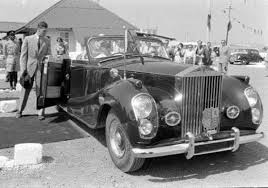
Sir Louis Phillip Odumegwu Ojukwu Rolls-Royce
His fortune was not locked away for personal enjoyment alone. He created jobs for thousands through his transport company and other ventures. He supported education and development in his hometown of Nnewi and beyond. He helped lift families out of poverty, and his influence spread across the Eastern Region. For many, he was not just a businessman but a benefactor, someone whose empire had ripple effects across the economy.
Family was also a central part of his life. He invested heavily in the education of his children, most famously Dim Chukwuemeka Odumegwu Ojukwu, who later led Biafra during the Nigerian Civil War. Sir Louis’s wealth enabled young Emeka to attend the finest schools in the world, including Eton College and later Oxford University in the United Kingdom. Without that financial backing, it would have been almost impossible for an African at the time to access such elite institutions. His decision to give his son the best education available would later shape Nigerian history in ways even he could not have imagined.
Unfortunately, Sir Louis did not live to see how the Nigerian Civil War would devastate the fortunes of many Eastern businessmen, including his own family. He died in 1966, a year before the war broke out. At the time of his death, he was Nigeria’s richest man, with investments spread across transportation, real estate, stock markets, and trade. But the war would later sweep away much of what he built. Many of his businesses collapsed in the chaos, and the full extent of his empire was never recovered.
Yet, even though time and war tried to erase parts of his story, his legacy remains strong. He is remembered as a pioneer, a man who showed what was possible for an African entrepreneur in the face of colonial dominance. His life is proof of the Igbo spirit of resilience and enterprise. He became a billionaire long before the oil boom, before the modern billionaires of Africa made their fortunes in technology, oil, or banking. His wealth came from vision, sweat, and the courage to take risks.
Sir Louis Phillip Odumegwu Ojukwu’s story is one that continues to inspire. He was more than just a businessman; he was a symbol of what Africans could achieve. His Rolls-Royce carrying the Queen of England was more than a luxury moment, it was history’s way of announcing that Africa had produced its first billionaire, a man whose success demanded global recognition. His empire may not have survived intact, but his legacy as a trailblazer lives on.
Remembering him is not just about recounting his fortune. It is about celebrating the boldness of a man who dreamed big, the vision of a leader who turned opportunities into wealth, and the pride of a generation that saw in him the proof that Africans could build empires too. Long before the age of modern billionaires, there was Sir Louis Ojukwu, the man from Nnewi whose Rolls-Royce carried a Queen and whose empire carried the dreams of a people.