





Igbo culture
Igba Afa (Divination) in Igbo Spirituality: The Ancient Art of Divination, Wisdom, and Spiritual Guidance

Igba Afa is the ancient Igbo system of divination used for spiritual guidance, wisdom, healing, and decision-making. Discover its origins, practices, cultural significance, and enduring relevance in Igbo spirituality.

In Igbo culture, people have long believed that not every answer can be found by looking only at the physical world. Sometimes, understanding a problem means seeking insight from the spiritual world as well. This is the foundation of igba afa.
Igba afa is the traditional Igbo system of divination. It is a respected spiritual practice used to seek guidance, uncover hidden causes, and make informed decisions. For generations, individuals, families, and communities have consulted afa when faced with important questions about health, marriage, business, fertility, conflict, and the future.
At the centre of this is the Dibia Afa, a trained diviner who interprets spiritual signs and offers guidance based on Igbo religious knowledge. Through this process, people seek clarity, healing, and a better understanding of their circumstances.
Although many people translate igba afa as fortune telling, that description is too narrow. It is not simply about predicting events. It is a system of spiritual inquiry, diagnosis, and counsel rooted in the wider framework of Igbo spirituality and Odinani.
Even today, igba afa remains an important part of Igbo religious life and cultural identity. Its continued practice offers valuable insight into how the Igbo have understood destiny, community, and the relationship between the seen and the unseen for centuries.
Understanding Igba Afa
To understand igba afa, it helps to begin with the words themselves. In Igbo, igba means to cast, perform, or consult, while afa refers to the divination system or oracle. Together, igba afa simply means consulting the oracle.
It is often translated as “fortune telling,” but that translation does not fully capture its meaning. It is much broader and much deeper. It is a traditional Igbo method of seeking spiritual insight, identifying the causes of problems, and receiving guidance.
People consult afa for many reasons. A family may want to understand repeated misfortunes. A trader may seek direction before making a major investment. Someone facing illness, marital difficulties, or unexplained setbacks may also turn to afa for answers.
In traditional Igbo society, igba afa was not treated as entertainment or casual curiosity. It was a serious spiritual exercise. The goal was not merely to predict what might happen next, but to uncover what was already at work beneath the surface.
Basically, igba afa rests on a simple belief that human life is connected to forces beyond ordinary sight. Through divination, the Dibia Afa helps to interpret those forces and provides guidance that can help to restore balance, resolve problems, and point the way forward.
Historical Origins of Igba Afa
The history of igba afa is as old as Igbo civilization itself. Long before written records, the Igbo relied on oral tradition to preserve their beliefs, customs, and spiritual practices. Igba afa emerged from this rich cultural heritage as one of the earliest ways people sought guidance and understanding.
In traditional Igbo society, life was seen as deeply connected to the spiritual world. Events such as illness, crop failure, infertility, and conflict were often believed to have causes beyond what could be seen with the eyes alone. Traditional divination developed as a means of uncovering these hidden causes and seeking solutions.
It became an essential part of Odinani, the indigenous religious system of the Igbo. Through afa, people consulted the spiritual realm before making important decisions or when faced with difficult situations. Kings, elders, farmers, traders, and ordinary families all relied on its wisdom.
Because Igbo culture was largely oral, the knowledge of afa was passed from one generation of Dibia to another through careful training and initiation. Each community preserved its own methods, symbols, and rituals, while maintaining the same fundamental purpose. Igba afa was deeply woven into the social, political, and spiritual fabric of Igbo society.
Although colonialism and missionary activities challenged many traditional practices, igba afa survived. It adapted to changing times while remaining rooted in ancient beliefs. Today, it continues to serve as a living link between modern Igbo communities and their ancestral spiritual heritage.
The Spiritual Foundations of Igba Afa
To understand igba afa, you have to first understand how the Igbo see the world. In Igbo spirituality, life is not limited to what can be touched or seen. The physical world and the spiritual world exist side by side, and they are constantly connected.
At the centre of this belief is Chukwu, the Supreme Being who is seen as the source of all life. Beneath Chukwu are different spiritual forces and deities known as Arusi, each responsible for certain aspects of nature and human life. There are also the ancestors known as Ndi Ichie who are believed to remain active in the lives of their living descendants.
Igba afa exists within this spiritual structure. It is not practiced in isolation or treated as a random ritual. It is a structured way of communicating within this belief system. Through it, a Dibia Afa seeks insight into situations that are believed to have both physical and spiritual dimensions.
A key figure in this system is Agwụ, often described as the spirit connected to divination, healing, and spiritual knowledge. Many Dibia Afa are believed to have a calling through Agwụ which sets them apart as people trained to interpret spiritual messages.
As such, igba afa is not about guessing the future. It is about interpretation. It helps people understand what may be influencing their lives, whether seen or unseen, and what steps may be needed to restore balance.
This spiritual foundation is what gives divination its seriousness in Igbo tradition. It is seen as a channel between human experience and a larger spiritual order that guides life, behaviour, and community well-being.
Who Is a Dibia Afa?
A Dibia Afa is the traditional Igbo spiritual specialist who performs igba afa. The word Dibia generally refers to a healer, teacher, or expert in a particular field, while Afa refers to the divination system. Together, a Dibia Afa is someone trained to interpret spiritual signs through the Afa system and guide people based on that understanding.
In Igbo society, a Dibia Afa is not seen as an ordinary fortune teller. He is regarded as a custodian of spiritual knowledge and a trusted guide in matters that affect both individuals and the community. People consult him when situations feel unclear, difficult, or beyond normal explanation.
The path to becoming a Dibia Afa is not usually casual. Many are believed to receive a spiritual calling often associated with Agwụ, the spirit linked to divination and healing. Others may come from families where the practice is already established and passed down through generations. In both cases, training is required.
This training is often long and disciplined. It involves learning how to interpret symbols, understanding sacred language, memorizing oral teachings, and studying traditional rituals. The apprentice also learns how to approach clients with care, respect, and responsibility, since the system deals with sensitive areas of human life.
A Dibia Afa is also expected to understand human behaviour and social relationships. This is because many consultations involve personal struggles, family issues, health concerns, or community disputes. The role requires both spiritual insight and practical wisdom.
In traditional communities, the Dibia Afa often holds a respected position. Leaders, families, and individuals may rely on his guidance before making important decisions. However, this respect also comes with responsibility. A true Dibia Afa is expected to act with integrity and avoid misuse of spiritual knowledge.
In simple terms, a Dibia Afa is a bridge between the visible and invisible aspects of Igbo life. Through afa, he helps people seek understanding, find direction, and restore balance when life becomes uncertain.
Tools and Methods Used in Igba Afa
The practice of igba afa is not done in a random way. It follows established methods that have been passed down through generations of Dibia Afa. While the exact tools may differ from one community to another, the purpose remains the same, and that is to interpret spiritual messages and guide human decisions.
One of the most important things to understand is that the tools used in afa are not valued for their physical form alone. Their meaning comes from how they are used within a sacred process of interpretation.
In different parts of Igbo land, a Dibia Afa may use several traditional objects, such as:
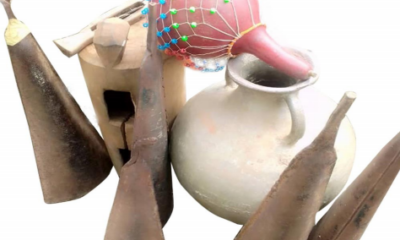
- Cowries, used for casting and pattern interpretation
- Seeds or nuts, arranged or thrown to form symbolic patterns
- Bones or small carved objects, often associated with ancestral wisdom
- Divination chains or cords, used to produce structured results
- Wooden or ritual tablets, marked with signs and symbols
- Sacred stones or natural items believed to carry spiritual significance
Each tool is connected to specific interpretive systems. The meaning is not in the object alone, rather, it is in the pattern it produces and how the Dibia Afa reads it.
The process usually begins with preparation. The Dibia Afa may observe silence, offer prayers, or perform cleansing rites, depending on tradition. This is done to create focus and respect for the consultation.
After preparation, the divination tool is cast, arranged, or manipulated according to established rules. The resulting pattern is then carefully observed.
Interpretation follows. This is the most important part of igba afa. The Dibia Afa does not simply “guess” meaning. He draws from training, oral teachings, symbolic knowledge, and spiritual intuition developed over time. Many interpretations are expressed through proverbs, symbolic language, or short spiritual statements. This makes the message layered and open to reflection, rather than a simple yes or no answer.
Every pattern or sign in igba afa carries meaning. Some may point to harmony, others to imbalance, warning, or instruction. The interpretation often depends on the question asked, the context of the situation, and the spiritual condition of the person seeking guidance. This symbolic system is one reason it is respected as more than ordinary prediction. It is a structured way of reading meaning into life situations through an indigenous knowledge system.
Igba afa is also deeply tied to oral learning. There are no fixed written manuals that cover all interpretations. Instead, knowledge is passed from teacher to apprentice over time. This includes stories, chants, proverbs, and case experiences. Because of this, two Dibia Afa may not always express answers in the same way, even if they interpret similar signs. However, the underlying principles remain consistent within each tradition.
While afa follows structured methods, it is also flexible. It adapts to the situation of the person seeking help. This balance between structure and adaptability is part of what has allowed it to remain relevant over time.
In essence, the tools and methods of igba afa are not just about physical objects. They form part of a deeper system of knowledge that connects human questions with spiritual interpretation and guidance.
How Afa Consultation Works
A typical afa consultation is a careful and structured process. It is not rushed, and it is not treated casually. In traditional Igbo settings, people approach it when they feel uncertain, troubled, or in need of deeper understanding about a situation.
The process usually begins with a conversation between the person seeking help and the Dibia Afa. The client explains the issue at hand. It could be illness that keeps returning, repeated setbacks in business, problems in marriage, or a general feeling that something is not going right. The Dibia listens closely. In many cases, he may ask simple questions to better understand the situation without rushing to conclusions. This stage is important because it sets the direction for the consultation.
After listening, the Dibia Afa proceeds to the actual divination. The tools are brought out, depending on the tradition being practiced. These may include cowries, seeds, chains, or other sacred objects. Before casting or arranging the tools, the Dibia may perform brief invocations or moments of silence. This is done to create focus and prepare for interpretation. In Igbo belief, this step is about aligning the consultation with spiritual awareness. The tools are then cast or arranged according to established patterns, and the result is observed carefully.
This is the most important part of the consultation. The Dibia Afa studies the patterns formed and interprets their meaning based on training, experience, and traditional knowledge. The interpretation is not presented as random prediction. Instead, it is framed as insight into possible causes of the situation. It may point to spiritual imbalance, broken relationships, neglected obligations, or other underlying issues. Often, the message is communicated using proverbs, symbolic expressions, or short traditional phrases. This allows the client to reflect deeply on the meaning rather than receive a simple answer.
After interpretation, the Dibia Afa offers guidance. This may include specific actions to take, such as reconciliation with a person, spiritual cleansing, herbal remedies, or changes in behaviour. In some cases, offerings or rituals may be recommended, depending on what is believed to be affecting the situation. The goal is not punishment, rather, it is restoration of balance and clarity.
The final stage is for the client to reflect on the guidance received. In traditional settings, it is common for individuals to take time before acting, especially when decisions affect family or community life. Igba afa does not force decisions. Instead, it provides insight that helps people think more clearly about their next steps.
A proper afa consultation is not rushed or sensational. It is a thoughtful process built on listening, interpretation, and guidance. Basically, it is about helping people understand their circumstances in a deeper way and find a path forward that restores balance in their lives.
The Role of Igba Afa in Igbo Society
In traditional Igbo life, igba afa was not a private or isolated practice. It played an active role in how people lived, related, and made decisions. It was part of daily life, especially in moments that required clarity, trust, or deeper understanding.
Many individuals and families consulted afa when facing personal challenges. This could include illness that did not respond to treatment, repeated difficulties in marriage, or uncertainty about important decisions.
For example, before marriage arrangements were finalized, families sometimes sought spiritual insight to understand whether the union would bring peace or conflict. In the same way, people consulted during pregnancy concerns, naming decisions, or major life transitions.
Igbo society has always been deeply entrepreneurial. Traders and farmers often relied on igba afa before taking major risks. A trader preparing for a long journey might seek guidance on timing and safety. A farmer might consult before planting or expanding farmland. The aim was not to replace hard work, rather to gain clarity before action.
Igba afa also played a role in settling disputes. In cases where conflicts were difficult to resolve, especially when truth was unclear, divination was sometimes used to uncover hidden causes or intentions. This helped communities to restore trust and reduce tension. In some cases, it guided elders and leaders in reaching fair decisions.
Traditional rulers and council of elders occasionally sought guidance through igba afa before making important community decisions. This could involve matters of land, security, festivals, or justice. While not the only decision-making tool, it was considered one way of ensuring that choices aligned with both human understanding and spiritual awareness.
In many Igbo communities, health was seen as both physical and spiritual. When illnesses persisted without clear explanation, igba afa was used to explore possible spiritual causes. The Dibia Afa might identify imbalance, neglected obligations, or other factors believed to affect well-being. Recommendations were then given to restore balance.
Fundamentally, igba afa helped people to make sense of uncertainty. It provided a framework for understanding events that seemed confusing or difficult to explain. Rather than leaving situations to chance alone, it encouraged reflection, responsibility, and thoughtful action.
In this vein, afa consultation served as more than a ritual practice. It was part of how Igbo society maintained order, addressed problems, and sought understanding in everyday life.
Divination Poetry and Sacred Language
One of the most fascinating parts of igba afa is the way language is used during consultation. In many cases, the Dibia Afa does not speak in plain or direct statements. Instead, meaning is often carried through proverbs, symbols, and poetic expressions. This style of communication is part of a long-standing Igbo tradition where wisdom is shared in layered language. In afa consultation, words are carefully chosen because they are believed to carry spiritual depth as well as practical meaning.
During divination, the message given to a client may come in the form of a proverb. For example, instead of saying something directly, the Dibia Afa may use a saying that requires reflection. The client is expected to think deeply about how it relates to their situation. This method allows the message to go beyond surface meaning. It creates space for interpretation, reflection, and personal understanding.
Symbols also play an important role. Certain words, images, or phrases may represent broader ideas such as conflict, warning, protection, or restoration. These symbols are understood within the cultural and spiritual framework of Igbo tradition.
Igba afa is closely tied to oral tradition. There is no single written manual that contains all interpretations. Instead, knowledge is passed down through speech, practice, and memory. A Dibia Afa learns by listening to mentors, observing consultations, and participating in training over time. This oral method helps to preserve the depth and flexibility of the practice. Because of this, divination language can vary slightly from one region or practitioner to another. However, the core meanings and principles remain consistent within the tradition.
In igba afa, language is not just about speaking. It is about communicating meaning between the spiritual and human worlds. The Dibia Afa acts as an interpreter. He translates what is believed to be spiritual insight into language that the client can understand and apply. This makes divination poetry more than artistic expression. It becomes a tool for guidance, reflection, and decision-making.
The language used in igba afa requires careful thought and cultural understanding. It is not random speech. It is structured, symbolic, and rooted in experience. These expressions function as a form of indigenous knowledge. They preserve history, moral teaching, and social values within short but meaningful statements.
Even today, the use of symbolic language remains one of the defining features of afa consultation. It connects present practice with ancient tradition and keeps oral wisdom alive. Through this poetic and layered form of communication, igba afa continues to serve not only as a system of guidance but also as a cultural expression of Igbo thought, memory, and worldview.
Igba Afa and the Concept of Destiny
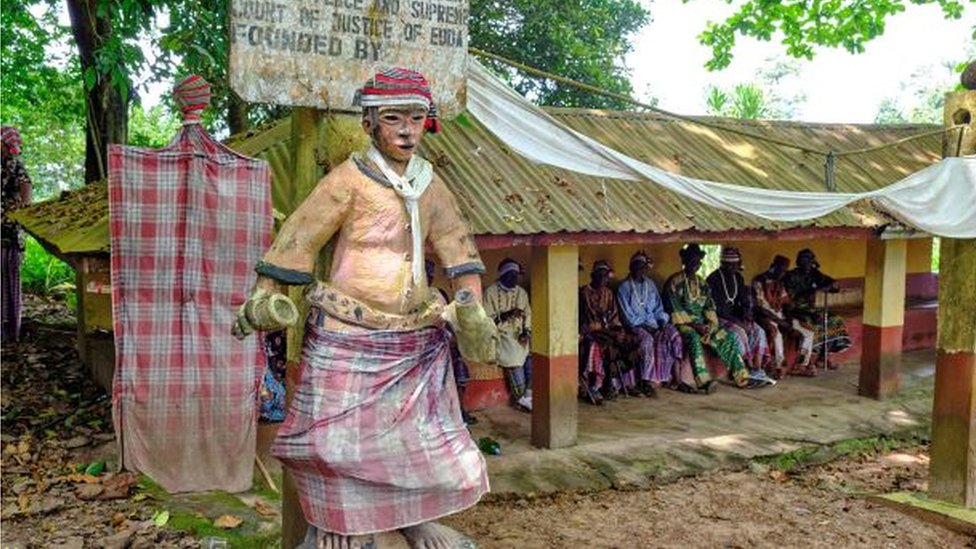
In Igbo spirituality, questions about life are often tied to one key idea – destiny. This belief is important for understanding igba afa, because divination is closely connected to how people interpret life paths, choices, and outcomes.
Among the Igbo, destiny is not seen as a fixed script that cannot be changed. Instead, it is understood as a path that can be influenced by human actions, spiritual balance, and relationships with the unseen world. A person may be born with certain potentials, challenges, or directions in life, but how those unfold is shaped by decisions, behaviour, and spiritual harmony. This flexible view of destiny is central to Igbo worldview.
Igba afa becomes important when people face uncertainty about their path. Through divination, a Dibia Afa helps individuals to look more closely at situations that may be affecting their progress. The process is not about telling someone that their future is already fixed. Instead, it is about identifying possible influences that may be helping or blocking their journey.
For example, afa may point to misunderstandings, neglected responsibilities, strained relationships, or spiritual imbalance as factors affecting a person’s life direction. It then offers guidance on how to address these issues.
A key idea in Igbo thought is that humans are not passive in their destiny. People are expected to take responsibility for their actions and decisions. Igba afa supports this by offering insight that helps individuals make better choices. It does not remove personal responsibility. Rather, it encourages awareness before action. As such, destiny is not something that simply happens to a person. It is something that is continuously shaped through choices, relationships, and spiritual alignment.
It is important to understand that afa is not used to control a person’s life. Instead, it is a tool for guidance. The Dibia Afa does not replace decision-making. He provides interpretation and advice that can help a person think more clearly about their situation. This makes igba afa more of a reflective practice than a predictive one. It helps people ask better questions about their lives rather than simply waiting for answers.
In traditional Igbo belief, living well means staying aware of both visible and invisible influences. Divination supports this awareness by offering a way to examine challenges from a wider perspective. It encourages balance between personal effort and spiritual understanding. In doing so, it helps individuals navigate life with more clarity and responsibility.
Ultimately, igba afa and the concept of destiny are closely linked, but not in a rigid way. Instead, they work together to help people understand their paths, make informed decisions, and move through life with greater awareness.
Igba Afa in Contemporary Igbo Society
In today’s Igbo society, igba afa still exists, though its place has changed. It is no longer as openly practiced in every community as it once was, especially with the rise of Christianity, modern education, and urban lifestyles.
Even so, the practice has not disappeared. In many rural areas and among some families, igba afa is still used quietly when people face difficult or unclear situations. Some individuals also seek it privately when they want deeper insight into personal or family matters.
In cities and towns, attitudes are more mixed. Some people fully accept it as part of cultural heritage, while others see it as outdated or incompatible with their religious beliefs. Despite these differences, interest in traditional Igbo spirituality has not completely faded.
There is also growing academic and cultural attention to practices like igba afa. Researchers and cultural writers now study it as part of Igbo history, belief systems, and indigenous knowledge.
Today, igba afa exists in a space between tradition and modern life. While it is less visible than in the past, it continues to be part of conversations about identity, culture, and spirituality in Igbo communities.
Cultural and Philosophical Significance
Beyond its role in decision-making, igba afa carries deep cultural and philosophical meaning in Igbo society. It is one of the ways the Igbo people express their understanding of life, existence, and the relationship between humans and the spiritual world. It is closely tied to the Igbo way of seeing the world. In this worldview, life is not random. Events are often connected to visible and invisible causes. This belief influences how people interpret success, failure, illness, and conflict.
Through divination, these ideas become practical. It gives people a structured way to ask questions about their experiences and seek meaning beyond the surface.
Igba afa is also part of a broader system of indigenous knowledge. It is not only spiritual, it is also intellectual. It involves observation, interpretation, memory, and communication. A Dibia Afa is trained to understand patterns, symbols, and human behaviour. This knowledge is passed down orally and refined through practice over time. In this sense, it functions as a living knowledge system rather than a fixed belief.
One of the key philosophical ideas behind igba afa is the search for cause. When something happens, especially something troubling, afa is used to explore what may be behind it. This does not always point to a single answer. Instead, it encourages reflection on multiple possible influences, including human actions, relationships, and spiritual factors.
Afa also carries moral weight. The guidance given during consultation often encourages responsibility, reconciliation, and balance. It may call attention to broken relationships or neglected duties. This way, it supports social order. It helps people think about how their actions affect others and how harmony can be restored when things go wrong.
Because afa consultation is rooted in oral tradition, it also serves as a way of preserving cultural memory. Proverbs, symbols, and expressions used in divination carry historical and cultural knowledge. This makes it more than a private practice. It is part of how Igbo society has historically stored and transmitted wisdom across generations.
Even in modern times, divination system continues to attract interest as part of African cultural heritage. Scholars study it, cultural writers document it, and some communities still practice it in traditional ways. Its significance today is not only spiritual, it is also cultural and intellectual. It offers insight into how the Igbo have historically understood life, knowledge, and human experience.
Challenges Facing Igba Afa Today
Although igba afa remains an important part of Igbo cultural history and spiritual life, it faces several challenges in the modern world. These challenges affect how it is practiced, understood, and passed on to the younger generations.
One of the biggest challenges is the gradual loss of oral transmission. In the past, the knowledge was passed directly from a master Dibia Afa to an apprentice over many years. Today, fewer young people are undergoing this kind of long-term traditional training. As a result, some aspects of the practice risk being forgotten or weakened over time.
The growth of Christianity in Igbo communities has also influenced attitudes toward igba afa. Many religious teachings discourage participation in traditional spiritual practices. Because of this, some people avoid or reject afa completely, while others practice it quietly or selectively. This shift has reduced its open presence in many communities.
Afa consultation is often misunderstood, especially outside traditional contexts. Some people reduce it to superstition or simple fortune telling without recognizing its cultural and philosophical depth. These misunderstandings can lead to negative judgments and limit serious discussion about its historical and social role in Igbo society.
In some cases, igba afa is being commercialized in ways that differ from its traditional form. People without proper training may present themselves as diviners, offering services without deep knowledge of the practice. This can weaken trust in authentic practitioners and distort public understanding of what igba afa truly represents in Igbo tradition.
Urban life has also affected the practice. In cities, people often live far from their ancestral communities and traditional institutions. This reduces regular contact with Dibia Afa and traditional systems of consultation. Modern lifestyles, education, and technology also change how people seek answers and make decisions.
Another challenge is the lack of extensive written documentation compared to other cultural systems. Much of the knowledge still exists in oral form. While some scholars have studied it, more systematic recording is needed to preserve its meanings, methods, and cultural context for future generations.
Despite these challenges, afa has not disappeared. It continues to exist in different forms, both openly and quietly, depending on community and belief systems. Its future depends on how well it can be understood, respected, and preserved in a changing world without losing its cultural depth and meaning.
Preserving the Legacy of Igba Afa
The future of igba afa depends largely on how well its knowledge, meaning, and cultural context are preserved. As with many indigenous traditions, the challenge is both survival and accurate understanding.
One of the most important ways to preserve igba afa is through careful documentation. Scholars of Igbo history and culture have already begun recording aspects of the practice in books, journals, and academic studies. Works by researchers such as Victor C. Uchendu and Elizabeth Isichei have helped to preserve early accounts of Igbo spirituality and divination systems. These studies provide a foundation for understanding how igba afa functioned in traditional society. More research is still needed, especially studies that focus on interpretation methods, oral traditions, and regional variations.
Education plays a major role in preservation. When the younger generations learn about afa in schools or cultural programmes, they gain a better understanding of their heritage. This does not mean everyone must practice it, but rather that the knowledge is not lost or misunderstood. Cultural awareness helps people to appreciate its place in Igbo history.
Even in modern times, oral tradition remains important. Elders, practitioners, and cultural custodians continue to pass down knowledge through storytelling, training, and practice. Supporting this transmission is key. When experienced Dibia Afa teach apprentices, they help to keep the tradition alive in its original form.
Preserving igba afa also requires respect. It should not be reduced to entertainment or stripped of its cultural meaning. At the same time, it should not be dismissed without understanding its context. Respectful engagement means studying it with openness, documenting it accurately, and avoiding misrepresentation.
In today’s world, traditions often exist alongside modern systems of belief and knowledge. Igba afa is no exception. Some communities continue to practice it in traditional ways, while others engage with it more as cultural heritage. Both approaches contribute in different ways to its preservation.
Ultimately, afa consultation is not only a historical practice. For many, it remains part of a living cultural identity. Preserving its legacy is not just about keeping old practices alive. It is about ensuring that future generations understand where they come from, how their ancestors thought, and how indigenous systems of knowledge helped shape society.
Conclusion …
Igba afa remains one of the most important expressions of Igbo spirituality and traditional knowledge. For generations, it has been used as a way of seeking clarity in moments of uncertainty, understanding the causes behind life events, and finding direction when decisions feel difficult.
While many people translate it as fortune telling, that description only captures a small part of its meaning. In reality, it is a structured system of spiritual inquiry. It connects human experience with deeper beliefs about the unseen world, ancestry, morality, and destiny.
From family matters to community leadership, it has played a steady role in shaping how people think, decide, and respond to challenges. It has also preserved a rich tradition of symbolic language, oral teaching, and cultural wisdom that continues to attract academic and cultural interest today.
Even in modern times, its presence has not fully disappeared. It exists in changing forms, sometimes openly and sometimes quietly, depending on belief systems and context. Yet, its influence remains part of the broader conversation about identity, heritage, and indigenous knowledge in Igbo society.
Understanding igba afa is not just about studying a traditional practice. It is about appreciating how the Igbo people have historically engaged with life, meaning, and the search for balance between the visible and invisible worlds.
References
- Anidiobu, I. E. (2011). The AFA: A divination system in Igbo land. Xlibris Corporation. https://www.amazon.com/AFA-Divination-System-Igbo-Land/dp/1465338288
- Isichei, E. (1976). A history of the Igbo people. Macmillan. https://archive.org/details/historyofigbopeo0000isic
- Nwankwere, A. U. N. (2007). The language of divination poetry: A case study of Dibia Njoku Nwogu. Awka Journal of Linguistics and Languages. https://journals.unizik.edu.ng/ajill/article/view/109
- Nwokike, K. I. (2024). An examination of the role of the Dibia in Igbo traditional socio-political and metaphysical economy. Zenodo. https://zenodo.org/records/14089514
- Mbiti, J. S. (1969). African religions and philosophy. Heinemann. https://archive.org/details/africanreligions0000mbit
You may want to check this out …