







Igbo Culture and History
Communal Living in Igbo Cosmology: The Igbo Philosophy of Community and Unity

“Communal living in Igbo cosmology…” reveals how the Igbo worldview places community, kinship, shared responsibility, and spiritual connection at the heart of life, identity, and belonging.

Communal living in Igbo cosmology was not just a social habit. It was the heart of life itself. In traditional Igbo society, no one was expected to face life alone. A child was raised by the family and the wider community. A farmer could count on neighbours during planting and harvest. When someone was in trouble, others stepped in without being asked.
This way of life came from the Igbo understanding of the world. The Igbo saw life as deeply connected. The living, the ancestors, the unborn, and the spiritual world all belonged to one great circle. In such a world, isolation had no place. A person became fully human through family, community, and shared responsibility.
The well-known Igbo saying Igwebuike, which literally translates “crowd is strength,” says it all. Success was shared. Problems were faced together. Leadership involved listening to others. Even justice focused on restoring peace within the community.
To understand communal living in Igbo cosmology is to understand the Igbo way of life itself. It is a rich tradition built on unity, care, cooperation, and belonging. Even today, its lessons remain powerful in a world where many people long for deeper connection.
What Is Igbo Cosmology?
To understand communal living in Igbo cosmology, we must first understand Igbo cosmology itself. It is the traditional Igbo view of the universe, life, and humanity’s place within it. It explains how the Igbo see God, the spiritual world, the ancestors, nature, and human beings.
In Igbo thought, the universe is not divided into separate parts that have nothing to do with one another. Everything is connected. The physical world and the spiritual world are constantly in touch. What happens in one can affect the other.
At the centre of this worldview is Chukwu, the Supreme Being and creator of all things. Beneath Chukwu are the deities, the ancestors, and human beings. Each has a role, and each belongs within the larger order of existence.
This is one reason communal living in Igbo cosmology is so important. Life is seen as a network of relationships. A person is connected not only to family and community, but also to the ancestors, the unborn, and the spiritual forces that guide the world.
In simple terms, Igbo cosmology teaches that no one exists alone. Every life is part of something bigger. That belief shaped traditional Igbo society and gave rise to one of its greatest values – community.
The Foundations of Communal Living in Igbo Cosmology
Communal living in Igbo cosmology is built on a simple but powerful idea. A person is never complete alone. Identity grows through relationships with family, community, and the wider world.
In Igbo thought, belonging comes first. From birth, a child is welcomed not only by parents but by a wider circle of relatives, neighbours, and age groups. Everyone shares a role in shaping the child’s life. This early experience teaches that life is shared and responsibility is collective.
Another foundation is the belief in shared humanity. The Igbo often express this through sayings like “Onye aghala nwanne ya,” meaning “let no one abandon their brother or sister.” This is not only about blood relations. It includes anyone who is part of the community. It encourages care, support, and loyalty.
Communal living in Igbo cosmology also rests on the idea of mutual responsibility. What affects one person can affect many. Because of this, people are expected to look out for one another. Success is celebrated together, and problems are faced together.
Respect for elders and family structure also plays a key role. Elders guide decisions, settle disputes, and help to maintain peace. The extended family system ensures that no one is left without support, especially in times of need.
Basically, Igbo thought teaches that life is not meant to be lived in isolation. A person becomes fully human through connection, care, and shared experience. This is the foundation that holds communal living in Igbo cosmology together.
The Concept of Igwebuike
One of the clearest expressions of communal living in Igbo cosmology is the idea of Igwebuike. This is a well-known Igbo philosophy that literally means “crowd is strength” or “strength in numbers.” At its heart, Igwebuike teaches that people achieve more when they work together than when they stand alone. In traditional Igbo life, this idea was not abstract. It was part of everyday living.
Farmers depended on one another during planting and harvest seasons. Families came together to build houses or support a member in need. Even difficult tasks became easier when shared among many hands. In this way, Igwebuike was not just a saying. It was a practical system of survival and progress.
Within communal living in Igbo cosmology, Igwebuike also carried a moral lesson. It reminded people that no one is self-sufficient. Everyone needs others at different points in life. This understanding helped to build cooperation, trust, and mutual respect within the community.
It also influenced leadership and decision-making. Important matters were often discussed collectively until agreement was reached. This ensured that no single person dominated the group and that everyone had a sense of belonging in decisions that affected them.
In simple terms, Igwebuike shows that unity is not just helpful. It is necessary. It is one of the strongest pillars that supports communal living in Igbo cosmology and continues to define Igbo identity today.
Family, Kinship, and the Extended Household
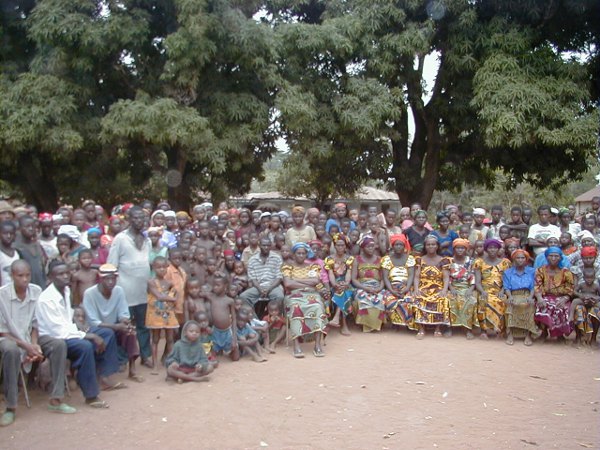
As far as communal living in Igbo cosmology is concerned, the family is the first and most important place where community is learned. But the Igbo idea of family goes beyond parents and children. It includes a wide network of relatives, known as the extended family or umunna.
In this system, everyone is connected. Cousins, uncles, aunts, grandparents, and even distant relatives share responsibility for one another. A child is not raised by parents alone. Any responsible adult in the family can correct, guide, or support the child.
This creates a strong sense of shared upbringing. Children grow up knowing that they belong to a larger group, not just a single household. This helps to build discipline, respect, and a sense of belonging from an early age.
Kinship also plays a major role in support systems. When someone is in need, the extended family steps in. This could be during marriage, illness, death, or financial difficulty. With communal living in Igbo cosmology, no one is expected to carry life alone.
The umunna also serves as a structure for decision-making and conflict resolution. Family matters are discussed together, and elders often help to guide solutions. This keeps peace within the group and strengthens relationships.
In communal living in Igbo cosmology, the extended household is more than a social arrangement. It is a safety net, a learning space, and a foundation for identity. It reminds every person that they belong, and that belonging comes with both support and responsibility.
Village Life and Collective Responsibility
In communal living in Igbo cosmology, the village is more than a place where people live. It is a living community built on shared responsibility. Every person has a role, and every action is connected to the well-being of others.
Village life in traditional Igbo society was highly organized, even without central rulers in many communities. Decisions were often made through meetings of elders, age grades, and respected title holders. These groups worked together to guide the affairs of the community.
Collective responsibility was part of daily life. People joined together to clear paths, maintain common spaces, and support community projects. If a family needed help building a house or preparing farmland, neighbours and relatives would often show up without being forced. This was seen as normal duty, not a favour.
Security was also shared. Members of the village watched out for one another. If danger or conflict arose, the community responded together. This created a strong sense of safety and trust within the village.
Age grades played an important role in this system. People of similar age formed groups that carried out tasks such as sanitation, farming support, and public service. These groups helped to ensure that responsibilities were spread fairly across the community.
In communal living in Igbo cosmology, village life teaches that no one exists alone. Everyone contributes to the survival and growth of the whole. This shared responsibility is what keeps the community strong and connected.
Communal Labour and Economic Cooperation

Communal living in Igbo cosmology is clearly seen in how work and economic life were organized. In traditional Igbo society, important tasks were rarely done alone. People depended on one another to get work done, especially during farming seasons.
One of the most common practices was communal labour. During planting, weeding, and harvesting, families and neighbours gathered to help each other on different farms. Today it is one person’s turn, tomorrow it is another’s. In this way, no household was overwhelmed by heavy farm work.
This system made life easier and more efficient. It also created strong social bonds. Workdays often ended with shared meals, conversation, and local drinks. These moments strengthened trust and friendship within the community.
Economic cooperation also went beyond farming. People formed savings groups and mutual support associations where members contributed money or goods regularly. When one member needed help, the group stepped in. This helped families handle emergencies, weddings, and other major life events.
Markets were also part of this cooperative system. Traders depended on trust, fairness, and long-standing relationships. Many economic activities were guided by community values rather than strict individual competition.
In communal living in Igbo cosmology, work and survival are shared responsibilities. The idea is simple. When people help each other, everyone benefits. No one is left to struggle alone, and no one succeeds in isolation.
Governance Through Consensus and Shared Leadership
In communal living in Igbo cosmology, leadership was not about one person giving orders to others. It was about people coming together to agree on what is best for the community. This is known as consensus-based governance.
In many traditional Igbo communities, there were no kings with absolute power. Instead, leadership was shared among elders, titled men, age grades, and respected members of society. These groups worked together to guide decisions and maintain order.
Important issues were discussed in public meetings. Everyone had the opportunity to speak, especially elders and representatives of different families. Decisions were not rushed. A matter was only concluded when most people were in agreement.
This system created a sense of belonging. People felt that their voices mattered. It also reduced the risk of unfair decisions because no single individual controlled the process.
The well-known expression “Igbo kwenu” often used in gatherings reflects this spirit of unity and agreement. It calls people to respond together as a way of showing shared acceptance of decisions or messages.
Leadership in this system was also based on service. Leaders were expected to act in the interest of the community, not for personal gain. If a leader failed the community, respect could be withdrawn.
In communal living in Igbo cosmology, governance is not separate from the people. It grows from the people. It is built on dialogue, respect, and shared responsibility. This is what made traditional Igbo leadership both participatory and balanced.
Spiritual Bonds: The Living, the Ancestors, and the Unborn
In communal living in Igbo cosmology, community does not end with the living. It stretches across time, linking the living, the ancestors, and the unborn into one continuous family of existence.
The Igbo believe that life is a shared journey between these three groups. The living are those present in the physical world. The ancestors, known as ndichie, are those who lived well, died good deaths, and continue to remain part of the family in the spiritual realm. The unborn are future generations who are expected to carry the family line forward.
This belief creates a strong sense of responsibility. People do not live only for themselves. They also live for those who came before and those who will come after. Actions are often guided by how they will affect the family line across generations.
Ancestors are highly respected in Igbo tradition. They are remembered in prayers, rituals, and family gatherings. They are believed to watch over their descendants, offering guidance and protection when honoured properly.
The unborn also have a place in this spiritual community. Decisions about land, family honour, and social behaviour are often made with future generations in mind. This helps to preserve continuity and stability within families and communities.
In communal living in Igbo cosmology, life is not a short individual experience. It is part of a long chain that connects generations. The living carry the past and prepare the future. This deep spiritual bond strengthens unity and gives life a stronger sense of meaning and belonging.
Festivals, Rituals, and Social Cohesion
In communal living in Igbo cosmology, festivals and rituals are more than celebrations. They are moments that bring the entire community together and remind everyone of their shared identity, history, and values.
Traditional Igbo festivals often involve the whole village or town. One of the most well-known is the New Yam Festival (Iri Ji or Iwa Ji). It marks the beginning of the harvest season and is a time to thank God, the ancestors, and the land for food and life. Families come together to cook, share meals, dance, and honour tradition.
Marriage ceremonies, naming ceremonies, and funerals also play a strong role in social life. These events are not private family matters alone. They are community events where relatives, neighbours, and friends gather to support one another. Through these moments, relationships are strengthened and community bonds are renewed.
Rituals in Igbo society also carry deep meaning. They often express gratitude, seek protection, or maintain harmony between the physical and spiritual worlds. Elders and spiritual leaders usually guide these rituals to ensure they are carried out properly.
These gatherings create social cohesion. They give people a chance to reconnect, resolve misunderstandings, and celebrate life together. Even those who have been away from the community often return during such events. This helped to strengthen ties across distance.
In communal living in Igbo cosmology, festivals and rituals are not just cultural expressions. They are a reminder that life is shared. They help to keep the community united, emotionally connected, and spiritually grounded.
Igbo Proverbs That Celebrate Community and Unity
In communal living in Igbo cosmology, proverbs are more than wise sayings. They are everyday guides for how people should live, relate, and behave in the community. They carry lessons that have been passed down through generations.
Many Igbo proverbs highlight communal living in Igbo cosmology. They focus on unity, support, and shared responsibility. One of the most common is “Igwebuike” which teaches that people achieve more when they work together than when they act alone.
Another well-known saying is “Otu onye anaghị azu nwa,” which means “one person does not raise a child.” This highlights the idea that raising children is a shared responsibility. It is not left to the parents alone, rather, it involves the wider family and community.
The proverb “Onye aghala nwanne ya” means “let no one abandon their brother or sister.” It encourages people to care for one another, especially in times of need. It reminds everyone that no one should be left behind.
There is also “Ikwu a maghi, ibe e zi ya,” meaning “when a kinsman does not know, his relative will teach him.” “Nwanne di n’ mba” reflects the belief that kinship extends beyond immediate family and can be found within the wider community.
These proverbs are not just spoken for speaking sake. They guide behaviour in daily life. They influence how people treat neighbours, resolve conflicts, and support one another.
In communal living in Igbo cosmology, proverbs act like moral reminders. They keep the values of unity, care, and cooperation alive in the minds and actions of the people.
Conflict Resolution and Restorative Justice in Igbo Society
In communal living in Igbo cosmology, conflict was never treated as a private matter between two individuals alone. It was seen as something that affected the entire community. Because of this, resolving disputes was a shared responsibility.
Traditional Igbo society placed strong value on peace and restored relationships. When conflict arose, it was usually brought before elders, family heads, or community assemblies. These gatherings were open, and both sides were given a fair chance to speak.
The goal was not simply to punish wrongdoing. It was to restore harmony. Elders listened carefully, asked questions, and helped both sides understand the impact of their actions. In many cases, compensation or apology was required, not to humiliate anyone, but to repair broken relationships.
Restorative justice was central to this process. Instead of removing people from the community, the system aimed to bring them back into good standing. Offenders were guided toward making peace with those they had harmed.
Family ties also played an important role. Because individuals were deeply connected through kinship, resolving conflict often involved entire families. This helped to prevent long-term divisions within the community.
In communal living in Igbo cosmology, peace is a shared responsibility. A conflict between two people is seen as a wound in the larger body of the community. Healing that wound requires everyone’s participation, patience, and willingness to forgive.
Modern Challenges to Igbo Communal Values
Communal living in Igbo cosmology has remained strong for generations. However, modern life has brought new pressures that have changed how people live and relate to one another.
One major challenge is urbanization. Many Igbo people now live in cities far from their ancestral villages. In these urban spaces, life is faster and more individual-focused. Neighbours often do not know each other well, and traditional systems of support are weaker.
Another challenge is migration. Large numbers of people have moved to other parts of Nigeria and to other countries for education, work, or business. While this has expanded opportunities, it has also stretched family and community ties across long distances.
Modern work structures also affect communal living. Unlike traditional farming life where people worked together physically, many jobs today are individual and time-bound. People leave for work early, return late, and have less time for communal interaction.
Technology has changed communication, but not always in the same way as face-to-face relationships. While phones and social media help people stay in touch, they do not always replace the depth of physical community life that once defined Igbo society.
There is also a growing influence of individualism. Personal achievement, privacy, and independence are now more emphasized than before. While these are not negative in themselves, they sometimes weaken the strong sense of collective responsibility found in traditional life.
Despite these challenges, communal living in Igbo cosmology has not disappeared. It has adapted. Family meetings still happen, often through calls or gatherings during holidays. Town unions and age grades remain active even in cities and abroad, especially in sponsoring development projects and community support.
In many ways, the values are still alive, even if the form has changed. The sense of belonging, mutual care, and shared responsibility continues to find new expressions in modern Igbo life.
The Enduring Relevance of Communal Living in Contemporary Igbo Society
Even with all the changes brought by modern life, communal living in Igbo cosmology is still very much alive today. It has not disappeared. Instead, it has adapted to new ways of living while holding on to its core values of unity, care, and shared responsibility.
One of the clearest signs of this continuity is the strength of town unions. These associations bring people from the same town or village together, no matter where they live. Through them, members contribute money, plan development projects, support families in need, and maintain a sense of belonging beyond physical distance.
Family networks also remain strong. Important life events like weddings, funerals, and naming ceremonies still attract large gatherings. Even when people live far apart, many return home or send support to take part in these moments. This shows that communal living in Igbo cosmology still shapes how people mark life’s major milestones.
Age grades and community groups are also active in many areas. They continue to play roles in local development, conflict resolution, and social support. In some places, they have even adapted to modern tools like WhatsApp groups and online meetings to stay connected.
Another important expression of continuity is the way people support one another during hardship. When illness, loss, or financial difficulty occurs, contributions often come quickly from relatives, friends, and community members. This habit of shared responsibility remains deeply rooted.
Even in the diaspora, Igbo communities abroad maintain strong cultural and social ties. Cultural associations, fundraising efforts, and community events help to preserve identity and connection far from home.
In communal living in Igbo cosmology, belonging is not limited by distance or time. It is carried through relationships, memory, and shared identity. Despite modern pressures, the spirit of community continues to guide how many Igbo people live, support one another, and stay connected.
Lessons from Igbo Communalism for the Modern World
Communal living in Igbo cosmology offers lessons that go beyond culture and history. It speaks to everyday human needs that are still relevant today, especially in a world where many people feel increasingly isolated.
One of the clearest lessons is the value of interdependence. In traditional Igbo life, no one was expected to succeed alone. People depended on family, friends, and neighbours for support. This created a safety net where hardship was shared and success was celebrated together. Modern societies can learn from this idea, especially in how communities support vulnerable people.
Another lesson from the communal living in Igbo cosmology is the importance of shared responsibility. In Igbo communal life, raising children, maintaining order, and caring for the elderly were not private duties alone. They were community concerns. This helped to reduce neglect and created stronger social bonds.
Communal living in Igbo cosmology also teaches the value of dialogue in decision-making. Through consensus-based governance, people learned to listen, discuss, and agree together. This reduced conflict and increased trust. In today’s divided world, this approach to leadership and problem-solving is still very relevant.
There is also the lesson of social belonging. The Igbo worldview reminds us that people thrive when they feel connected. Strong relationships improve emotional well-being and give people a sense of identity and purpose.
Another important insight is balance between individuality and community. While each person has value, that value is fully expressed within relationships. This balance can help modern societies avoid extremes of isolation or excessive individualism.
Finally, communal living in Igbo cosmology shows the power of culture in building resilient communities. Through proverbs, rituals, family systems, and shared work, values were passed down in a natural and lasting way.
These lessons are not limited to Igbo society. They offer a broader reminder that human life is richer when lived in connection with others.
Conclusion …
Communal living in Igbo cosmology is more than a cultural practice. It is a deep way of understanding life itself. From family and village life to spirituality and governance, everything is built around connection, shared responsibility, and belonging.
In the traditional setting, the principle of communal living in Igbo cosmology did not leave members to carry life’s burdens alone. People grew up within strong family systems, worked together in the fields, made decisions through discussion, and supported one another in times of joy and difficulty. Even the spiritual world was part of this community. There was a link between the living, the ancestors, and the unborn into one continuous family.
At the centre of it all is a simple but powerful truth. A person becomes fully human through others. This idea expressed in values like Igwebuike and onye aghala nwanne ya, helped to shape a society where unity was not just encouraged but lived every day.
Today, even with modern changes, these values have not disappeared. They continue in town unions, family networks, community support systems, and cultural gatherings. The form may change but the meaning remains.
Communal living in Igbo cosmology offers a reminder that life is not meant to be lived in isolation. It shows that strength grows in relationships, identity is built in community, and human life finds deeper meaning when it is shared.
References
- Ugwu, A. K., Ogbozo, C. N., & Anyanwu, A. U. (2023). An Igbo concept of community. Cuestiones de Fisioterapia. https://cuestionesdefisioterapia.com/index.php/es/article/view/2815
- Ayika, P. E. (2019). Communal relations in traditional Igbo society. Nigerian Journal of Philosophy. https://www.nigerianjournalsonline.com/index.php/NJP/article/view/667
- Asikaogu, J., & Eze, F. A. (2021). Igbo kwenu: A consensus philosophy in African communalism. https://eprints.gouni.edu.ng/3618/
- Onwuatuegwu, I. N. (2021). An overview of the Igbo cosmologic-ontological conception and the structure of the world: A philosophical reflection. ResearchGate. https://www.researchgate.net/publication/352407127_AN_OVERVIEW_OF_THE_IGBO_COSMOLOGIC-ONTOLOGICAL_CONCEPTION_AND_THE_STRUCTURE_OF_THE_WORLD_A_PHILOSOPHICAL_REFLECTION
- Ugwu, V. (2021). Defining life in African Igbo cosmology. JOSHA Journal. https://www.josha-journal.org/en/categories/humanities-social-sciences-and-law/articles/defining-life-in-african-igbo-cosmology
- Chukwudebelu, I. A., Ajakor, E., & Molokwu, G. C. (2024). Unveiling the depths: A scholarly exploration of the Igbo worldview. Sapientia Foundation Journal. https://www.sfjesgs.com/index.php/SFJESGS/article/view/529
You may want to check this out …