


Igbo History & Heritage
Ntezi Town, Ebonyi State: History, Culture, Language and People

Ntezi is a town in Ebonyi State known for its rich history, unique culture, distinct language known as Korring, traditional festivals, and tight-knit community life in southeastern Nigeria. Explore this historic town.
Ntezi is a town with a quiet depth. Situated within Ishielu Local Government Area of Ebonyi State in southeastern Nigeria, it is a place where history lives not only in old stories but in everyday conversations, shared meals, festivals, and family ties. For generations, the people of Ntezi have built a community rooted in ancestry, language, and tradition, even as they steadily adapt to a changing world.
Often overlooked in broader narratives about southeastern Nigeria, Ntezi carries a distinct history defined by its Orring identity and the Korring language they speak. Its story stretches from early settlement patterns and oral traditions to colonial encounters, cultural festivals, and modern development. Each chapter adds texture to the larger picture of who the people are and how they live.
This article explores Ntezi in full context. It looks at its origins, geography, people, and the cultural practices that define their community life. It also examines language, traditional leadership, economic activities, and the realities of the town today. Through verified records, documented research, and carefully preserved oral history, the story unfolds as one of continuity, belonging, and shared memory.
To discover Ntezi is to understand how history and culture can remain present in daily life. It is a story worth telling, and one worth preserving.
Geographical Location and Settlement Pattern of Ntezi
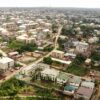
Ntezi is located in the eastern part of Ishielu Local Government Area of Ebonyi State in southeastern Nigeria. The town sits within a region known for its gentle hills, fertile land, and seasonal rainfall, all of which have influenced how people live and work in the area. Agriculture thrives here, and the physical environment has long supported farming as a central part of daily life.
Geographically, Ntezi shares boundaries with neighbouring communities in Ishielu and nearby parts of Ebonyi State. These shared borders have encouraged interaction through trade, intermarriage, and cultural exchange over many years. As a result, Ntezi maintains close social and economic ties with surrounding towns while still preserving its distinct identity.
The settlement pattern of Ntezi follows a traditional structure rooted in ancestry and kinship. The town is made up of five main villages, namely, Agaga, Amata, Biledeba, Iyokpa, and Ulepa. Each village developed around extended family groups which reflects the early movement and settlement of its ancestors. Homes are typically clustered by lineage to create a layout that strengthens family bonds and communal responsibility.
Farmlands stretch outward from residential areas to allow households easy access to their crops. Footpaths and local roads connect villages to one another and to nearby markets in a way that reinforces the importance of movement and exchange within the community. Central spaces serve as meeting points for markets, festivals, and important discussions.
This settlement pattern has endured, despite modern changes. While newer buildings and roads have appeared over time, the core layout of Ntezi remains closely tied to its history. The way the town is arranged tells a quiet story of continuity, cooperation, and respect for ancestral foundations.
Origins and Early History of Ntezi Town
The origins of Ntezi are closely tied to the wider history of the Orring people, an ethnic group found across parts of present-day Ebonyi, Cross River, and Benue states. In Ebonyi State, Ntezi stands as one of the most prominent Orring settlements with a shared ancestry that is preserved through oral tradition and supported by historical references.
According to community accounts, the early settlers of the town traced their lineage to a common ancestral source that, according to oral history, widely regarded Ugboloke as its founding forebear. From this ancestral line emerged the families and kindreds that later formed the villages of the town. These early settlers chose the area because of its arable land, access to water, and relative security which allowed farming and community life to grow steadily over time.
Before colonial contact, Ntezi existed as an organized community governed by the elders and family heads. Social life centered on farming cycles, kinship obligations, and shared customs. Land was communally held and managed according to lineage. This system helped to maintain order and clear boundaries between families and neighbouring settlements. Interaction with nearby communities occurred through trade, seasonal markets, and social ties such as marriage, thus creating a network of relationships across the region.
One of the most clearly documented moments in the early history of Ntezi occurred during the late 1920s when the community became involved in a land dispute that reached the colonial court in Ogoja. The case involved settlers who had entered the land under an agreement that later became contested. After formal proceedings, the colonial administration ruled in favour of Ntezi, and recognized their ownership of the land in question. This event is frequently cited as an important moment in the recorded history of the town as it marked early engagement with colonial legal structures while affirming traditional land rights.
Colonial administration later brought new influences to Ntezi, including missionary activity, Western education, and indirect rule through recognized local leaders. While these changes introduced new systems of governance and belief, they did not erase existing social structures. Instead, traditional leadership and customs continued alongside colonial institutions, and allowed the community to retain its core identity.
The early history of Ntezi is, therefore, a blend of oral memory and documented events. It tells a story of settlement, community formation, and continuity. From ancestral migration to encounters with colonial authority, it developed as a town grounded in shared history, land, and collective responsibility.
The People of Ntezi Town
The people of Ntezi belong to the Orring ethnic group. Orring is a community with a long presence in parts of present-day Ebonyi State and neighbouring areas of southeastern Nigeria. In Ebonyi, the town is recognized as one of the key Orring settlements, and this identity continues to guide social life, language use, and cultural practice within the town.
Families in Ntezi are traditionally organized around lineage and kinship. Each of the villages is made up of extended family groups whose ties can be traced through shared ancestry. These family bonds influence where people live, how land is inherited, and how responsibilities are shared. The elders hold an important place in the society, not only because of age but because they serve as custodians of history, customs, and community values.
Community life in Ntezi places strong emphasis on collective responsibility. Important events such as marriages, funerals, and festivals involve wide participation, often extending beyond the immediate family. During such moments, people return from nearby towns and cities to take part. Helping one another during farming seasons, ceremonies, or times of need is seen as a shared duty rather than a personal favour.
Although the people of Ntezi maintain a distinct Orring identity, they have long interacted with neighbouring Igbo-speaking communities. This interaction has led to cultural exchange, bilingualism, and social ties through trade and intermarriage. Many residents speak both Korring and Igbo. This allows them to move easily between local and wider regional spaces while still maintaining their roots.
Religion also plays a role in everyday life. Christianity is widely practiced in Ntezi today, introduced through missionary activity during the colonial period. Churches serve as centres for worship, social gathering, and community organization. At the same time, respect for ancestral heritage remains important, especially during cultural festivals and traditional observances.
In contemporary times, the people include farmers, traders, artisans, civil servants, and professionals living both within the town and in urban centres across Nigeria. Despite migration and modern influences, ties to home remain strong. Family meetings, festivals, and communal projects continue to draw people back, thus keeping the social fabric of Ntezi active and connected.
Fundamentally, the story of these people is one of continuity. It is a story informed by shared ancestry, communal values, and an enduring sense of identity that links past generations with those living there today.
Language and Ethnolinguistic Identity
Language sits at the heart of identity in Ntezi. The people speak Korring, sometimes referred to locally as K’eteji, a language associated with the Orring ethnic group. Korring is part of the wider Benue-Congo language family which includes many languages spoken across southeastern and central Nigeria. In Ntezi, the language is more than a means of communication. It is carries memory, values, and shared experience.
Korring is commonly spoken in homes, among relatives, and during traditional ceremonies. It is the language used for greetings, proverbs, songs, and storytelling, especially among the elders. Through these everyday uses, knowledge about ancestry, moral conduct, and community expectations is passed from one generation to the next. Many traditional expressions in Korring do not translate easily into other languages. This gives the language a special place in preserving local meaning and worldview.
Because Ntezi is surrounded by predominantly Igbo-speaking communities, bilingualism is common. Most residents speak both Korring and Igbo with ease. Igbo is often used in schools, churches, markets, and formal settings while Korring remains dominant in family spaces and cultural gatherings. This balance allows the people to participate fully in wider regional life without losing their linguistic roots.
Ethnolinguistically, Ntezi occupies an important position in Ebonyi State. The town represents one of the main centres of the Orring culture in the State, alongside other Orring communities in Ishielu and nearby areas. This identity sets the town apart while also linking it to a broader network of related communities across State boundaries.
In recent years, there has been growing awareness of the need to preserve the Korring language, especially as the younger generations spend more time in urban areas or communicate mainly in Igbo and English. Elders, cultural events, and family life continue to play a key role in keeping the language active. Festivals, naming ceremonies, and community meetings provide spaces where Korring is heard, spoken, and valued.
For the people of Ntezi, language is not simply about the words. It is about belonging. Speaking Korring connects individuals to their ancestors, their land, and their community. Even as the town adapts to social and economic change, its language remains a strong marker of who they are and where they come from.
Culture and Traditional Practices

Culture in Ntezi is lived quietly but deeply. It appears in everyday routines, family relationships, farming seasons, ceremonies, and the way people relate to one another. While modern influences are present, traditional practices continue to guide social life and give the community a clear sense of continuity.
Social Life
Social life in Ntezi is built around family, kinship, and mutual support. Households are closely connected, and extended families often live near one another. This closeness encourages cooperation, especially during farming seasons, ceremonies, and times of need. Helping a neighbour is seen as part of normal community life, and not something spectacular.
Marriage customs in Ntezi involve both families rather than just the couple. Elders play an important role in negotiations and ceremonies ensuring that unions are properly recognized by the wider community. Naming ceremonies, funerals, and other life events also draw large gatherings which is a way of reinforcing bonds among relatives and neighbours.
Respect for elders is central to social conduct. Elders are valued for their knowledge of history, customs, and family lines. Their guidance is often sought in family matters and community discussions, and their presence at important events carries social meaning.
Festivals and Cultural Expressions
Festivals are among the most visible expressions of culture in Ntezi as they bring together tradition, music, and collective memory. One of the most significant festivals celebrated in the town is the Oviode Festival, also known as Ofi-Oye. The festival is observed annually, typically around February, and marks an important moment in the cultural calendar of the community. It is documented as a major cultural event in Ntezi and neighbouring Orring communities.
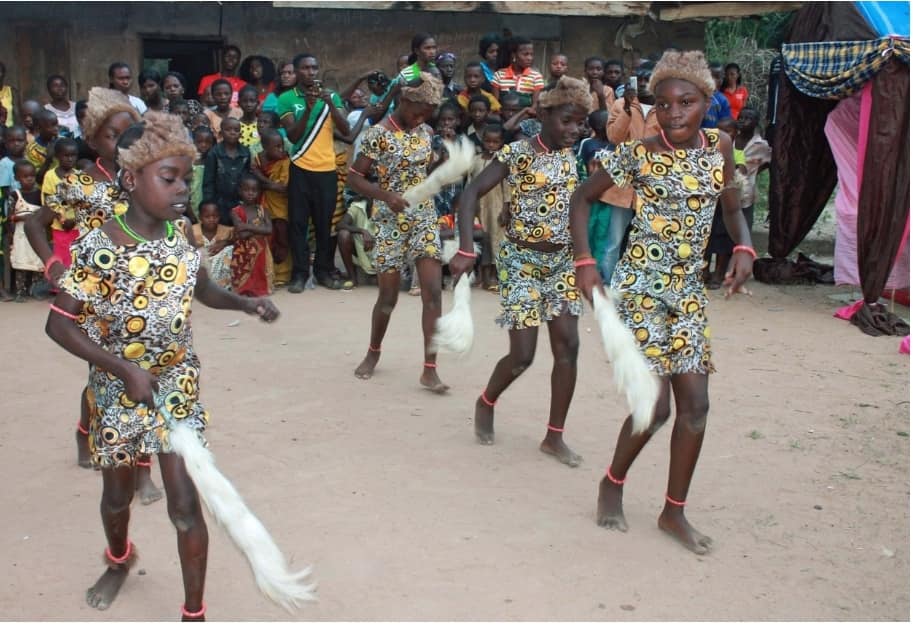
During the Oviode Festival, residents and returning indigenes gather to celebrate shared heritage. Traditional music, drumming, dance, and masquerade performances form part of the celebrations. These performances are not staged simply for entertainment. They carry cultural meaning and are closely tied to community identity, seasonal cycles, and respect for ancestors.
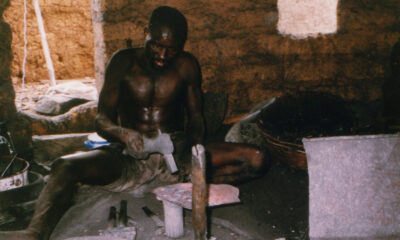
Artistic expression also takes practical forms. Basket weaving is a well-known traditional craft practiced mainly by women in Ntezi. Woven baskets are used for farming, storage, and trade, and they are sold in local markets and beyond. The craft reflects both creativity and usefulness, and shows how culture and daily life intersect.
Dress, Music, and Oral Tradition
Traditional attire is commonly worn during festivals and special occasions. These outfits often include locally made fabrics and accessories that signal cultural pride. Music in Ntezi relies heavily on drums and call-and-response songs which encourage group participation rather than individual performance.
Oral tradition remains an important part of cultural life. Stories, proverbs, and songs are used to teach values, explain origins, and pass on knowledge. The elders play a key role in preserving these traditions by often sharing them during gatherings or family events.
Continuity in a Changing World
While Christianity and modern education have influenced cultural practices in Ntezi, traditional customs continue to exist alongside newer ways of life. Festivals are still observed, local crafts continue, and family structures remain strong. Cultural practices are not frozen in time, rather they are respected as living parts of the community.
In Ntezi, culture is not something set aside for special occasions only. It is woven into everyday life, and guides how people relate, celebrate, and remember their roots.
Traditional Leadership and Governance
In Ntezi, traditional leadership remains an important part of community life that complement modern administrative structures. The governance system of the town is deeply rooted in the Orring cultural framework where elders and recognized leaders guide social, political, and ceremonial matters.
At the heart of traditional governance is the council of elders, a group of respected men and women chosen for their knowledge, experience, and wisdom. These elders serve as custodians of customs, mediators in disputes, and advisers during community decision-making. Their authority comes from both age and the recognition of the community, and not by appointment.
Each village within Ntezi has its own local leadership often headed by a village head or chief. The village heads coordinate with the elders and oversee communal activities such as farming initiatives, land allocation, conflict resolution, and festival organization. The arrangement ensures that decisions affecting daily life are made with consultation and consensus.
Dispute resolution in Ntezi is primarily customary. Land disagreements, family conflicts, and other issues are often brought before the elders who listen to all parties and apply traditional laws and precedents. This system has maintained social cohesion for generations with the goal of ensuring fairness and preserving the customs.
Traditional leadership also plays a key role in ceremonies and festivals. Leaders oversee ritual practices, advise on cultural protocols, and maintain links between the living community and ancestral traditions. They serve as a bridge between the past and the present, and ensure that cultural practices are respected and upheld.
Even with the presence of local government authorities and modern legal frameworks, the traditional system remains highly relevant. Many community members continue to seek guidance from the elders and village heads before taking significant actions, thus demonstrating the enduring value of customary governance in Ntezi.
In essence, traditional leadership in Ntezi is both practical and symbolic. It organizes daily life, preserves cultural identity, and strengthens community bonds, and ensures that the town maintains continuity while adapting to modern realities.
Economy and Traditional Occupations

The economy of Ntezi has long been defined by its natural environment and traditional practices. The fertile soil, rolling hills, and a favourable climate make farming the backbone of community life. For generations, families have cultivated staple crops such as yams, cassava, maize, and beans, both for household consumption and for sale in local markets.
Farming is often a communal activity with neighbours and extended family helping one another during planting and harvest seasons. This cooperation strengthens social bonds while supporting livelihoods.
In addition to agriculture, Ntezi is known for traditional crafts, particularly basket weaving. Local artisans, mainly women produce baskets used for farming, storage, and trade. These items are not only functional but also carry cultural significance as they represent skill, creativity, and the continuation of traditional practices. Woven goods are sold in town markets and neighbouring communities. This contributes to household income and sustains artisanal knowledge.
Trade is another important aspect of the economy. The town hosts central markets where farmers, artisans, and traders converge to buy and sell goods. These markets serve as social hubs as they allow the residents to exchange not only products but news, ideas, and social support. Trading extends beyond Ntezi, with connections to nearby towns and communities which helps to broaden economic opportunities for residents.
Livestock rearing, including goats, poultry, and small ruminants is practiced by many families. It supplements income from farming and provides food security. Some residents also engage in small-scale retail or transport services.
While agriculture remains the dominant occupation, the younger generations increasingly explore formal employment, education, and business opportunities outside the town. Despite this shift, the traditional economic practices continue to provide stability and a tangible link to the land and cultural heritage.
In Ntezi, work and community life are intertwined. More than a means of survival, economic activities reinforce cooperation, family ties, and cultural continuity. Farming, craftsmanship, trade, and livestock rearing are enduring pillars of life which ensure that the economy remains both practical and culturally rooted.
Ntezi Town in the Colonial and Post-Colonial Era
The history of Ntezi during the colonial and post-colonial periods portrays both adaptation and resilience. Like many communities in southeastern Nigeria, Ntezi experienced significant changes under British colonial administration while maintaining its traditional structures and cultural identity.
During the colonial period, Ntezi came into contact with missionaries, colonial officials, and new legal systems. The missionaries introduced formal education and Christianity which created opportunities for literacy and religious practice that were previously unavailable. Schools established in and around the town allowed children to learn English and gain skills that would later open pathways to employment outside the town. Christianity gradually became widespread, even though traditional beliefs and ancestral practices continued to play a role in community life.
Colonial authorities also affected governance and land management. Ntezi was involved in documented land disputes during the 1920s, particularly the case brought before the colonial court at Ogoja concerning territorial rights with neighbouring settlers. The resolution affirmed the control of the town over its ancestral lands.
Indirect rule during the colonial administration recognized traditional leaders as intermediaries between the colonial government and local communities. In Ntezi, village heads and councils of elders continued to resolve local issues, collect taxes, and oversee communal projects. This ensured that customary governance remained intact alongside colonial structures.
Following Nigeria’s independence in 1960 and the eventual creation of Ebonyi State in 1996, Ntezi experienced new forms of political and administrative oversight. Local government institutions were introduced to provide channels for public services, infrastructure development, and education. These changes brought the town into the broader framework of Nigerian governance, and connected it to state-wide initiatives in health, education, and economic development.
Despite these transitions, the people retained strong ties to their cultural roots. Traditional leadership, festivals, language, and communal practices continued to guide social life. The colonial and post-colonial eras thus represent periods of adaptation rather than replacement which allow Ntezi to integrate modern institutions while preserving its identity.
Today, the legacy of these historical periods is visible in the schools, churches, administrative offices, and continued respect for the elders and traditional authorities. The experience of Ntezi during the colonial and post-colonial times demonstrates its ability to navigate change while maintaining continuity with its past.
Education, Religion, and Social Development
Education has played a central role in the growth of Ntezi over the years. With the arrival of the missionaries during the colonial period, formal schools were established in and around the town. These schools introduced children to reading, writing, and arithmetic, often alongside Christian religious instruction.
Today, Ntezi has several primary and secondary schools that continue to provide foundational education for young people. Access to schooling has allowed the residents to pursue careers in civil service, business, and other professions while also enabling them to maintain strong connections with their community.
Religion in Ntezi is largely Christian. Although this is a legacy of missionary influence, traditional beliefs and practices remain respected, especially during festivals and cultural ceremonies. Churches have become not only spiritual centres but also venues for social gatherings, education, and community projects. Sunday services, Bible study groups, and youth programmes contribute to social cohesion and offer a structured framework for moral and ethical guidance.
Social development in Ntezi has been closely linked to education and religion. Schools and churches often serve as platforms for health campaigns, literacy programmes, and vocational training. Initiatives aimed at improving water access, sanitation, and healthcare have reached the town through both government programmes and non-governmental organizations. Community members participate actively in such programmes.
Youth engagement is another key aspect of social development. Many young people from Ntezi migrate to urban areas for higher education or work but maintain ties to the town through family connections, festivals, and remittances. These interactions help to bring new ideas, resources, and skills back to the community, thereby contributing to overall growth and modernization.
In essence, education, religion, and social development in Ntezi are intertwined. Schools and churches not only provide learning and spiritual guidance but also foster community participation, civic awareness, and cultural continuity. They form the backbone of social progress while respecting the traditions and shared values of the town.
Ntezi Town in Contemporary Times
Today, Ntezi is a town that balances tradition with the realities of modern life. While its residents continue to uphold cultural practices, language, and festivals, the town has also seen developments in education, infrastructure, and economic activity. The community reflects a blend of ancestral heritage and contemporary influence.
Many young people from Ntezi now live in cities across Nigeria and even abroad. Despite this migration, they maintain strong connections to their hometown. They return for important festivals like the Oviode Festival, family events, and community projects. This pattern of movement and return helps the town to stay connected with the broader social and economic networks while reinforcing local identity.
Agriculture remains a major livelihood, though there is increasing diversification. Some residents engage in small businesses, trade, and formal employment. Crafts such as basket weaving and other artisanal skills continue to generate income. Markets remain central to social and economic life as they serve as hubs for trade, communication, and networking.
Education continues to shape the present and the future of Ntezi. While the children attend primary and secondary schools in Ntezi, the others pursue higher education elsewhere. The community values learning, understanding that education offers opportunities to improve lives while contributing to the town’s growth.
Infrastructure improvements have also reached Ntezi in recent years. Roads, electricity, and communication networks connect the town to neighbouring areas and urban centres, thereby facilitating trade, mobility, and access to services. Development projects by government agencies and private investors have contributed to economic growth and social welfare.
Despite these changes, its social fabric remains strong. Family ties, respect for elders, communal cooperation, and cultural celebrations continue to define life in Ntezi. The combination of modern opportunities and traditional structures allows residents to navigate contemporary challenges while keeping their heritage alive.
In many ways, the contemporary Ntezi exemplifies a community that honours its past while embracing the present. Its people are connected to their roots through language, customs, and festivals, yet they actively participate in Nigeria’s broader social, economic, and educational landscape. This balance ensures that the town remains both resilient and culturally rich.
Cultural and Social Significance of Ntezi Town
Ntezi holds a unique place in Ebonyi State and the wider southeastern region of Nigeria, both culturally and socially. Its significance is tied to the people’s Orring heritage, their Korring language, and the traditions that have been carefully preserved over generations. These elements together form a rich cultural identity that continues to influence community life.
Festivals such as the Oviode Festival are central to its cultural identity. These events bring together residents from all villages and returning indigenes and provide a space for the community to celebrate shared history, perform traditional dances, and honour ancestral legacies. Beyond entertainment, festivals serve as opportunities for cultural transmission by ensuring that the younger generations learn songs, dances, proverbs, and rituals that have defined the town for centuries.
Language is another key element of Ntezi cultural significance. The Korring language is not only a daily means of communication but also a vessel for oral history, moral lessons, and folklore. Through language, the people maintain a connection with their past and reinforce communal identity, even as external influences, including Igbo and English interact with daily life.
Ntezi also represents a model of communal cohesion. Social structures, respect for elders, and cooperative practices in farming, festivals, and dispute resolution highlight its ability to work together. This cohesion strengthens resilience, ensures the preservation of traditions, and provides a support system that has sustained the town through historical challenges.
Economically, traditional crafts and markets in Ntezi carry social as well as cultural value. Basket weaving, local trade, and farming are not only sources of livelihood but also ways in which their heritage is expressed and shared. Artisans and farmers participate in a cultural economy where skills, aesthetics, and practical needs intersect.
In contemporary society, the cultural and social significance of tezi Nextends beyond the town itself. It contributes to the diversity of Ebonyi State by enriching regional heritage with its festivals, language, and customs. Scholars, cultural enthusiasts, and government agencies recognize the town as an important repository of Orring history and identity, thus making it a vital location for cultural preservation and study.
Ultimately, Ntezi stands is a living embodiment of history, language, tradition, and social unity. Its cultural and social structures demonstrate how communities can maintain identity, continuity, and relevance across generations while engaging with the broader currents of modern life.
In Conclusion …
Ntezi is a community where history, culture, language, and social life come together to form a living story. From its origins as a settlement of the Orring people to its contemporary presence, Ntezi represents continuity, resilience, and a deep connection to ancestral roots.
Its Korring language, traditional festivals, and artisanal crafts keep its heritage alive while schools, churches, and markets integrate the community into modern Nigerian society. Ntezi social structures, respect for elders, and cooperative spirit reinforce a sense of belonging which ensures that each generation inherits both knowledge and values.
In contemporary times, Ntezi navigates change without losing its identity. Though the young people move to cities or abroad for education and work, they return for festivals and family gatherings, thereby bridging the past and the present. Agricultural livelihoods, craftsmanship, and trade remain central to life, and reflect the ability of the town to adapt while preserving tradition.
The story of Ntezi is one of connection between the people, between the past and the present, and between culture and daily life. Understanding the town means appreciating how a community can remain vibrant, culturally rich, and socially cohesive, even as it engages with the wider world. For those seeking to explore Nigeria’s diverse heritage, Ntezi offers a living example of how tradition and modernity can coexist in harmony.
References
- https://en.wikipedia.org/wiki/Ntezi
- https://placeandsee.com/wiki/ebonyi-state
- https://en.wikipedia.org/wiki/Orring
- https://ozikoro.com/exploring-the-korring-language-and-cultural-heritage-of-ntezi/
- https://soluap.com/oviode-ofi-oye-festival-in-ntezi-community-ishielu-lga-ebonyi-state/
- https://www.bio-research.com.ng/index.php/home/article/view/344
- https://independent.ng/salt-city-pharma-park-to-establish-mega-factory-at-ntezi-ebonyi/
- https://en.wikipedia.org/wiki/Ntezi#History
- https://journals.unizik.edu.ng/faic/article/download/3516/2840/8117
You might want to check this out …