




Igbo Culture & Heritage
Igbo Blacksmithing Tradition: The Enduring and Remarkable Craft of Iron Working

Blacksmithing in traditional Igbo society is an ancient craft of iron working that shaped agriculture, warfare, trade, and culture in precolonial Igboland. Explore its history, tools, communities, and legacy.
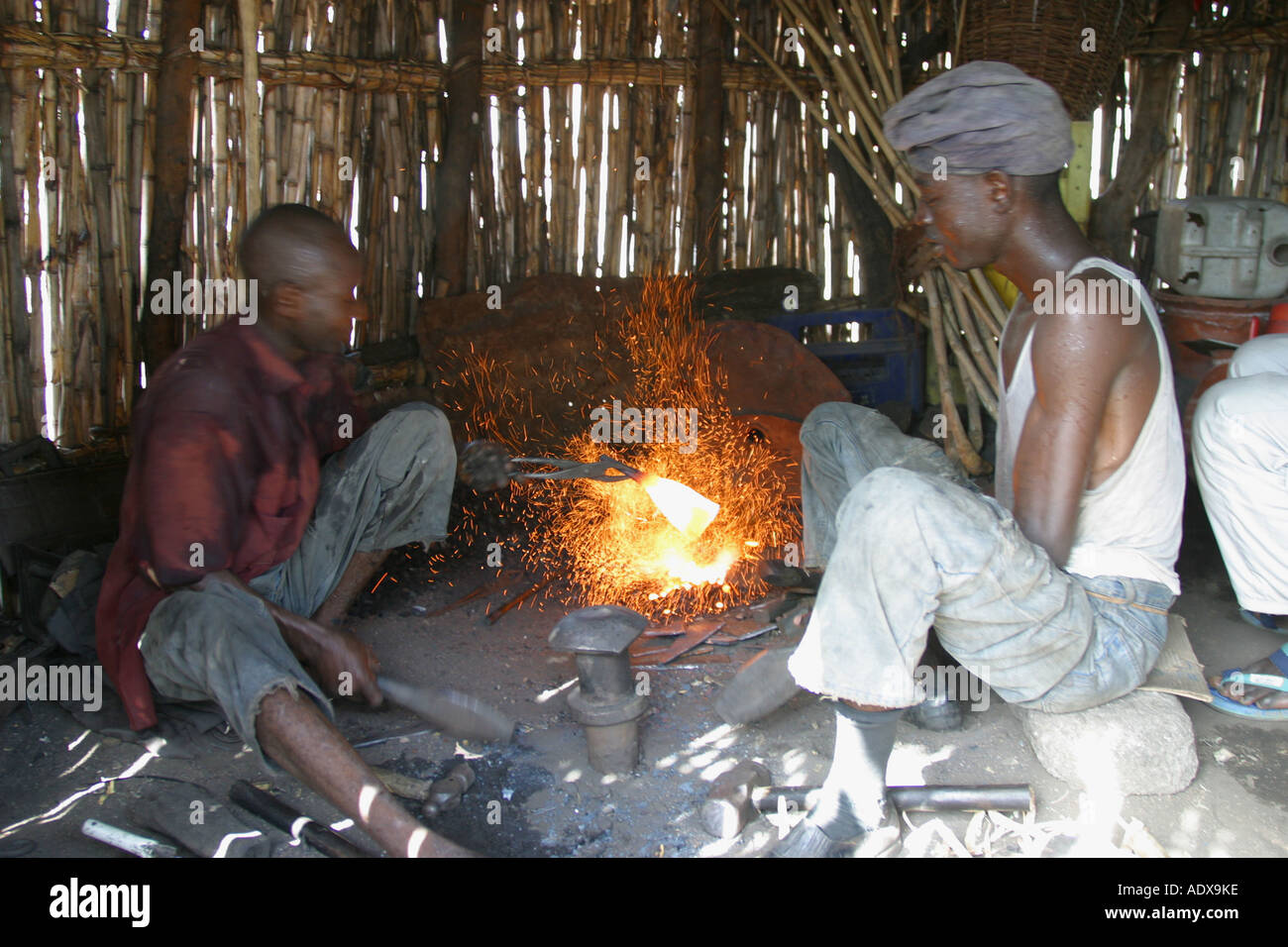
In many parts of Igboland in the past, life moved with the sound of fire and metal. Early in the morning, you could hear the steady rhythm of hammer on iron coming from small workshops in places like Awka, Nkwerre, and other communities known for their skill in blacksmithing. Those sounds were not just noise. They were part of everyday survival.
Back then, if a farmer needed a new hoe or cutlass, or a hunter needed a stronger knife or spearhead, the blacksmith was the person to see. Everything from farming tools to simple household items often came from their hands. Blacksmithing in traditional Igbo society was not something separate from daily life. It was part of it.
Over time, iron working became one of the most important skills in Igbo communities. People in places like Lejja and Igbo-Ukwu were already working with iron many centuries ago. That means this knowledge did not just arrive from outside. It grew here, through experience, practice, and generations of learning.
This article looks at the Igbo blacksmithing tradition in a simple way. It explains how it started, how it worked, the tools used, and the communities that became known for it. It also looks at how the craft changed over time and why it still matters today, even in a world filled with modern machines.
Origins of Blacksmithing in Igbo Society
The origin of blacksmithing in Igbo society goes back to a long period before written records. What we know today comes from archaeology, oral history, and studies of early iron sites in southeastern Nigeria. Together, they show that iron working was not something recently introduced. It developed gradually within the region and became part of everyday life over many generations.
One of the strongest pieces of evidence comes from archaeological work in sites such as Lejja in Enugu State. Studies from this area show early iron smelting activity that dates back many centuries. As such, communities in Igboland were already working with iron independently and using it to support farming and settlement life. These early experiments with iron helped to shape later blacksmithing traditions.
Another important site is Igbo-Ukwu in Anambra State, discovered in the 20th century. The findings in Igbo-Ukwu included highly detailed metal objects that showed that iron and other metalworking skills were already advanced in the region around the 9th century CE. These discoveries changed earlier assumptions that complex metalwork in West Africa was imported. Instead, they confirmed that Igbo communities had their own developed systems of metal production.
As farming became more important, the need for stronger tools also increased. Stone tools could no longer meet the demands of clearing land, planting crops, and harvesting. Iron tools made work faster and more effective. This practical need pushed communities to improve iron production and support skilled workers who could handle the fire and metal process.
Over time, these skilled workers became known as blacksmiths. They were not only tool makers. They were people who understood heat, timing, and material behaviour through experience passed down in families and apprenticeships. Their work slowly spread across different Igbo communities, especially in places like Awka, Nkwerre, Abiriba, and Nsukka where blacksmithing later became a respected and well-known tradition.
In simple terms, Igbo blacksmithing grew from everyday needs. It started with early iron experiments, developed through farming demands, and matured into a skilled craft that supported entire communities.
Major Blacksmithing Communities in Traditional Igboland
In traditional Igbo society, blacksmithing was not spread evenly across every community. Over time, certain towns became well known for their skill in iron working. These places built strong reputations that went beyond their local areas. People travelled from far and near to get tools, repair equipment, or learn the craft.
Awka
Among all Igbo communities, Awka in Anambra State stands out as one of the most widely recognized centres of blacksmithing. Awka blacksmiths were known for their skill in making farming tools, knives, and weapons. Their work was so trusted that they often travelled outside their homeland to provide services in other regions.
Awka smiths did not only work within local markets. Many of them moved from place to place, taking their tools and skills with them. This made Awka blacksmithing widely known across southeastern Nigeria and beyond. Their reputation was built over many generations of consistent craftsmanship.
Nkwerre
Nkwerre in present-day Imo State also developed a strong identity in blacksmithing. Historical studies show that Nkwerre blacksmiths played an important role in producing tools needed for farming and daily life. Their craft was deeply rooted in family lines where skills were passed from one generation to another.
Nkwerre blacksmiths were respected for their ability to produce durable iron tools. Like Awka smiths, some of them also travelled to other communities for work.
Abiriba
Abiriba in Abia State was another community known for skilled craftsmanship. Blacksmithing here supported both local needs and trade. Abiriba smiths were involved in producing tools that moved through regional markets, helping to connect different communities through exchange. Their work contributed to the flow of goods within Igboland, where iron tools were often exchanged for food items, livestock, and other essential materials.
Nsukka
The Nsukka cultural area, especially places like Lejja, is very important in the history of iron working. Archaeological findings in this region show some of the earliest evidence of iron smelting in West Africa. This suggests that Nsukka communities played a major role in the early development of iron technology. Even though later blacksmithing practices evolved differently across Igboland, Nsukka remains significant for understanding how early iron working began and spread.
These blacksmithing communities were not isolated from one another. Instead, they formed a loose but active network of skilled workers. Knowledge moved through travel, apprenticeship, and trade. Tools made in one area often found their way into another, and skills were shared across generations and locations.
As such, blacksmithing in traditional Igbo society became both local and connected, rooted in specific communities but shared across a wider cultural space.
Traditional Tools and Materials Used in Igbo Blacksmithing

Blacksmithing in traditional Igbo society depended on simple but carefully designed tools and locally available materials. Nothing was industrial or factory-made. Everything used in the workshop came from the environment and was adapted through long experience. Each item had a clear purpose, and together they made iron working possible.
The main material used in Igbo blacksmithing was iron ore collected from natural deposits in the environment. This raw ore had to be processed through heat before it could be useful. It was the starting point for every tool, weapon, or household item produced by the blacksmith. Communities with access to iron-rich soil or nearby sources of ore had an advantage in early iron working development.
To reach the high temperatures needed for iron working, blacksmiths used charcoal as fuel. Charcoal burned hotter and more steadily than raw wood, making it suitable for furnace work. It was produced by slowly burning wood under controlled conditions with limited air supply. This process created a strong heat source that could melt and soften iron for working.
At the centre of every blacksmithing space was the clay furnace. This structure was built from local clay and designed to withstand intense heat. Inside the furnace, iron ore was heated until it became soft enough to work on. The furnace was carefully maintained because cracks or damage could affect the entire process. Its design varied slightly across communities, but the purpose remained the same – to contain heat and support iron production.
One of the most important tools in Igbo blacksmithing was the bellows. This device was used to push air into the furnace to increase the intensity of the fire. Traditional bellows were often made from wood and animal skin. By pumping air into the fire, the blacksmith could control temperature levels. This control was essential because iron requires very high heat before it becomes workable.
Once iron was heated, blacksmiths used a set of core tools to work on it:
- Hammer to strike and bend hot metal
- Anvil which is a strong surface where metal was placed and worked on
- Tongs used to hold and move hot iron safely
These tools were simple in design but required strength, timing, and skill to use effectively. Depending on the community and the type of work, blacksmiths also used chisels for cutting metal, files for smoothing rough edges, water containers for cooling and hardening metal, and stones for sharpening tools. Each tool supported a specific stage in the production process.
What stands out in Igbo blacksmithing is how everything came from local materials. There was no reliance on imported equipment. Instead, knowledge of the environment was used to gather clay, wood, ore, and other needed resources. This system shows how blacksmithing in traditional Igbo society was deeply connected to land, nature, and practical knowledge passed through generations.
Traditional Blacksmithing Techniques in Igbo Society
In traditional Igbo society, blacksmithing was a careful process that required patience, observation, and repeated practice. Nothing was rushed. Every stage mattered because a small mistake could affect the strength and usefulness of the final tool. Over generations, blacksmiths developed methods that worked well with locally available materials and simple equipment.
The process usually began with heating iron in a clay furnace. The blacksmith placed iron ore or already processed iron into the fire and used charcoal as fuel. With the help of bellows, air was pushed into the fire to raise the temperature. As the heat increased, the iron gradually softened. The blacksmith watched the colour of the metal closely. The change in colour helped them to know when the iron was ready to be worked on.
Once the iron became soft from heat, it was moved quickly to an anvil. Here, the blacksmith used a hammer to strike the metal repeatedly. Each strike served a purpose. Some were used to flatten the iron, others to lengthen or bend it into a desired form. This stage required timing, because the iron had to be worked while still hot. If it cooled too quickly, it would become hard again and need reheating.
Blacksmithing was not a one-step process. The iron was often returned to the fire several times. After each round of hammering, it was reheated and worked again. This cycle of heating and hammering continued until the tool reached its intended form. It was a slow process, but it helped to produce strong and durable tools that could withstand heavy use.
After shaping the iron, the final stage involved cooling. The hot metal was sometimes dipped into water to harden it. This process helped to increase strength and durability, especially for tools like knives, spears, and cutlasses. The timing of cooling was important. If done too early or too late, it could affect the quality of the tool.
Once cooled, the tool was refined. Blacksmiths used stones or simple files to smooth rough edges and sharpen cutting surfaces. This step made the tool more useful and safer to handle. At this stage, the item was ready for use in farming, hunting, household work, or trade.
These techniques were not written down. They were learned through close observation and long-term practice under experienced blacksmiths. Apprentices spent years learning how to control fire, judge metal temperature, and understand how iron behaves under pressure. This practical knowledge system ensured that blacksmithing in traditional Igbo society continued across generations without formal schools or written manuals.
Products Made by Traditional Igbo Blacksmiths

In traditional Igbo society, blacksmithing was deeply tied to everyday survival. Almost every household depended on tools produced by blacksmiths. Their workshops supplied items used in farming, hunting, cooking, protection, and cultural life. Without their work, many daily activities would have been difficult to carry out.
Farming was the backbone of Igbo life, so agricultural tools were among the most important products made by blacksmiths. These included hoes used for tilling soil and planting crops, cutlasses (machetes) for clearing bushes and harvesting, and digging tools for preparing farmland. These tools helped to increase food production and made farming more efficient for communities.
Blacksmiths also produced tools used for hunting and community protection such as spears for hunting animals and defense, arrowheads for bows used by hunters, and knives for general use and protection. These items were carefully crafted to be strong and sharp, since they often determined success in hunting or safety during conflict.
Beyond farming and hunting, blacksmiths supported daily domestic life. They made cooking knives and simple kitchen tools, metal nails and fasteners for basic construction, locks and small security items for homes. These objects may seem simple, but they were essential for daily living in many Igbo households.
Blacksmithing was not only practical. It also supported cultural and spiritual life. Some items included ritual staffs used by traditional leaders, metal gongs and bells for communication and ceremonies, and symbolic iron objects used in cultural practices. These items carried meaning beyond their physical use. They were part of important events and traditions within the community.
In many cases, blacksmith products were not only used locally. They were also traded in markets. Farmers and traders exchanged iron tools for food, livestock, and other goods. This made blacksmithing an important part of the local economy. Skilled craftsmen were able to support their families while also contributing to wider trade networks across Igboland.
Almost every aspect of life depended on iron tools in one way or another. From planting yam to preparing meals, blacksmithing in traditional Igbo society supported both survival and growth. It was a quiet but powerful foundation of everyday living.
Economic Importance of Blacksmithing in Traditional Igbo Society
In traditional Igbo society, blacksmithing was not only a craft. It was also an important part of the local economy. Every community that practiced farming, hunting, or trade depended on iron tools. Because of this, blacksmiths played a steady role in supporting daily economic life.
As agriculture was the main source of livelihood in most Igbo communities, farmers needed tools like hoes, cutlasses, and digging implements to clear land and plant crops. Blacksmiths supplied these tools regularly. Without their work, farming would have been slower and more difficult. This means blacksmithing indirectly supported food production and helped to sustain local populations.
Blacksmith products were commonly sold in village markets. Tools such as knives, farming equipment, and spearheads were exchanged for food items, livestock, and other goods. Some blacksmiths also participated in wider trade networks. Skilled craftsmen from places like Awka and Nkwerre were known to travel to different communities, selling or repairing tools. This movement helped to connect different parts of Igboland through trade.
Blacksmithing provided steady income for families involved in the craft. In many cases, the skill was passed down through generations, creating family-based economic systems. Apprentices learned the trade over several years and later became independent workers. This created a cycle of skill transfer and economic continuity within communities.
Before the arrival of imported goods, blacksmithing in traditional Igbo society functioned as a form of local industry. It supplied almost all metal tools needed for daily life. This included farming tools, hunting equipment, and household items. The craft reduced dependence on external sources and supported self-reliance within communities.
In some areas, iron tools had high exchange value. They were sometimes used in barter systems where goods were traded without money. A strong cutlass or hoe could be exchanged for food crops or other valuable items. This made blacksmith products a form of economic currency in local settings.
Because blacksmiths were present in many communities, they helped to maintain economic balance at the local level. Farmers, hunters, and traders all relied on them. Their work ensured that essential tools were always available which kept economic activities moving. In this wise, blacksmithing supported both individual households and the wider community economy.
Social Status and Cultural Significance of Blacksmiths

In traditional Igbo society, blacksmithing was more than a technical skill. It carried social meaning and shaped how blacksmiths were seen within their communities. Because their work affected farming, hunting, trade, and daily survival, blacksmiths held a visible and respected place in society.
Blacksmiths were regarded as skilled specialists. Not everyone could handle fire, iron, and tools with the level of control required for the work. This made their craft valuable. People depended on them for essential tools. So, their workshops were often busy places. Farmers, hunters, and traders all visited blacksmiths regularly, which increased their importance in community life.
Respect for blacksmiths came mainly from how much people relied on their products. A broken hoe or dull cutlass could slow down farming while a well-made tool improved productivity. Because of this, blacksmiths were seen as practical problem-solvers. Their skills were respected not just for the craft itself but for what it made possible in everyday living.
In many Igbo communities, blacksmithing in traditional Igbo society was passed through families. Children often learned from parents or close relatives. Apprenticeship was a long process. Young learners started with simple tasks like carrying materials, preparing the fire, and observing the master. Over time, they learned how to handle tools and manage iron working processes. This system created continuity and helped to preserve the craft across generations.
Some blacksmiths, especially from well-known centres like Awka and Nkwerre did not stay in one place. They travelled to other communities to work or trade. This movement increased their influence and reputation. It also allowed knowledge and techniques to spread across different parts of Igboland.
Blacksmiths were part of everyday community activities. Their work supported farming seasons, hunting expeditions, and local markets. Because of this, they were closely connected to the rhythm of community life. They were not distant artisans. They were active participants in the survival and development of their societies.
Over time, blacksmithing became part of cultural identity in many Igbo areas. Towns like Awka became known for their iron working tradition, and this reputation became part of how the community was recognized.
Spiritual Beliefs and Symbolism Associated with Iron Working
In traditional Igbo society, blacksmithing was not viewed only as physical work with fire and metal. It also carried deep spiritual meaning. Iron, fire, and the tools used in the workshop were often linked to ideas of power, protection, and transformation. Because of this, blacksmiths were sometimes seen as people who worked at the boundary between the physical and spiritual world.
Iron was widely associated with strength. Tools made through blacksmithing were used for farming, hunting, and defense. So, iron naturally became a symbol of survival. Many communities also believed that iron objects could offer protection. Items such as knives, spears, and iron rods were sometimes kept close for safety or used in protective practices. This belief gave iron a meaning that went beyond its physical use.
Fire was central to blacksmithing, and it carried symbolic meaning in Igbo thought. It was seen as a force that changes raw material into something useful. In the blacksmith’s workshop, iron moved through fire before becoming a tool. This process was understood as a form of transformation. Because of this, fire was treated with respect and caution, not only as a working element but also as something powerful.
The blacksmith’s workshop was often viewed as a special place. It was where heat, noise, and skill came together to produce tools that supported community life. In some communities, the workshop was treated with a level of respect because of the processes that took place there. The combination of fire, iron, and skill gave the space a unique identity within the community.
Blacksmiths were seen as people with deep practical knowledge. Their ability to control fire and metal required patience and careful observation. Because of this, some people viewed their skill as something closely linked to natural forces. The way they worked with heat and iron created a sense of admiration, and in some cases, spiritual interpretation.
Iron objects made by blacksmiths were sometimes used in ceremonies and cultural practices. Items like iron staffs, gongs, and bells played roles in community gatherings and traditional events. These objects were not just functional. They carried meaning and were used to mark important moments in social and cultural life.
Overall, blacksmithing in traditional Igbo society was surrounded by respect. The combination of fire, skill, and useful output made the craft stand out. Even without formal religious structure tied to every workshop, the work itself was seen as something that required discipline and careful handling. This helped to shape how blacksmiths and their tools were viewed in society.
Apprenticeship and Knowledge Transfer in Traditional Blacksmithing
In traditional Igbo society, learning blacksmithing was not done in a classroom. It followed a clear apprenticeship system that depended on close observation and long practice under a skilled master.
Young learners usually began at an early age. Their first duties were simple – gathering firewood, preparing charcoal, pumping the bellows, and keeping the workshop clean. At this stage, they were not allowed to handle hot iron.
As time went on, they were gradually introduced to basic tools. They learned how to observe the colour of heated iron, how to hold tools safely, and how to assist during hammering. Each stage required patience and repeated practice before moving forward.
There were no written manuals. Everything was passed through direct demonstration, correction, and repetition. This hands-on system helped to ensure that knowledge remained strong within families and communities across generations.
Colonialism and the Decline of Indigenous Blacksmithing
The arrival of colonial rule brought major changes to blacksmithing in Igbo society. Imported metal goods from Europe became widely available in local markets. These factory-made tools were often cheaper and produced in larger quantities.
Over time, this reduced the demand for locally made iron tools. Many traditional workshops could no longer compete with mass production. As a result, some blacksmithing centres began to decline.
The shift was not only economic. It also affected knowledge systems. As fewer people practiced the craft, the number of apprentices dropped. Some techniques that were once common started to fade because they were no longer regularly used.
This change marked a turning point in the history of indigenous iron working, as communities slowly moved from local production to imported materials.
Blacksmithing in Contemporary Igbo Society
Today, blacksmithing still exists in parts of Igboland, even though it has changed in form and scale. In some rural communities, small workshops continue to operate, mainly repairing tools or producing simple metal items for local use.
Modern equipment and industrial products have taken over many of the original functions of traditional iron working. However, some artisans still preserve older methods, especially in areas where handmade tools are still valued.
There is also growing interest in cultural preservation. Researchers, educators, and cultural organizations are beginning to document traditional blacksmithing practices as part of Igbo heritage. This helps to keep the history alive, even as the practice itself becomes less common.
Preserving the Heritage of Igbo Blacksmithing Tradition
Protecting blacksmithing in traditional Igbo society requires deliberate action. One important step is proper documentation through research, writing, and storytelling. This helps to preserve knowledge that may no longer be widely practiced.
Cultural institutions and museums also play an important role. By collecting and displaying traditional tools and explaining their use, they help the younger generations to understand the value of indigenous technology.
Another key approach is encouraging interest among young people. When children and students are exposed to traditional crafts, they are more likely to appreciate and possibly continue them in new forms. Preservation is not only about keeping the past. It is about maintaining a connection between history and present-day identity.
Conclusion …
Blacksmithing in traditional Igbo society was more than the production of tools. It supported farming, strengthened trade, and shaped daily life across communities. From early iron smelting sites to well-known blacksmithing towns like Awka and Nkwerre, the craft played a central role in indigenous development.
Even though modern tools have replaced much of its original function, the legacy of blacksmithing remains important. It tells a story of creativity, skill, and adaptation within Igbo history.
Preserving this heritage is not just about remembering the past. It is about protecting a valuable part of cultural identity and understanding how Igbo communities once solved everyday problems with the resources around them.
References
- Okafor, E. E. (1993). Iron technology in precolonial Africa: A case study of Igboland, Nigeria. Archaeometry, 35(2), 213–221. https://doi.org/10.1111/j.1475-4754.1993.tb01039.x
- Chirikure, S., & Bandama, F. (2022). Iron production in Africa: A long-term perspective on technology and society. African Archaeological Review. https://link.springer.com/article/10.1007/s10437-022-09495-5
- McIntosh, S. K. (1998). Igbo-Ukwu: The early art of metalworking in West Africa. Smithsonian Institution. https://www.si.edu/object/siris_sil_595968
- Njoku, O. N. (1988). Awka and early iron technology in Igboland. Smithsonian Libraries Archive. https://library.si.edu/digital-library/book/awkaandearlyiro00njok
- ResearchGate. (2021). Colonialism and the disintegration of indigenous technology in Igboland: A case study of blacksmithing in Nkwerre. https://www.researchgate.net/publication/351780620
- Connah, G. (2015). African civilizations: An archaeological perspective. Cambridge University Press. https://doi.org/10.1017/CBO9781139029663
- https://nnewicity.com/indigenous-crafts-of-precolonial-igbo-society/
- https://nnewicity.com/awka-blacksmiths-in-precolonial-igbo-society/